Artwork
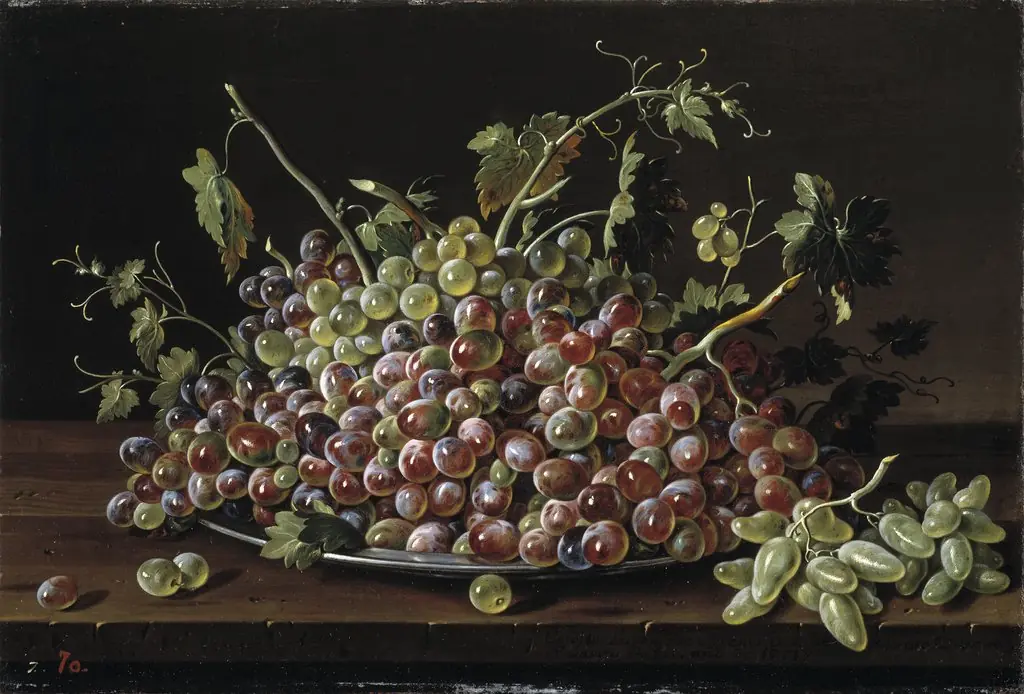
Still life with grapes
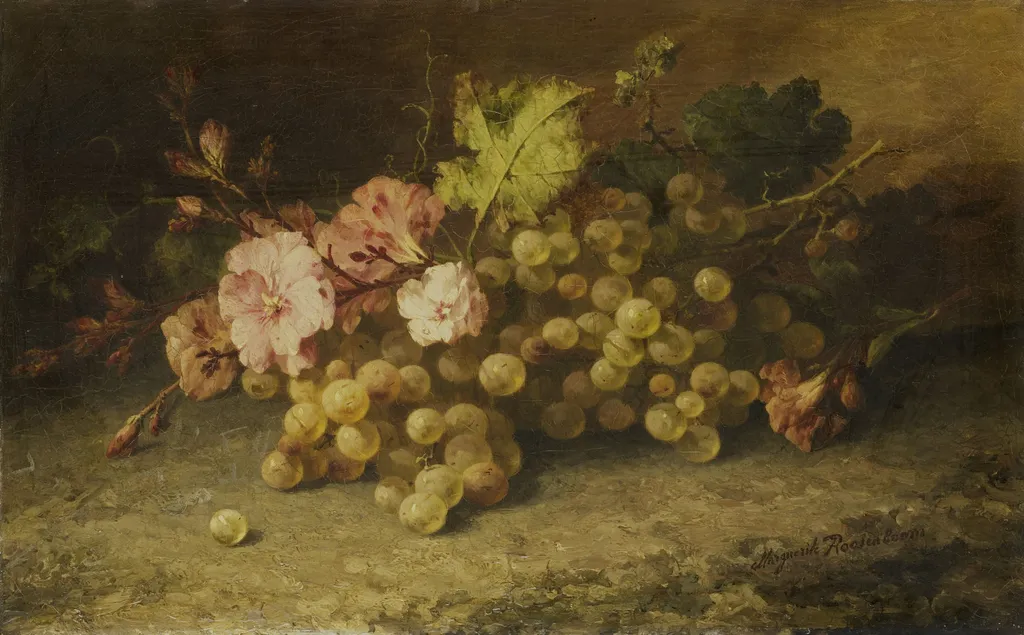
Still life with grapes is an oil painting by the Impressionist artist Margaretha Roosenboom. It dates from 1894 and is held in the collection of the Rijksmuseum.
About this work
Technique & Style
The composition is likely arranged to highlight the interplay of light and shadow, a common stylistic feature in works of this period.
The painting employs oil paint on a canvas support, with dimensions of 34 cm in height and 54 cm in width. Executed in 1888, the work exemplifies the still-life genre, emphasizing the depiction of grapes as its central subject. The handling reflects the naturalistic tendencies of late 19th-century Dutch still-life painting, focusing on the textural rendering of the fruit and its surrounding elements.
The composition is likely arranged to highlight the interplay of light and shadow, a common stylistic feature in works of this period.
The formal qualities prioritize realism and tactile detail, with careful attention to the depiction of grape clusters and foliage, characteristic of Margaretha Roosenboom’s approach to still-life subjects.
History & Provenance
Margaretha Roosenboom created the oil painting Still life with grapes in 1888. Executed on canvas, the work measures 34 cm in height and 54 cm in width. Historical records indicate that the piece was owned by Joannes Barnardus Antonius Maria Westerwoudt. The painting is currently held in the collection of the Rijksmuseum.
Still life with grapes is an 1888 oil painting by Margaretha Roosenboom, housed in the Rijksmuseum in Amsterdam. It entered the collection through the Westerwoudt family lineage, recorded as owned by Joannes Barnardus Antonius Maria Westerwoudt before acquisition. The work has been part of the museum’s permanent display, contributing to exhibitions focused on Dutch still-life painting.
The painting measures 54 cm in height and 34 cm in width, documented in the Rijksmuseum’s catalog.
It was featured in the 1988 retrospective of Roosenboom’s work at the Rijksmuseum and again in the 2014 exhibition 'Dutch Masters: From the Golden Age to Today' at the same institution.
Context
Margaretha Roosenboom's 1888 oil painting Still life with grapes, measuring 34 cm by 54 cm, exemplifies 19th-century Dutch still life within the broader European tradition of meticulous floral and fruit compositions. Its restrained palette and precise rendering reflect the influence of earlier Dutch Golden Age masters while anticipating Impressionist interest in natural light and texture. The work was acquired by the Rijksmuseum and remains part of its collection, underscoring its significance within Roosenboom's oeuvre and Dutch art history.
Overview
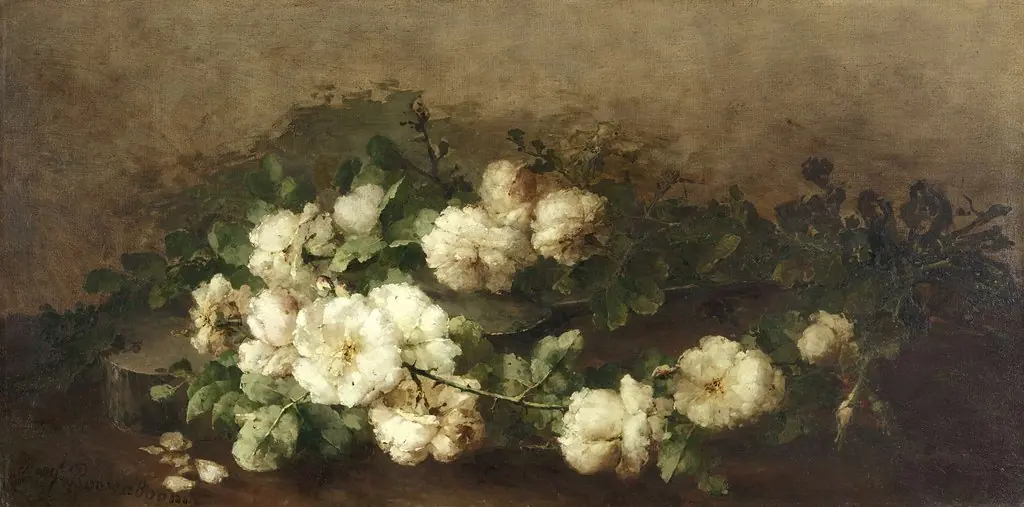
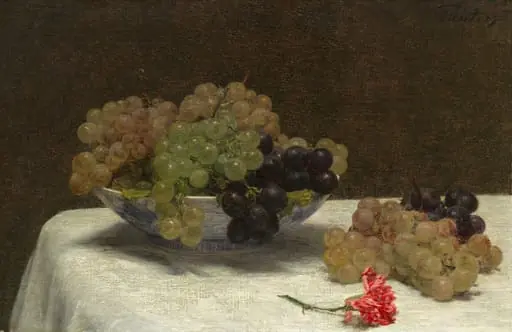
Margaretha Roosenboom’s 1894 oil painting titled Still life with grapes presents a compact arrangement of fruit and flowers. The composition centers on a cluster of green grapes that cascade across a textured surface, accompanied by a few pink blossoms with white centers and interwoven green foliage. The dark, indistinct background serves to accentuate the vivid tones of the subject matter, creating a quiet, intimate tableau.
Subject & Meaning
The work focuses on everyday botanical elements, a bunch of grapes, delicate pink flowers, and their surrounding leaves, rendered with meticulous attention to the play of light and shadow. By isolating these objects against a muted backdrop, Roosenboom invites contemplation of the fleeting beauty of natural forms, suggesting a momentary pause in the rhythm of domestic life.
Own this work as a print
Artist & collection