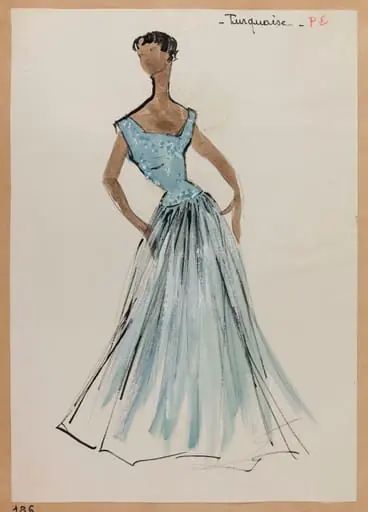
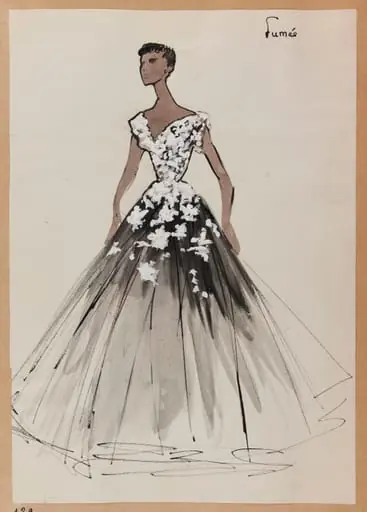
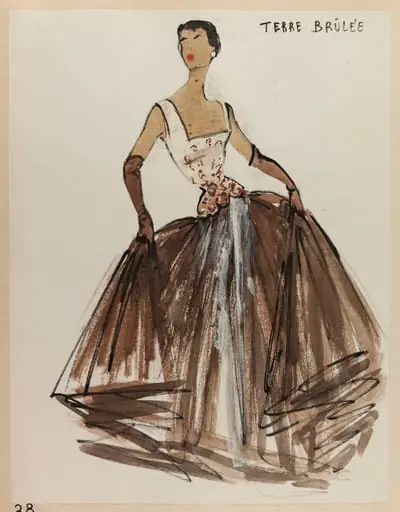
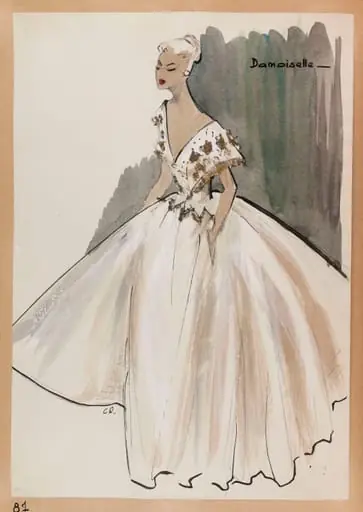
Artwork
Néréïde
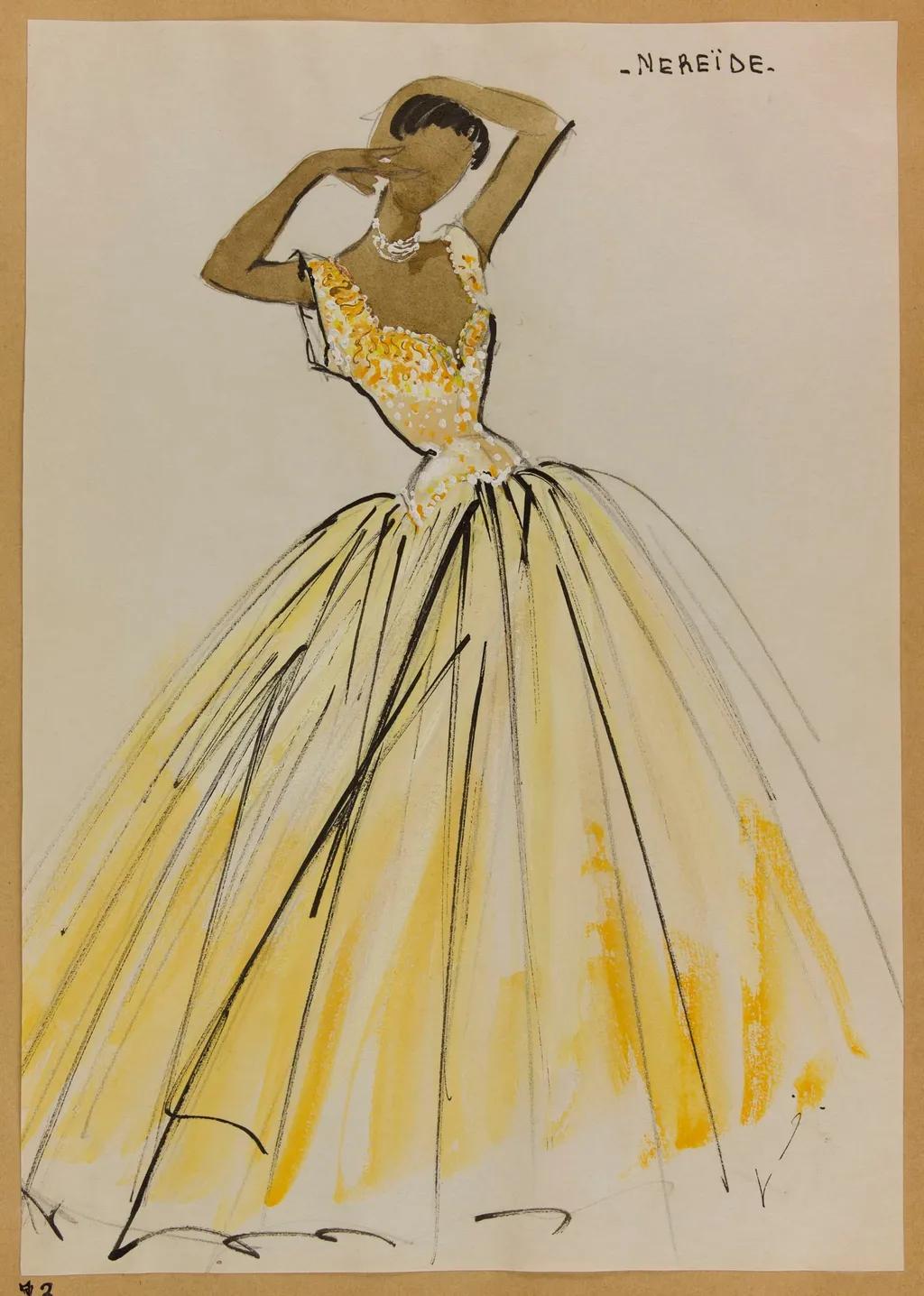
Néréïde is a drawing by Marie-Louise Carven. It dates from 1952 and is held in the collection of the Palais Galliera - Musée de la Mode de la Ville de Paris.
About this work
Overview
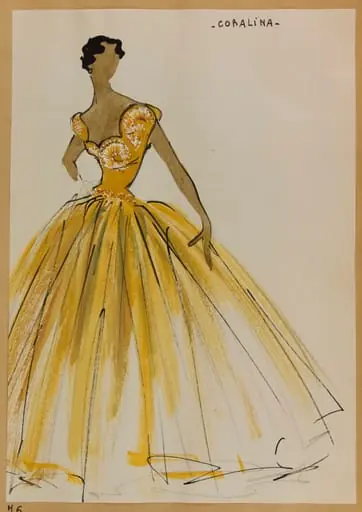
Created in 1952 by French designer Marie-Louise Carven, Néréïde is a pencil sketch on paper, not a finished garment. It belongs to the Museum of Ethnography’s collection and reflects Carven’s interest in translating movement and lightness into fashion design. The work’s informal, rapid execution suggests it was a preliminary study, capturing a gesture rather than a finalized silhouette.
Subject & Meaning
The figure depicted raises her arms behind her head, suggesting a fluid, almost aquatic motion. The title Néréïde, referencing sea nymphs from Greek myth, implies a connection to water and grace. The flowing lines of the dress and the open posture evoke a sense of weightlessness, aligning the design with mythological ideals of ethereal femininity rather than literal representation.
Technique & Style
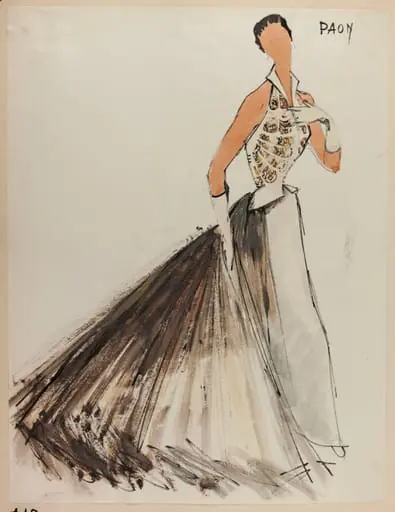
The bodice is marked with clustered, small shapes suggesting embroidery or texture, while the skirt flows with minimal contouring.
Executed in loose, energetic pencil strokes, the drawing emphasizes gesture over detail. The bodice is marked with clustered, small shapes suggesting embroidery or texture, while the skirt flows with minimal contouring. A pale yellow wash tints the fabric, contrasting with the darker upper section. The sketch’s spontaneity reveals Carven’s process: capturing motion and mood before technical refinement.
History & Provenance
Carven founded her fashion house in 1945 and was among the first French couturiers to develop a ready-to-wear line. Néréïde dates from the early 1950s, a period when she was experimenting with lightweight materials and silhouettes suited to smaller frames. The sketch entered the Museum of Ethnography’s collection as part of a broader effort to document fashion as cultural expression.
Context
In postwar France, fashion was shifting toward accessibility and movement, away from rigid structures. Carven’s designs responded to this change, favoring ease and natural form. Néréïde reflects this ethos, blending mythological inspiration with practical concerns for wearability. Its sketch form situates it within a designer’s working archive, not a public display piece.
Legacy
Though not a finished garment, Néréïde illustrates Carven’s approach to design as an evolving process. Her emphasis on fluidity and petite proportions influenced later generations of designers seeking to balance artistry with everyday wear. The sketch remains a quiet testament to the intellectual and aesthetic labor behind fashion’s more visible outcomes.
Artist & collection
Artist
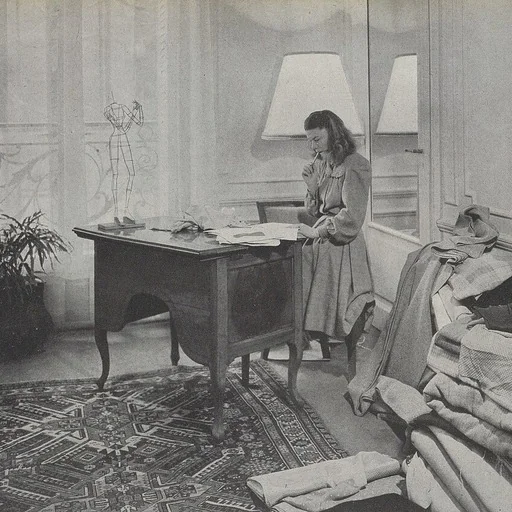
Marie-Louise Carven (31 August 1909 – 8 June 2015), born Carmen de Tommaso, was a French fashion designer who founded the house of Carven in 1945.
Museum
Palais Galliera - Musée de la Mode de la Ville de Paris
Continue through works from the same source collection.
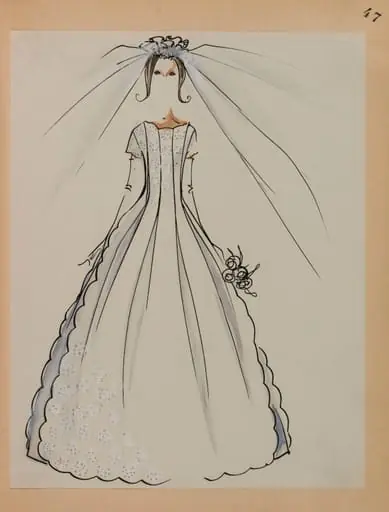 Robe de mariée festonnée et son voile
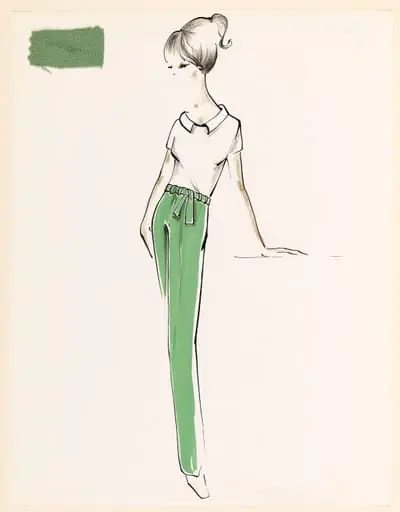 Haut blanc à manches courtes et pantalon vert à ceinture nouée
 Kapur
Kapur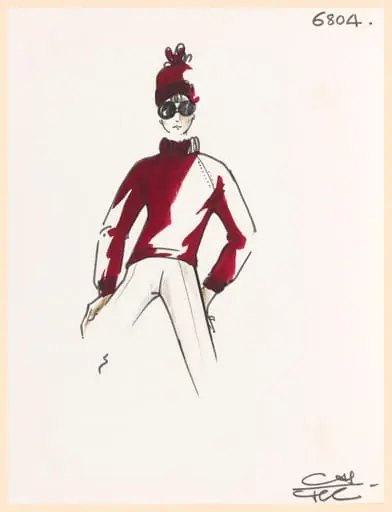 Pull-over à manches longues pourpre, bonnet assorti, pantalon et lunettes de soleil
 GLAMOUR
 'Renardeau'
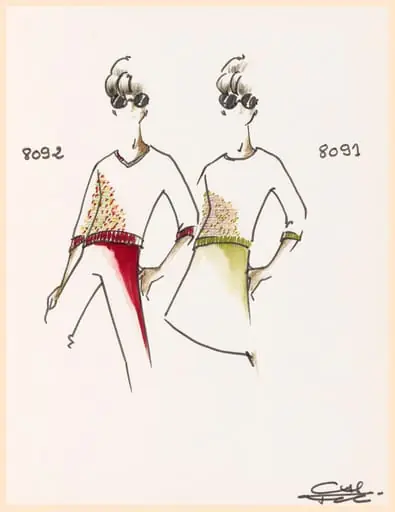 Pull-over à manches trois quarts et à encolure V à motifs multicolores, pantalon cerise et lunettes de soleil
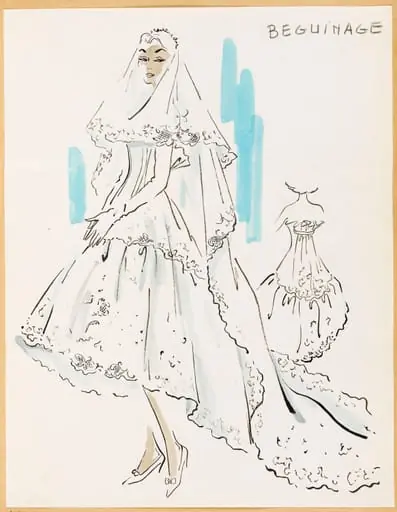 Béguinage