Artwork
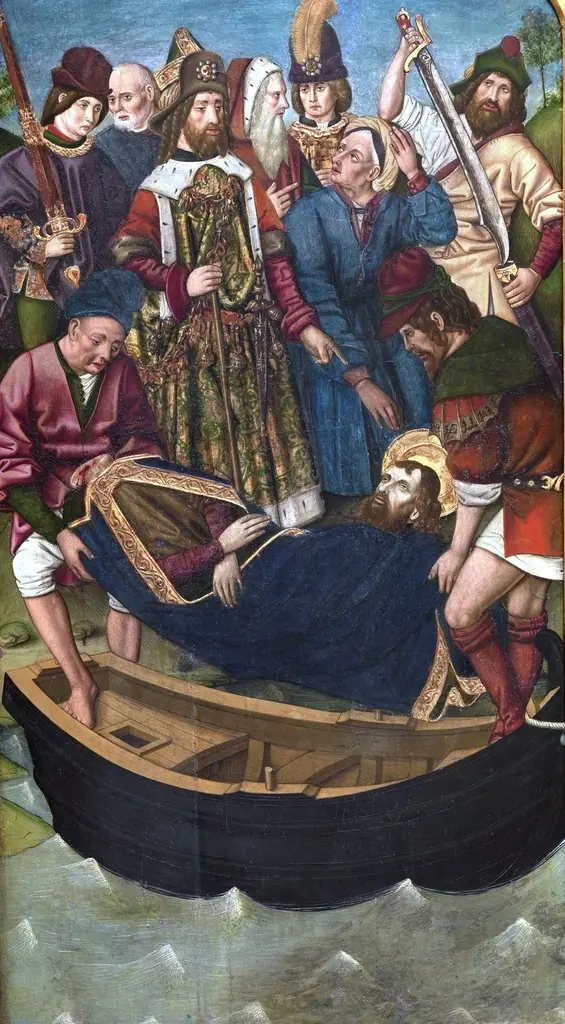
The Translation of the Body of Saint James the Greater at the Palace of Queen Lupa
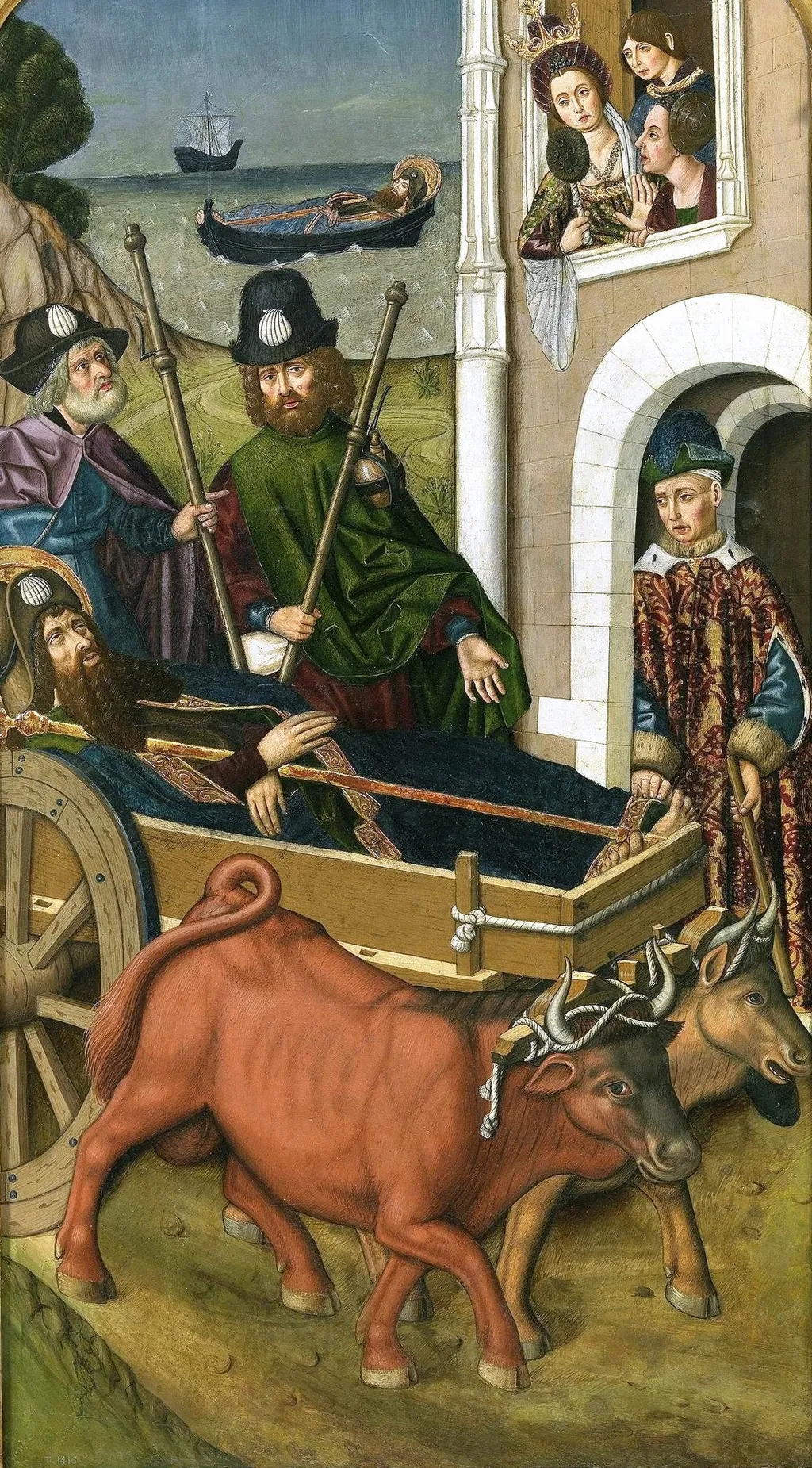
The Translation of the Body of Saint James the Greater at the Palace of Queen Lupa is an unspecified painting by the Early Renaissance artist Martín Bernat. It dates from 1490 and is held in the collection of the Museo del Prado.
About this work
History & Provenance
The panel was painted by Martín Bernat around 1480, as indicated by the work’s documented classification and internal records.
The panel was painted by Martín Bernat around 1480, as indicated by the work’s documented classification and internal records.
By 1485 it had entered the collection of the Museo del Prado, where it remains today. The museum’s holdings list the work under its current title and record its dimensions as 159 cm in height and 73 cm in width.
The work is held in the Museo del Prado, Madrid, where it is recorded as inventory number P003942.
It has been exhibited once in modern times, appearing in the 1999–2000 exhibition El Gótico Español en la época de los Reyes Católicos held at the Museo del Prado (Madrid, 29 October 1999–30 January 2000).
Overview
Created in 1490, The Translation of the Body of Saint James the Greater at the Palace of Queen Lupa is a panel painting now in the Museo del Prado. It was executed by Martín Bernat, a Gothic painter active in Zaragoza during the late fifteenth century, whose career overlapped with the early Renaissance in Spain.
Subject & Meaning
The composition illustrates the legendary transport of Saint James’s relics to the palace of Queen Lupa. A green‑clad figure steers a wooden cart drawn by oxen, while onlookers and animals populate the foreground. In the distance a ship sails on water, underscoring the narrative’s theme of movement and pilgrimage.
Technique & Style
Bernat employs the detailed linearity typical of late Gothic art, combined with a nascent interest in spatial depth that anticipates Renaissance concerns. The figures are rendered with precise contours, and the landscape background, including the castle and distant vessel, is treated with a modest atmospheric perspective.
Context
The painting reflects the devotional climate of late medieval Spain, when the cult of Saint James was promoted by both ecclesiastical and royal patrons. Its narrative setting at Queen Lupa’s palace connects local legend with the broader pilgrimage route to Santiago de Compostela, a focal point of religious identity in the period.
Artist & collection
Artist
Martín Bernat (fl. 1450 -1505) was a Spanish Gothic style painter, active in Zaragoza, where he had a long collaboration with Bartolomé Bermejo. His dates of birth and death are not known.

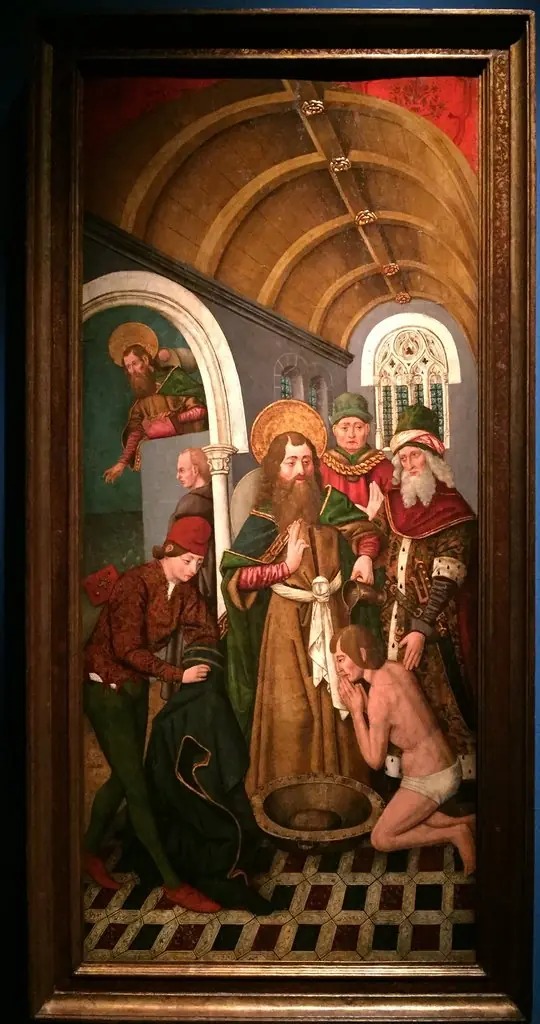
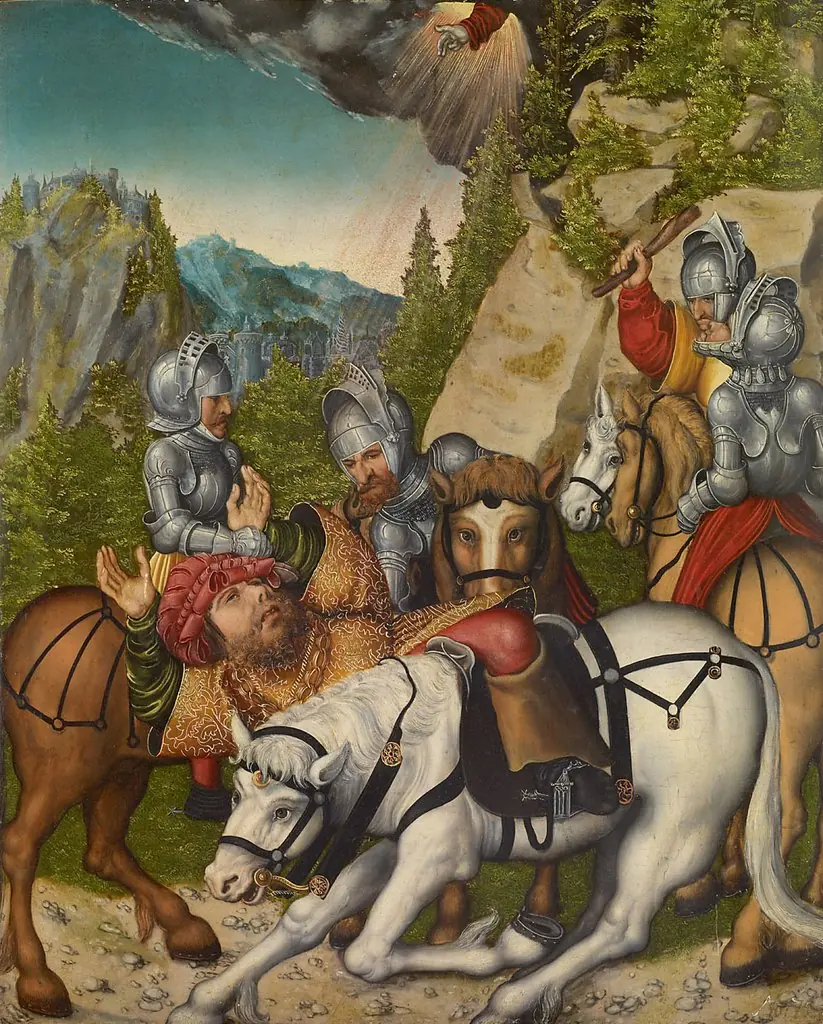 The Conversion of St Paul
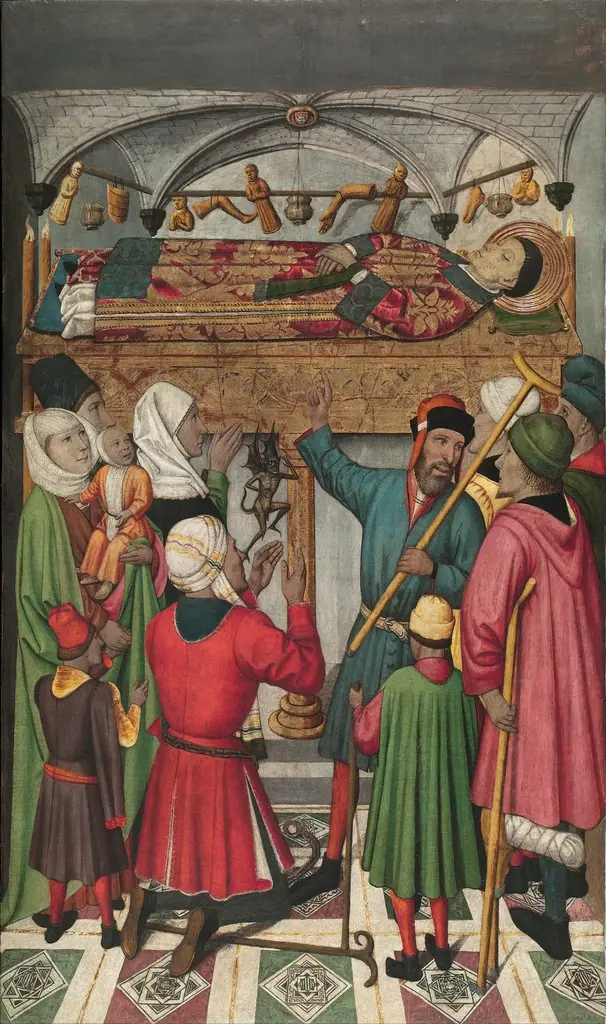 Posthumous Miracles by Saint Vincent
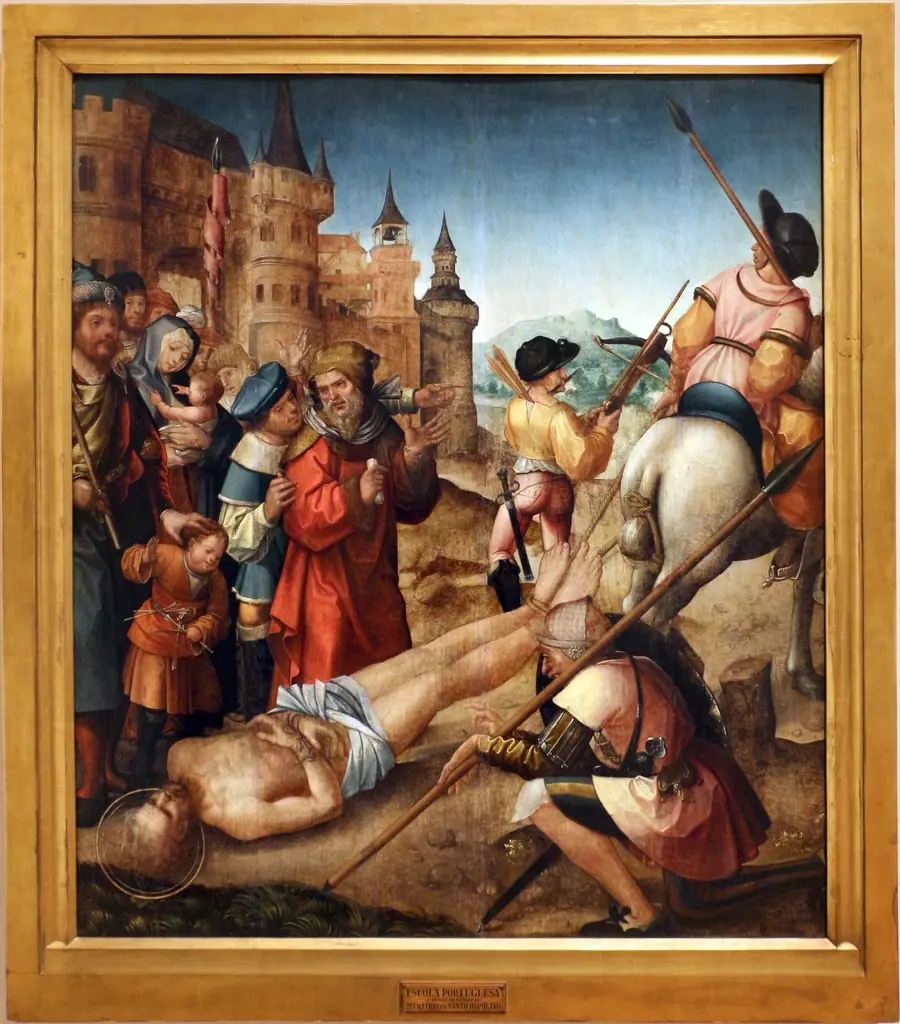 Martyrdom of Saint Hippolyte
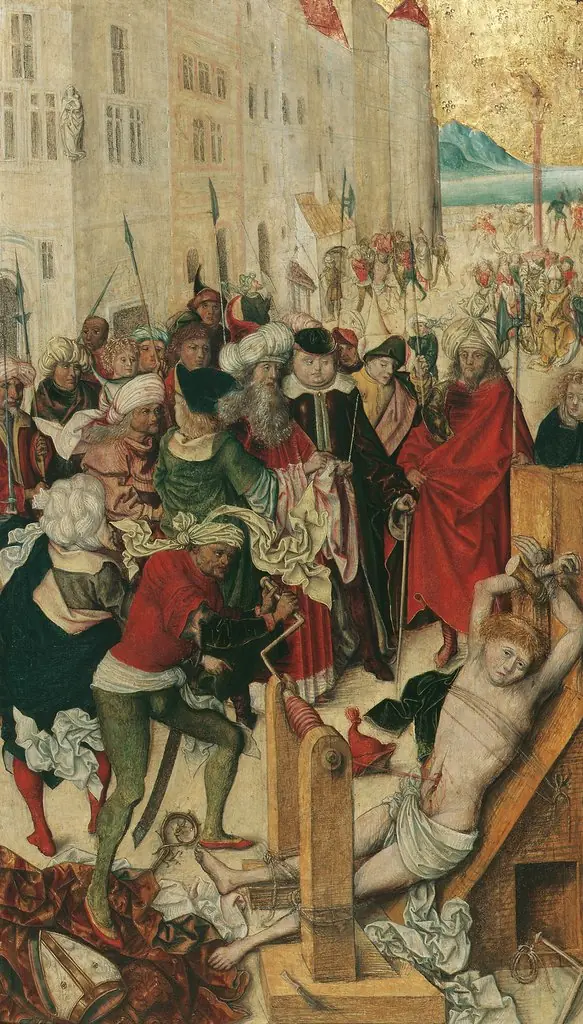 Martyrdom of St. Erasmus
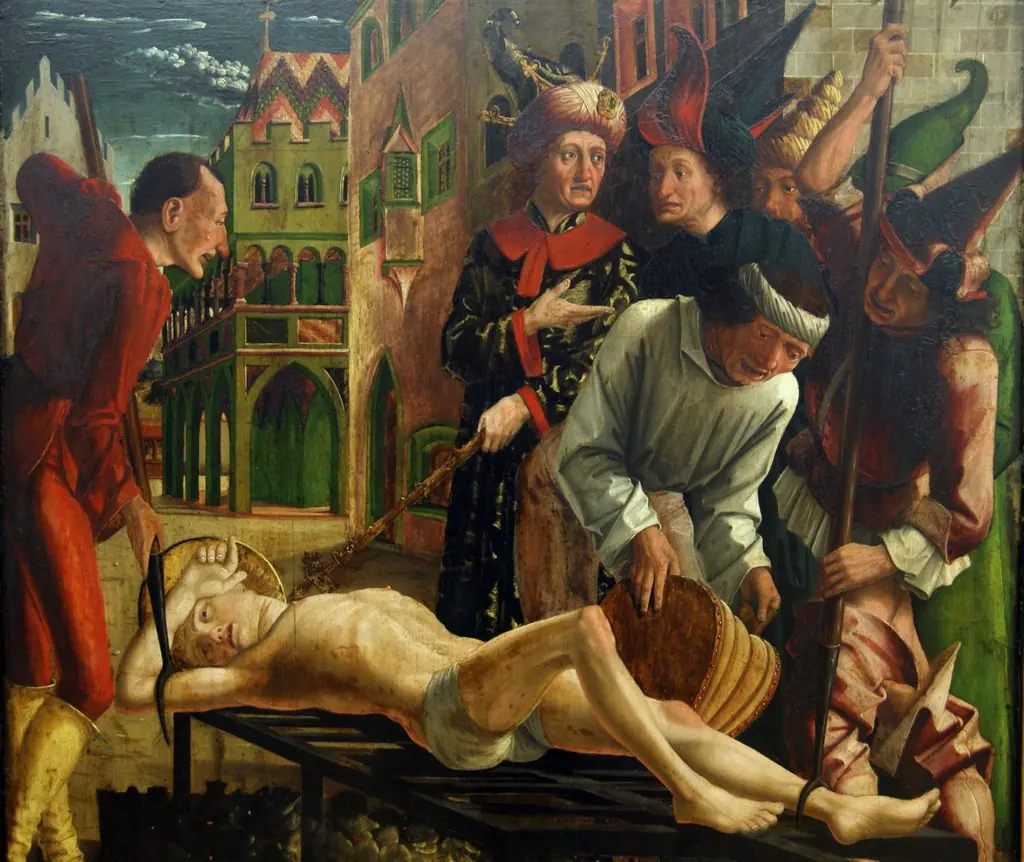 The Martyrdom of St. Lawrence
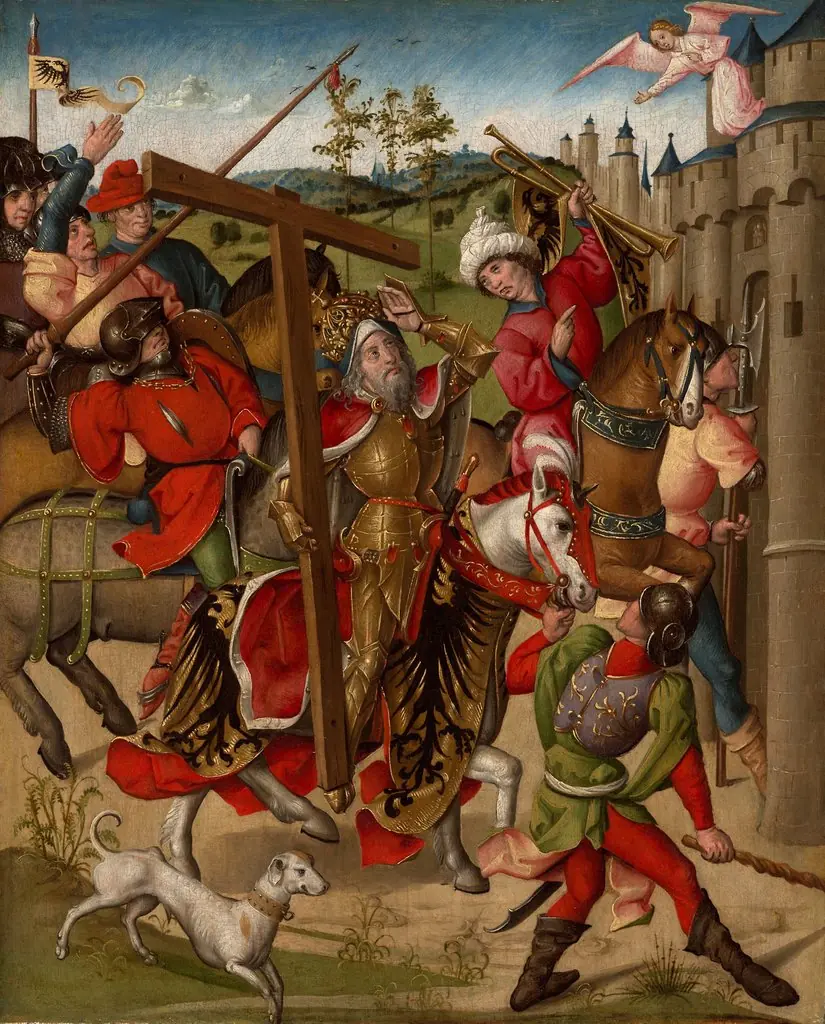 Emperor Heraclius Denied Entry into Jerusalem
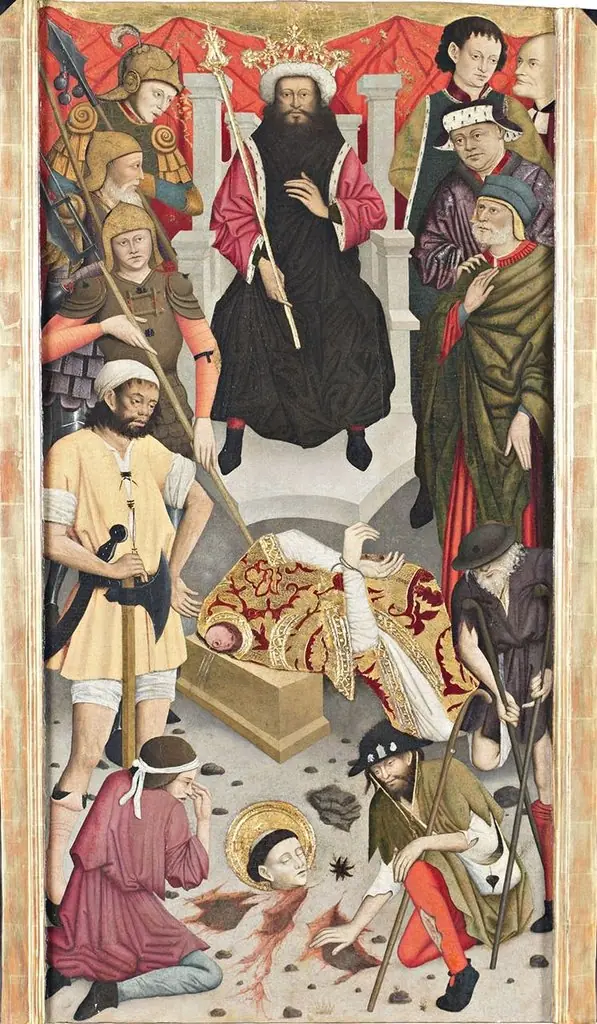 Decapitació de Sant Baldiri
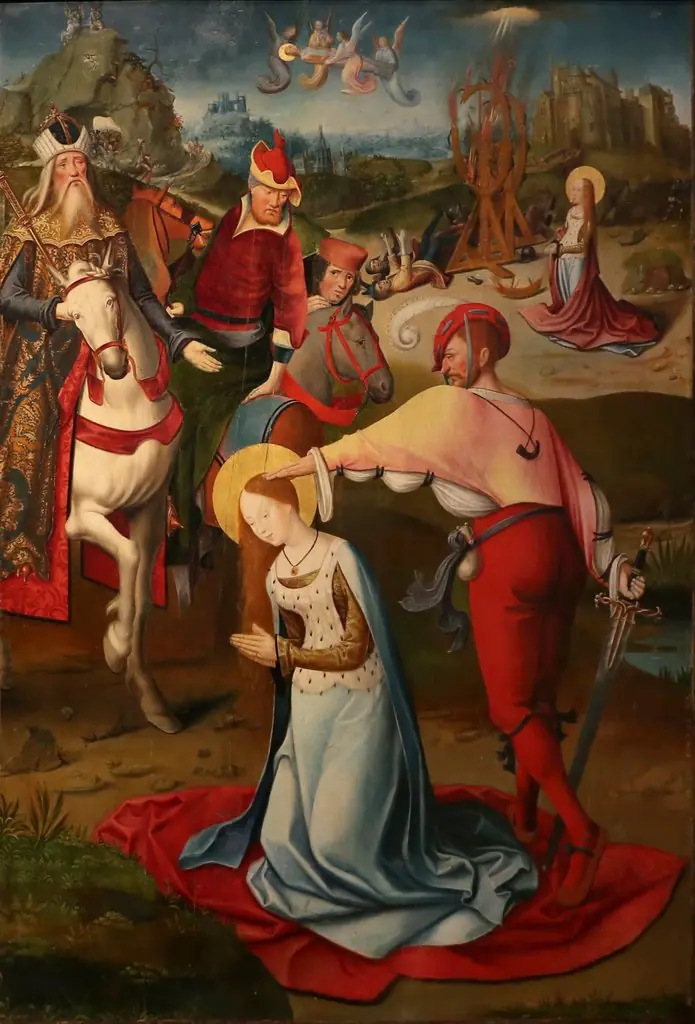 Beheading of Saint Catherine
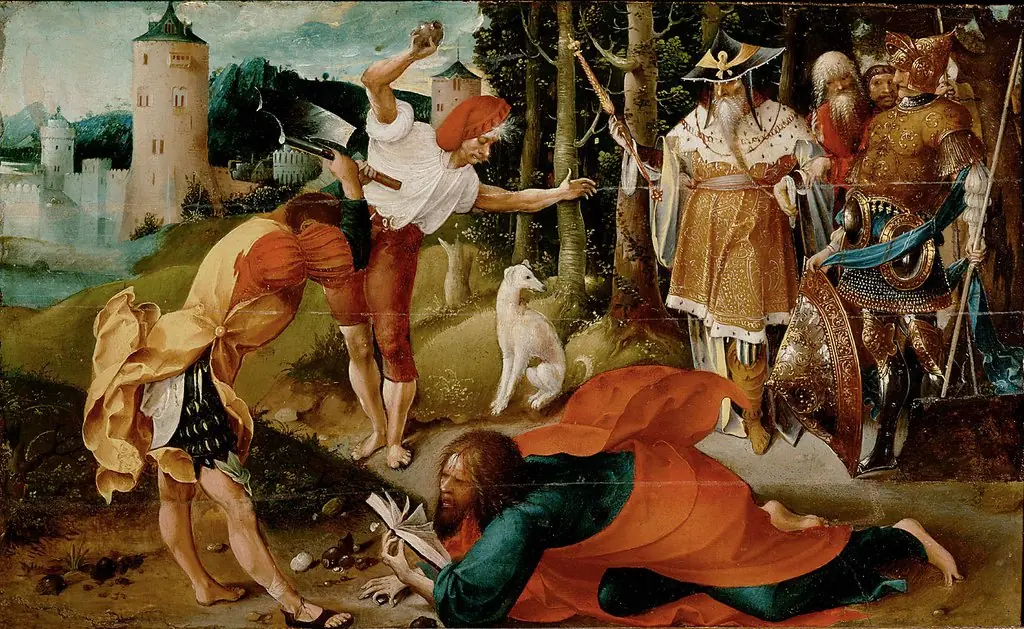 Marter des Apostels Matthias
 The King’s Spies Bring Him News of Dymphna’s Hideout
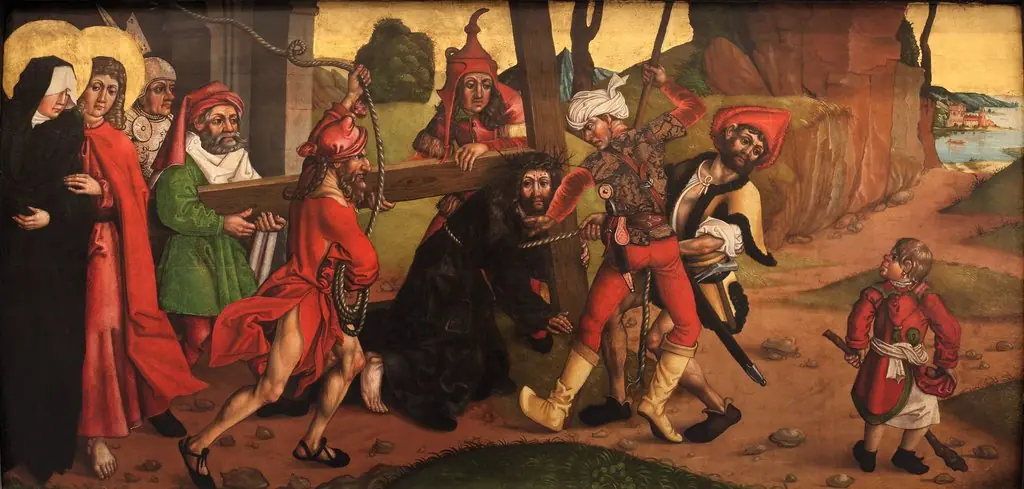 The carrying of the cross