Artwork
The Embarkation of James the Greater’s Body at Jaffa
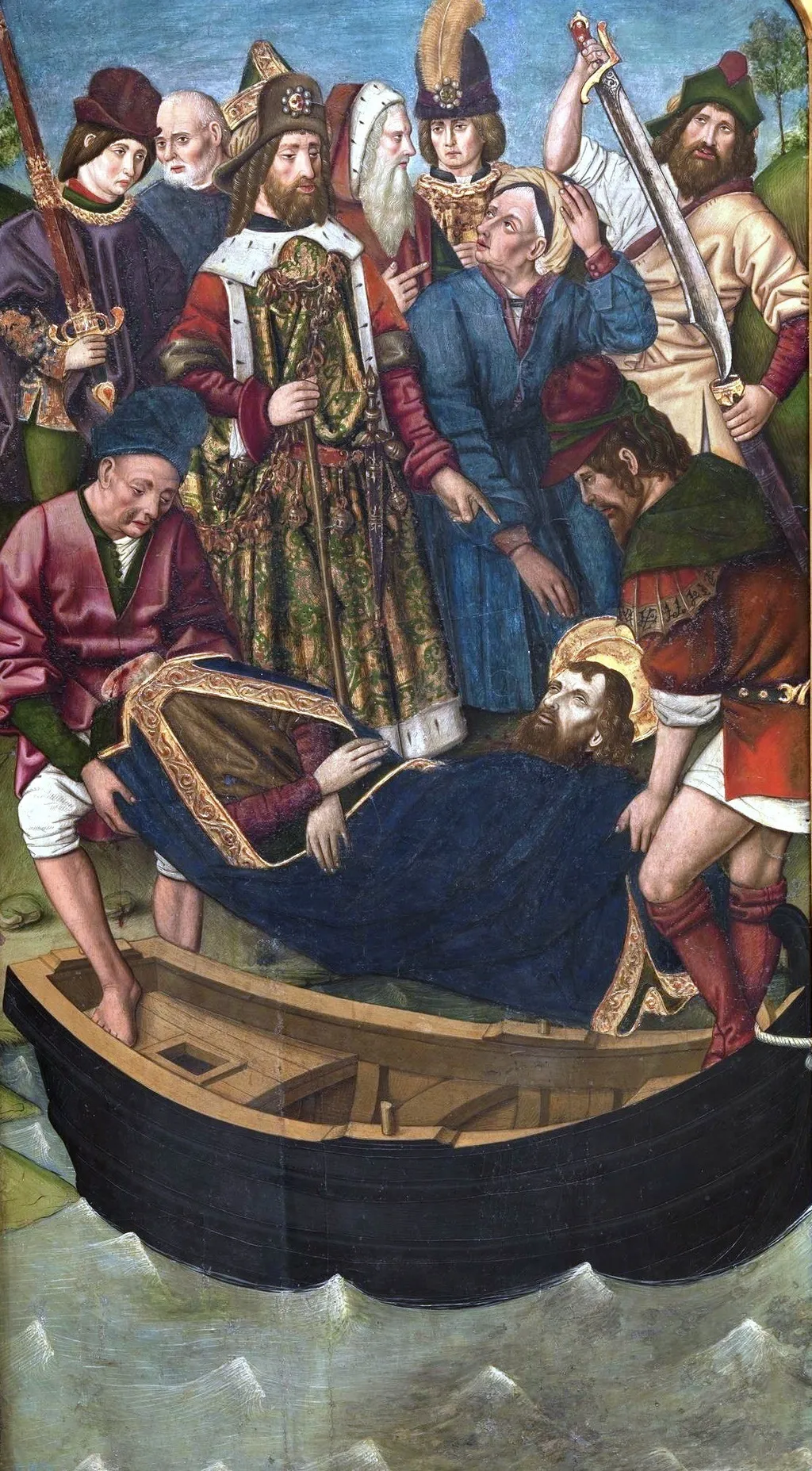
The Embarkation of James the Greater’s Body at Jaffa is an unspecified painting by the Early Renaissance artist Martín Bernat. It dates from 1490 and is held in the collection of the Museo del Prado.
About this work
Subject & Meaning
Central iconography includes a sword, symbolizing his execution, and a vessel on land, representing the journey of his relics.
The Embarkation of James the Greater’s Body at Jaffa portrays the apostle James being transported by sea after martyrdom, emphasizing his role as a pilgrim and martyr. Central iconography includes a sword, symbolizing his execution, and a vessel on land, representing the journey of his relics. The composition underscores themes of sacrifice and divine mission within the narrative of early Christian evangelism.
The work belongs to Martín Bernat’s mature period and is housed in the Museo del Prado, where it remains part of the museum’s collection of 15th-century Spanish religious paintings.
The painting measures 159 cm in height and 73 cm in width, reflecting its vertical format suited to devotional display.
Technique & Style
The Embarkation of James the Greater’s Body at Jaffa is an oil painting on panel created by Martín Bernat in 1480. Executed in the late Gothic style, the work features a restrained palette of earth tones and delicate glazing to render the narrative scene of the saint’s body being transported by sea, with figures arranged in a balanced composition that emphasizes linear clarity and symbolic detail such as the sword. The painting measures 159 cm in height and 73 cm in width, reflecting a meticulous handling of surface texture and spatial depth characteristic of Iberian panel painting of the period.
The formal qualities highlight a crisp delineation of forms and a subtle modulation of light that underscores the narrative drama while maintaining a harmonious spatial organization.
History & Provenance
Martín Bernat painted The Embarkation of James the Greater’s Body at Jaffa in 1480 for the Museo del Prado, where it remains in the collection today.
The work was created as an altarpiece for the confraternity of the Order of Santiago, reflecting the patron saint’s legendary journey to the Holy Land.
Technical examination of the canvas indicates a rectangular format measuring 159 cm in height and 73 cm in width, consistent with late 15th‑century Spanish devotional painting.
Overview
Created in 1490, the painting titled The Embarkation of James the Greater’s Body at Jaffa is attributed to the Spanish Gothic artist Martín Bernat, who was active in Zaragoza from the mid‑15th to the early 16th century. The work is part of the collection of the Museo del Prado and illustrates the transport of the saint’s corpse by sea, a subject drawn from hagiographic tradition.
Context
The subject derives from the legend of Saint James the Greater, whose relics were said to have been transported from the Holy Land to Spain. Depicting the moment of embarkation at Jaffa aligns the work with the broader medieval fascination with saints’ journeys and the political significance of James as patron of the Spanish Reconquista.
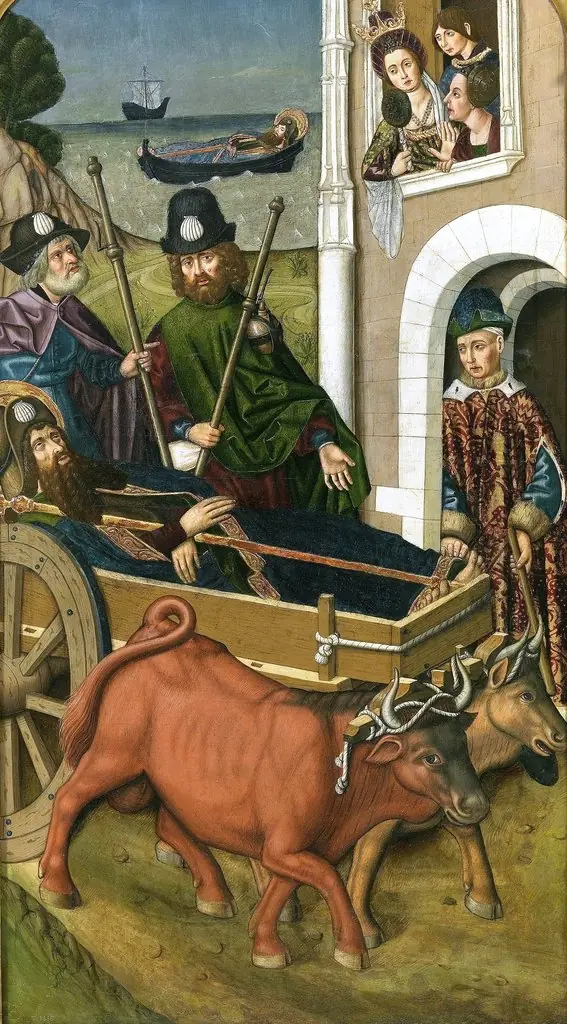
Artist & collection
Artist
Martín Bernat (fl. 1450 -1505) was a Spanish Gothic style painter, active in Zaragoza, where he had a long collaboration with Bartolomé Bermejo. His dates of birth and death are not known.

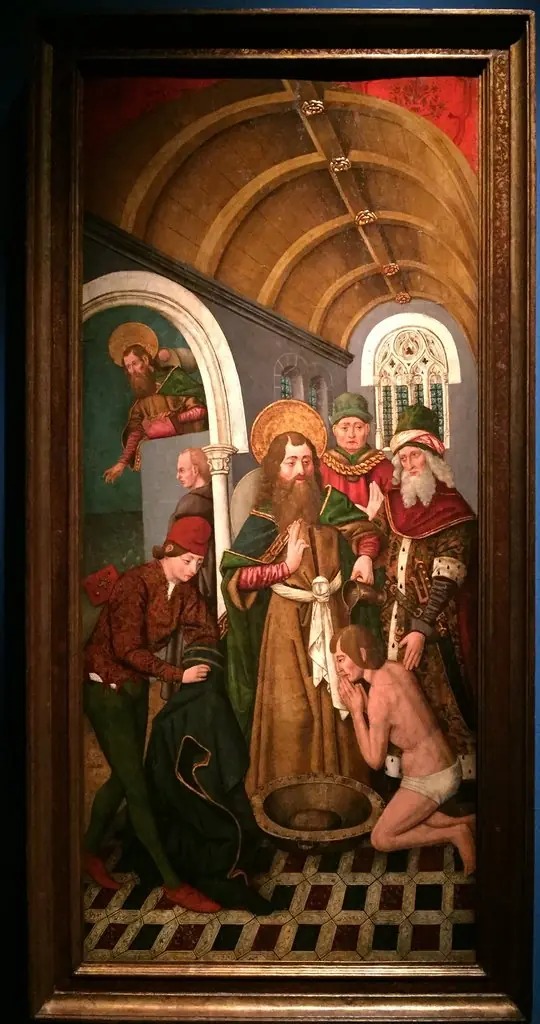
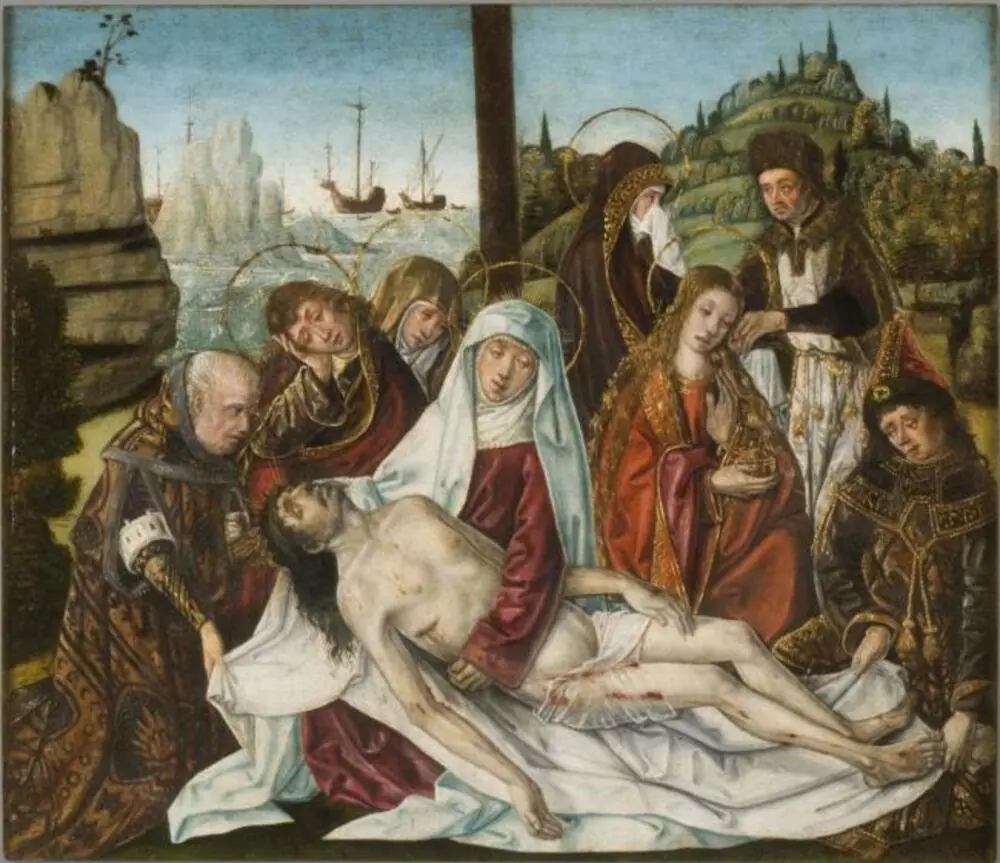 The Lamentation
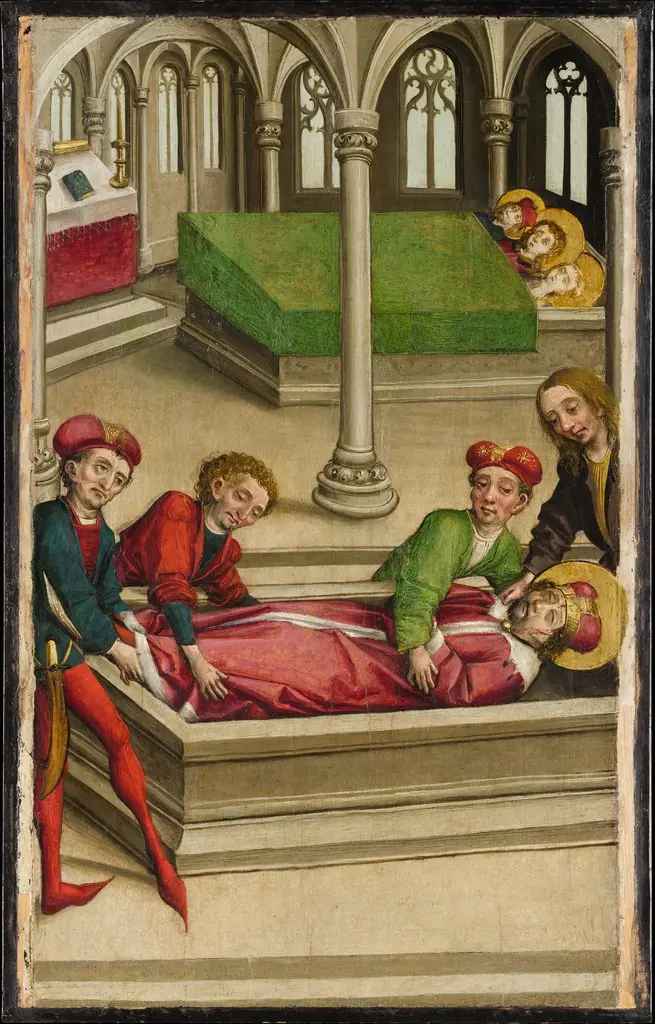 The Burial of Saint Wenceslas
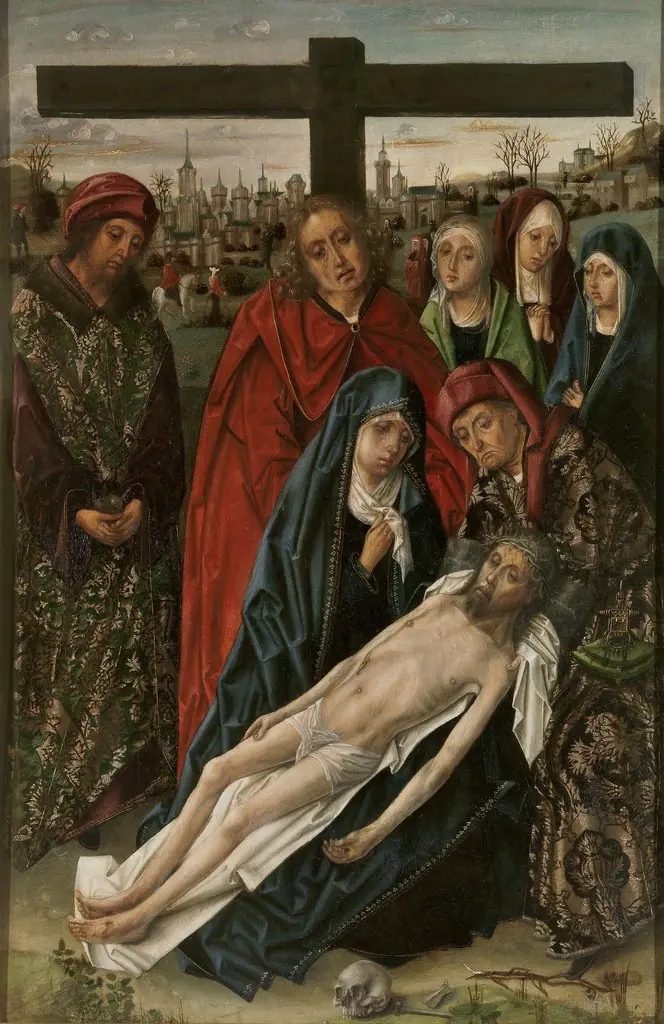 The Lamentation
 Lamentation of Christ
 Posthumous Miracles by Saint Vincent
 The Raising of Lazarus
 The Raising of Lazarus
 The Descent From the Cross
 Jakobus-Stephanus-Altar: Der hl. Jakobus tauft Josias und Hinrichtung des Jakobus
 Flagellation of Christ
 The Lamentation of Christ with a Donor