Movement
Late Gothic
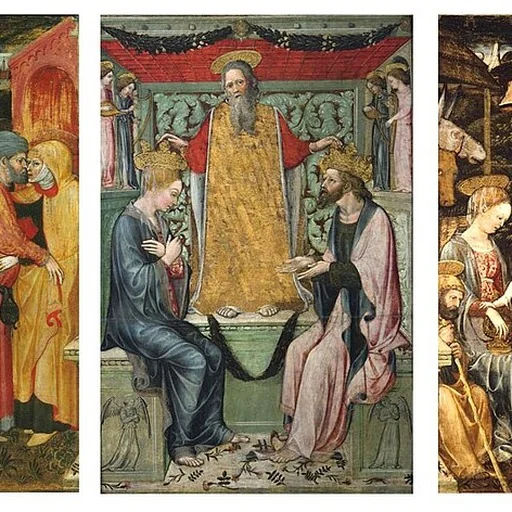
Late Gothic is an art movement. The gallery holds 2 works in this movement, including works by Bonifacio Bembo. Browse Late Gothic paintings, portraits, pictures and artworks from the world's public-domain museum collections.
Late Gothic names the final phase of the Gothic period, roughly the late fourteenth through the early sixteenth century, when the courtly Gothic idiom reached its most refined and ornamental maturity before yielding to the Renaissance. Its first international flowering, the style known as International Gothic, crystallised around 1370–1400 in the orbit of the Burgundian, French and north Italian courts, spread less from a single centre than through a dense traffic of artists, illuminated manuscripts, tapestries and portable panels exchanged among aristocratic patrons. The result was a remarkably cosmopolitan visual language—elegant, jewel-like and devotional—shared from Paris and Dijon to Milan, Prague and Vienna.
The style is recognisable above all by its mannered grace: the swaying S-curve of the body, sinuous "bladelike" sweeps of drapery, lavish use of gold, and a delight in courtly detail, costume and naturalistic plants and animals set within shallow, decorative space. In architecture the same sensibility produced the Flamboyant tracery whose flame-like curves give the late phase its name. Over the fifteenth century, especially in the North, this ornamental elegance fused with a new, sharply observed realism of light, texture and landscape.
In the Netherlands the founding masters of early Netherlandish painting—Robert Campin, Jan van Eyck and Rogier van der Weyden (c. 1399/1400–1464)—carried Late Gothic devotion toward unprecedented naturalism and emotional intensity; van der Weyden's fluent line and expressive pathos dominated painting in France, Germany and Spain for a generation. In the German-speaking lands the period culminated, around 1460–1525, in towering carved limewood altarpieces by Veit Stoss and Tilman Riemenschneider (c. 1460–1531). In Lombardy the courtly strain persisted with Bonifacio Bembo (active 1447–1477), the Sforza court painter of Cremona, whose elegant line and gilded space exemplify the Italian Late Gothic.
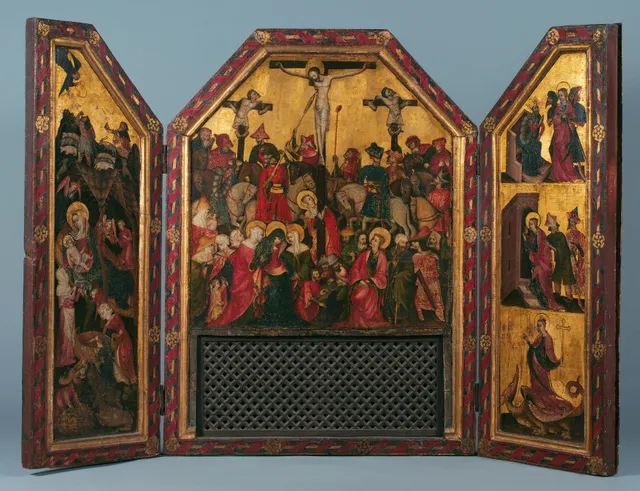
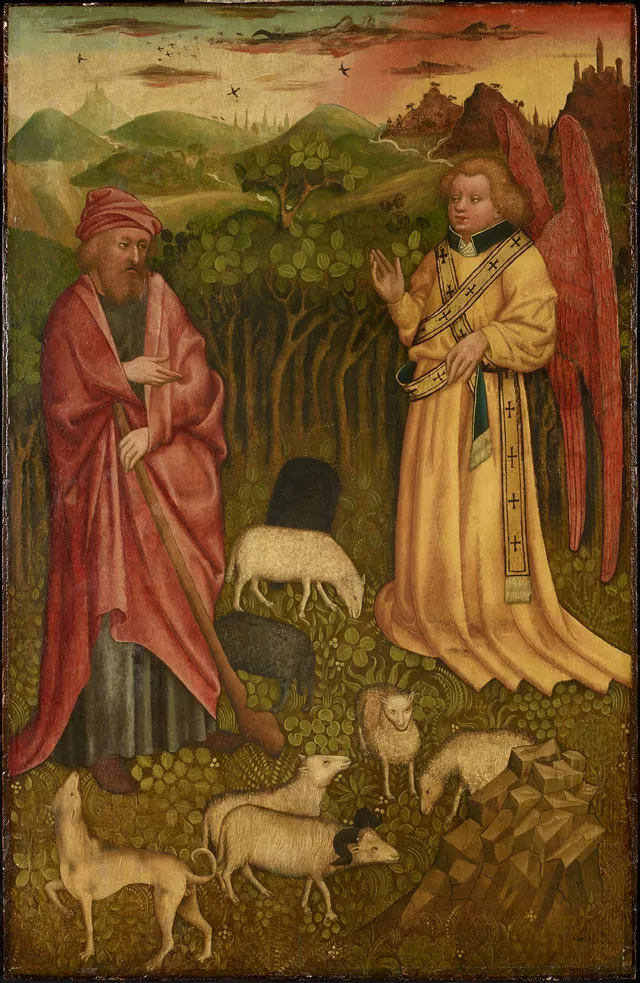
This encyclopaedia's holdings reflect the style's Central European reach. The Botschaft des Engels an Joachim comes from the Master of the Albrechtsaltar, whose Viennese winged altar of 1437–1439—containing the oldest surviving view of the city—is a landmark of Austrian "Gothic Realism"; the Obervellach Altar belongs to the same Alpine altarpiece tradition. Far from a mere twilight, Late Gothic art supplied the technical and devotional foundations on which the Northern Renaissance was built.
Key artists
Works
Frequently asked questions
What is Late Gothic?
Late Gothic is an art movement. The final flowering of the Gothic style in European painting and sculpture (roughly 1380–1500), marked by increasing naturalism within the traditional framework of gold grounds and vertical figures.
Who are the key Late Gothic artists?
Key Late Gothic artists in the collection include Bonifacio Bembo.
Where can I see Late Gothic works?
Late Gothic works in the collection are held by Kunsthistorisches Museum.