Artwork
Feeding the Five Thousand (July)
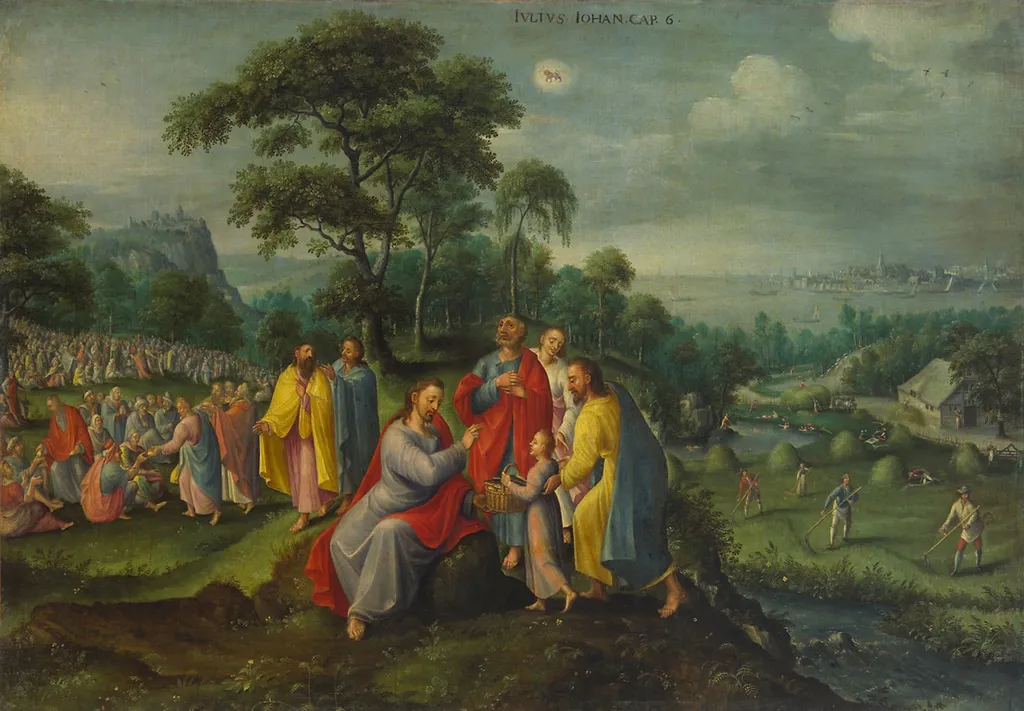
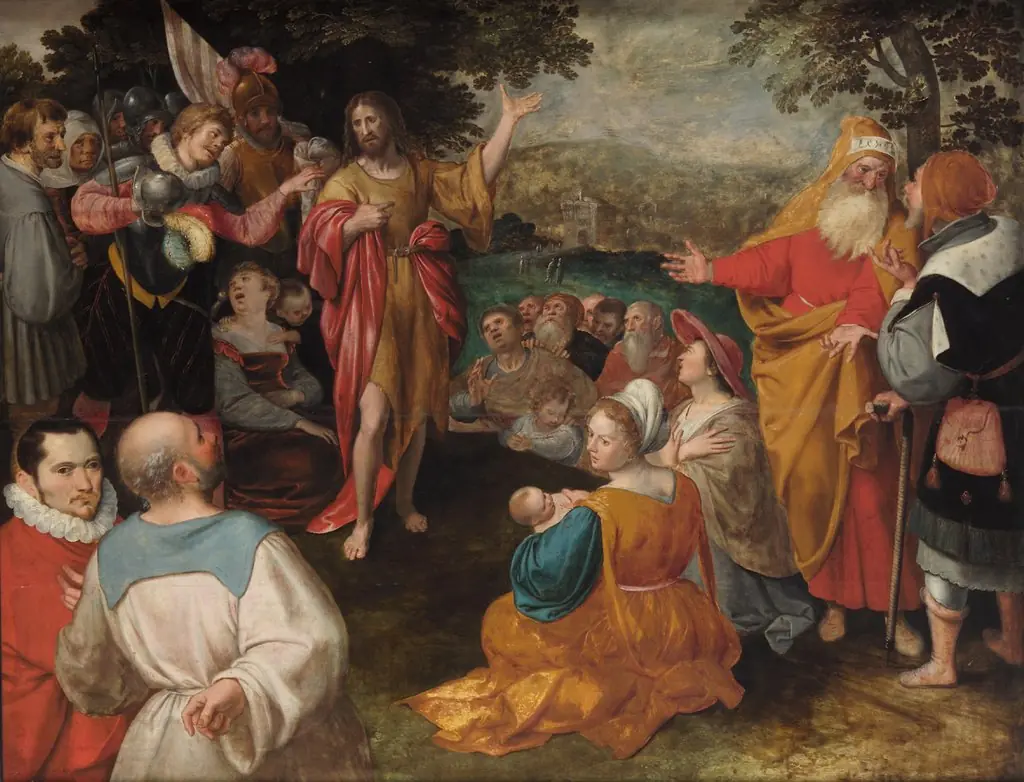
Feeding the Five Thousand (July) is an oil painting by the Mannerist artist Marten van Valckenborch. It dates from 1593 and is held in the collection of the Kunsthistorisches Museum.
About this work
Subject & Meaning
The composition focuses on the central event of distribution, serving as a visual representation of faith and supernatural sustenance.
Marten van Valckenborch's 1585 oil painting depicts the biblical miracle of feeding the multitude, a narrative drawn from the New Testament where Jesus provides food for a large crowd. As a work of religious art, the canvas illustrates this specific act of divine provision and compassion. The composition focuses on the central event of distribution, serving as a visual representation of faith and supernatural sustenance.
By capturing this moment, the artwork functions as a devotional image intended to reflect on themes of charity and spiritual abundance within the Christian tradition.
History & Provenance
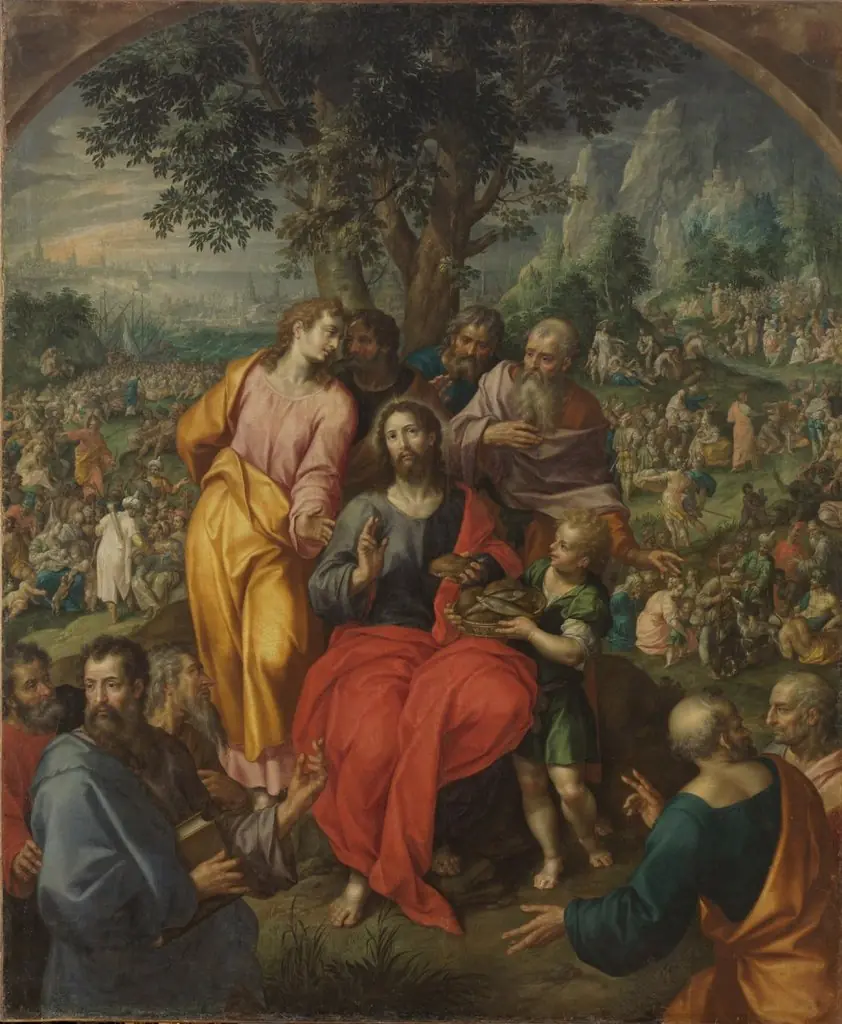
Feeding the Five Thousand (July) was created in 1585 by the artist Marten van Valckenborch. Executed in oil paint on canvas, the work measures 86 cm in height and 123 cm in width. It is currently held in the collection of the Kunsthistorisches Museum, where it remains part of the institution's holdings of religious art depicting the feeding of the multitude.
Context
Marten van Valckenborch painted Feeding the Five Thousand in 1585, an oil on canvas work now housed in the Kunsthistorisches Museum in Vienna. The painting depicts a biblical miracle of Christ feeding a multitude and belongs to the religious genre within the broader context of late Renaissance art. Scholarly attention to this piece remains limited, though its formal qualities and iconography have been noted in studies of Counter-Reformation visual culture, situating it within the artist’s documented oeuvre and the devotional practices of the period.
Overview
Marten van Valckenborch’s Feeding the Five Thousand (July), executed in oil in 1593, presents a biblical scene set within an expansive, verdant landscape. The composition balances a crowd of figures in vivid garments against a backdrop of trees and water, creating a harmonious visual field that draws the eye from the foreground activity to the distant horizon.
Technique & Style
Rendered in a late‑Renaissance Mannerist idiom, the work employs a rich palette of reds, yellows, blues, and dominant greens to model space and atmosphere. Precise brushwork delineates individual figures, while broader strokes suggest foliage and water, achieving depth through layered color modulation and subtle tonal shifts.
Artist & collection
Artist
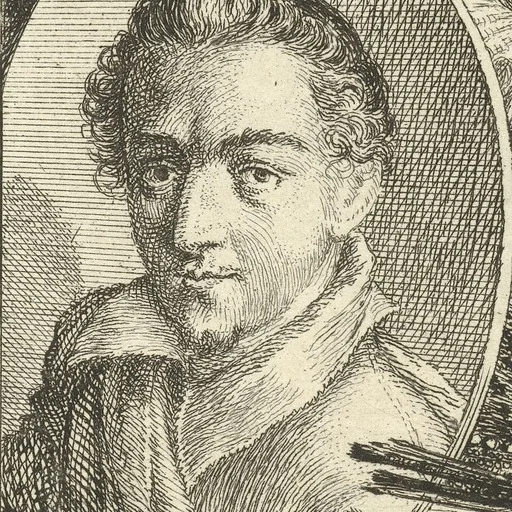
Marten van Valckenborch or Marten van Valckenborch the Elder (1535 in Leuven – 1612 in Frankfurt), was a Flemish Renaissance painter, mainly known for his landscapes and city scapes.

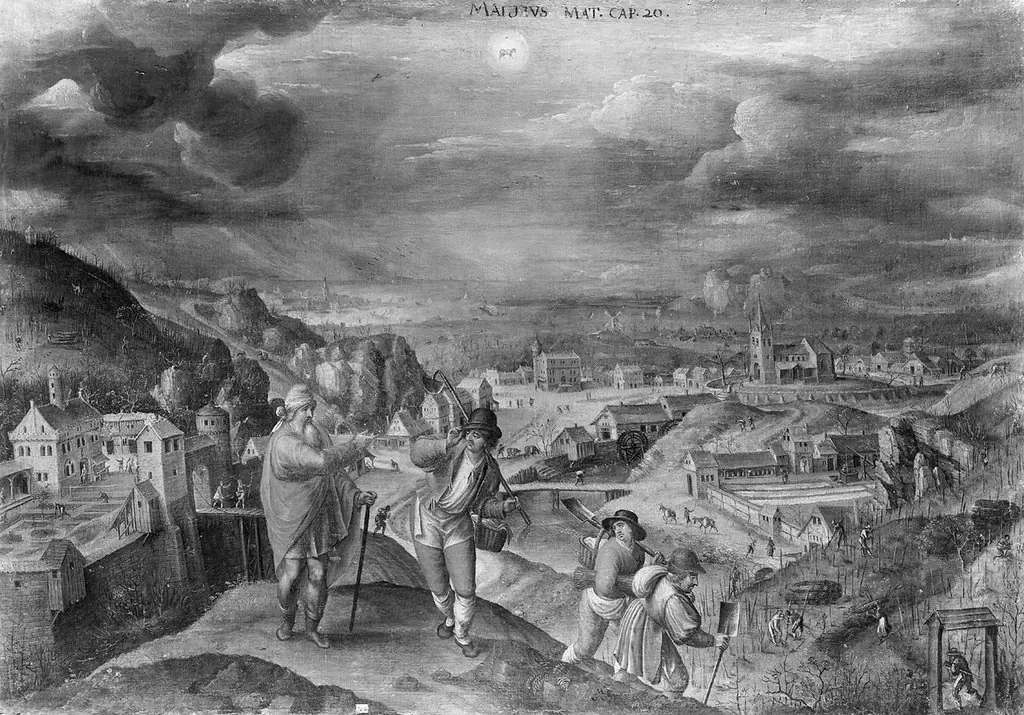 Parable of the Workers in the Vineyard (March)
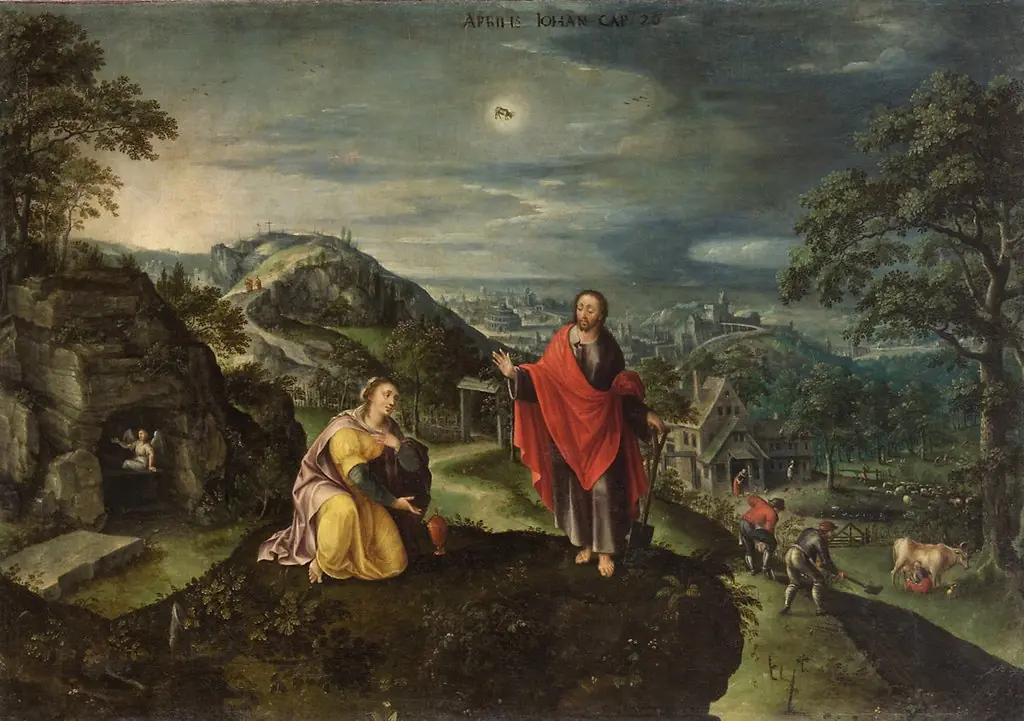 Noli me tangere (April)
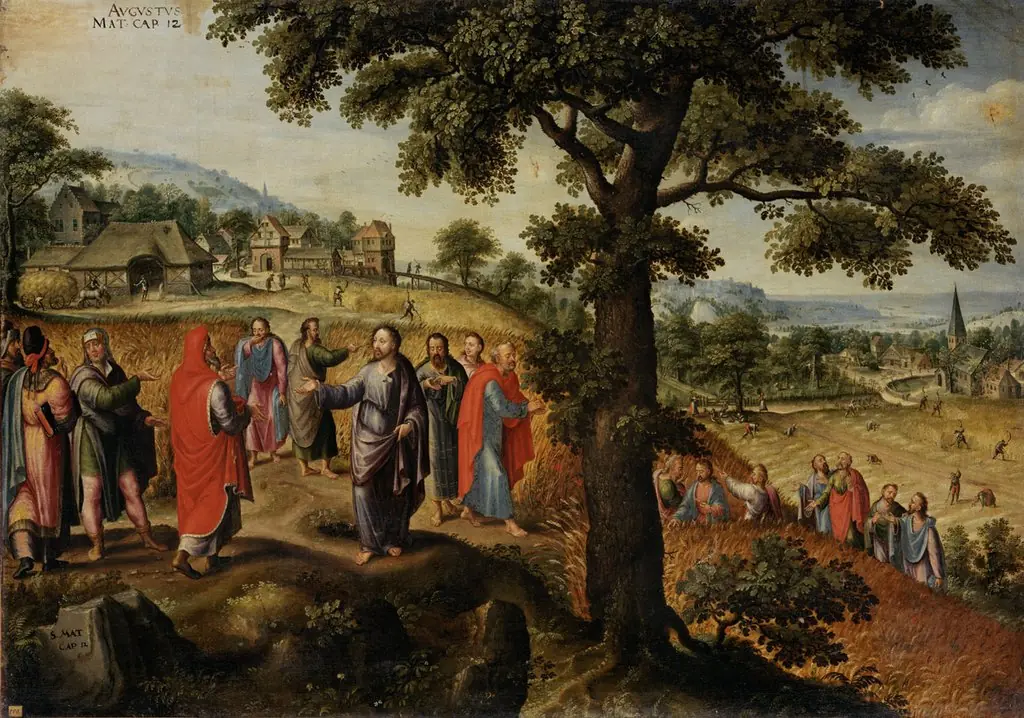 Christ defends the plucking of the ears of grain on the Sabbath (August)
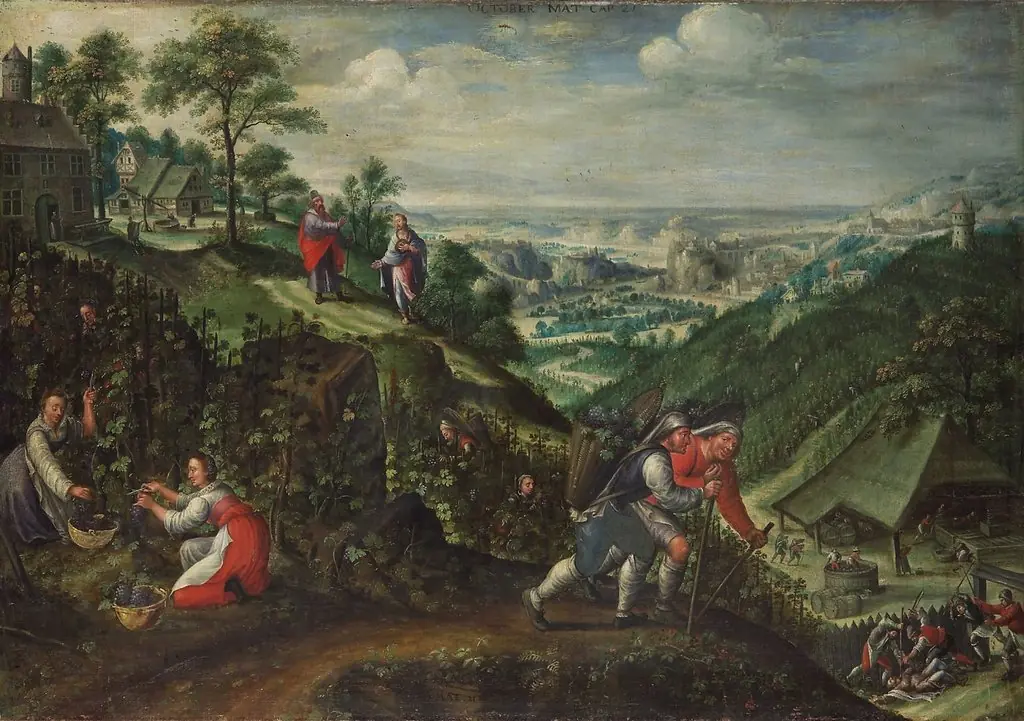 Gleichnis von den bösen Winzern (Oktober)
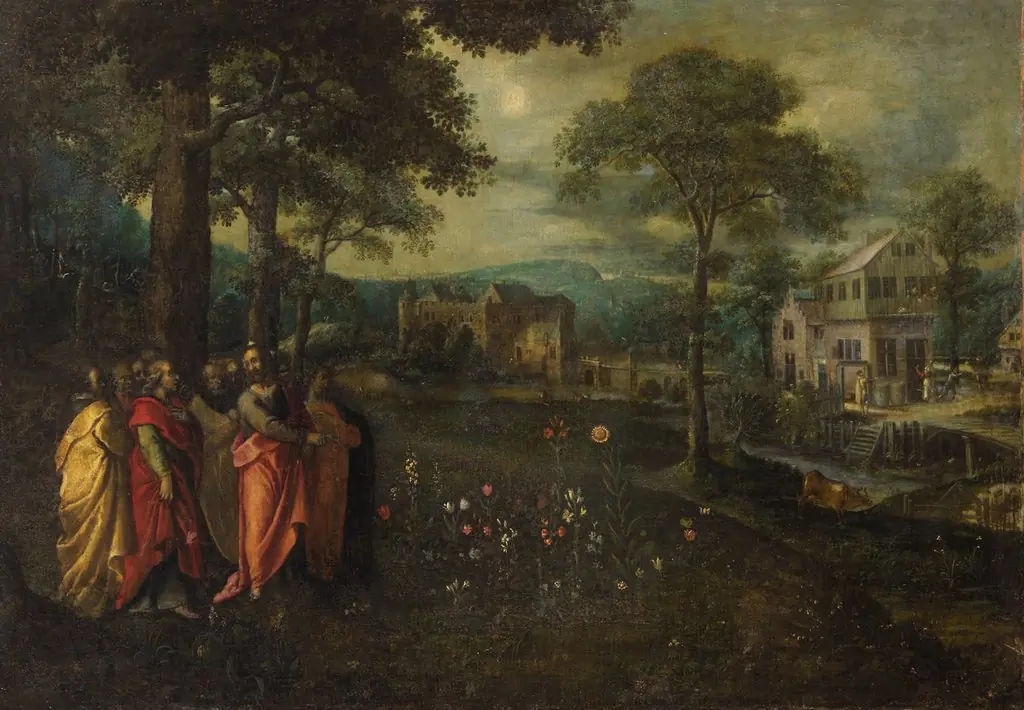 Parable of the lily of the field (May)
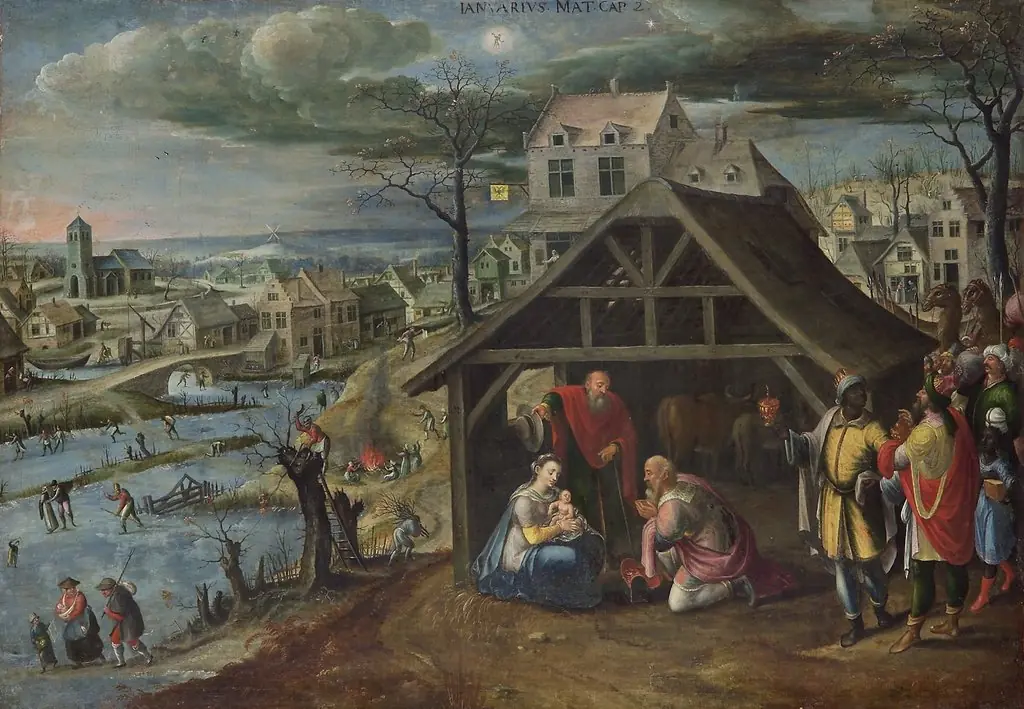 Adoration of the Magi (January)
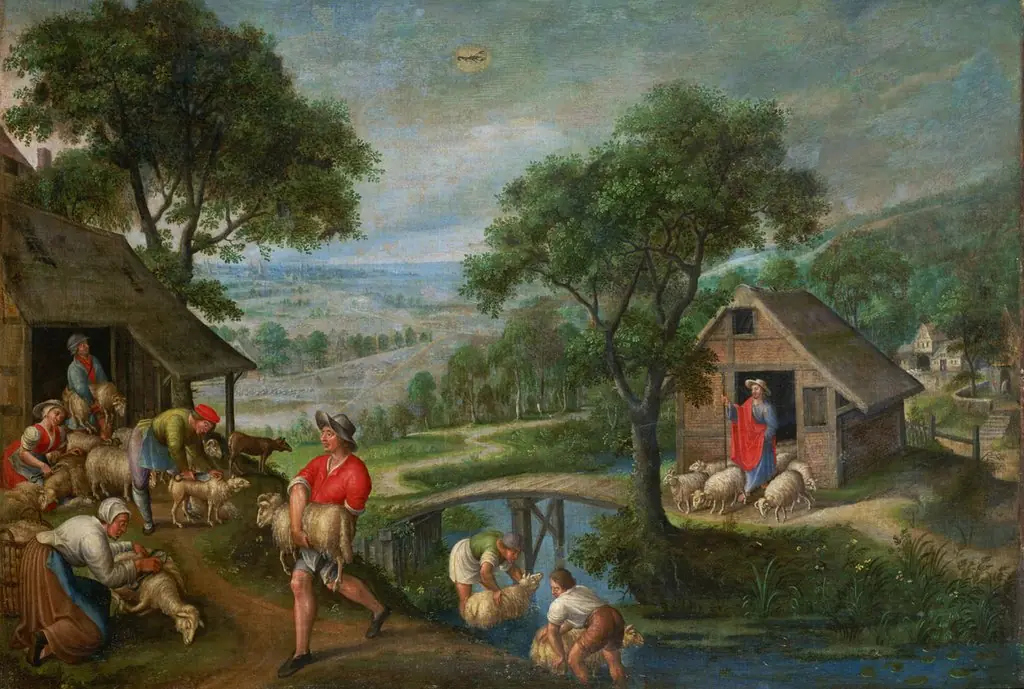 Parable of Christ as the Good Shepherd (June)
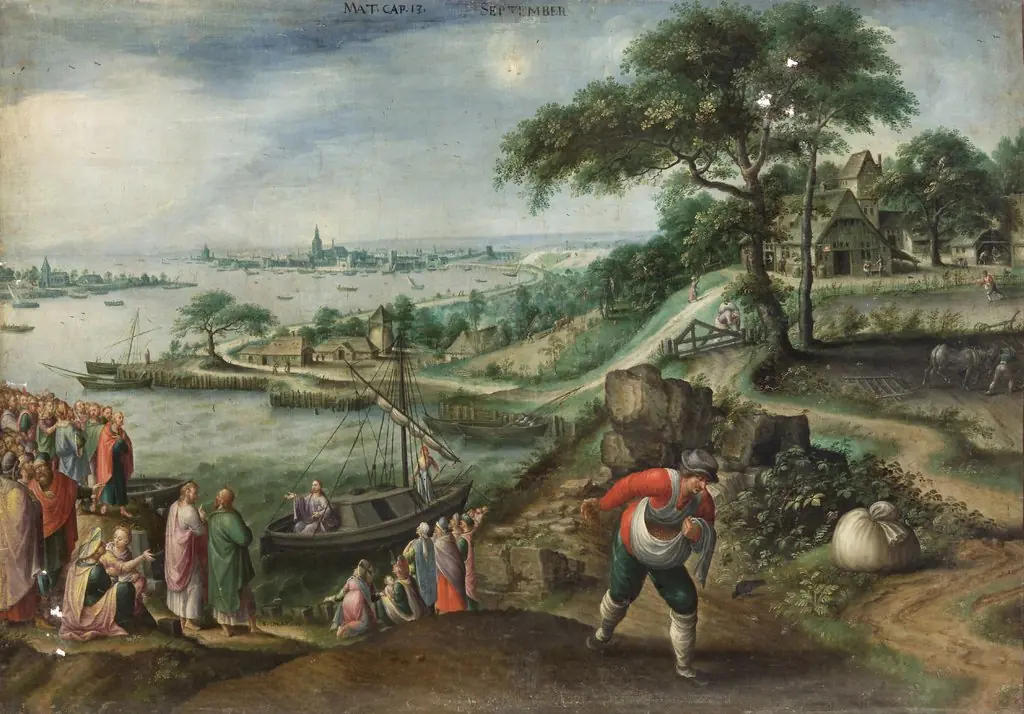 Parable of the sower (September)