Artwork
Agony in the Garden
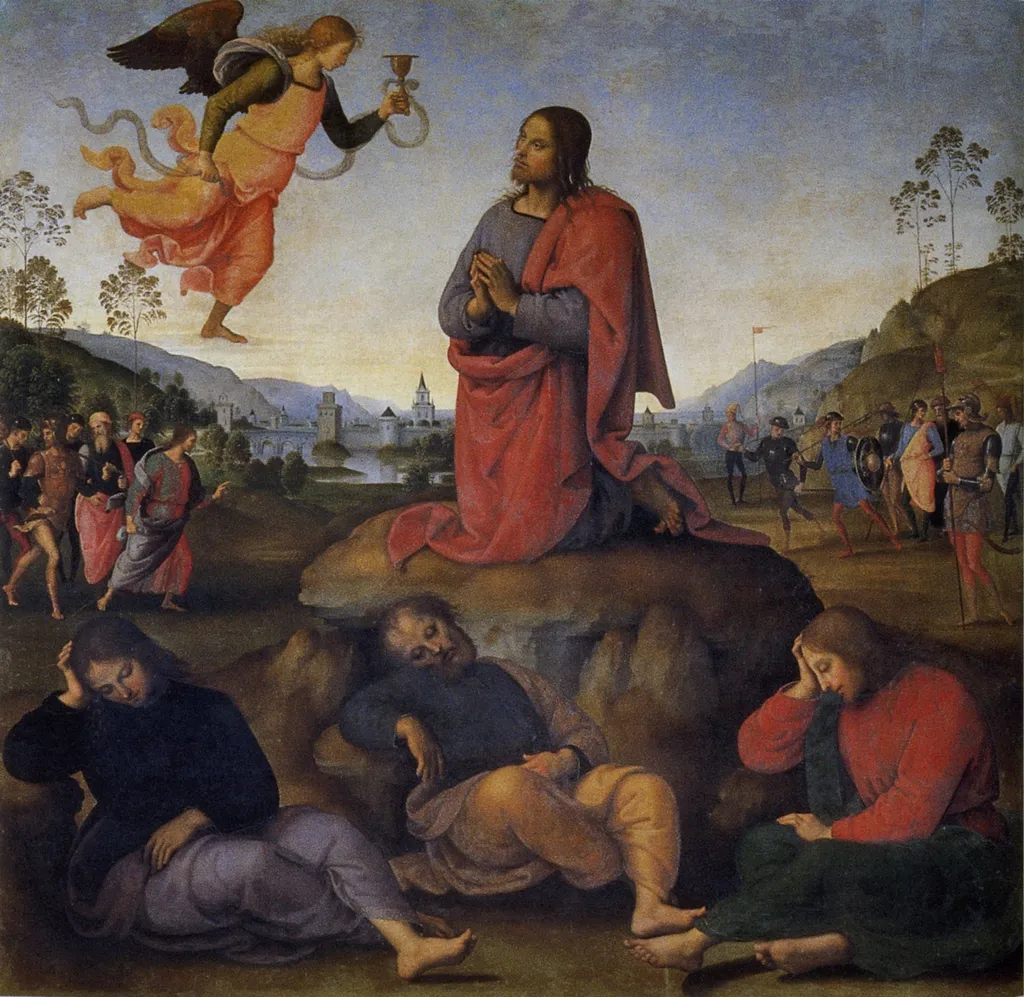
Agony in the Garden is an oil painting by the High Renaissance artist Pietro Perugino. It dates from 1492 and is held in the collection of the Uffizi Gallery.
About this work
Overview
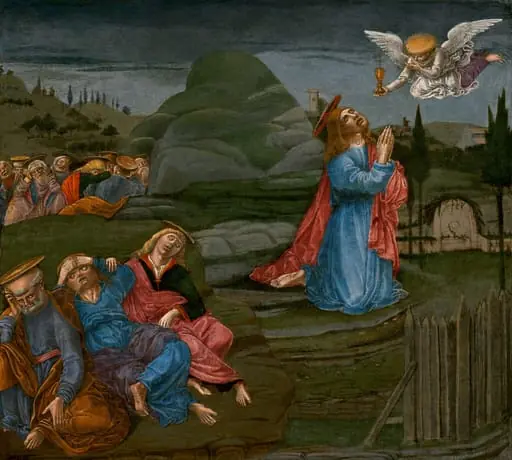
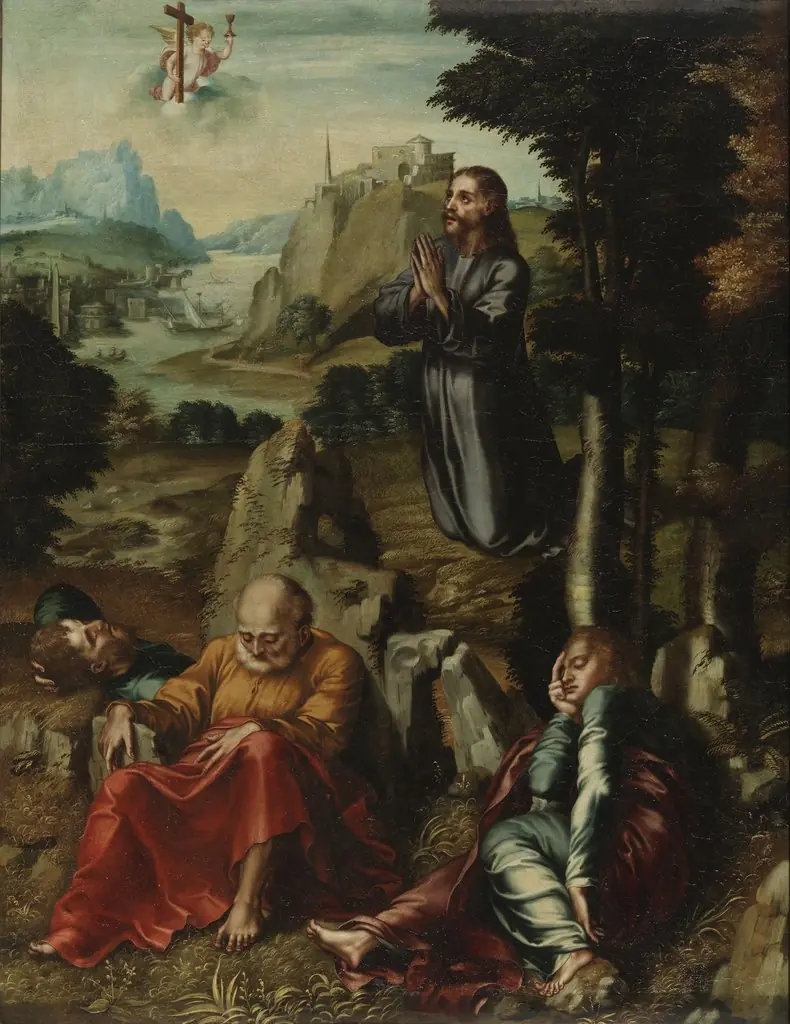
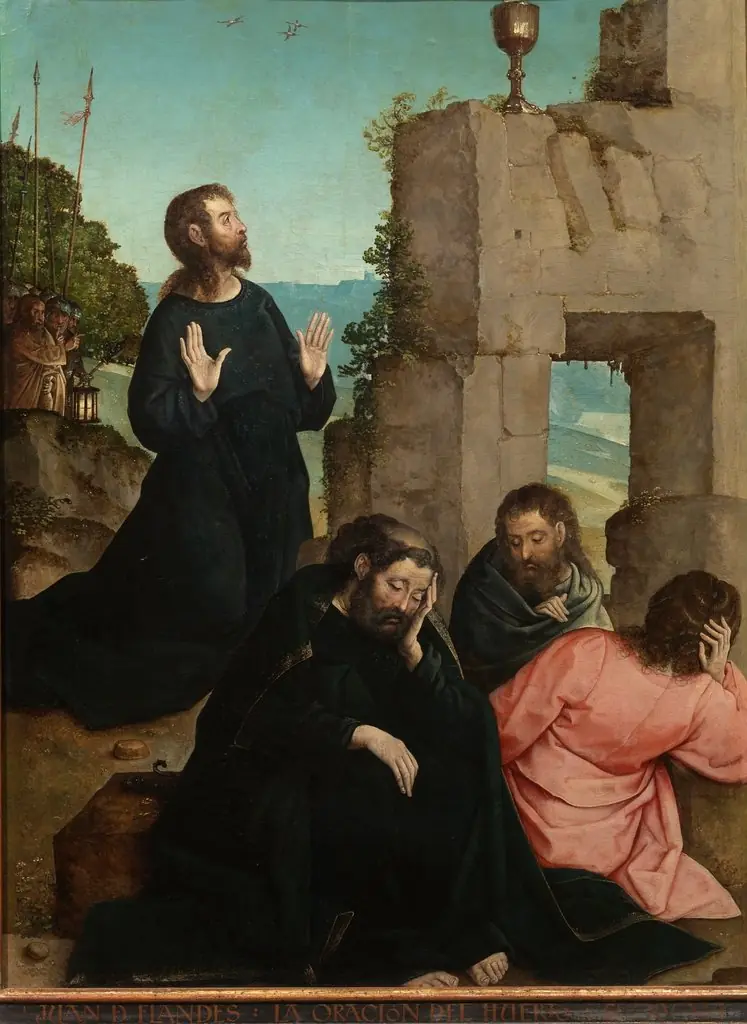
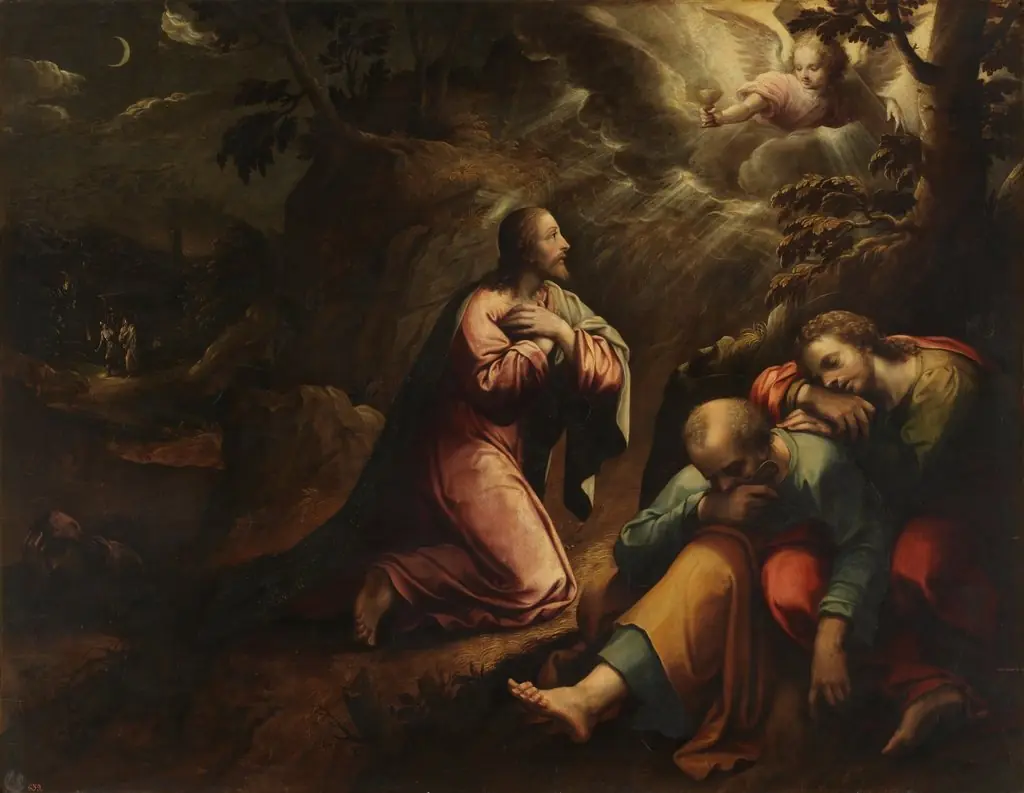
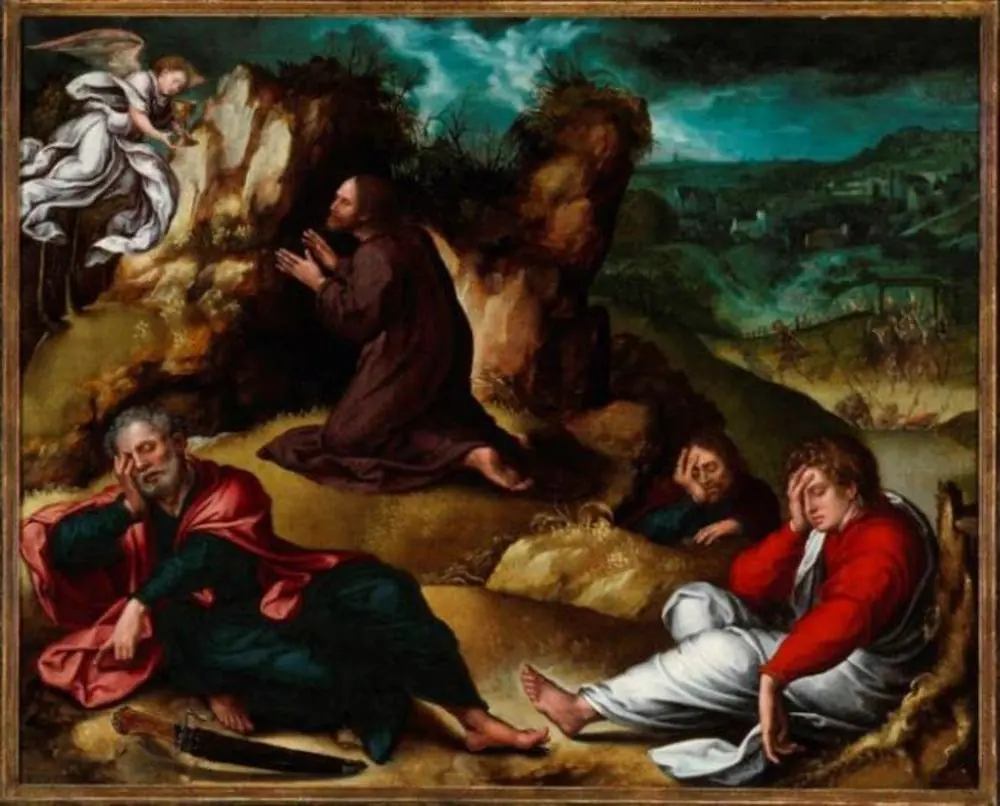
In the immediate foreground, the three apostles, Peter, James, and John, lie asleep on the ground, their slumber contrasting with Christ's spiritual alertness.
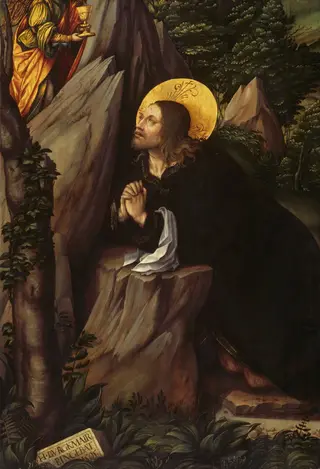
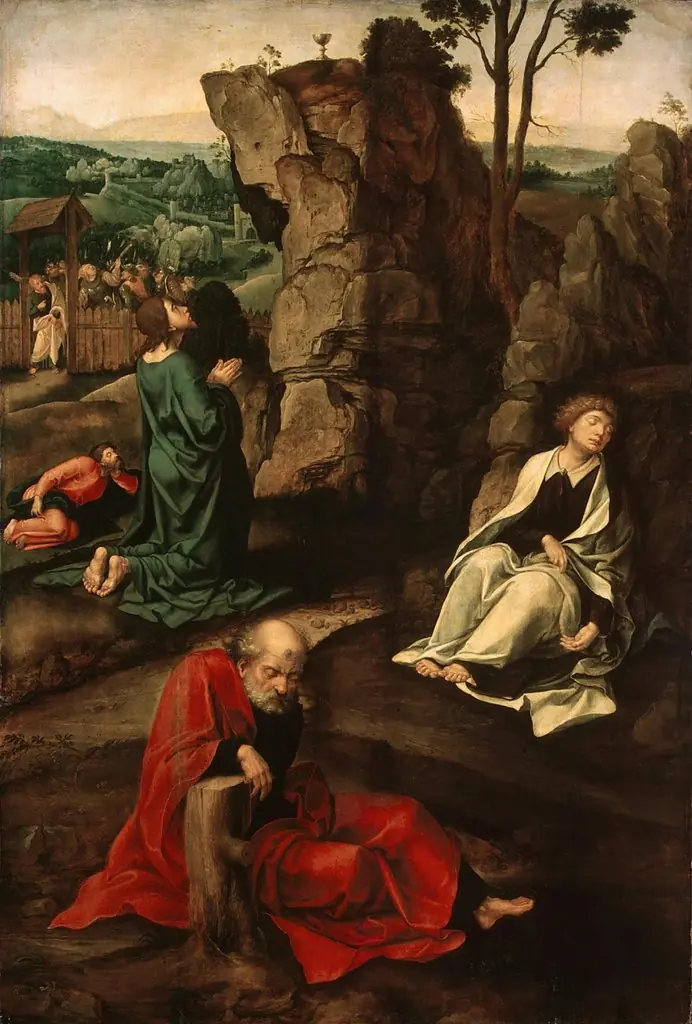
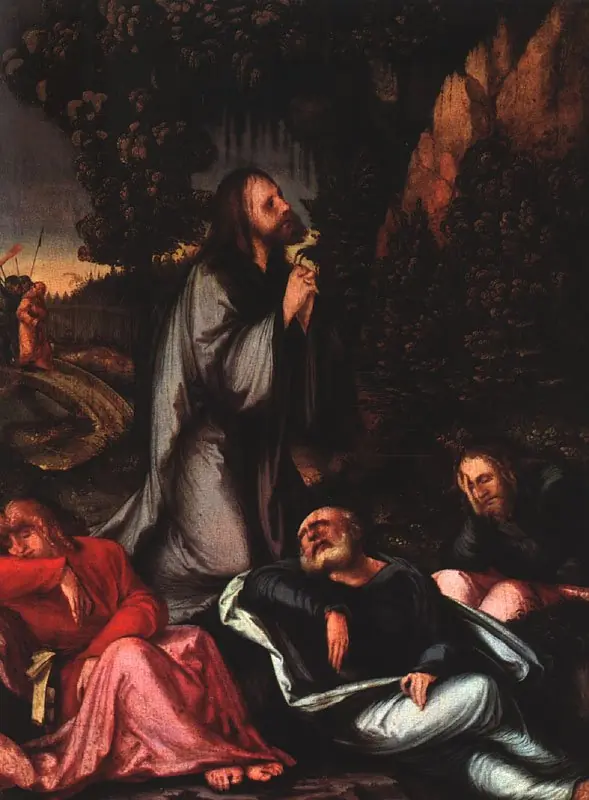
Pietro Perugino's 'Agony in the Garden,' executed in 1492, is a quintessential example of High Renaissance religious painting characterized by its balanced composition and serene atmosphere. The work depicts the biblical moment from the Gospel of Matthew where Jesus prays in the Garden of Gethsemane before his arrest. Christ is positioned centrally, kneeling on a rocky outcrop with hands clasped in prayer, wearing a red robe over a blue tunic and encircled by a golden halo.
Directly above him, an angel descends holding a chalice, symbolizing the impending Passion. In the immediate foreground, the three apostles, Peter, James, and John, lie asleep on the ground, their slumber contrasting with Christ's spiritual alertness. The background features a meticulously rendered landscape with soft, atmospheric perspective, typical of Perugino's style, which includes rolling hills, distant trees, and a clear sky that enhances the painting's tranquil mood.
Created during the artist's mature period, this work demonstrates his mastery of spatial organization and his ability to convey deep religious emotion through calm, idealized figures. The painting reflects the Umbrian school's influence on the development of Renaissance art, bridging the gap between the early Renaissance and the High Renaissance through its harmonious structure and clear narrative focus.
Subject & Meaning
The scene shows Christ kneeling on a rock, hands clasped in prayer, his head encircled by a halo. An angel hovers above, bearing a cup, while three companions lie asleep at his feet, evoking the Gospel account of the night before the crucifixion.
Technique & Style
Perugino employs a soft palette of blues, greens, and warm earth tones to model depth. The distant hills and water are rendered in cool hues that recede, whereas the figures in the foreground are illuminated with richer reds and golds, creating a subtle atmospheric perspective.
History & Provenance
The painting entered the Uffizi’s holdings during the museum’s early acquisitions of Renaissance works, though precise documentation of its early ownership remains limited. It has been displayed in the gallery’s Florentine collection since the 18th century.
Context
Executed at a time when Perugino was establishing his reputation as a leading figure in the Umbrian school, the work reflects the period’s emphasis on serene devotional imagery and the harmonious integration of landscape and narrative.
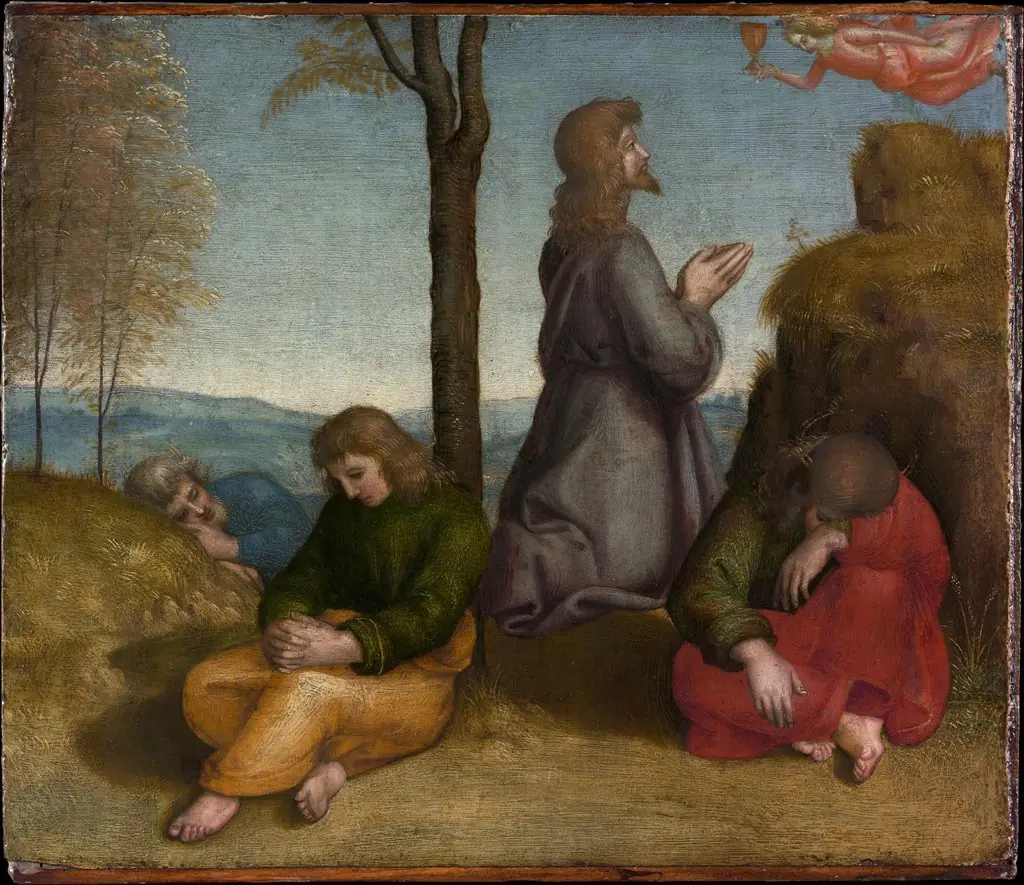
Own this work as a print
Artist & collection
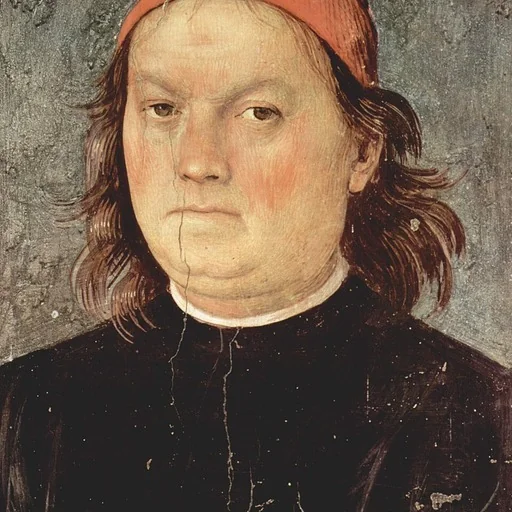
Artist
Pietro Perugino (US: PERR-ə-JEE-noh, -oo-; Italian:; born Pietro Vannucci or Pietro Vanucci; c.

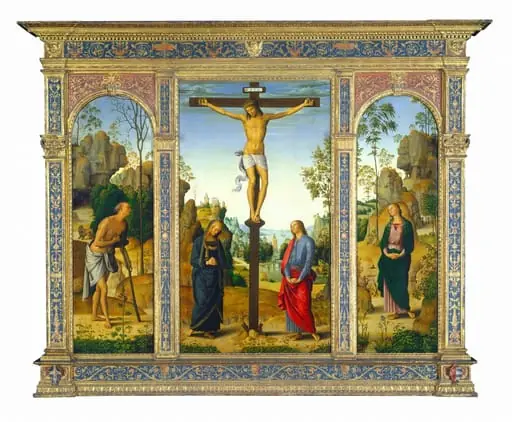 The Crucifixion with the Virgin, Saint John, Saint Jerome, and Saint Mary Magdalene
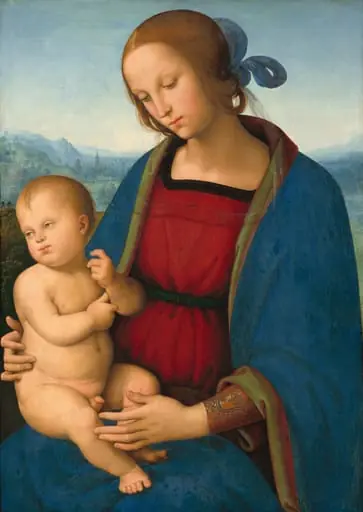 Madonna and Child
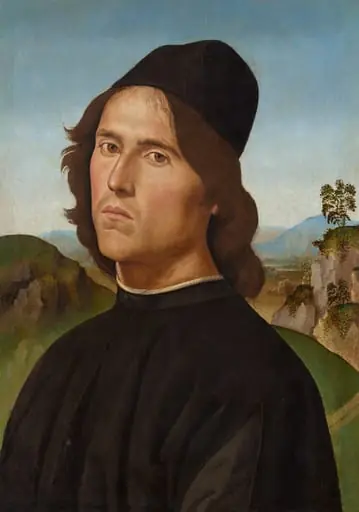 Portrait of Lorenzo di Credi
![The Crucifixion with the Virgin, Saint John, Saint Jerome, and Saint Mary Magdalene [right panel], by Pietro Perugino](https://artifactworldgallery.com/img/pietro-perugino--the-crucifixion-with-the-virgin-saint-john-saint-jerome-and--7d9a2b1f47b9fc9b-w320.webp) The Crucifixion with the Virgin, Saint John, Saint Jerome, and Saint Mary Magdalene [right panel]
The Crucifixion with the Virgin, Saint John, Saint Jerome, and Saint Mary Magdalene [right panel]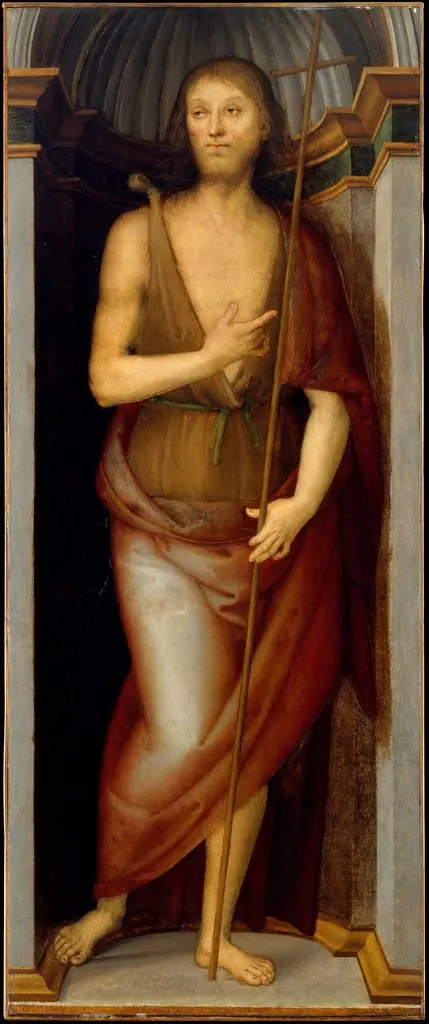 Saint John the Baptist; Saint Lucy
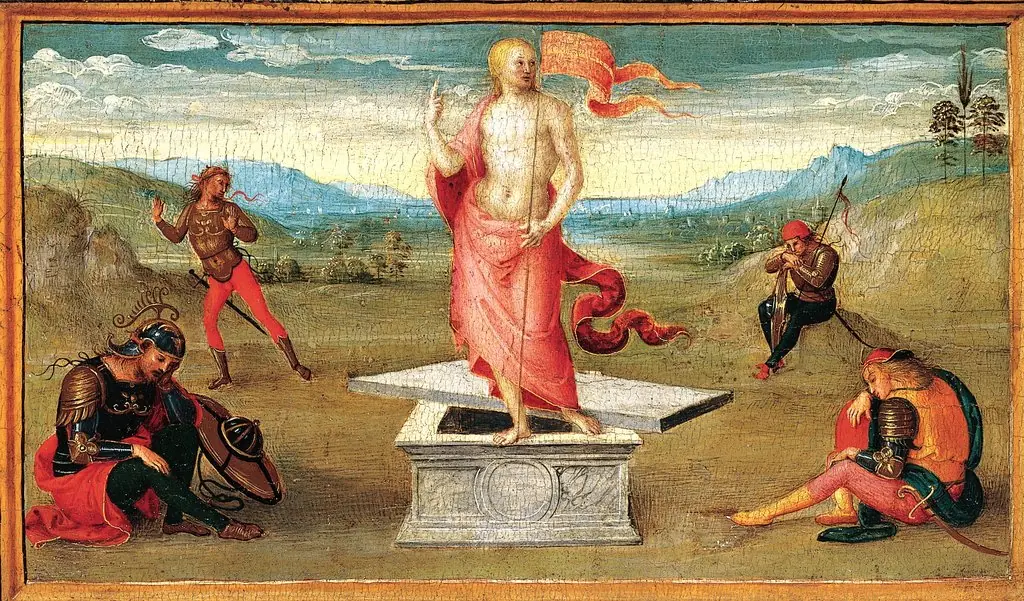 The Resurrection
![The Crucifixion with the Virgin, Saint John, Saint Jerome, and Saint Mary Magdalene [left panel], by Pietro Perugino](https://artifactworldgallery.com/img/pietro-perugino--the-crucifixion-with-the-virgin-saint-john-saint-jerome-and--1017dec17318baa5-w320.webp) The Crucifixion with the Virgin, Saint John, Saint Jerome, and Saint Mary Magdalene [left panel]
The Crucifixion with the Virgin, Saint John, Saint Jerome, and Saint Mary Magdalene [left panel]![The Crucifixion with the Virgin, Saint John, Saint Jerome, and Saint Mary Magdalene [middle panel], by Pietro Perugino](https://artifactworldgallery.com/img/pietro-perugino--the-crucifixion-with-the-virgin-saint-john-saint-jerome-and--a9b4c312771e3f71-w320.webp) The Crucifixion with the Virgin, Saint John, Saint Jerome, and Saint Mary Magdalene [middle panel]
The Crucifixion with the Virgin, Saint John, Saint Jerome, and Saint Mary Magdalene [middle panel]