Artwork
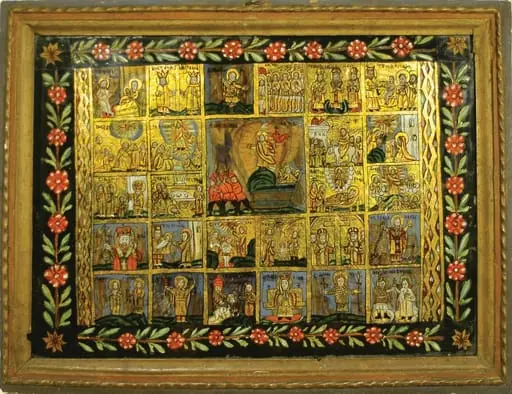
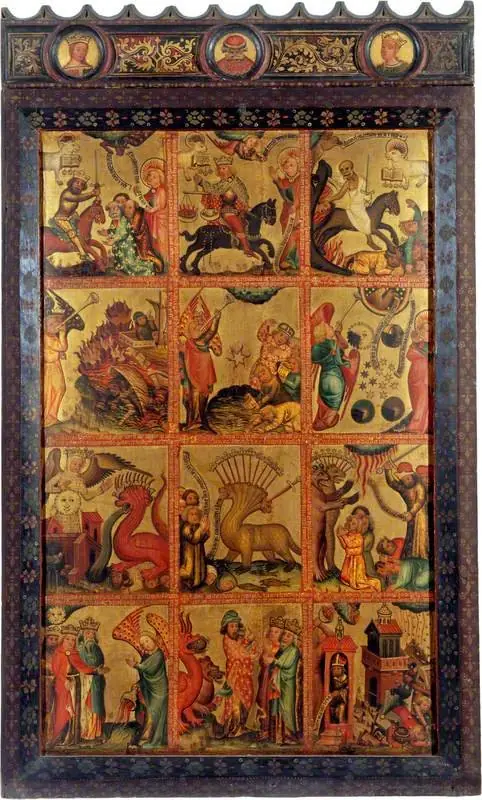
21 Scenes of the Apocalypse (triptych altarpiece, centre panel)
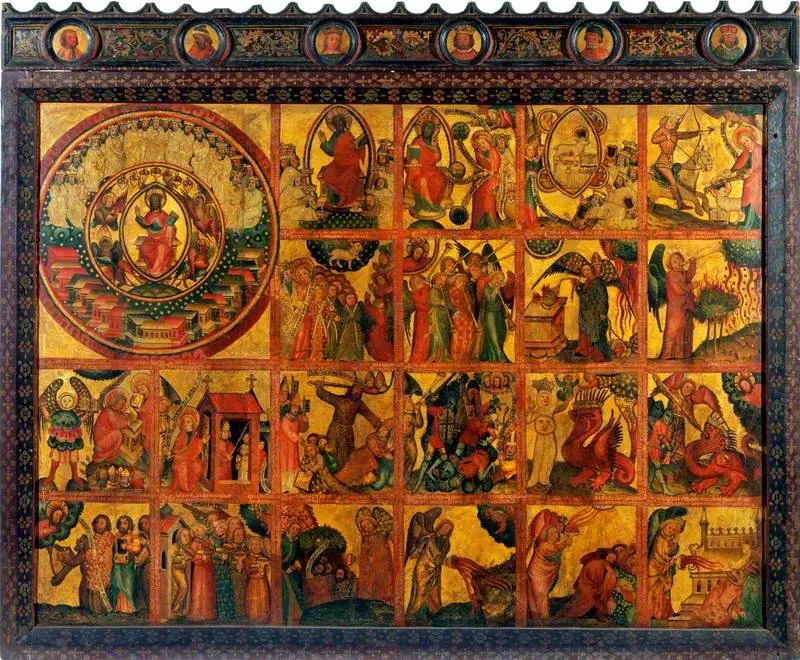
21 Scenes of the Apocalypse (triptych altarpiece, centre panel) is an unspecified painting by the Gothic painting artist Master Bertram. It dates from 1400 and is held in the collection of the Victoria and Albert Museum.
About this work
Overview
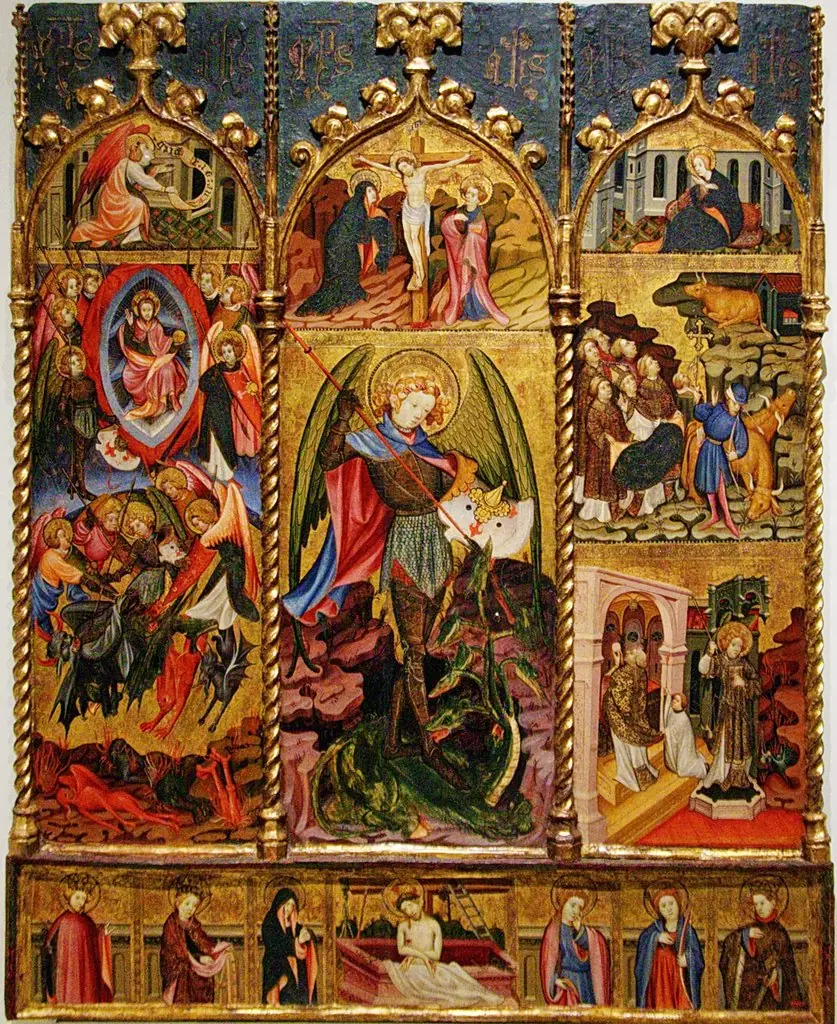
Created around 1400, the central panel of Master Bertram’s triptych presents twenty‑one episodes from the Book of Revelation. Executed in the International Gothic idiom that prevailed in northern Europe, the work arranges the narrative in a compact grid, each vignette framed by ornamental architectural elements.
Subject & Meaning
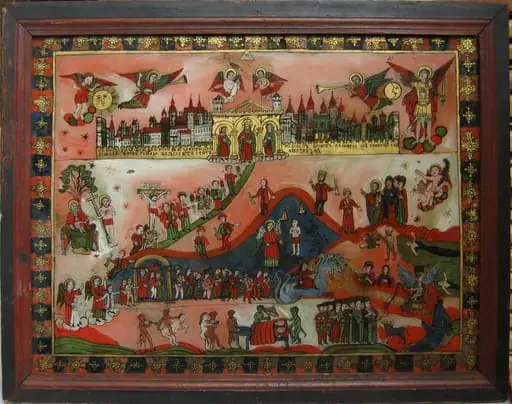
The panel visualises the apocalyptic visions of Revelation, depicting key events such as the opening of the seals, the emergence of the Four Horsemen, and the final judgment. By grouping the scenes together, the composition emphasizes the continuous unfolding of divine prophecy.
Technique & Style
Painted with a restrained palette of muted reds, yellows and greens, the work employs gold leaf for the background, lending a luminous, ceremonial quality. Figures are outlined with fine, flowing lines characteristic of the International Gothic, while the overlapping of scenes creates a sense of narrative density.
History & Provenance
The altarpiece was produced by the Hamburg‑based artist known as Master Bertram or the Master of Minden, a prolific creator of religious imagery in the late fourteenth and early fifteenth centuries. The central panel now belongs to the collection of the Victoria and Albert Museum in London.
Artist & collection
Artist
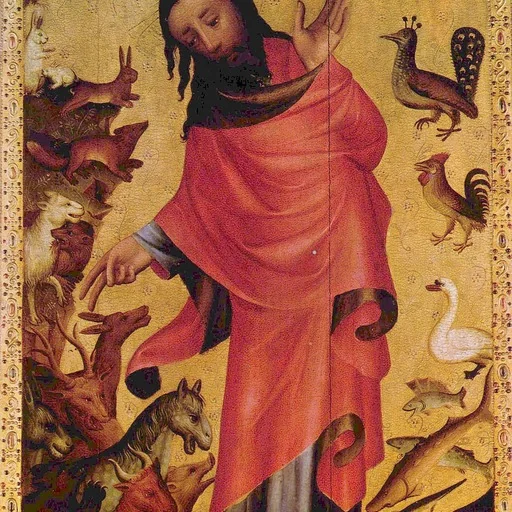
Master Bertram (c.1345–c.1415), also known as Meister Bertram and Master of Minden, was a German International Gothic painter primarily of religious art.

- 12 Scenes of the Apocalypse (triptych altarpiece, right wing, inner)
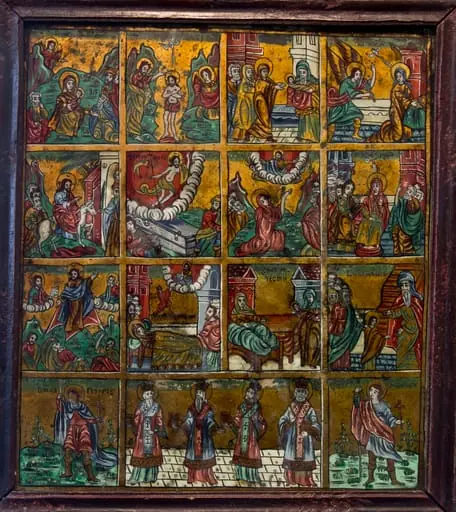
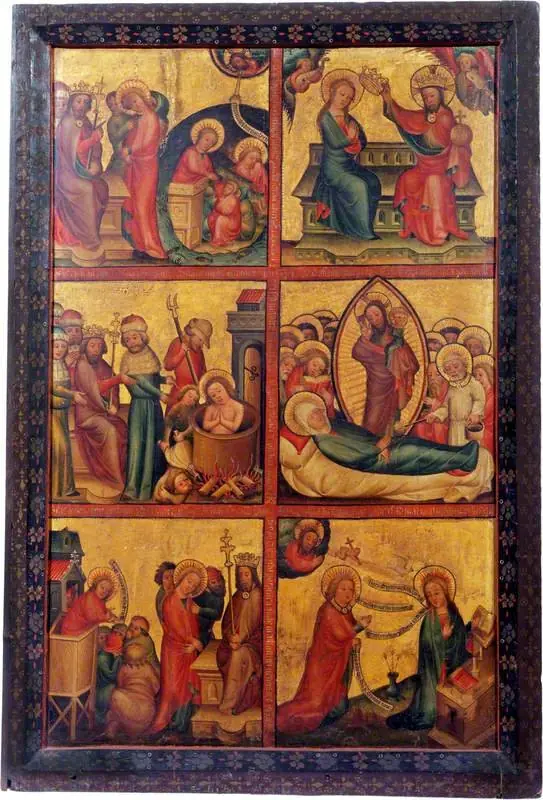 3 Scenes from the Life of Saint John the Evangelist; 3 Scenes from the Life of the Virgin (triptych altarpiece, left wing, outer)
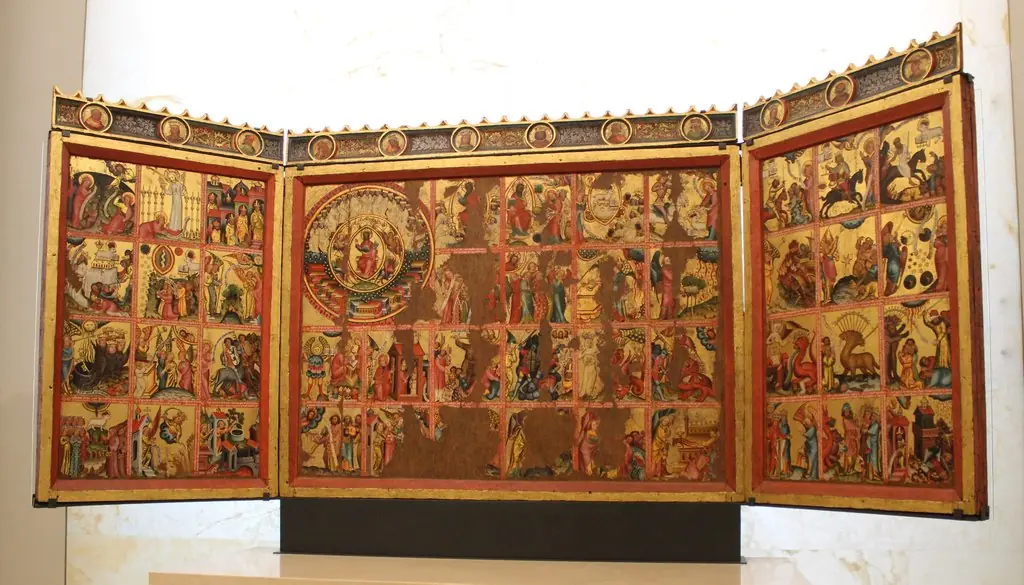 Apocalypse triptych
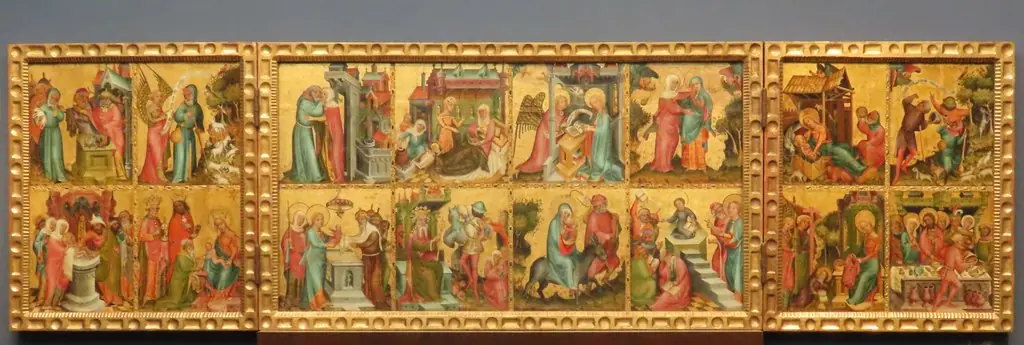 The Buxtehude Altar
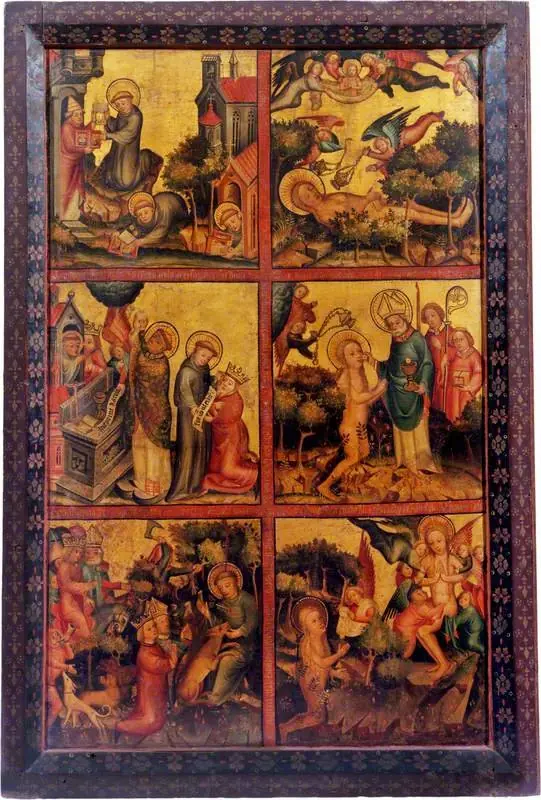 3 Scenes from the Life of St Giles; 3 Scenes from the Life of Saint Mary Magdalen (triptych altarpiece, right wing, outer)