Artwork
12 Scenes of the Apocalypse (triptych altarpiece, right wing, inner)
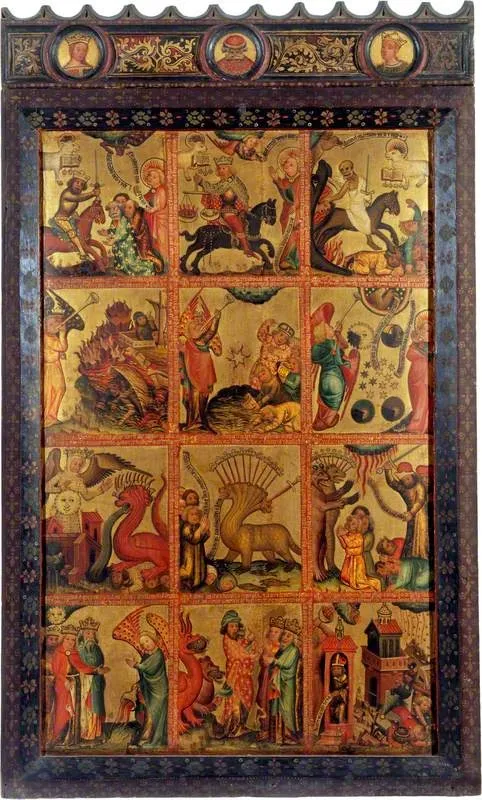
12 Scenes of the Apocalypse (triptych altarpiece, right wing, inner) is an unspecified painting by the Gothic painting artist Master Bertram. It dates from 1400 and is held in the collection of the Victoria and Albert Museum.
About this work
Overview
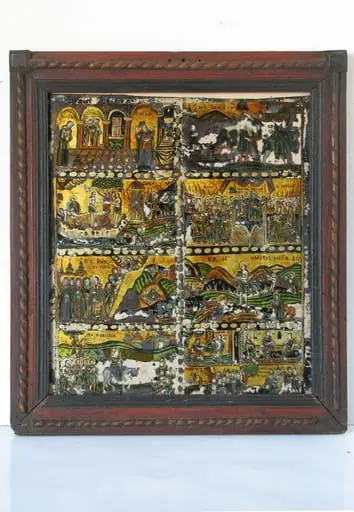
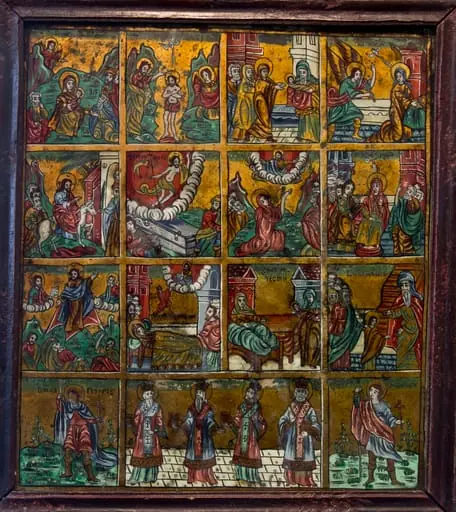
It forms part of a larger devotional structure, divided into twelve distinct narrative compartments.
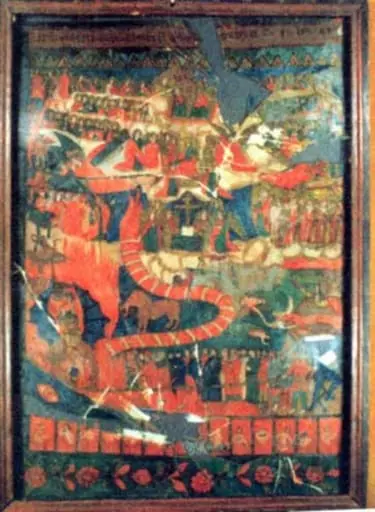
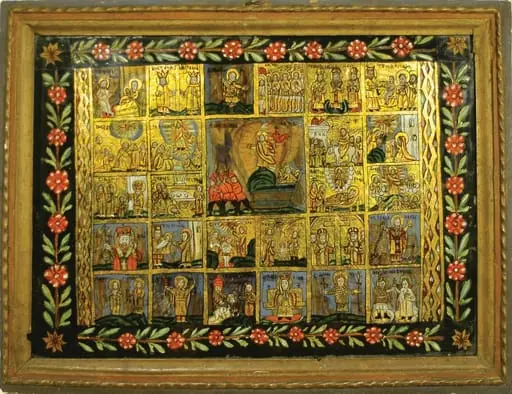
The right wing of the triptych altarpiece known as 12 Scenes of the Apocalypse is a panel painting attributed to Master Bertram, a German artist active around 1400. It forms part of a larger devotional structure, divided into twelve distinct narrative compartments. Each panel illustrates a moment from the Book of Revelation, arranged within a framework of Gothic arches and tracery that unifies the composition while guiding the viewer’s eye across the sequence.
Subject & Meaning
The twelve panels depict escalating visions of divine judgment: celestial beings, monstrous creatures, and symbolic figures from the Apocalypse. A dragon, a seven-headed beast, and a woman clothed in the sun appear as key motifs, drawn from biblical prophecy. The scenes convey a theological narrative of cosmic upheaval and redemption, intended to inspire contemplation of sin, divine wrath, and the ultimate triumph of good over evil in late medieval Christian belief.
Technique & Style
Executed in tempera and gold leaf on panel, the work reflects the International Gothic style with its refined linearity, rich coloration, and ornamental detail. Figures are elongated and expressive, set against intricate architectural backdrops that frame each scene. The use of gold highlights and vivid pigments enhances the otherworldly tone, while the dense composition and layered imagery reflect a devotion to visual storytelling over naturalistic space.
History & Provenance
Commissioned for a religious setting, likely a church or monastery in northern Germany, the altarpiece was dismantled in the 19th century. The right wing survived and entered a museum collection, while other panels remain dispersed or lost. Scholarly attribution to Master Bertram, a documented painter of the period, is supported by stylistic parallels with works linked to the Master of Minden, suggesting a regional workshop tradition.
Context
Created during a time of social unrest and religious anxiety in late medieval Europe, the altarpiece responded to widespread fears of divine punishment and the end times. Apocalyptic imagery was common in ecclesiastical art, serving both as moral instruction and spiritual warning. The work’s complexity reflects the theological sophistication of its patrons and the skilled artisans who produced devotional objects for liturgical use.
Legacy
Though Master Bertram’s oeuvre is limited and largely undocumented, this panel remains a significant example of early 15th-century German religious painting. Its survival offers insight into the visual language of apocalyptic devotion and the craftsmanship of regional workshops. It continues to inform scholarly understanding of how biblical narratives were rendered in tangible, immersive forms for medieval audiences.
Artist & collection
Artist
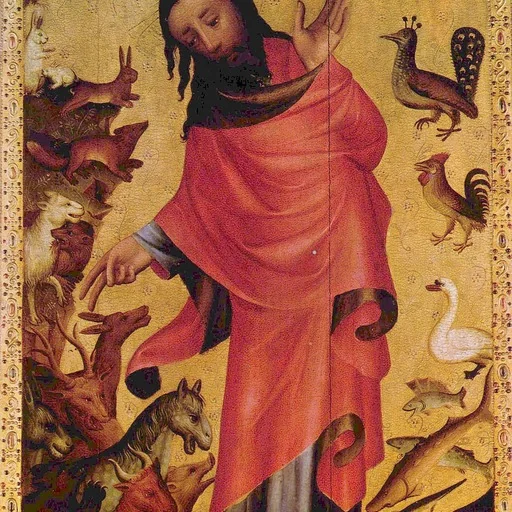
Master Bertram (c.1345–c.1415), also known as Meister Bertram and Master of Minden, was a German International Gothic painter primarily of religious art.

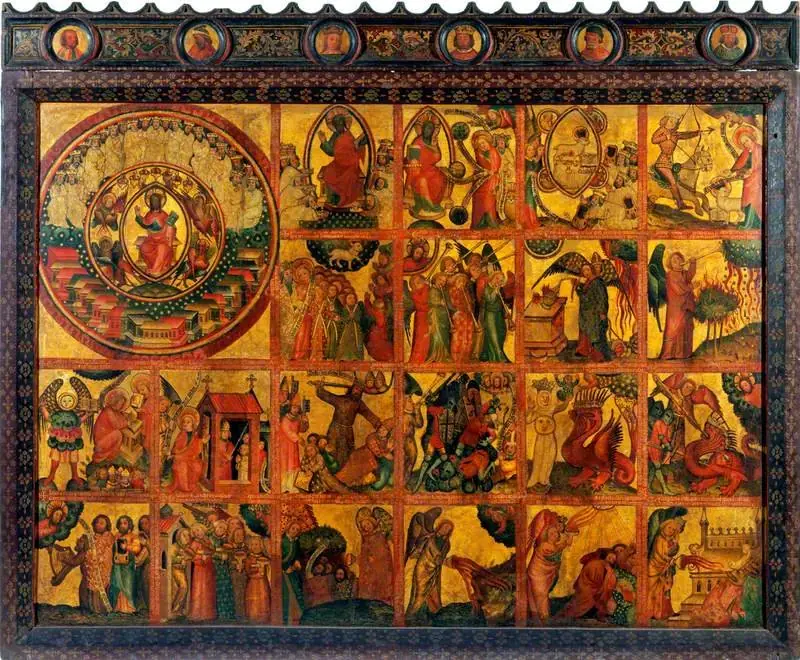
- 21 Scenes of the Apocalypse (triptych altarpiece, centre panel)
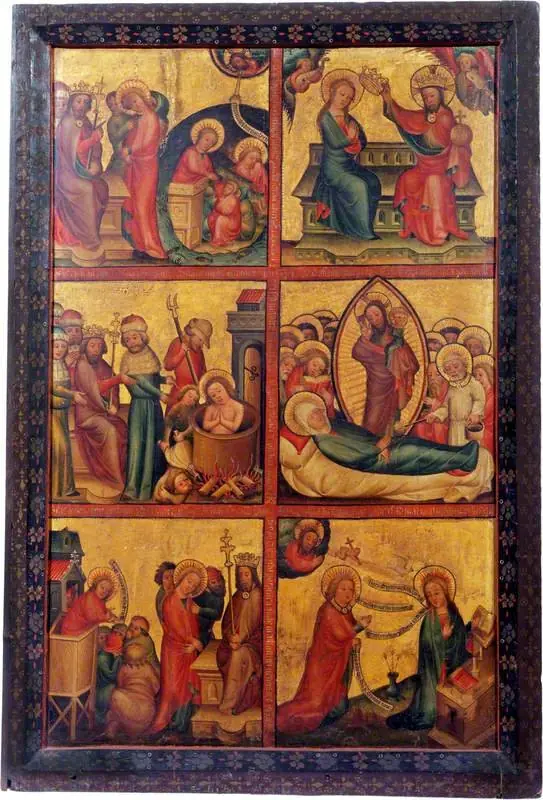 3 Scenes from the Life of Saint John the Evangelist; 3 Scenes from the Life of the Virgin (triptych altarpiece, left wing, outer)
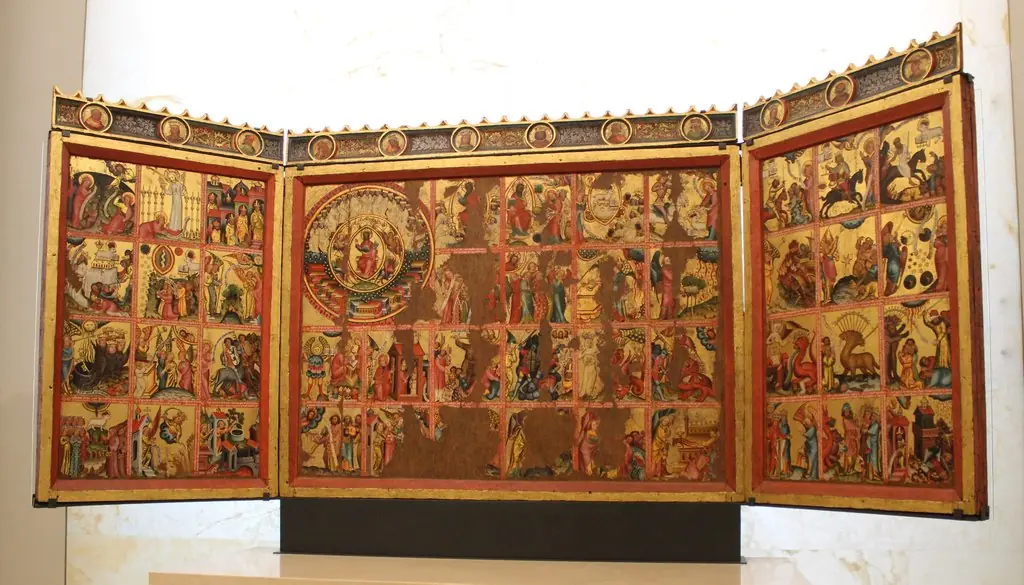 Apocalypse triptych
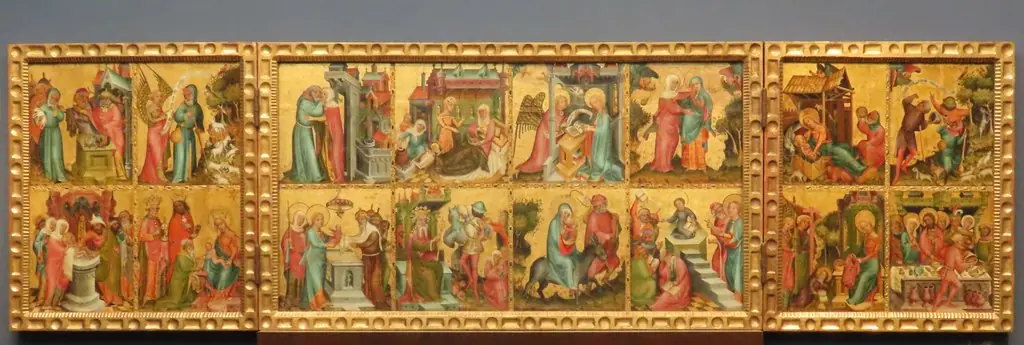 The Buxtehude Altar
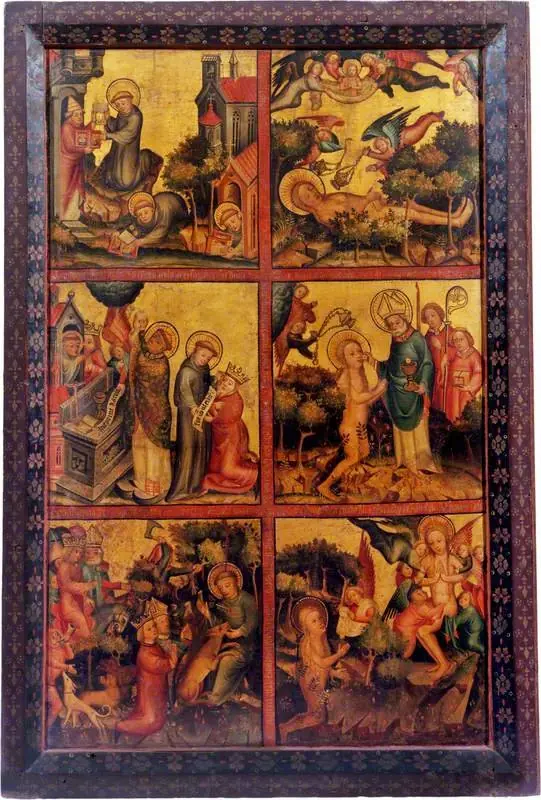 3 Scenes from the Life of St Giles; 3 Scenes from the Life of Saint Mary Magdalen (triptych altarpiece, right wing, outer)