Artwork
The Annunciation to Mary (Diptych)
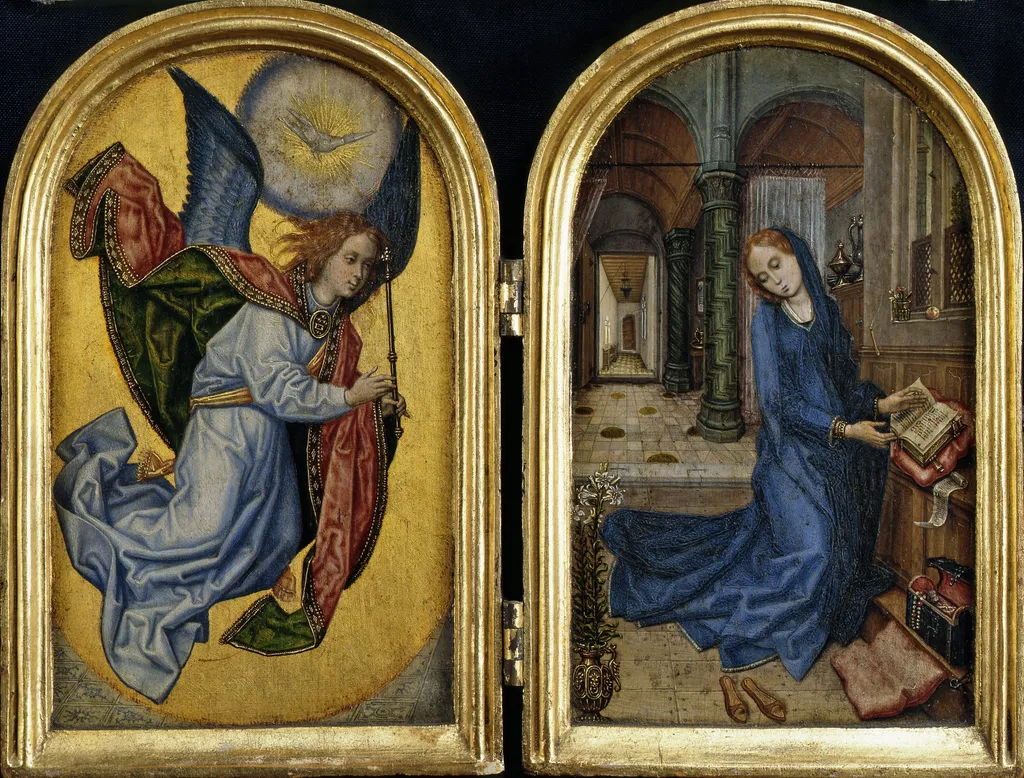
The Annunciation to Mary (Diptych) is an oil painting by the Northern Renaissance artist Master of 1499. It dates from 1500 and is held in the collection of the Gemäldegalerie Berlin. Created around 1500, this oil diptych presents a two‑panel narrative of the biblical Annunciation.
About this work
Overview
Dated to approximately 1500, the work consists of two arched panels hinged together, each measuring 15.
The Annunciation to Mary (Diptych) is a small devotional painting by the anonymous Master of 1499, an Early Netherlandish painter active around 1500 in Bruges and Ghent. Dated to approximately 1500, the work consists of two arched panels hinged together, each measuring 15.9 cm in height and 9.5 cm in width, executed in oil paint on oak panel. The diptych is held in the Gemäldegalerie Berlin and is significant as a rare reflection of a lost late work by Hugo van der Goes, the renowned Ghent painter whose workshop patterns and chromatic methods profoundly influenced the Master of 1499. The work exemplifies the intimate, miniature-like quality of Netherlandish devotional diptychs while preserving compositional ideas from one of the period's most important masters.
Subject & Meaning
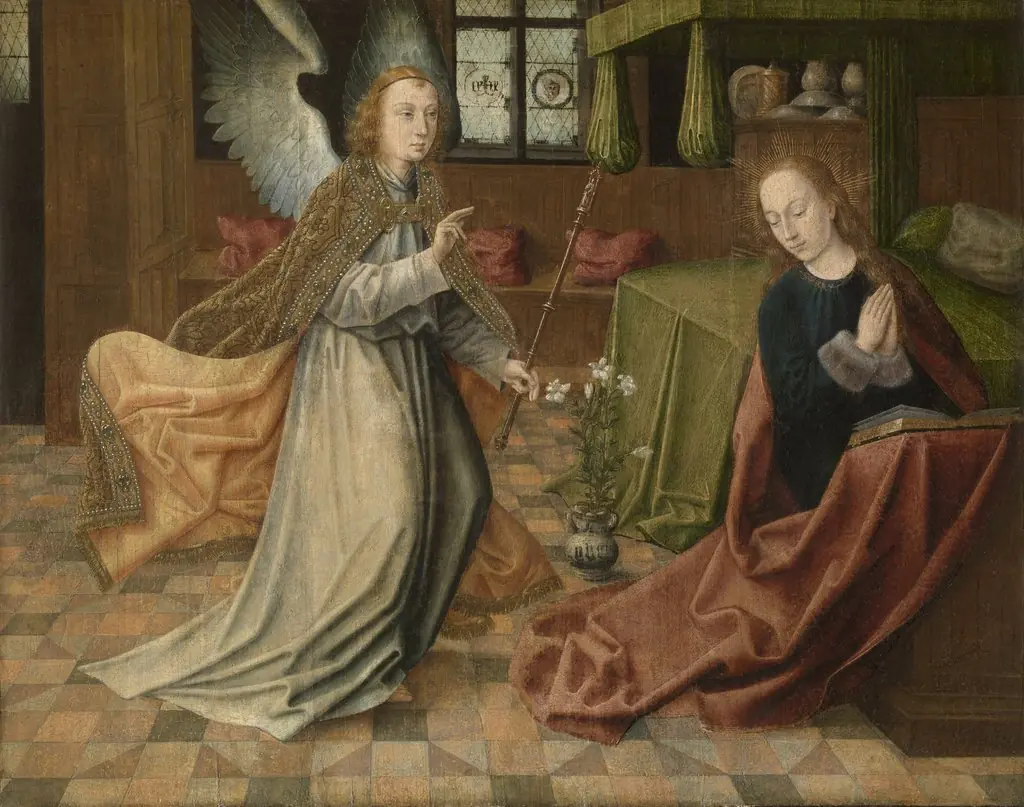
The diptych depicts the Annunciation, the moment when the Archangel Gabriel announces to the Virgin Mary that she will conceive and bear Christ, as narrated in the Gospel of Luke (1:26-38). The left panel shows Gabriel kneeling with hands resting on a staff, his blue, green, and red robes flowing against a flat gold background, with the Holy Spirit represented as a dove radiating golden lines above. The right panel presents Mary seated within a columned architectural interior, holding an open book, with a vase of white lilies in the foreground symbolizing her purity and a pair of wooden clogs resting on the tiled floor. The lilies, the dove, and the open book are standard Annunciation iconography, while the detailed interior with its receding corridor and patterned floor tiles creates a sacred space that merges the domestic and the divine. The even, modeling light and brilliant gold background emphasize the miraculous nature of the event.
Technique & Style
The diptych is painted in oil on oak panel with a smooth, enamel-like finish that suggests the refined technique of miniature painting. The surface displays fine, precise brushwork with decorative patterning in textiles and floor tiles. The palette juxtaposes brilliant gold with saturated blues, reds, and greens, while light falls evenly to model drapery and create architectural depth. The composition is treated entirely in the style of miniature painting, with careful attention to fictive details such as the tiled floor and columned arches. The handling of color reveals an intimate knowledge of Hugo van der Goes's working methods, particularly in the subtle visual and symbolic use of primary and secondary tones. The panels are set in gilded frames with visible central hinges, preserving their original function as a portable devotional object.
History & Provenance
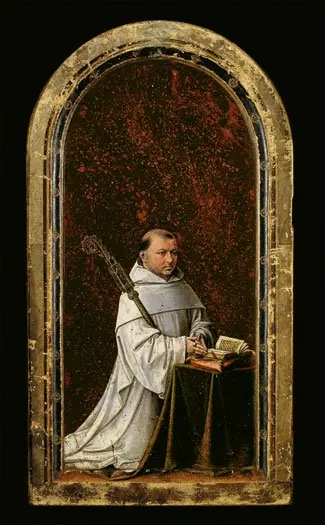
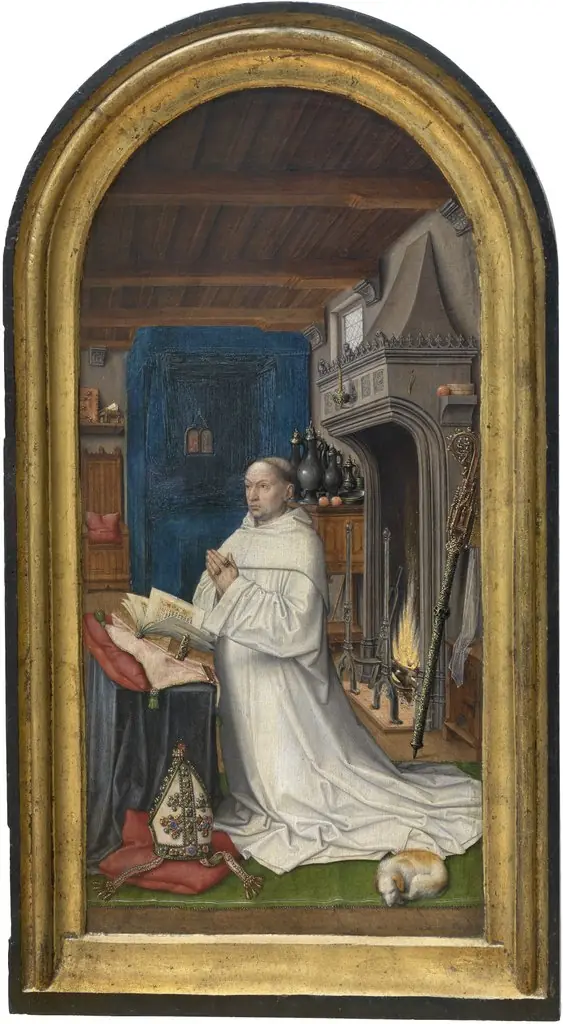
The Master of 1499 owes his conventional name to a diptych dated 1499 commissioned for Abbot Christian de Hondt in Antwerp. The Berlin Annunciation diptych, dated to approximately 1500, reflects a lost work by Hugo van der Goes from his later period, close in time to the Death of the Virgin Mary in Bruges of around 1480. The work entered the collection of the Gemäldegalerie Berlin, where it remains today. It was included in the exhibition Prayers and Portraits: Unfolding the Netherlandish Diptych, which explored the development and function of the diptych format in Netherlandish art. The specific provenance and accession details for the Berlin diptych are not recorded in the available sources.
Context
The Master ofzar of 1499 worked in the immediate circle of Hugo van der Goes, one of the most significant painters of late fifteenth-century Flanders. Scholarly attention has focused on the painter's access to workshop patterns from Hugo's studio, which allowed him to make free use of established compositions while also demonstrating personal receptivity to Hugo's chromatic innovations. The Berlin doty of the Berlin diptych is particularly important because it preserves a composition from a lost late work by Hugo van der Goes, known only through this reflection. Research has long recognized that the composition is not an independent invention but rather mirrors Hugo's later style. The figure of the Virgin in the Berlin diptych was executed with recourse to a preparatory drawing now in the British Museum, which was also utilized for other works by the Master of 1499. The artist's characteristic style includes low-set mouths, heavy-lidded eyes, and almost hourglass facial profiles that emphasize the forehead, features that can be traced across his attributed works.
Legacy
The Annunciation to Mary (Diptych) holds particular importance for art history as a surviving witness to a lost composition by Hugo van der Goes, one of the foundational figures of Early Netherlandish painting. Without this small diptych, knowledge of Hugo's late Annunciation composition would be entirely lost. The work also exemplifies the broader phenomenon of Netherlandish workshop practice, where patterns and preparatory drawings circulated among associates and followers, enabling the preservation and transformation of influential designs. The Master of 1499's role in transmitting Hugo's legacy has been confirmed by scholarly attribution, notably supported by Till-Holger Borchert. The diptych format itself, as explored in exhibitions such as Prayers and Portraits, represents a crucial chapter in the history of private devotion in Northern European art. The Berlin panels continue to serve as essential reference points for understanding the afterlife of Hugo van der Goes's inventions and the creative dynamics of the Ghent-Bruges artistic milieu around 1500.
Own this work as a print
Artist & collection
Artist
The Master of 1499, sometimes called the Bruges Master of 1499, was a Flemish painter active at the end of the fifteenth century, known from four paintings, all closely related to earlier works by others, and one dated "1499".

- The Annunciation
 The Annunciation
 The Annunciation
 Annunciation
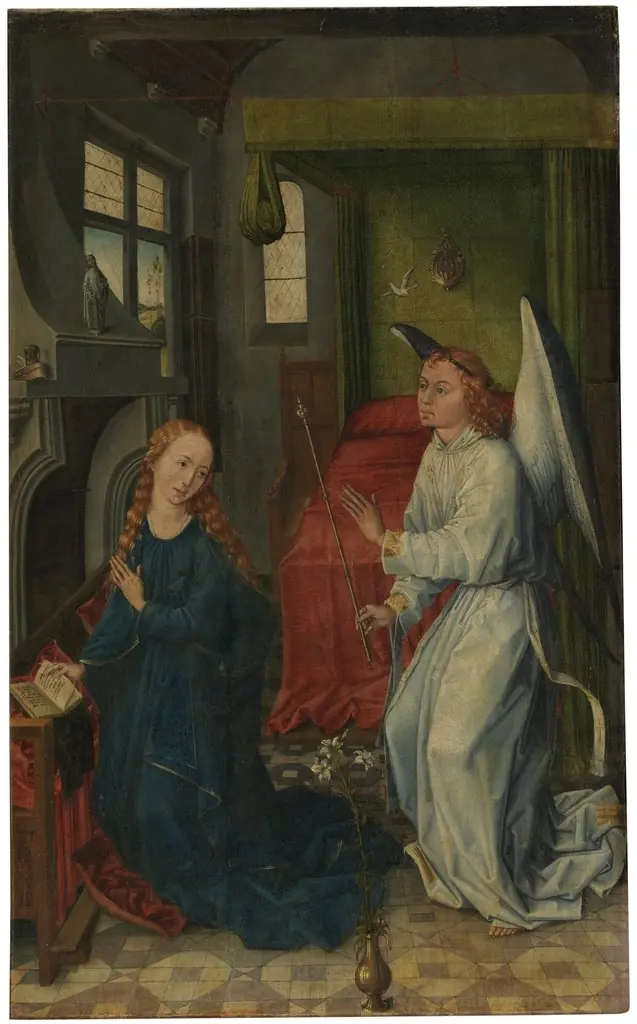 The Annunciation
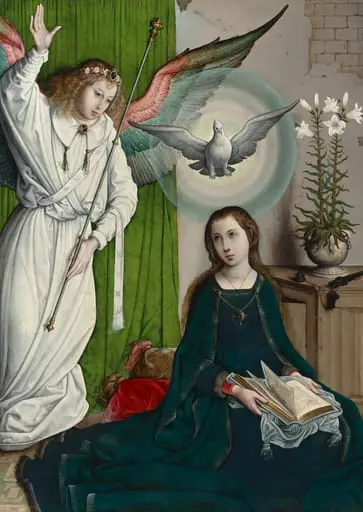 The Annunciation
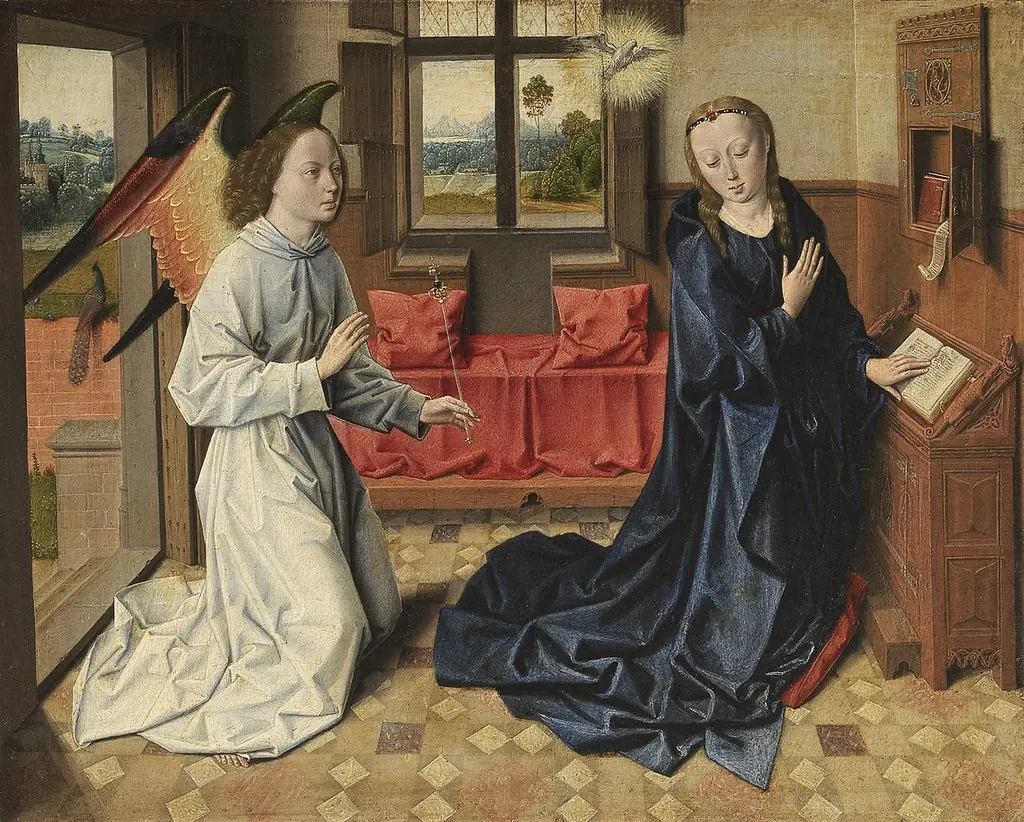 The Annunciation
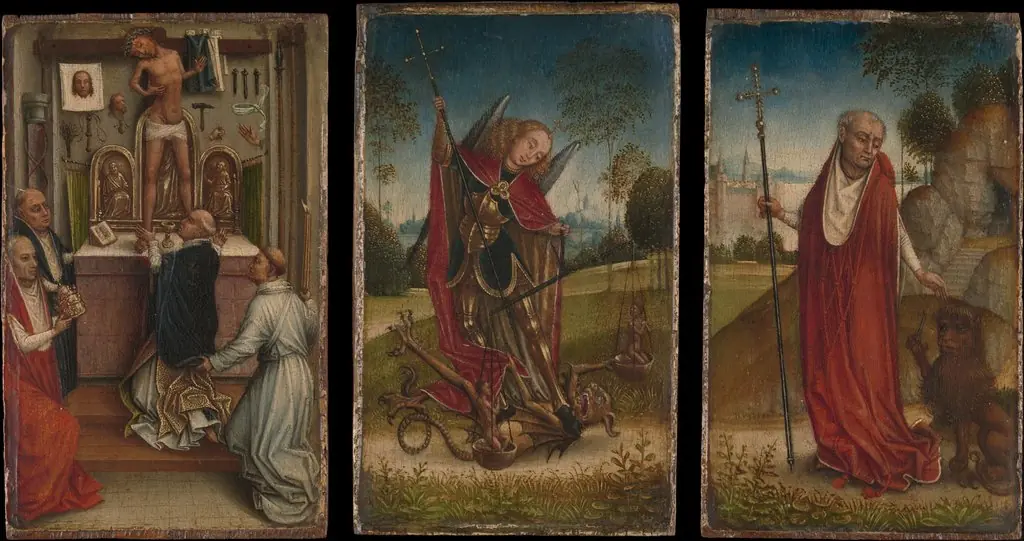 Saint Michael; The Mass of Saint Gregory; Saint Jerome
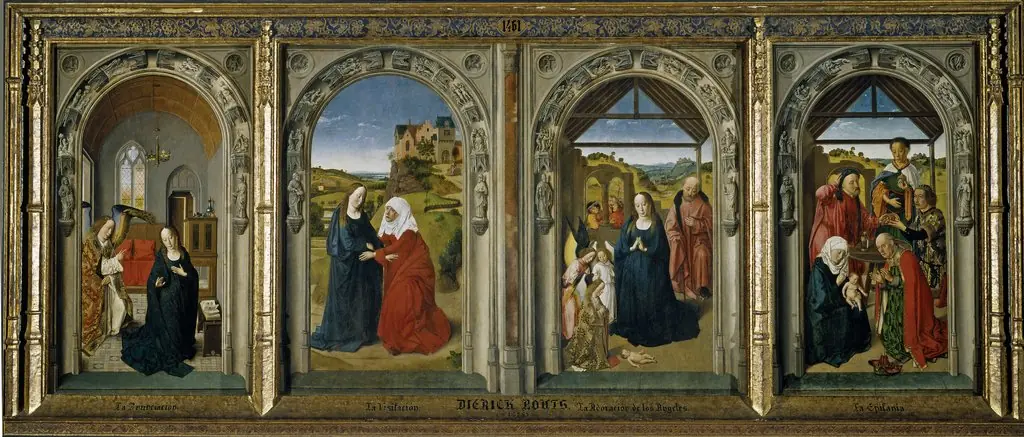 Triptych with Scenes from the Life of the Virgin
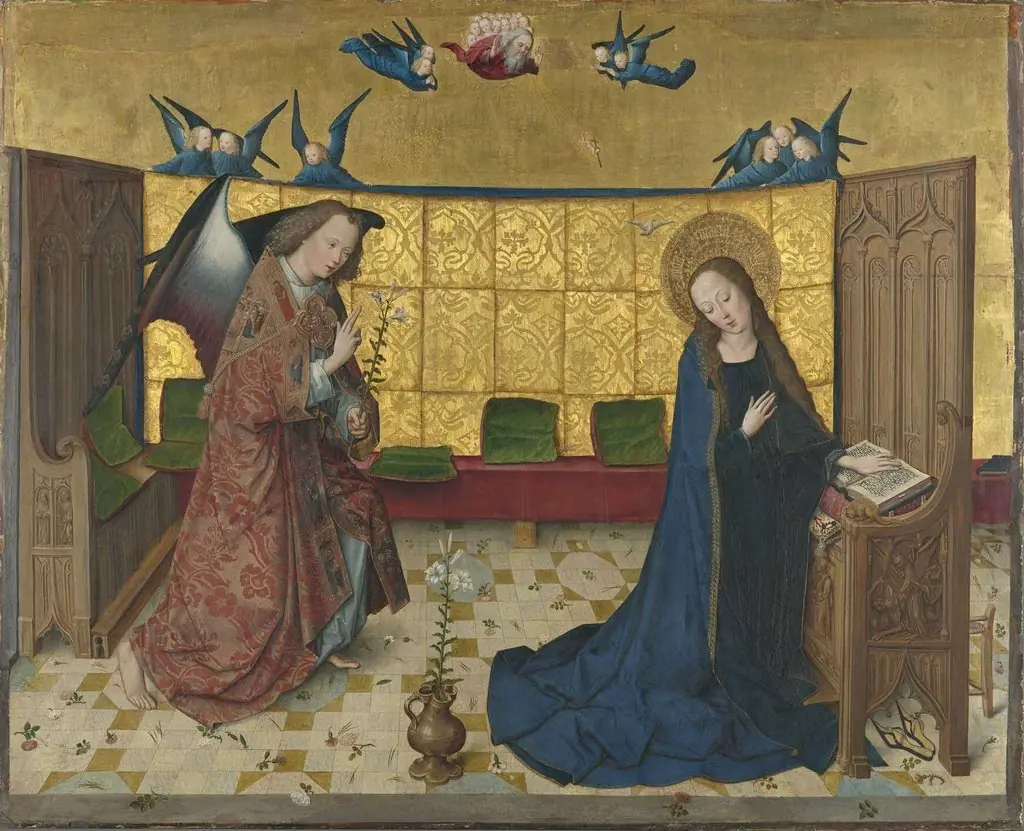 The Life of Mary: the Annunciation (lower half of the Crucifixion of Christ)
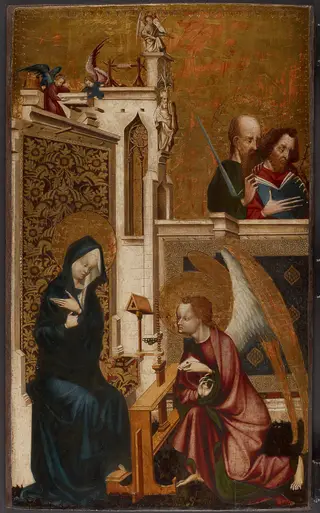 Verkündigung Mariae, Rückseite: Hl. Dorothea
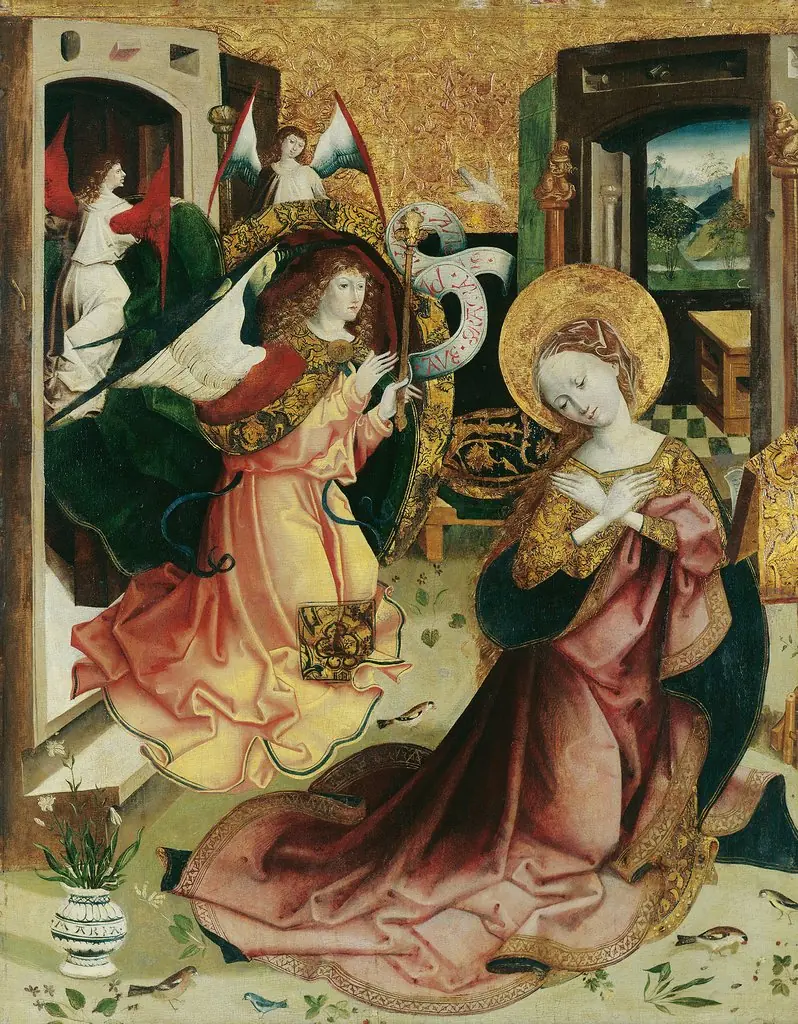 Verkündigung an Maria