Artwork
The Annunciation
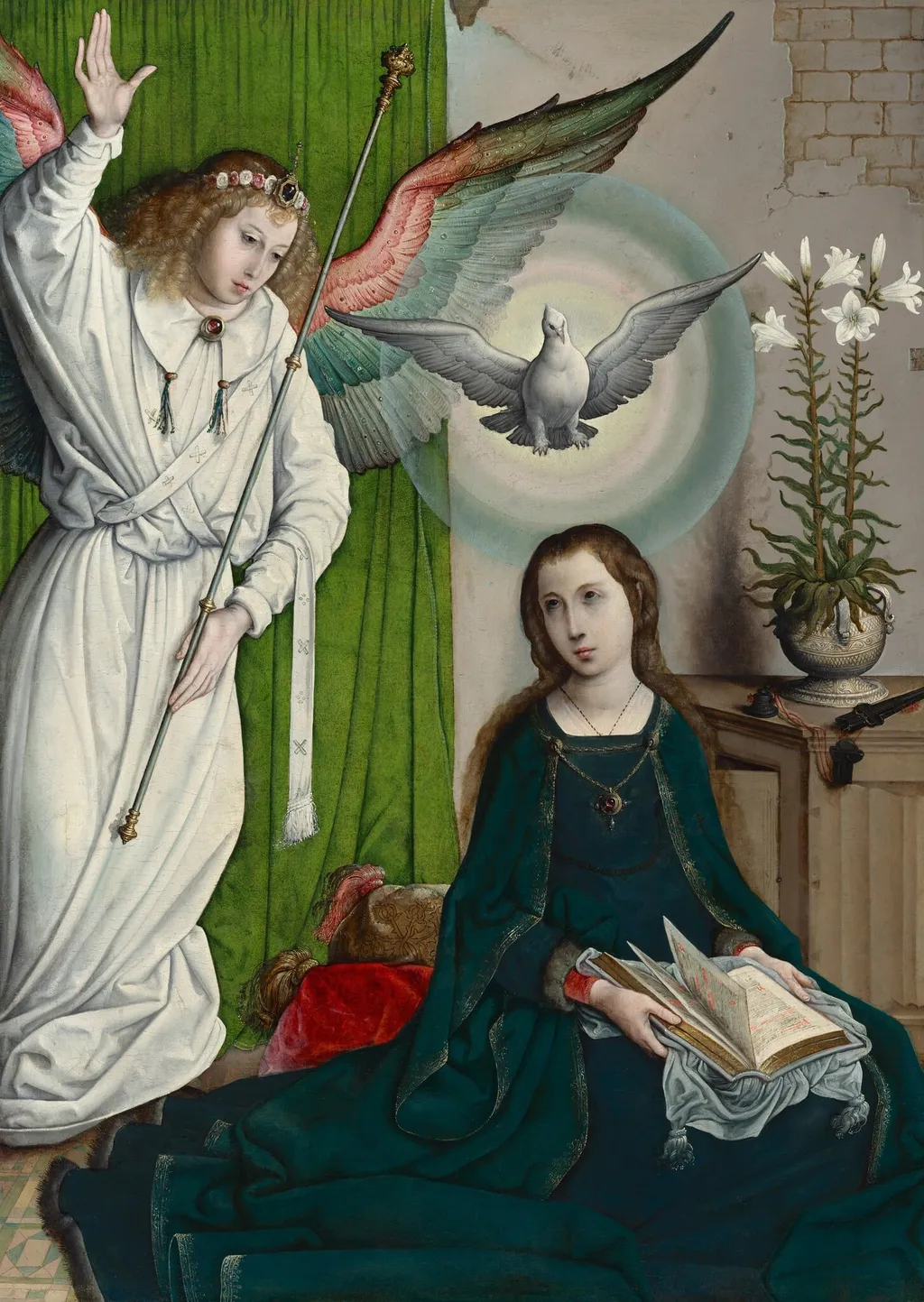
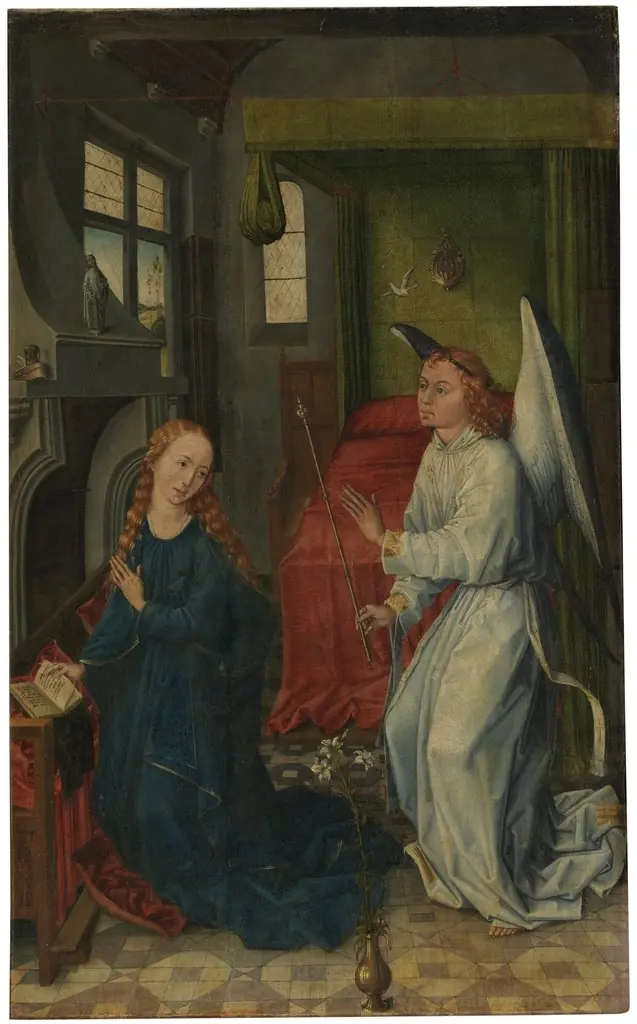
The Annunciation is an oil painting by the Early Renaissance artist Juan de Flandes. It dates from 1514 and is held in the collection of the National Gallery of Art.
About this work
Subject & Meaning
The iconography follows traditional motifs: the lily represents purity, and celestial light illuminates Mary's modest interior.
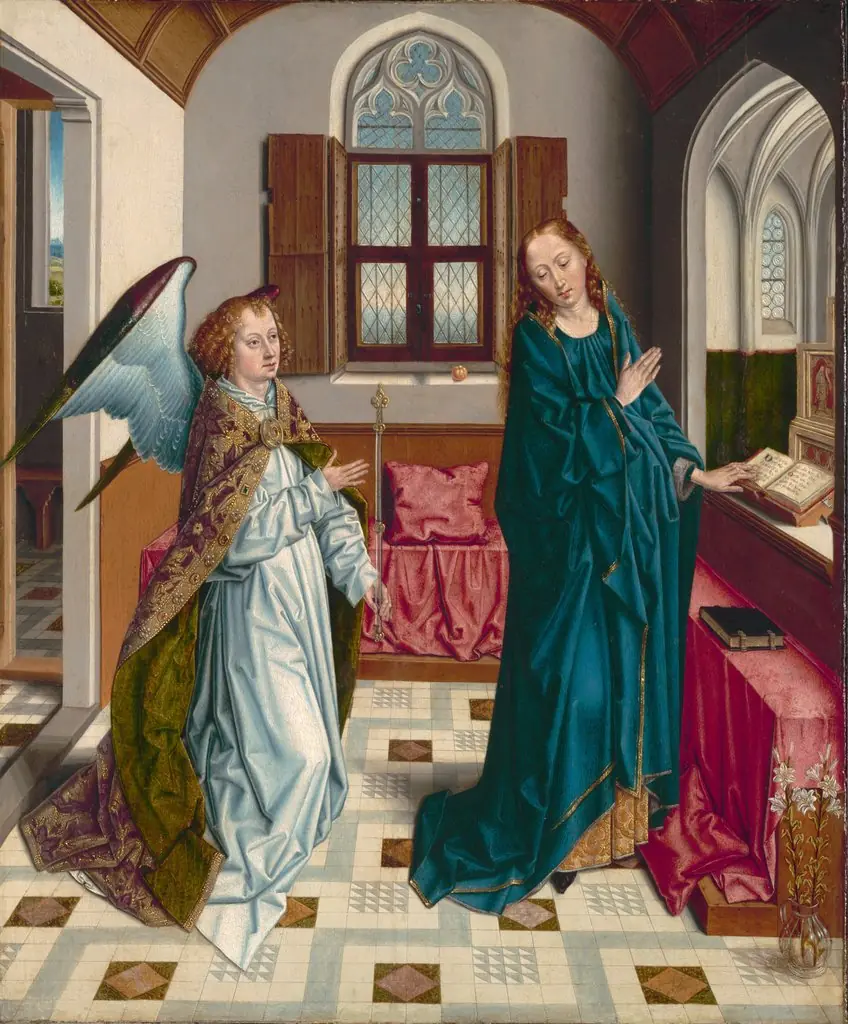
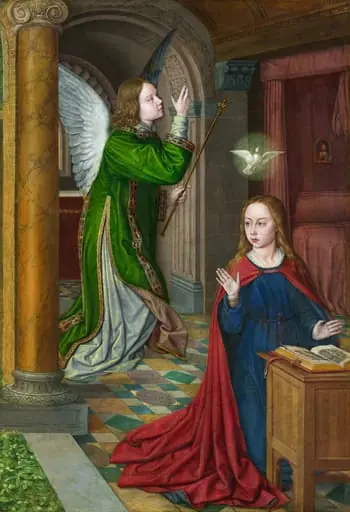
The Annunciation depicts the moment when the angel Gabriel announces to the Virgin Mary that she will conceive the Messiah. In the composition the angel is shown beside Mary, who is seated reading, while a dove symbolizing the Holy Spirit descends, emphasizing the divine nature of the message. The iconography follows traditional motifs: the lily represents purity, and celestial light illuminates Mary's modest interior.
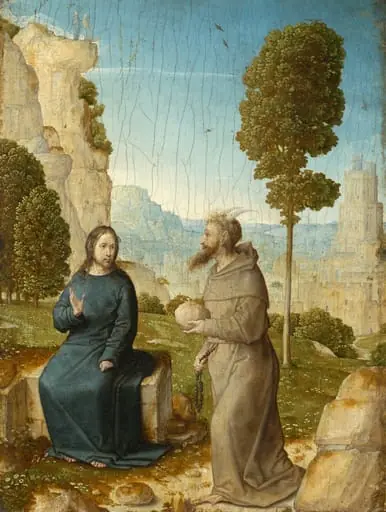
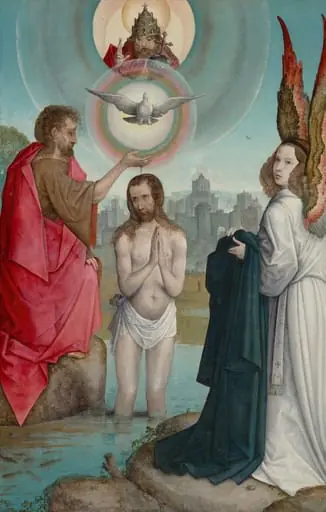
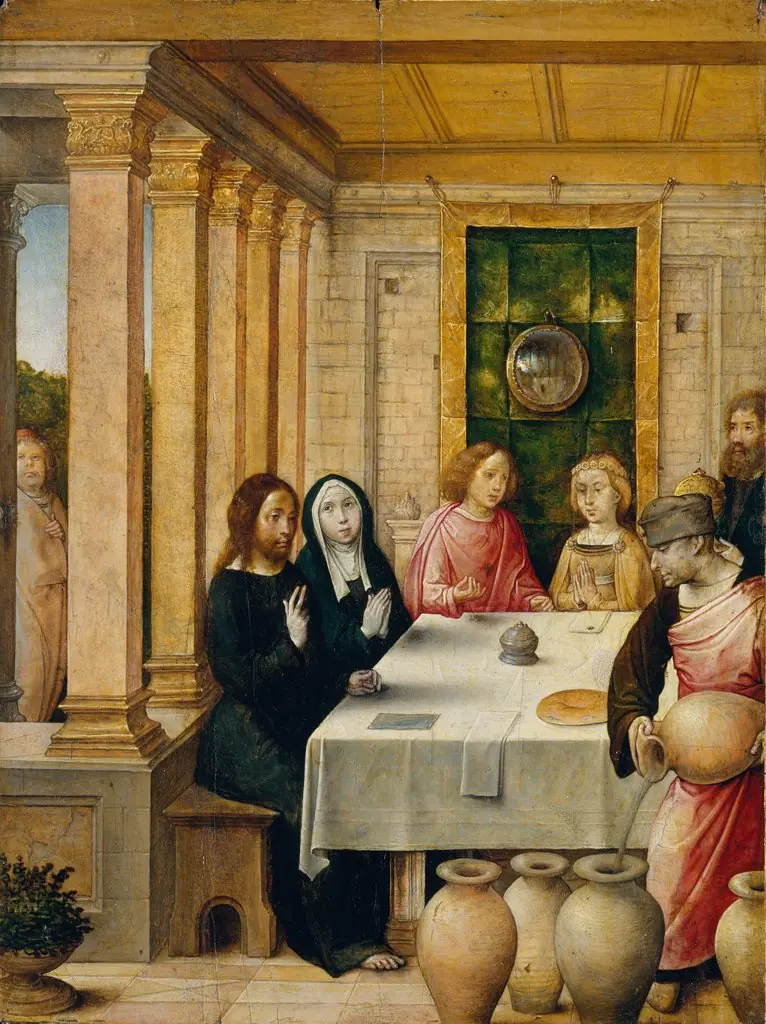
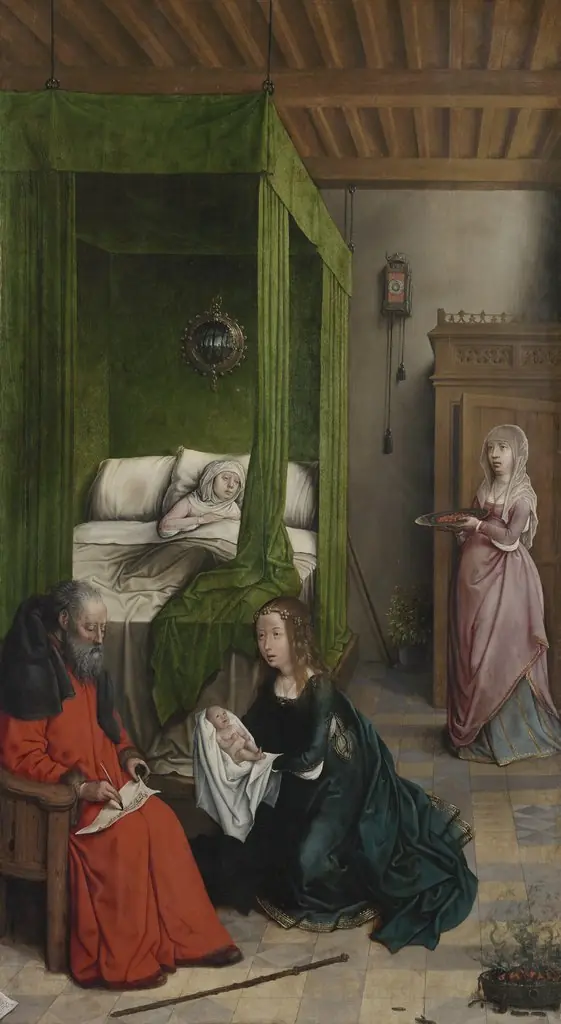
As part of a multi-panel altarpiece made around 1514 for the main chapel of San Lázaro in Palencia, the work reflects the devotional focus on the Incarnation in Spanish Renaissance art.
Technique & Style
Juan de Flandes's The Annunciation is executed in oil paint on a wooden panel, a technique typical of early-16th-century Netherlandish painting. The support is a single panel measuring approximately 110.2 cm in height and 78.4 cm in width. The oil medium allows for fine detail and subtle gradations of light, characteristic of the artist's meticulous handling of surfaces. No information on the painting's current condition or specific stylistic comparisons is provided in the sources.
History & Provenance
The Annunciation was painted by Juan de Flandes in 1514 as an oil-on-panel component of the altarpiece for the main chapel of the Church of San Lázaro in Palencia, commissioned by Don Sancho de Castilla. It remained in that church until services there ceased in September 1945.
By 1950 the work was in the Palencia home of Arcadio Torres Martín, where it was examined privately in 1950 and 1951 by the scholar Egbert Haverkamp-Begemann alongside other panels from the original altarpiece. It entered the New York art market circa 1952 through the dealer Frederick Mont before being purchased by the Samuel H. Kress Foundation on 11 February 1953. The foundation gave the panel to the National Gallery of Art in Washington, D.C., in 1961, where it remains as part of the Samuel H. Kress Collection.
Context
The Annunciation (1514) is an oil-on-panel work by Juan de Flandes, created for the main chapel altarpiece of the Church of San Lázaro in Palencia and commissioned by Don Sancho de Castilla. The painting, measuring 110.2 × 78.4 cm, depicts the biblical Annunciation and exemplifies early sixteenth-century Spanish religious art, bridging late Gothic tradition with emerging Renaissance naturalism. Its provenance traces from the chapel through the collection of Arcadio Torres Martín and the dealer Frederick Mont to the Samuel H. Kress Foundation, before its donation to the National Gallery of Art in 1961.
Overview
Juan de Flandes completed The Annunciation, an oil painting on panel, around 1514. This religious work portrays the biblical moment when the Archangel Gabriel informs the Virgin Mary of her impending divine motherhood. The composition is characterized by its tranquil atmosphere and meticulous detail, reflecting the devotional purpose typical of paintings from this period.
Own this work as a print
Artist & collection