Artwork
Triptych with Scenes from the Life of the Virgin
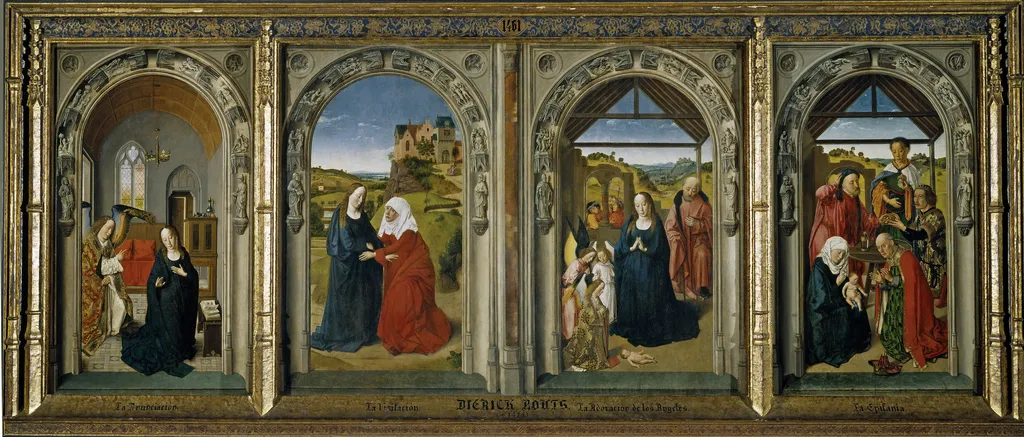
Triptych with Scenes from the Life of the Virgin is an oil painting by the Northern Renaissance artist Dieric Bouts. It dates from 1445 and is held in the collection of the Museo del Prado.
About this work
This painting is called Triptych with Scenes from the Life of the Virgin. It's an oil painting on panel.
The painting was executed around 1445. It's now held at the Museo del Prado in Madrid, which suggests it's a significant work from that time.
To learn more about the style and techniques used in this painting, look up the technique of glazing.
Subject & Meaning
These scenes emphasize Mary’s pivotal role in the economy of redemption, linking her obedience to the Incarnation with the broader salvation narrative.
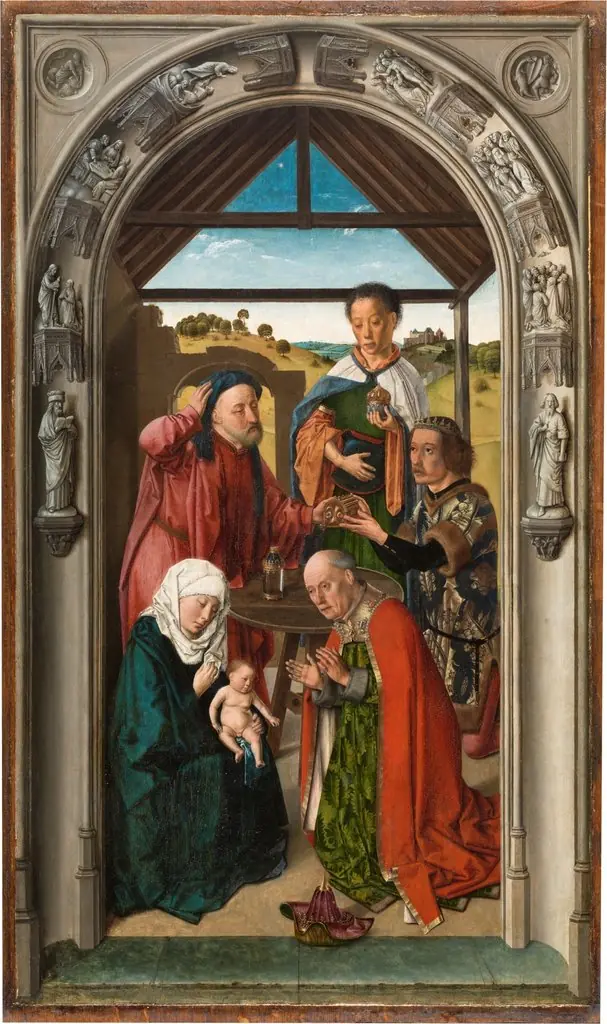
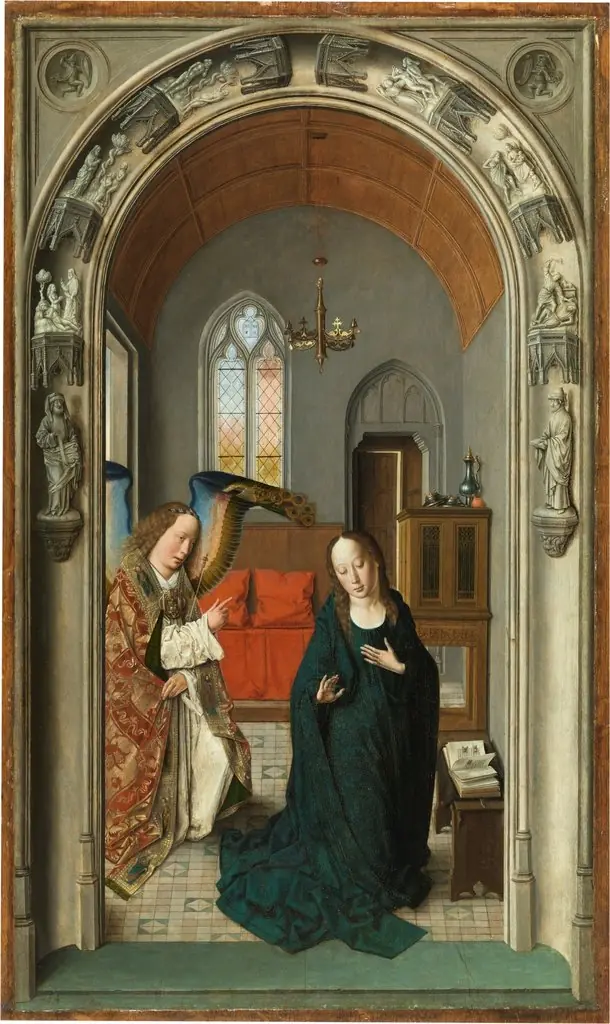
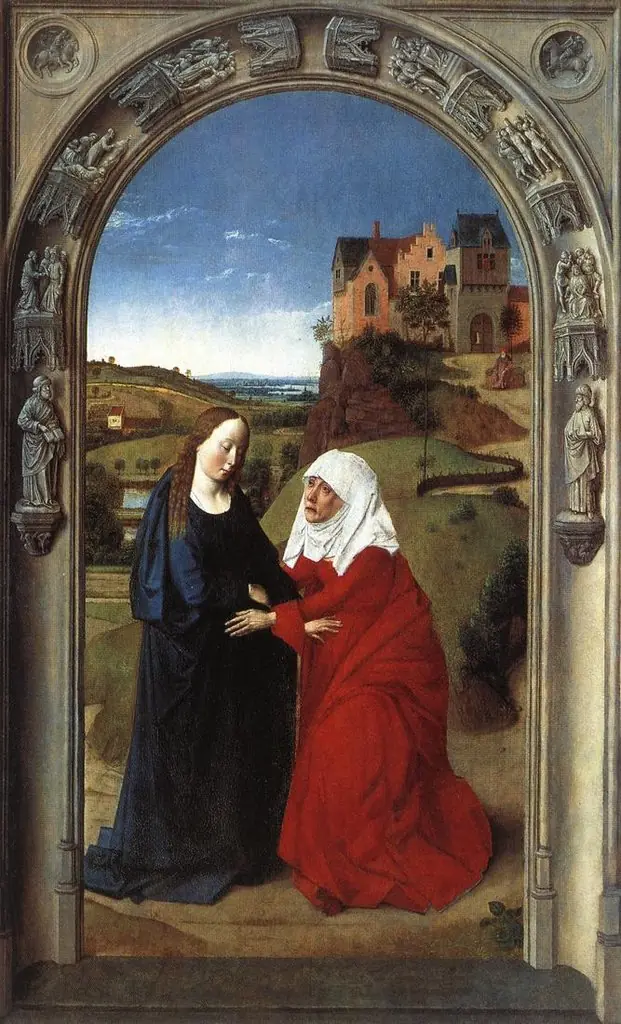
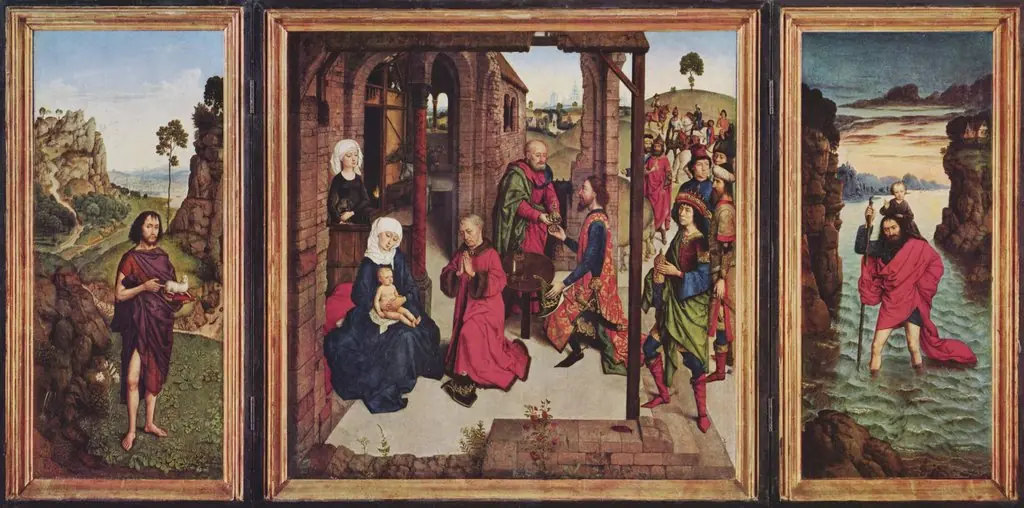
La triptych presents four narrative panels from the Life of the Virgin Mary, the Annunciation, the Visitation, the Nativity and the Adoration of the Magi, arranged on a central altar-like composition flanked by sculptural portal figures derived from Rogier van der Weyden’s Miraflores Altarpiece. These scenes emphasize Mary’s pivotal role in the economy of redemption, linking her obedience to the Incarnation with the broader salvation narrative. The work’s iconography draws on Early Netherlandish conventions while incorporating Italianate architectural motifs, reflecting a synthesis of northern and continental influences.
Stylistic connections to artists such as Petrus Christus and Rogier van der Weyden underscore the piece’s function as an early example of artistic exchange and as a visual sermon on Marian intercession.
Technique & Style
This Early Netherlandish artwork is executed in oil paint on a wooden panel. Structurally, it consists of three panels currently mounted together in a fixed frame, though the two outer panels originally functioned as hinged wings; the backs of these outer doors bear no signs of former drawings beneath grey overpaint. Stylistically, the painting features painted "sculptures" within ornamented Gothic settings around the portal arches, a compositional element derived from Rogier van der Weyden's Miraflores Altarpiece, while the main portal arches are rounded, likely reflecting an awareness of early Italian Renaissance architecture.
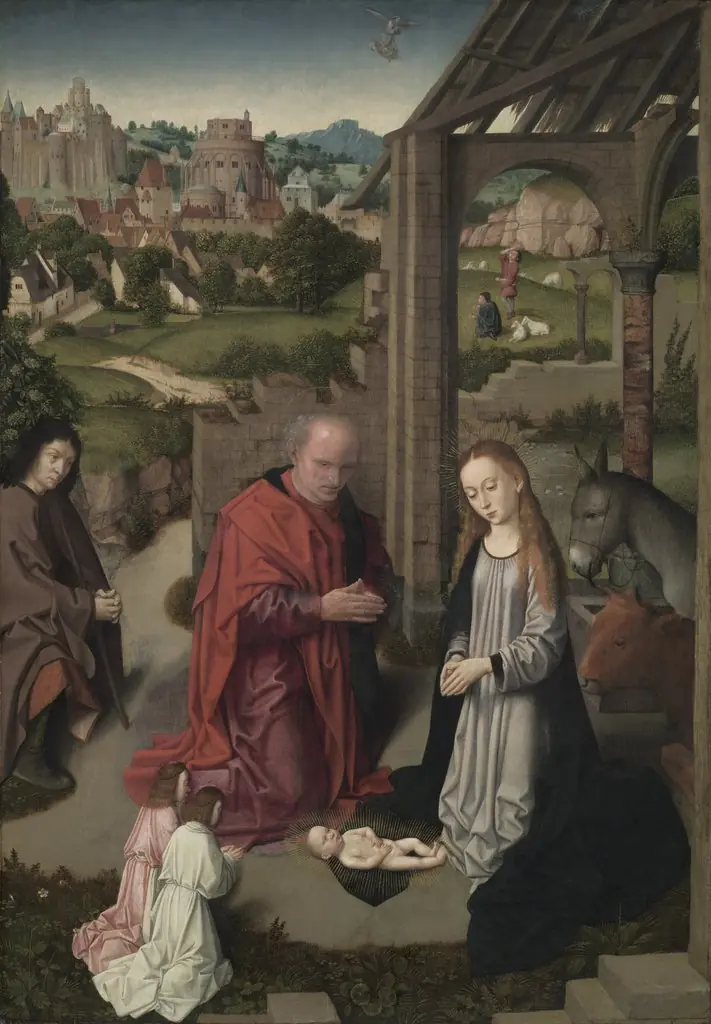
The individual scenes exhibit distinct formal choices: the Annunciation depicts a kneeling Virgin with detailed red bed cushions and a tiled floor, the Visitation shows two women touching each other's pregnant wombs within a landscape, and the Nativity places the Christ Child on the cold ground rather than on Mary's cloak. The work's strong affinities with Petrus Christus's Washington Nativity previously led to an attribution to Christus before scholars recognized Bouts's authorship and connection to Christus.
History & Provenance
Created circa 1445, the Triptych with Scenes from the Life of the Virgin is widely considered the earliest surviving work by Dieric Bouts. The painting was executed in oil on panel and entered the Spanish royal collection during the reign of Philip II. It was first documented at the Royal Monastery of San Lorenzo de El Escorial in 1584, where it remained until 1839.
In that year, the work was transferred to the Royal Museum in Madrid, now known as the Museo del Prado. Although the piece consists of three panels mounted in a fixed frame today, the outer sections originally functioned as hinged wings capable of closing. Historical records do not indicate whether the shutters were ever painted on their reverse sides, as no traces of underdrawings exist beneath the grey overpaint on the exterior doors.
The triptych is held in the Museo del Prado, Madrid. It entered the Spanish royal collection under Philip II of Spain and was documented at El Escorial in 1584, remaining there until 1839 when it was moved to the Royal Museum (now the Prado). The work is today mounted in a fixed frame at the Prado, though the two outer panels originally functioned as hinged wings.
No inventory or accession number is provided in the sources, and no specific exhibition history beyond this institutional transfer is recorded.
Context
The triptych is regarded as the earliest surviving work by Dieric Bouts and is situated within the Early Netherlandish painting movement. For a long period the panel was attributed to Petrus Christus, owing to its strong affinities with Christus's Washington Nativity. The reattribution to Bouts, with acknowledged influence from Rogier van der Weyden, only began to gain ground among specialist authors in the 1920s.
Erwin Panofsky, in Early Netherlandish Painting (1971), argued that the close connection with Christus was evidence that the young Bouts attached himself to that master early in his career. The work also reflects Rogier van der Weyden's impact, since the painted sculptures around the arches derive from van der Weyden's Miraflores Altarpiece of about three years earlier, while the round main portal arches suggest awareness of early Italian Renaissance architecture.
Legacy
The triptych entered the Spanish royal collection and was recorded at El Escorial from 1584 to 1839 before being transferred to the Prado, where it became a cornerstone of the museum’s early Netherlandish holdings. Art historian Erwin Panofsky emphasized its role in understanding the formative years of Dieric Bouts, proposing that the painter studied under Petrus Crispus and that the work reflects a synthesis of Burgundian and Italian influences. Subsequent scholarship has repeatedly cited its stylistic links to Rogier van der Weyden and Petrus Crispus, using it as a reference point for discussions of devotional imagery in the fifteenth century.
The attribution shifted from an early misattribution to Christus to a consensus view of Bouts in the 1920s, shaping the painting’s enduring reputation.
Overview
The Triptych with Scenes from the Life of the Virgin is an oil-on-panel work by the Early Netherlandish master Dieric Bouts, executed circa 1445. Currently held in the Museo del Prado in Madrid, this triptych represents an early phase in Bouts's career, predating his most famous commissions in Leuven. The composition is divided into three panels, a format typical for private devotion during the period, depicting narrative episodes from the life of the Virgin Mary.
Bouts employs the refined oil technique characteristic of the Northern Renaissance, utilizing layered glazes to achieve luminous color and detailed textures. The work demonstrates his emerging interest in spatial coherence and the integration of figures within architectural settings, foreshadowing the more complex perspectival experiments found in his later altarpieces. As one of the artist's earliest surviving dated works, it provides critical insight into the development of his style before he became the leading painter in Leuven.
The painting remains a significant example of mid-15th-century Flemish religious art, illustrating the transition from International Gothic elegance to the observational realism that defined the Early Netherlandish school.
Artist & collection
Artist
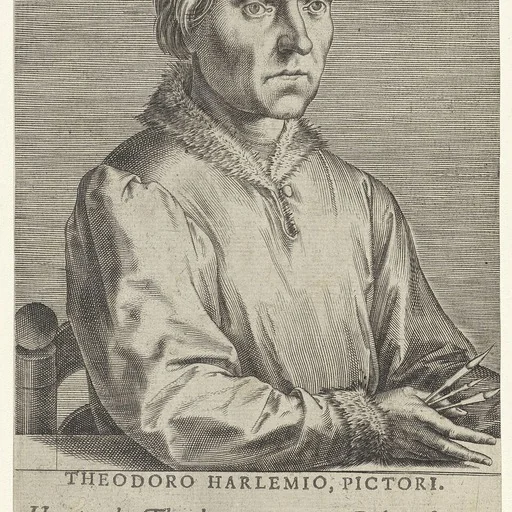
Dieric Bouts (born c. 1415 – 6 May 1475) was an Early Netherlandish painter. Bouts may have studied under Rogier van der Weyden, and his work was influenced by van der Weyden and Jan van Eyck. He worked in Leuven from…

![Altarpiece showing scenes from the Infancy of Christ: The Adoration of the Magi [center]; The Annunciation; The Presentation of Christ in the Temple; The Flight into Egypt; The Nativity [clockwise from upper left], by Master of Hoogstraeten](https://artifactworldgallery.com/img/master-of-hoogstraeten--altarpiece-showing-scenes-from-the-infancy-of-christ-the-ado--6a236bfea3373486-w320.webp) Altarpiece showing scenes from the Infancy of Christ: The Adoration of the Magi [center]; The Annunciation; The Presentation of Christ in the Temple; The Flight into Egypt; The Nativity [clockwise from upper left]
Altarpiece showing scenes from the Infancy of Christ: The Adoration of the Magi [center]; The Annunciation; The Presentation of Christ in the Temple; The Flight into Egypt; The Nativity [clockwise from upper left]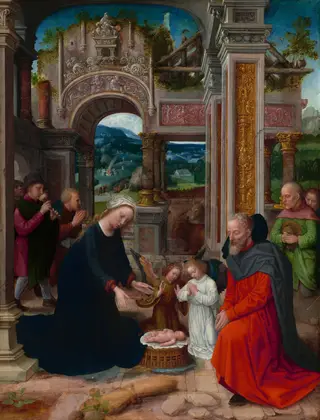 The Adoration of the Shepherds
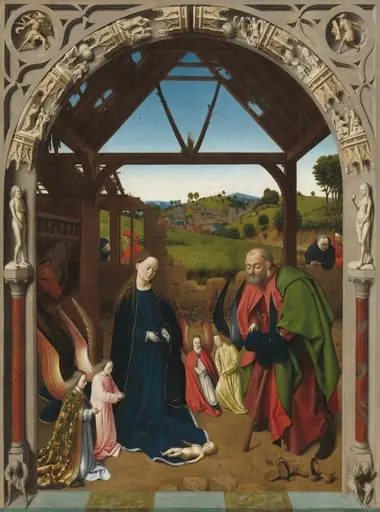 The Nativity
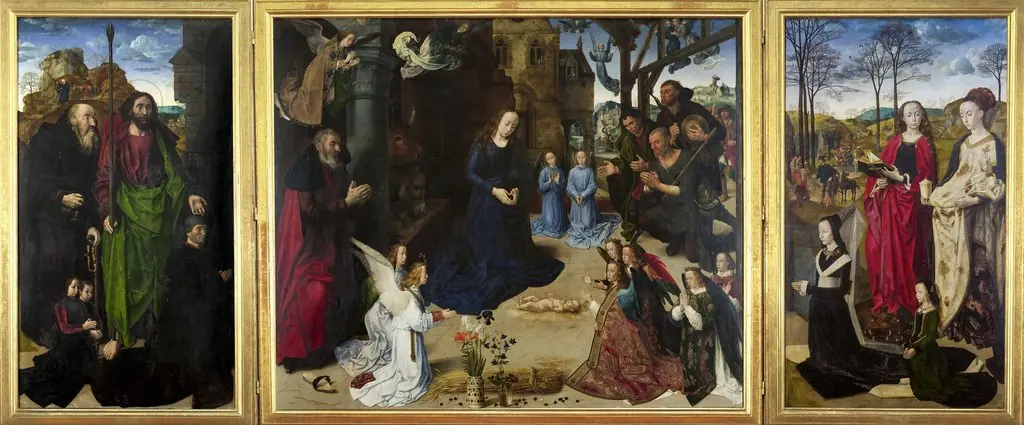 Portinari Triptych
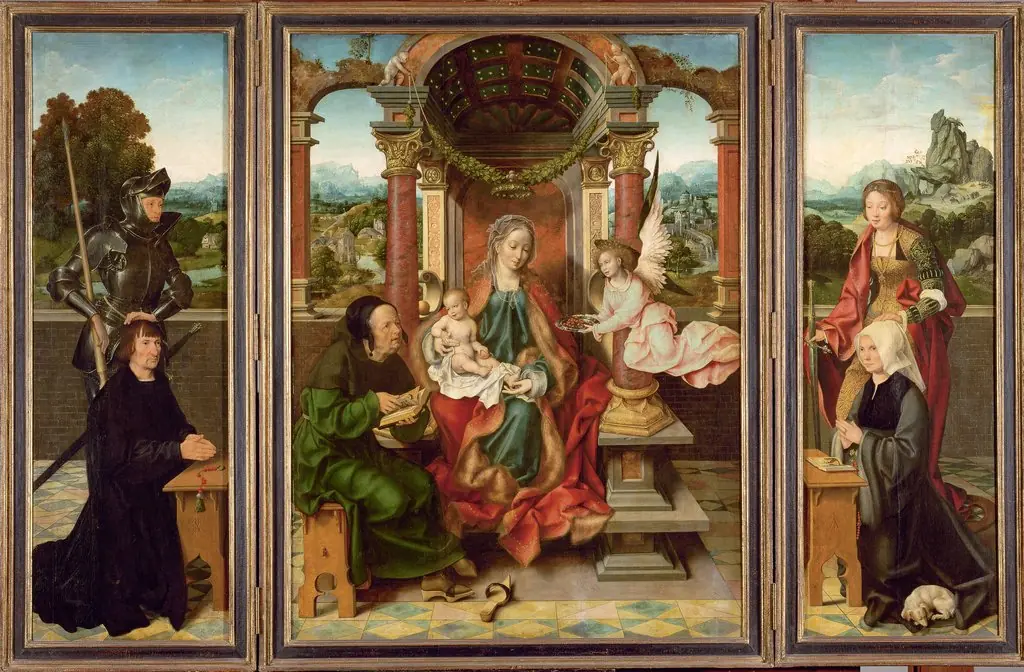 Winged Altar
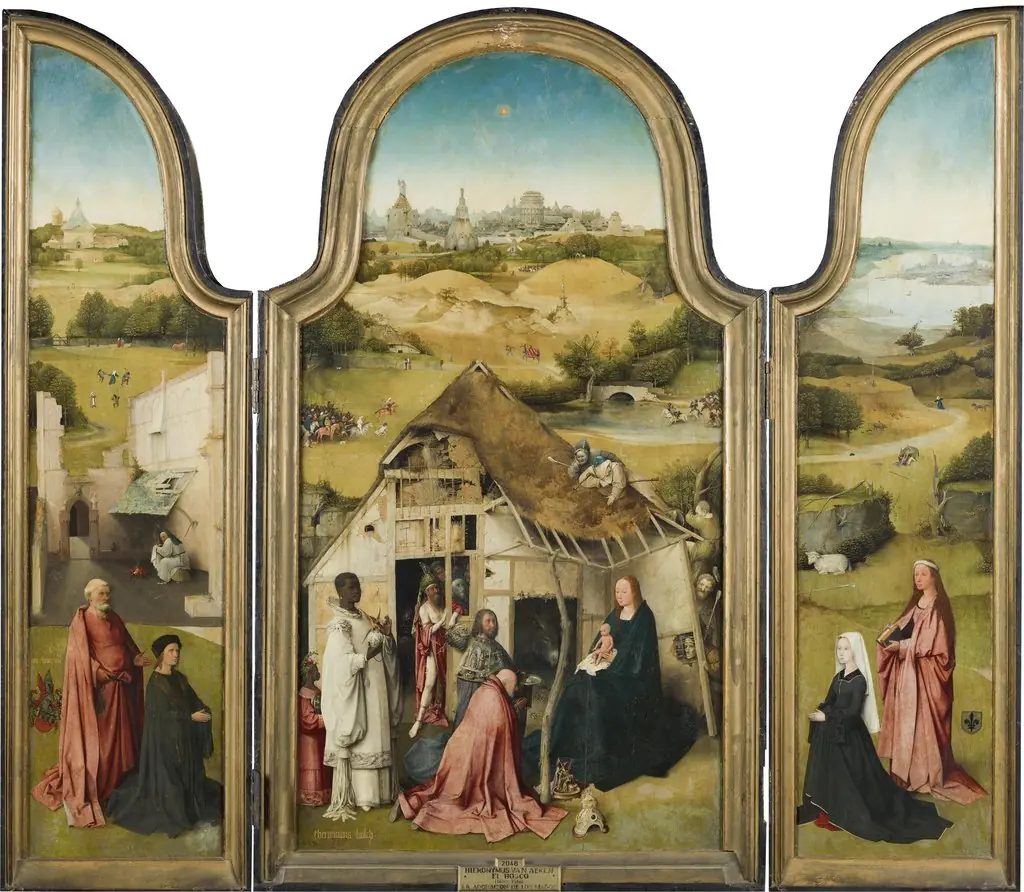 The Epiphany
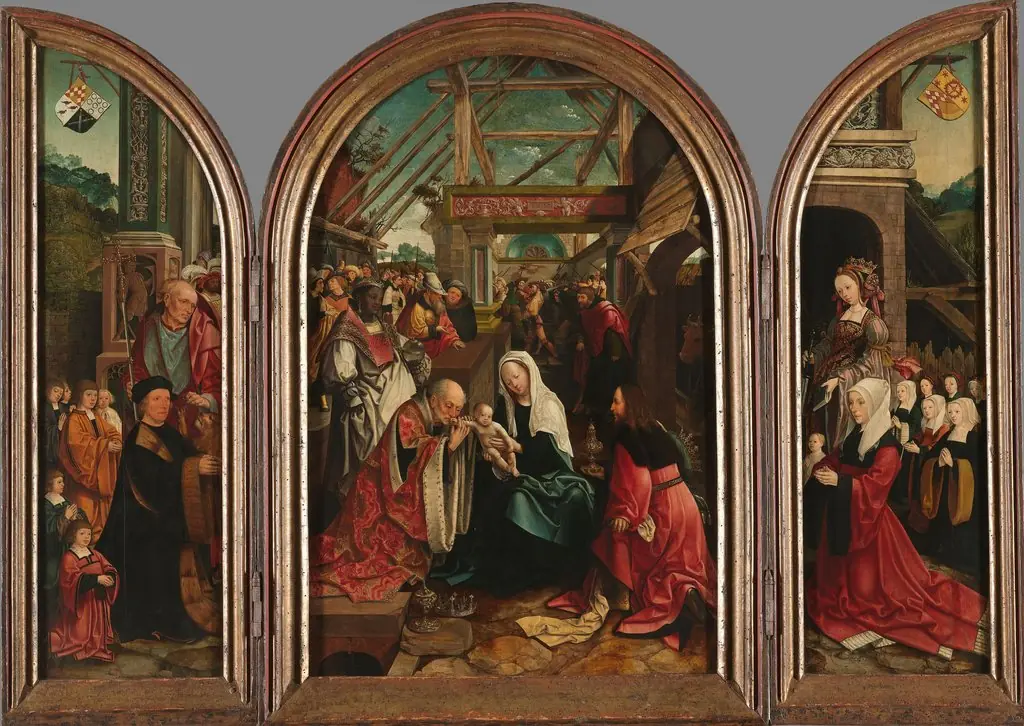 The Adoration of the Magi
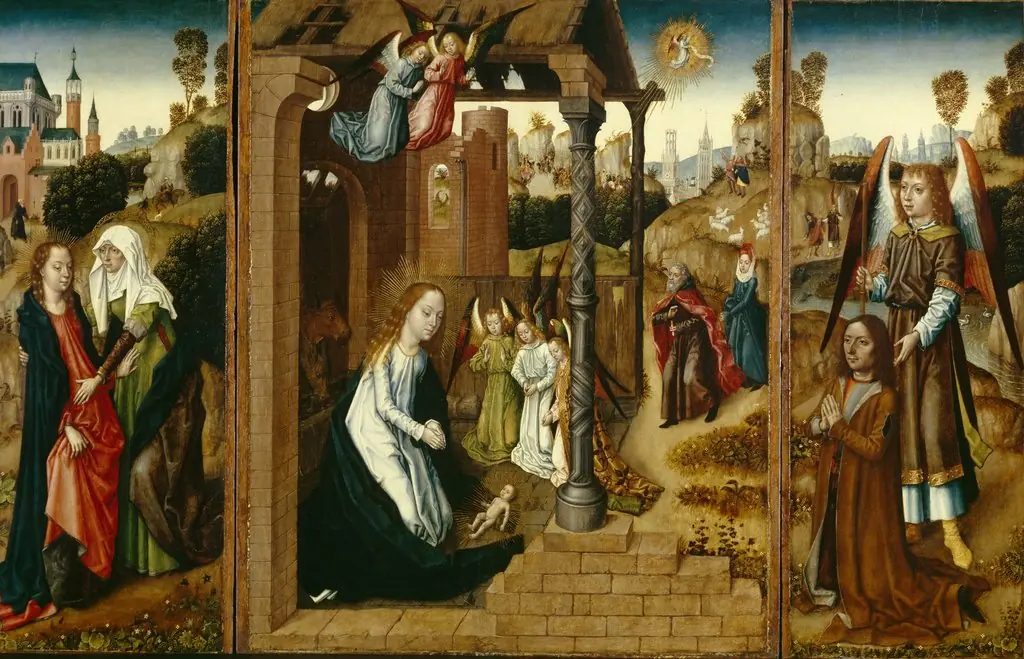 Nativity
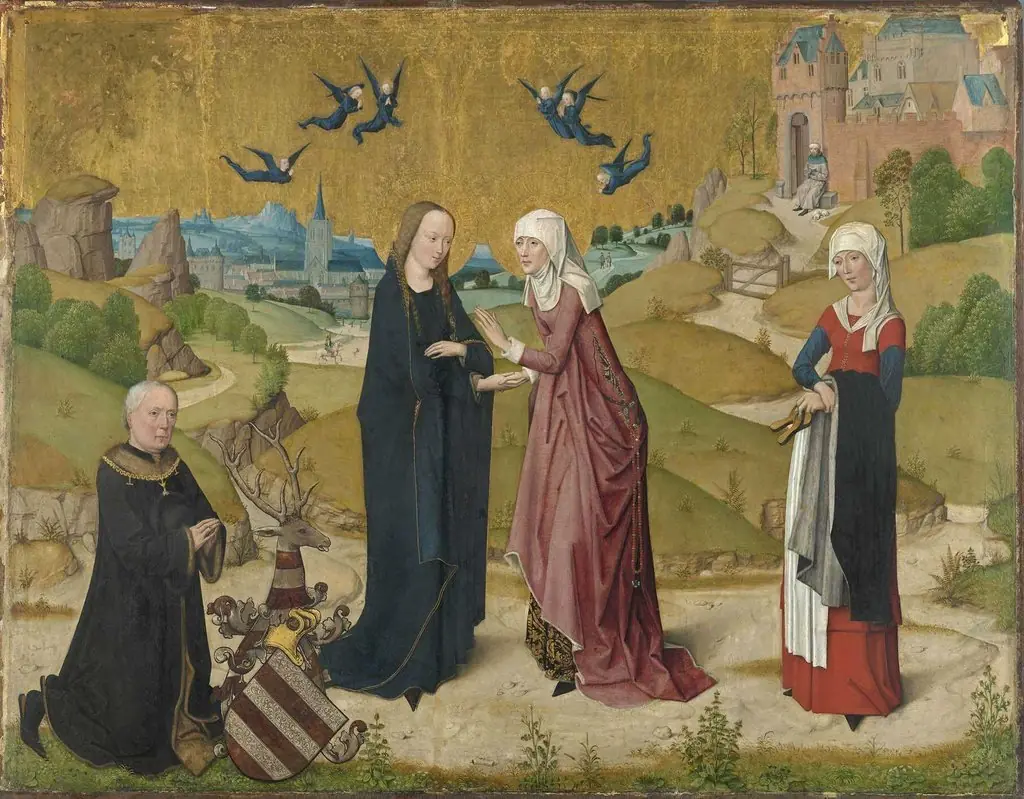 The Visitation with a portrait of donor Johann von Hirtz (?-?)
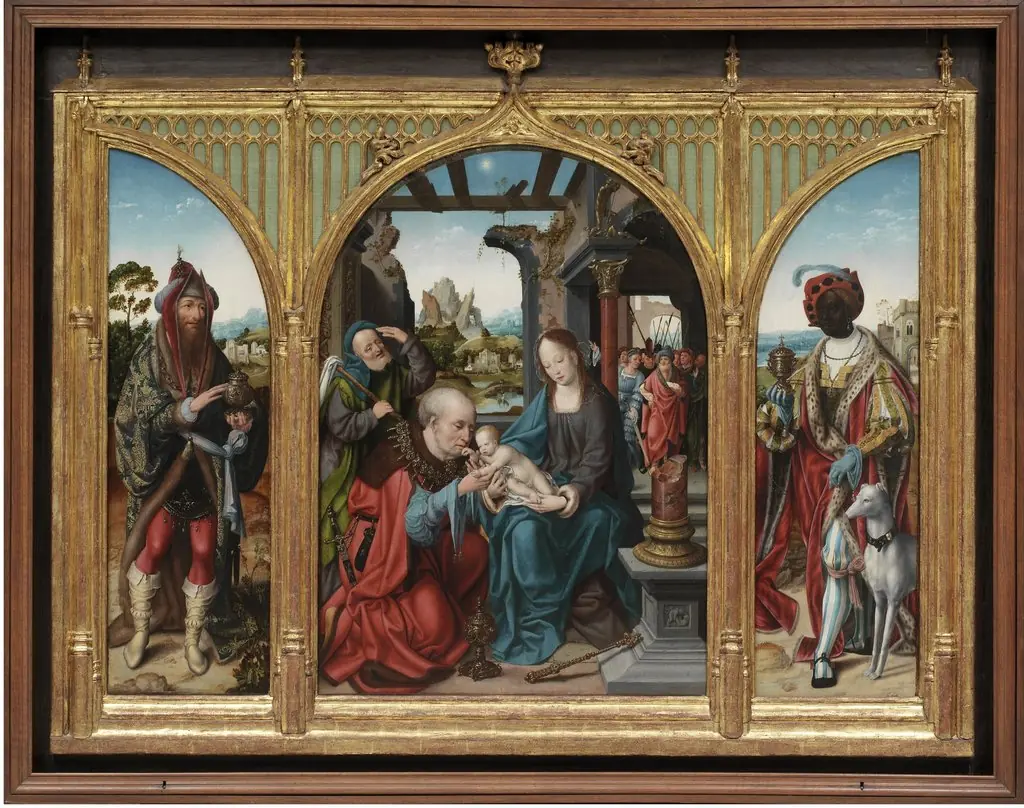 Adoration of the Magi
 The Nativity
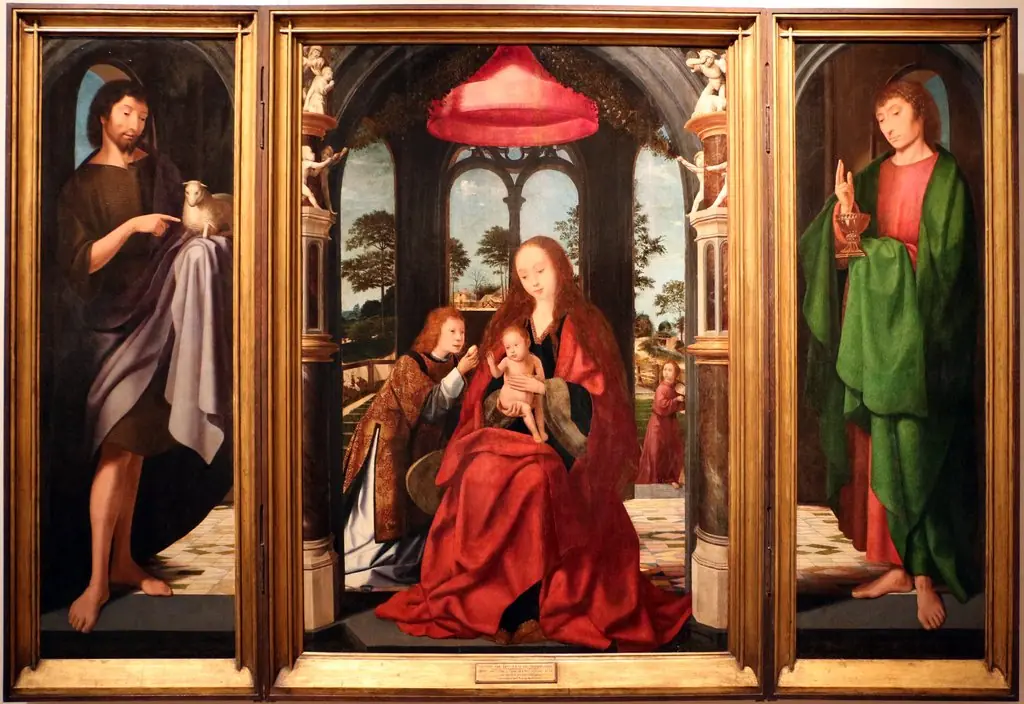
- Triptych of the Virgin with the Child and Angels, St. John the Baptist and St. John the Evangelist