Artwork
Beweinung Christi und seine Grablegung
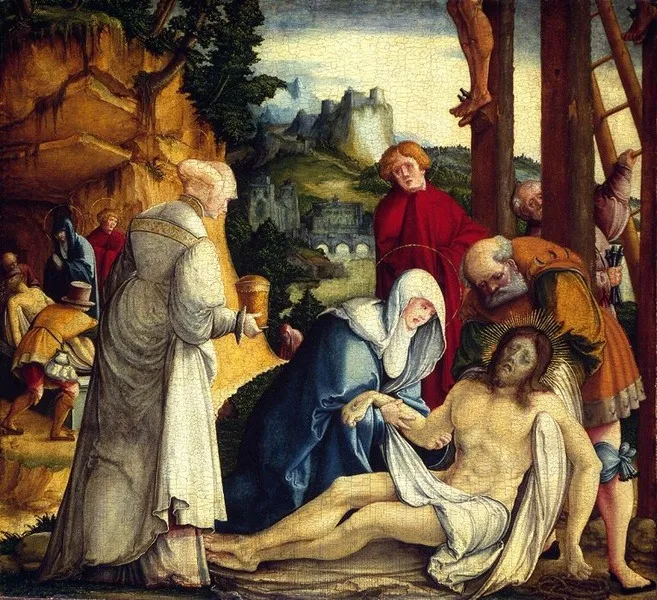
Beweinung Christi und seine Grablegung is a paint painting by the Mannerist artist Master of Messkirch. It dates from 1537 and is held in the collection of the Gemäldegalerie Berlin.
About this work
Subject & Meaning
The subject matter aligns with the traditional Christian narrative of the Passion, specifically the moments immediately preceding the interment in the tomb.
The painting depicts the Lamentation of Christ and the Entombment of Christ, focusing on the figure of Jesus Christ following his crucifixion. As a work of religious art created in 1537, the composition centers on the mourning of the dead body of Jesus and his preparation for burial. The subject matter aligns with the traditional Christian narrative of the Passion, specifically the moments immediately preceding the interment in the tomb.
The depiction serves to visualize the sorrow of the followers and the physical reality of Christ's death as core elements of the devotional image.
Technique & Style
Beweinung Christi und seine Grablegung is executed in paint on a fir panel, a support typical of South German panel painting of the period. The work is relatively small in scale, measuring 62.7 cm in height by 67.5 cm in width. Its subject matter combines the Lamentation of Christ with the Entombment of Christ, rendered as a religious devotional image.
Beyond the identification of the medium as paint on fir panel and these basic physical parameters, the available sources do not provide further detail on handling, condition, or specific stylistic characteristics.
History & Provenance
The painting was created in 1537 by the Master of Messkirch for Johann Baptist von Hirscher, a prominent patron who commissioned the work. It remained in the Hirscher family collection before being acquired by Gustav Abel, later entering the Bode Museum's holdings. The work entered the Gemäldegalerie Berlin collection and has been displayed at St Martin within the museum. The piece depicts the Lamentation of Christ and entombment of Christ, rendered in paint on fir panel.
The artwork measures 62.7 cm in height and 67.5 cm in width.
The painting is held in the Gemäldegalerie Berlin, specifically in the St Martin section of the museum. According to Wikidata, it entered the museum’s collection from the Hirscher and Abel collections, with former owners listed as Johann Baptist von Hirscher, Gustav Abel, and the Bode Museum. The sources do not provide an inventory or accession number for the work, nor do they record any exhibition history. Further details about its provenance are not documented in the provided sources.
Context
Critical reception of the Beweinung Christi und seine Grablegung has centered on its emotional intensity and devotional function within Counter-Reformation art. Scholars highlight the Master of Messkirch's synthesis of Grünewald's expressive modeling and Cranach's compositional clarity to heighten the Lamentation's narrative immediacy. The work is situated within the artist's oeuvre as a pivotal example of Swabian Renaissance religious painting, reflecting both local devotional practices and wider Central European artistic exchanges. Its placement in the Gemäldegalerie Berlin underscores its significance within institutional collections of German Renaissance art.
Overview
Beweinung Christi und seine Grablegung is a 1537 religious painting by Master of Messkirch, depicting two concurrent scenes from the Passion of Christ: the Lamentation and the Entombment. The work is part of the collection at the Gemäldegalerie Berlin.
Legacy
While specific influences or direct artistic legacies of 'Beweinung Christi und seine Grablegung' are not highlighted in available information, its use of chiaroscuro contributes to the broader artistic tradition of employing light and shadow for narrative and emotional impact in religious art.
Artist & collection


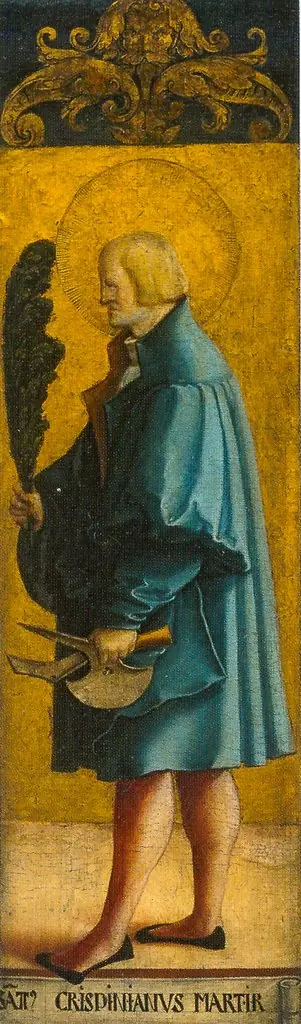
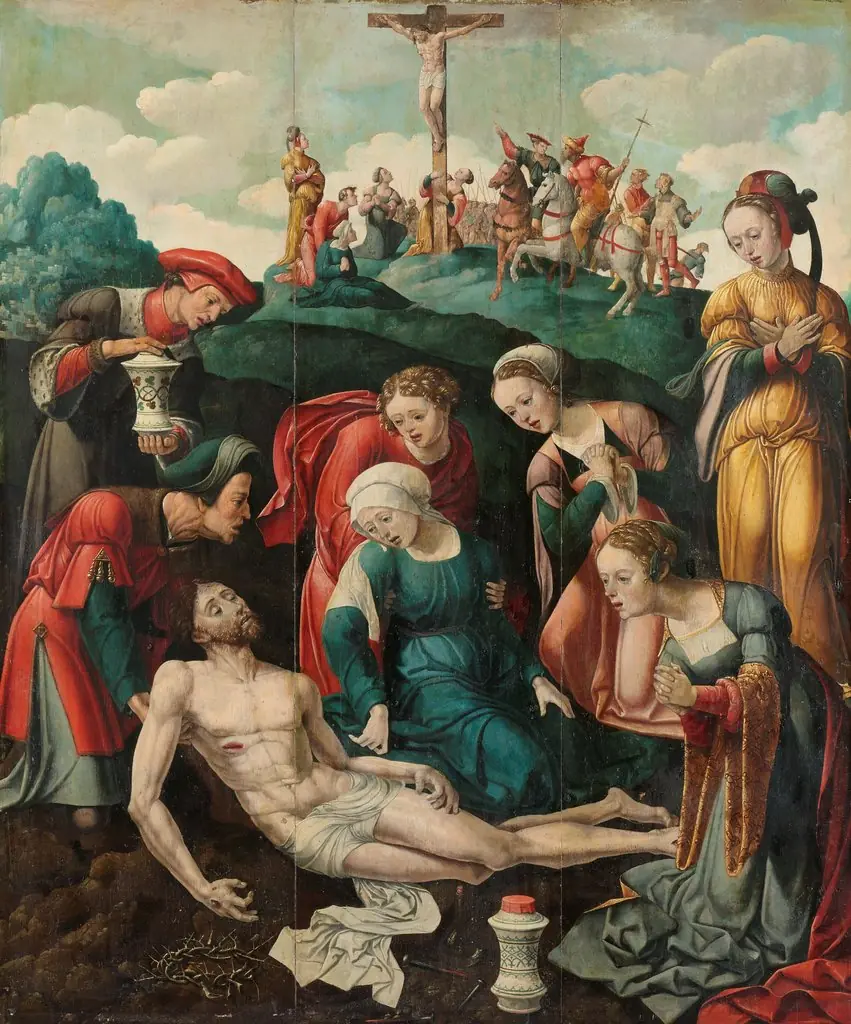
- The Lamentation of Christ
 Mourning over the Dead Body of Christ
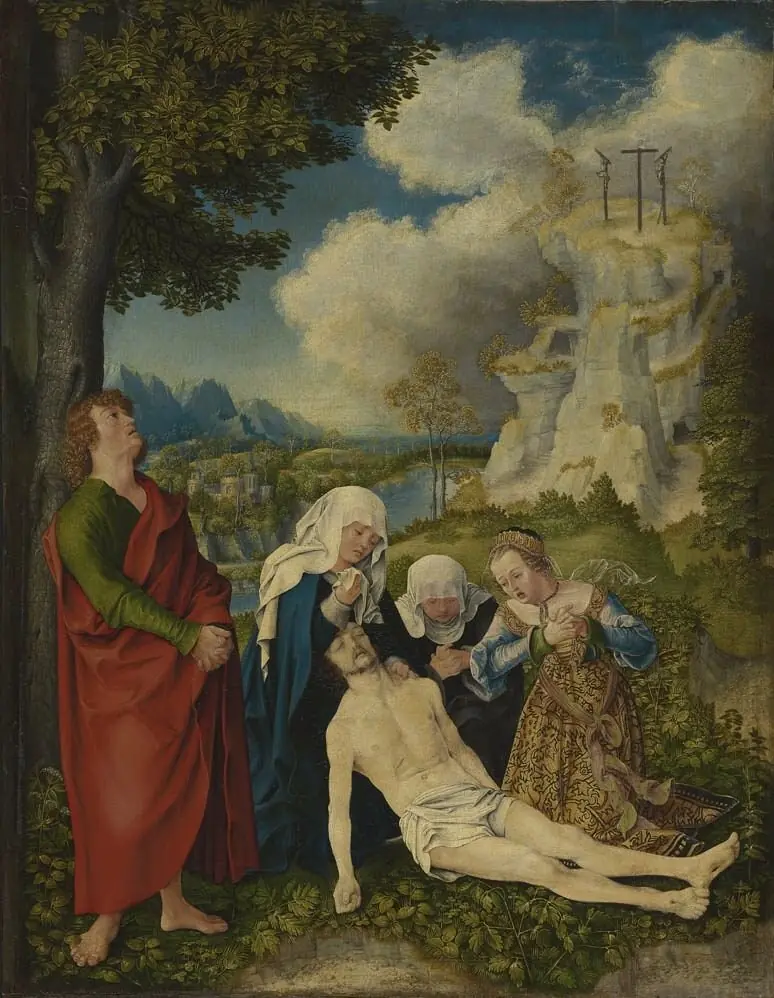 Lamentation of Christ
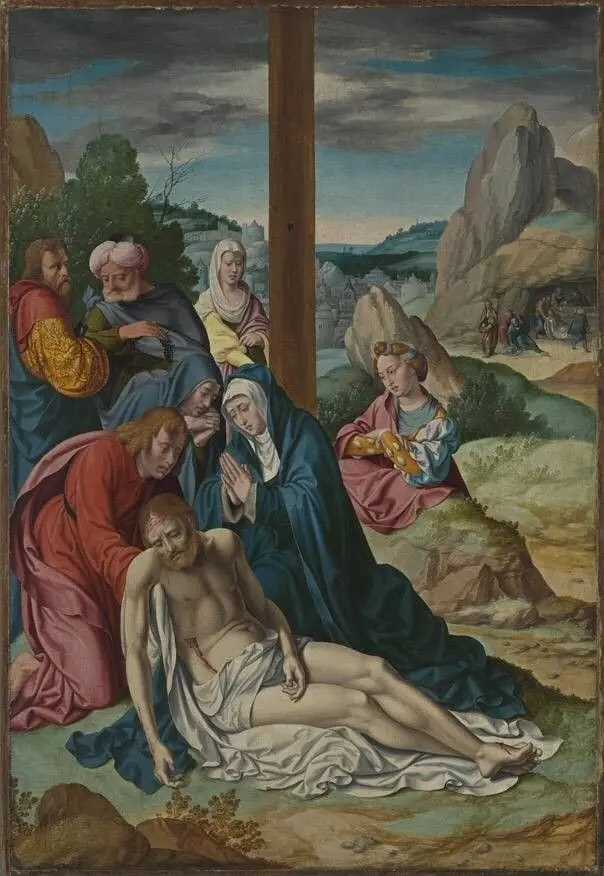 The lamentation of Christ
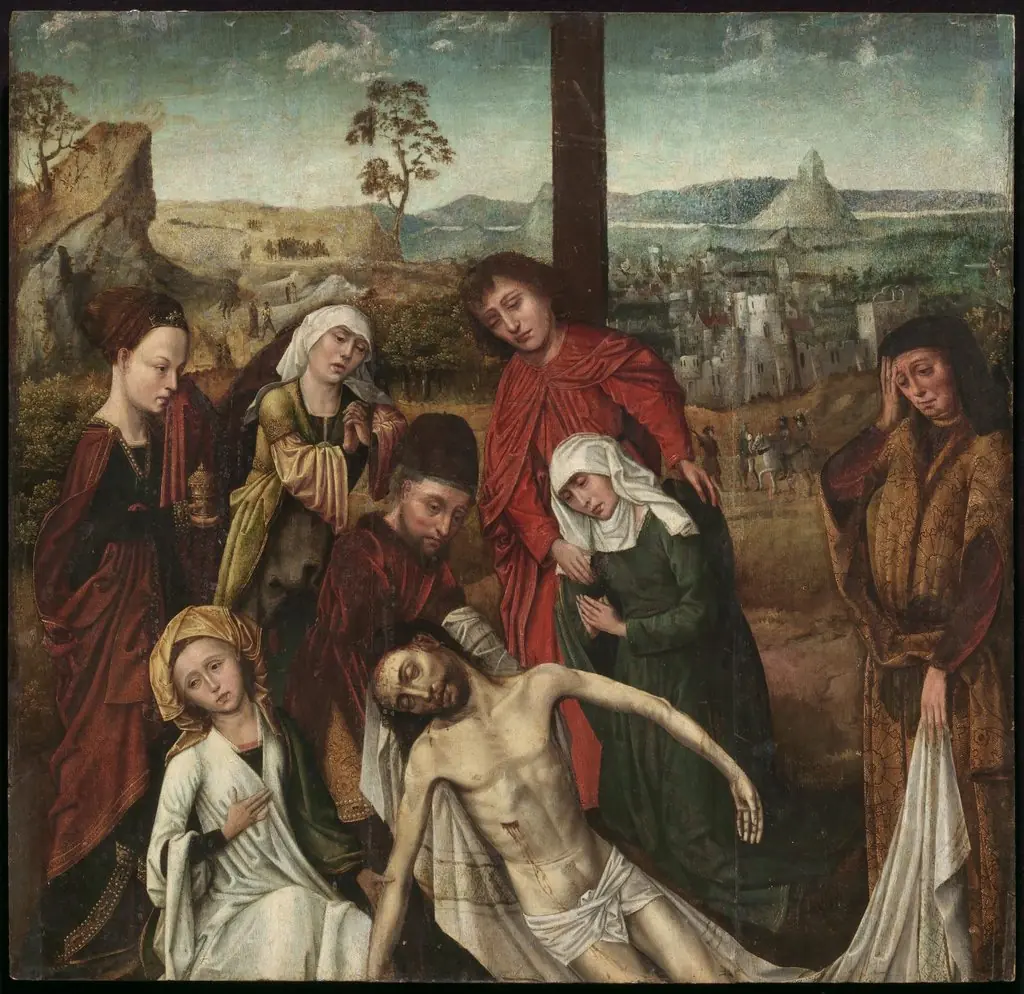 The Deposition of Christ
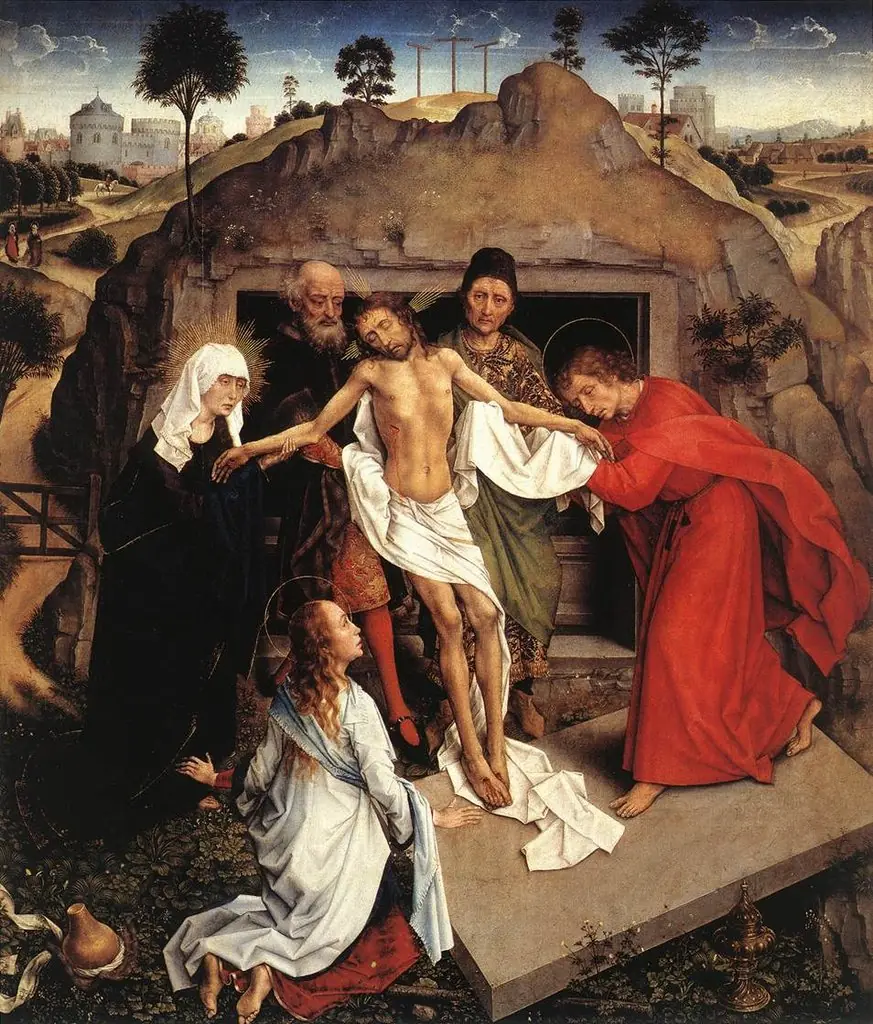 Lamentation of Christ
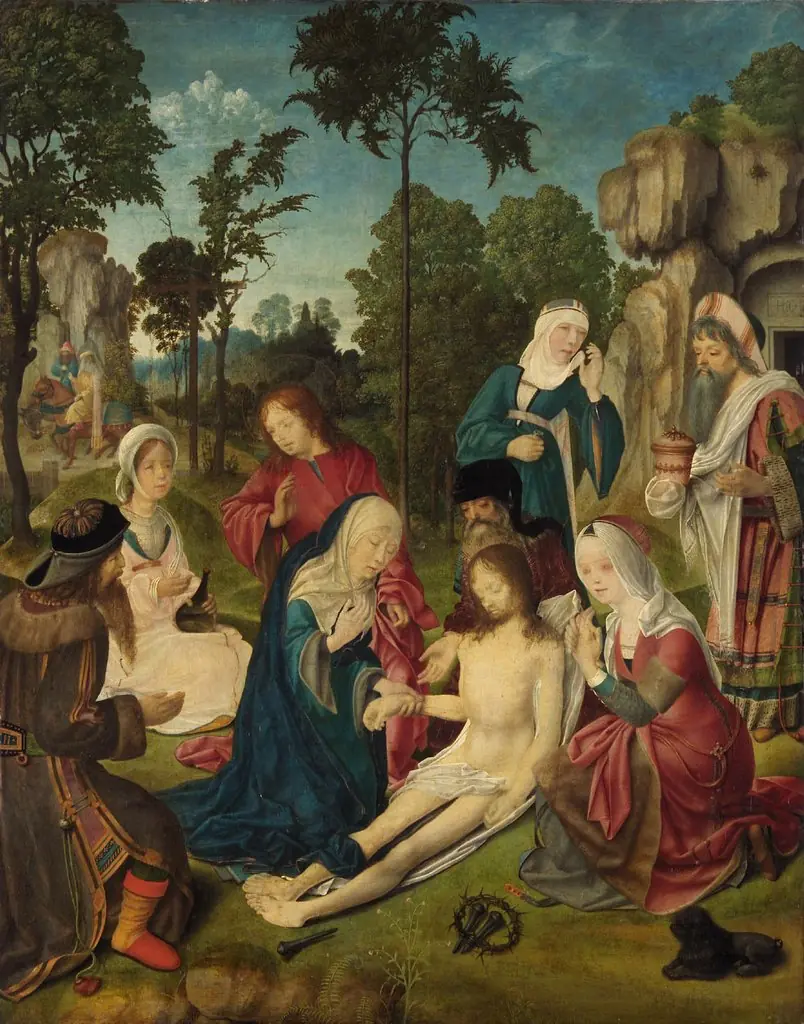 Lamentation of Christ
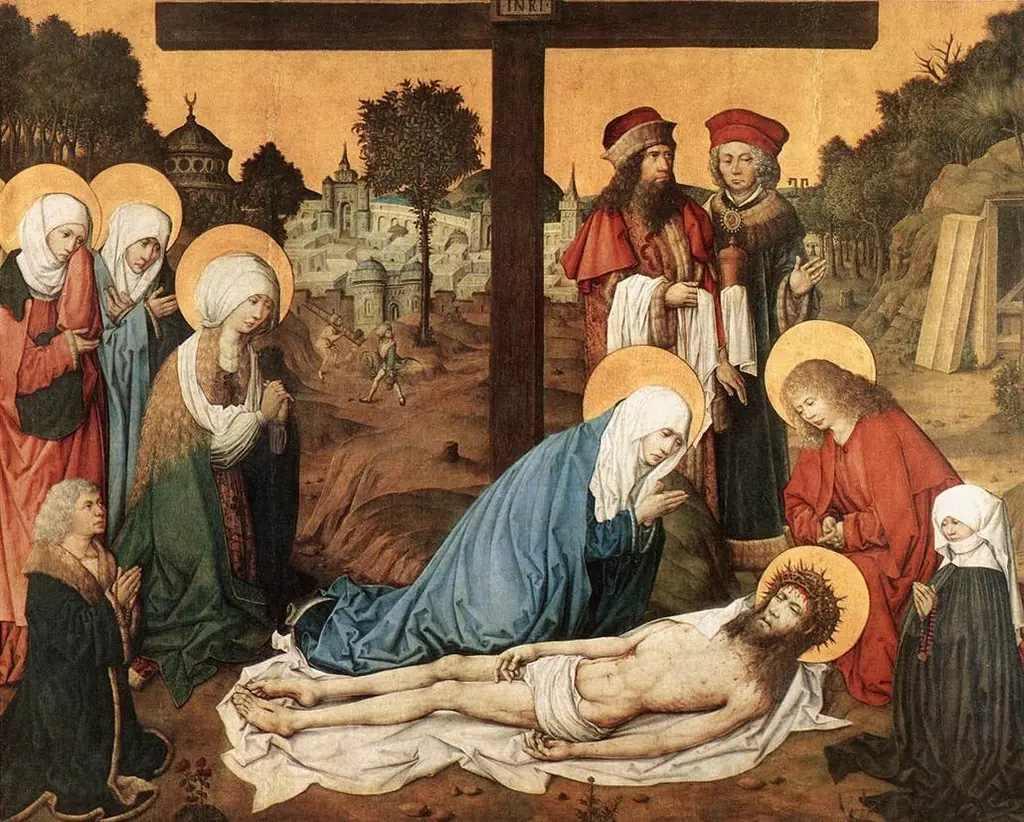 Lamentation of Christ
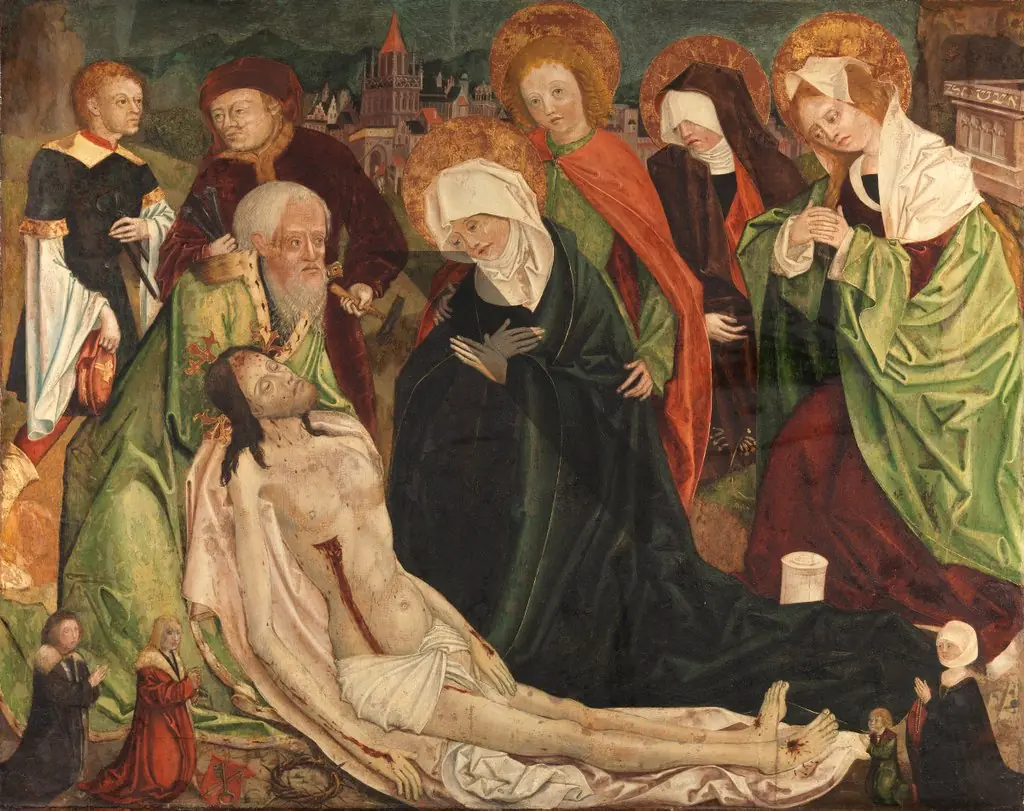 The Lamentation of Christ
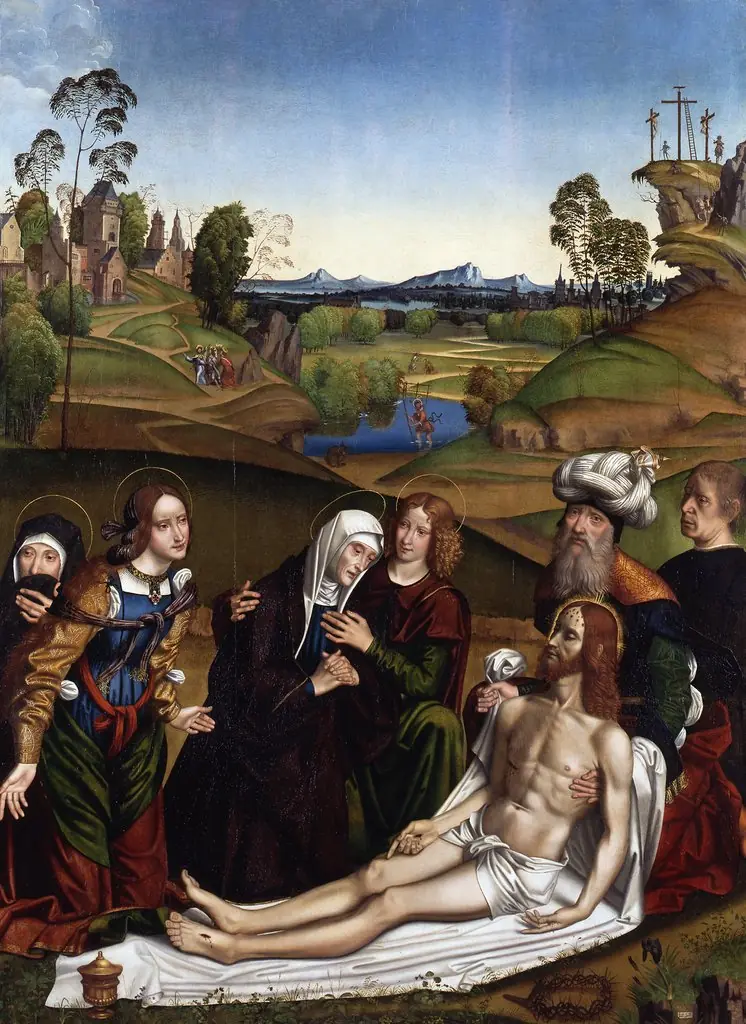 The Lamentation of Christ with a Donor
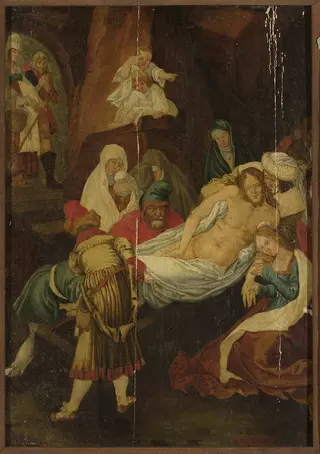 Entombment of Christ (Matthew 27:59–61; Mark 15:46–47; Luke 23:53–56; John 19:38–42)
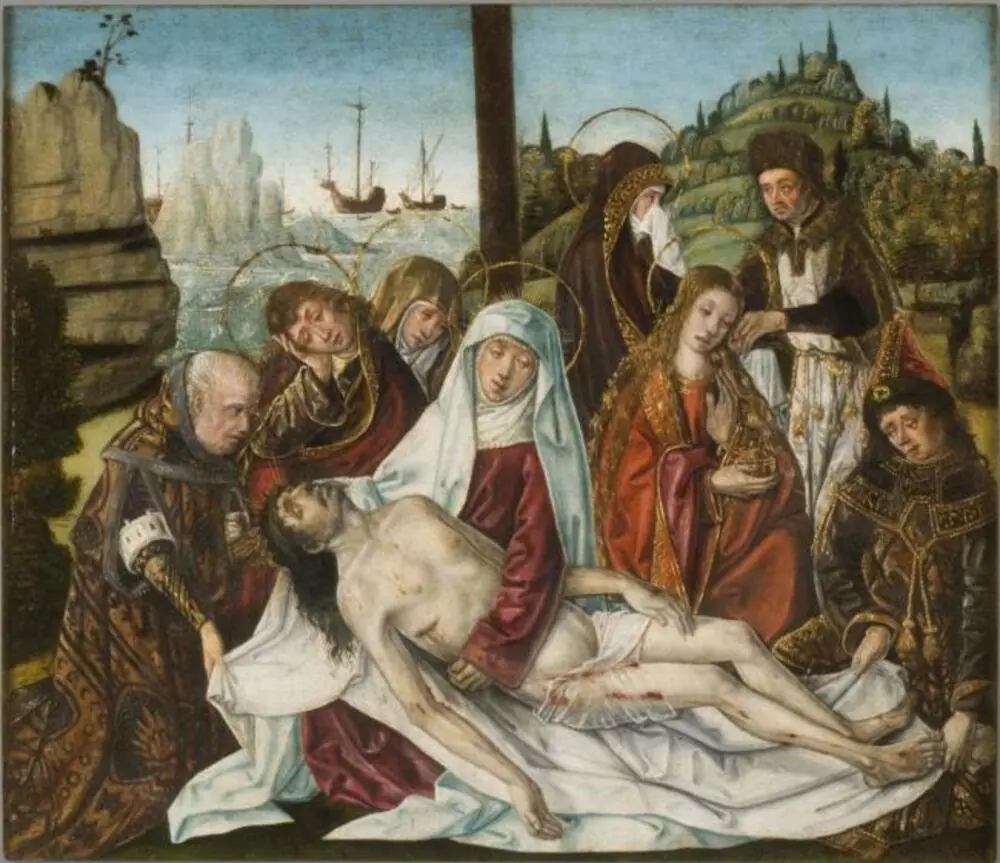 The Lamentation