Artwork
Portrait of Engelbrecht II, Count of Nassau
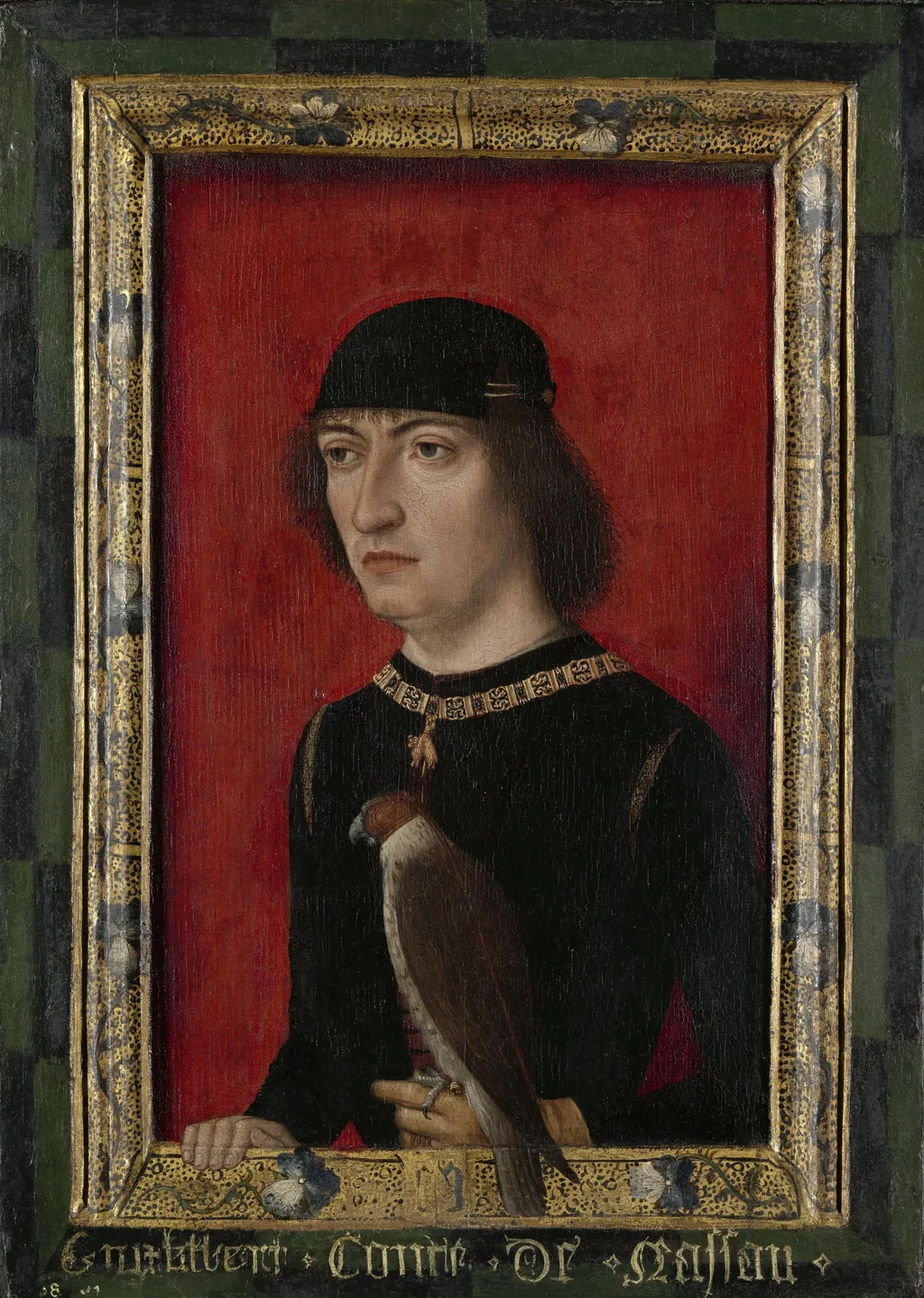
Portrait of Engelbrecht II, Count of Nassau is an oil painting by the Northern Renaissance artist Master of Portraits of Princes. It dates from 1493 and is held in the collection of the Rijksmuseum.
About this work
Subject & Meaning
The painting portrays Engelbert II of Nassau, Count of Nassau, as indicated by the title and the work’s depiction of the sitter.
The painting portrays Engelbert II of Nassau, Count of Nassau, as indicated by the title and the work’s depiction of the sitter. He is shown with a falcon perched on his hand, an attribute that identifies him and signals his noble status. The inclusion of the falcon follows Early Netherlandish portraiture conventions where such animals served as symbols of the sitter’s rank, virtues, or personal pursuits.
Thus the work conveys both a likeness of the count and an emblematic statement of his aristocratic identity.
Technique & Style
Executed in 1485, this Early Netherlandish portrait utilizes oil paint applied to an oak panel support. The work measures 33.5 cm in height and 24 cm in width. Stylistically, the composition focuses on the depiction of Engelbrecht II, Count of Nassau, who is portrayed holding a falcon, a detail that anchors the subject's identity within the genre of princely portraiture.
History & Provenance
The portrait was created around 1485 by the Master of Portraits of Princes in oil paint on an oak panel. Its provenance traces ownership from Hollingworth Magniac, through Rudolf Arthur Peltzer and Michiel Onnes, to its current holding in the Rijksmuseum. The work has been displayed in hall 0.4 of Nassau Palace and was included in the exhibition "Remember Me".
Portrait of Engelbrecht II, Count of Nassau is held in the collection of the Rijksmuseum in Amsterdam. The painting was acquired from the Hollingworth Magniac Collection and is currently displayed in hall 0.4 of the Nassau Palace section. Its provenance includes former ownership by Hollingworth Magniac, Rudolf Arthur Peltzer, and Michiel Onnes before entering the museum's holdings. The work was featured in an exhibition titled Remember Me.
Legacy
The work has been cited in scholarship as a representative example of early Netherlandish portraiture, shaping later understandings of courtly representation in the late 15th century. Its inclusion in the Remember Me exhibition reinforced scholarly interest in the Master of Portraits of Princes' role in disseminating imperial imagery. The painting's provenance through private collectors before its acquisition by the Rijksmuseum illustrates patterns of art circulation among European aristocracy.
Overview
The work is an oil painting executed in 1493 by the anonymous workshop known as the Master of Portraits of Princes. It portrays Engelbert II, Count of Nassau, positioned against a uniform red backdrop. The composition is framed by a gilded border adorned with miniature birds, emphasizing the portrait’s formal, courtly character.
Context
The portrait belongs to the Northern Renaissance, a period marked by the diffusion of oil techniques and heightened realism in court portraiture. Such images served both as personal commemoration and as political propaganda, presenting noble patrons as dignified, cultured, and aligned with contemporary ideals of rulership.
Own this work as a print
Artist & collection
Artist
Master of Portraits of Princes
This early Netherlandish painter specialized in rulers’ likenesses, think crisp velvet collars and golden rings.

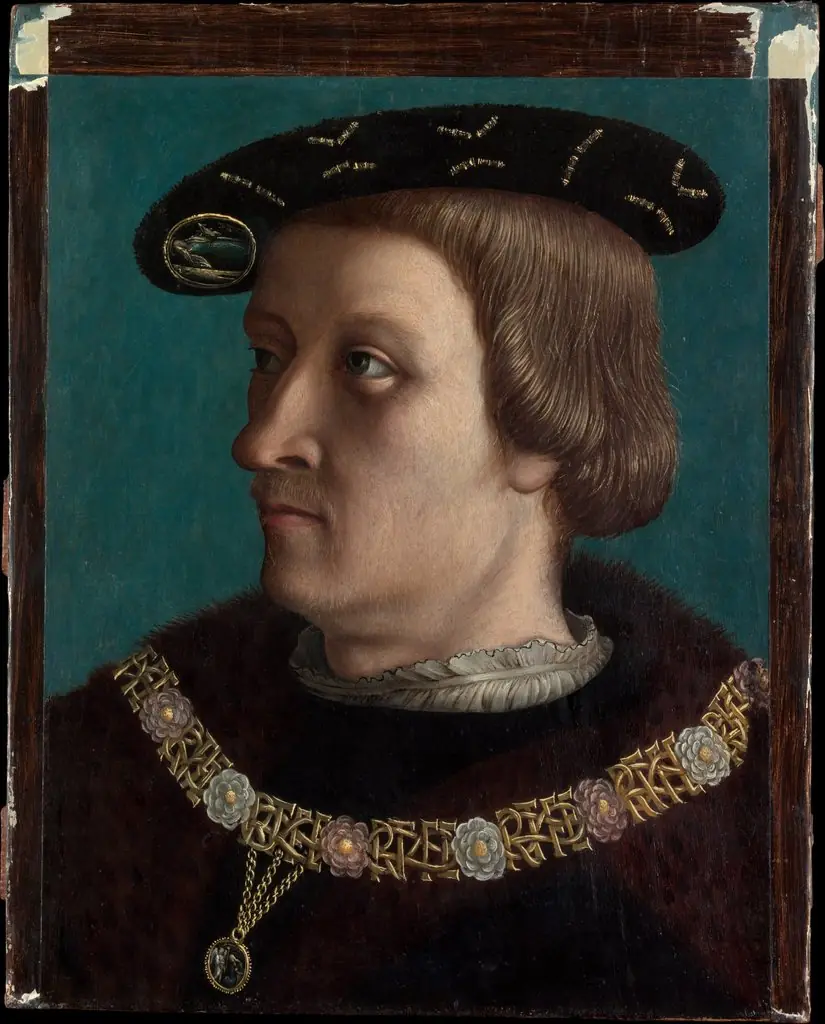
- Portrait of a Man Wearing the Order of the Annunziata of Savoy
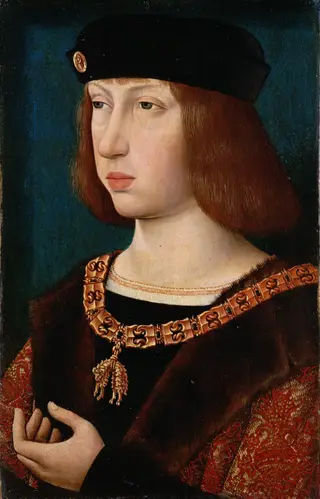 Portrait of Philips 'de Schone' van Habsburg (1478-1506)
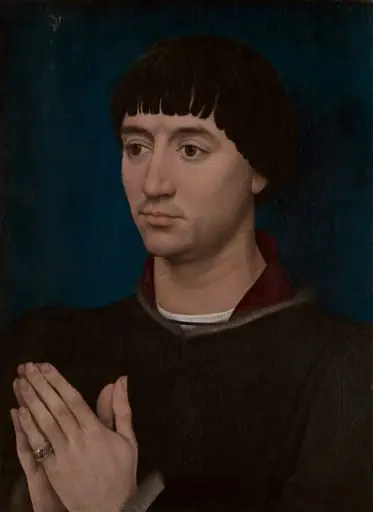 Portrait of Jean Gros (recto); Coat of Arms of Jean Gros (verso)
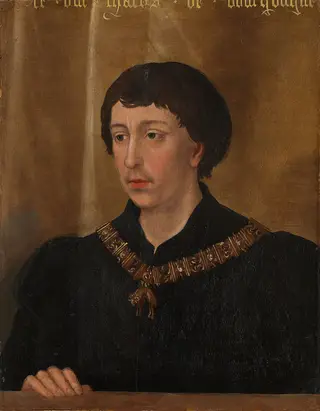 Herzog Karl der Kühne (1433-1477) von Burgund
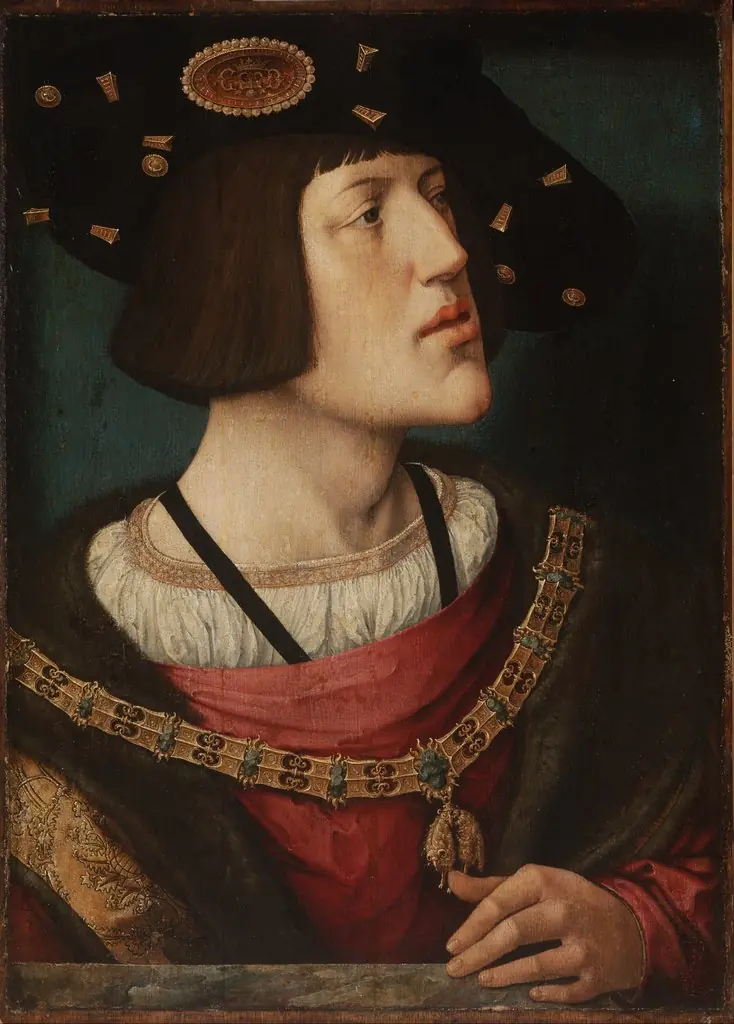 Portrait of Charles V, Holy Roman Emperor
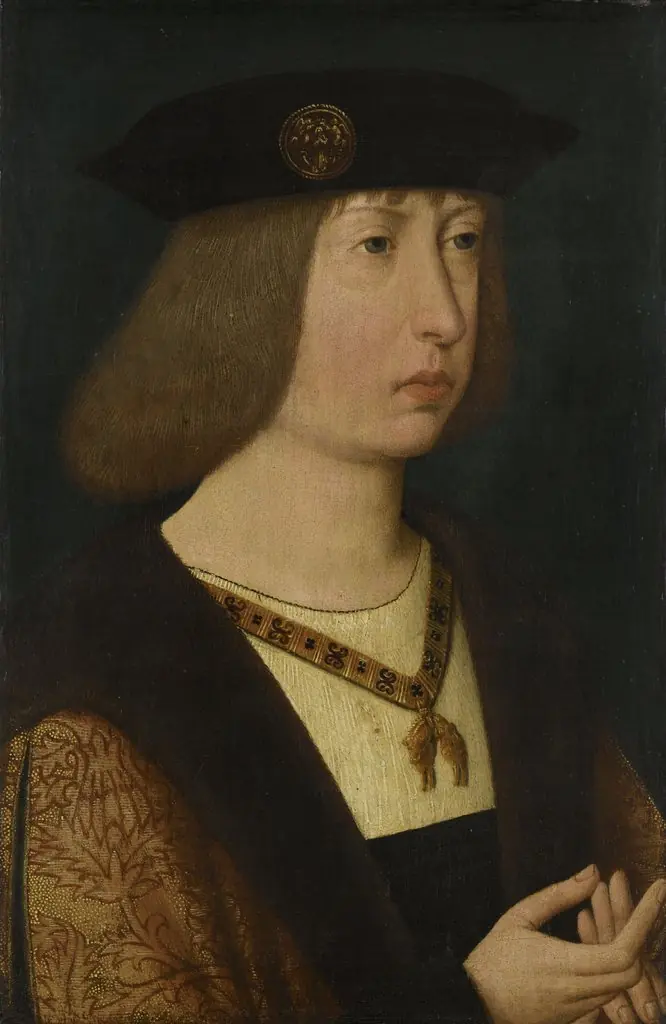 Portrait of Philipp I
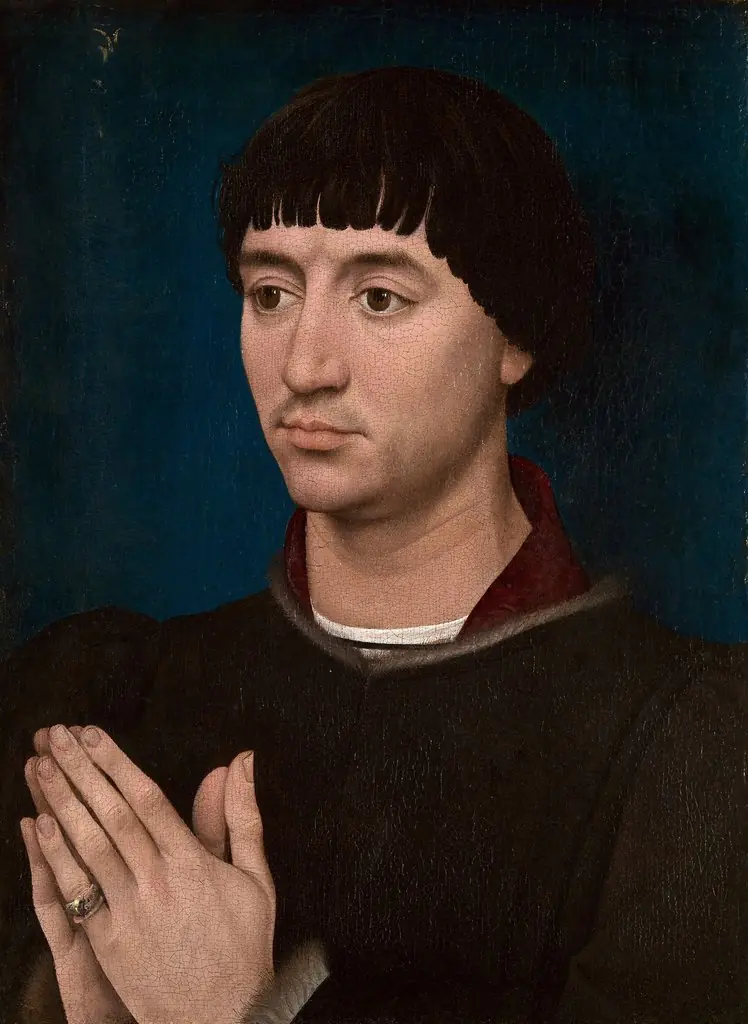 Portrait of Jean Gros
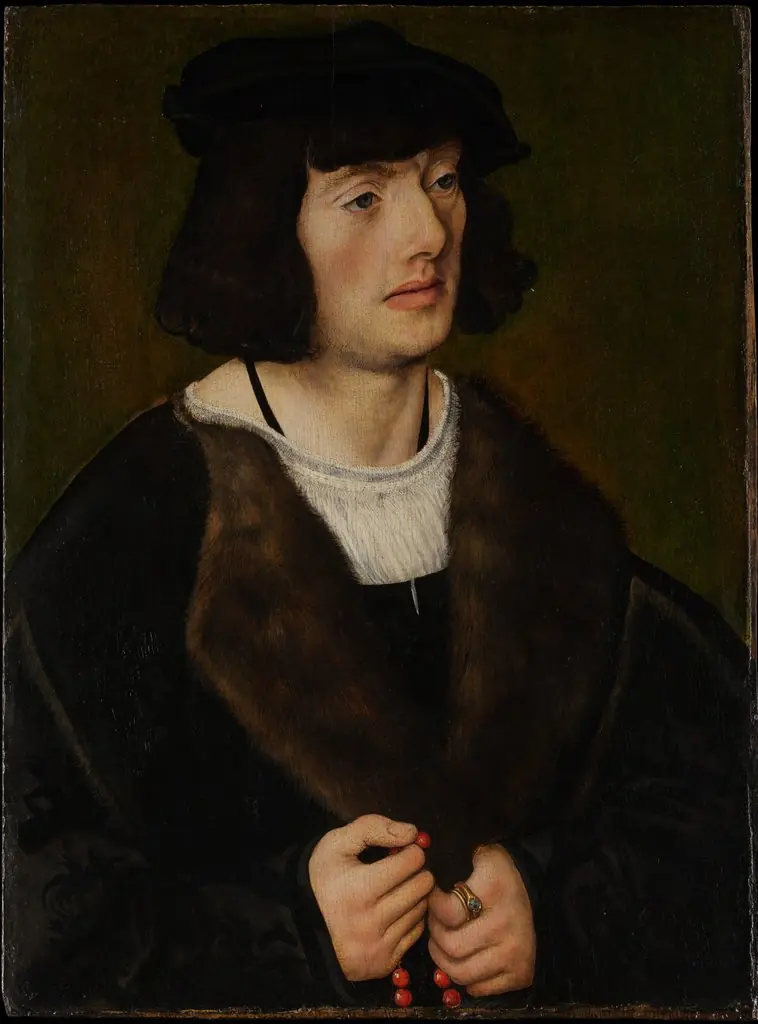 Portrait of a Man with a Rosary
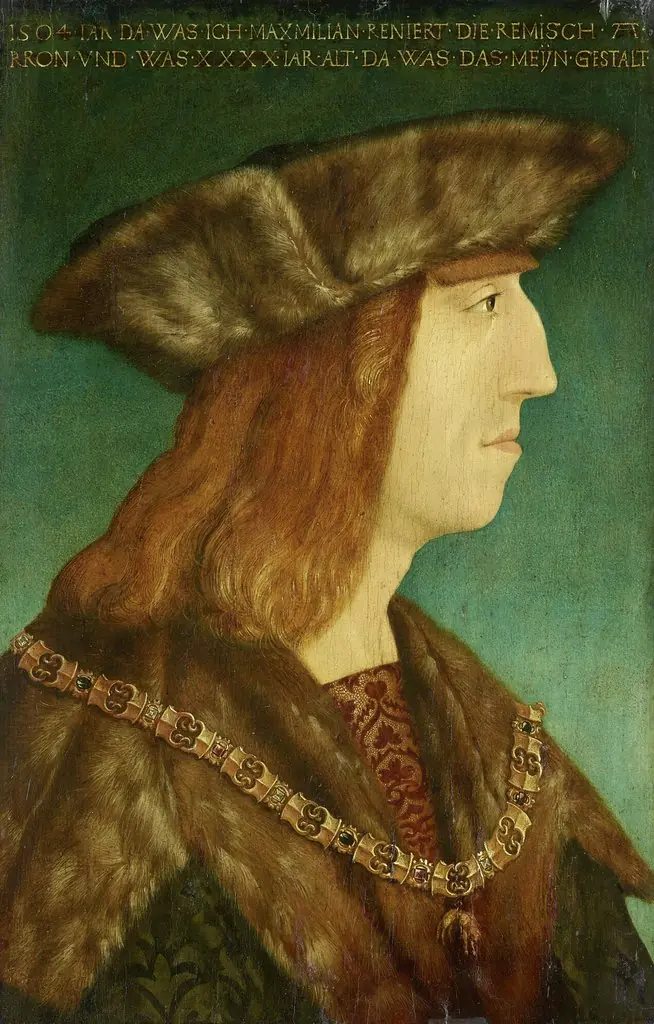 Emperor Maximilan I. (1459-1519)
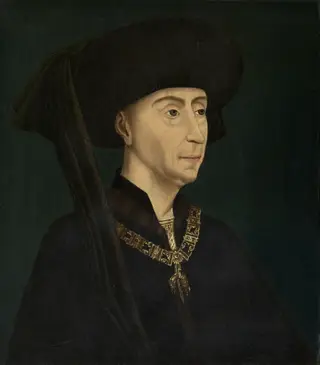 Philip the Good
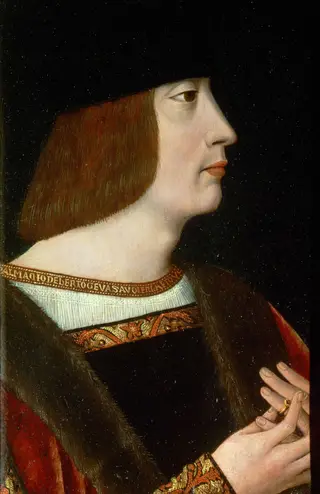 Herzog Philibert II. von Savoyen (1480-1504), Brustbild
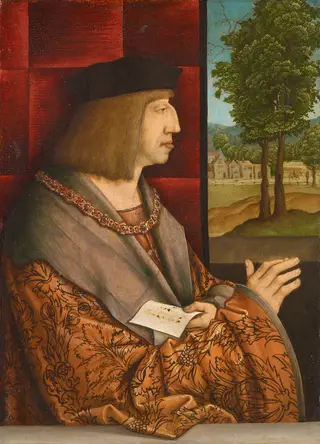 Portrait of Maximilian I (1459-1519)