Artwork
Portrait of Philips 'de Schone' van Habsburg (1478-1506)
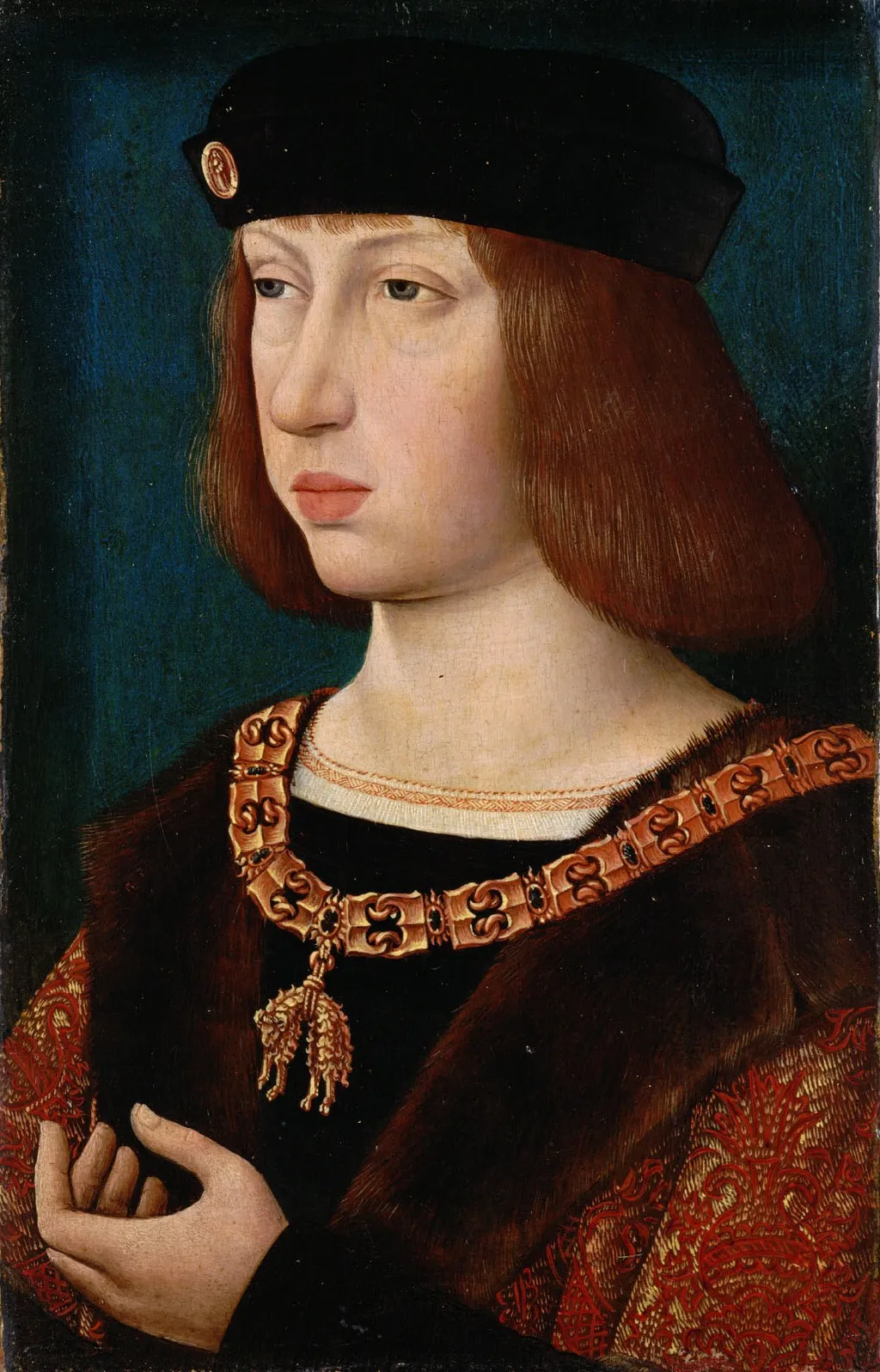
Portrait of Philips 'de Schone' van Habsburg (1478-1506) is an oil painting by the Northern Renaissance artist Unknown. It dates from 1500 and is held in the collection of the Kunsthistorisches Museum.
About this work
Subject & Meaning
The painting depicts Philip I of Castile (1478–1506), known in Dutch tradition as Philips 'de Schone' (Philip the Handsome), the Habsburg ruler who inherited the Burgundian Netherlands from his mother Mary of Burgundy and later became the first Habsburg king of Castile through his marriage to Joanna of Castile. Executed in 1500, the portrait belongs to the Early Netherlandish tradition and is identified as a work after the Master of the Legend of the Magdalen, indicating that the panel translates an established courtly image type of the young Habsburg prince into a smaller-scale format. As a dynastic likeness, the work functions as a representative image of Burgundian-Habsburg authority, presenting the sitter in the conventional visual language used to circulate Philip's likeness among the courts of the Low Countries.
Technique & Style
1 cm wide) suggest an intimate devotional format, and the surface bears a fine brushwork that models the sitter’s features with subtle chiaroscuro.
The work is executed in oil paint on a wooden panel, a format typical of Early Netherlandish portraiture. The small dimensions (36 cm high by 2.1 cm wide) suggest an intimate devotional format, and the surface bears a fine brushwork that models the sitter’s features with subtle chiaroscuro. The handling of light and texture aligns with the stylistic concerns of the Early Netherlandish movement, emphasizing meticulous detail and a luminous surface quality.
History & Provenance
Created in 1500, this oil-on-panel portrait depicts Philip I of Castile, also known as Philips 'de Schone' van Habsburg. The work is attributed to the Master of the Magdalene Legend and is classified within the Early Netherlandish painting movement. It measures 36 cm in height and 2.1 cm in width. The painting is currently held in the collection of the Kunsthistorisches Museum.
Context
The portrait of Philip I of Castile, known as Philips 'de Schone' van Habsburg, was created circa 1500 using oil paint on panel and belongs to the Early Netherlandish painting movement. It depicts the Habsburg heir and was originally part of the collection at the Kunsthistorisches Museum, where it remains housed. Scholars have examined its stylistic connections to the Meister der Magdalenenlegende tradition and its role within early Netherlandish portraiture, situating it within the broader cultural and artistic context of Habsburg Europe circa 1500.
The work is classified as a portrait and exemplifies the genre through its detailed rendering and symbolic composition, reflecting both the sitter's status and the artistic innovations of the period. Its attribution to this tradition underscores its significance in the study of early Northern Renaissance art and the evolution of royal portraiture in the late medieval and early Renaissance eras.
Overview
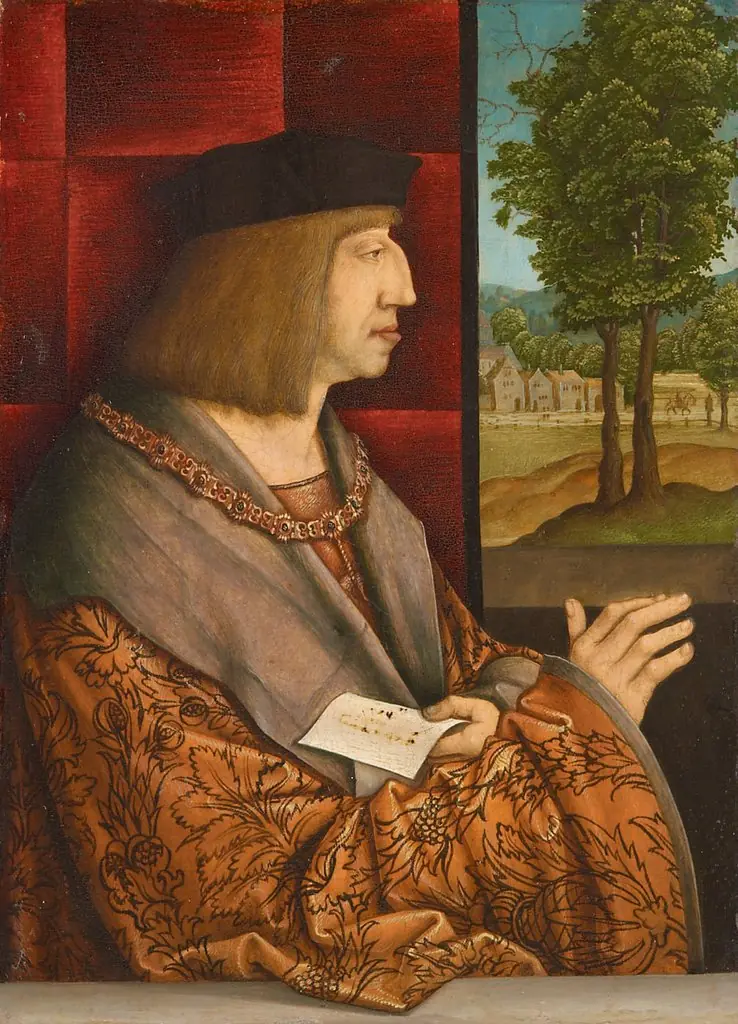
The portrait depicts a youthful male figure with pale complexion and reddish‑brown hair, dressed in a black hat adorned with a brooch, a dark collar over a white shirt, and a vivid red robe trimmed with gold embroidery. A golden chain rests around his neck, and his hands are joined in front of his torso. The figure is set against a deep, uniform background that isolates him from any surrounding context.
Artist & collection









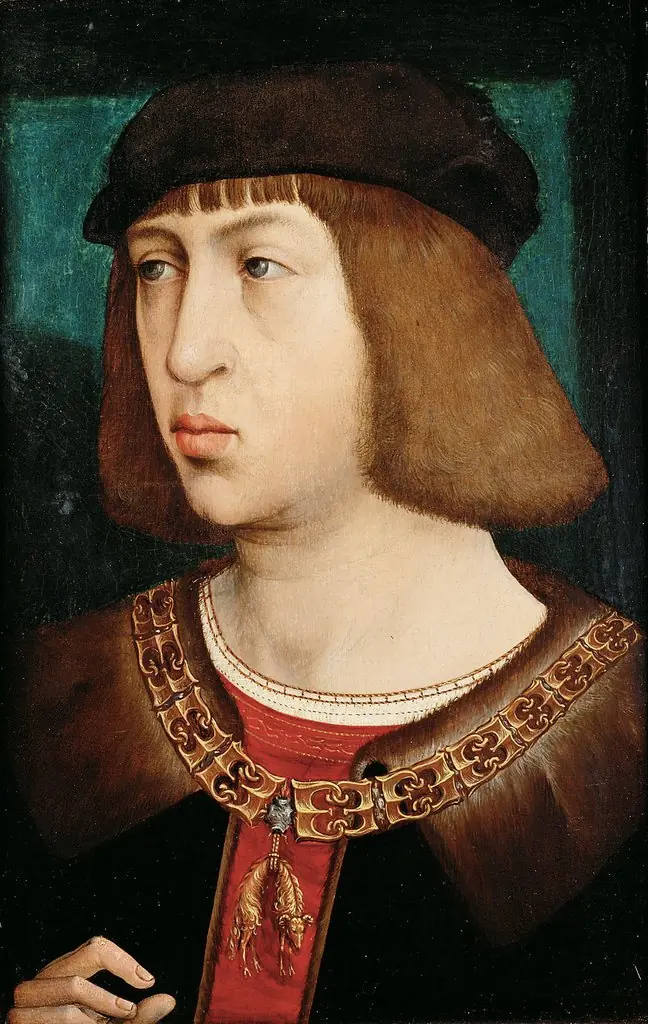 Philip the Handsome (1478-1506)
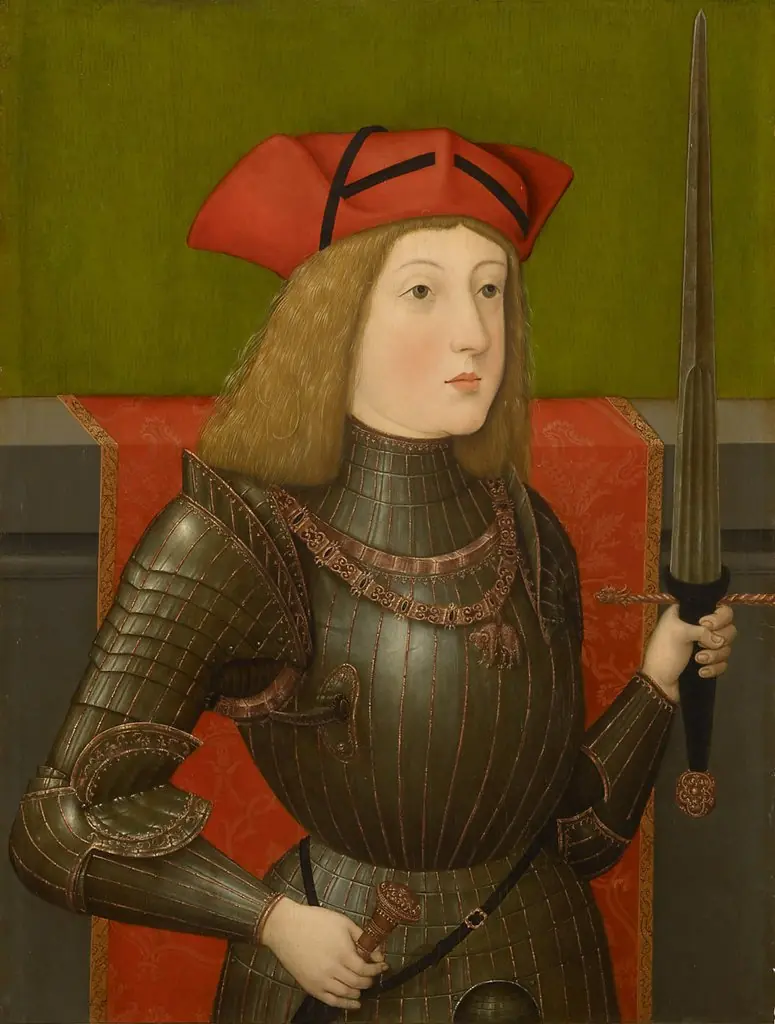 Portrait of emperor Charles V (1500-1558)
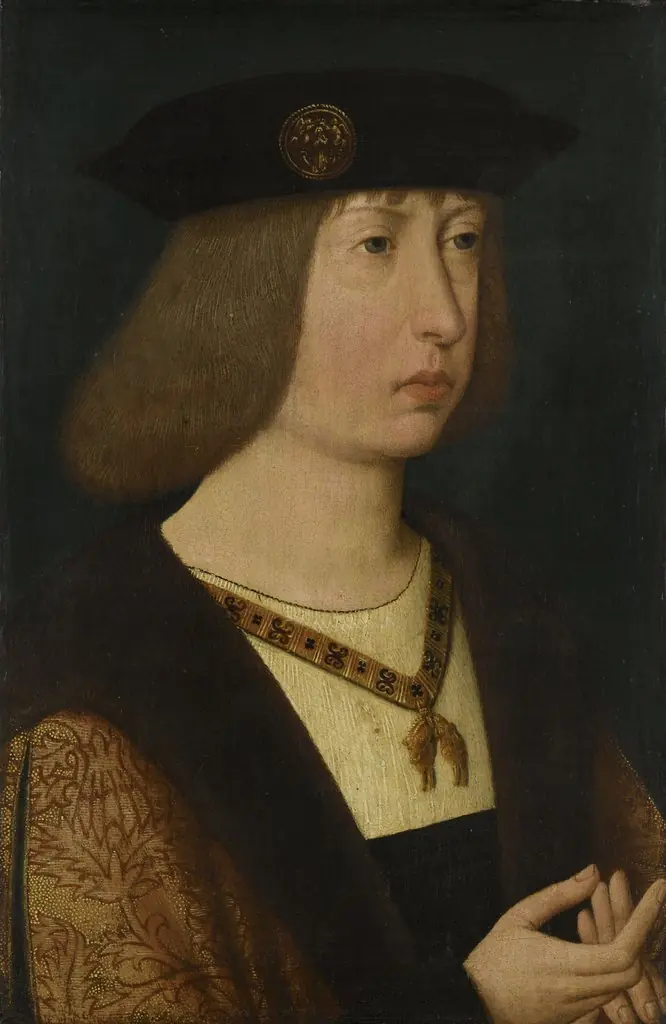 Portrait of Philipp I
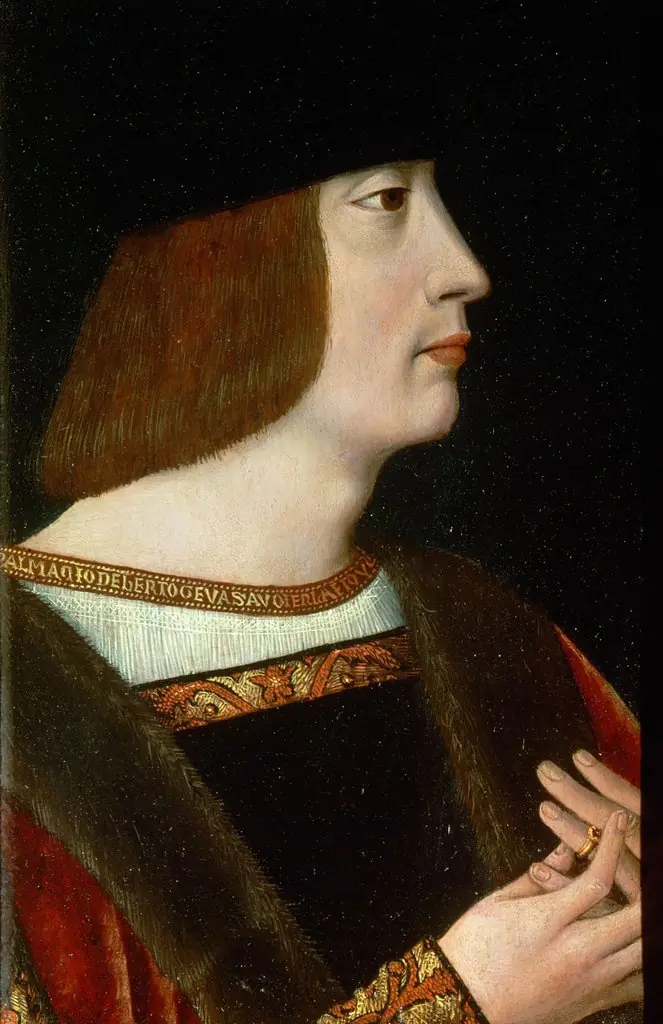 Herzog Philibert II. von Savoyen (1480-1504), Brustbild
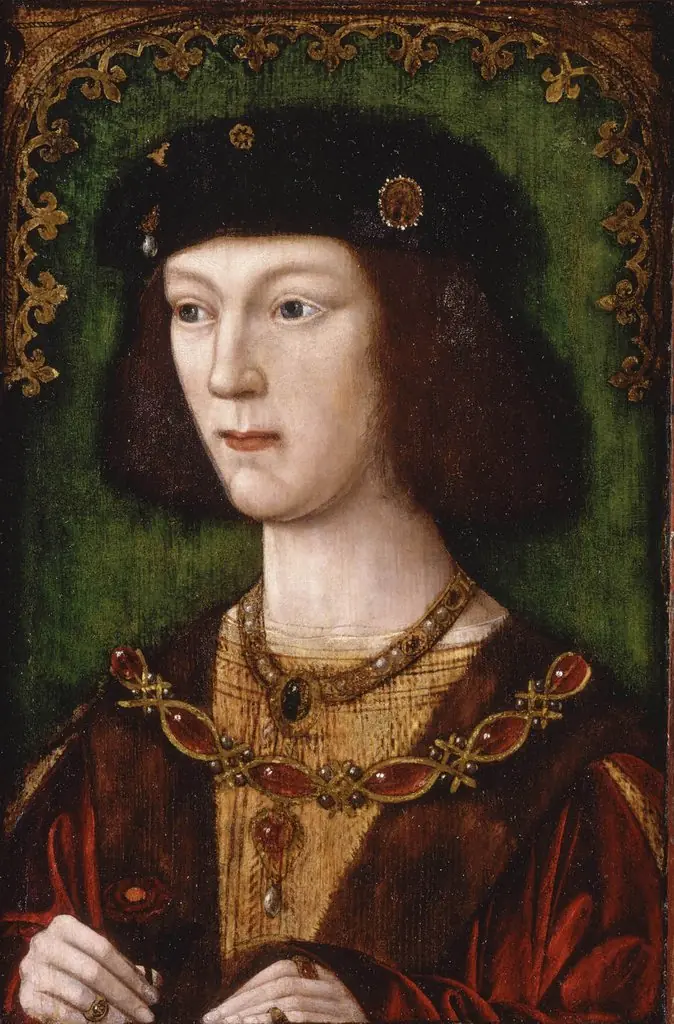 Henry VIII
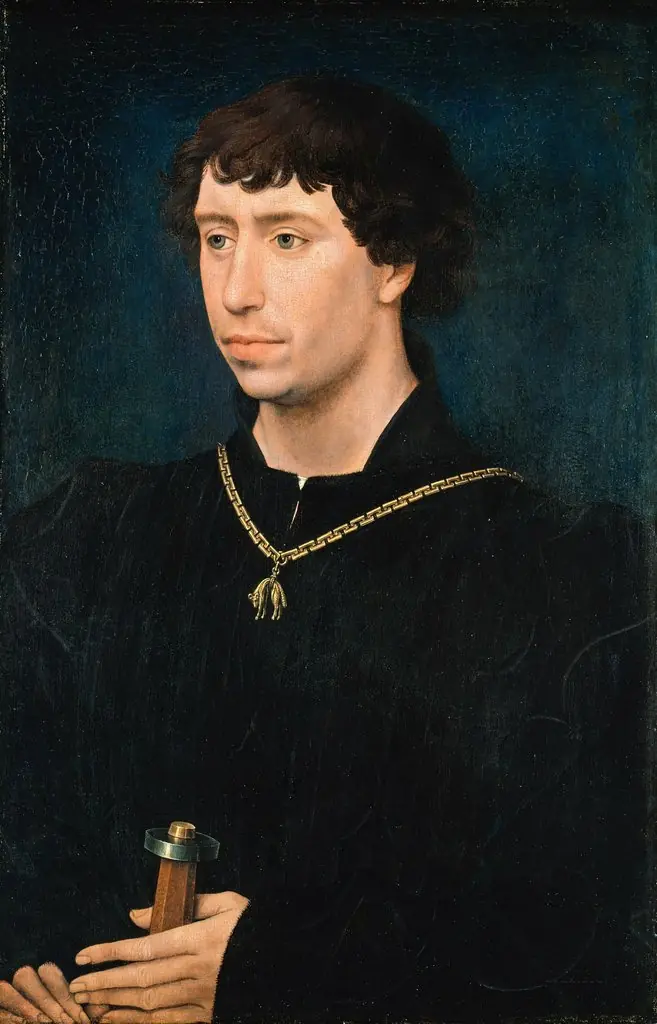 Portrait of Charles the Bold
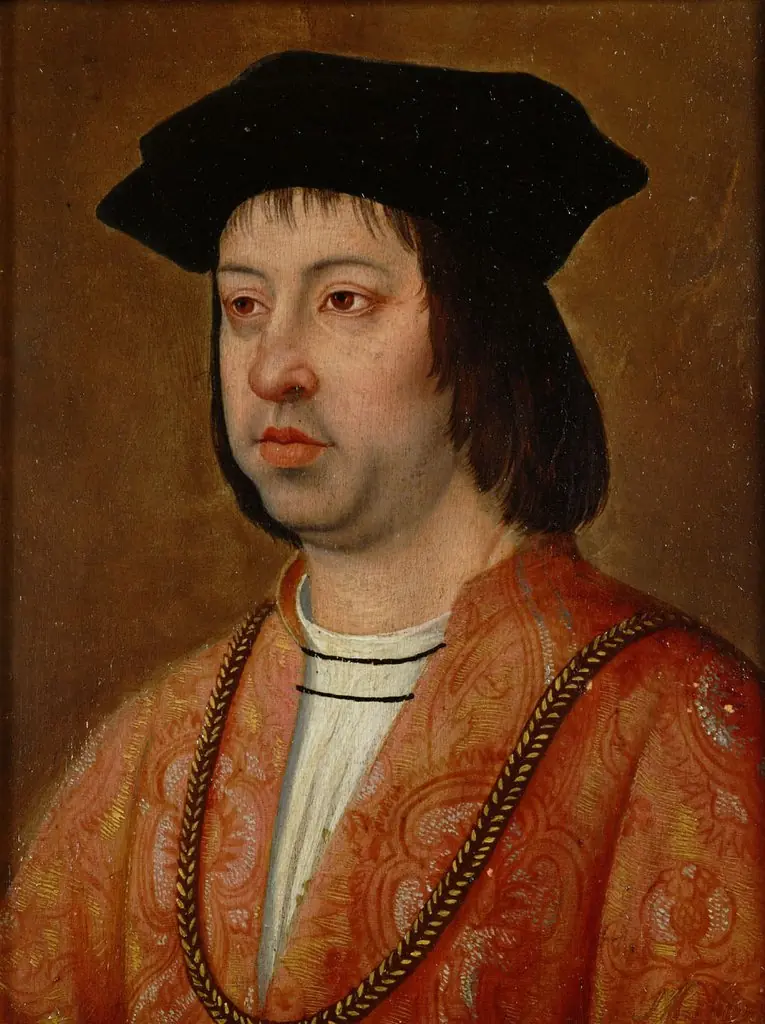 König Ferdinand II. (1452-1516) von Aragon
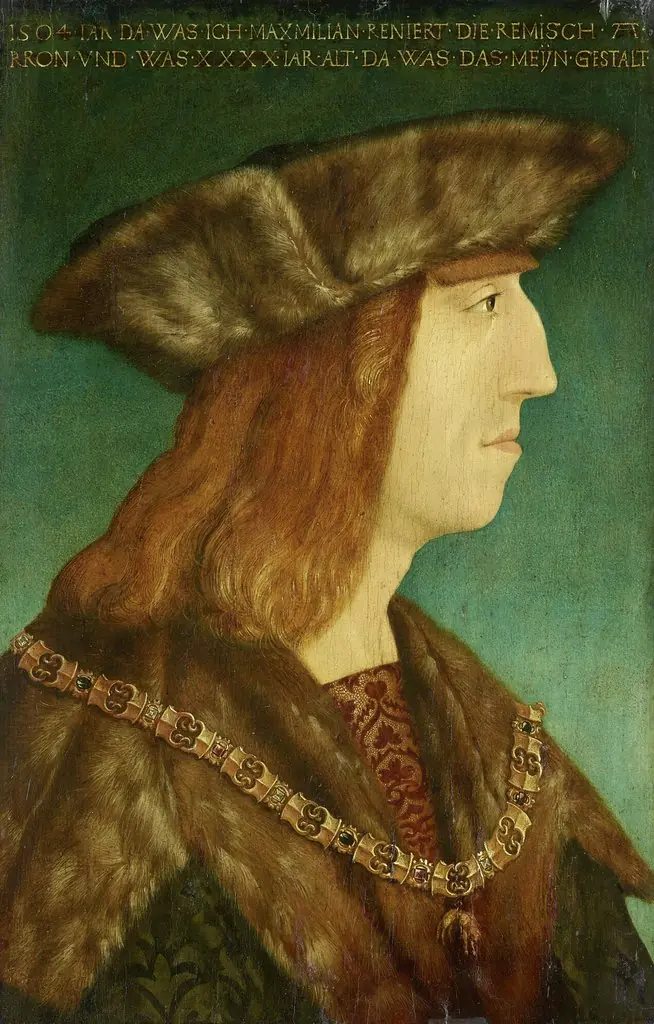 Emperor Maximilan I. (1459-1519)
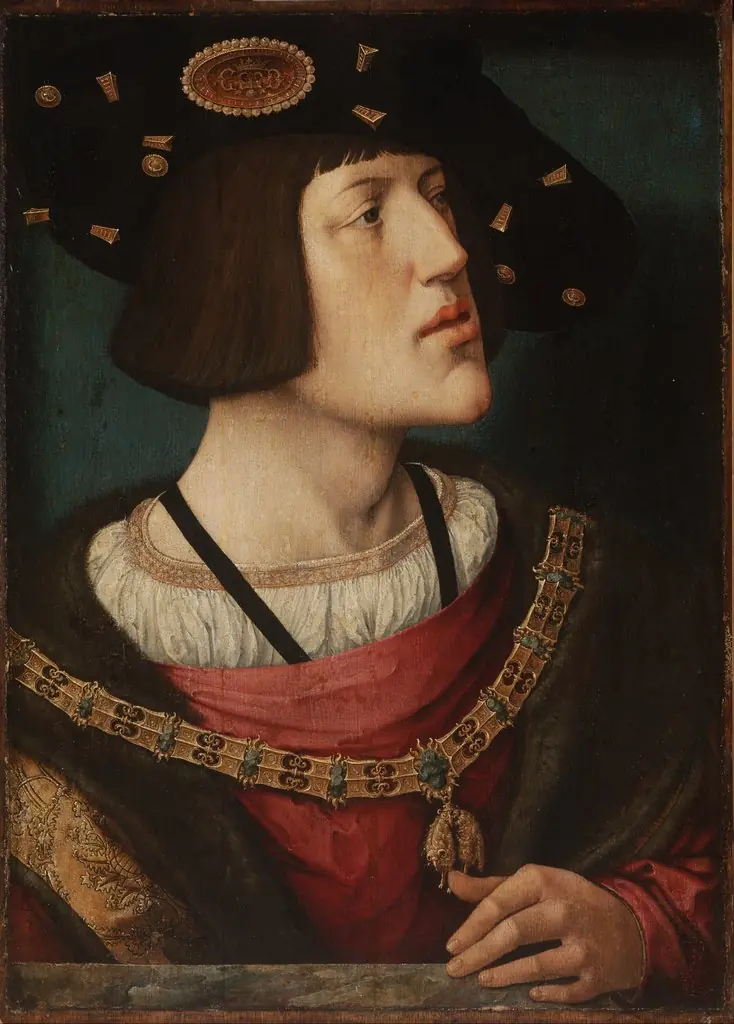 Portrait of Charles V, Holy Roman Emperor
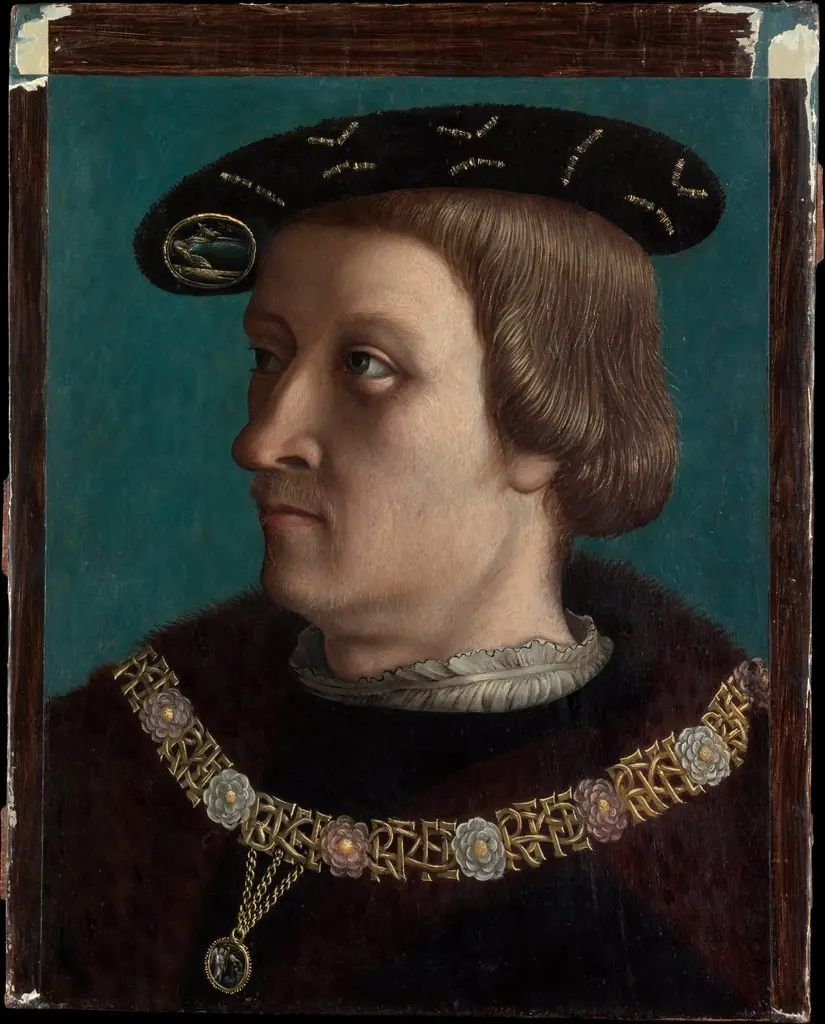 Portrait of a Man Wearing the Order of the Annunziata of Savoy
 Portrait of Maximilian I (1459-1519)
- Portrait of King Louis II (1506-1526) of Hungary, 10-12 years old