Artwork
Saint Jerome and the Lion
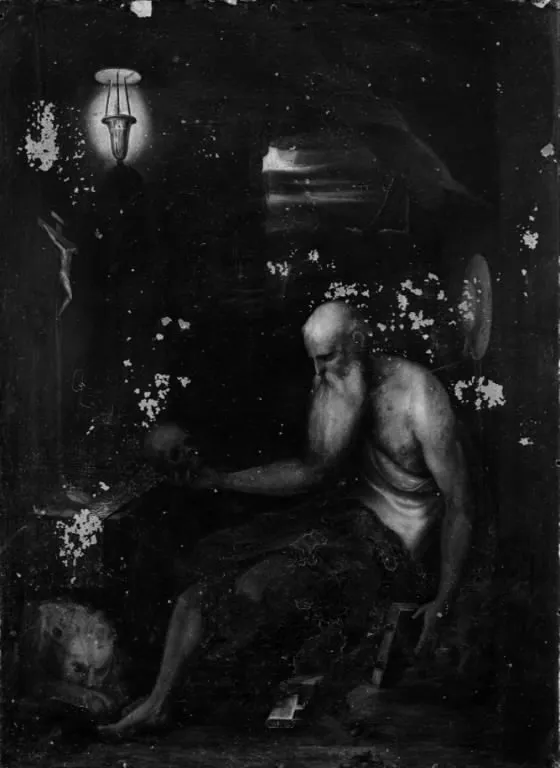
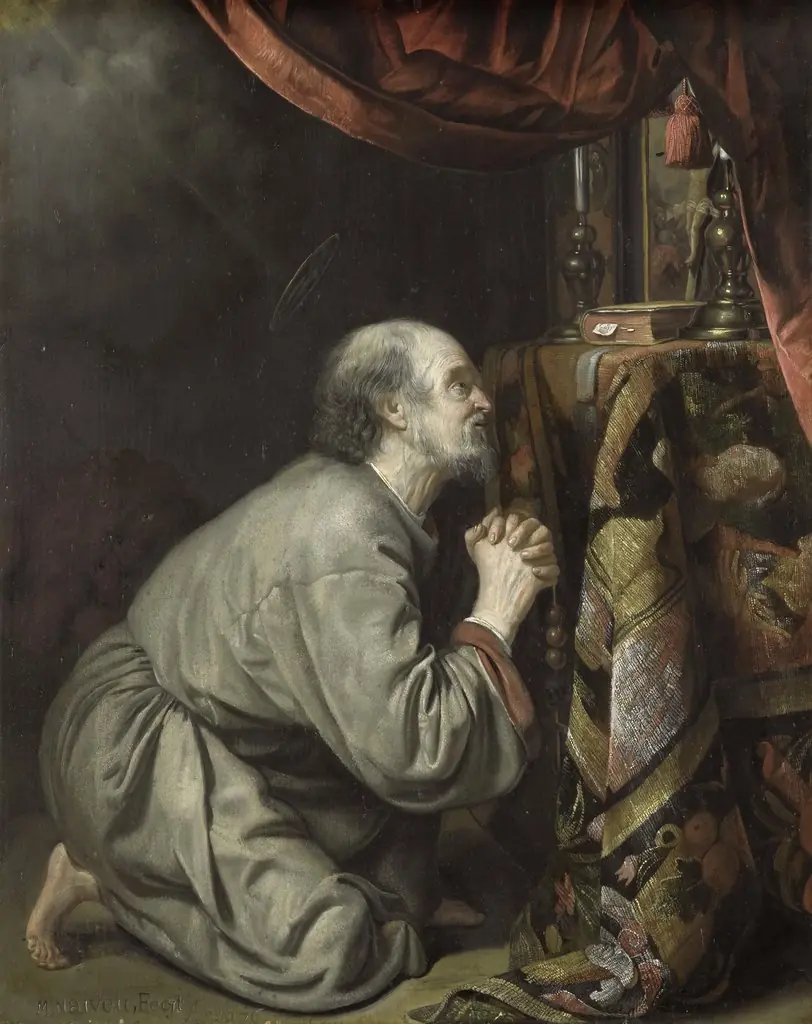
Saint Jerome and the Lion is an unspecified painting by the Dutch Golden Age artist Matthijs Naiveu. It dates from 1696 and is held in the collection of the Statens Museum for Kunst.
About this work
Subject & Meaning
Matthijs Naiveu's 1691 religious painting illustrates the hagiographic legend of Saint Jerome and the lion.
Matthijs Naiveu's 1691 religious painting illustrates the hagiographic legend of Saint Jerome and the lion. The work depicts the specific moment when the saint extracts a thorn from the animal's paw, an act that tames the beast and establishes a bond of loyalty between them. This narrative serves as the central iconographic focus, representing themes of compassion, divine intervention in the natural world, and the sanctity of the hermit life.
By capturing this miraculous encounter, the artwork visualizes the traditional story where the lion subsequently becomes Jerome's constant companion and protector within the monastery.
History & Provenance
Saint Jerome and the Lion was painted in 1691 by the Dutch artist Matthijs Naiveu, depicting the saint extracting a thorn from a lion’s foot. The work entered the collection of the Statens Museum for Kunst (the National Gallery of Denmark) and has remained there since. No earlier ownership or commission details are recorded in the available sources.
The work Saint Jerome and the Lion by Matthijs Naiveu (1691) is housed in the collection of the Statens Museum for Kunst, with the accession number KMS1949:1. It was first exhibited at the museum in 1949 and has been part of the museum's permanent display of Dutch and Flemish paintings since its acquisition.
Overview
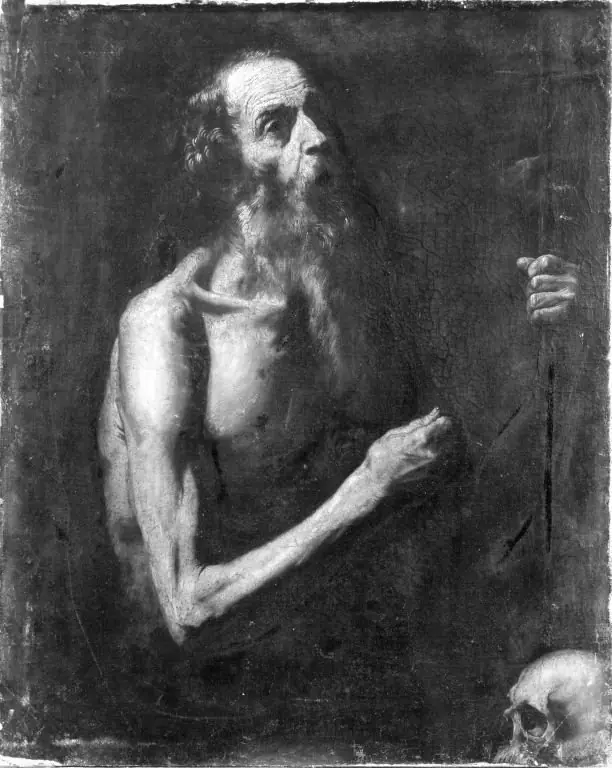
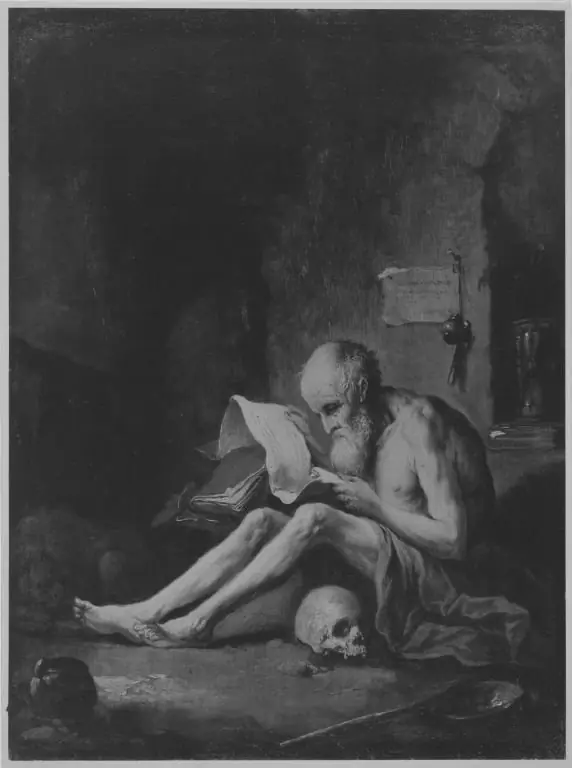
Matthijs Naiveu's Saint Jerome and the Lion, executed in 1696, depicts the Penitent Saint Jerome in his traditional ascetic setting. The composition centers on the elderly saint, characterized by a long white beard and a partially draped torso, kneeling within a shadowed interior. He holds a stone, a symbol of his penitential self-flagellation, while a human skull rests at his feet, serving as a memento mori.
A small lion, the saint's legendary companion, emerges from the darkness behind him, its head visible near the figure's shoulder. The scene is illuminated by a single hanging lamp, which casts a focused, chiaroscuro light that highlights the saint's face and hands against a predominantly black background. This work reflects the Dutch Golden Age's enduring interest in religious subjects rendered with naturalistic detail and dramatic lighting.
Painted late in Naiveu's career, the piece demonstrates his mastery of intimate, psychologically charged interiors and his ability to convey spiritual introspection through restrained composition and controlled illumination.
Technique & Style
Naiveu employs a restrained palette of deep blacks and muted earth tones, allowing the faint glow of a hanging lamp to illuminate the saint’s white beard and the lion’s fur. The chiaroscuro effect heightens the sense of introspection, while the sparse inclusion of wilted flowers adds a subtle note of transience.
Context
During the Dutch Golden Age, depictions of Saint Jerome were common, often emphasizing his role as a translator of the Bible and a hermit scholar. Naiveu’s rendition aligns with contemporary devotional art, focusing on personal piety and the moral lesson embodied by the saint’s encounter with the lion.
Artist & collection