Artwork
Hl. Hieronymus
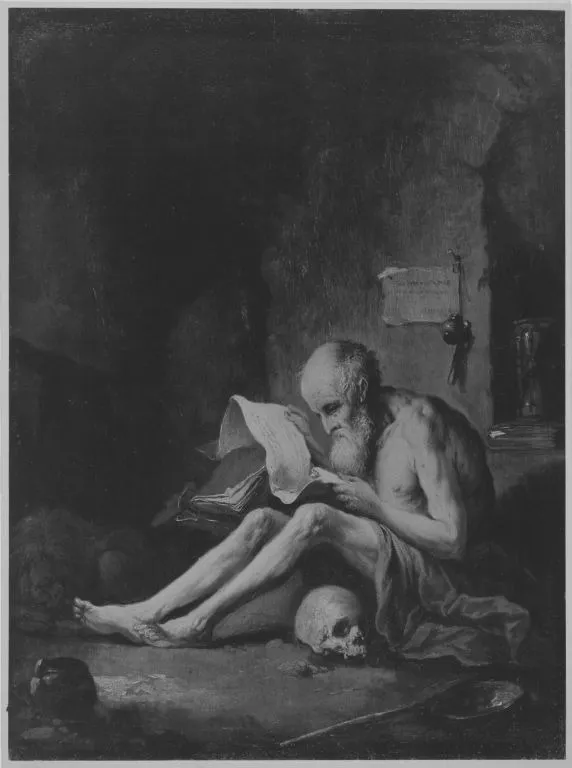
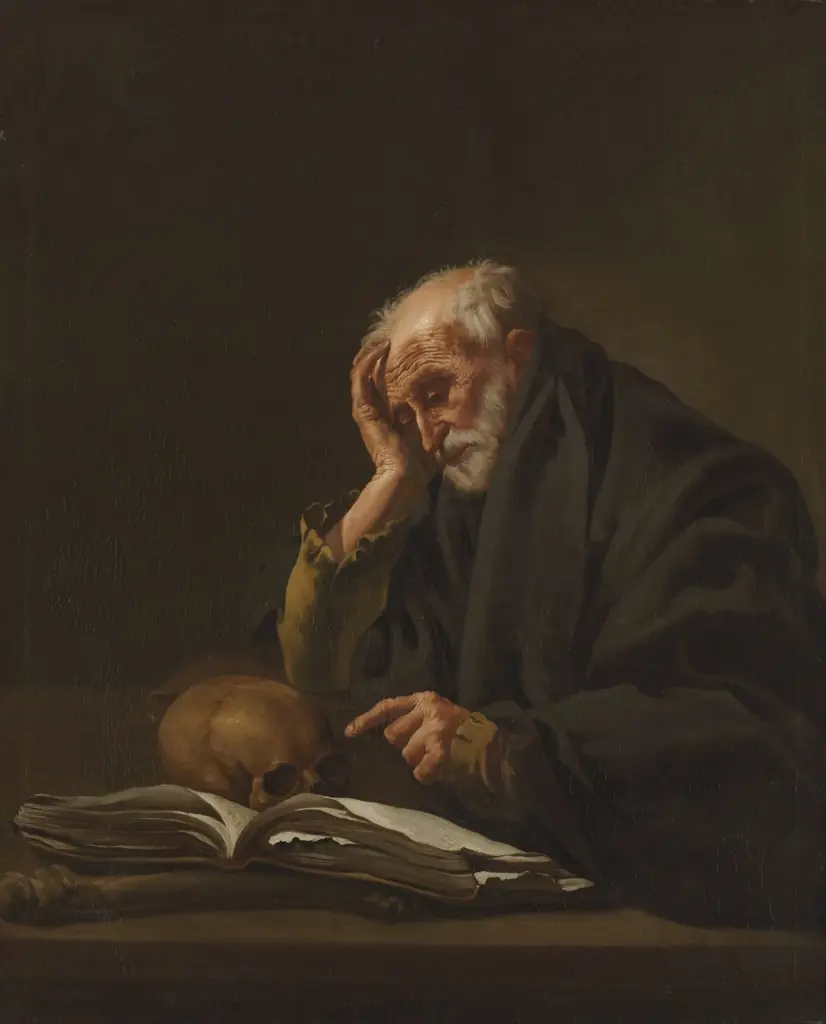
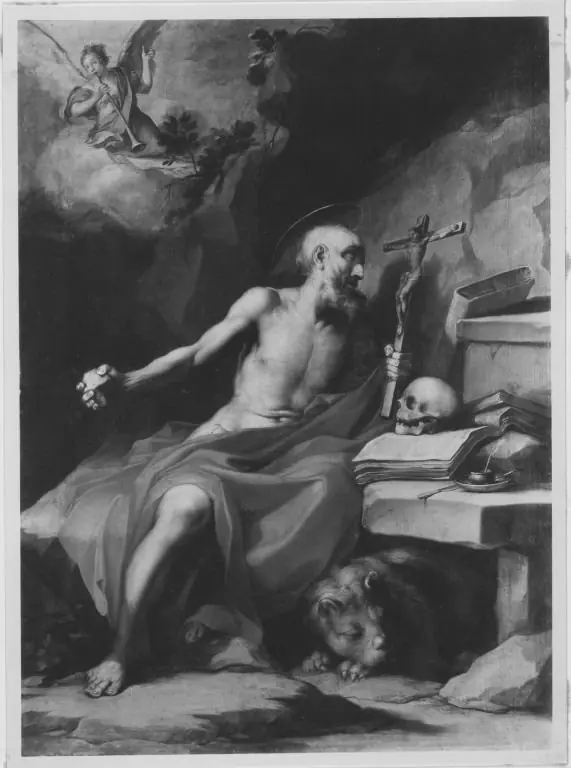
Hl. Hieronymus is an unspecified painting by the Flemish Baroque painting artist David Teniers the Younger. It dates from 1650 and is held in the collection of the Bavarian State Painting Collections.
About this work
Subject & Meaning
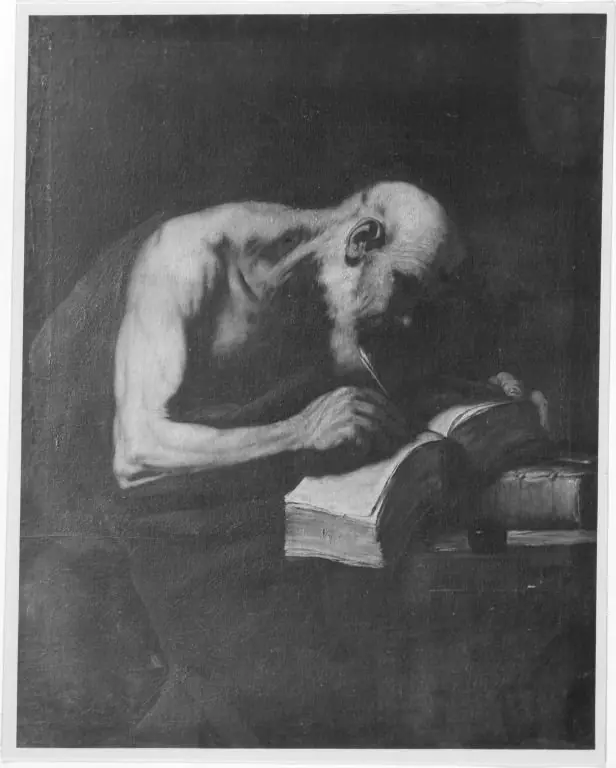
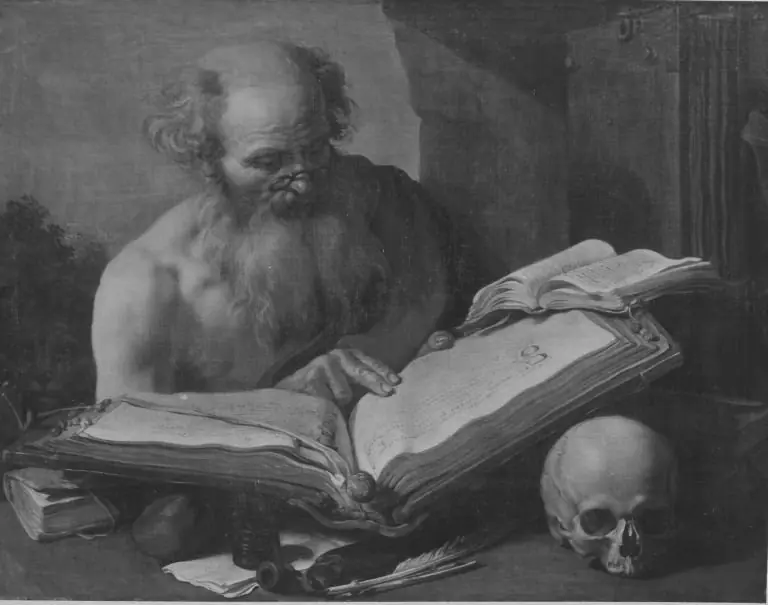
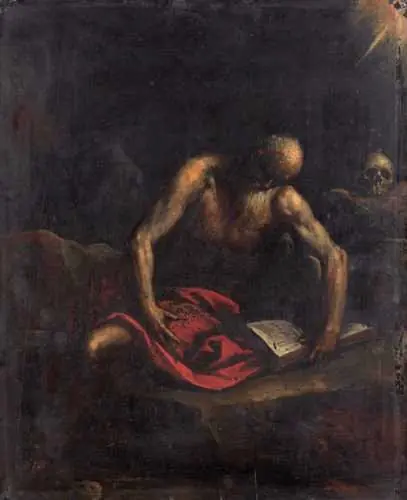
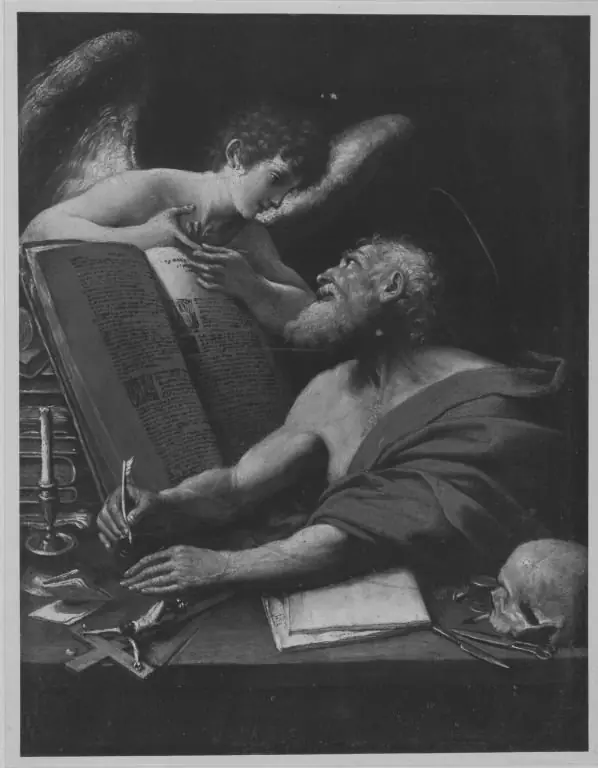
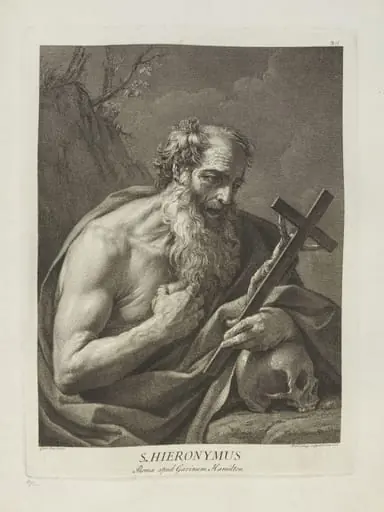
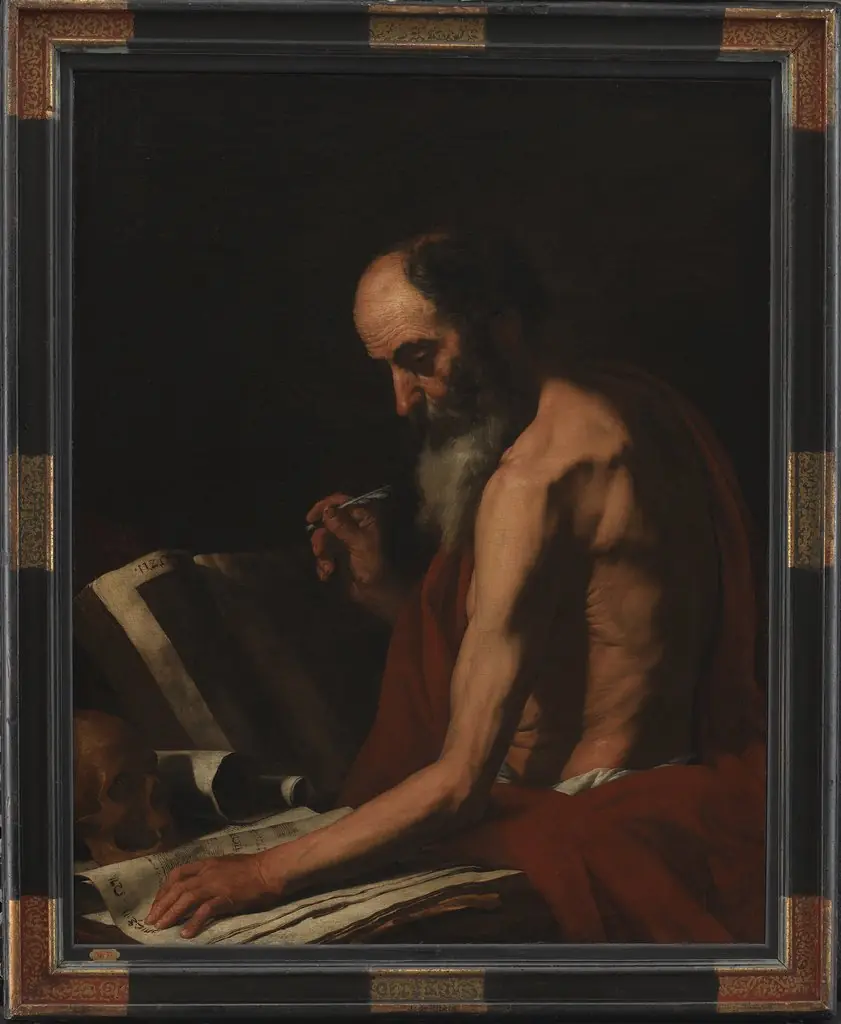
The painting depicts Jerome, a Christian priest and theologian who is venerated as a saint. As a work of religious art, the image focuses on this specific holy figure as its main subject. The composition serves to represent the saint within the context of Catholic devotion, consistent with the genre classifications assigned to the piece.
Technique & Style
The work is executed in oil on wood panel, depicting Saint Jerome in a devotional composition characteristic of mid-17th century religious painting.
The work is executed in oil on wood panel, depicting Saint Jerome in a devotional composition characteristic of mid-17th century religious painting. Formal analysis reveals Teniers' characteristic blending of realism and devotional imagery, with careful attention to texture and spatial arrangement within the confined panel format.
Measured dimensions of 34 cm in height and 25.2 cm in width confirm a small-scale devotional format typical of private religious works from this period. The painting's handling demonstrates the artist's technical proficiency in rendering both the physical presence of the figure and the spiritual atmosphere intended for contemplative use.
History & Provenance
The painting titled Hl. Hieronymus was created by David Teniers the Younger in 1650. This religious work depicting Saint Jerome is currently held within the collection of the Bavarian State Painting Collections at the Alte Pinakothek.
While the specific commission details and the full chain of ownership prior to its current location are not detailed in the available records, the work's creation is firmly dated to the year 1650. The piece remains a significant example of Teniers' religious output from that period.
The painting Hl. Hieronymus by David Teniers the Younger is held in the collection of the Bavarian State Painting Collections. It is currently located at the Alte Pinakothek in Munich. The work, which depicts Saint Jerome, was created in 1650.
No specific inventory number or exhibition history for this artwork is provided in the available sources.
Overview
David Teniers the Younger's 'Hl. Hieronymus' (1650) depicts Saint Jerome in his study, a subject the Flemish Baroque master revisited frequently throughout his career. The composition centers on the elderly saint, characterized by a long white beard, seated directly on the floor in a posture of humble devotion.
He is engaged in reading, holding one volume while another rests in his lap, emphasizing his role as a scholar and translator of the Vulgate. The setting is a sparsely furnished, dimly lit cell defined by rough stone walls, creating an atmosphere of ascetic isolation. Key iconographic elements include a skull placed near the saint, serving as a memento mori, and a small table holding a candle, additional books, and writing implements.
Painted in 1650, during a period when Teniers was highly active in Antwerp and later at the court of the Archduke Leopold Wilhelm, this work exemplifies the artist's ability to blend religious solemnity with the detailed observation of everyday objects typical of Flemish genre painting. The work reflects the Counter-Reformation emphasis on penitence and scholarly piety, rendered with the precise brushwork and chiaroscuro effects characteristic of mid-seventeenth-century Flemish art.
Context
Saint Jerome was a favored subject for Northern European artists, symbolizing erudition and asceticism. In the mid‑1600s, Flemish painters like Teniers often incorporated the skull motif to align the saint’s scholarly pursuits with the broader Counter‑Reformation emphasis on mortality and repentance.
Artist & collection
Artist
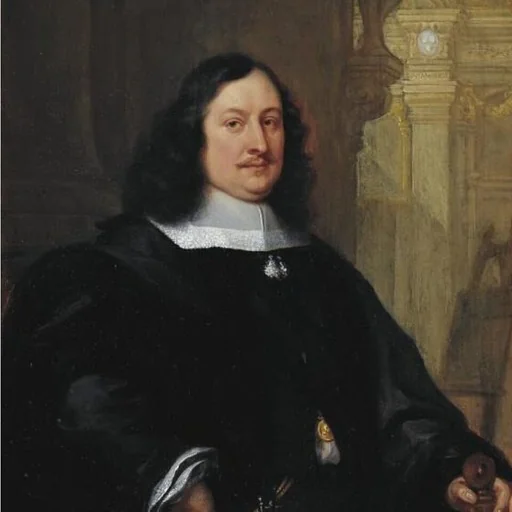
David Teniers the Younger or David Teniers II was a Flemish Baroque painter, printmaker, and artist.