Artwork
Little Nemo in Slumberland: "I don't like this, one little tiny bit, not one tiny weenie bit"
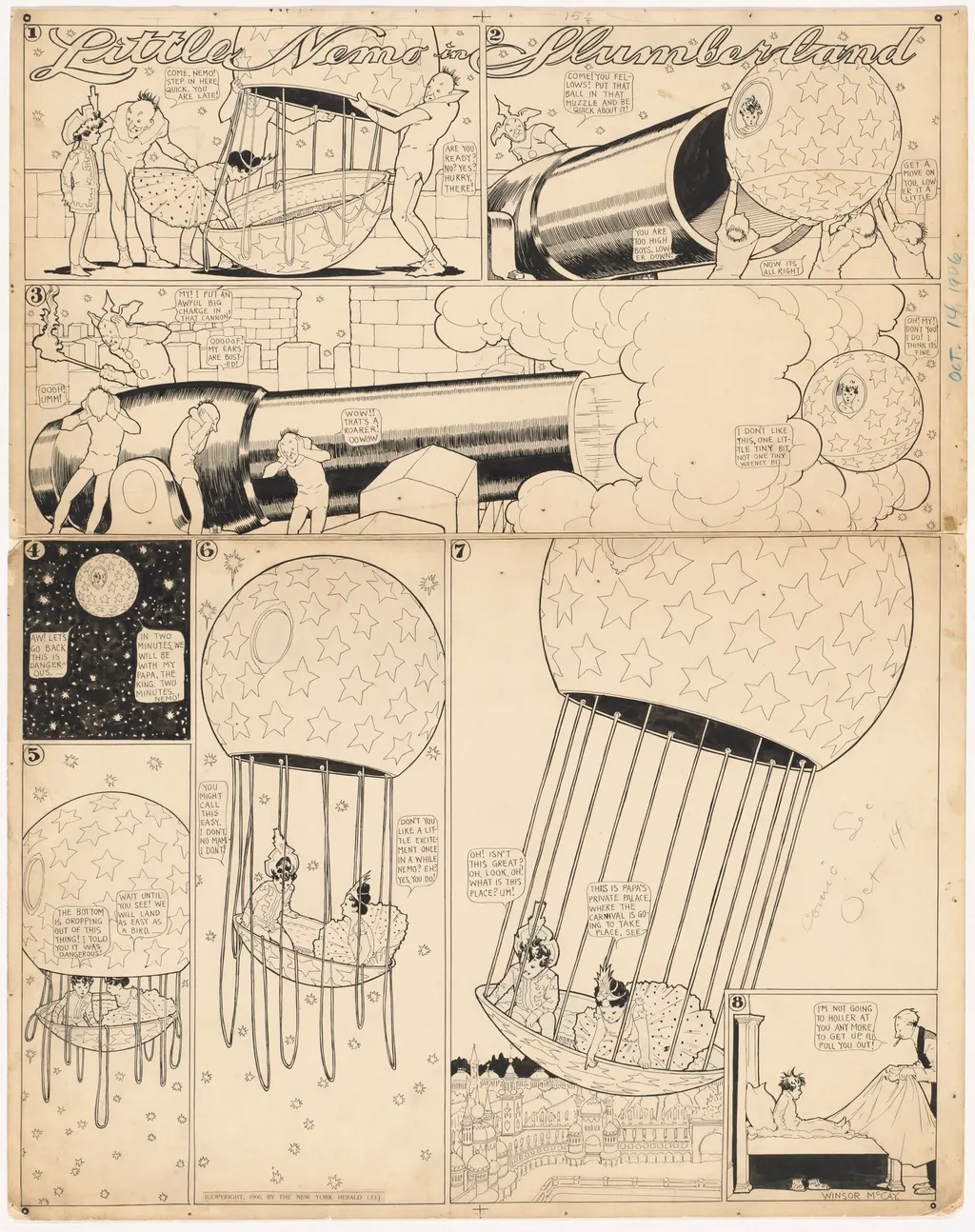
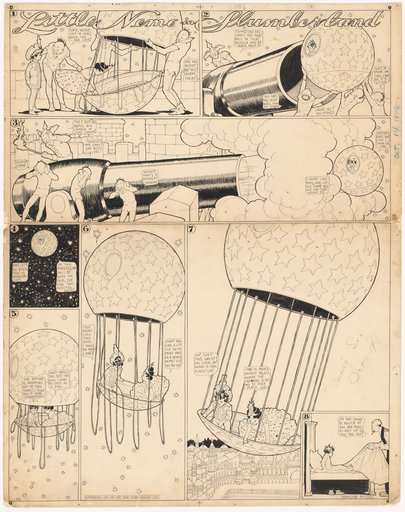
Little Nemo in Slumberland: "I don't like this, one little tiny bit, not one tiny weenie bit" is an ink drawing by the Art Nouveau artist Winsor McCay. It dates from 1906 and is held in the collection of the National Gallery of Art.
- Inscription
- Inscribed:lower right in pen and black ink: Winsor McCay; lower center printed in black: (COPYRIGHT, 1906, BY THE NEW YORK HERALD CO.); upper right edge in blue colored pencil: October 14, 1906; lower right in graphite: Comic Sec / Oct , 14; center right verso in blue ball-point pen: 40 (circled); lower right verso in blue ball-point pen: 41 (circled); lower right in graphite by unknown hand: Moniz
- Markings
- Marked:on verso two address labels: Mr. Ray W. Moniz / 343 Depew Street / Peekskill, N.Y. 10566
About this work
Overview
Created in 1906 by Winsor McCay, this pen-and-ink drawing depicts a single installment of the "Little Nemo in Slumberland" comic strip. Executed on two joined sheets of paperboard, the work combines graphite underdrawing with black ink applied by brush and pen, producing a compact narrative scene in black and white.
Subject & Meaning
The panel follows the boy protagonist, Nemo, as he drifts through a surreal dreamscape. He appears in a massive cannon, a soaring hot‑air balloon, and a colossal bed that crowns a palace, each setting accompanied by his muttering complaint about the situation. The sequence captures the whimsical frustration of a child navigating unpredictable dream adventures.
Technique & Style
McCay employs bold, thick outlines to define the exaggerated architecture and machinery, while cross‑hatching and subtle shading render depth and volume.
McCay employs bold, thick outlines to define the exaggerated architecture and machinery, while cross‑hatching and subtle shading render depth and volume. The graphite sketch beneath the ink provides a structural framework, later reinforced with brush‑drawn washes that give the larger forms a fluid, dynamic quality. Speech bubbles are integrated seamlessly, guiding the viewer through the narrative.
History & Provenance
The drawing originates from the early years of McCay's influential newspaper comic, which debuted in the New York Herald in 1905. This particular strip was reproduced in the original publication and later preserved as a standalone artwork on paperboard, entering museum collections through a donation from a private collector of early American comics.
Context
"Little Nemo in Slumberland" emerged during a period when newspaper comics were experimenting with elaborate visual storytelling. McCay's intricate line work and imaginative settings set a high standard for the medium, influencing subsequent cartoonists and establishing the comic strip as a legitimate artistic form in the early twentieth century.
Artist & collection

![The Crucifixion [left plate], by John Baptist Jackson](https://artifactworldgallery.com/img/john-baptist-jackson--the-crucifixion-left-plate--3dc106b1e6500937-w320.webp)