Artwork
The Man of Sorrows
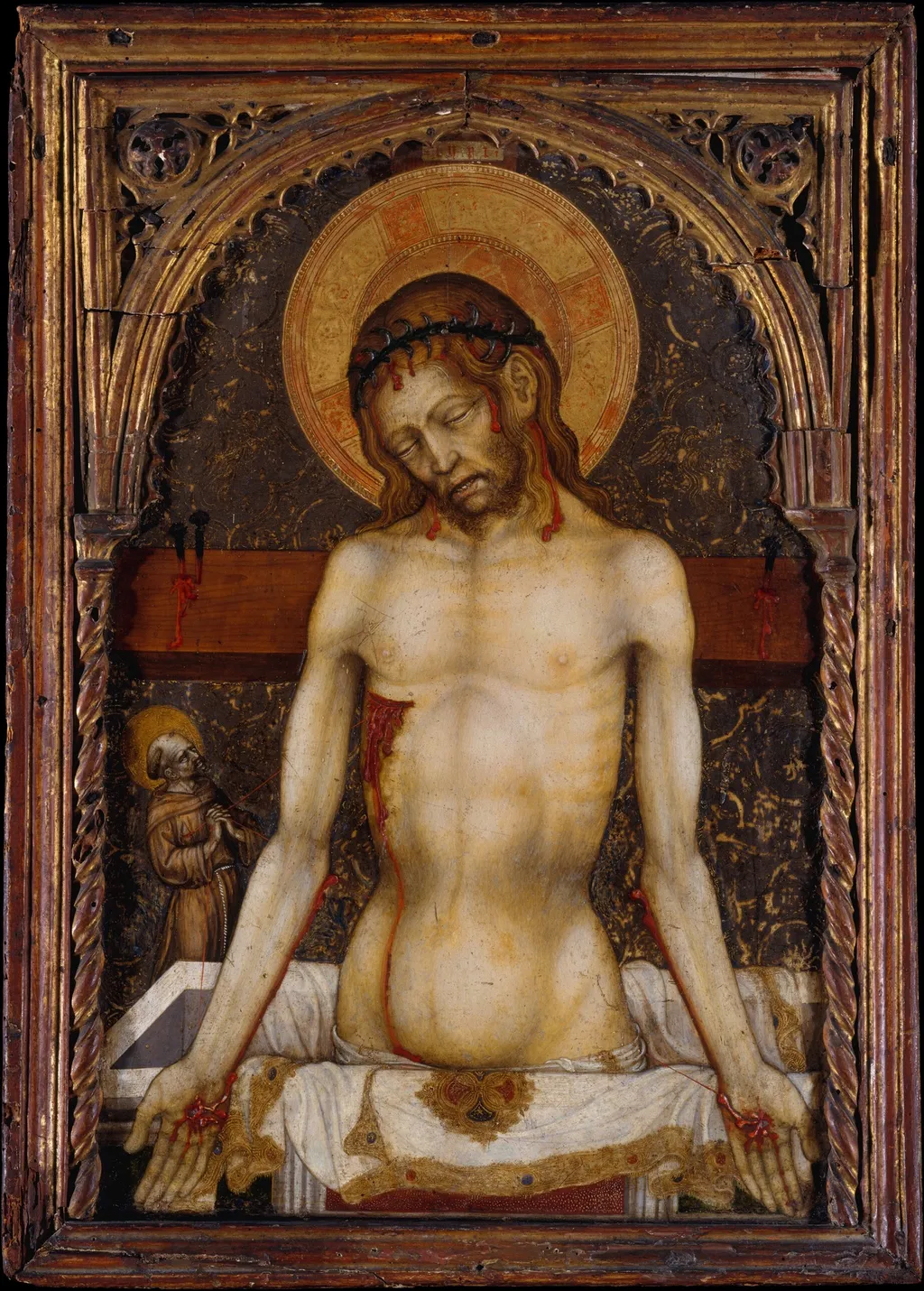
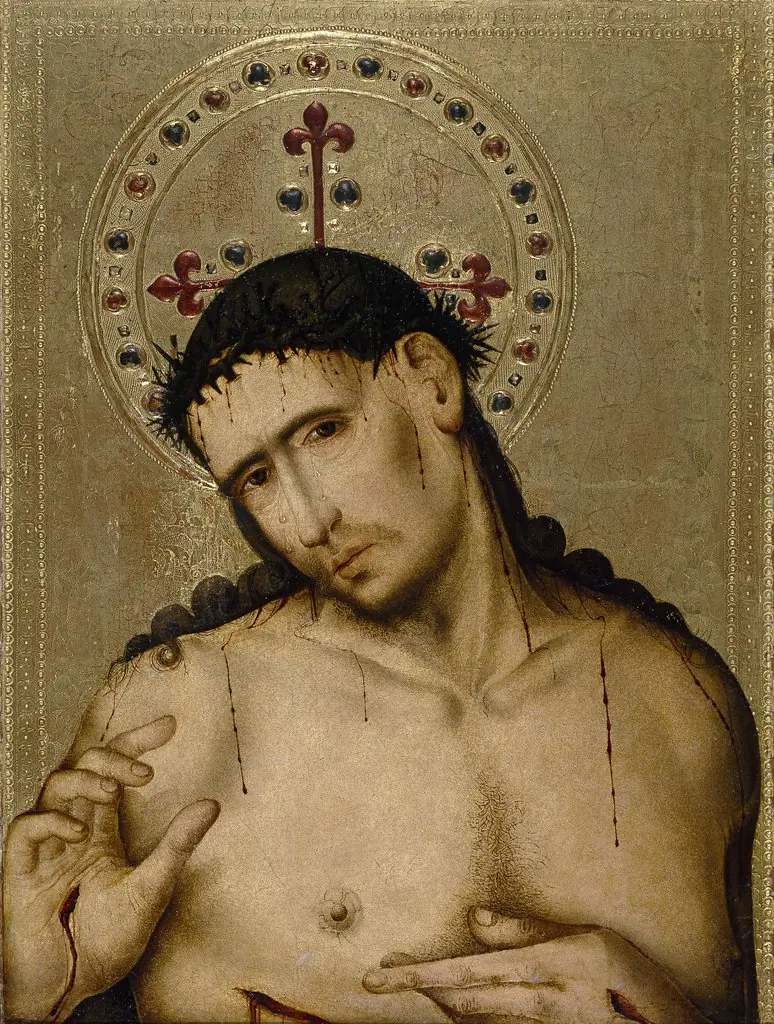
The Man of Sorrows is an unspecified painting by Michele Giambono. It dates from 1430 and is held in the collection of the Metropolitan Museum of Art.
About this work
Subject & Meaning
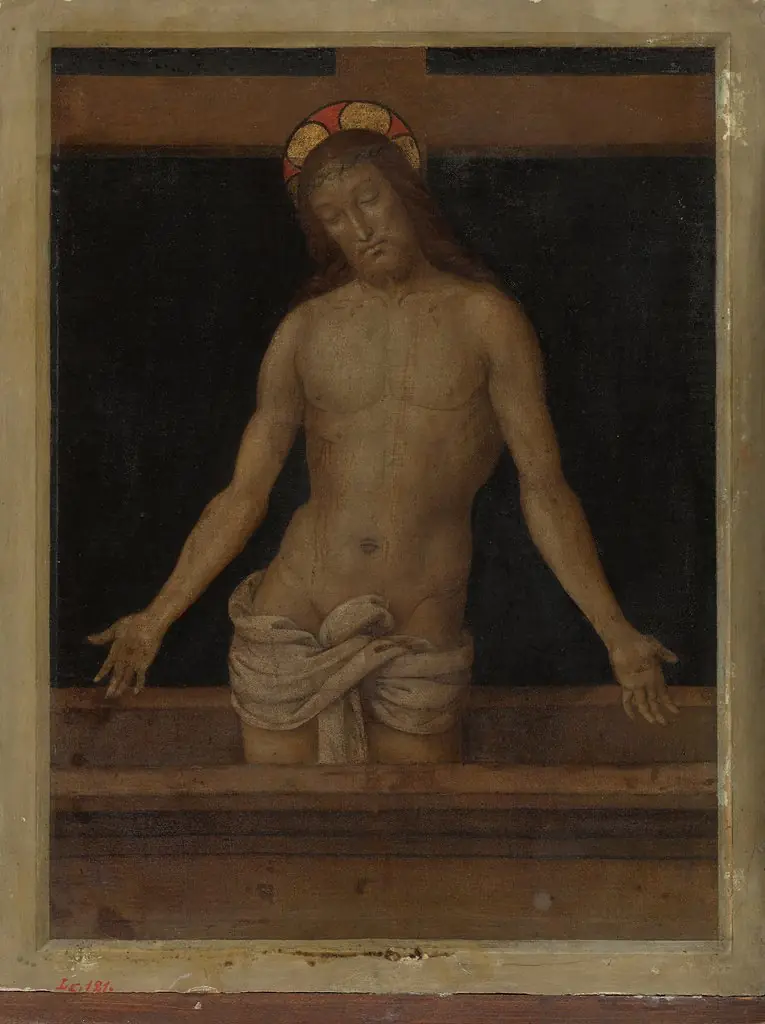
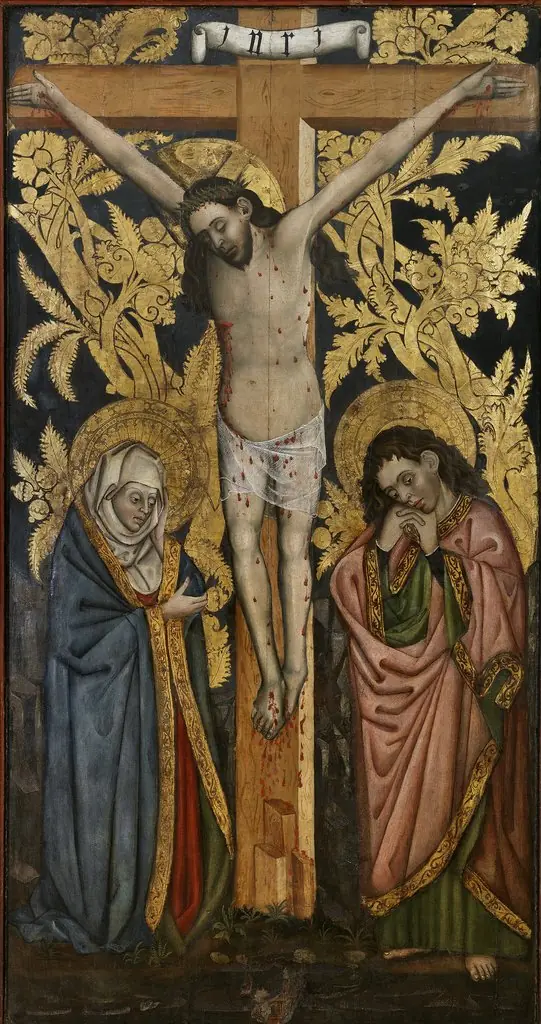
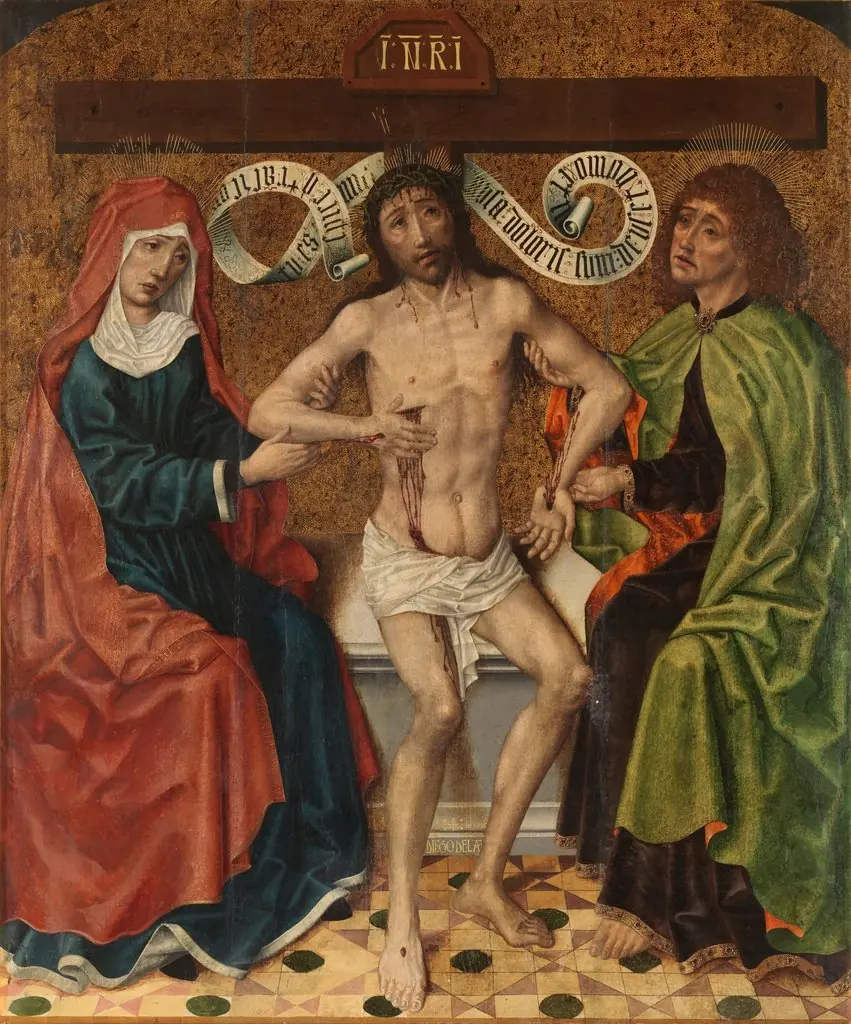
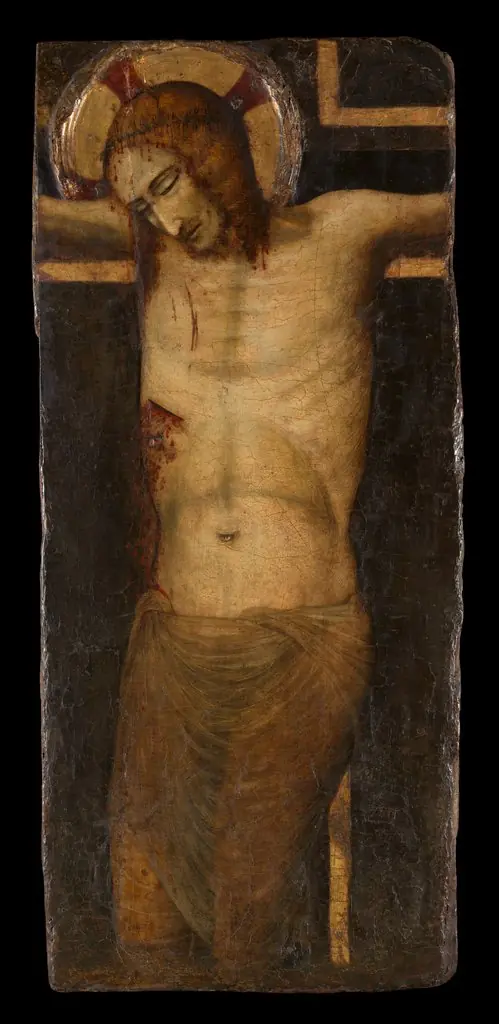
His bowed head, closed eyes, and bleeding side emphasize suffering and mortality, while the pallor of his skin underscores the physical toll of the Crucifixion.
The Metropolitan Museum of Art’s Man of Sorrows by Michele Giambono (c. 1430) depicts the post-Crucifixion Christ, seated and displaying the wounds of his Passion. His bowed head, closed eyes, and bleeding side emphasize suffering and mortality, while the pallor of his skin underscores the physical toll of the Crucifixion. The inclusion of Saint Francis of Assisi, identifiable by his stigmata and Franciscan habit, links the image to the Franciscan emphasis on Christ’s humanity and compassionate suffering.
The composition thus merges devotional focus on Christ’s sacrifice with Franciscan spirituality, inviting contemplation of redemption through his wounds.
History & Provenance
The Man of Sorrows was created by Michele Giambono in 1430, as recorded in both the internal corpus entry and the Wikidata record for the work. The painting is held in the collection of the Metropolitan Museum of Art, where it remains located. No additional information is provided in the available sources regarding the circumstances of its commission, the identity of any patron, the chain of prior ownership, or any intermediate collections through which it may have passed before entering the Metropolitan Museum of Art.
Likewise, the sources do not detail the creation history of the panel beyond fixing its inception date to 1430.
The Man of Sorrows by Michele Giambono is held in the collection of the Metropolitan Museum of Art, as recorded in the Wikidata entry for the work. The painting, dated to 1430, has been documented as part of the museum's holdings, with its location confirmed at the Metropolitan Museum of Art. No specific accession number is provided in the available sources, and no exhibition history is recorded.
Overview
Michele Giambono's The Man of Sorrows, painted around 1430, is a significant example of early Renaissance Venetian art. This religious panel, now housed at The Metropolitan Museum of Art, depicts a suffering Christ alongside Saint Francis of Assisi. It reflects the devotional focus prevalent in Giambono's oeuvre and showcases his distinctive blend of stylistic influences.
Technique & Style
Giambono executed this work in the International Gothic style, characterized by its decorative elements and refined detail, yet infused with a distinctly Venetian sensibility. The radiant gold background creates a luminous effect, while the stark contrast of Christ's red wounds against his pale skin enhances the dramatic impact. The artist's use of light and shadow contributes to the solemnity of the scene, typical of devotional imagery from this period.
Context
Active in Venice during the early to mid-15th century, Michele Giambono was a notable painter whose artistic contributions extended beyond panel painting. His involvement in creating mosaics for St. Mark’s Basilica highlights his versatility and prominence within the Venetian art scene. The Man of Sorrows exemplifies the religious themes that frequently appeared in his commissions, reflecting the spiritual climate of the era.
Own this work as a print
Artist & collection

Artist
Michele Taddeo di Giovanni Bono, known as Giambono (c. 1400 Venice – c. 1462 Venice) was an Italian painter, whose work reflected the International Gothic style with a Venetian influence. He designed the mosaics of the…