Artwork
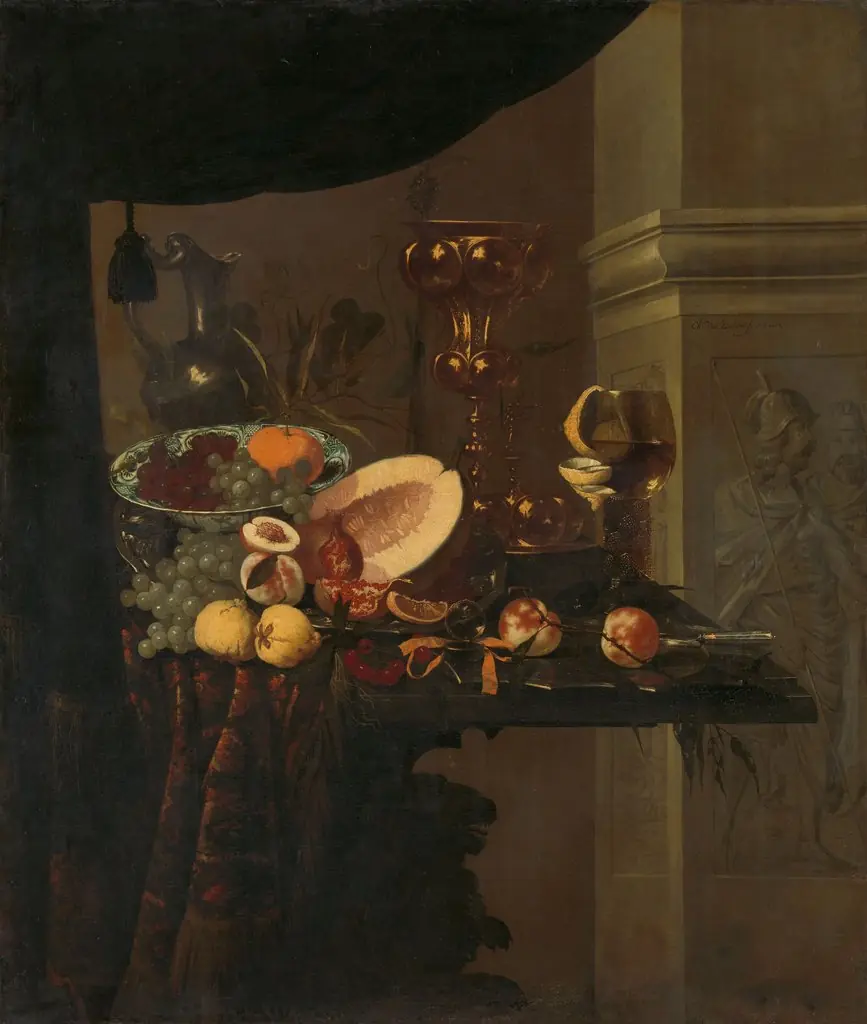
Still Life with Fruit
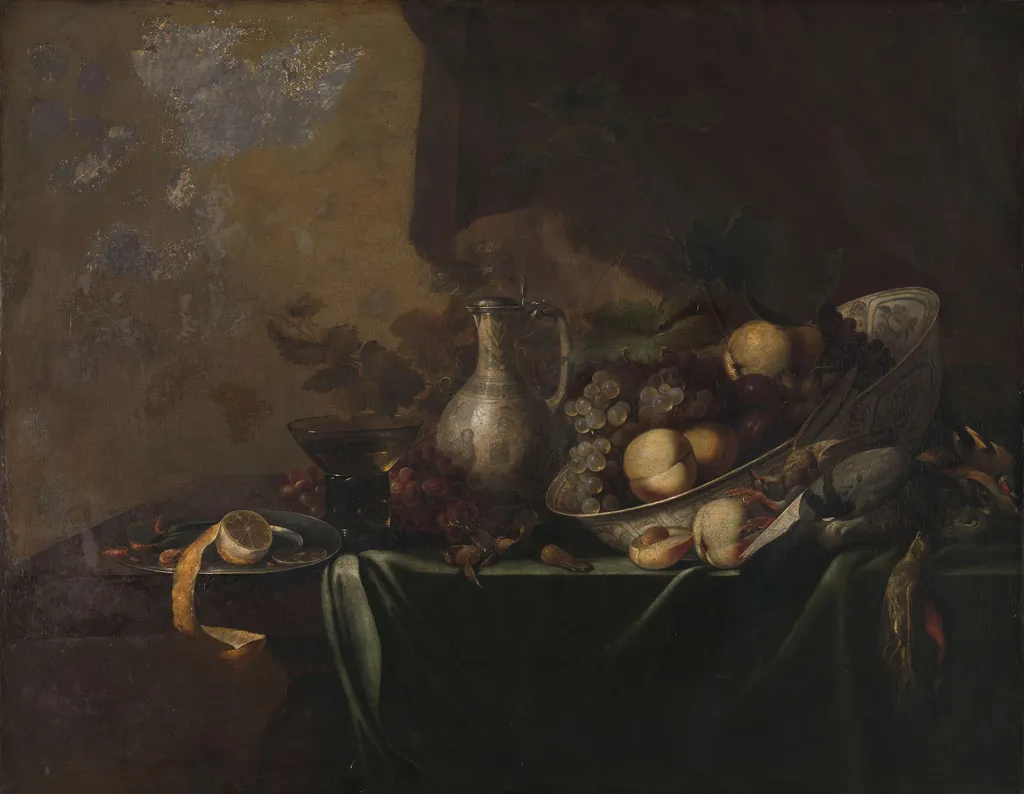
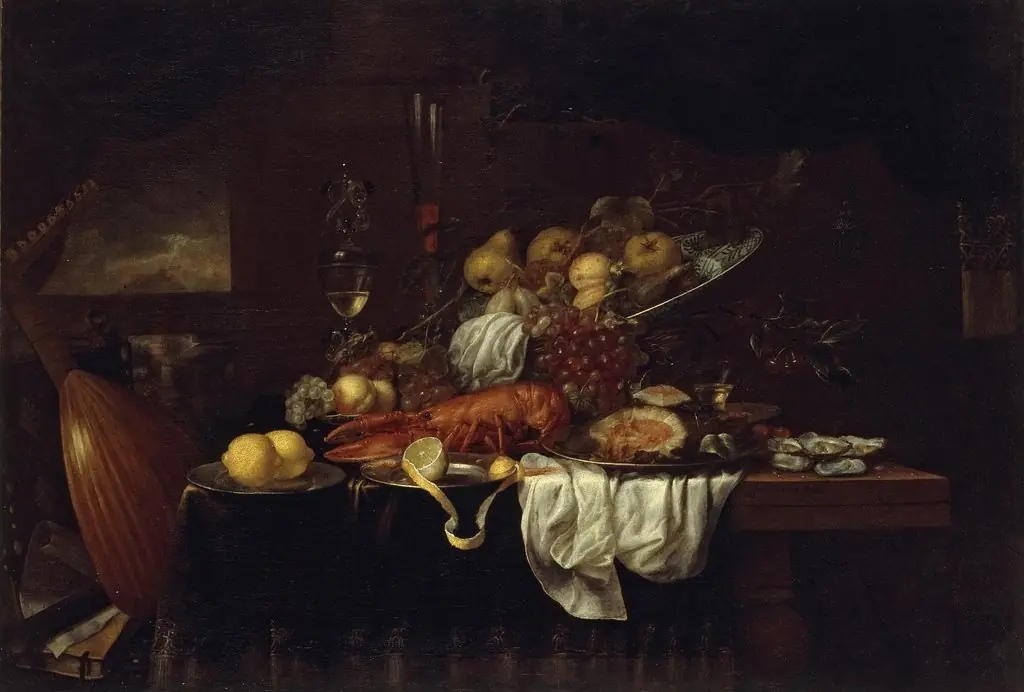
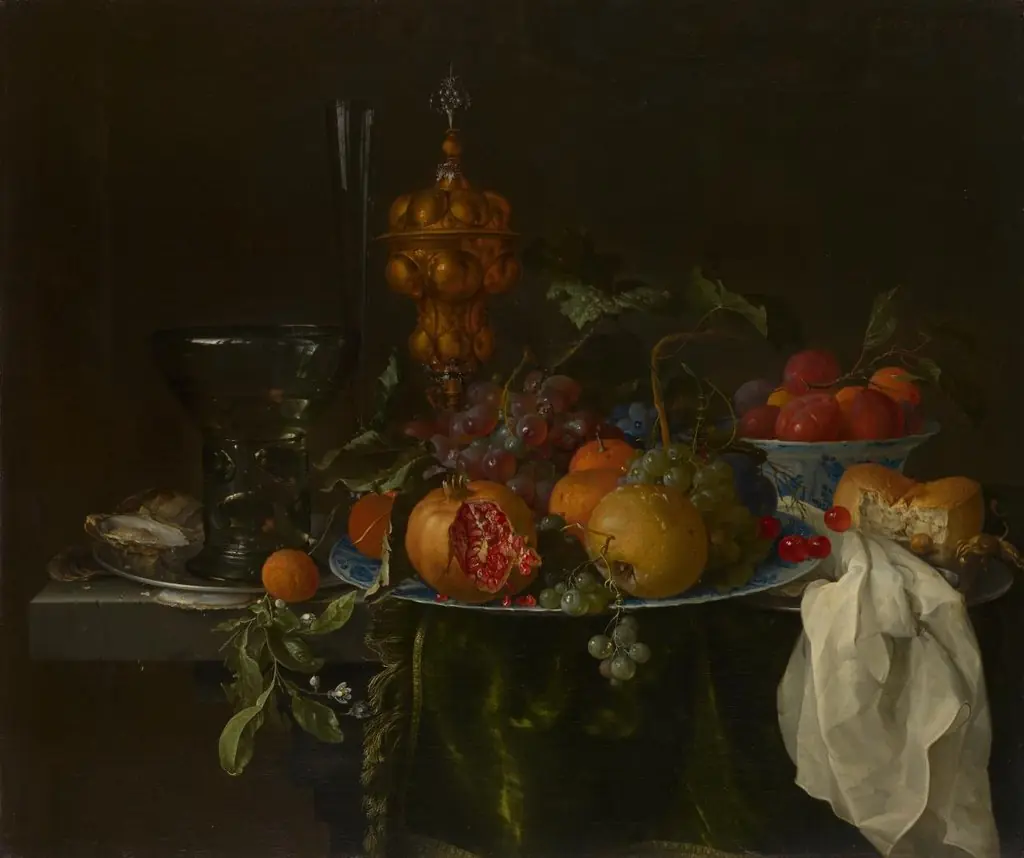
Still Life with Fruit is an oil painting by the Flemish Baroque painting artist Michiel (II) Simons. It dates from 1650 and is held in the collection of the Rijksmuseum.
About this work
Subject & Meaning
The composition focuses exclusively on the depiction of fruit, adhering to the conventions of the genre.
Created in 1650 by Michiel (II) Simons, this oil painting on canvas is classified as a still life. The composition focuses exclusively on the depiction of fruit, adhering to the conventions of the genre. While the work functions as a realistic representation of produce, the provided records do not specify particular species of fruit or elaborate on any associated allegorical meanings or symbolic interpretations beyond the general subject matter.
Technique & Style
The painting is executed in oil on canvas, measuring 89 by 113.5 cm. This support and medium were standard for Dutch still-life painting of the mid-17th century, allowing for the detailed rendering of surface textures and the subtle modulation of color that characterize the genre. The work depicts fruit, a common subject in the Dutch Golden Age that typically carried connotations of transience and material abundance.
History & Provenance
Michiel (II) Simons created the oil-on-canvas painting Still Life with Fruit in 1650. The work measures 89 cm in height and 113.5 cm in width. Historical records indicate that the painting was once owned by Arnoldus Andries des Tombe. It is currently held in the collection of the Rijksmuseum.
Overview
Michiel Simons’ oil painting Still Life with Fruit, executed around 1650, presents a carefully arranged banquet scene. The work is part of the Rijksmuseum’s collection and exemplifies the Dutch still‑life tradition of the mid‑seventeenth century, focusing on everyday objects rendered with meticulous attention to surface and form.
Context
The work belongs to a broader Dutch still‑life movement that celebrated the visual richness of ordinary objects. Artists of the period often used such scenes to demonstrate technical skill and to comment subtly on themes of transience and material wealth, aligning Simons’ piece with the cultural and economic climate of the Golden Age.
Own this work as a print
Artist & collection