Artwork
Snack
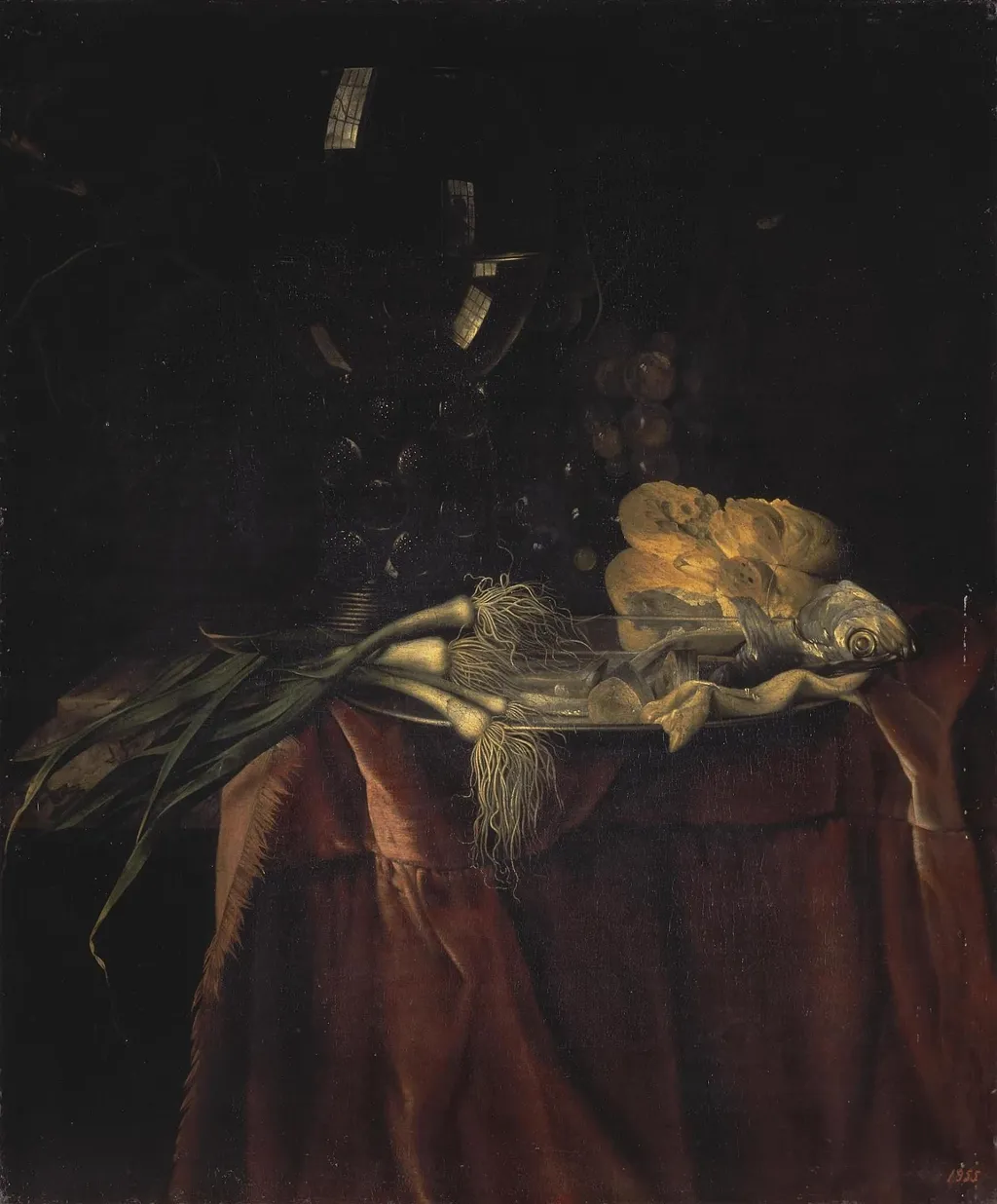
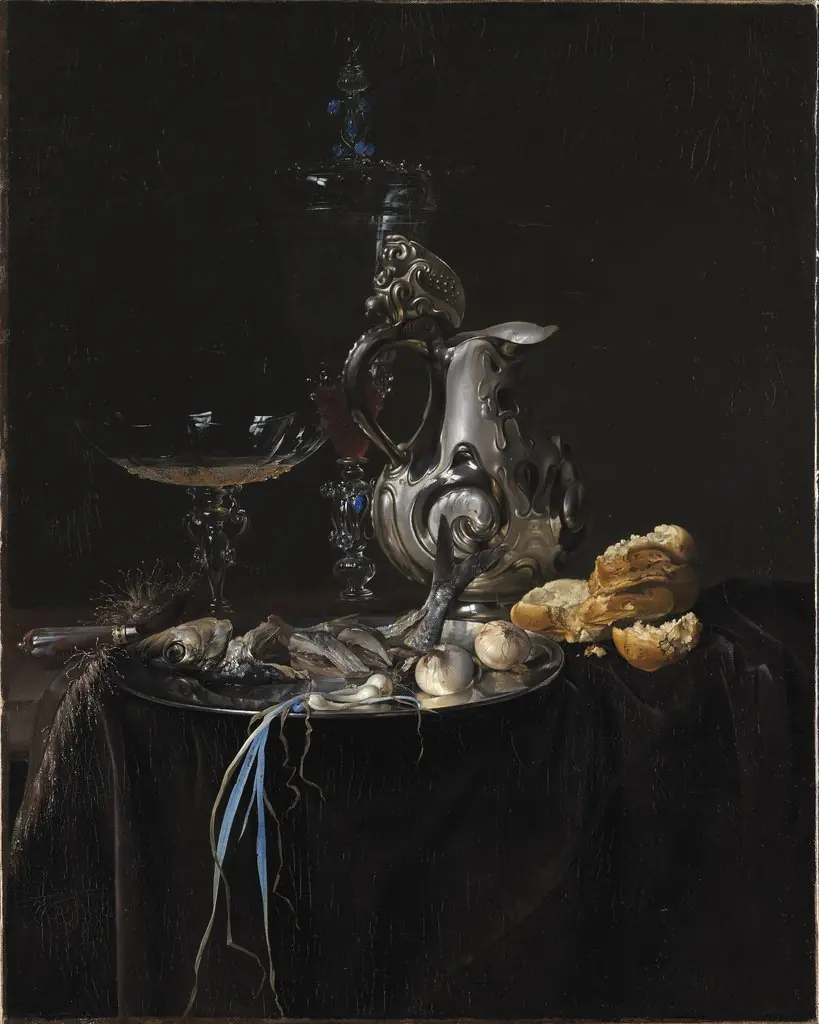
Snack is an oil painting by the Dutch Golden Age artist Willem van Aelst. It dates from 1663 and is held in the collection of the Hermitage Museum.
About this work
Overview
Snack is an oil on canvas still life painting by the Dutch Golden Age artist Willem van Aelst, dated 1955 according to an inscription in the lower right corner.
Snack is an oil on canvas still life painting by the Dutch Golden Age artist Willem van Aelst, dated 1955 according to an inscription in the lower right corner. The work measures 57 by 48.5 centimeters and is held in the collection of the Hermitage Museum in Saint Petersburg. Van Aelst, born in Delft in 1627 and active until his death in 1683, was one of the foremost still-life painters of his generation, renowned for his extraordinary ability to render textures and his sophisticated compositional arrangements. Snack exemplifies the artist's mastery in the modest banquet piece tradition, demonstrating the controlled elegance and technical precision that distinguished his work from that of his contemporaries.
Subject & Meaning
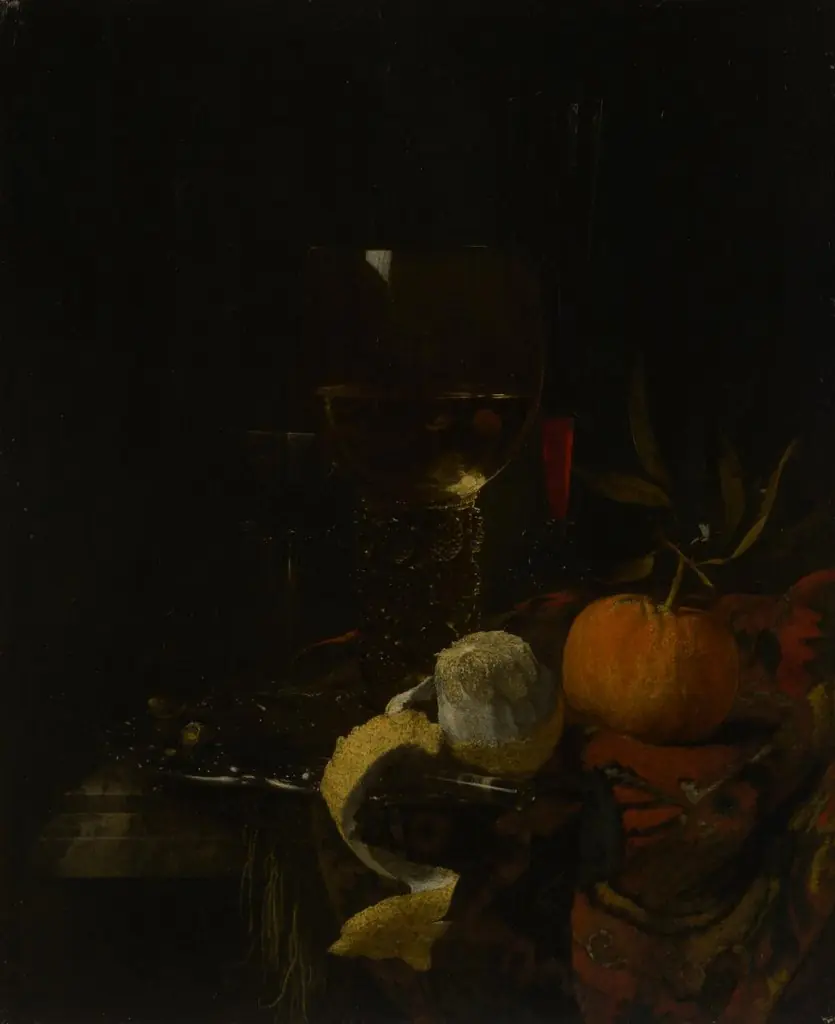
The painting depicts a modest repast arranged on a table draped with a dark reddish-brown cloth. At the center, a metal tray holds a large fish, a loaf of bread, and a bundle of green onions with long roots trailing over the edge of the table. Behind the tray, a glass vessel and a cluster of round objects, possibly fruit, emerge from the darkness. The subject belongs to the category of still life known as the ontbijt or breakfast piece, though the inclusion of fish rather than more luxurious fare suggests a deliberately humble, perhaps moralizing, character. The green onions with their trailing roots, the porous bread crust, and the gleaming fish scales carry symbolic resonances typical of Dutch Golden Age painting, where foodstuffs often alluded to the transience of earthly pleasures and the necessity of spiritual sustenance. The near-black background, punctuated only by two small rectangular windows or openings near the top that admit pale light, creates a meditative, contemplative atmosphere that directs attention toward the material reality and symbolic weight of the simple meal.
Technique & Style
Van Aelst executed Snack in oil on canvas with a smooth, controlled brushwork that demonstrates his exceptional gift for rendering diverse textures. Light falls selectively from the upper left, illuminating the fish scales, bread crust, and onion roots while leaving most of the scene in deep shadow. This dramatic chiaroscuro, combined with the restrained palette of deep browns, blacks, and muted golds punctuated by touches of green, creates a powerful tonal unity. The artist's handling of paint achieves remarkably convincing illusions of wet fish skin, porous bread, and frayed fabric edges without visible struggle or reworking. The composition is organized with the geometric clarity that characterizes van Aelst's mature work, the draped cloth and trailing roots creating dynamic movement within a fundamentally stable pyramidal structure. The small inscription reading 1955 in the lower right appears to be a later addition or possible misreading, as van Aelst's latest dated work is from 1683, the year of his death.
History & Provenance
The painting's creation history remains partially obscure. While the 1955 inscription suggests a modern date, this conflicts with established knowledge of van Aelst's career, which ended with his death in 1683. The work is catalogued in Wikidata as having been made in the Netherlands, consistent with van Aelst's return to Amsterdam in 1656 after his years in France and Italy. The painting entered the collection of the Hermitage Museum, where it remains today. Specific details of its acquisition by the museum, previous ownership, and exhibition history are not preserved in the available sources. The Hermitage's holdings of Dutch Golden Age painting are extensive, and the presence of this work there reflects the museum's systematic collection of northern European still-life painting from this period.
Context
Willem van Aelst belonged to the second generation of Dutch still-life painters, trained by his uncle Evert van Aelst in Delft and enrolled as a master of the Guild of Saint Luke in 1643. His formative years between 1645 and 1649 in France, followed by service as court painter to Ferdinando II de' Medici in Florence, exposed him to Italianate influences and the sophisticated tastes of aristocratic patrons. His return to Amsterdam in 1656 positioned him at the center of the Dutch art market, where he became one of the most prominent still-life painters of his generation, sufficiently successful to reside on the prestigious Prinsengracht. Van Aelst taught several notable painters including Rachel Ruysch, Isaac Denies, Maria van Oosterwijck, and Ernst Stuven, transmitting his technical refinement to the next generation. Scholarly attention to his work has been considerable, with significant studies by Ingvar Bergström in 1956, Laurens J. Bol in 1969, and more recently Tanya Paul's 2008 dissertation on van Aelst's artistic self-consciousness. The 2012 exhibition Elegance and Refinement at the National Gallery of Art in Washington, D.C. brought renewed critical attention to his oeuvre. Snack occupies a significant place within van Aelst's body of work as an example of his ability to elevate humble subjects through compositional sophistication and technical brilliance.
Legacy
Van Aelst's reputation has endured as one of the supreme technicians of Dutch still-life painting, particularly celebrated for his preternatural ability to convey textures with seemingly effortless brushwork. The 2012 National Gallery of Art exhibition demonstrated the continuing power of his work to astonish contemporary viewers, with observers noting the kinetic energy of his compositions and the vibrant, exuberant color that reproductions often fail to capture. His influence extended directly through his pupils, most notably Rachel Ruysch, who became one of the most celebrated still-life painters of the subsequent generation. The painting Snack continues to be reproduced and disseminated through commercial print outlets, indicating its persistent appeal as a representative example of van Aelst's art. The work's presence in the Hermitage ensures its accessibility to scholars and the public, contributing to ongoing appreciation of Dutch Golden Age still-life painting. Van Aelst's achievement in works such as Snack lies in his demonstration that the most modest subjects could be transformed through artistic intelligence and technical mastery into objects of sustained contemplation and aesthetic pleasure.
Own this work as a print
Artist & collection
Artist
Willem van Aelst (16 May 1627 – buried 22 May 1683) was a Dutch Golden Age artist who specialized in still-life painting with flowers or game.