Artwork
Se ridică barajul Bicaz
Se ridică barajul Bicaz is a print by Mihăilescu-Craiu Victor. It dates from 1945 and is held in the collection of the Moldova National Museum Complex.
About this work
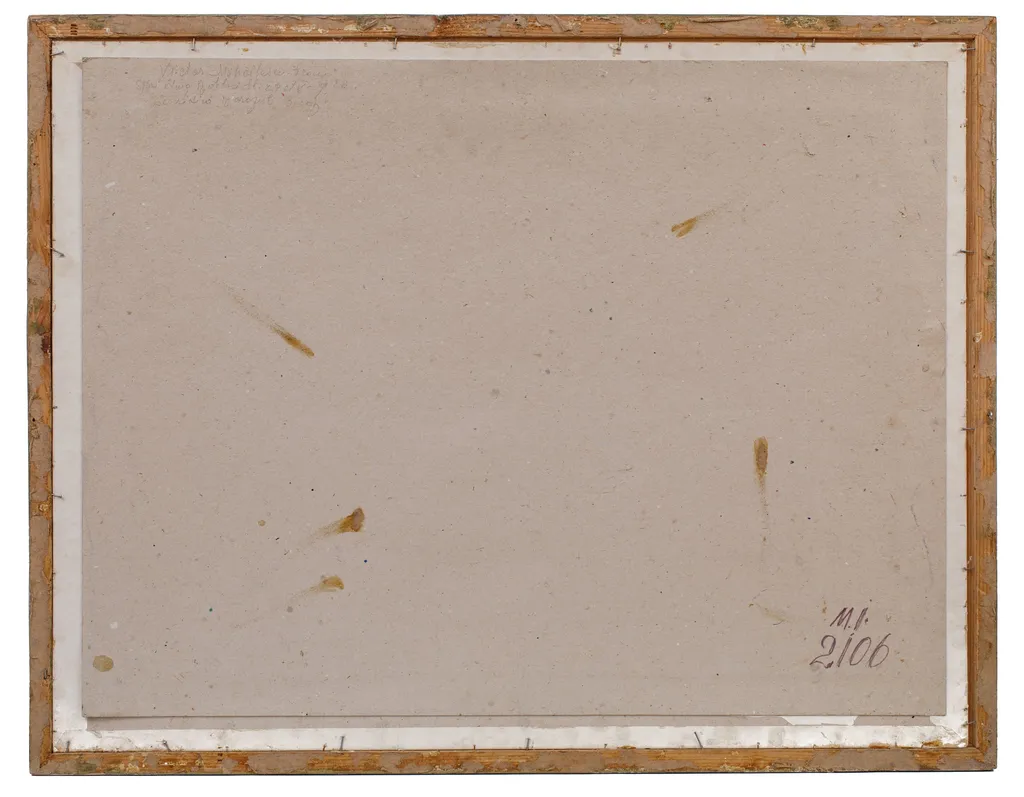
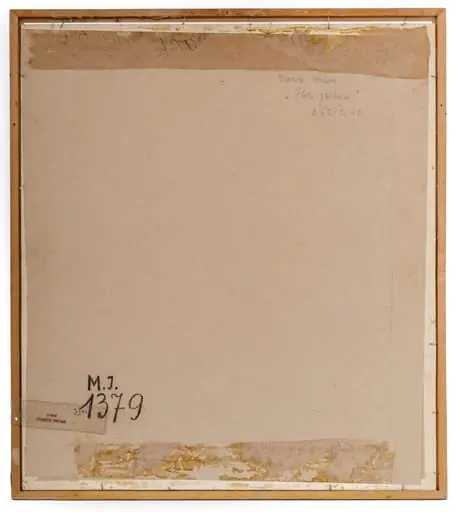
There are a few faint stains and tiny marks scattered across it, and the frame looks old with some paint chipping away.
This is a blank canvas inside a wooden frame. The surface is light-colored, smooth, and mostly empty. There are a few faint stains and tiny marks scattered across it, and the frame looks old with some paint chipping away.
The top edge has handwritten text in a foreign language, and the bottom right corner has a number "2106" penciled in. The back of the canvas shows signs of wear, like dried paint splatters.
If you’re curious about where this canvas is kept, check out the Museum of Ethnography.
Overview
Se ridică barajul Bicaz, attributed to Mihăilescu‑Craiu Victor and dated to around 1945, consists of an unadorned canvas set within a weathered wooden frame. The panel’s light‑toned surface is smooth and largely empty, punctuated only by faint stains and minute marks that hint at its handling over time.
Technique & Style
The work’s minimal visual content emphasizes materiality rather than representation. The canvas retains a plain, almost monochrome ground, while the frame shows signs of aged paint loss, suggesting an intentional exposure of the object's physical history. Hand‑written script along the upper edge and a penciled numeral "2106" in the lower right introduce a sparse, documentary element.
History & Provenance
Created in the mid‑1940s, the piece entered the collection of the Museum of Ethnography, where it remains on view. The back of the canvas bears dried paint splatters and general wear, indicating it has been stored or displayed for an extended period before acquisition.
Context
The title references the construction of the Bicaz Dam, a major infrastructure project in Romania during the 1940s. By presenting an ostensibly empty surface marked only by subtle traces, the work may allude to the transformative impact of large‑scale engineering on landscape and cultural memory, aligning with post‑war artistic explorations of presence and absence.
Artist & collection
Artist
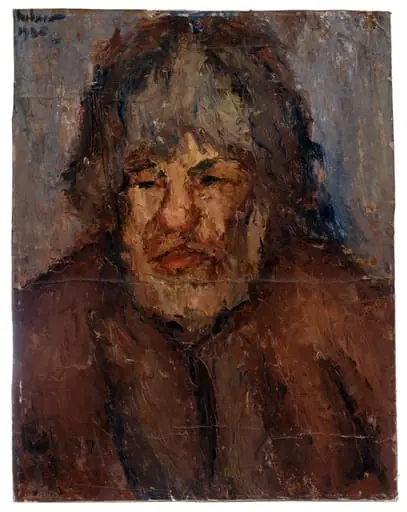
Victor M. Craiu painted Romanian landscapes and figure scenes using thick, choppy brushstrokes that give his surfaces a restless energy. In prints like Strămoșul and Peisaj urban, he layered bold autumn greens, ochres,…
 Flori de toamnă
 Natură statică
 Strămoșul
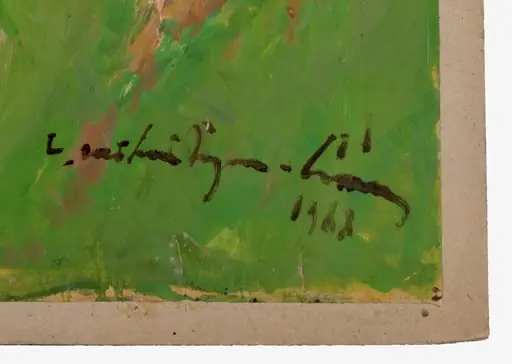 Studiu de peisaj cu un drum pe care merge o căruță trasă de cai. În prim-plan, căruța văzută din spate, dreapta. În căruță, un bărbat cu căciulă neagră și haină gri, o femeie cu batic alb și haină brun-ocru și o fetiță cu batic alb cu verde-roșu, așezată în spatele celor doi, lângă două butoaie. Drumul taie ca o diagonală lucrarea; de-o parte și de alta, iarbă. Linia orizontului foarte ridicată, după care se vede un copac verde, dealul albastru în depărtare și cerul. Semnat și datat cu brun, dreapta jos: V. Mihăilescu Craiu 1968.
 Natură statică cu flori
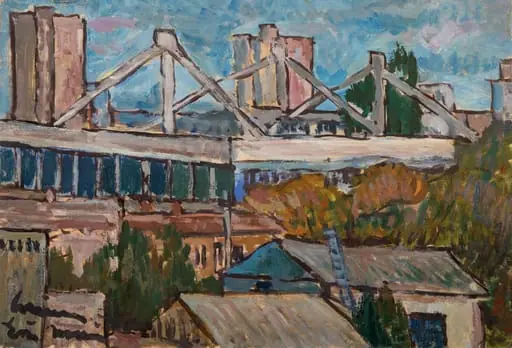 Peisaj urban; în prim-plan, acoperișuri de case și vegetație. În plan îndepărtat, o hală de producție care are pe acoperiș grinzi verticale care susțin alte grinzi de-o parte și de alta, celălalt capăt având punct de sprijin marginile construcției. Două coșuri apar în spatele halei. Colorat în gri. Tușă păstoasă. Semnat cu negru, stânga jos: Craiu.
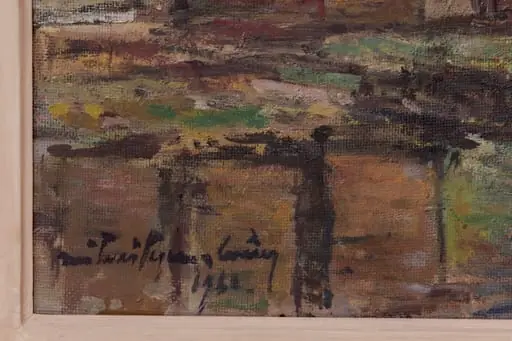 Peisaj industrial pe Valea Bistriței
 Natură moartă cu mere și flori