Artwork
Departe de București
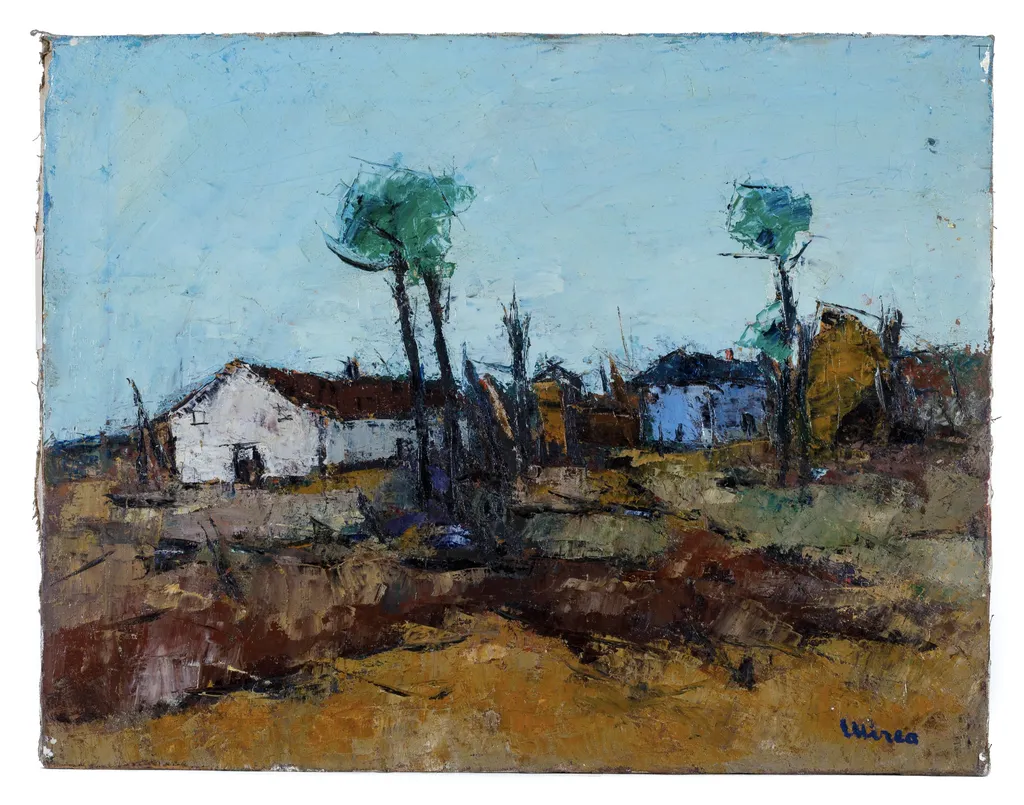
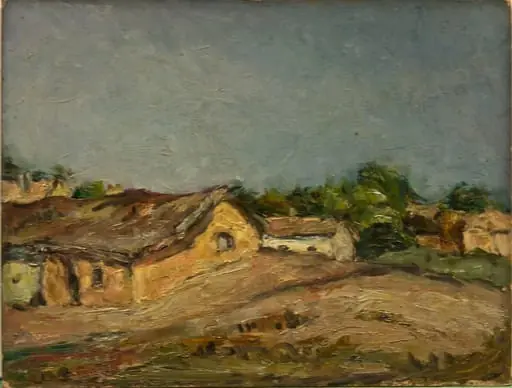
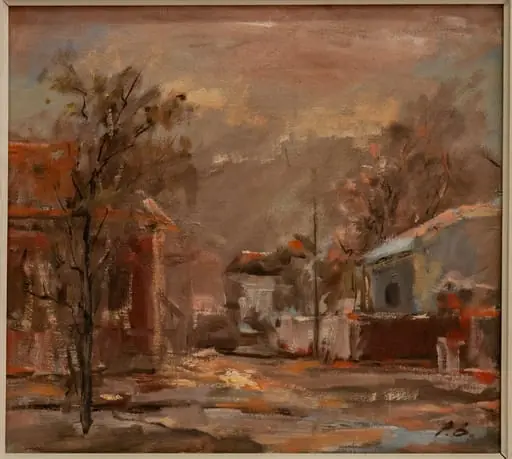
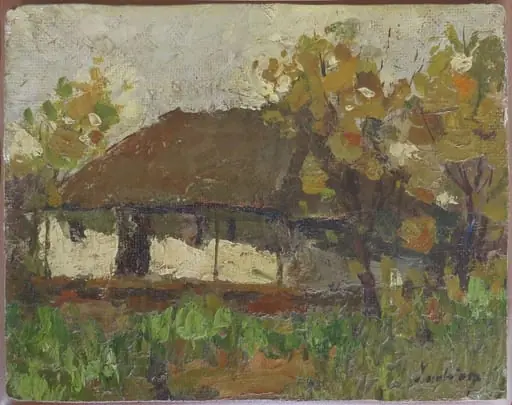
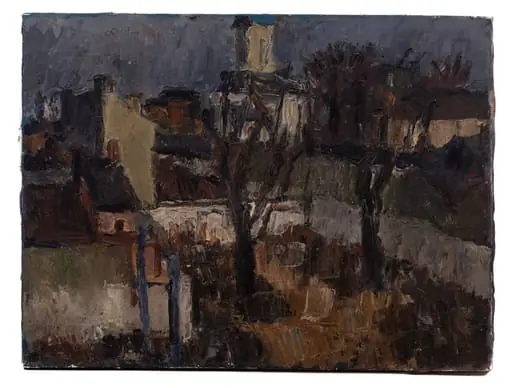
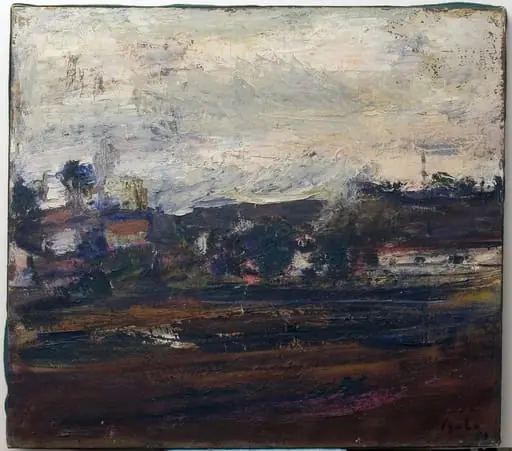
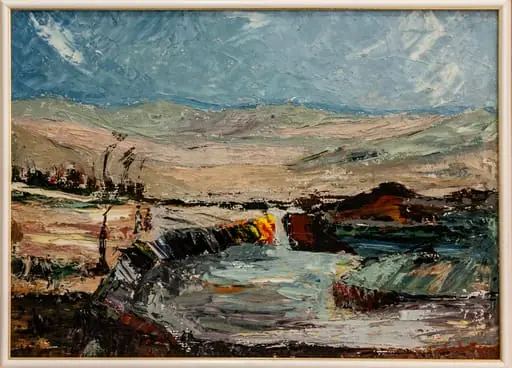
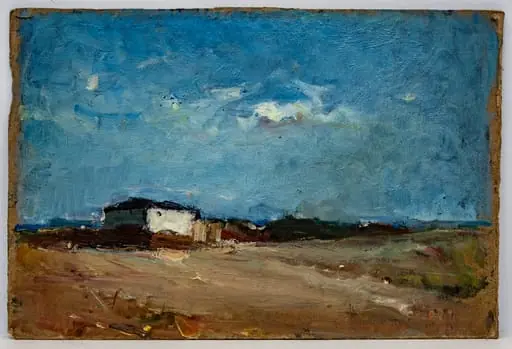
Departe de București is a print by Mirea I.. It is held in the collection of the Moldova National Museum Complex. This image depicts a rural Romanian village scene, rendered with vigorous, unrefined brushwork.
About this work
Overview
The palette is restrained, earthy browns, pale yellows, muted greens, and white, applied in thick, irregular layers that emphasize texture over detail.
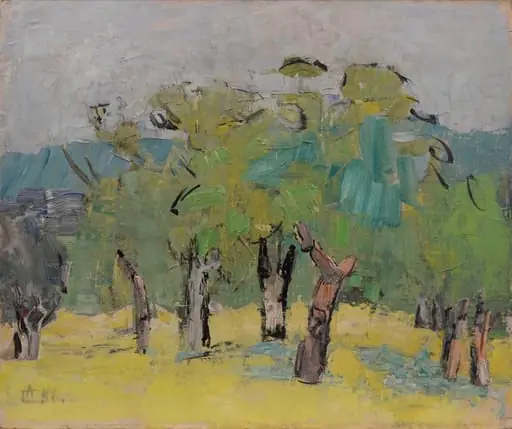
This image depicts a rural Romanian village scene, rendered with vigorous, unrefined brushwork. The composition centers on two prominent trees, flanking a modest white house and scattered outbuildings. The palette is restrained, earthy browns, pale yellows, muted greens, and white, applied in thick, irregular layers that emphasize texture over detail. The surface appears hastily worked, with paint applied in a tactile, almost physical manner.
Subject & Meaning
The scene captures an ordinary village setting, devoid of narrative or human figures. The focus on modest architecture and native vegetation suggests an interest in everyday rural life rather than idealized landscapes. The absence of polish or ornamentation reinforces a sense of authenticity, as if the artist sought to record the quiet endurance of place rather than dramatize it.
Technique & Style
Paint is applied in heavy, uneven strokes, creating a rough, tactile surface typical of impasto. Colors are laid side by side without blending, preserving their raw intensity. The brushwork is direct and unmediated, with visible ridges and drips that convey immediacy. This method prioritizes material presence over illusion, rejecting smooth finish in favor of expressive gesture.
History & Provenance
The work originates from Romania, likely produced in the early to mid-20th century, during a period when local artists were redefining national identity through depictions of rural life. While specific provenance details are unrecorded, its style aligns with regional modernist tendencies that valued emotional honesty over academic precision.
Context
In early 20th-century Romania, many painters turned to village scenes as a way to connect with indigenous culture amid rapid urbanization. This work reflects that trend, rejecting European academic traditions in favor of a more visceral, locally grounded aesthetic. The rough handling echoes broader European modernist movements that valued authenticity over refinement.
Legacy
The painting contributes to a body of Romanian modernist work that elevated ordinary landscapes through expressive technique. Its unpolished style influenced later generations who sought to break from classical conventions. Though not widely exhibited internationally, it remains a representative example of how rural subjects were reimagined through raw, material-focused painting.
Artist & collection
Artist
Mirea I. left behind a single print so crisp it feels like a snapshot someone forgot on the seat of a tram. Departe de București shows a cityscape shrinking in a train’s rear window, buildings and cranes dissolving into…