Artwork
Study for "The Well"
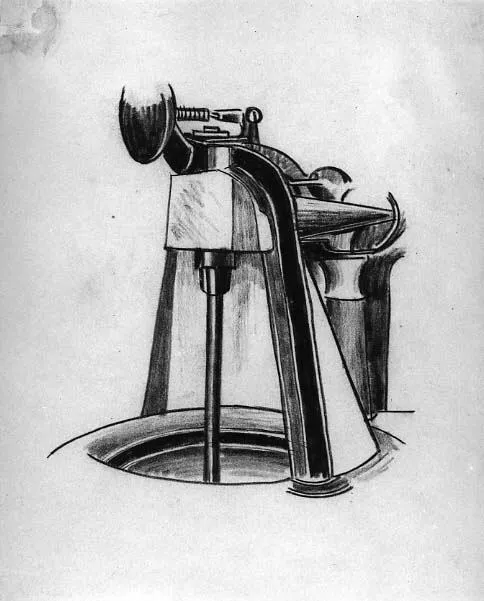
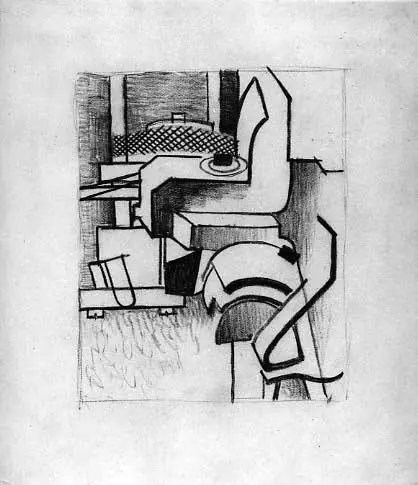
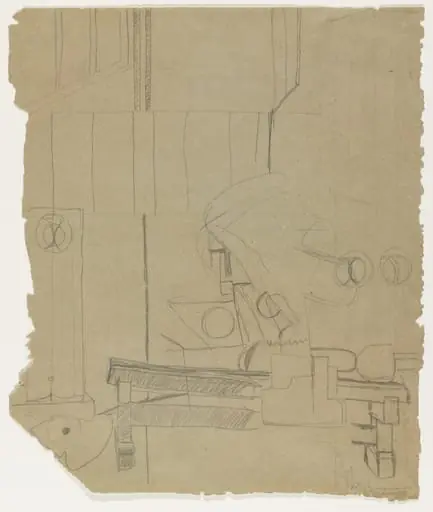
Study for "The Well" is a graphite painting by the Art Brut artist Morton Livingston Schamberg. It dates from 1916 and is held in the collection of the Metropolitan Museum of Art.
About this work
Technique & Style
Although classified within painting contexts in some records, the physical medium consists solely of graphite applied to a paper support.
Executed in 1916, this work is a graphite drawing on paper by Morton Livingston Schamberg. Although classified within painting contexts in some records, the physical medium consists solely of graphite applied to a paper support. The sheet measures 14 cm in height and 11.4 cm in width.
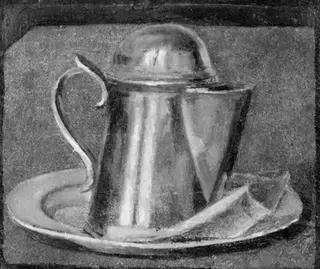
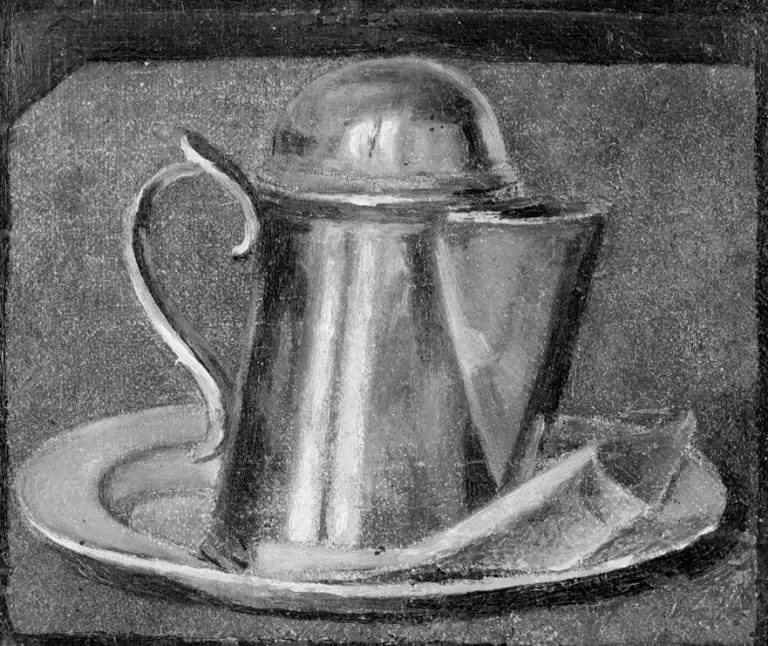
The composition depicts a water well, serving as a preparatory study for a larger work titled "The Well." The use of graphite allows for precise linear definition characteristic of Schamberg's approach to form during this period.
History & Provenance
Morton Livingston Schamberg created the graphite study titled "Study for 'The Well'" in 1916. Executed on paper, the work measures 14 cm in height and 11.4 cm in width. The piece depicts a water well and is classified as a painting study.
It is currently held in the collection of the Metropolitan Museum of Art, where it remains part of the institution's holdings.
The drawing Study for "The Well" is held by the Metropolitan Museum of Art in New York, where it is catalogued under the accession number 1985.173. It entered the collection through a bequest and has been included in exhibitions focused on early American modernism at the museum.
The work was created in 1916 by Morton Livingston Schamberg, measures 14 cm in height and 11.4 cm in width, and is executed in graphite on paper.
Overview
Created in 1916, this graphite study by Morton Livingston Schamberg records a utilitarian water well with an attached mechanical device. The drawing presents a stark, almost clinical view of the structure, emphasizing form over ornament. Its modest scale and monochrome palette underscore the artist’s interest in industrial subjects during a period of rapid technological change.
Subject & Meaning
The composition centers on a well opening, topped by a contraption that resembles a bucket, lever and funnel combined. By rendering the apparatus in a plain, unadorned manner, Schamberg draws attention to the functional reality of everyday labor, inviting viewers to consider the quiet significance of such commonplace mechanisms.
Context
The piece emerges at a time when American art was beginning to assimilate European avant‑garde influences, particularly Cubism, while simultaneously turning toward the nation’s own industrial landscape. Schamberg’s focus on a functional well reflects this dual impulse: to modernize visual language and to document the machinery of everyday life.
Artist & collection

Artist
Morton Livingston Schamberg (October 15, 1881 – October 13, 1918) was an American modernist painter and photographer.