Artwork
Index
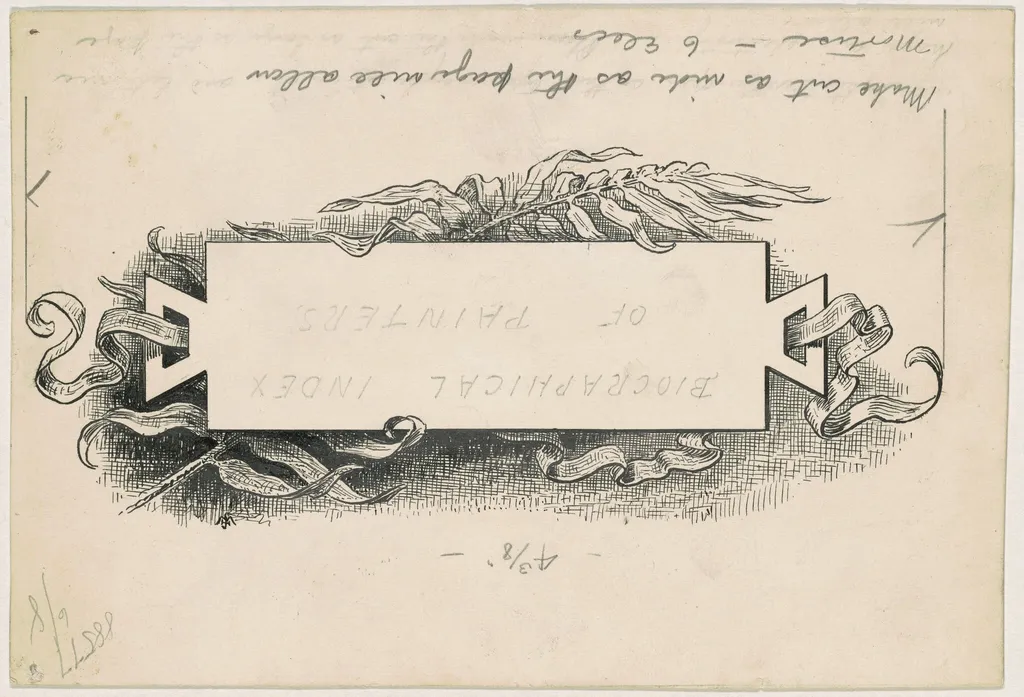
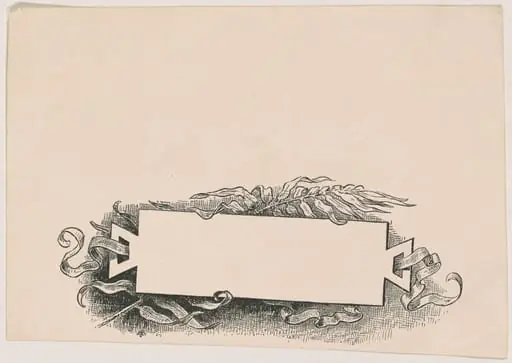
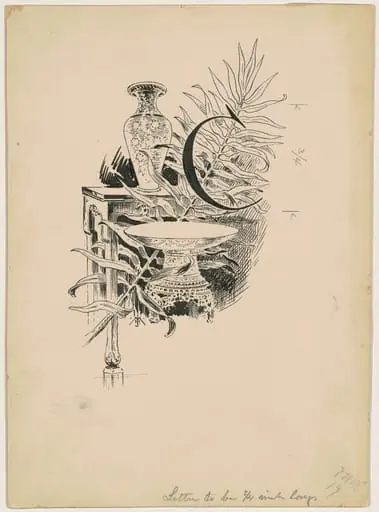
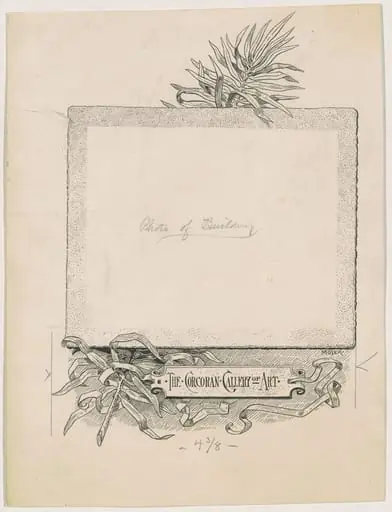
Index is an ink drawing by the Impressionist artist James Henry Moser. It dates from 1890 and is held in the collection of the National Gallery of Art.
- Inscription
- Inscribed:lower left in black ink: JHM [artist's monogram]; upper center in graphite by unknown hand (upside down): Make cut as wide as the page will allow / Mortise - 6 Elecs; center in graphite by unknown hand (upside down): BIOGRAPHICAL INDEX / OF PAINTERS; lower center in graphite by unknown hand (upside down): - 4 3/8" -; lower left in graphite by unknown hand (upside down): 88577 / 6/8
About this work
Overview
James Henry Moser’s 1890 drawing titled Index is executed in pen and black ink complemented by graphite on paperboard. The composition consists of a rectangular frame encircled by two intertwined ropes or vine-like strands, topped by a bird with wings spread wide. The work is rendered in a loose, sketch‑like manner, emphasizing line rather than detailed modeling.
Subject & Meaning
The surrounding twisted cords evoke a sense of entanglement, perhaps alluding to themes of confinement or connection.
The central motif features a bird perched above a simple frame, its feathers suggested by rapid, gestural strokes. The surrounding twisted cords evoke a sense of entanglement, perhaps alluding to themes of confinement or connection. While no explicit narrative is provided, the juxtaposition of the bird’s freedom with the binding ropes invites contemplation of tension between liberty and restraint.
Technique & Style
Moser employs a combination of black ink for the primary outlines and graphite for tonal shading, relying heavily on cross‑hatching to build depth and shadow. The drawing’s surface is densely populated with fine, intersecting lines that define form while preserving a spontaneous, unfinished quality. This approach highlights the artist’s emphasis on line work and the immediacy of the sketching process.
History & Provenance
Created in 1890, Index belongs to Moser’s early period, when he explored drawing as a means of rapid visual experimentation. The piece remains on paperboard, a common support for studies of the era, and has been retained within the artist’s estate collections, offering insight into his preparatory methods before larger, more finished compositions.
Own this work as a print
Artist & collection
Artist
American (born Canada), Whitby, Ontario 1854–1913 West Cornwall, Connecticut

 Imortele
 Composition avec branches fleuries et guirlandes de glands argentés, frises de fleurs stylisées et de perles grises, projets de broderies de gilet, XVIIIème siècle
 Siddende figur med fremstrakt arm
 Study of "The Roman Orator (Germanicus)"
 Hammer and Compass
 Studies for Border Designs
 Study for a Border Design
- Index