Artwork
伊藤若冲筆 無染浄善 (丹崖) 賛 豌豆豆図|Bean Vine
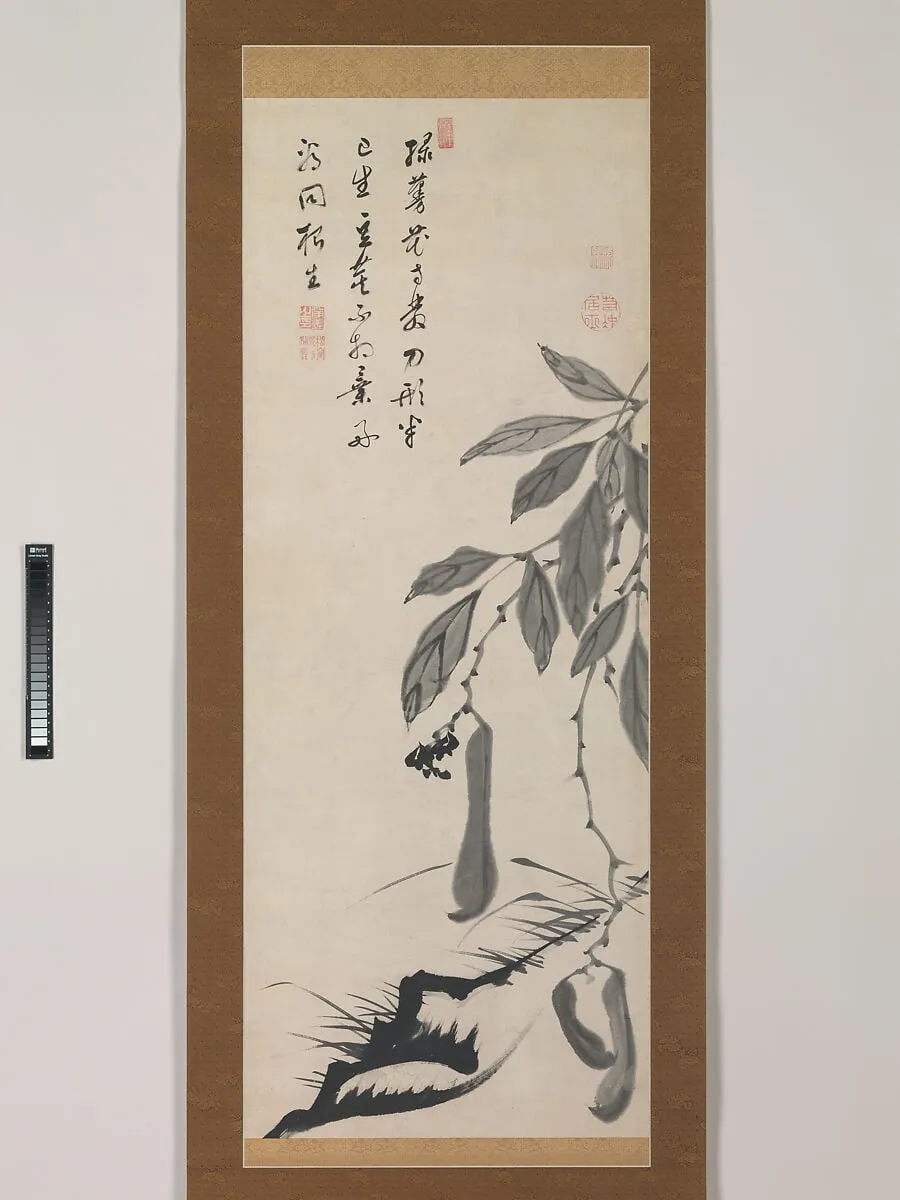
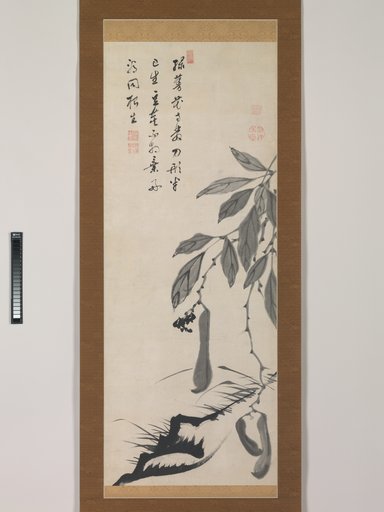
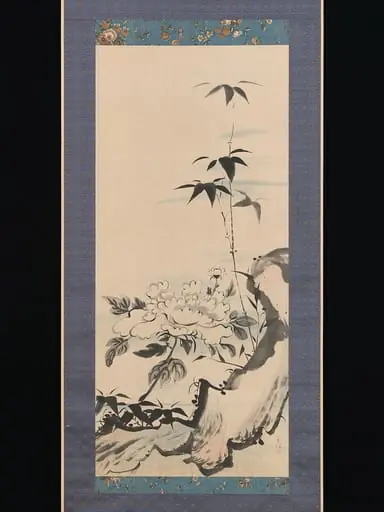
伊藤若冲筆 無染浄善 (丹崖) 賛 豌豆豆図|Bean Vine is an ink painting by the Baroque artist Musen Jōzen. It dates from 1750 and is held in the collection of the Metropolitan Museum of Art. Created around 1750, this hanging scroll is an ink drawing on paper attributed to the Edo‑period painter Ito Jakuchu.
- Accession no.
- 1985.97
- Credit line
- Purchase, Lita Annenberg Hazen Charitable Trust Gift, in honor of Cynthia and Leon Polsky, 1985
About this work
Technique & Style
The composition centers on a twisting vine rendered with fine brushstrokes, showcasing the artist’s mastery of traditional Japanese monochrome techniques.
Itō Jakuchū executed Bean Vine as a hanging scroll using ink on paper, a medium that emphasizes delicate line work and subtle tonal gradations. The composition centers on a twisting vine rendered with fine brushstrokes, showcasing the artist’s mastery of traditional Japanese monochrome techniques. The work’s flat, decorative surface and stylized botanical detail reflect a synthesis of Zen aesthetics and Edo-period naturalist observation, with the vine depicted in a rhythmic, almost calligraphic rhythm. Its handling suggests careful vertical display, preserving the scroll’s structural integrity over centuries.
The painting’s condition remains stable, with minimal fading and intact paper support, allowing the nuanced ink washes to retain their visual clarity. Formal elements such as asymmetrical balance and controlled negative space underscore the piece’s restrained elegance, aligning with contemporary accounts of Jakuchū’s precise brush control and contemplative approach to everyday subjects.
History & Provenance
The hanging scroll was created in 1750 by Itō Jakuchū, executed in ink on paper and accompanied by an inscription (賛) by the monk Musen Jōzen, also known by the name Tango (丹崖). The work was produced in Japan during Jakuchū's mature period as a painter.
The painting is now held in the collection of the Metropolitan Museum of Art, where it is classified as a painting and categorized within the still-life genre. The documented ownership chain beyond its current institutional home is not detailed in the available sources, and no information is provided regarding an earlier provenance, prior collectors, or the circumstances of any commission.
The hanging scroll ink on paper work titled Bean Vine painted by Itō Jakuchū in 1750 is part of the Metropolitan Museum of Art collection in New York.
It is catalogued under the accession number 1983.277.1.
The piece was featured in the museum’s 1990 exhibition Japan: The Art of Itō Jakuchū.
Overview
Created around 1750, this hanging scroll is an ink drawing on paper attributed to the Edo‑period painter Ito Jakuchu. The work presents a solitary vine rendered in monochrome, its slender stems, leaves, and pea pods extending across a largely empty surface.
Subject & Meaning
The composition focuses on a single bean‑vine, its tendrils curling and its small pea blossoms hanging like delicate bells. By isolating the plant, the image invites contemplation of natural growth and the quiet vitality of a solitary organism.
Context
During the Edo era, ink drawings often served as studies or decorative objects. This piece aligns with a broader interest in botanical subjects, yet its restrained composition distinguishes it from the more densely populated works typical of the time.
Artist & collection