Artwork
徳山玉瀾筆 牡丹に竹図|Peony and Bamboo
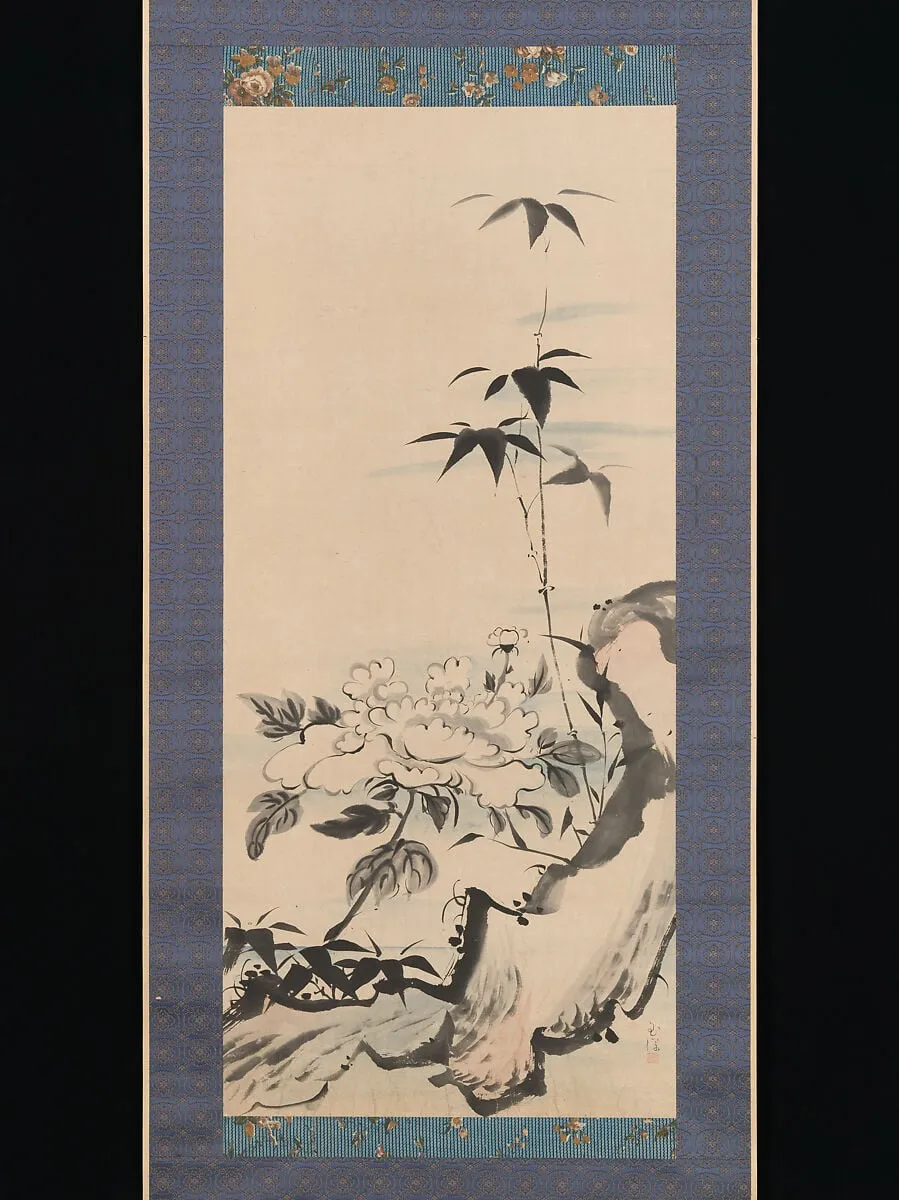
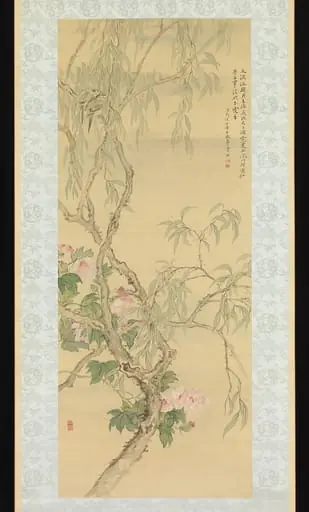
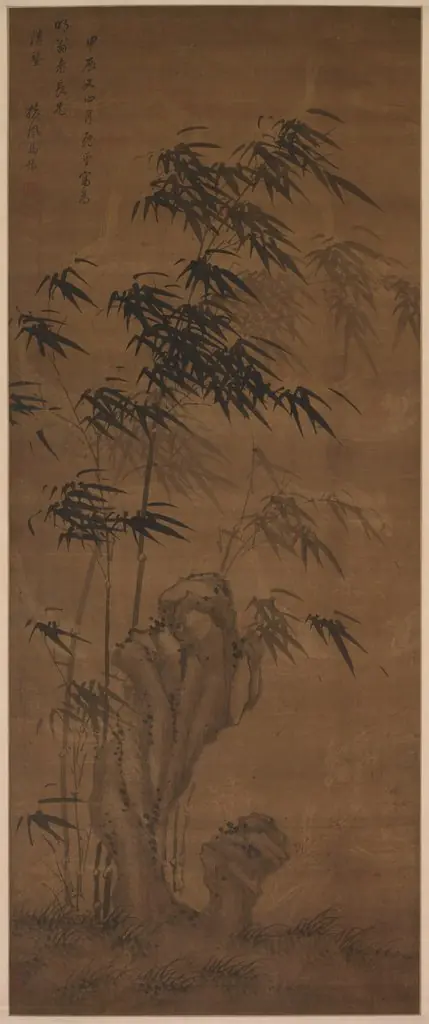
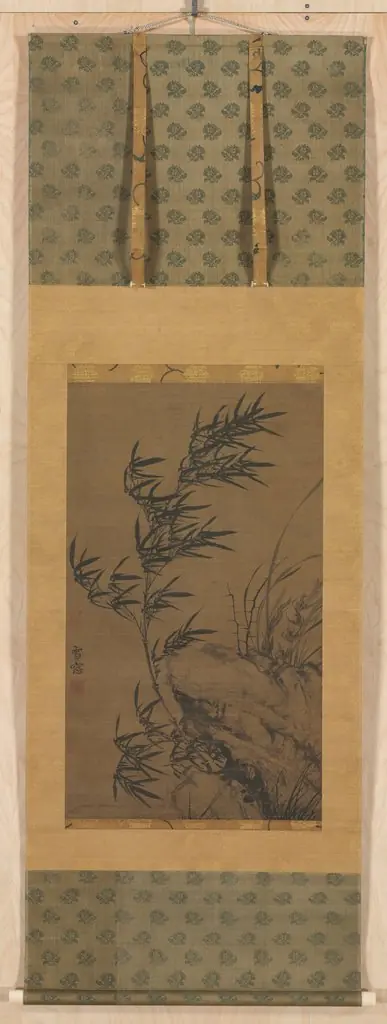
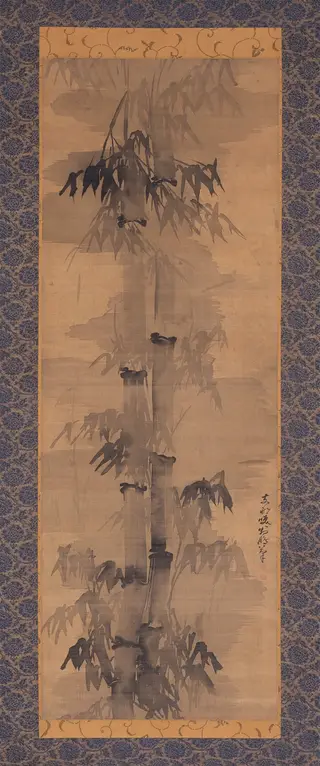
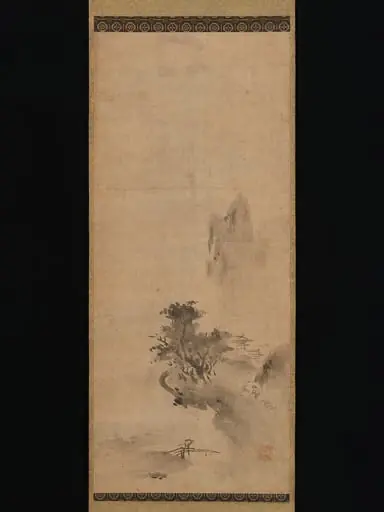
徳山玉瀾筆 牡丹に竹図|Peony and Bamboo is an ink painting by the Baroque artist Ike (Tokuyama) Gyokuran. It dates from 1768 and is held in the collection of the Metropolitan Museum of Art. This hanging scroll, titled Peony and Bamboo, is an ink and color painting on paper by Tokuyama Gyokuran.
About this work
Subject & Meaning
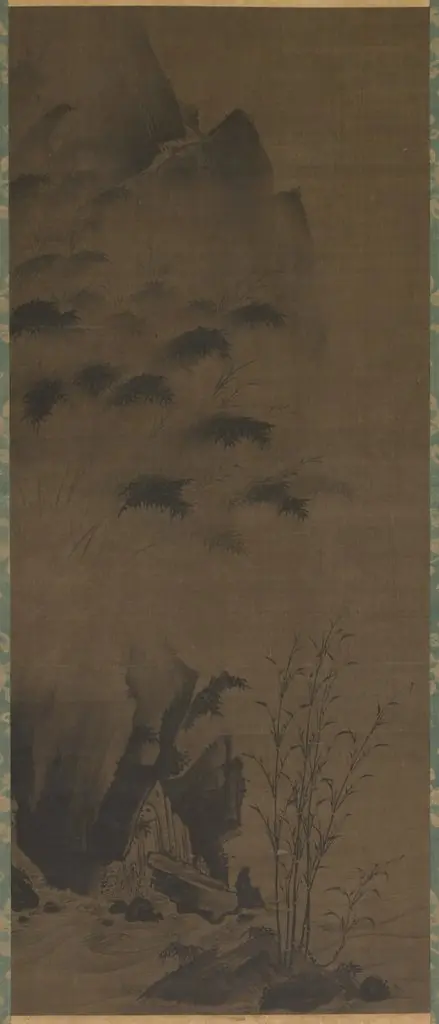
The hanging scroll depicts two botanical subjects paired together: peonies (Paeonia) and bamboo (Bambusoideae).
The hanging scroll depicts two botanical subjects paired together: peonies (Paeonia) and bamboo (Bambusoideae). In East Asian painting, peonies are traditionally associated with wealth, prosperity, and feminine beauty, while bamboo symbolizes resilience, integrity, and upright character because it bends without breaking and remains evergreen. The combination of a flowering plant with bamboo is a conventional pairing in literati and Zen-influenced ink painting, where contrasting motifs, soft blossoms against rigid stalks, create visual and philosophical balance.
Tokuyama Gyokuran's composition thus joins these symbolic plants within a single ink-and-color field on paper, presenting the natural subjects as carriers of auspicious and moral meaning rather than as a botanical study.
Technique & Style
Created in 1768, this hanging scroll by Ike (Tokuyama) Gyokuran is executed in ink and color on paper. The work depicts peonies and bamboo, aligning with the landscape genre classification. As a hanging scroll, the painting is designed for vertical display, utilizing paper as its primary support.
The application of both ink and pigment indicates a polychrome approach typical of the artist's style during this period. The piece is currently held in the collection of the Metropolitan Museum of Art. The formal subject matter focuses on the botanical elements of bamboo and peonies, rendered through the traditional Japanese painting medium of ink and color on paper.
History & Provenance
The work titled 徳山玉瀾筆 牡丹に竹図 (Peony and Bamboo) was created in 1768 by the Japanese painter Ike (Tokuyama) Gyokuran, as recorded in its internal catalog entry [1] and confirmed by its Wikidata entry [2]. It is an ink and color hanging scroll depicting Bambusoideae and Paeonia, executed in Japan [2]. The piece entered the collection of the Metropolitan Museum of Art, where it remains on display, indicating a straightforward ownership chain from the artist to the museum [2].
No records of prior private commissions or sales are documented in the available sources, and the dating is anchored to the inscription “1768” cited in both references [1][2].
Overview
This hanging scroll, titled Peony and Bamboo, is an ink and color painting on paper by Tokuyama Gyokuran. Created by a notable woman artist in 18th-century Japan, the work depicts a vibrant natural scene. Gyokuran's delicate brushwork and use of soft hues imbue the composition with a sense of both tranquility and vitality, characteristic of her approach to nature subjects.
Context
Tokuyama Gyokuran was an accomplished woman painter active in 18th-century Japan, a period when female artists were uncommon. Her practice often centered on depicting natural subjects, such as the flora presented in Peony and Bamboo. This work exemplifies her skill in conveying both the delicate details and the overall spirit of the natural world, establishing her as a significant figure in her artistic milieu.
Artist & collection