Artwork
An Arab Caravan Resting near the Shore
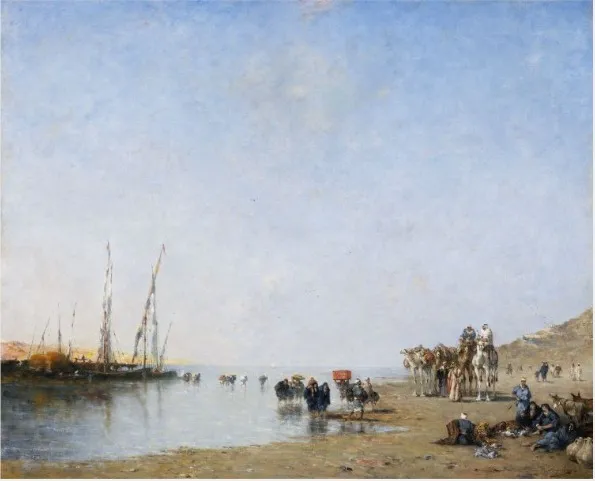
An Arab Caravan Resting near the Shore is an oil painting by the Orientalist artist Narcisse Berchère. It dates from 1865 and is held in the collection of the National Gallery of Ireland.
About this work
The artist used oil paint to create this work, which is now held at the National Gallery of Ireland.
The painting is titled An Arab Caravan Resting near the Shore. It was created by Narcisse Berchère in 1865. The artist used oil paint to create this work, which is now held at the National Gallery of Ireland.
The painting's subject is an interesting aspect, as it depicts a moment of rest for the caravan. This moment of rest might suggest a sense of calm or pause in the caravan's journey. You can learn more about this style of painting by looking into the technique of glazing.
Overview
Painted in 1865 by French artist Narcisse Berchère, this oil on canvas depicts a caravan paused near a coastal landscape. Berchère, known for his travels in North Africa and the Middle East, captured the quiet interlude of travelers and animals during a long journey. The work belongs to the Orientalist tradition, reflecting 19th-century European interest in Eastern cultures through observed detail rather than idealization.
Subject & Meaning
The scene shows a group of travelers and their animals resting beside the water’s edge, their posture suggesting temporary repose. No dramatic action occurs; instead, the focus lies in the stillness of the moment, shadows stretching, figures seated, camels kneeling. This pause implies the rhythm of desert travel, where rest is as essential as movement, and the shore marks a rare convergence of land and sea in an arid world.
Technique & Style
Berchère employed oil paint with careful layering, using glazes to render subtle shifts in light across sand, fabric, and water. His brushwork is precise yet unobtrusive, emphasizing texture over drama. The composition avoids theatricality, favoring a quiet, observational tone. Atmospheric perspective softens the distant horizon, reinforcing the vastness of the landscape surrounding the small human presence.
History & Provenance
Created during Berchère’s period of active travel in the Maghreb, the painting entered the National Gallery of Ireland’s collection in the 20th century. Its acquisition reflects the gallery’s broader interest in 19th-century European Orientalist works. No record of prior ownership or exhibition history prior to its arrival in Dublin is widely documented, though it was likely exhibited in France during the artist’s lifetime.
Context
In mid-19th-century Europe, increased travel and colonial expansion fueled fascination with the Middle East and North Africa. Artists like Berchère traveled as documentarians, producing images that blended observation with romanticized notions of the exotic. While not overtly political, such works contributed to a visual lexicon that shaped European perceptions of Eastern societies, often prioritizing aesthetic harmony over cultural depth.
Legacy
Berchère’s work remains a quiet example of Orientalist painting, valued for its restraint and attention to environmental detail. Unlike more sensationalized depictions of the era, this painting offers a subdued, almost meditative view of cross-cultural encounter. Today, it contributes to scholarly discussions on how European artists interpreted, and sometimes softened, the realities of non-Western life through the lens of their own aesthetic conventions.
Artist & collection
Artist
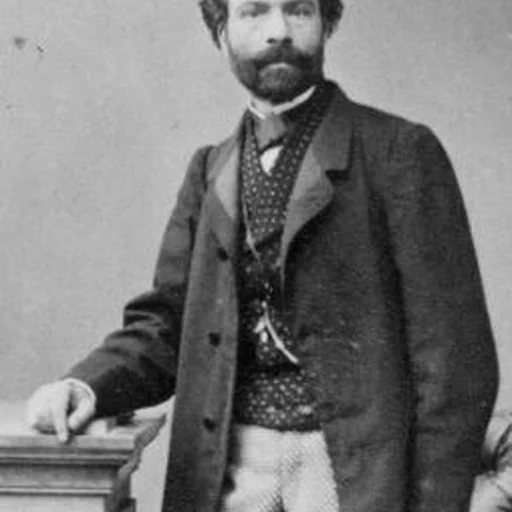
Narcisse Berchère (11 September 1819 – 20 September 1891) was a French painter and engraver best known for his Orientalist works.

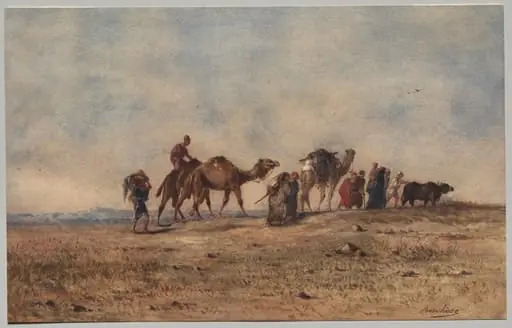
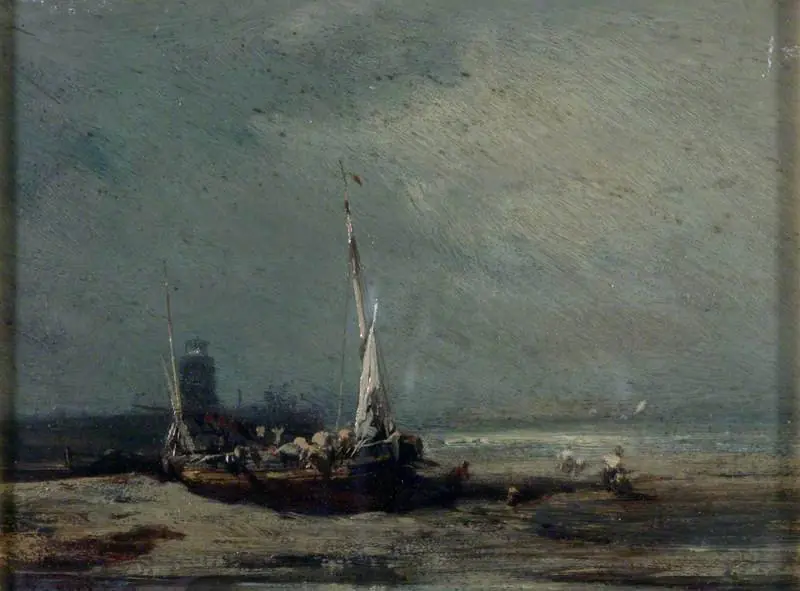
- Boat on a Shore
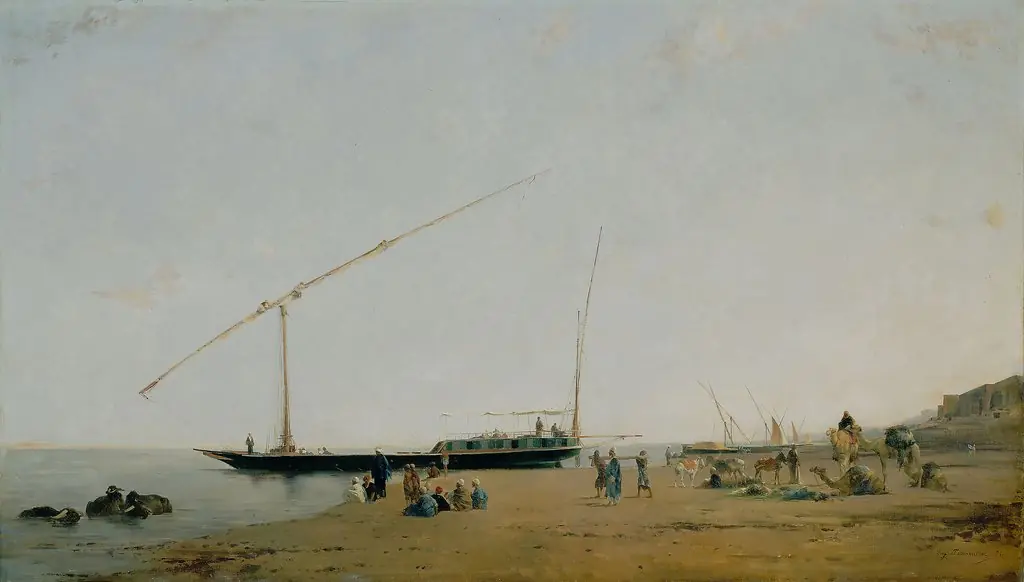 On the Nile, Near Philae
 On the Nile
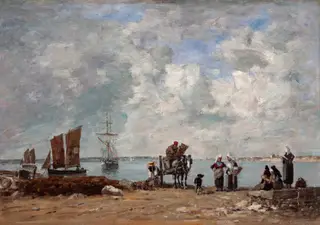 Fishermen's Wives at the Seaside
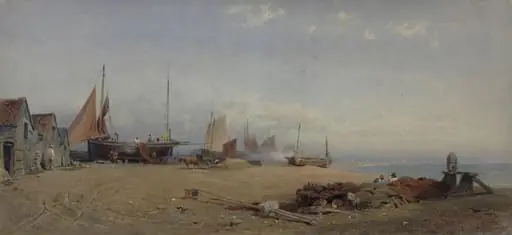 Eastbourne
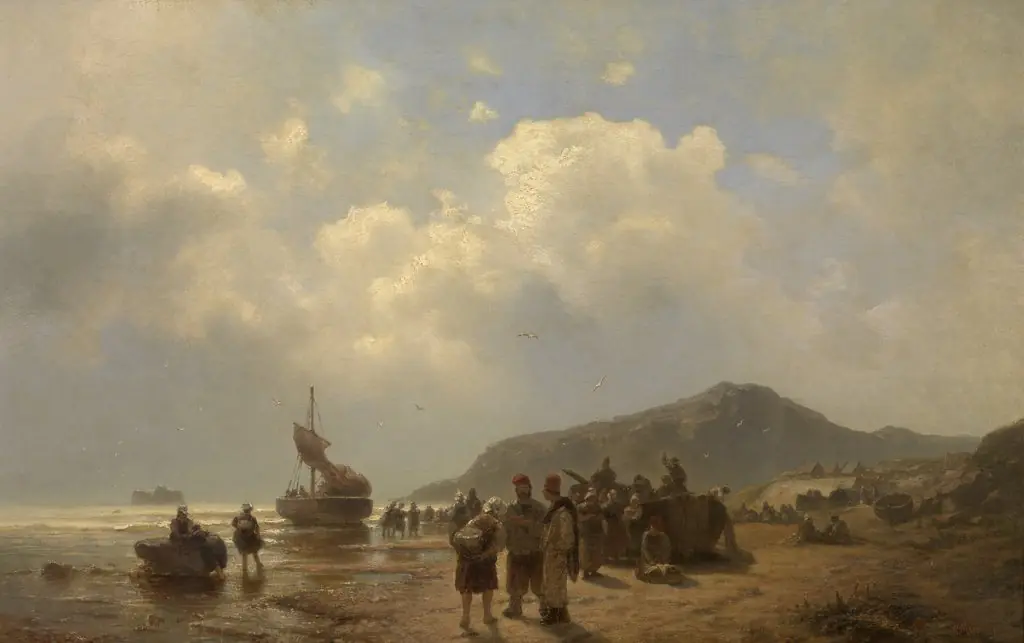 Scheveningen
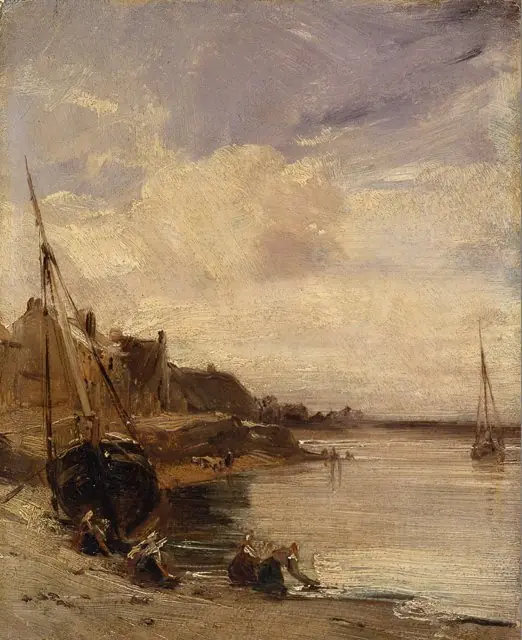 Low Tide at Boulogne
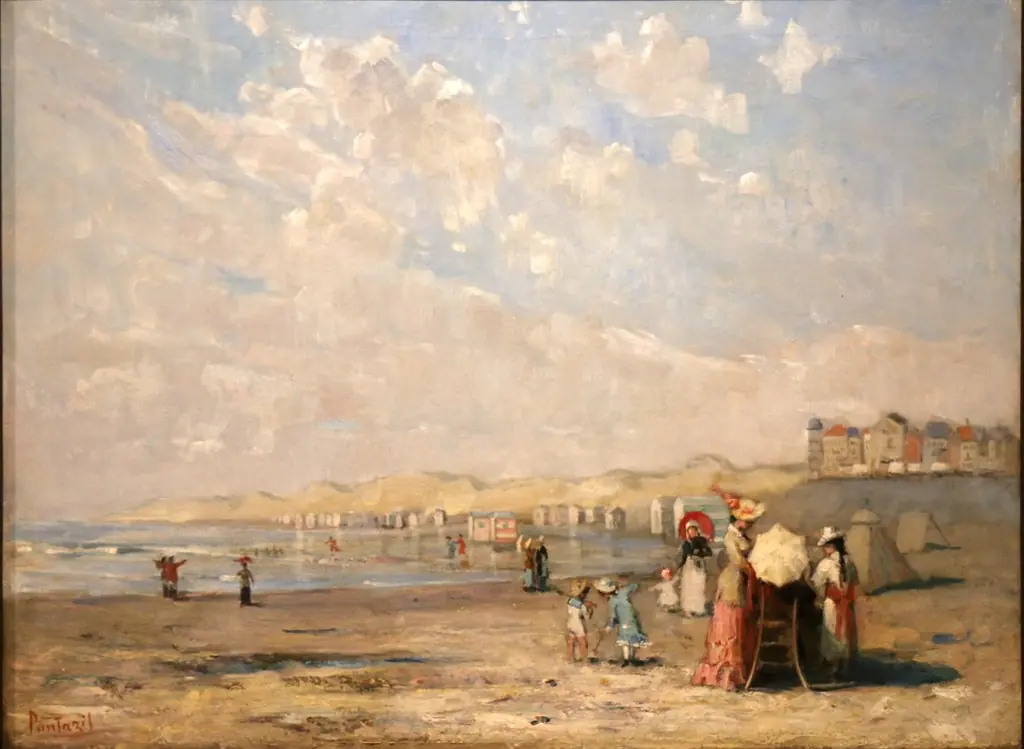 The beach at Blankenberghe
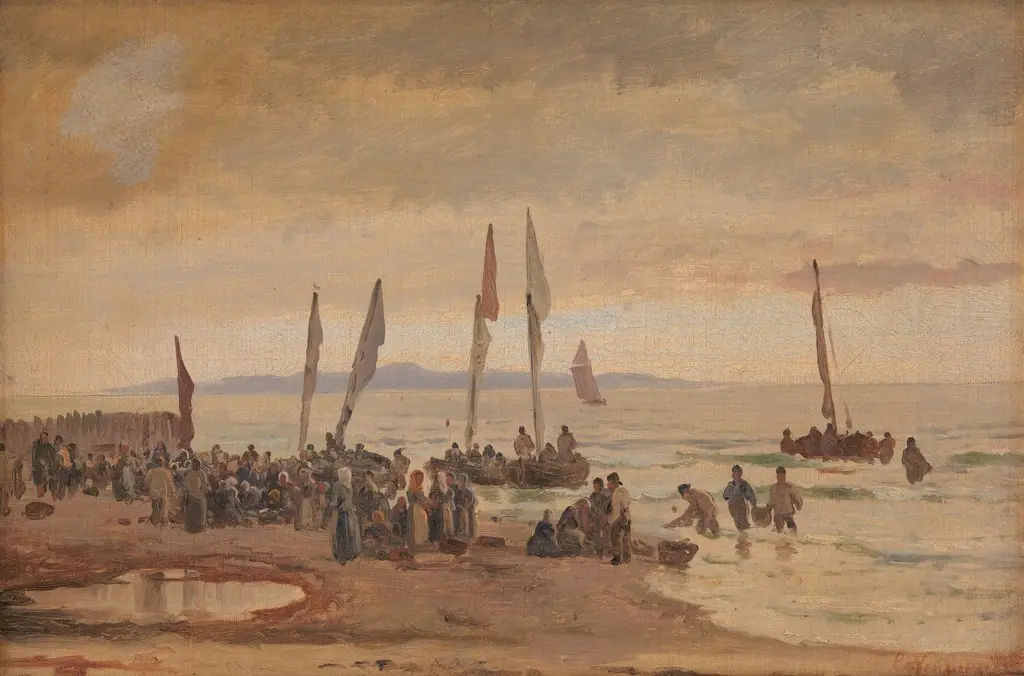 Hjemvendende fiskere modtages på Hornbæk Strand
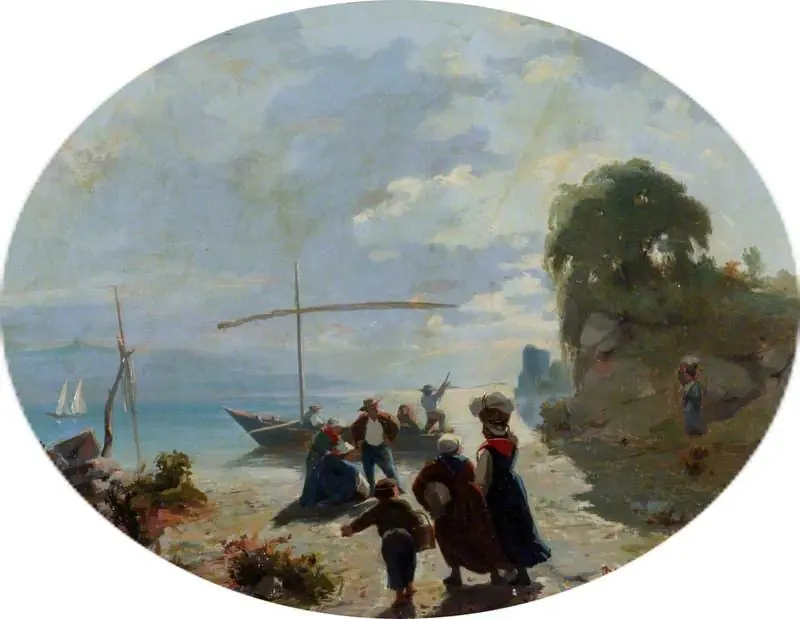 Landscape: The Shore of a Lake, with Figures
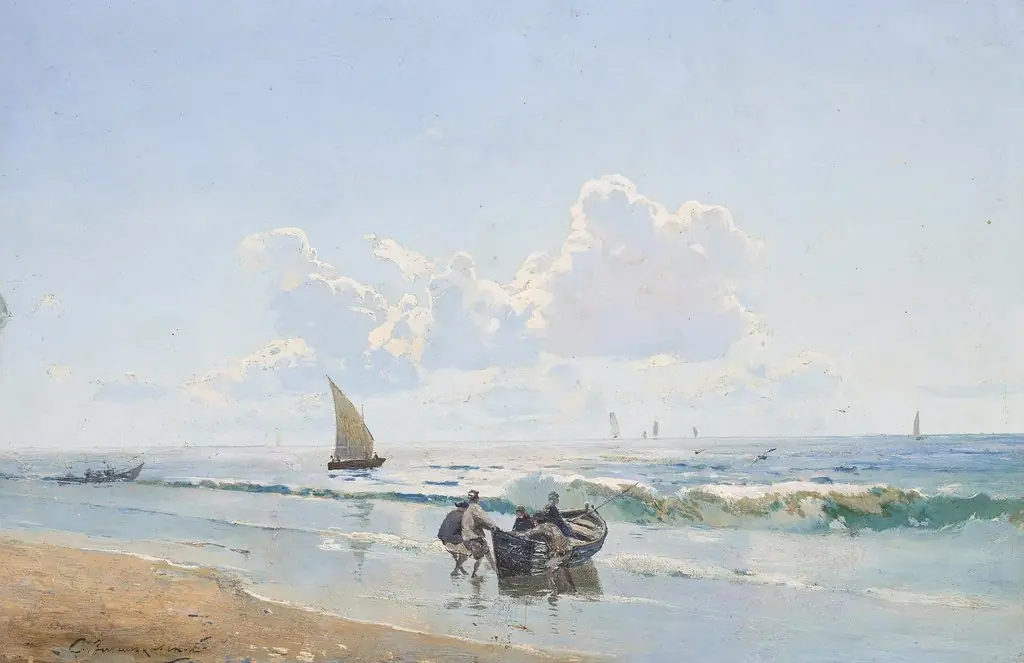 Sea Tide
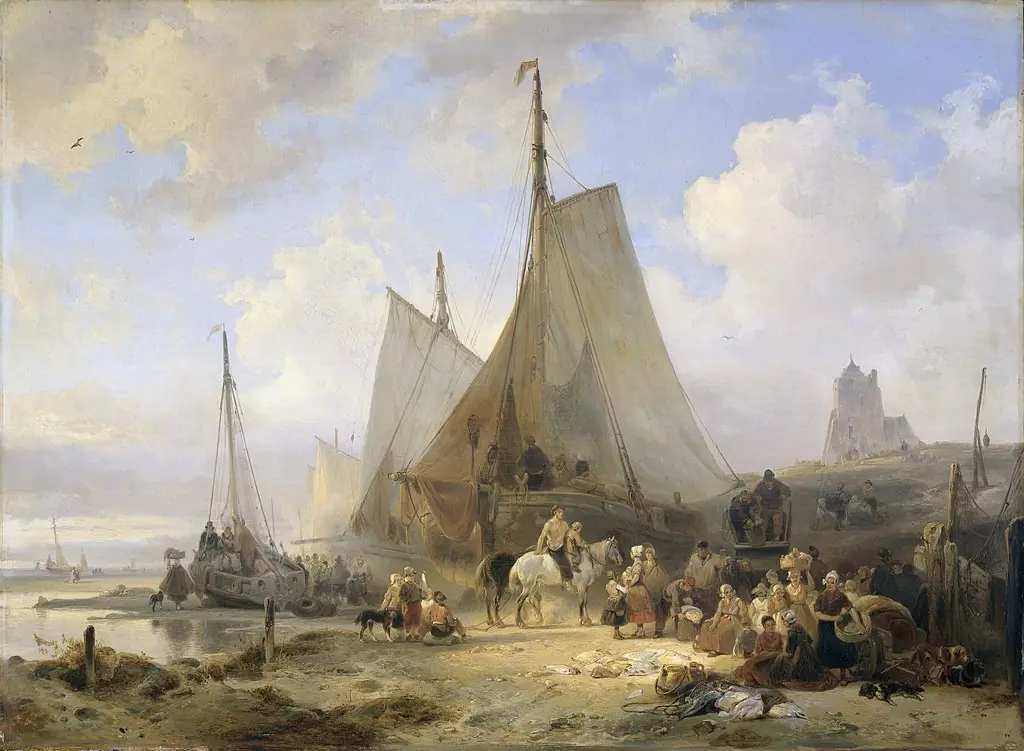 Fishing Boats on the Beach with Fishermen and Women Sorting the Catch