Artwork
Red Sails. Prince Vladimir's Campaign to Korsun
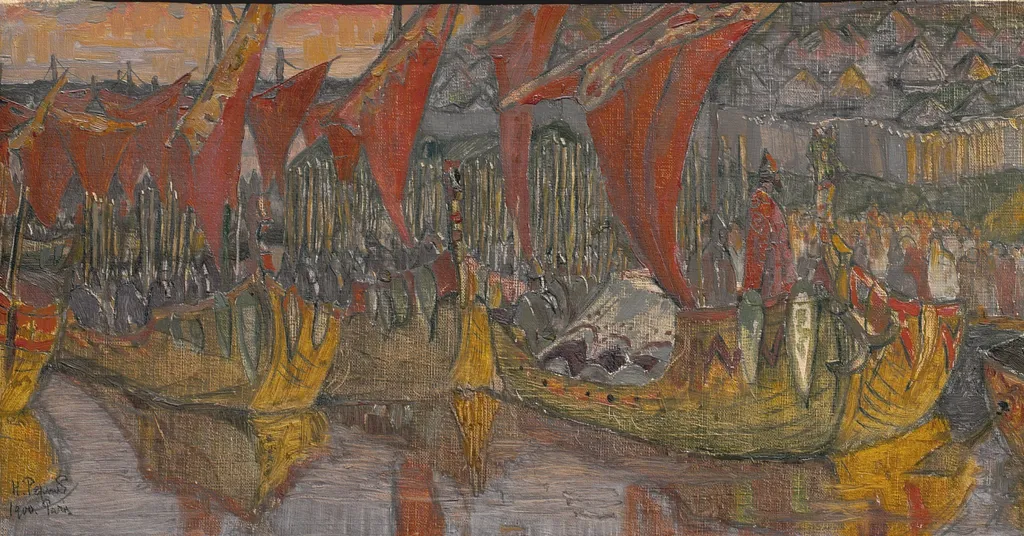
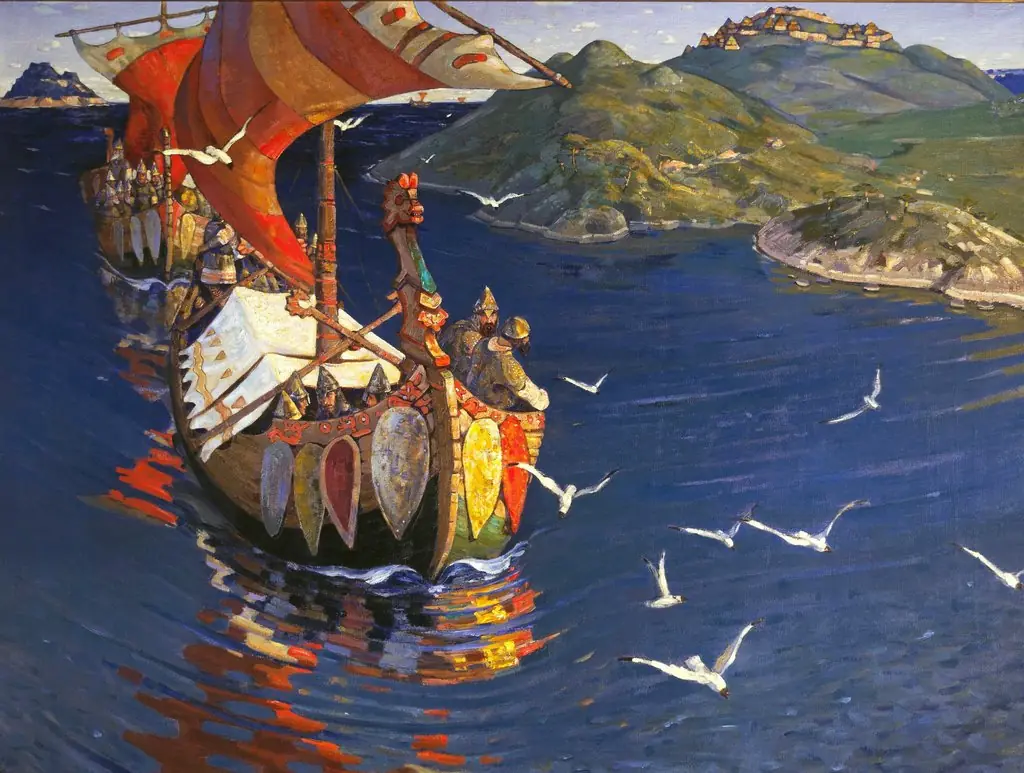
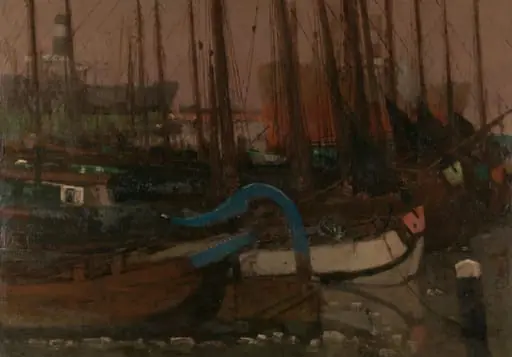
Red Sails. Prince Vladimir's Campaign to Korsun is an oil painting by the Art Nouveau artist Nicholas Roerich. It dates from 1920 and is held in the collection of the Tretyakov Gallery. Painted around 1920, Red Sails.
About this work
Overview
It illustrates a medieval military expedition led by Prince Vladimir of Kiev toward the Byzantine city of Korsun.
Painted around 1920, Red Sails. Prince Vladimir's Campaign to Korsun is an oil work by Russian artist Nicholas Roerich. It illustrates a medieval military expedition led by Prince Vladimir of Kiev toward the Byzantine city of Korsun.
The painting is part of the Tretyakov Gallery’s permanent collection and reflects Roerich’s interest in historical and spiritual themes, though it diverges from strict realism in its symbolic composition.
Subject & Meaning
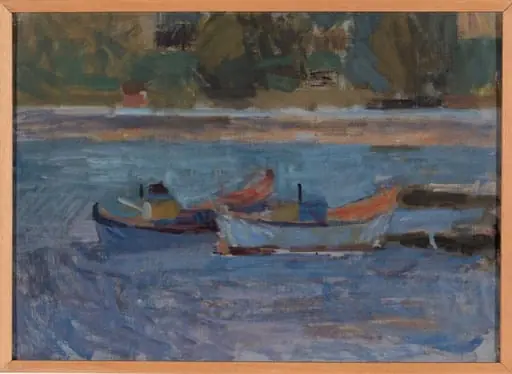
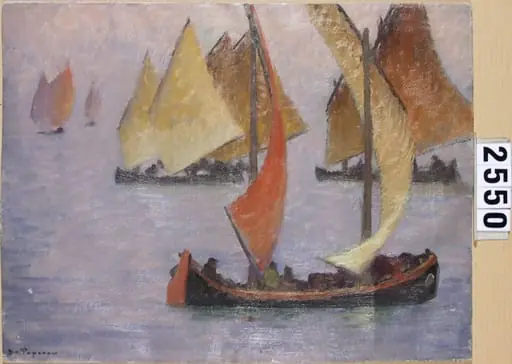
The scene portrays a fleet of longboats with crimson sails advancing toward a distant settlement, evoking Prince Vladimir’s 988 campaign to secure a marriage alliance with Byzantium. The red sails symbolize both military resolve and spiritual transformation, as Vladimir’s subsequent conversion to Christianity reshaped Kievan Rus’. The composition suggests movement and purpose, emphasizing the historical weight of the moment rather than literal detail.
Technique & Style
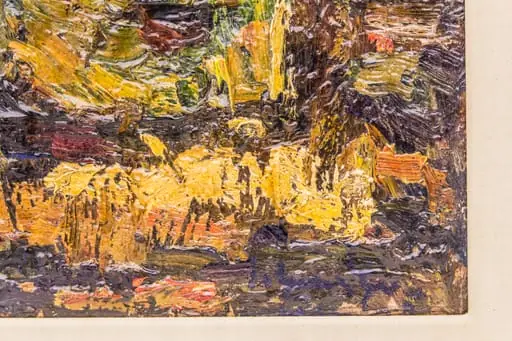
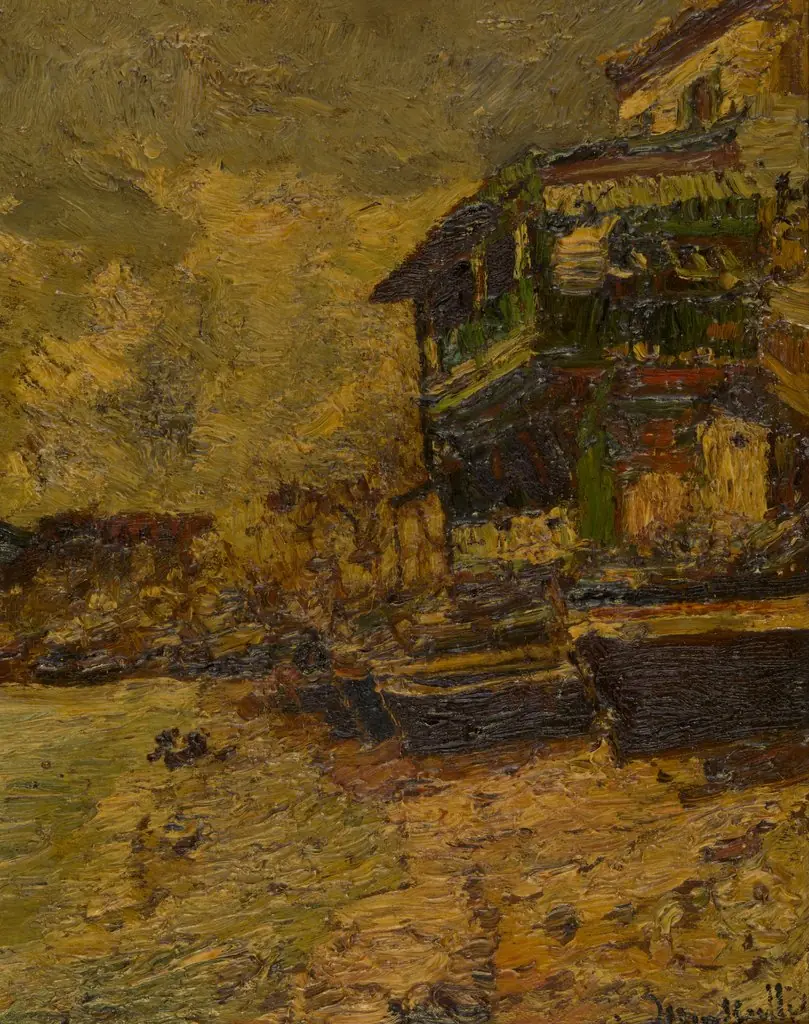
Roerich employs visible, expressive brushwork to convey texture and motion, with layered pigments creating depth in the water and hulls. The red sails dominate the palette, contrasting with muted grays, blues, and earth tones in the boats and landscape. The style blends historical narrative with a lyrical, almost dreamlike atmosphere, aligning with Symbolist tendencies rather than strict Art Nouveau conventions.
History & Provenance
Created during Roerich’s time in Russia after his return from Central Asia, the painting emerged from his broader project to visualize Slavic history through myth and memory. It entered the Tretyakov Gallery’s collection in the early 20th century, where it was recognized as part of a series exploring Russia’s medieval past. Its provenance remains tied to Russian national cultural institutions.
Context
Roerich painted this during a period of intense national reflection following the Russian Revolution. His focus on pre-Mongol Kievan Rus’ reflected a search for cultural roots amid political upheaval. The campaign to Korsun, a pivotal moment in the Christianization of the East Slavs, resonated as a symbol of cultural synthesis between Byzantine and Slavic traditions.
Legacy
While not widely exhibited outside Russia, the painting contributes to Roerich’s reputation as a visual historian of Slavic heritage. It stands as part of a larger body of work that sought to reconnect modern audiences with pre-imperial Russian identity through mythic imagery, influencing later generations interested in national symbolism and spiritual history.
Artist & collection
Artist
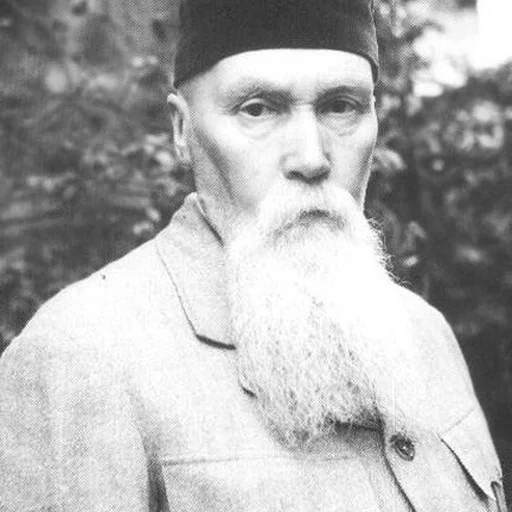
Nikolai Konstantinovich Rerikh (Russian: Николай Константинович Рерих), better known as Nicholas Roerich (; October 9, 1874 – December 13, 1947), was a Russian polymath, painter, writer, archaeologist, theosophist, philosopher, and public…