Artwork
Saint Pantaleon
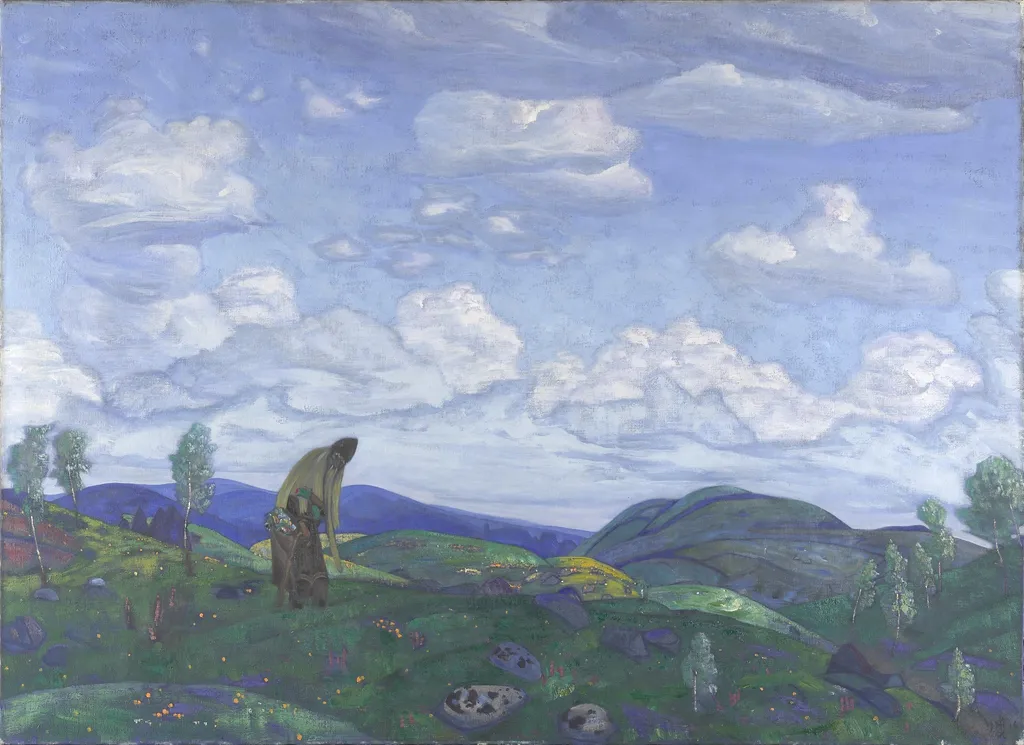
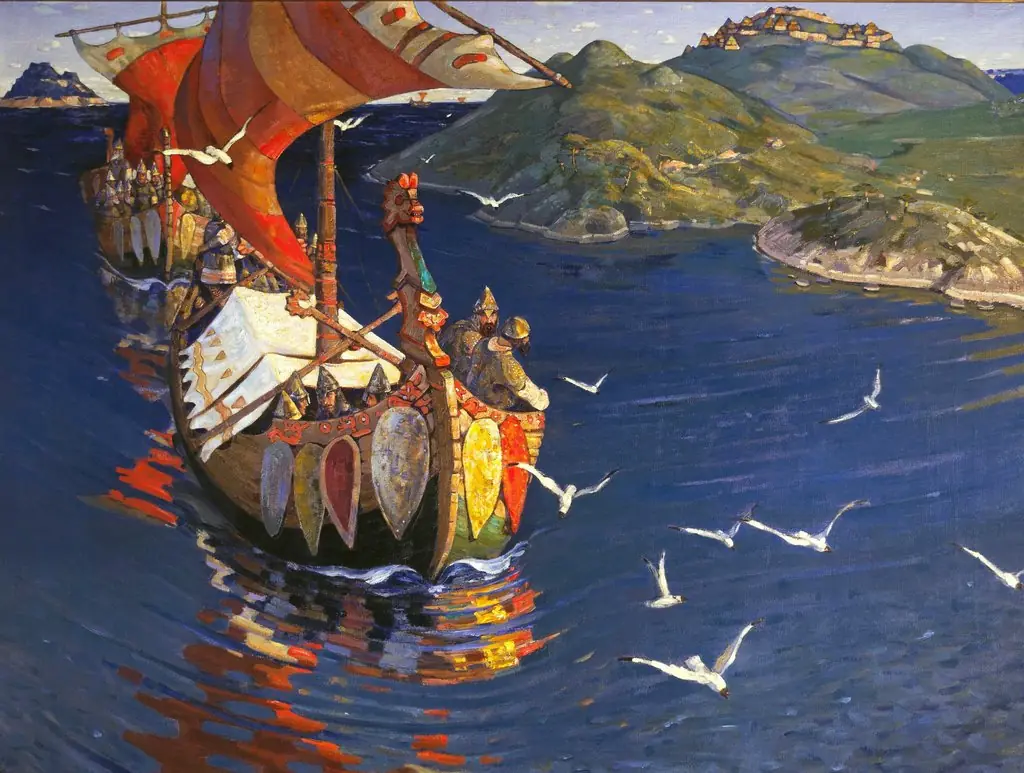
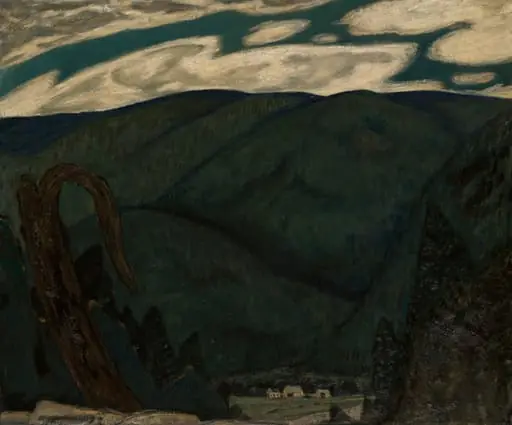
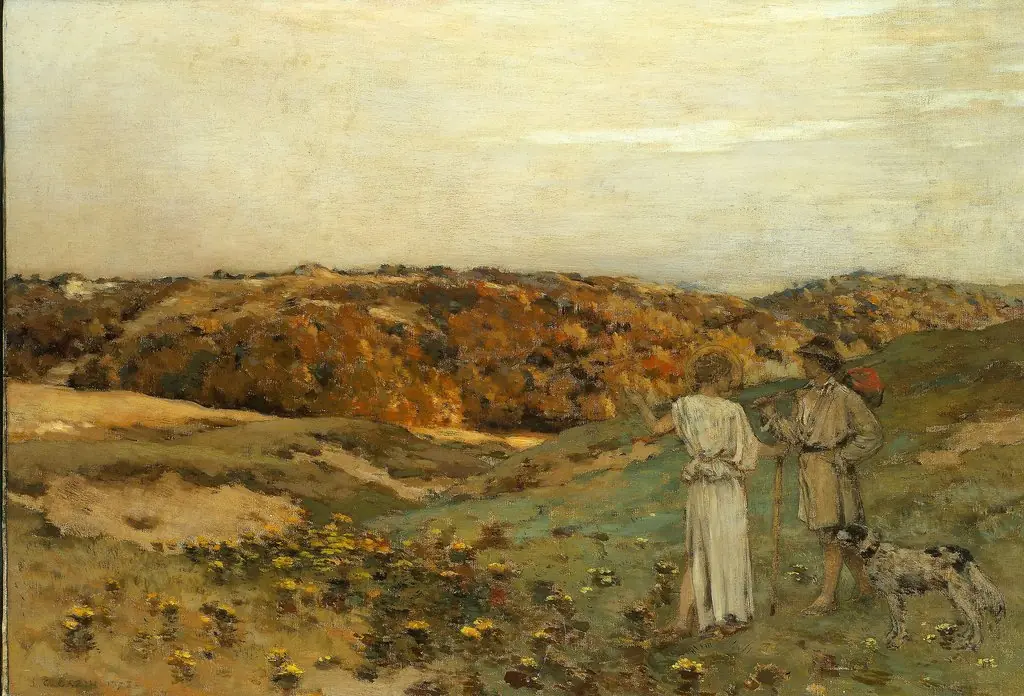
Saint Pantaleon is an oil painting by the Symbolist artist Nicholas Roerich. It dates from 1916 and is held in the collection of the Tretyakov Gallery.
About this work
Overview
Painted in 1916, Saint Pantaleon is an oil on canvas work by Nicholas Roerich, part of a broader series exploring spiritual figures through landscape.
Painted in 1916, Saint Pantaleon is an oil on canvas work by Nicholas Roerich, part of a broader series exploring spiritual figures through landscape. The painting belongs to the Symbolist tradition, prioritizing inner meaning over literal depiction. It is held in the Tretyakov Gallery’s permanent collection, reflecting its significance within early 20th-century Russian art. Roerich’s output during this period was vast, integrating religious, philosophical, and archaeological interests into his visual language.
Subject & Meaning
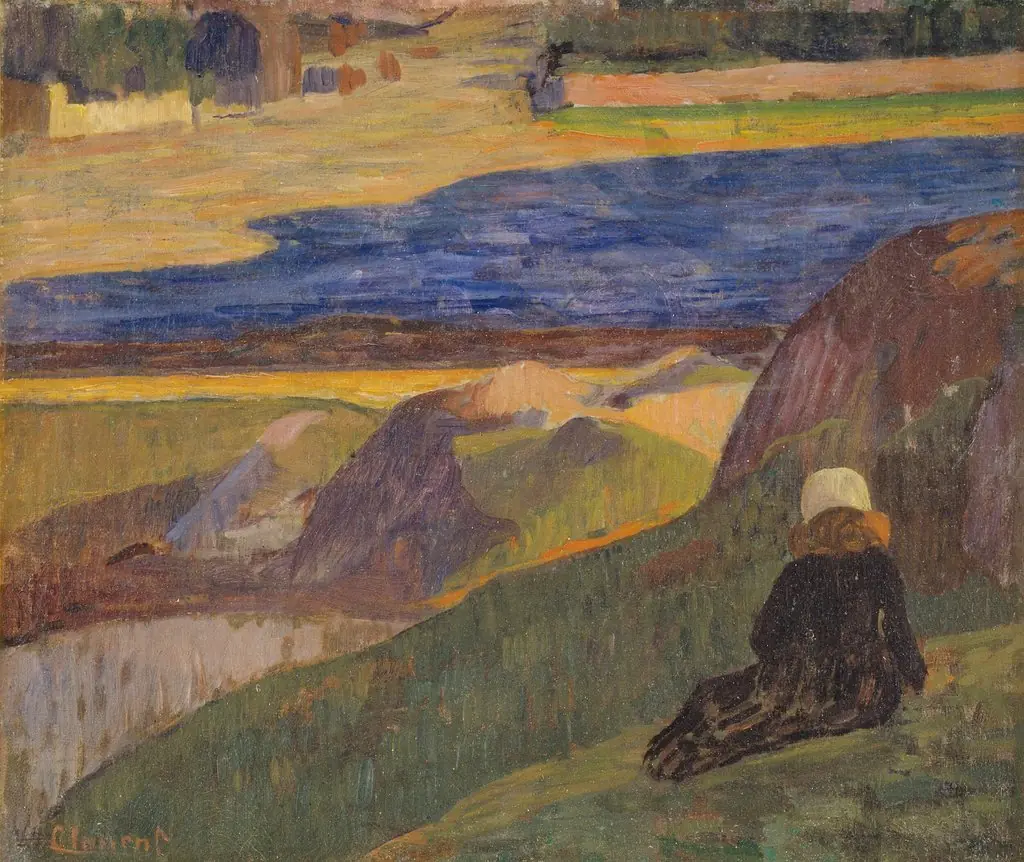
The figure in the foreground, traditionally identified as Saint Pantaleon, is rendered not as a conventional icon but as a solitary presence within nature. Dressed in a hooded robe and holding a staff or scroll, the saint merges with the environment, suggesting spiritual harmony rather than divine authority. The absence of overt religious symbols shifts focus to quiet contemplation, aligning with Roerich’s theosophical belief in universal spiritual truths expressed through landscape.
Technique & Style
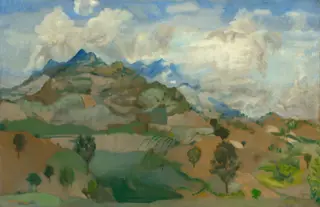
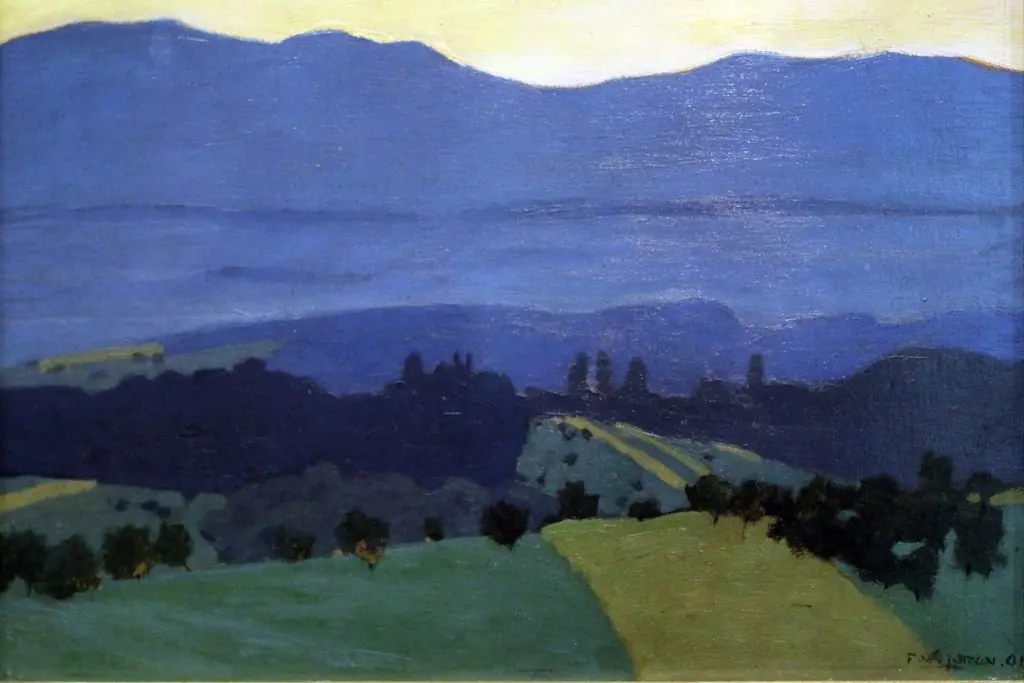
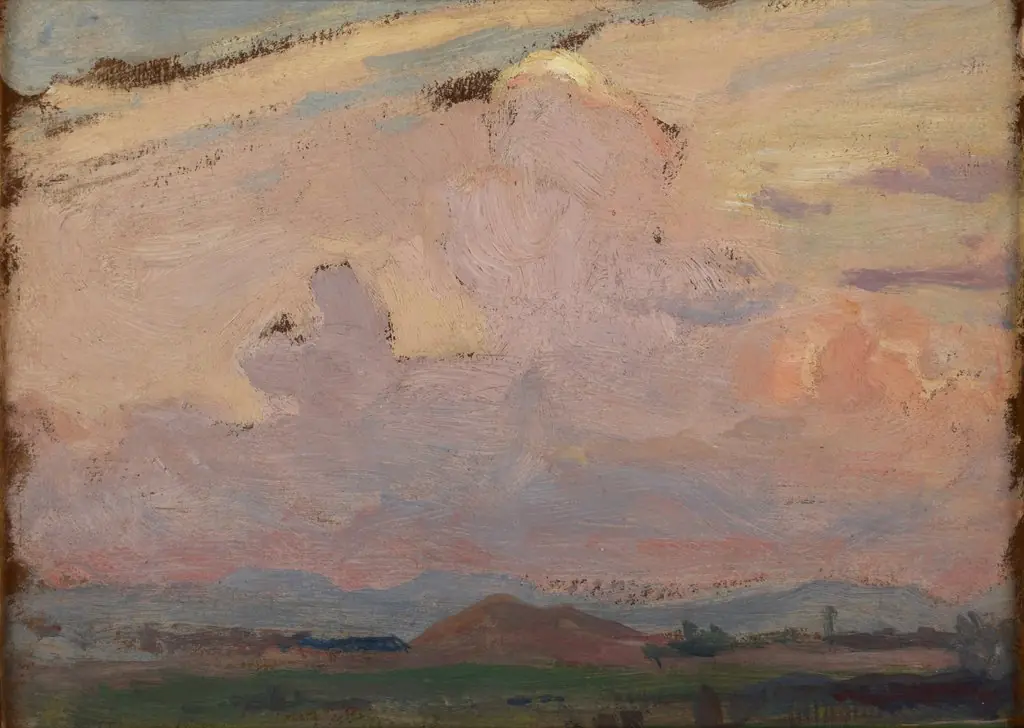
Roerich employs soft, muted tones and layered brushwork to evoke atmospheric depth. The rolling hills, distant mountains, and diffused sky create a sense of stillness, with no sharp contrasts or dramatic lighting. Figures are simplified, almost silhouetted, emphasizing form over detail.
This restrained approach reflects Symbolist ideals, where mood and suggestion replace narrative clarity, inviting introspection rather than immediate recognition.
History & Provenance
Created during Roerich’s time in Russia before his later travels to Central Asia, the painting emerged from a phase of intense spiritual inquiry. It entered the Tretyakov Gallery’s collection in the early 20th century, likely through direct acquisition or donation, as the gallery actively documented works by Russian Symbolists. Its preservation there underscores its role in the national artistic discourse of the era, despite Roerich’s eventual emigration.
Context
In 1916, Russia was amid political upheaval and cultural redefinition. Roerich’s work responded to a broader search for meaning beyond materialism, influenced by Theosophy, Eastern spirituality, and medieval iconography. While many artists turned to abstraction or revolution, Roerich sought transcendence through nature and ancient symbolism.
Saint Pantaleon reflects this quiet resistance to modernity’s fragmentation, offering a vision of unity between the sacred and the earthly.
Legacy
The painting remains a quiet example of Roerich’s unique synthesis of landscape and spirituality. Though less widely known than his Himalayan series, it exemplifies his consistent thematic concerns and stylistic approach. Its presence in the Tretyakov Gallery ensures continued scholarly attention, particularly in studies of Russian Symbolism and the intersection of art with esoteric thought in the early 20th century.
Own this work as a print
Artist & collection
Artist
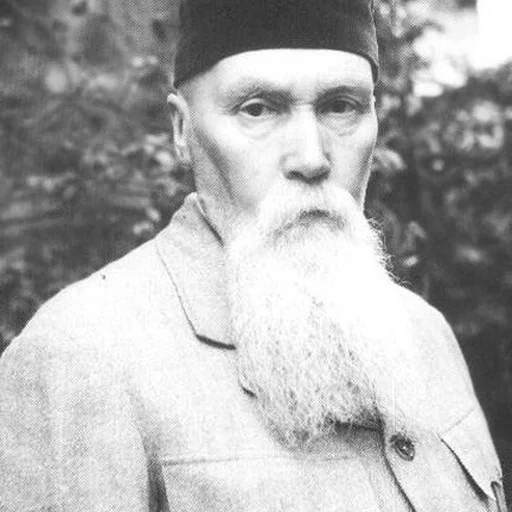
Nikolai Konstantinovich Rerikh (Russian: Николай Константинович Рерих), better known as Nicholas Roerich (; October 9, 1874 – December 13, 1947), was a Russian polymath, painter, writer, archaeologist, theosophist, philosopher, and public…