Artwork
Eva
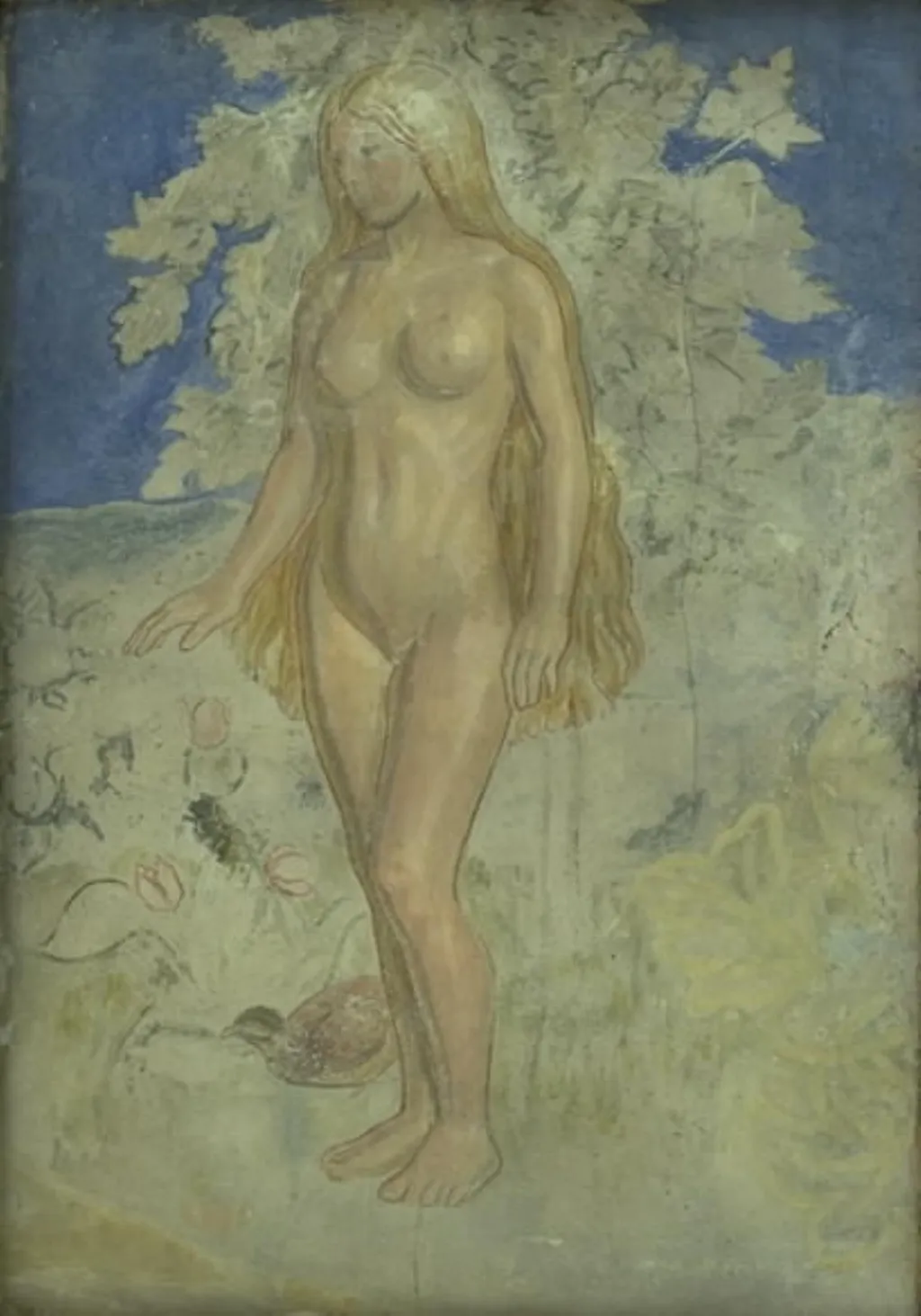
Eva is a tempera painting by the Symbolist artist Niels Larsen Stevns. It dates from 1900 and is held in the collection of the Statens Museum for Kunst.
About this work
Technique & Style
The painting is executed in tempera on plaster, a medium associated with Stevns’s early practice in the late 19th century.
The painting is executed in tempera on plaster, a medium associated with Stevns’s early practice in the late 19th century. Its handling emphasizes matte, planar surfaces and muted tonalities, aligning with the Symbolist tendency to convey spiritual narrative through restrained figuration. The composition centers on a frontal figure, rendered with simplified volumes and linear contours, which focus attention on the subject’s symbolic role rather than naturalistic detail.
The work’s dimensions, 101 × 71 cm, situate it within the modest scale typical of devotional panels of the period, while the choice of tempera on plaster underscores the artist’s engagement with traditional craftsmanship in religious imagery.
History & Provenance
The religious painting titled Eva was created in 1898 by the Danish artist Niels Larsen Stevns. Executed in tempera on a plaster support, the work depicts the biblical figure Eve and measures 101 cm in height by 71 cm in width. The artwork is currently held in the collection of the Statens Museum for Kunst.
No specific details regarding the original commission, the chain of ownership prior to the museum, or the precise circumstances of its creation are provided in the available records.
The painting Eva by Niels Larsen Stevns (1898) is held in the collection of Statens Museum for Kunst, Copenhagen. It is inventoried as SMK 1355.
It was included in the exhibition Danish Symbolism: Truth, Beauty, and Evil around 1900, held at Statens Museum for Kunst in 2017.
Context
Niels Larsen Stevns's 1898 painting Eva, rendered in tempera and depicting the biblical Eve, occupies a distinct place in Danish art history through its synthesis of Symbolist spirituality and National Romantic narrative traditions. While Stevns is primarily known for his large-scale frescoes in Copenhagen's City Hall, this smaller work reveals his engagement with religious themes during a period when Danish artists were reinterpreting biblical stories through contemporary psychological lenses. The painting's placement in the Statens Museum for Kunst collection, alongside other Symbolist works, underscores its significance in bridging 19th-century religious iconography with emerging modernist approaches to subjectivity, as noted in scholarly analyses of Stevns' oeuvre.
Overview
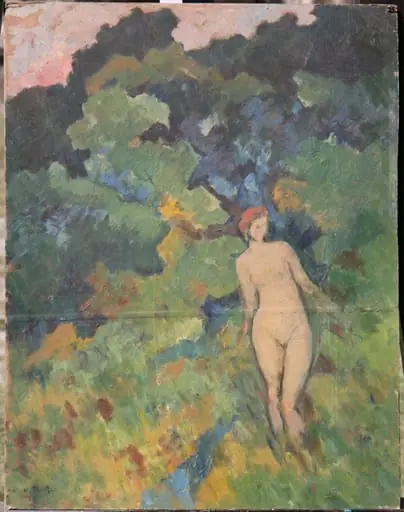
Created in 1900 by Danish artist Niels Larsen Stevns, Eva is a tempera painting that presents a solitary female figure in a natural setting. The work is part of the collection of Denmark’s National Gallery (Statens Museum for Kunst) and is identified with the Symbolist tendency toward religious and allegorical subjects.
Subject & Meaning
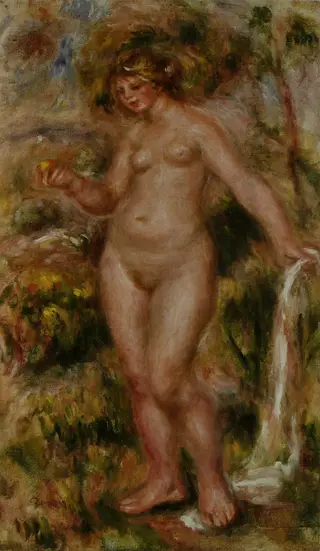
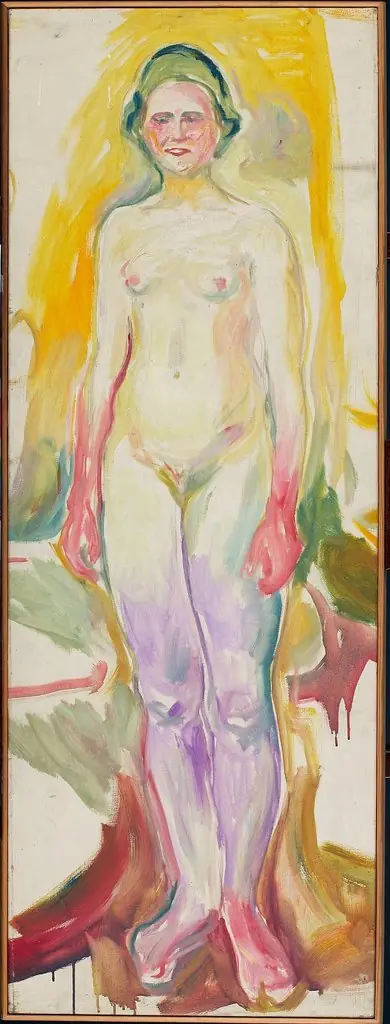
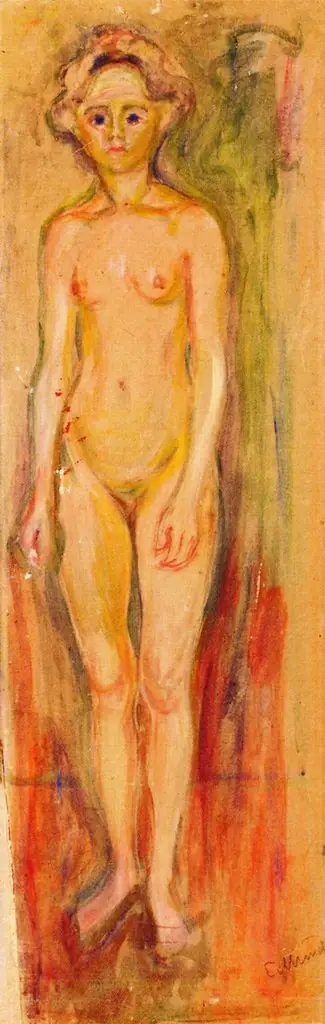
The figure is intended to represent the biblical Eve, rendered in a calm, contemplative pose with arms slightly extended. Her bare skin and long hair merge with the surrounding landscape, suggesting an intimate connection between humanity and nature that echoes the theological themes of innocence and fall.
Artist & collection
Artist
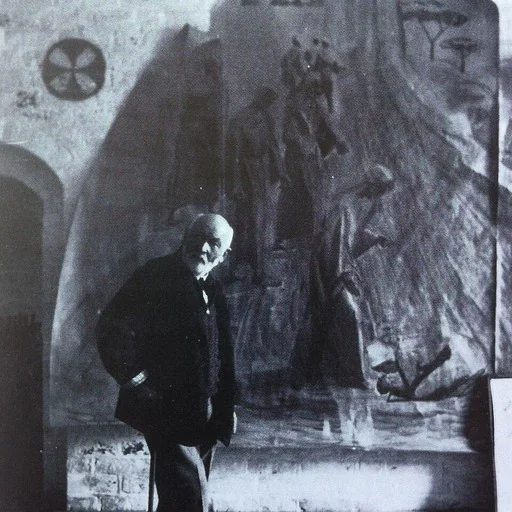
Niels Larsen Stevns (9 July 1864 – 27 September 1941) was a Danish painter and sculptor.