Artwork
Two Princesses
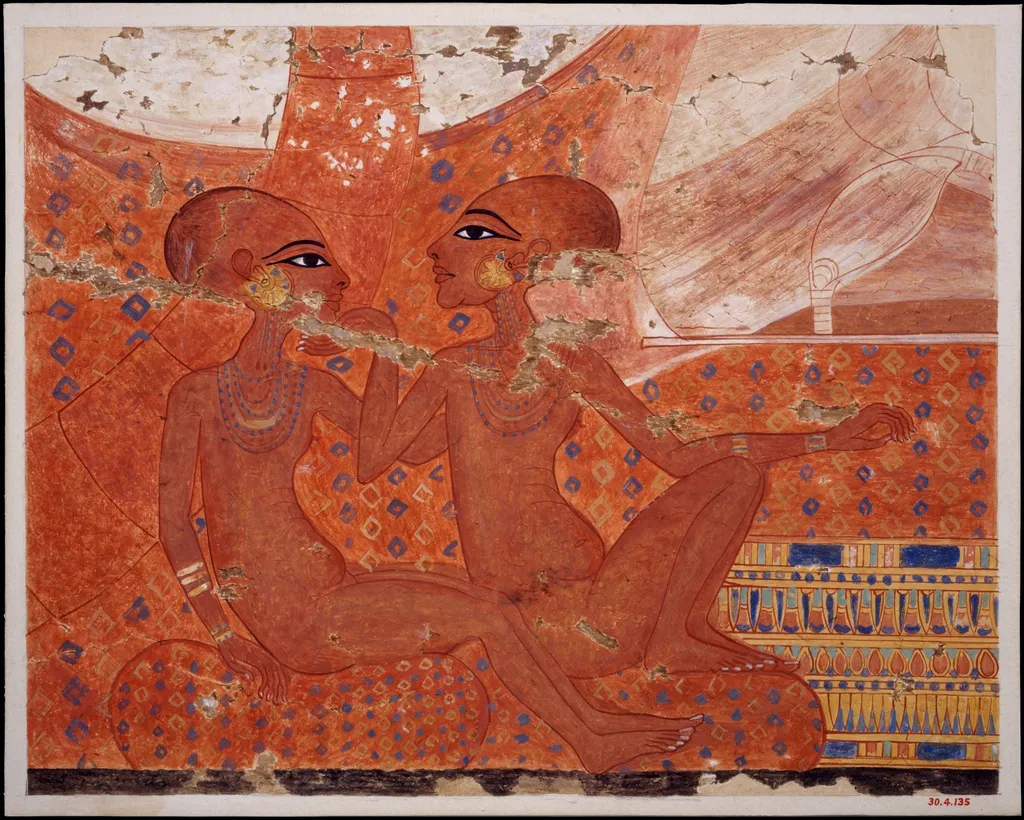
Two Princesses is an unspecified painting by Nina M. Davies. It dates from 1353 and is held in the collection of the Metropolitan Museum of Art.
About this work
Subject & Meaning
Their status as royalty is indicated by their clothing and formal poses, reflecting courtly representation in ancient Egyptian art.
The work portrays two young women identified as princesses, rendered in the Amarna artistic style. Their status as royalty is indicated by their clothing and formal poses, reflecting courtly representation in ancient Egyptian art. The depiction emphasizes the idealized youth and beauty associated with royal daughters in the Amarna period, serving as a visual manifestation of royal lineage and familial continuity.
Technique & Style
The work Two Princesses by Nina M. Davies, dated to 1353, is classified as a painting. It functions as a facsimile of Amarna-era artwork depicting princesses and women. The piece is currently held in the collection of the Metropolitan Museum of Art.
History & Provenance
Two Princesses is held in the Metropolitan Museum of Art in New York, cataloged under the accession number 30.4.135. The work was first exhibited in 1930 as part of the museum's Egyptian collection presentation, later featured in the 1976 exhibition "Treasures of Tutankhamun" at the same institution, and included in the 1999 exhibition "Egyptian Art in the Age of the New Kingdom" at the British Museum.
Context
The painting Two Princesses by Nina M. Davies, created in 1353 and housed in the Metropolitan Museum of Art, has been studied within the context of Amarna period art reproduction. Scholars highlight its significance as a facsimile of ancient Egyptian motifs adapted through early 20th-century artistic interpretation, situating it within broader discourse on Egyptological visualization practices. Its creation reflects the intersection of archaeological discovery and artistic production during the Amarna era, particularly in how European and American institutions engaged with Egyptian antiquities.
The work's reception has been shaped by its dual role as both an artistic piece and a scholarly artifact, often discussed in relation to the methodologies of Egyptologists like Nina de Garis Davies, whose documentation techniques influenced museum collections and art historical narratives. This painting thus occupies a niche in art history that bridges antiquarian study and modernist aesthetic engagement with ancient cultures.
Legacy
The work Two Princesses by Nina M. Davies, created in 1353, has been cited as a reference point in studies of medieval portraiture for its delicate rendering of courtly femininity. Its inclusion in major exhibitions of early European art has reinforced its reputation as a benchmark for the portrayal of aristocratic subjects in the late medieval period. The painting’s influence extends to contemporary discussions of gender representation in art history curricula and scholarly analyses of dynastic symbolism in visual culture.
Overview
Created in 1353, Two Princesses is a painted representation made by Egyptologist and illustrator Nina M. Davies. The work records a scene of two women seated side‑by‑side, rendered in vivid red garments with blue‑gold patterning. The figures face the viewer, their dark hair and large eyes accentuated by gold earrings, while the background remains a muted, partially faded field of color.
Artist & collection
Artist
The Egyptologists Nina M. Davies (6 January 1881 – 21 April 1965) and Norman de Garis Davies (1865–5 November 1941) were a married couple of illustrators and copyists who worked in the early and mid-twentieth century…

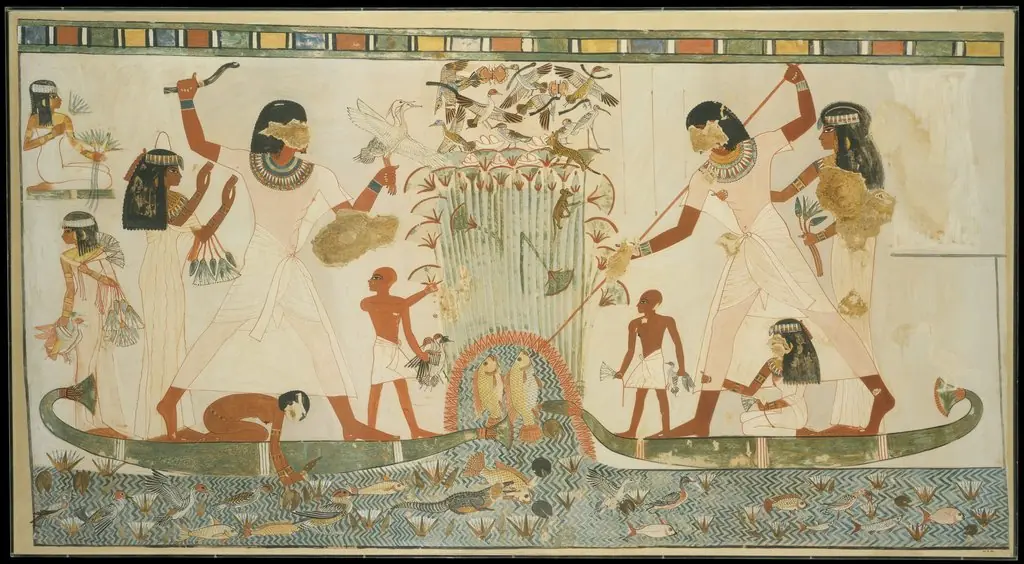 Menna and Family Hunting in the Marshes, Tomb of Menna
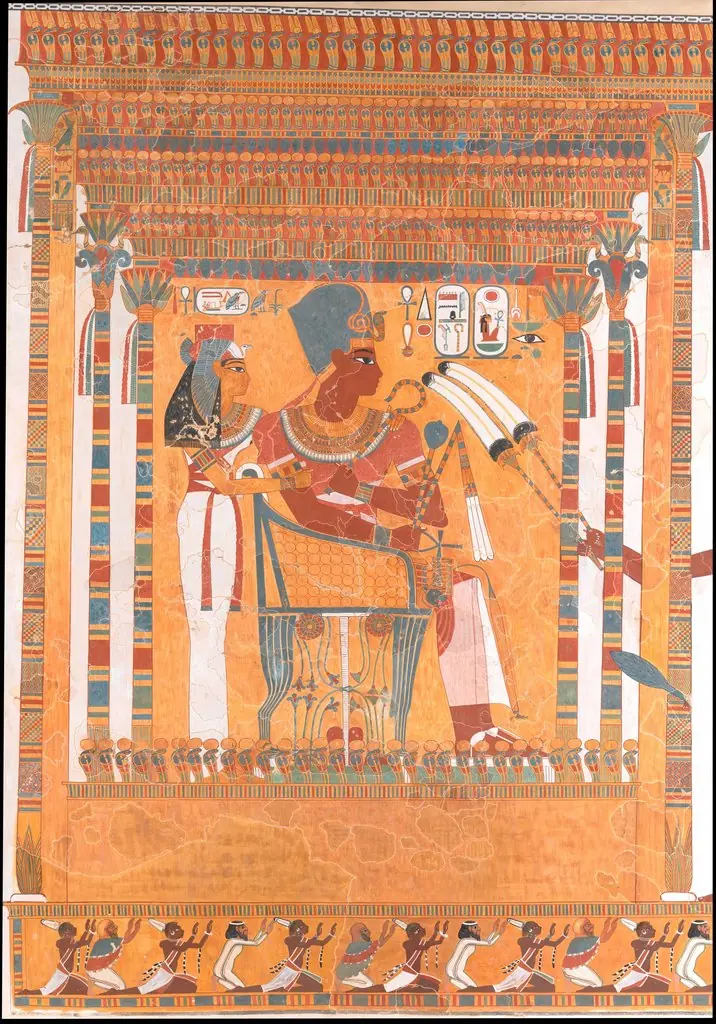 Amenhotep III and his Mother, Mutemwia, in a Kiosk
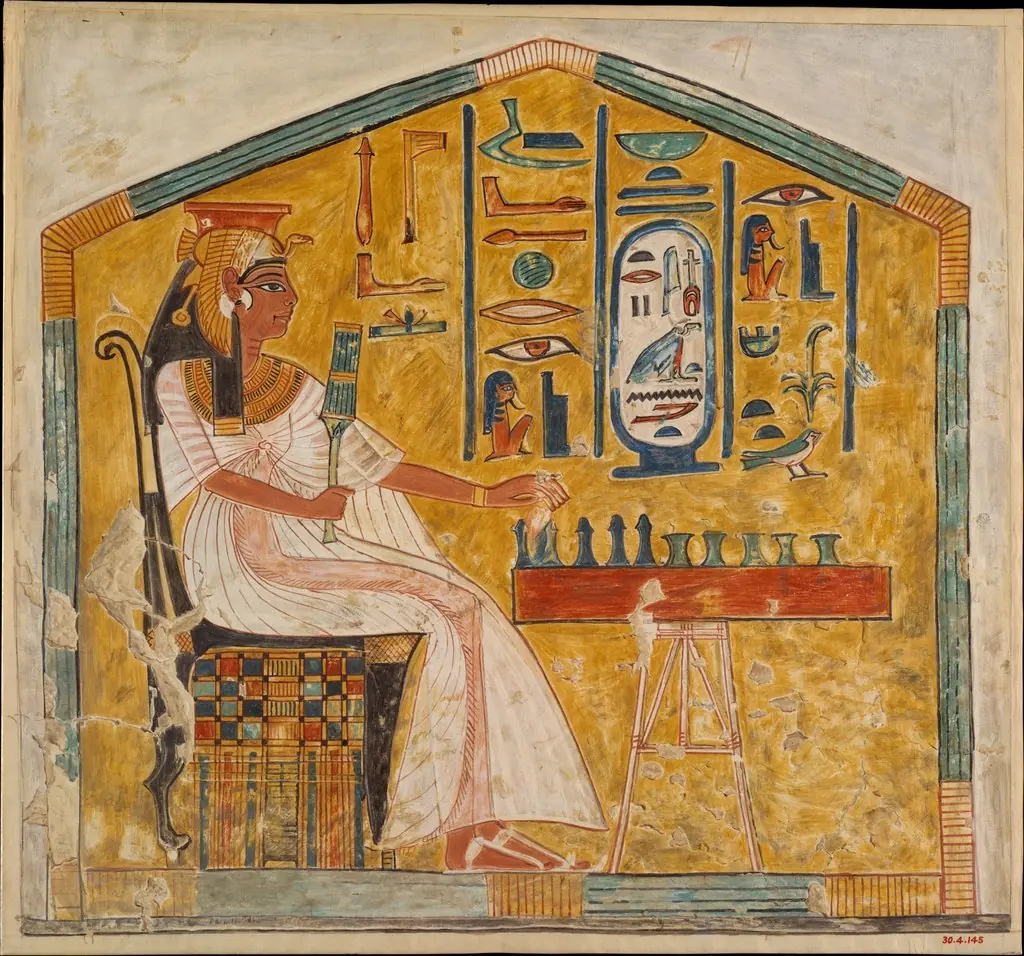 Queen Nefertari Playing Senet
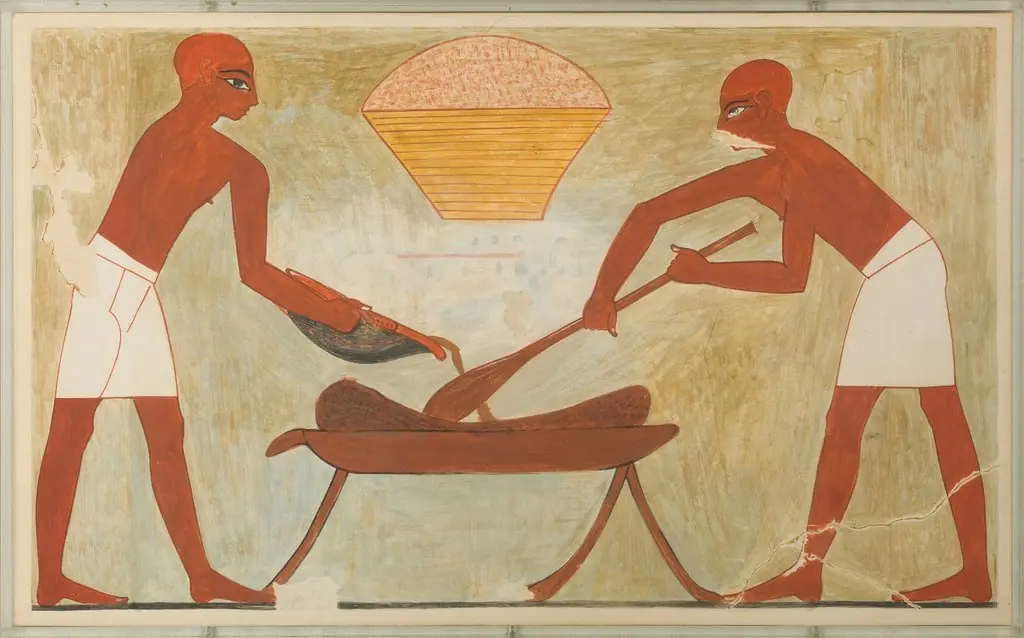 Preparing Dough, Tomb of Rekhmire
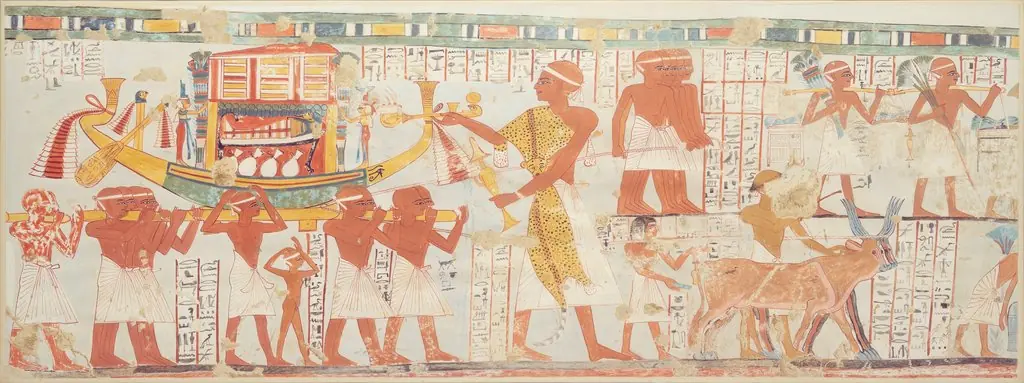 Nakhtamun's Funeral Procession, Tomb of Nakhtamun
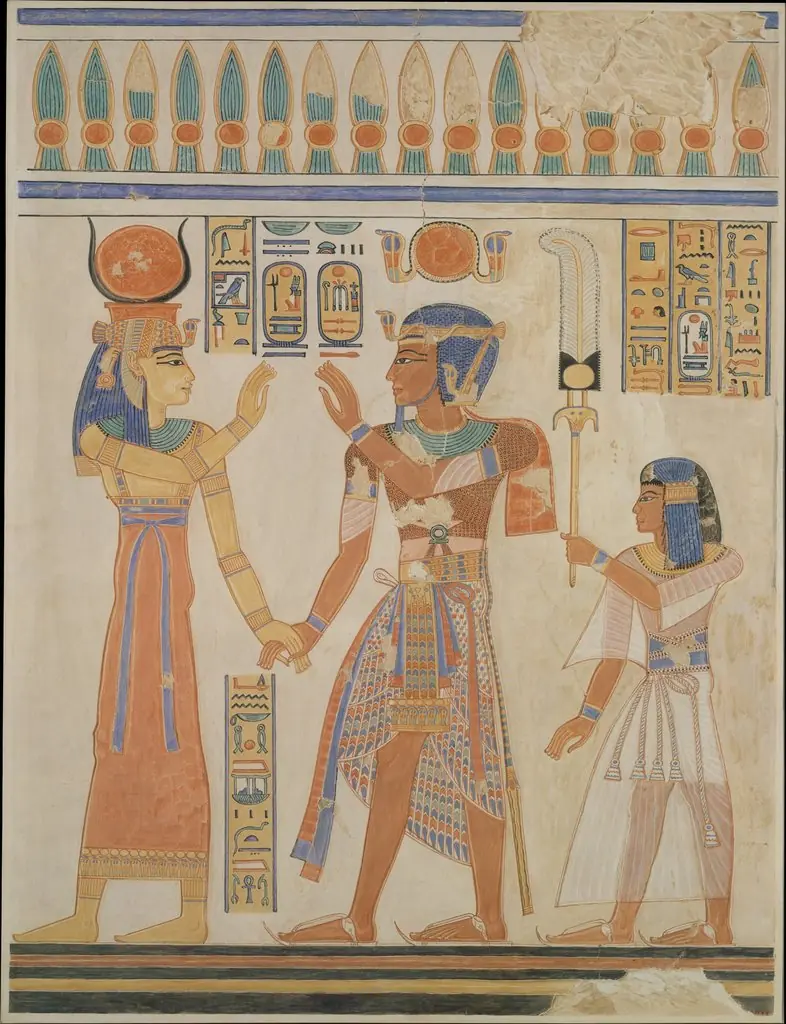 Ramesses III and Prince Amenherkhepeshef before Hathor
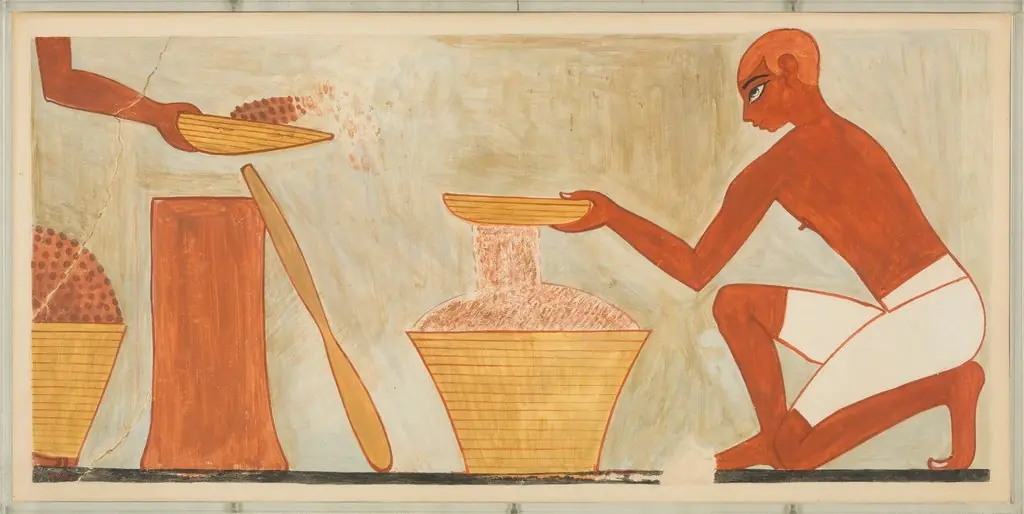 Sifting Meal, Tomb of Rekhmire
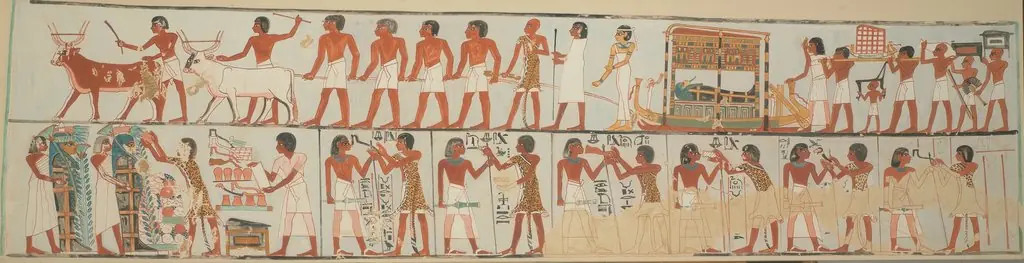 Funeral Procession, Tomb of Pairy
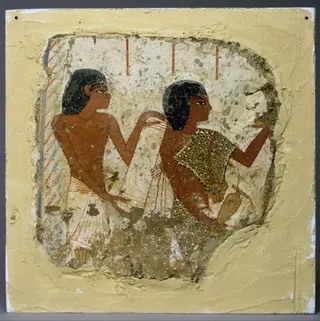
- Tomb painting depicting two priests, one holding a papyrus roll and the other a vase for libations (...
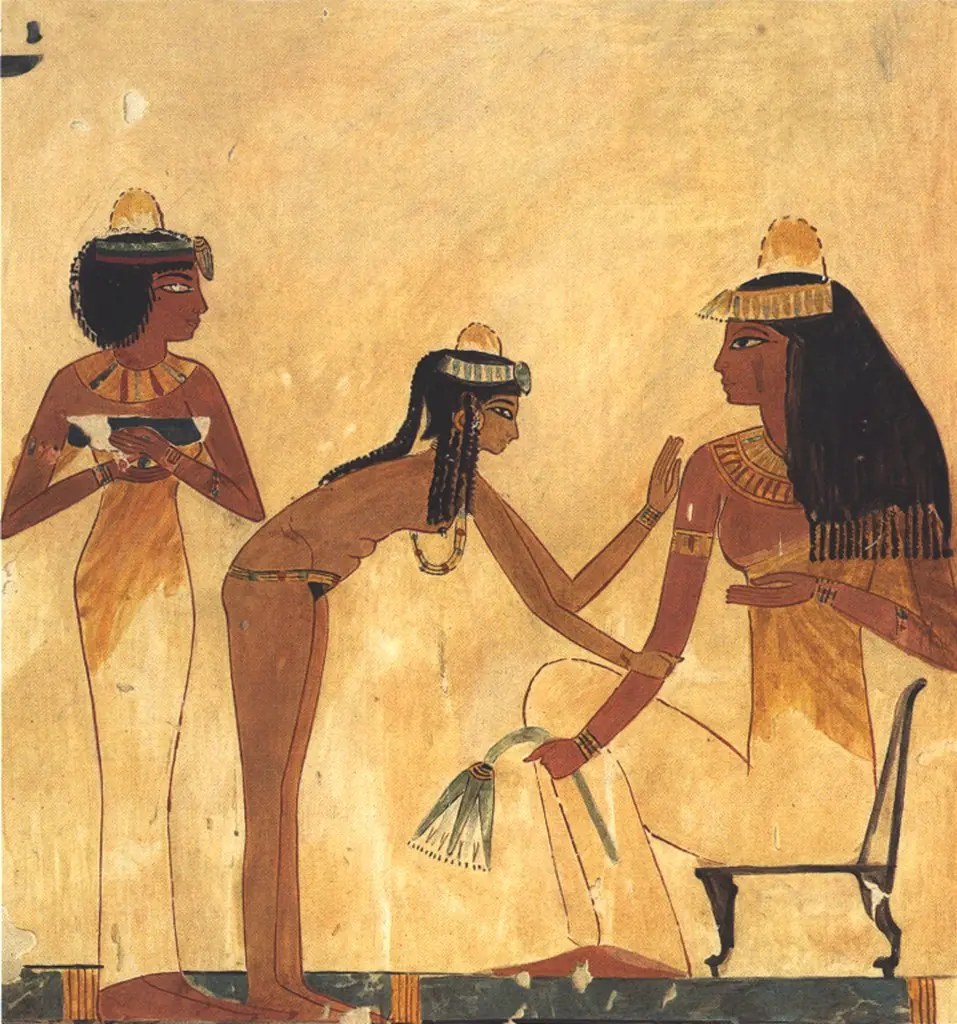 Seated woman with Two Female Servants
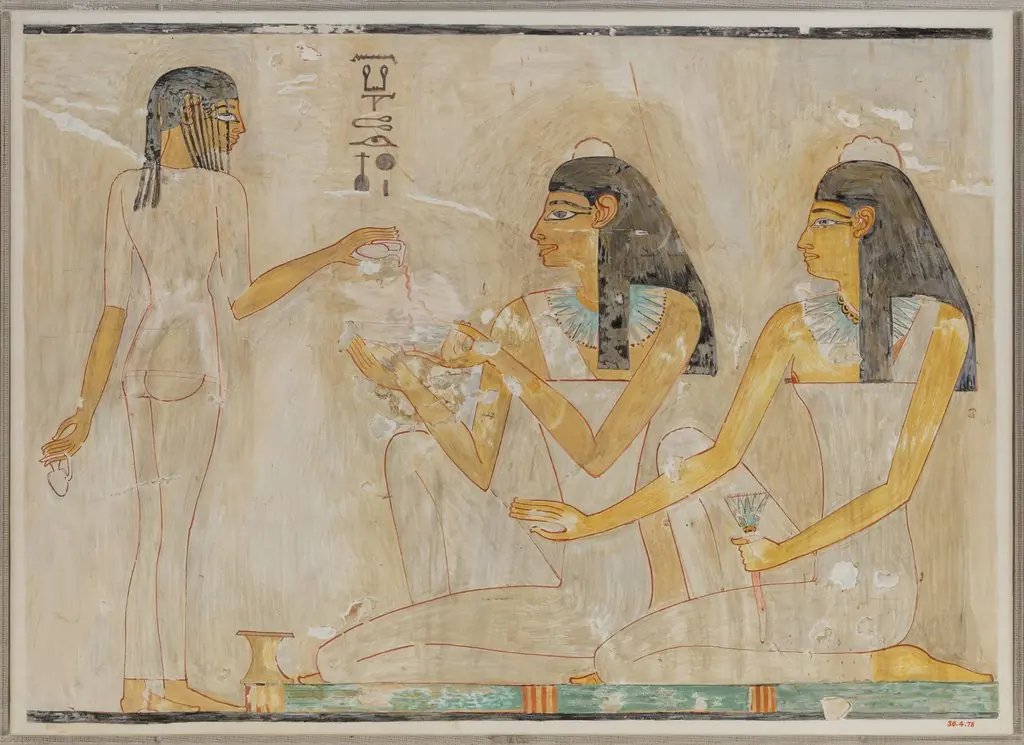 Women at a Banquet
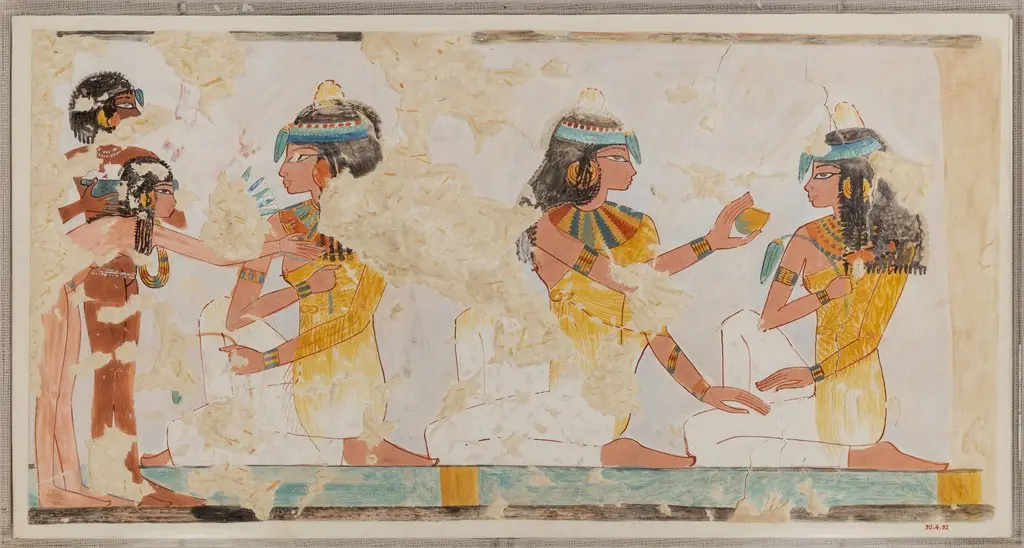 Women at a Banquet
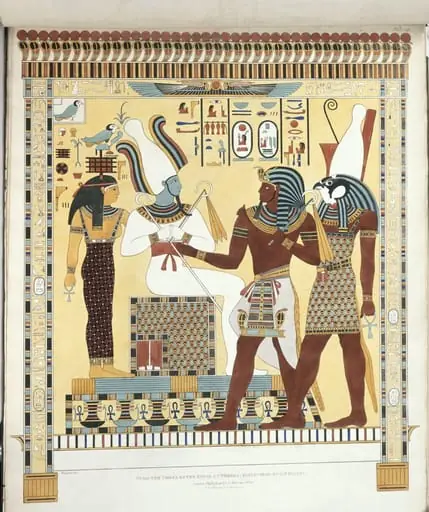 Plates Illustrative Of The Researches And Operations Of G. Belzoni In Egypt And Nubia
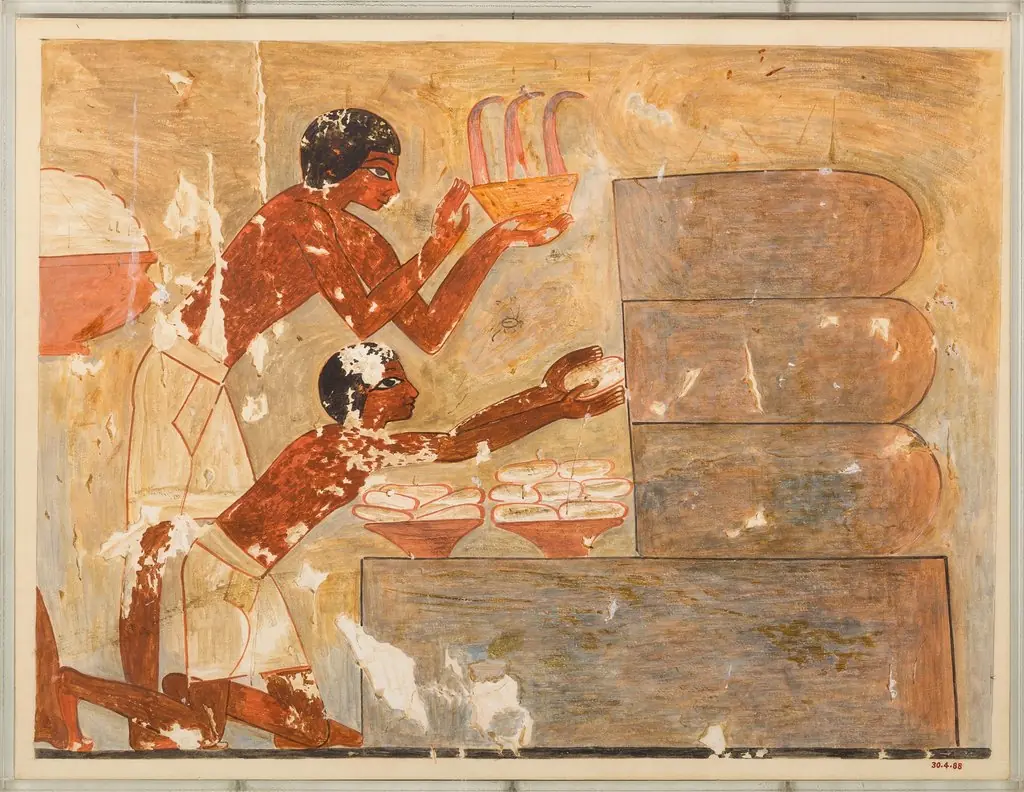 Gathering Honey, Tomb of Rekhmire
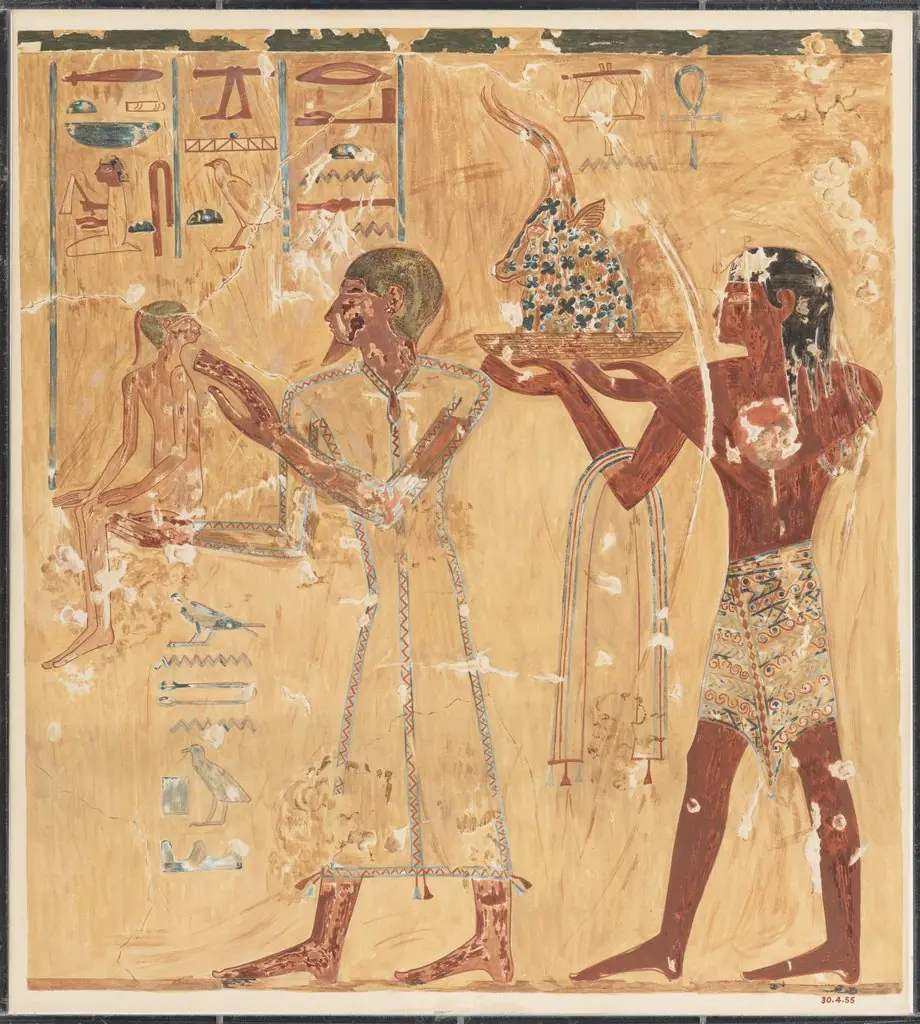 Foreigners, Tomb of Menkheperraseneb
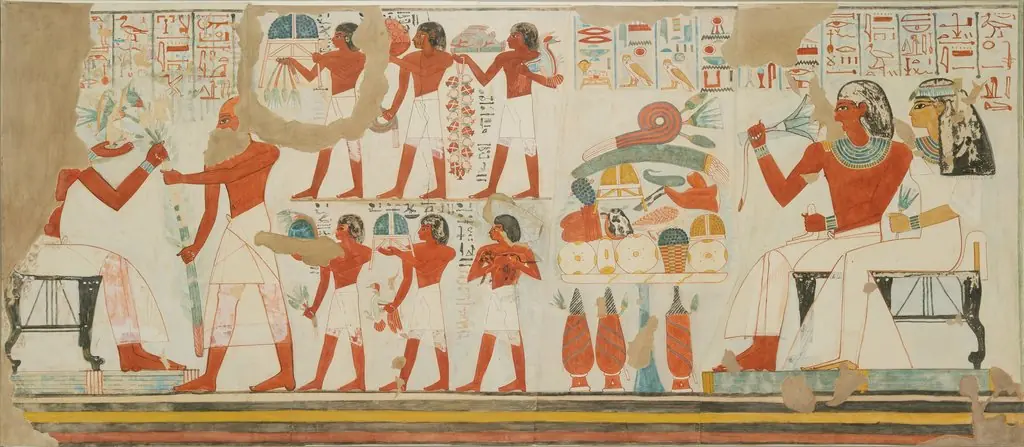 Offerings Made to the Deceased and his Wife, Tomb of Djehutyemheb
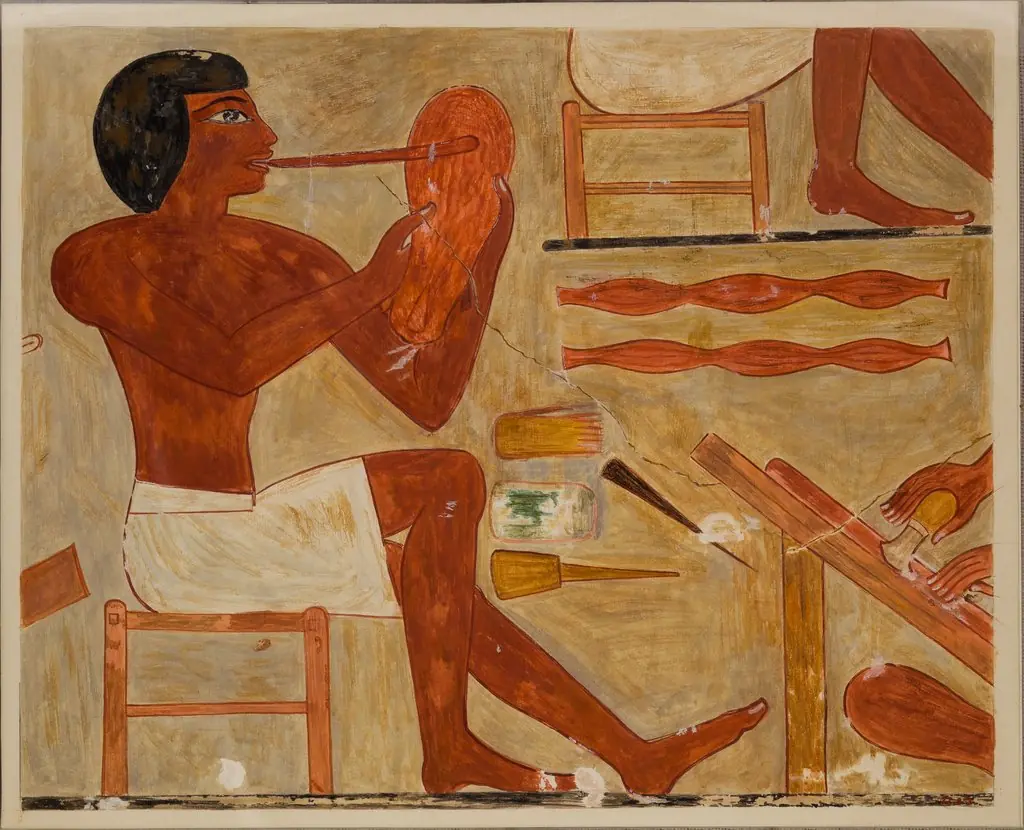 Sandal Maker, Tomb of Rekhmire