Artwork
The Ship "Macon"
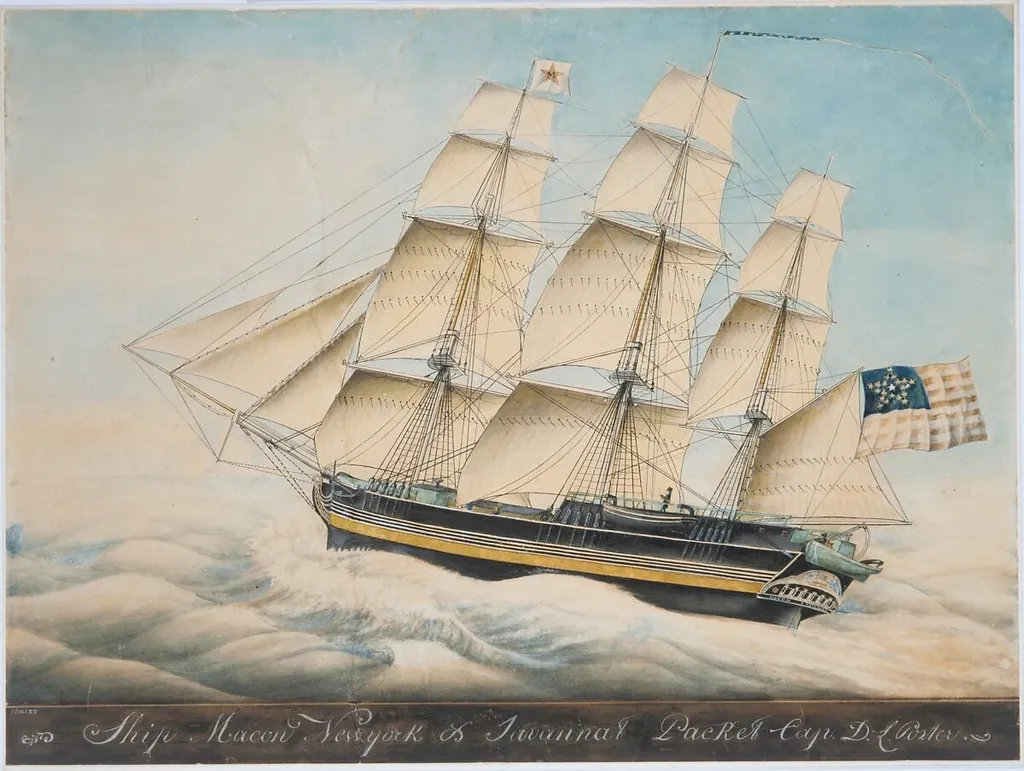
The Ship "Macon" is a watercolor work on paper by the American Folk Art artist Nivelet. It dates from 1832 and is held in the collection of the Metropolitan Museum of Art.
- Accession no.
- 66.242.7
- Credit line
- Gift of Edgar William and Bernice Chrysler Garbisch, 1966
About this work
Overview
3 cm) and is rendered in watercolor, gouache, gold paint, graphite, pen and black ink, and gum arabic on off-white Bristol board.
The Ship "Macon" is an American marine painting by the artist known as Nivelet, who was active around 1830. Executed between 1828 and 1835, the work measures 18 15/16 by 25 5/16 inches (48.1 x 64.3 cm) and is rendered in watercolor, gouache, gold paint, graphite, pen and black ink, and gum arabic on off-white Bristol board. The Metropolitan Museum of Art holds the piece as object number 66.242.7 in its American Wing, having received it in 1966 as a gift from Edgar William and Bernice Chrysler Garbisch. The painting matters as a significant example of early nineteenth-century American maritime art, combining documentary precision with symbolic overtones of national pride and commercial ambition.
Subject & Meaning
The painting depicts a three-masted sailing vessel, the ship "Macon," cutting through choppy, white-capped waves. The ship tilts to the left as it moves through turbulent water, its multiple sails unfurled and its intricate rigging carefully delineated. The dark hull bears a yellow stripe along its length, and an American flag with a circle of stars flies from the stern while a smaller starred flag tops the mainmast. A single small figure stands on deck near the stern, emphasizing the vessel's scale. Below the image, a dark band contains cursive text identifying the ship by name. The sky transitions from pale yellowish tones at the left to soft blue at the right, creating a subtle atmospheric drama. As a subject, the ship functions as more than mere documentation; it embodies the maritime culture of the young United States, serving as a symbol of national identity, commercial enterprise, and expansionist aspiration. The turbulent seas and the vessel's confident bearing suggest both the perils and the triumphs of American maritime endeavor.
Technique & Style
Nivelet employed a mixed-media technique that combines watercolor, gouache, gold paint, graphite, pen and black ink, and gum arabic on off-white Bristol board. This combination of materials allows for both smooth, atmospheric effects and precise linear detail. The sky demonstrates smooth gradations of tone, while the rigging and sails receive more detailed linear work. The overall finish is precise and documentary in character, typical of ship portraiture from this period, yet the composition achieves a grand, almost theatrical presentation of the vessel. The use of gold paint adds a decorative, commemorative quality to the work, elevating it beyond pure functional documentation. The Bristol board support provided a stable, smooth surface suitable for the fine pen work and layered washes that define the painting's technical achievement.
History & Provenance
The work was created between 1828 and 1835, though some sources give a broader date of 1850. The artist Nivelet remains known only by this surname, with an approximate activity period of 1830, indicating the limited documentation that survives about this painter's life and career. The painting entered the collection of the Metropolitan Museum of Art in 1966 as a gift from Edgar William and Bernice Chrysler Garbisch, prominent collectors of American folk and decorative art. The object number 66.242.7 reflects this accession year. The work is catalogued within the museum's American Wing, affirming its status as a significant object of American artistic heritage.
Context
Nivelet worked within the tradition of early nineteenth-century American marine painting, a genre closely tied to the economic and cultural life of the young republic. Ships like the "Macon" were potent symbols of national pride and commercial vitality, and paintings of such vessels were frequently commissioned by ship owners, captains, or merchants for display in homes, offices, or ship cabins. These works functioned simultaneously as personal commemoration, promotional material, and assertions of maritime identity. The Metropolitan Museum of Art's placement of the work in its American Wing situates it within a narrative of American artistic development, though scholarly attention to Nivelet specifically remains limited by the scarcity of biographical information. The artist's approximate dating and the work's possible creation span of 1828 to 1835 place it within a period of intense American maritime expansion and technological development in shipbuilding.
Legacy
The The Ship "Macon" occupies a place in the broader legacy of American marine art as an exemplar of the ship portrait tradition, a genre that documented and celebrated the vessels that powered American commerce and national ambition. Its acquisition by the Metropolitan Museum of Art through the Garbisch collection ensured its preservation and public accessibility, contributing to ongoing understanding of early nineteenth-century American visual culture. The work's presence in museum collections and its availability through open access programs have allowed it to serve as a teaching tool and subject of curatorial interpretation, with discussions highlighting its role in reflecting the political and economic agendas embedded in maritime art patronage. The painting continues to attract interest from scholars of American art, maritime history, and the intersection of commerce and visual representation in the antebellum period.
Artist & collection


 Veleiro de três mastros (atribuído)
 Seascape with a Frigate
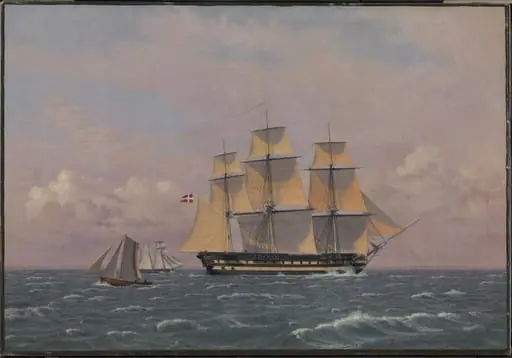 The 84-Gun Danish Warship "Dronning Marie" in the Sound
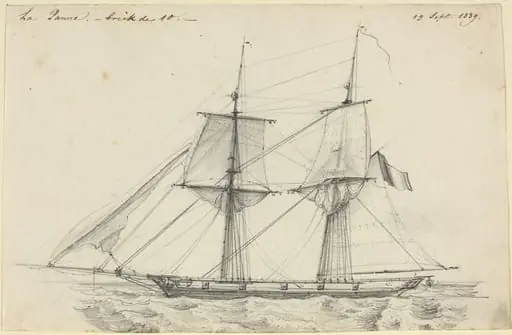 La Panne
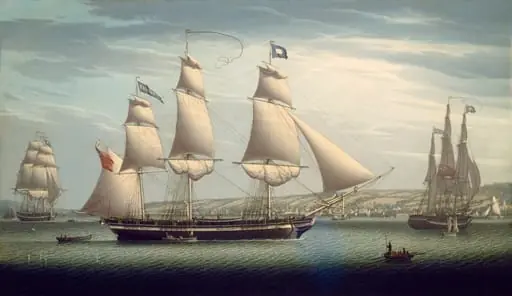 The Ship "Favorite" Maneuvering Off Greenock
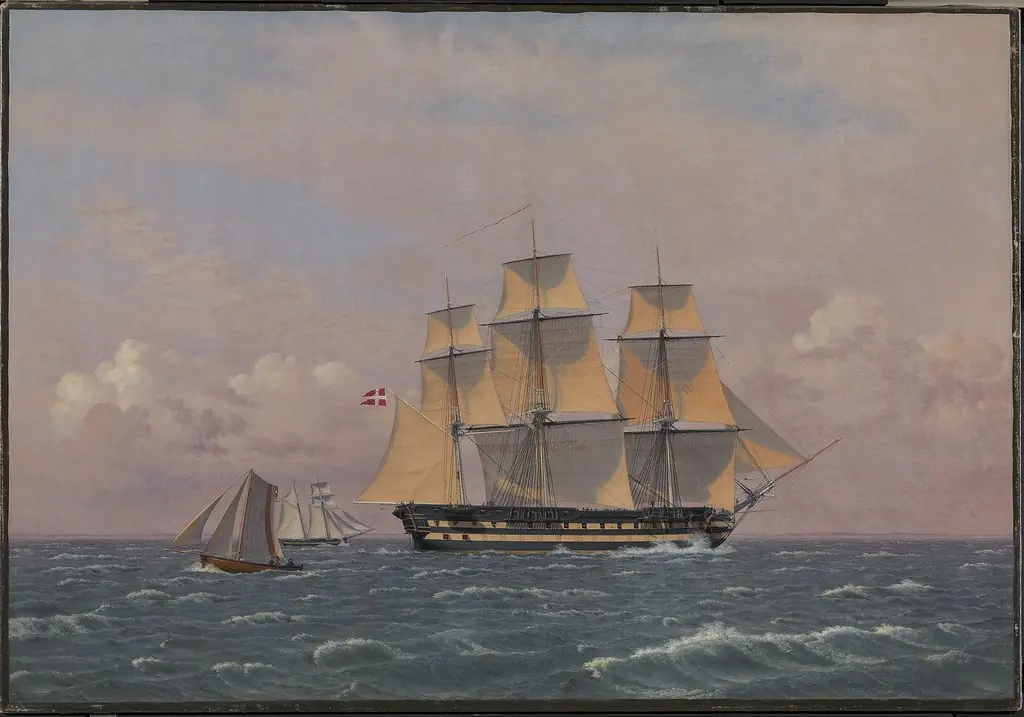 The 84-Gun Danish Warship "Dronning Marie" in the Sound
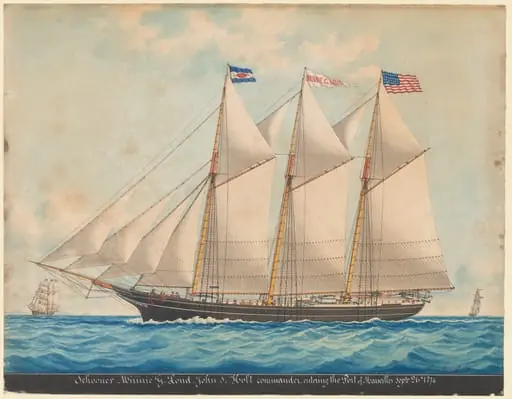 The Tern Schooner "Minnie G. Loud"
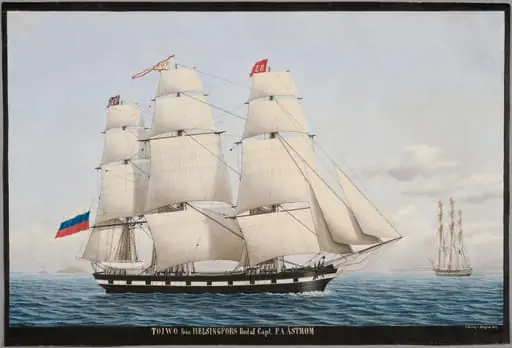 Purjealus Toiwo
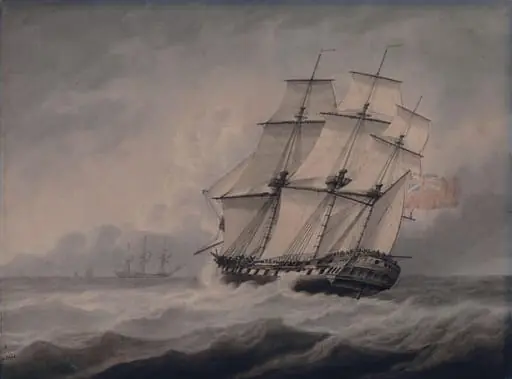 The Frigate
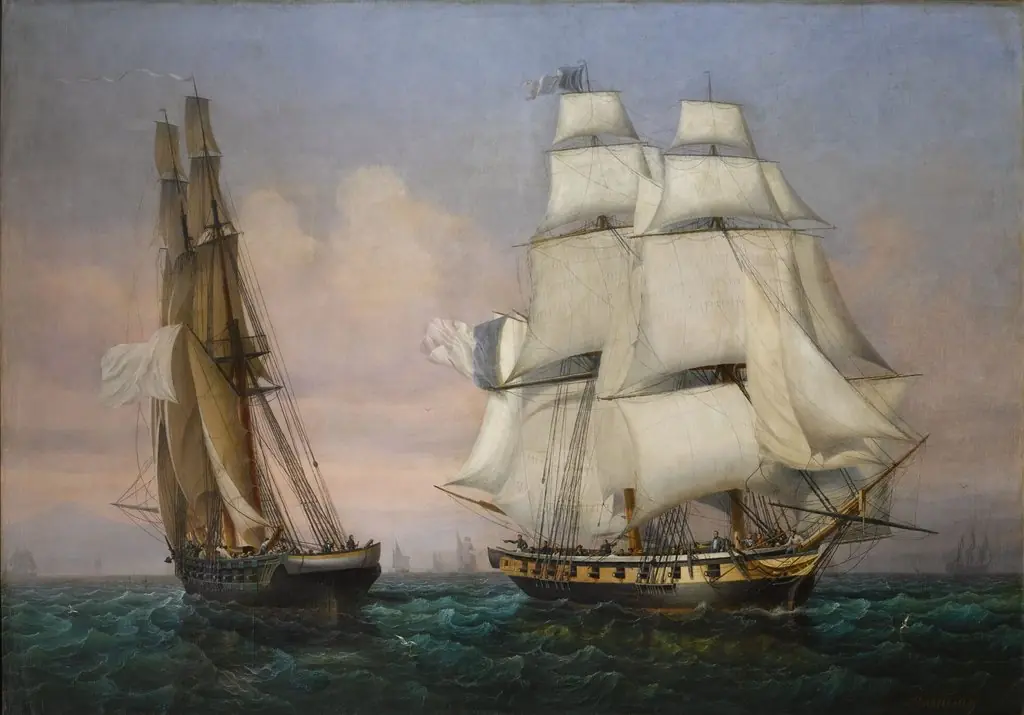 Return of Napoleon from Elba
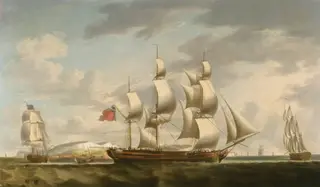 Three Views of "Amity Hall" With a View of Dover and the White Cliffs
- The New Ship "Duncan"
 Lake Lucerne
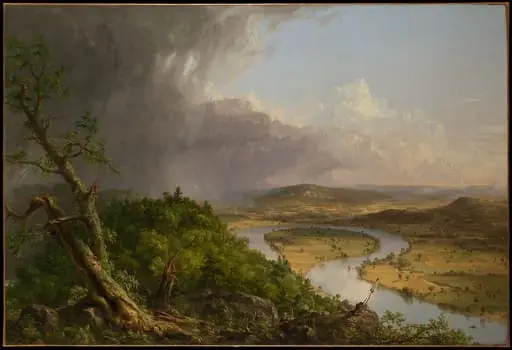 View from Mount Holyoke, Northampton, Massachusetts, after a Thunderstorm—The Oxbow
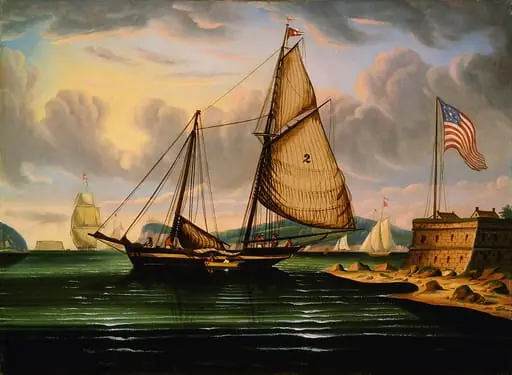 New York Harbor with Pilot Boat "George Washington"
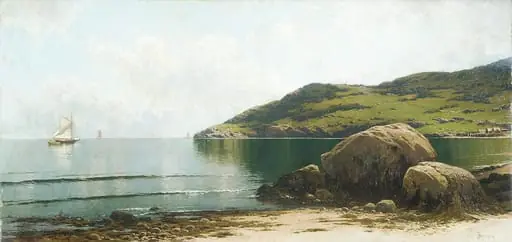 Marine Landscape
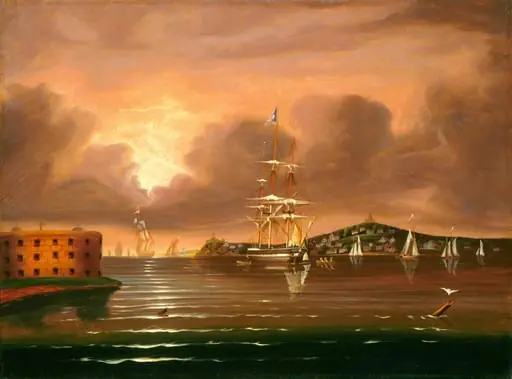 Threatening Sky, Bay of New York
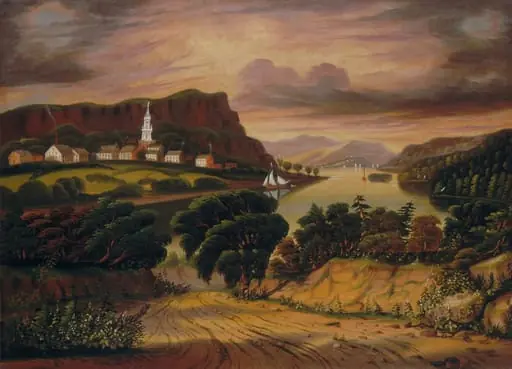 Lake George and the Village of Caldwell
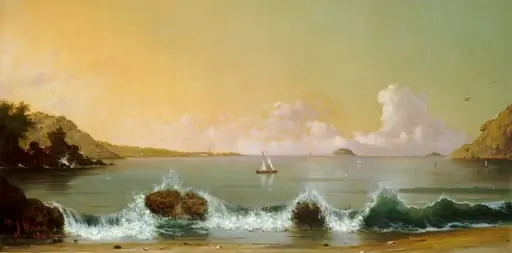 Rio de Janeiro Bay
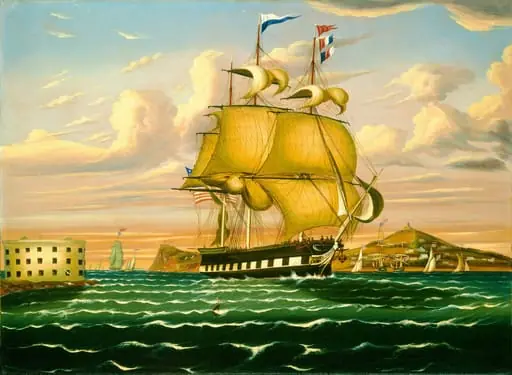 Packet Ship Passing Castle Williams, New York Harbor