Artwork
Untitled
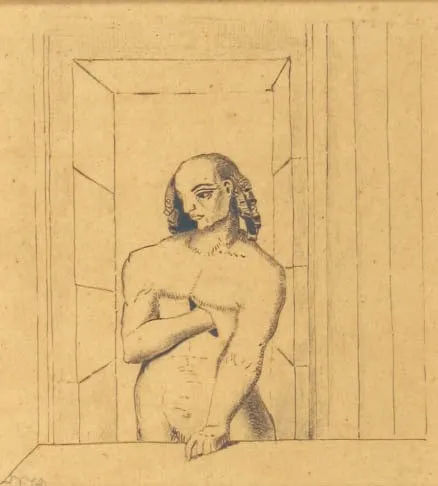
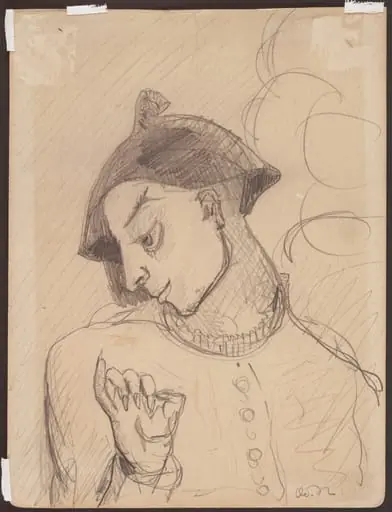
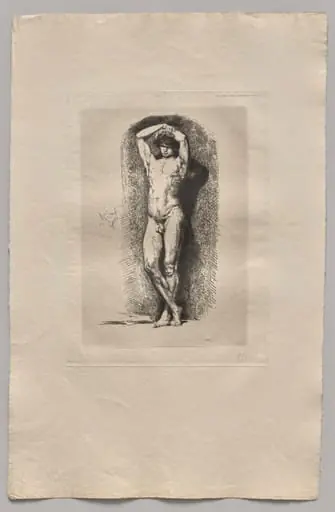
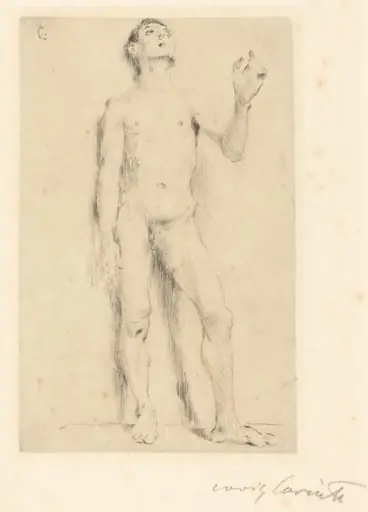
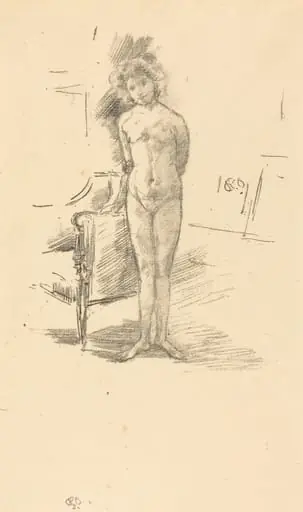
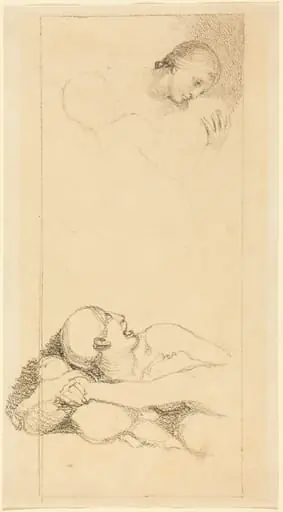
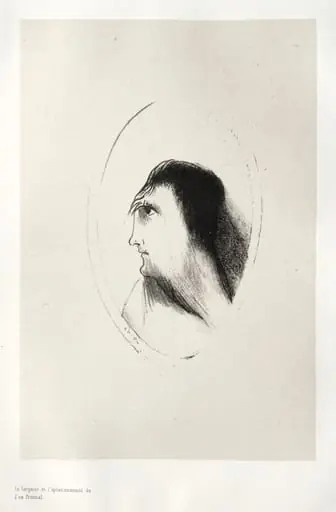
Untitled is a crayon drawing by the Impressionist artist Odilon Redon. It dates from 1887 and is held in the collection of the Museum of Modern Art.
About this work
Overview
It belongs to a phase before his transition to color media, retaining the somber, tactile qualities of his so-called “noirs.
Created circa 1887, this drawing by Odilon Redon employs lithographic tusche and crayon on transfer paper, reflecting his early engagement with print-based techniques. It belongs to a phase before his transition to color media, retaining the somber, tactile qualities of his so-called “noirs.” The work’s surface bears the physical traces of its process: smudged edges, uneven tones, and a sense of impermanence that aligns with its experimental medium.
Subject & Meaning
The figure, bare-chested and standing in a doorway, holds its arms across the chest in a posture that suggests introspection or restraint. The blurred face and indistinct features resist clear identification, evoking psychological ambiguity rather than narrative specificity. The threshold setting implies transition or liminality, consistent with Symbolist interests in inner states over external reality.
Technique & Style
Redon used lithographic tusche, a greasy ink, and crayon to draw directly on transfer paper, which was then pressed onto a stone for printing. The resulting image retains the spontaneity of hand-drawn marks, with soft gradients and smudged contours that dissolve form. The rough texture and faded tonalities are not signs of deterioration but intentional outcomes of the lithographic process, emphasizing atmosphere over detail.
History & Provenance
This work emerged during Redon’s formative years as a printmaker, before his later adoption of pastels and oils. It was likely produced as a study or independent piece, not intended for mass reproduction. Its survival as a unique drawing on transfer paper suggests it was retained by the artist or a close associate, offering insight into his private creative process during the late 1880s.
Context
In the 1880s, Redon was part of a broader Symbolist circle that rejected naturalism in favor of subjective experience. His graphic works, including this one, responded to literary and philosophical currents that valued mystery and the unconscious. Lithography allowed him to explore dreamlike imagery with immediacy, bridging the gap between drawing and print, and between reality and inner vision.
Legacy
This drawing exemplifies Redon’s contribution to the evolution of modern graphic art, demonstrating how traditional print techniques could be adapted to express psychological depth. Its unfinished quality and emphasis on tone over line influenced later artists exploring the limits of drawing and the expressive potential of imperfection in media.
Artist & collection
Artist
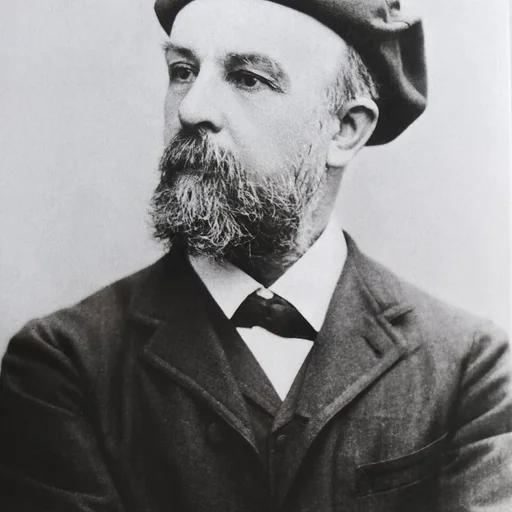
Born Bertrand-Jean Redon on 20 April 1840 in Bordeaux, the artist adopted the name Odilon from his mother, Marie-Odile.