Artwork
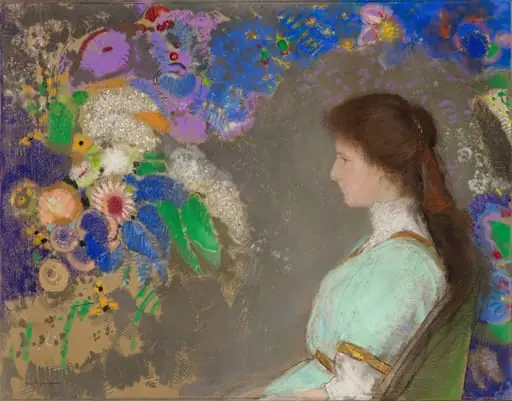
Madame Arthur Fontaine (Marie Escudier, born 1865)
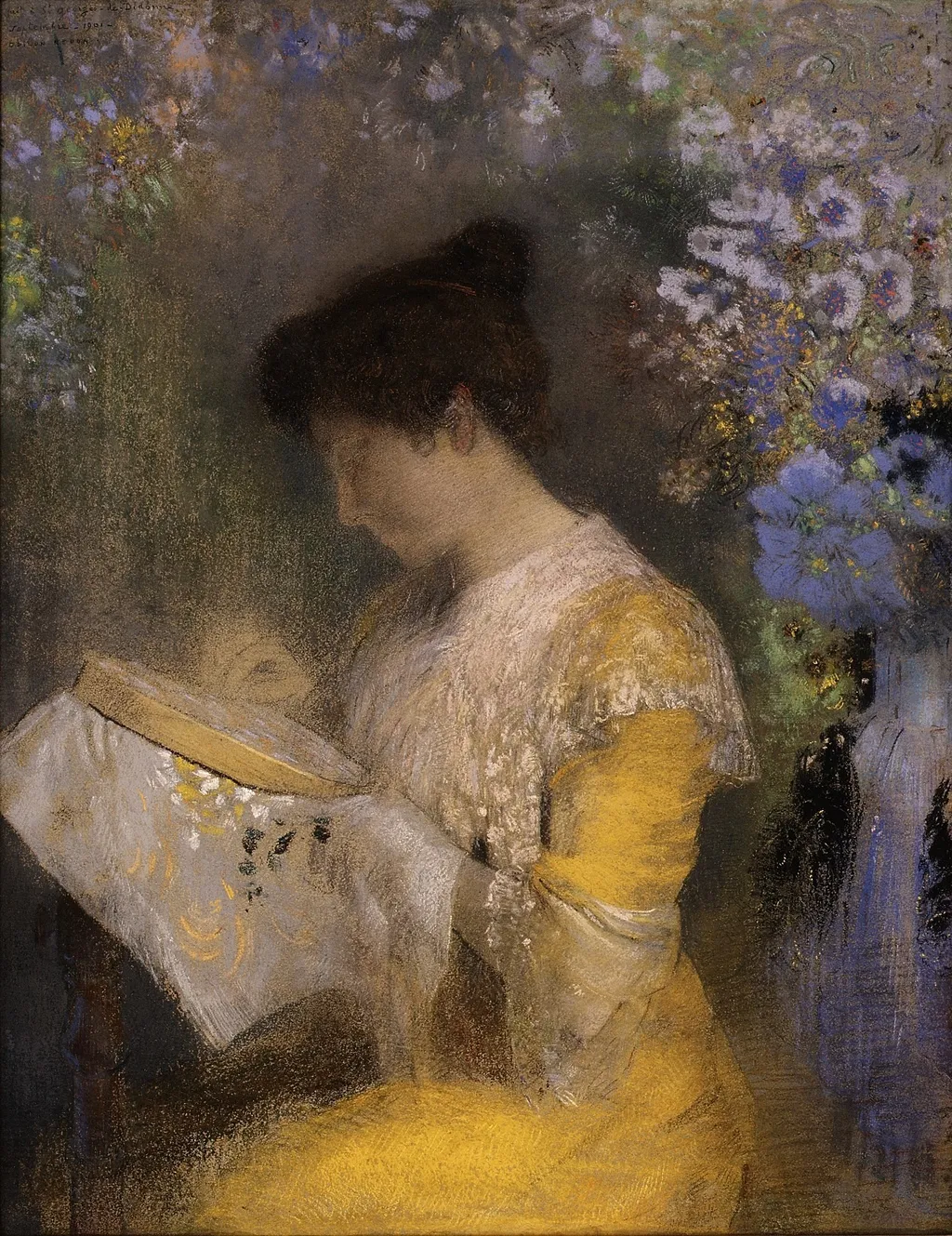
Madame Arthur Fontaine (Marie Escudier, born 1865) is an unspecified painting by the Post-Impressionist artist Odilon Redon. It dates from 1901 and is held in the collection of the Metropolitan Museum of Art.
About this work
History & Provenance
2 cm and was created while Redon was active in Paris, employing pastel and charcoal to capture the sitter's likeness.
Odilon Redon painted Madame Arthur Fontaine, the portrait of Marie Escudier, in 1901. The painting, classified as a portrait, measures 72.4 × 57.2 cm and was created while Redon was active in Paris, employing pastel and charcoal to capture the sitter's likeness. After its execution, the work entered the Metropolitan Museum of Art's collection, where it remains on view. No specific commission details or prior provenance are recorded in the available sources.
Overview
Odilon Redon's 1901 painting, Madame Arthur Fontaine (Marie Escudier), marks a significant period in the artist's career as he transitioned from his earlier monochromatic works to vibrant oils and pastels. The portrait captures Marie Escudier in a contemplative pose, engaged in needlework, reflecting Redon’s interest in depicting subjects in quiet, introspective moments. This piece aligns with the broader Post-Impressionist movement's departure from strict naturalism.
Subject & Meaning
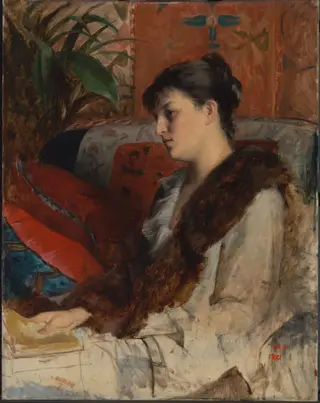
The artwork features Marie Escudier, depicted in profile, absorbed in a piece of embroidery. Redon chose to present her in an introspective state, emphasizing a sense of personal reflection rather than a formal pose. Her dark hair and pale yellow dress contrast with the loosely rendered garden behind her, which blooms with indistinct purple and white flowers. The artist's focus on her quiet engagement suggests an interest in the inner life of his sitters.
Technique & Style
Executed in oil, this work showcases Redon's embrace of color, a departure from his earlier charcoal drawings and lithographs known as noirs. The brushwork is notably loose, especially in the background, creating a soft, blurry effect. Redon prioritizes the play of light and shadow on the sitter's face and shoulders over precise detail in her embroidery, aligning with Post-Impressionism's expressive rather than strictly naturalistic approach to representation.
Context
Odilon Redon was a prominent figure within the French Symbolist movement, which sought to evoke ideas and emotions through symbolic imagery rather than direct depiction. His artistic reputation grew significantly after his drawings were notably referenced in Joris-Karl Huysmans' influential 1884 novel, À rebours. This recognition helped solidify Redon's place within the avant-garde circles of the late 19th and early 20th centuries, influencing his later colorful works.
Own this work as a print
Artist & collection

Artist
Odilon Redon (born Bertrand Redon; French: ; 20 April 1840 – 6 July 1916) was a French Symbolist draftsman, printmaker, and painter.