Artwork
Kabuki Play Kusazuribiki from the Tales of Soga (Soga monogatari)
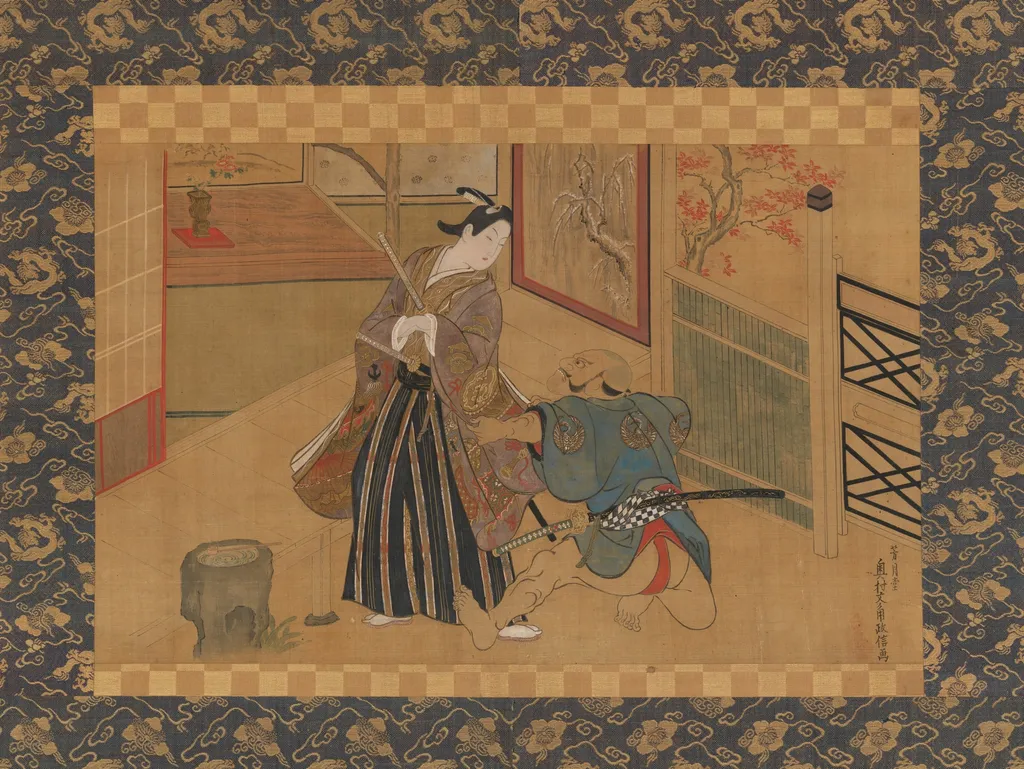
Kabuki Play Kusazuribiki from the Tales of Soga (Soga monogatari) is an unspecified painting by the Ukiyo-e artist Okumura Masanobu. It dates from 1749 and is held in the collection of the Metropolitan Museum of Art.
About this work
Subject & Meaning
Rendered by Okumura Masanobu in 1749, the painting presents a theatrical stage with a solitary male figure, emphasizing the performative context of the story.
The work illustrates a dramatic moment from the kabuki play “Kusazuribiki,” drawn from the “Soga monogatari,” a narrative centered on familial loyalty and vengeance. Rendered by Okumura Masanobu in 1749, the painting presents a theatrical stage with a solitary male figure, emphasizing the performative context of the story. The composition captures the essence of the Soga legend through its focus on a staged narrative rather than a literal scene, reflecting the cultural importance of theatrical retellings in Edo-period Japan. The piece is housed in the Metropolitan Museum of Art.
History & Provenance
Kabuki Play Kusazuribiki from the Tales of Soga (Soga monogatari) was created by Okumura Masanobu in 1749. The work was produced in Japan and is classified as a painting. It is held in the collection of the Metropolitan Museum of Art, where it is documented as part of the institution’s holdings.
No information is available in the provided sources regarding the original commission or the chain of ownership between 1749 and its accession by the museum.
Context
Okumura Masanobu’s Kabuki Play Kusazuribiki from the Tales of Soga (1749) reflects the close ties between ukiyo-e and the kabuki theatre of Edo-period Japan. Masanobu was among the artists who experimented with linear perspective in ukiyo-e, and his frequent use of theatrical subjects bridged popular entertainment and pictorial art. This work, depicting a scene from the Soga revenge narrative as staged in kabuki, exemplifies that engagement and is held in the collection of the Metropolitan Museum of Art.
Overview
Okumura Masanobu's painting, Kabuki Play Kusazuribiki from the Tales of Soga, created in 1749, captures a dramatic moment from a theatrical performance. This work, now housed at The Metropolitan Museum of Art, exemplifies the artist's engagement with popular culture of the Edo period. It offers a glimpse into the vibrant world of Kabuki, depicting a specific scene from a well-known narrative.
Technique & Style
Masanobu employs a clear, illustrative style to render the theatrical setting. The scene unfolds within a room characterized by wooden floors and sliding doors, suggesting a stage environment through its simplified props, such as a small tree with red flowers and a hanging scroll. The composition frames the figures effectively, emphasizing their interaction. A decorative dark blue pattern borders the painting, enhancing its visual presentation.
Own this work as a print
Artist & collection
Artist
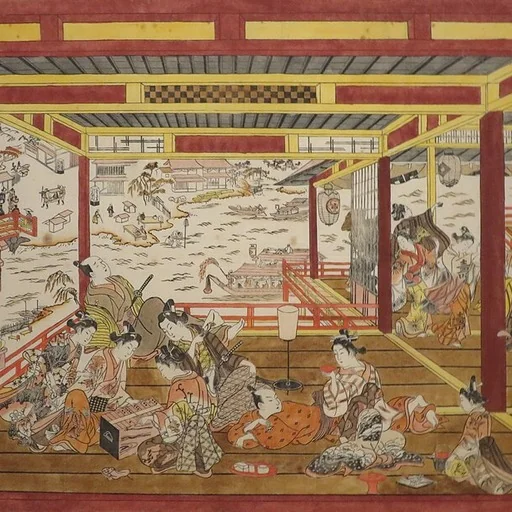
Okumura Masanobu lived in Edo (now Tokyo) when the city was a flashy, fast-growing hub of theater, gossip, and new ideas.

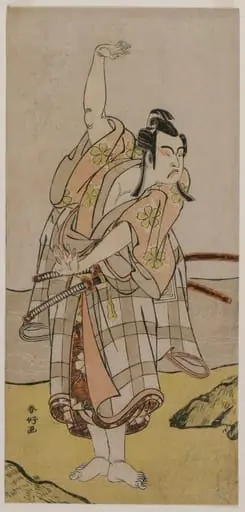
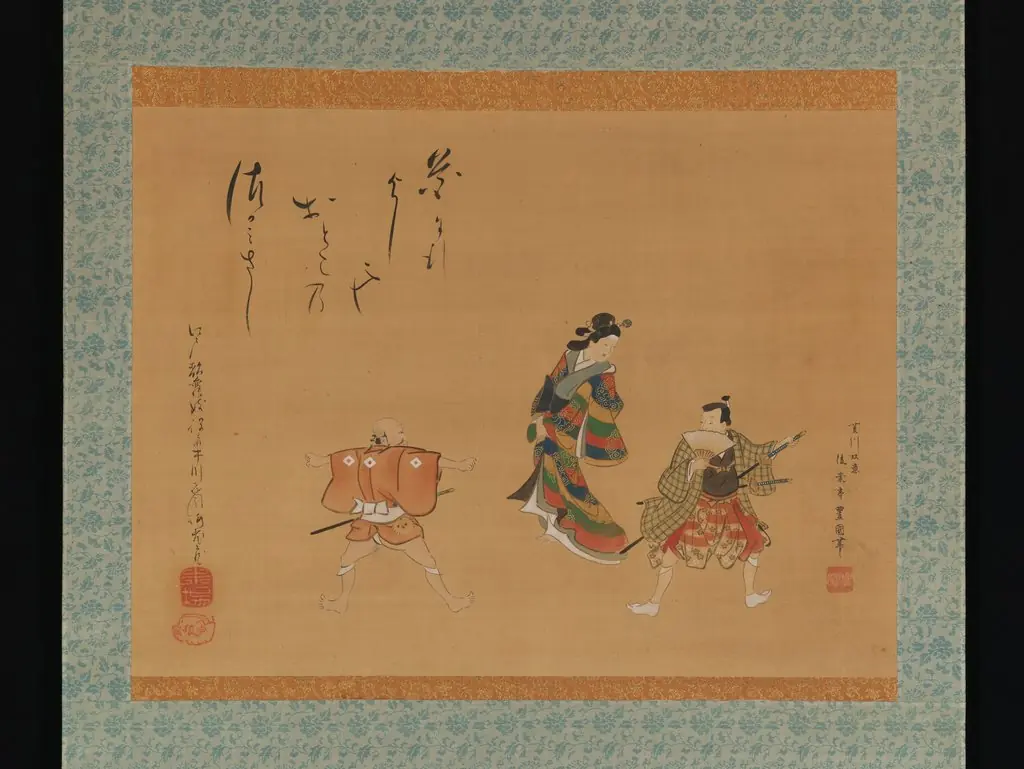
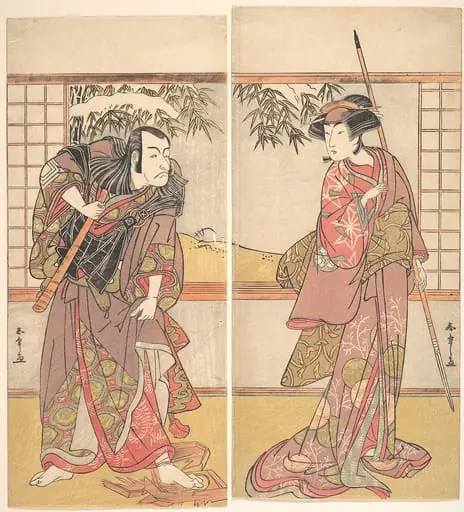
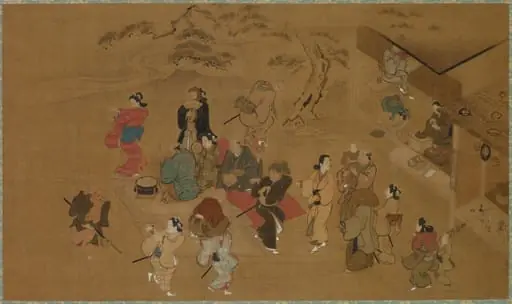
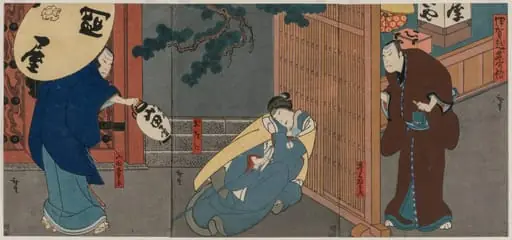
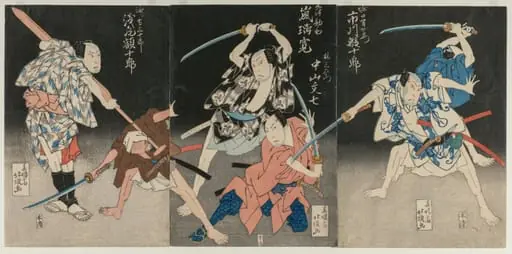
- Ichikawa Ebijūrō II as Horiguchi Manzaemon (right), Arashi Rikan II as Kizu Kansuke, Nakayama Bunshichi III as Hayashi Sanzemon (center), and Asao Gakujurō as the Ferryman Sanjūrō (left) from the Kabuki Play "Eight Views of the Kizu River by Boating Song"
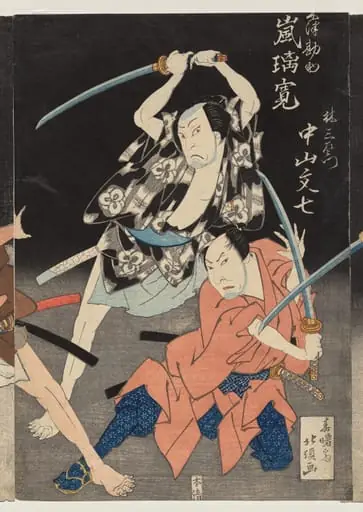 Arashi Rikan II as Kizu Kansuke and Nakayama Bunshichi III as Hayashi Sanzemon from the Kabuki Play "Eight Views of the Kizu River by Boating Song"
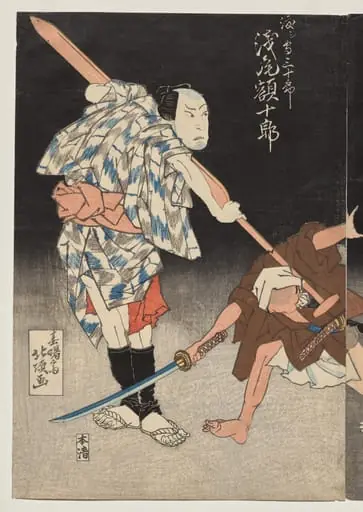 Asao Gakujurō as the Ferryman Sanjūrō from the Kabuki Play "Eight Views of the Kizu River by Boating Song"
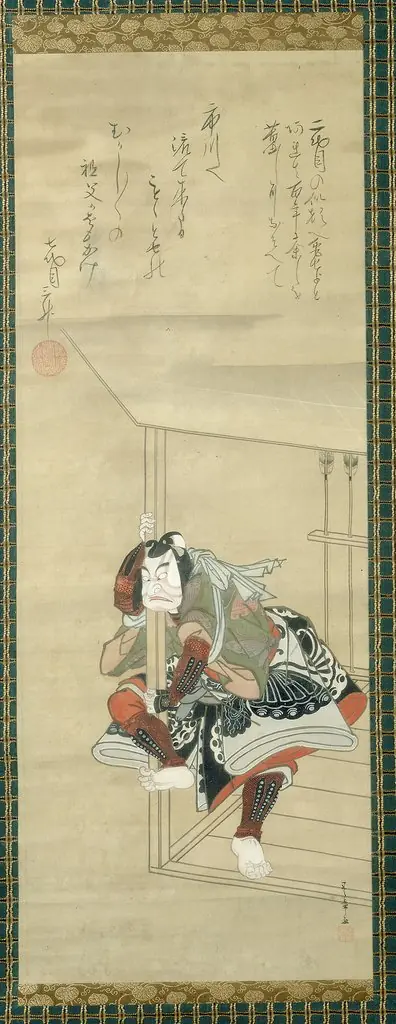
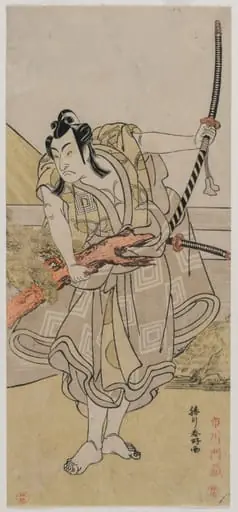 Ichikawa Monnosuke II as Soga no Gorō