Artwork
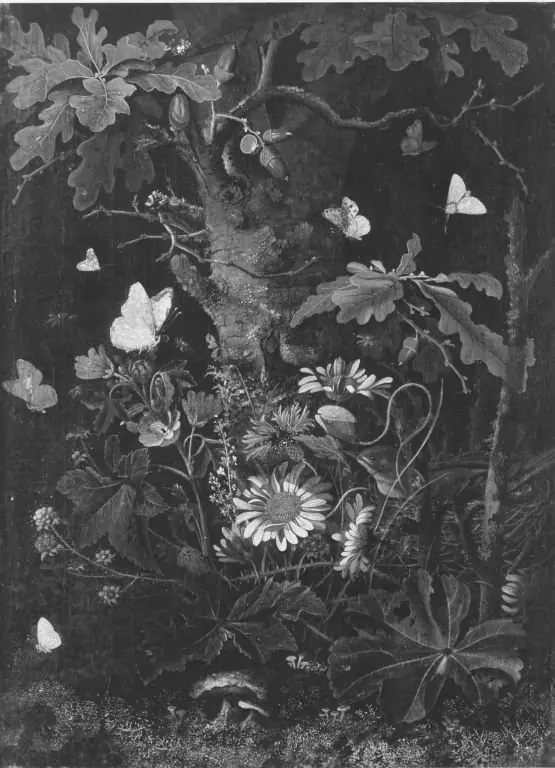
Forest floor still life with rodent
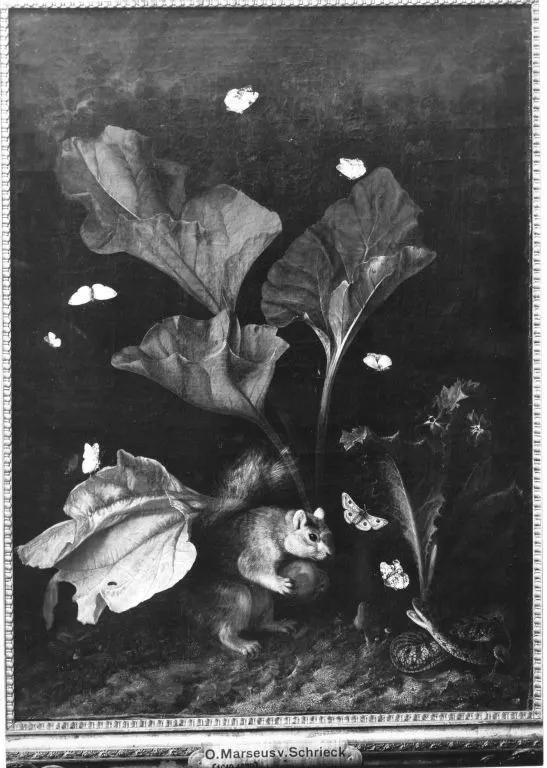
Forest floor still life with rodent is an oil painting by the Dutch Golden Age artist Otto Marseus van Schrieck. It dates from 1670 and is held in the collection of the Bavarian State Painting Collections.
About this work
Technique & Style
The work is an oil painting executed on canvas, a support consistent with Marseus van Schrieck's standard practice for his forest-floor still lifes.
The work is an oil painting executed on canvas, a support consistent with Marseus van Schrieck's standard practice for his forest-floor still lifes. The composition measures 97.8 cm in height by 72.8 cm in width. Dated to 1670, it belongs to the artist's signature genre of sottobosco ("forest floor") still life, in which small creatures, insects, and plants are rendered against a dark woodland ground.
The use of oil paint allows for the fine, detailed handling required to depict the textures of fur, foliage, and decaying matter characteristic of this subgenre.
The painting is held in the Bavarian State Painting Collections at the Alte Pinakothek in Munich.
History & Provenance
The painting Forest floor still life with rodent is attributed to Otto Marseus van Schrieck and dated to circa 1670, although the work’s inception is recorded as spanning from 1646 to 1670. Executed in oil on canvas, it entered the Bavarian State Painting Collections and is now housed in the Alte Pinakothek in Munich. No records of a specific commission or earlier owners are provided in the sources, so the known ownership chain begins with its acquisition by the Bavarian State Painting Collections.
The painting is held by the Bavarian State Painting Collections and is on view at the Alte Pinakothek in Munich. No specific inventory or accession number is recorded in the available sources.
No exhibition history is documented in the available sources.
Legacy
The painting's quiet influence emerged through its subtle integration of natural observation into still life, a practice later artists adopted to heighten realism. Its depiction of a rodent amidst forest flora contributed to a broader shift toward ecological detail in Dutch painting, influencing contemporaries who sought to capture the complexity of nature. The work remains in the Bavarian State Painting Collections at the Alte Pinakothek, preserving its legacy as a foundational example of this genre.
Overview
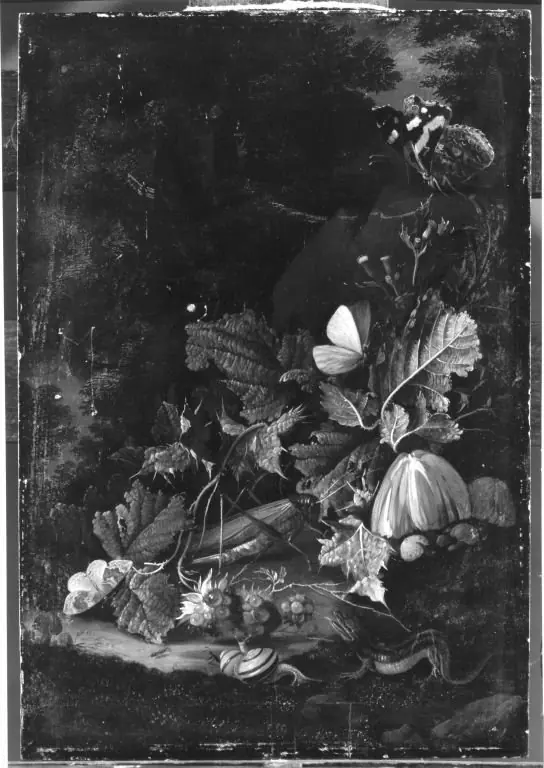
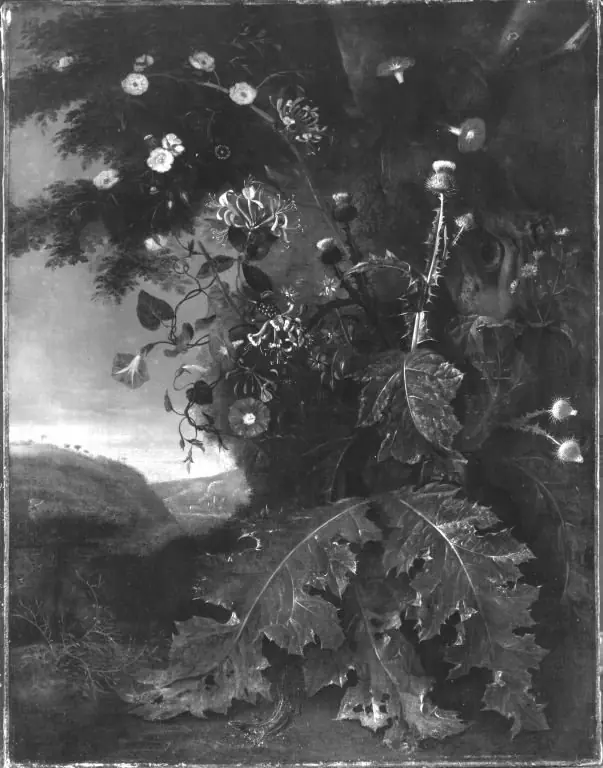
Forest floor still life with rodent, painted in 1670 by Otto Marseus van Schrieck, is an oil painting characterized by its depiction of a small rodent amidst forest flora, set against a dark background that accentuates the subject matter.
Subject & Meaning
The painting focuses on a small rodent as its central subject, surrounded by large, wavy leaves, flowers, and butterflies. This composition reflects Schrieck's specialty in capturing the intimate details of forest ecosystems.
Context
As a product of the Dutch Golden Age, this work aligns with the era's artistic trends that valued detailed, realistic depictions of nature. Schrieck's specialization in forest still lifes contributed to the period's diverse artistic output.
Artist & collection
Artist
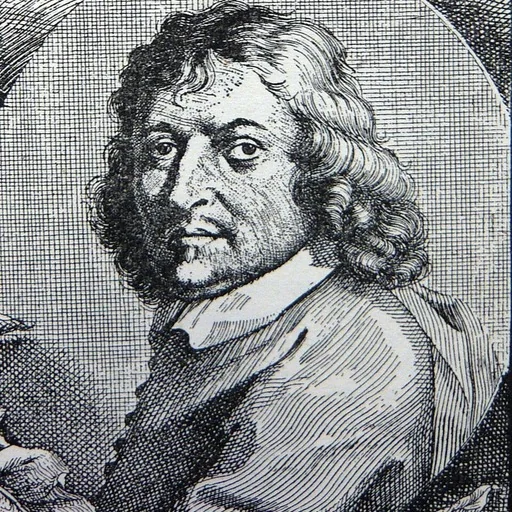
Otto Marseus van Schrieck (ca. 1613, in Nijmegen – buried 22 June 1678, in Amsterdam) was a painter in the Dutch Golden Age. He is best known for his paintings of forest flora and fauna.

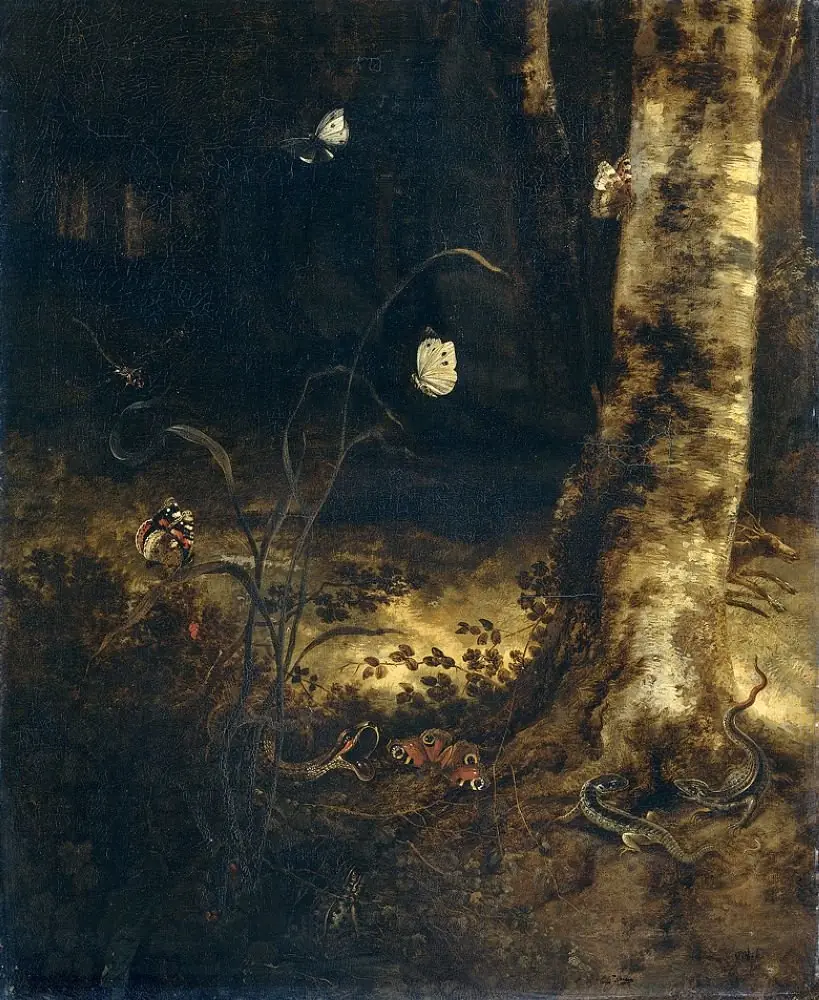 A forest floor with a snake, lizards, butterflies and other insects
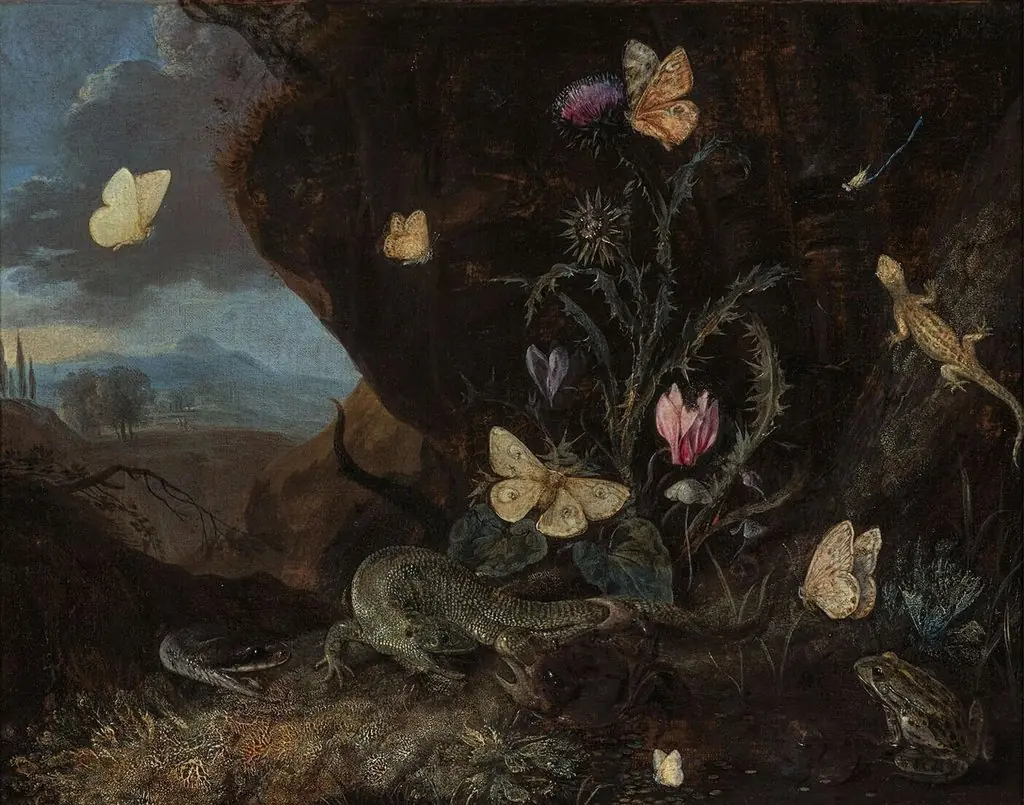 Landschap with insects, cyclamen and thistle
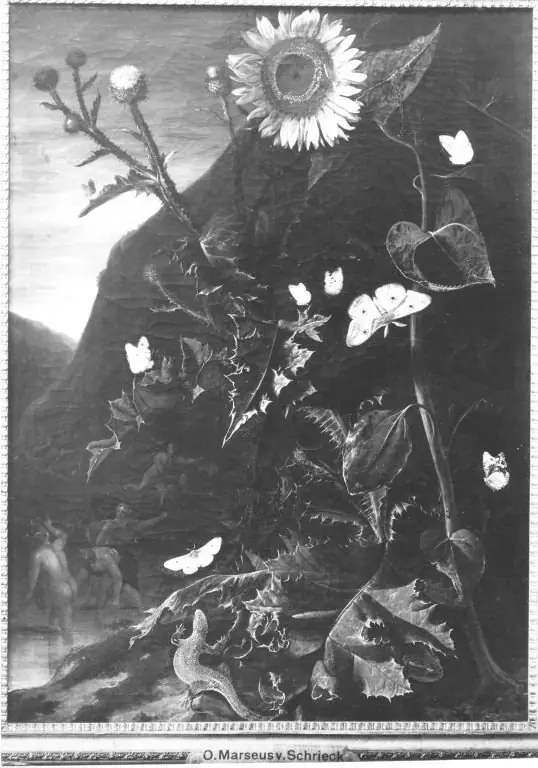 Forest floot still life with Diana and Actäon
 Forest Floor with a Snake, Lizards, Butterflies and other Insects
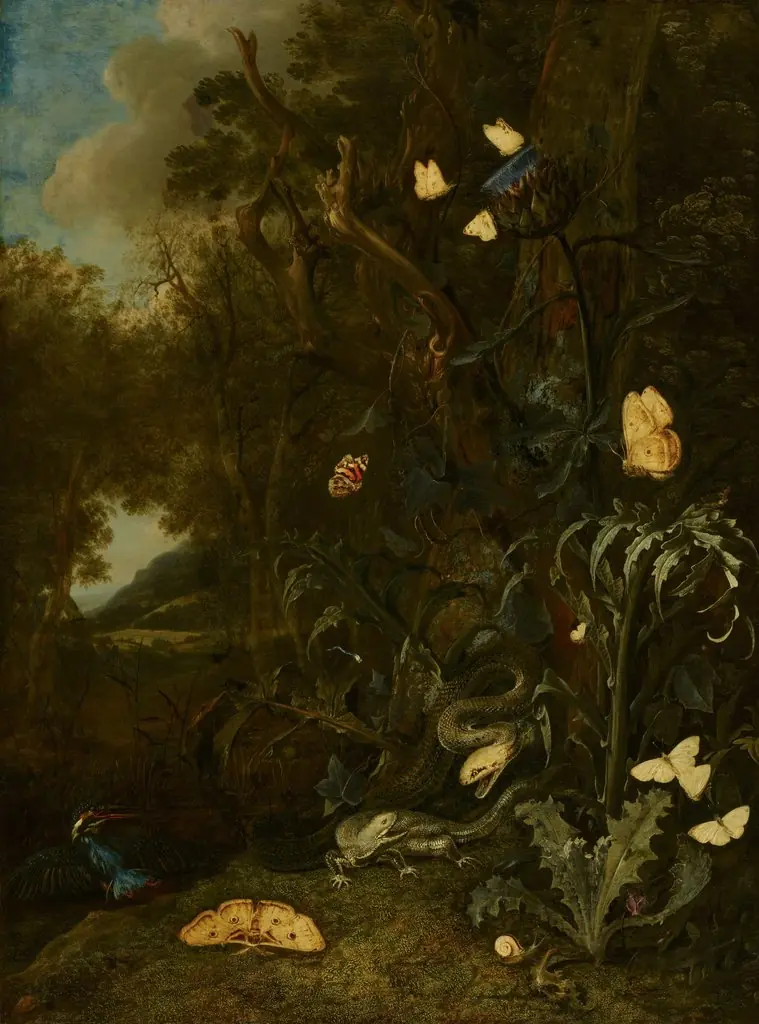 Plants and Insects
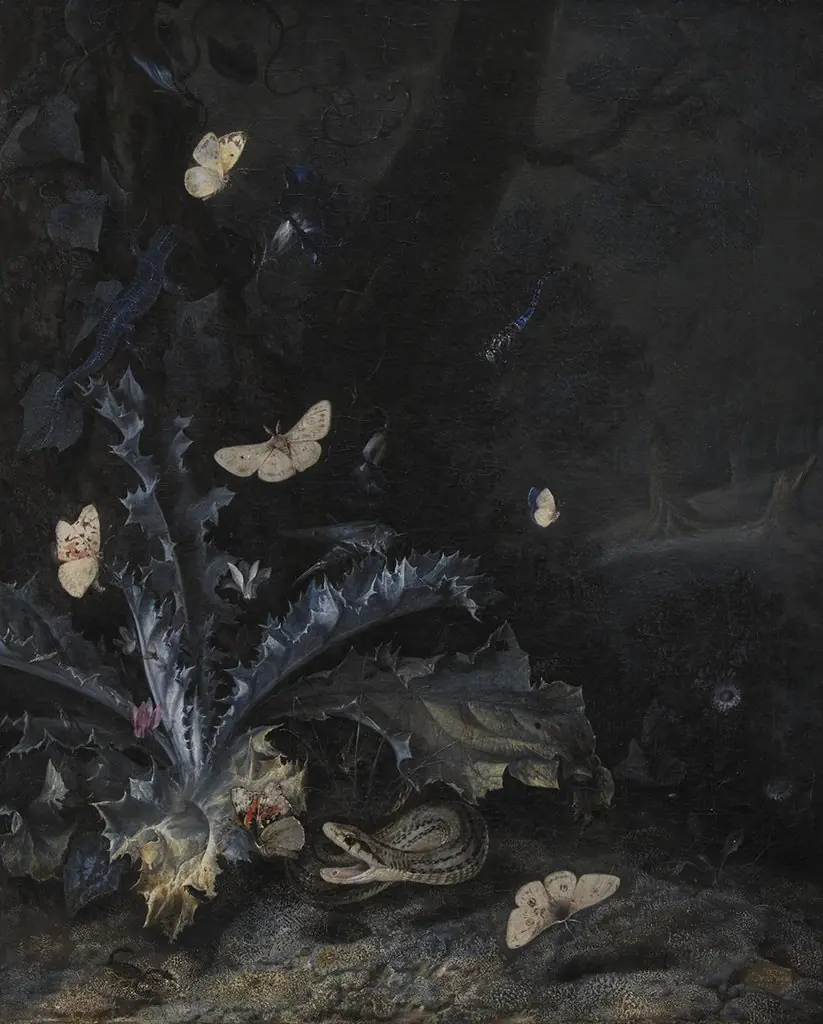 Still Life with Thistle and Snake
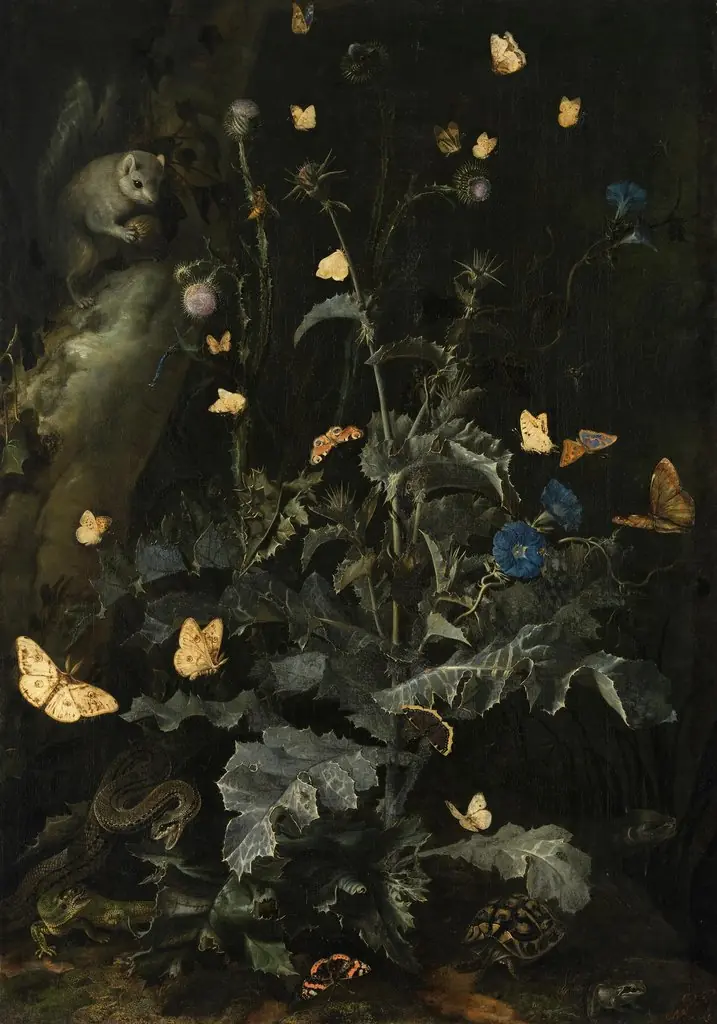 Forest floor still life with thistle and rodent
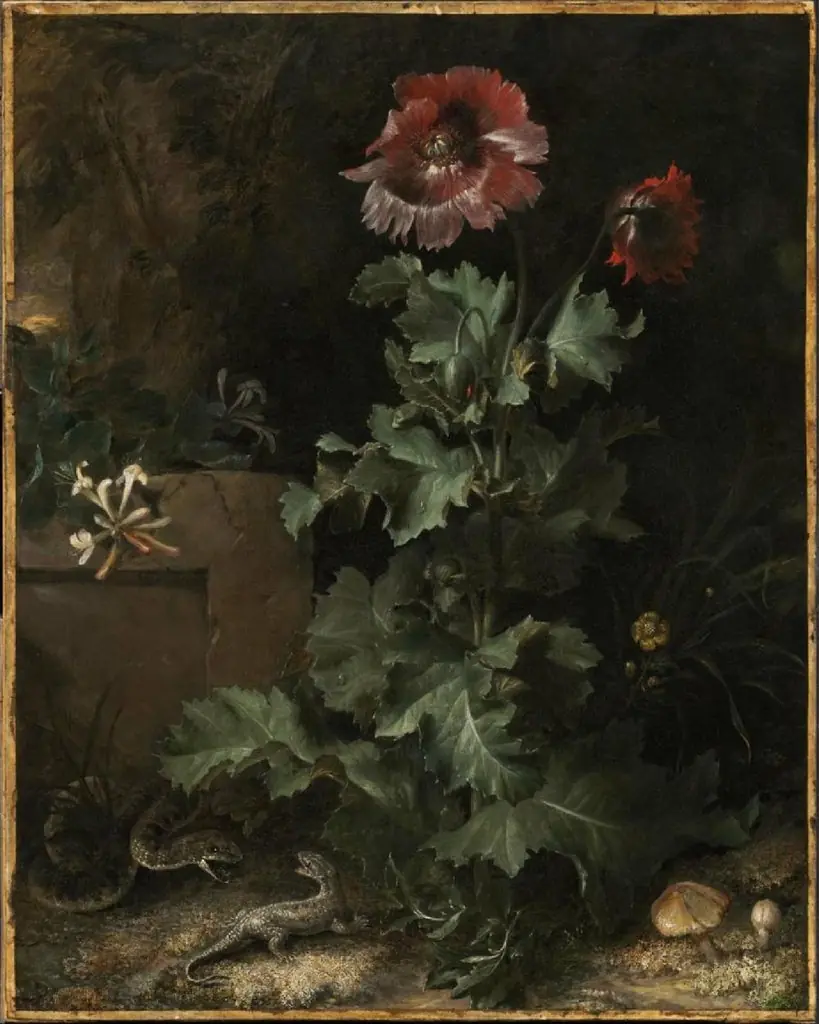 Still Life with Snake and Lizard