Artwork
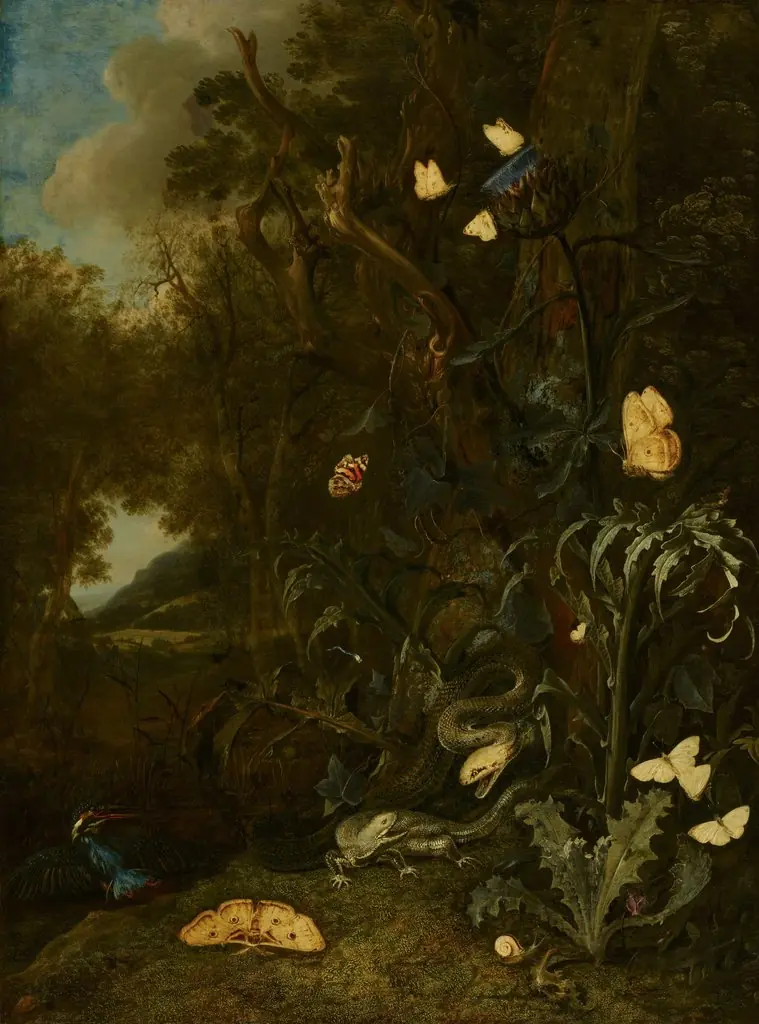
A forest floor with a snake, lizards, butterflies and other insects
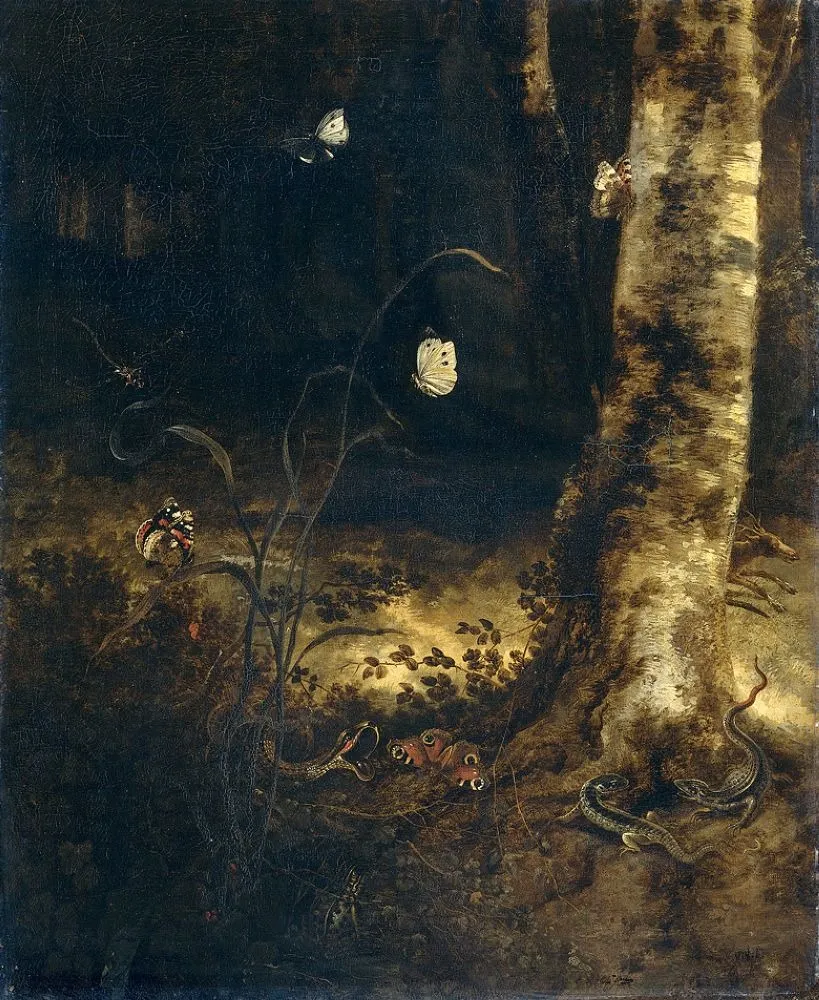
A forest floor with a snake, lizards, butterflies and other insects is an oil painting by the Dutch Golden Age artist Otto Marseus van Schrieck. It dates from 1650 and is held in the collection of the Rijksmuseum. Created around 1650, this oil on canvas presents a close‑up view of a forest floor teeming with small creatures.
About this work
Subject & Meaning
Created by Otto Marseus van Schrieck in 1650, the work focuses on the intricate details of this micro-ecosystem rather than a broad landscape vista.
The painting depicts a close-up view of a forest floor teeming with life, featuring a snake, lizards, butterflies, and various other insects. Created by Otto Marseus van Schrieck in 1650, the work focuses on the intricate details of this micro-ecosystem rather than a broad landscape vista. While the title explicitly lists the fauna present, the composition falls within the genre of landscape painting.
The inclusion of a tree in the depiction suggests the setting is a shaded woodland environment where these creatures interact. The artwork presents a naturalistic study of wildlife at ground level, highlighting the coexistence of predators and prey within a specific habitat.
Technique & Style
Otto Marseus van Schrieck executed this landscape painting in 1650 using oil paint applied to a canvas support. The work measures 76 centimeters in height and 62 centimeters in width. As a landscape genre piece, the composition focuses on a detailed forest floor scene populated by a snake, lizards, butterflies, and various insects.
The artist's handling of the medium allows for the depiction of natural elements such as trees alongside the smaller fauna, characteristic of his specialized focus on this subject matter.
History & Provenance
The painting titled A forest floor with a snake, lizards, butterflies and other insects was created by Otto Marseus van Schrieck in 1650. Executed in oil on canvas, this landscape work measures 76 cm in height and 62 cm in width. The piece is currently held in the collection of the Rijksmuseum. It depicts a detailed natural scene featuring a tree, snake, lizards, butterflies, and various insects.
Legacy
The painting has shaped later forest and still-life compositions through its vivid depiction of woodland creatures, inspiring 18th-century naturalists and later Dutch still-life painters who adopted its detailed observation of flora and fauna. Its presence in the Rijksmuseum collection has kept it visible to scholars studying Baroque naturalism, reinforcing the legacy of the artist’s fascination with the hidden life of the forest floor.
Overview
Created around 1650, this oil on canvas presents a close‑up view of a forest floor teeming with small creatures. A coiled snake rests at the base of a prominent tree trunk, while lizards, butterflies and assorted insects populate the surrounding leaf litter. The composition focuses on the intimate details of the undergrowth rather than a broader landscape.
Context
Van Schrieck’s oeuvre belongs to a broader Dutch Golden Age interest in scientific observation and detailed representation of the natural world. His “forest floor” paintings align with contemporary curiosity about botany and zoology, reflecting a period when artists often served as visual documentarians of the environment.
Artist & collection
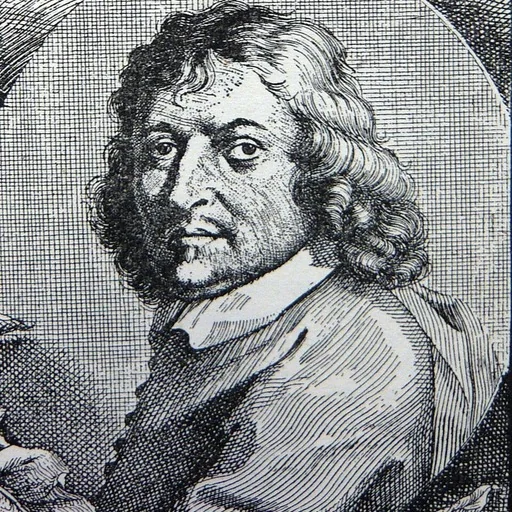
Artist
Otto Marseus van Schrieck (ca. 1613, in Nijmegen – buried 22 June 1678, in Amsterdam) was a painter in the Dutch Golden Age. He is best known for his paintings of forest flora and fauna.

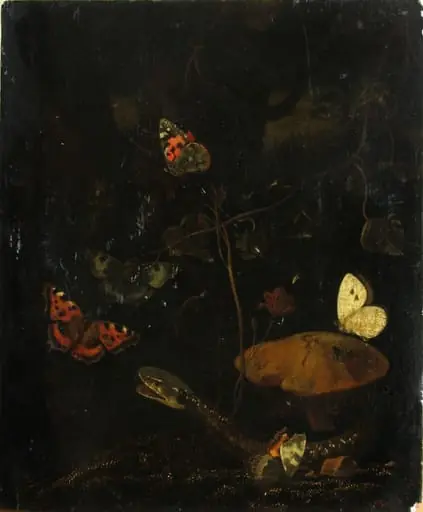
- Insects and a lizard in a wood
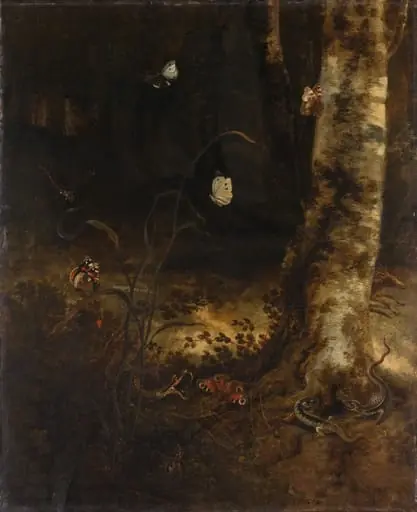 Forest Floor with a Snake, Lizards, Butterflies and other Insects
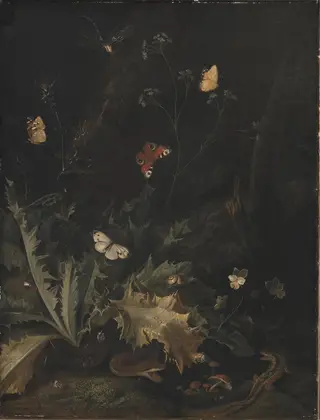 A Forest Floor with a Thistle, a Snake, a Lizard and Butterflies
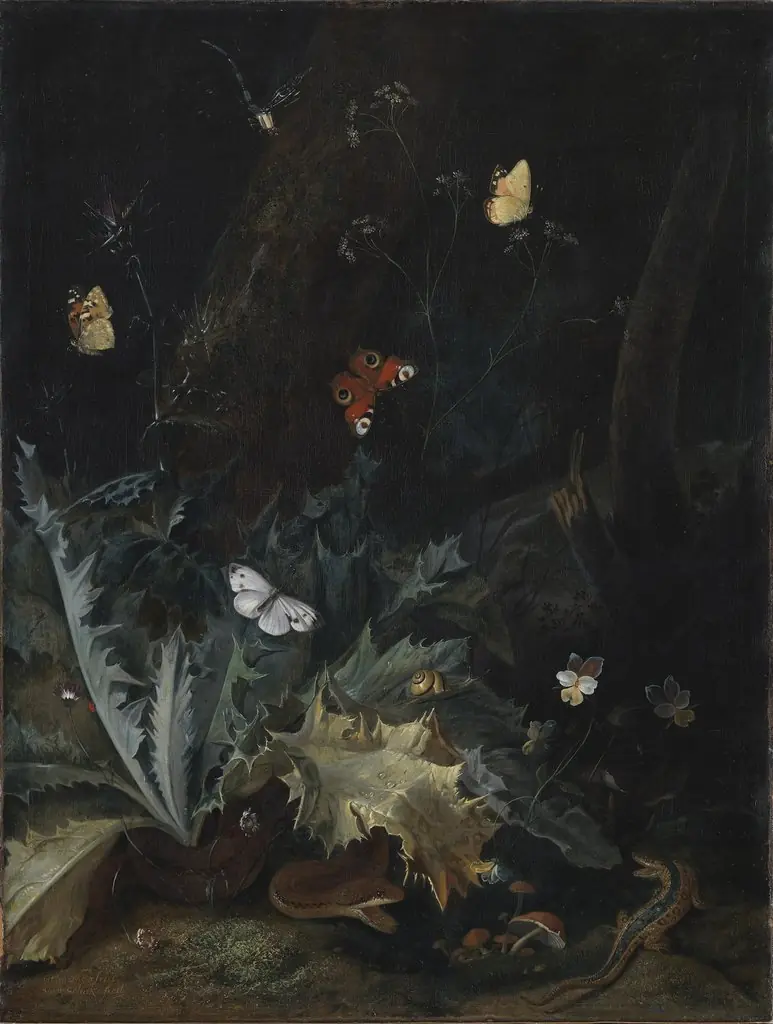 A Forest Floor with a Thistle, a Snake, a Lizard and Butterflies
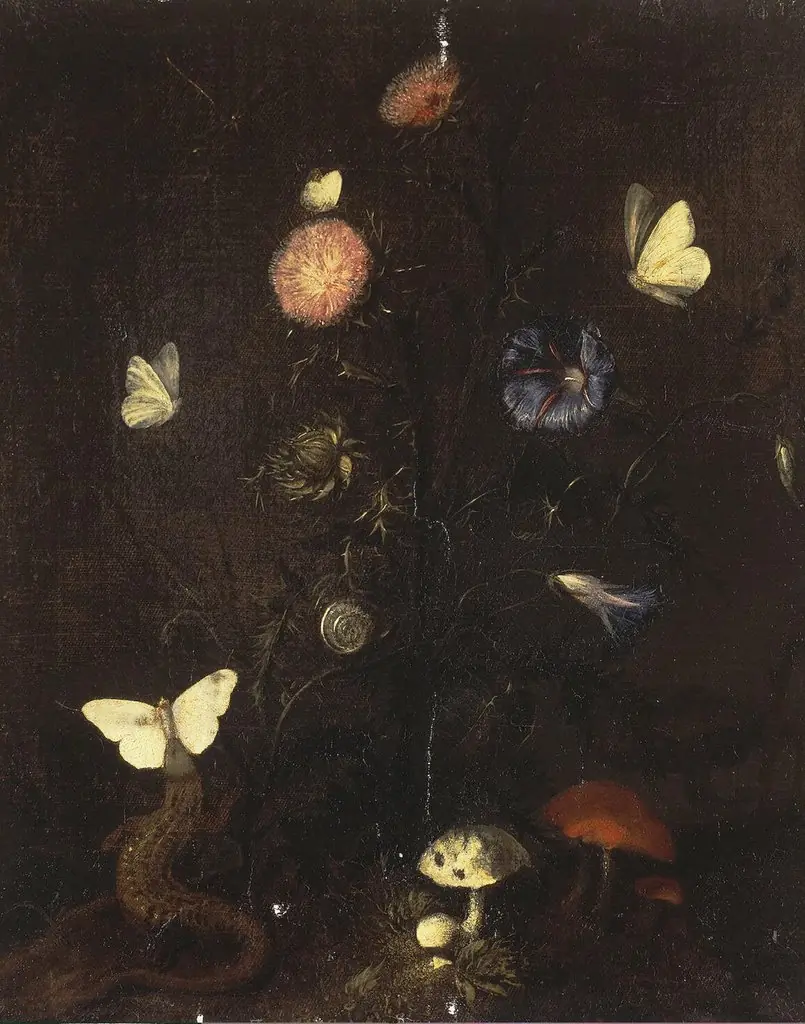 Flowers, Lizard and Butterflies
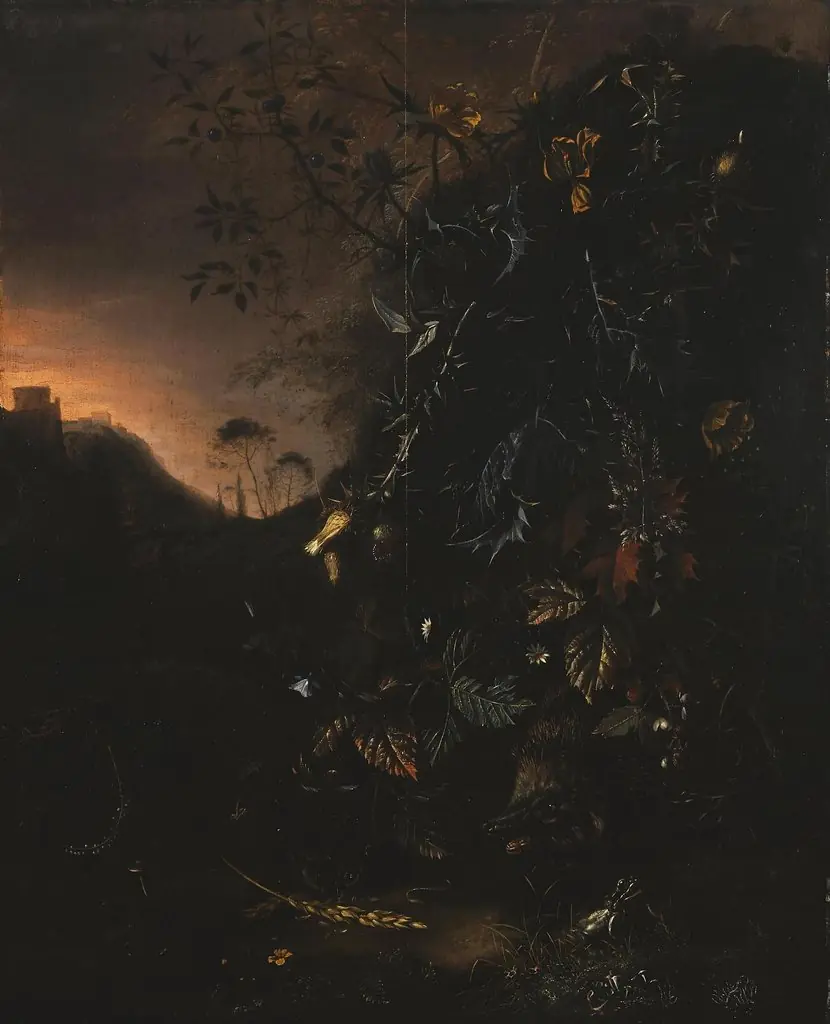
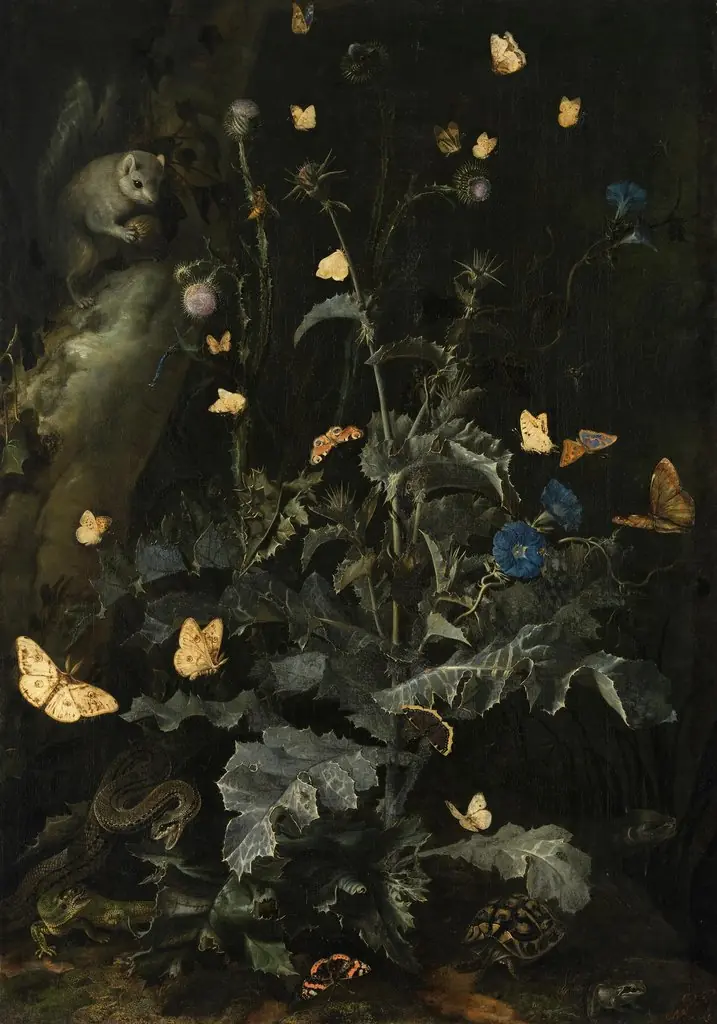 Forest floor still life with thistle and rodent
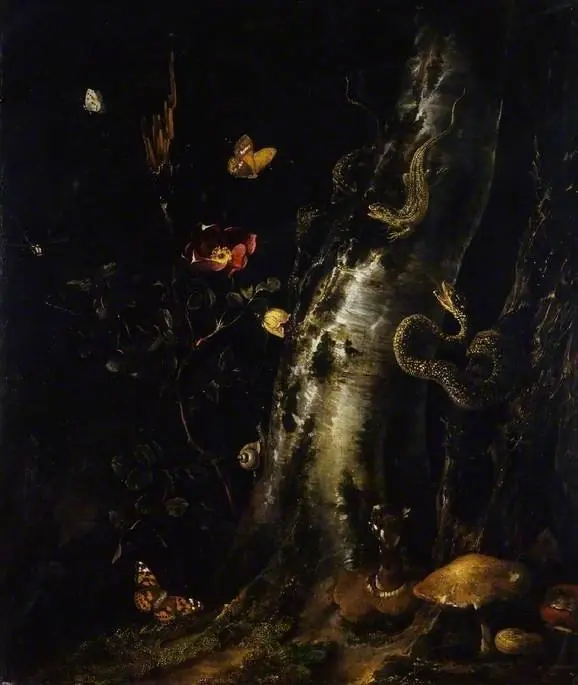 Silver birch trunk and branch with rose, lizards, a snake, toadstools, butterflies and a snail
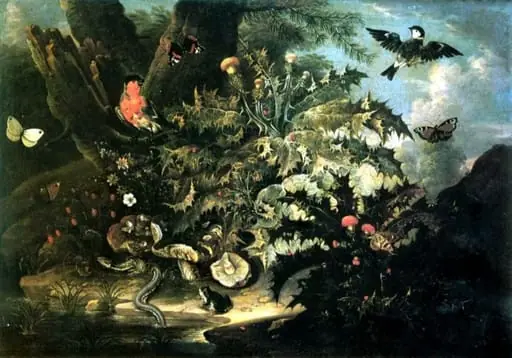
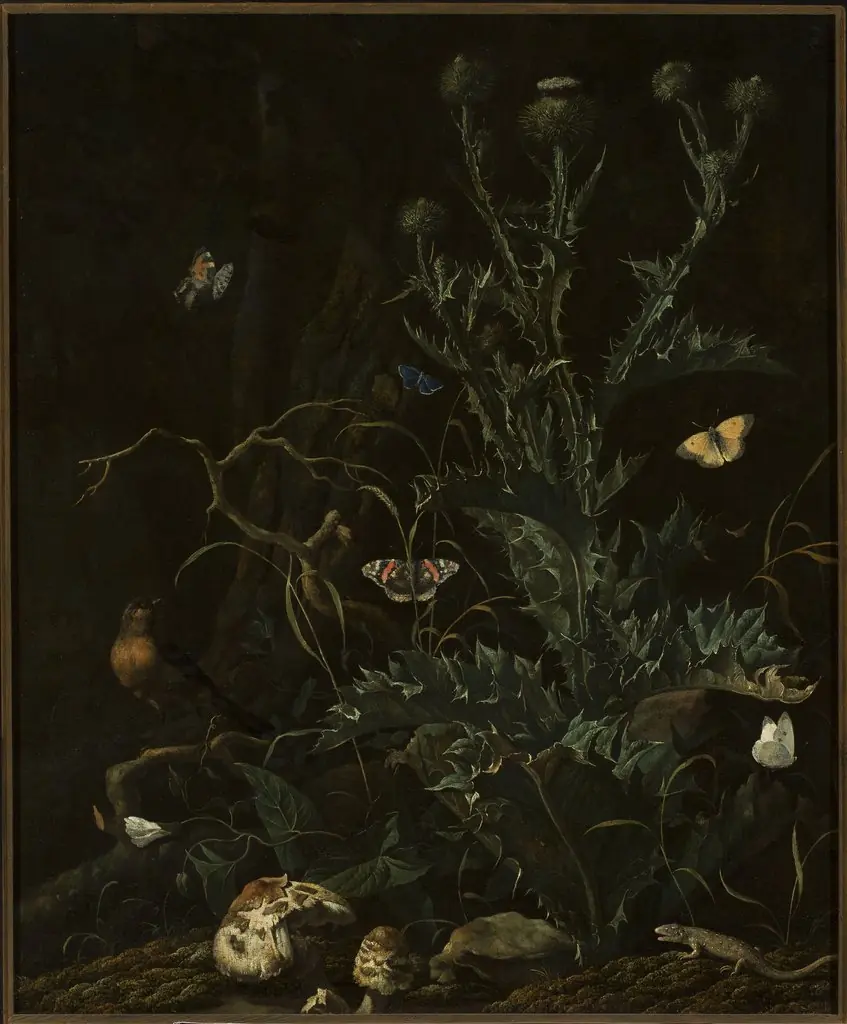 Thistles, butterflies and a lizard
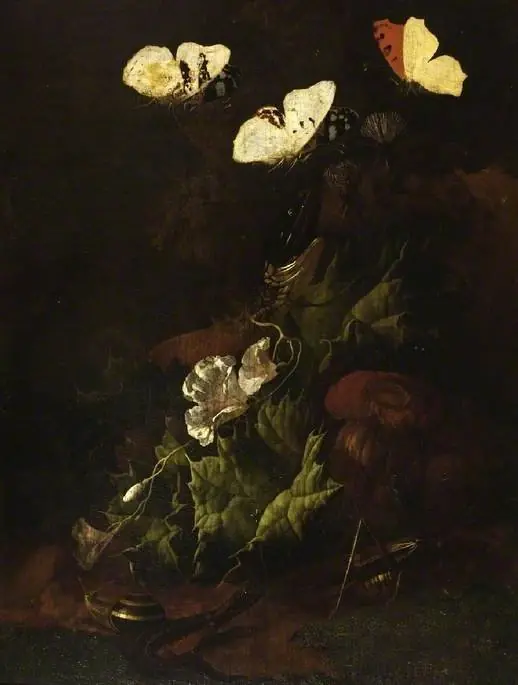 A thistle with snakes and butterflies
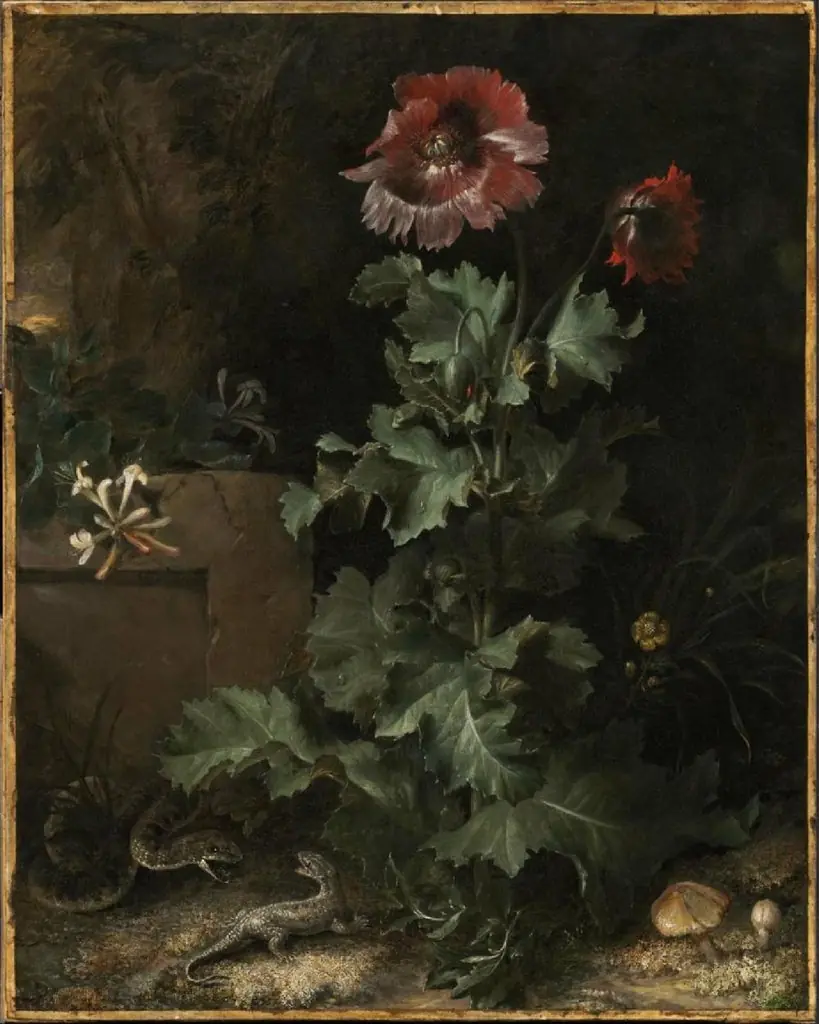 Still Life with Snake and Lizard
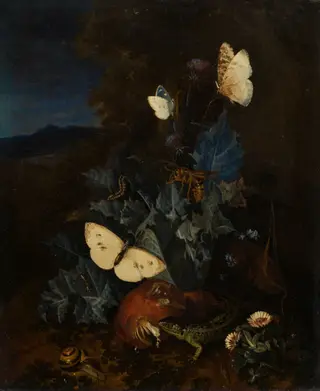 Still-life with a thistle, boletus, snail, lizard, butterflies and a bee in a landscape