Artwork
Madonna with Child and Two Angels
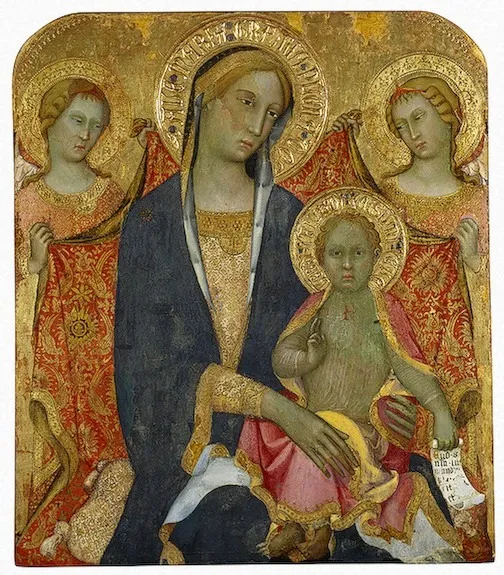
Madonna with Child and Two Angels is an unspecified painting by the Sienese School artist Paolo di Giovanni Fei. It dates from 1393 and is held in the collection of the Hermitage Museum.
About this work
Subject & Meaning
The central figures occupy a shallow, golden space, emphasizing holiness and divine presence.
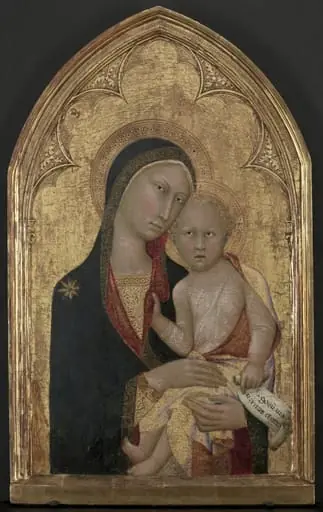
The painting depicts the Virgin Mary holding the Christ Child, flanked by two angels. The central figures occupy a shallow, golden space, emphasizing holiness and divine presence. The Child’s blessing gesture and the angels’ reverent positioning underscore the sacred relationship between mother and son, a common motif in late medieval Marian iconography.
The composition conveys themes of protection, intercession, and the Incarnation, reflecting the devotional priorities of fourteenth-century Italian religious art.
History & Provenance
Madonna with Child and Two Angels is a religious panel painting by Paolo di Giovanni Fei, dated to 1385. According to the Wikidata record for the work, it was produced in Italy and entered the collection of the Hermitage Museum, where it remains held. The painting, which depicts the Madonna and Christ Child with attendant angels, measures 94.5 cm in height by 82.5 cm in width.
The sources do not provide details on a specific commission, patron, or intermediate ownership transfers prior to its acquisition by the Hermitage, nor do they document the circumstances of its creation beyond the 1385 inception date and Italian origin.
The painting is held by the State Hermitage Museum in Saint Petersburg. It is inventoried as Ж-515.
The work was included in the exhibition “From Cimabue to Tiepolo: Italian Paintings from the State Hermitage Museum” held at the Scuderie del Quirinale in Rome from December 17, 2010 to March 20, 2011.
Overview
Created in 1393, Madonna with Child and Two Angels is a tempera painting on panel by Paolo di Giovanni Fei, a Sienese artist active in the late fourteenth century. The work exemplifies the devotional imagery typical of Siena’s religious art and is presently part of the collection of the State Hermitage Museum in St. Petersburg.
Technique & Style
Executed in the Sienese tradition, the panel combines a gold ground with delicate linear modeling. The halos glow against the dark robes, and the figures are outlined with fine, precise lines, a hallmark of the workshop’s emphasis on decorative elegance over naturalistic depth. The use of gold leaf and restrained color palette reflects the influence of earlier Sienese masters such as Simone Martini and the Lorenzetti brothers.
Context
The work belongs to a period when Siena’s artistic output was dominated by devotional panels intended for private chapels or personal devotion. Its iconography, Madonna, Child, and attendant angels, mirrors the theological emphasis on the intercession of the Virgin and heavenly beings, a theme prevalent in late‑fourteenth‑century Sienese painting.
Artist & collection
Artist
Paolo di Giovanni Fei (c. 1345 – c. 1411) was a painter of the Sienese school. He came to Siena from San Quirico, Castelvecchio, held public positions in Siena from 1369 and was first mentioned in the Sienese register…

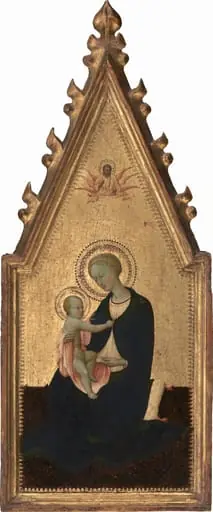 Madonna of Humility
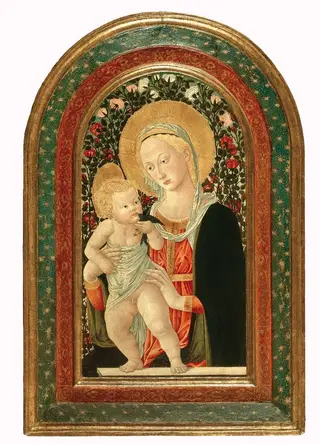 Maria col bambino
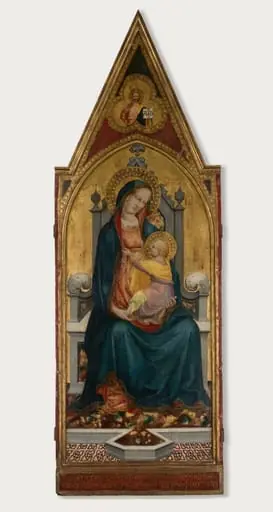 Virgin and Child Enthroned
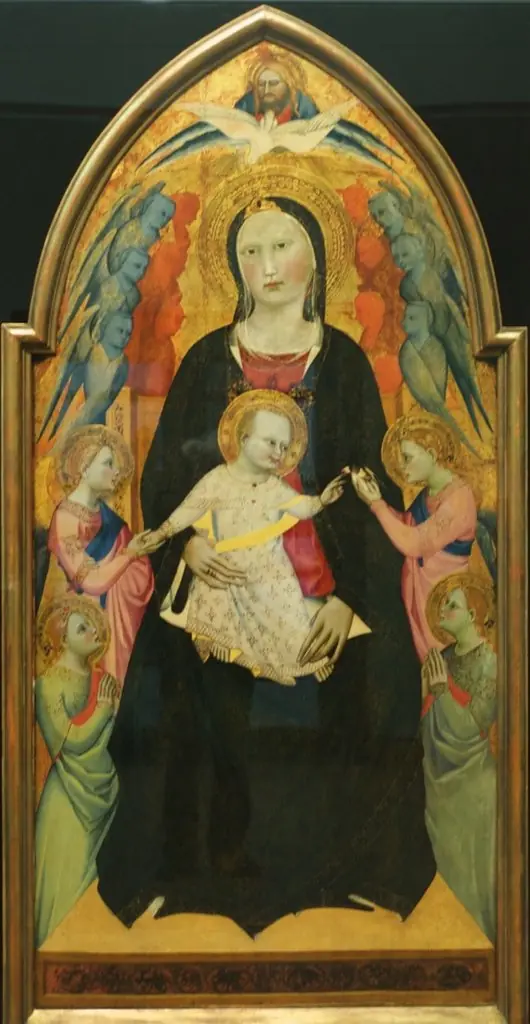 Virgin Mother and Child enthroned surrounded by the Holy Father, the Holy Ghost and Angels
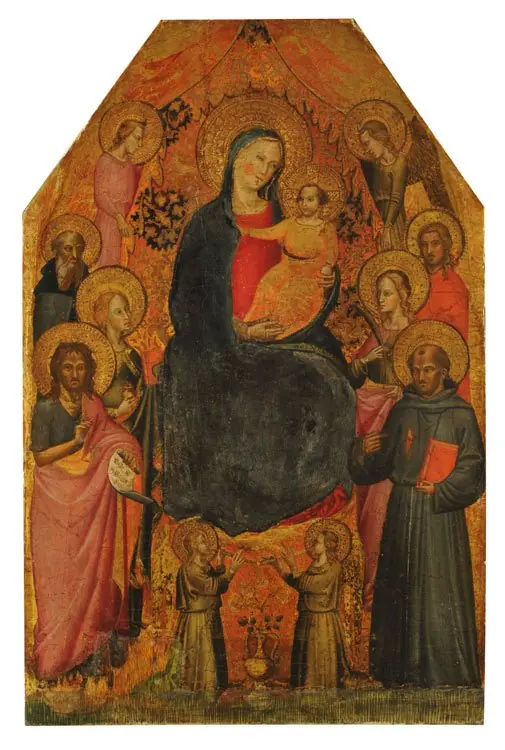 Virgen y Niño rodeados de santos y ángeles
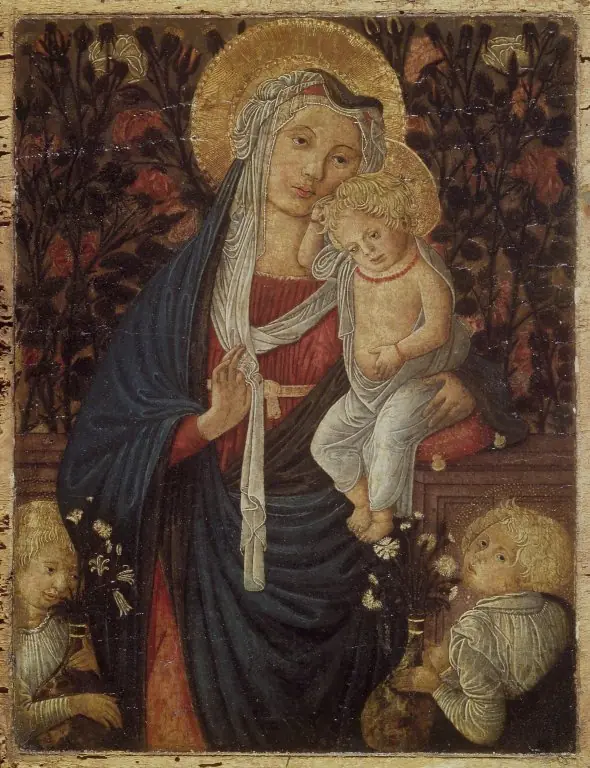 Virgin and Child with Two Angels Before a Rose Hedge
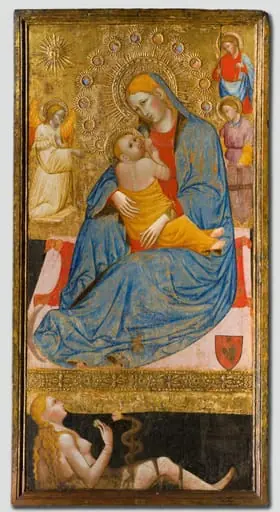 The Madonna of Humility with the Temptation of Eve
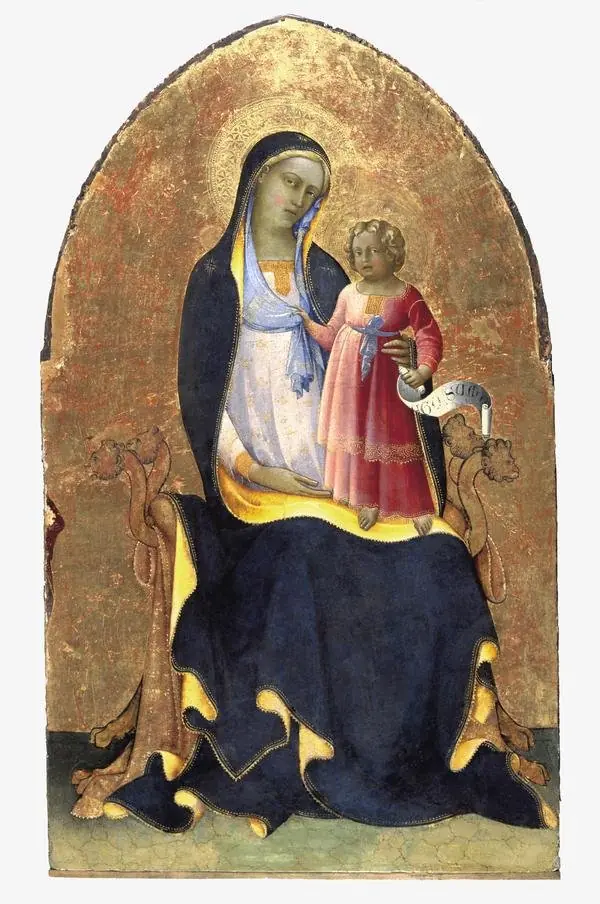 The Virgin and Child Enthroned
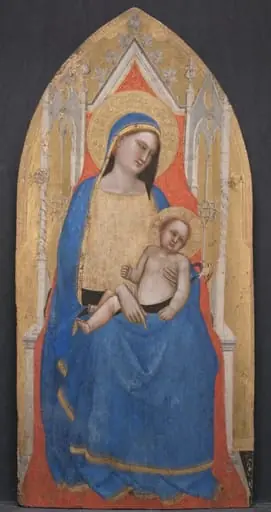 Madonna and Child Enthroned
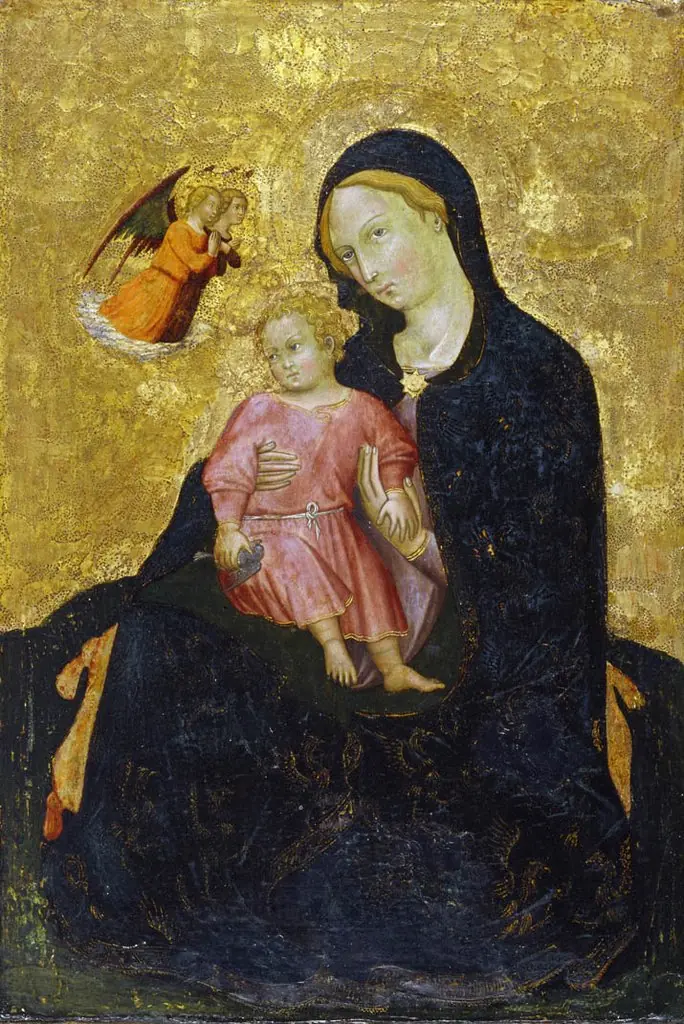 Vierge d'humilité
 Madonna and Child
- Madonna and Child with Angels