Artwork
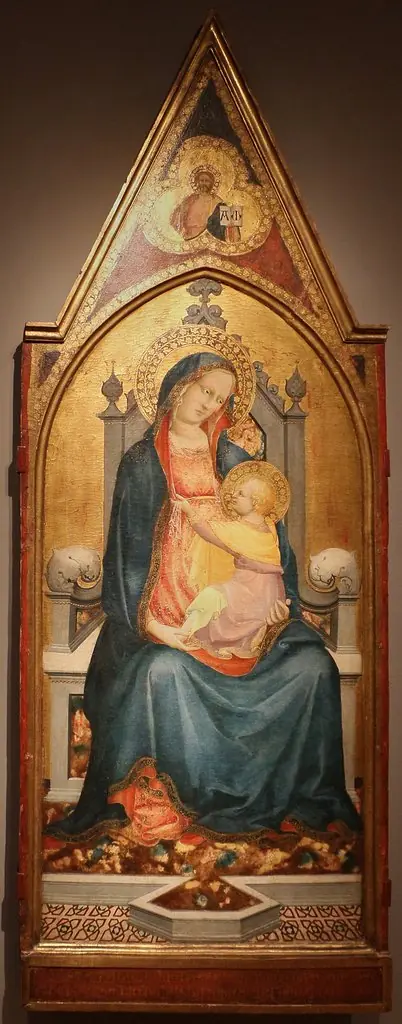
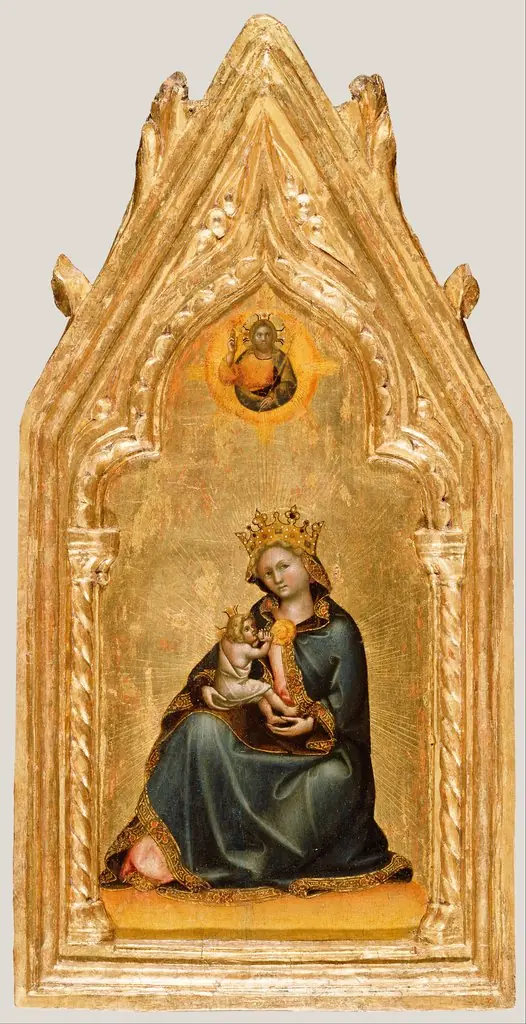
Virgin and Child Enthroned
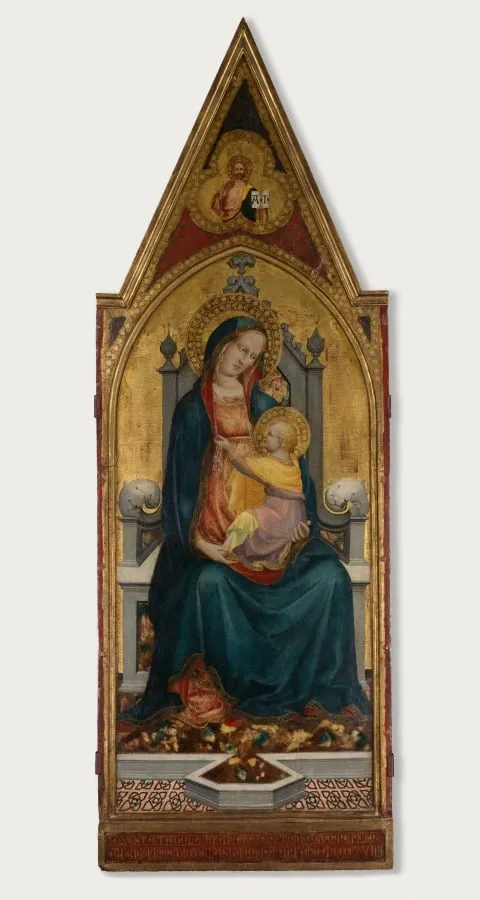
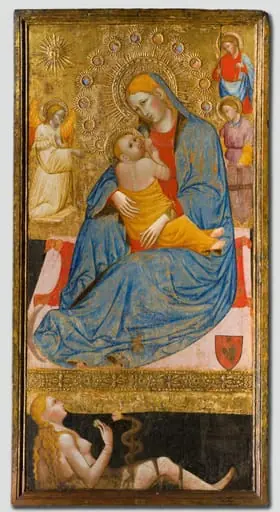
Virgin and Child Enthroned is an unspecified painting by the Gothic painting artist Battista di Biagio Sanguigni. It dates from 1419 and is held in the collection of the Cleveland Museum of Art.
- Accession no.
- 1954.834
- Credit line
- Gift of the Hanna Fund
About this work
Overview
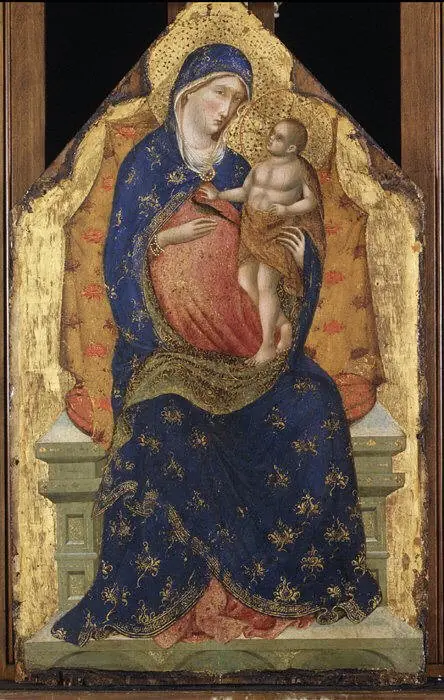
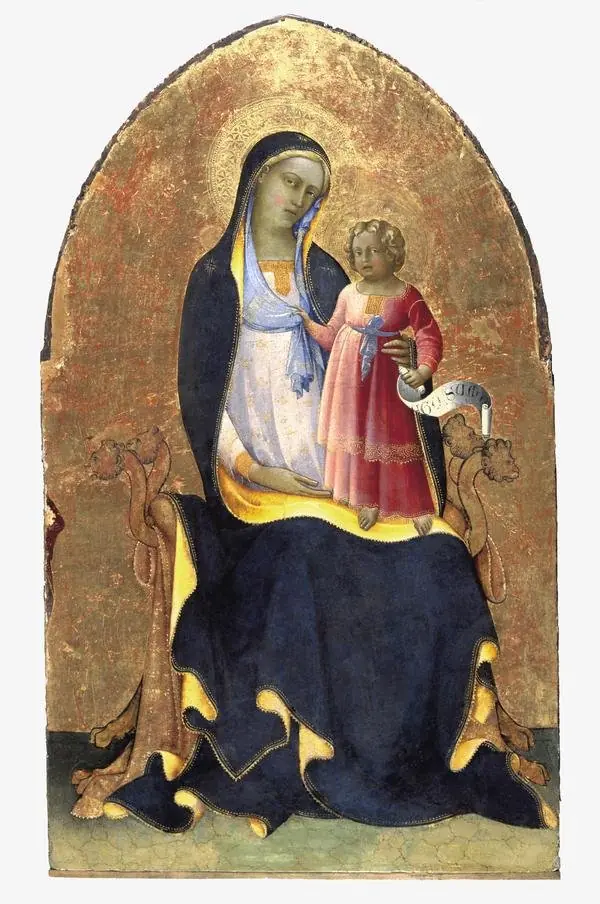
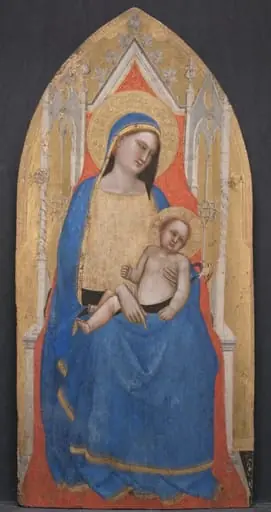
This gold-ground painting depicts the Virgin and Child Enthroned, symbolically representing Christ's dual nature through two simultaneous portrayals: as an infant with the Virgin and as the risen Christ in heaven. Executed in 1419, it exemplifies the late Gothic style prevalent in early 15th-century Italian painting.
Subject & Meaning
The painting conveys Christian theological themes through its composition. The Virgin, seated on a throne, holds the Christ child, while above, the risen Christ holds a book inscribed with the Greek letters alpha and omega, signifying his role as the beginning and end of all things. This juxtaposition emphasizes Christ's eternal and omnipresent nature.
Technique & Style
Characterized by a flat gold background and a golden throne, this work employs the gold-ground technique typical of 14th-century Italian painting, which emphasized heavenly and abstract religious concepts through formal beauty and ethereal settings.
History & Provenance
Created in 1419 for Antonio di Domenicho Giugni, the painting includes a later inscription praying for the repose of his soul. It reflects the transitional period in Italian art, preceding the shift towards more naturalistic and earthly depictions of sacred figures in the ensuing decades.
Context
Within the broader context of early 15th-century Italian art, this painting sits at the cusp of a stylistic evolution. While it retains the heavenly, abstract focus of the 1300s, the impending Renaissance would soon introduce more earthly and naturalistic settings for religious subjects, fostering a sense of approachability and devotion among the faithful.
Legacy
As a representative of late Gothic gold-ground paintings, it influences the understanding of the transitional phase in Italian art history, illustrating how religious themes were conveyed before the advent of more humanistic and naturalistic approaches in the Renaissance.
Artist & collection
Artist
Battista di Biagio Sanguigni, formerly known as the Master of 1419 (active 1393–1451) was an Italian painter from the region around Florence in the first half of the 15th century.