Artwork
Fouberies de Femmes
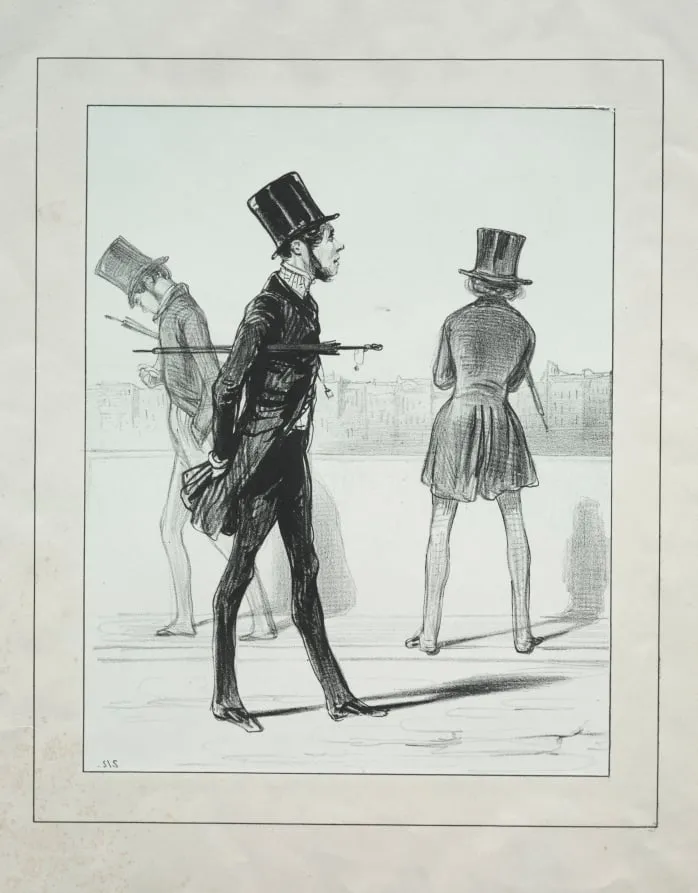
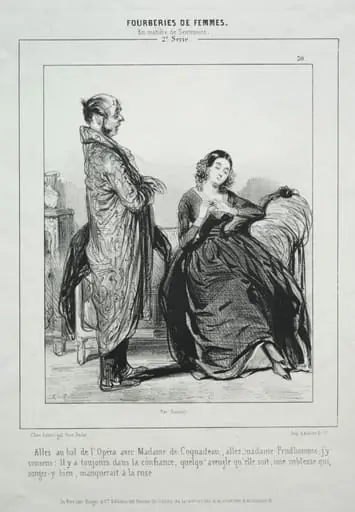
Fouberies de Femmes is a print by the Romanticist artist Paul Gavarni. It dates from 1839 and is held in the collection of the Cleveland Museum of Art.
- Accession no.
- 1925.1025
- Credit line
- Dudley P. Allen Fund
About this work
Overview
The work is part of the collection at The Cleveland Museum of Art, where it reflects Gavarni’s interest in social observation through sketch-like draftsmanship.
Fouberies de Femmes is a monochrome lithograph by French artist Paul Gavarni, dated 1839. Executed in ink on paper, it captures a fleeting urban moment with minimal detail and no color. The work is part of the collection at The Cleveland Museum of Art, where it reflects Gavarni’s interest in social observation through sketch-like draftsmanship. Its simplicity invites attention to posture and gesture rather than ornamentation.
Subject & Meaning
The scene depicts three figures on a city sidewalk: a man in formal attire leading, another following with a walking stick, and a woman turning away. The composition suggests a social tension or disconnection, possibly commenting on gendered behavior in public spaces. Gavarni avoids narrative clarity, instead emphasizing ambiguity, offering a quiet critique of urban etiquette without overt moralizing.
Technique & Style
Gavarni employs swift, linear ink strokes to define forms, eschewing shading and color. The figures are rendered with economical contours, their clothing and accessories suggested rather than detailed. This approach aligns with 19th-century French graphic traditions that valued immediacy and expressive line over finish. The lack of background reinforces focus on the figures’ interactions and silhouettes.
History & Provenance
Created in 1839, the print emerged during Gavarni’s early career as a social commentator in Parisian periodicals. It was likely produced as a standalone plate or for publication in a journal. The Cleveland Museum of Art acquired it as part of its broader collection of 19th-century European prints, preserving it as an example of Gavarni’s observational style before his later fame.
Context
In 1830s Paris, lithography flourished as a medium for satirical and documentary imagery. Gavarni’s work responded to rising urban life and shifting class dynamics, often highlighting the rituals of middle-class men and women. His drawings, though unembellished, engaged with contemporary debates on propriety and gender roles, situating this print within a broader visual culture of social critique.
Legacy
Gavarni’s influence extended to later illustrators and cartoonists who adopted his direct, unadorned style. Fouberies de Femmes exemplifies his ability to distill complex social interactions into single, resonant images. While not widely exhibited, the work remains a quiet reference point in studies of French graphic art and the evolution of urban observation in print.
Artist & collection
Artist
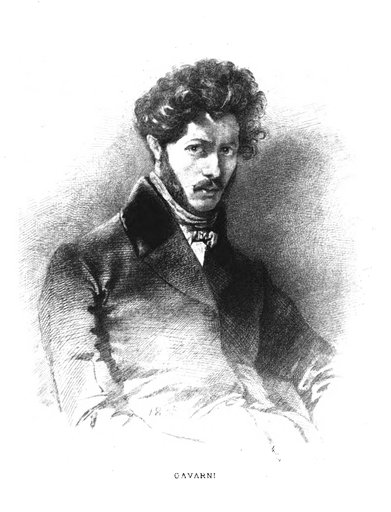
Paul Gavarni was the pen name of Sulpice Guillaume Chevalier, a French illustrator, born in Paris.

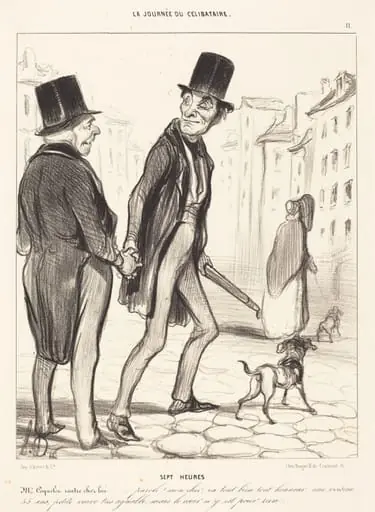 Sept heures
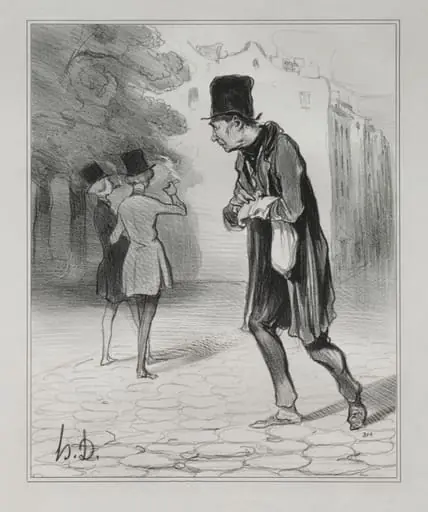 The Collector of Cigar Stubs
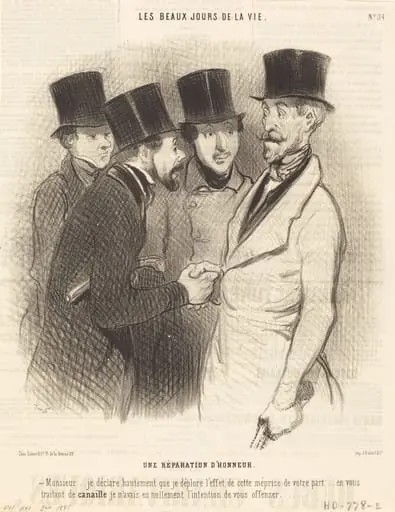 Une Réparation d'honneur
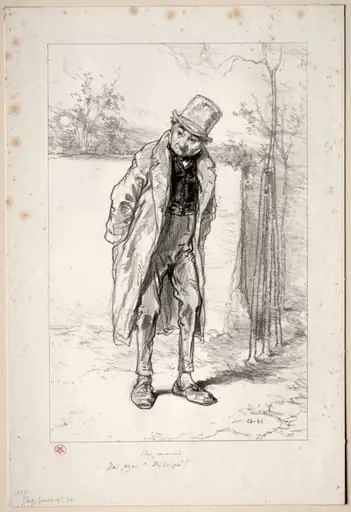 Physionomies Parisiennes: Au Marais. Ici, Azor! ici!
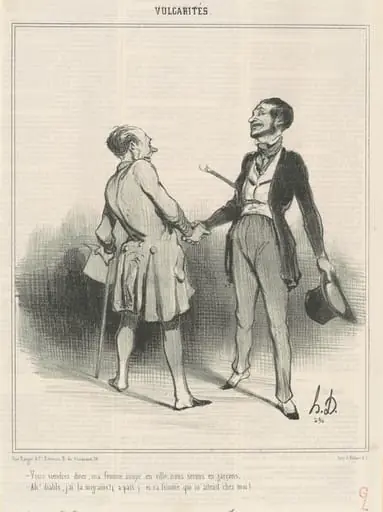 Vous viendrez diner, ma femme soupe en ville ...
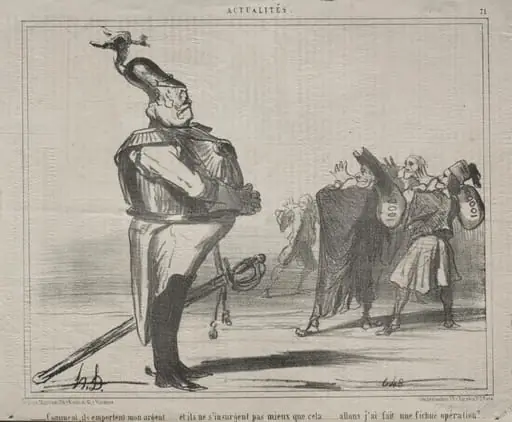 Why are they taking away my money...
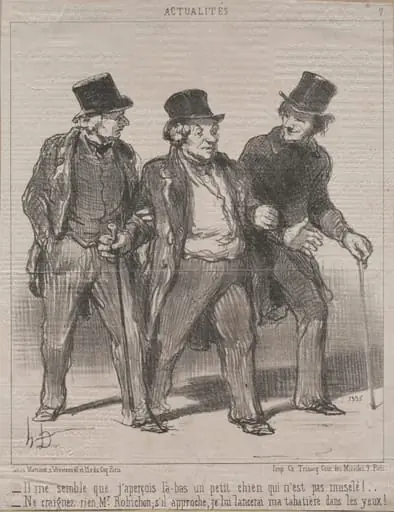 It seems to me that I notice a little dog there that is not muzzled!...
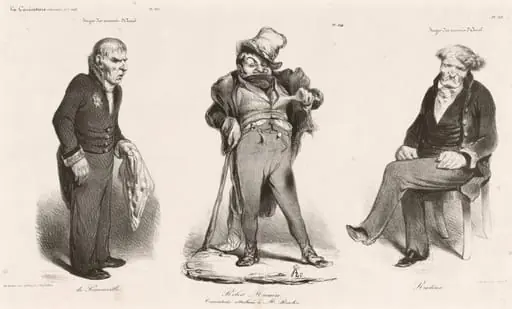 Huguet de Sémonville - Robert Macaire (Thiers) - Comte Roederer
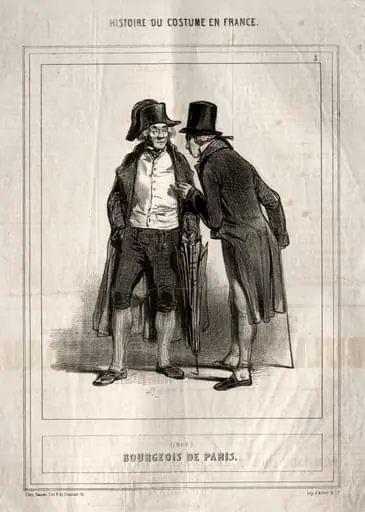 Histoire du Costume en France: Bourgeois de Paris
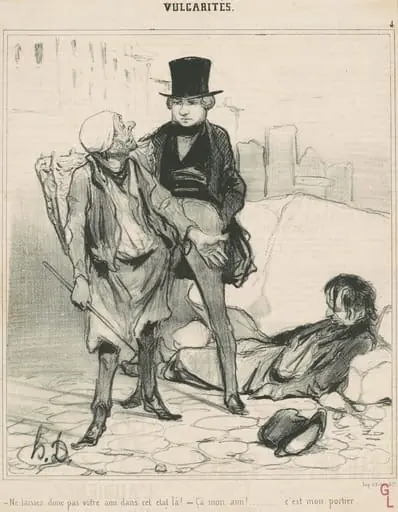 Ne laissez donc pas votre ami dans cet état la!