Artwork
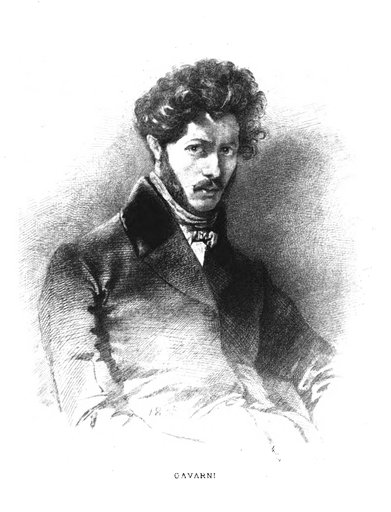
Self-Portrait with a Cigarette
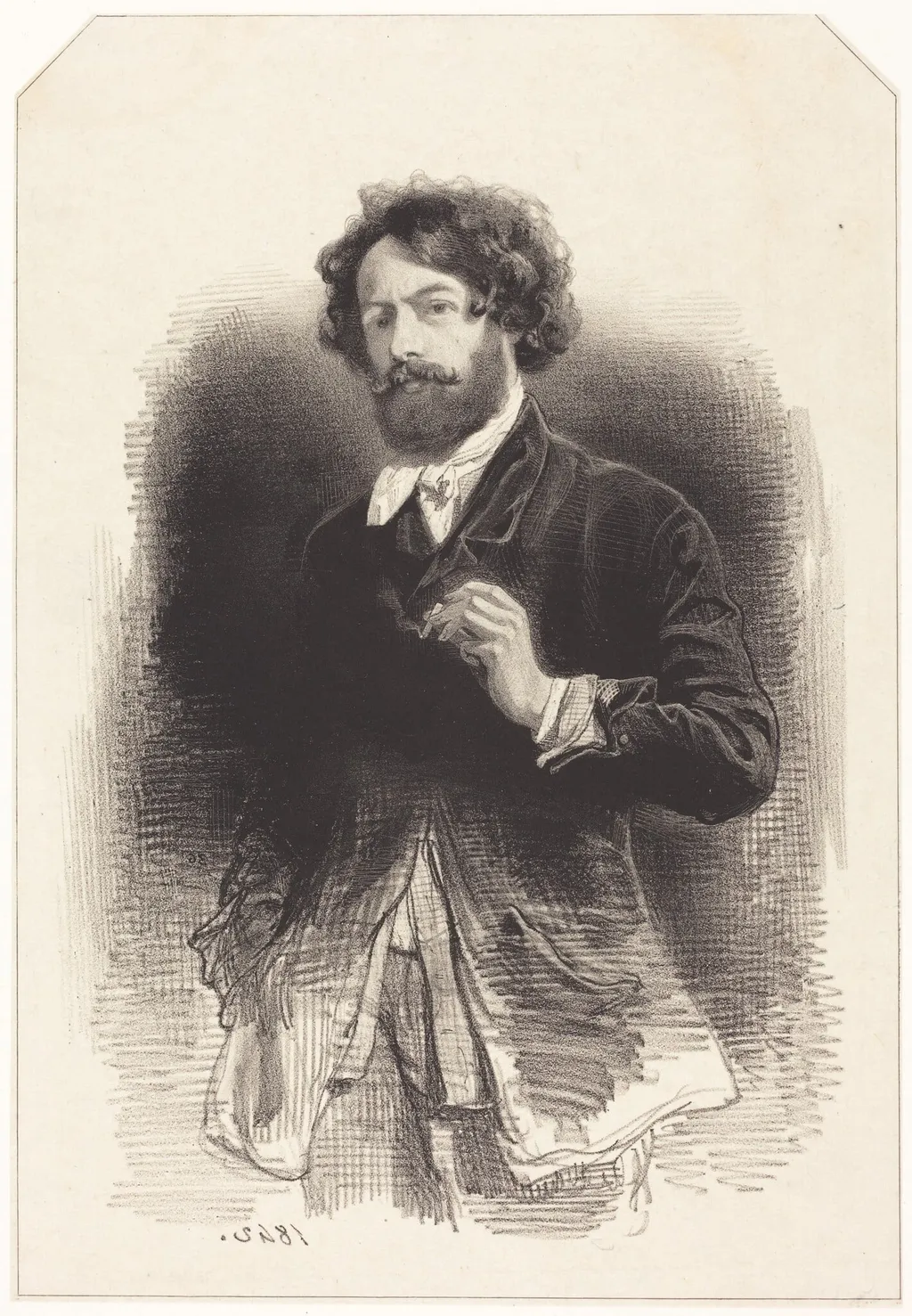
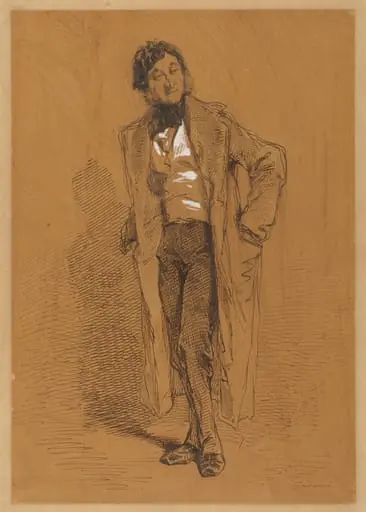
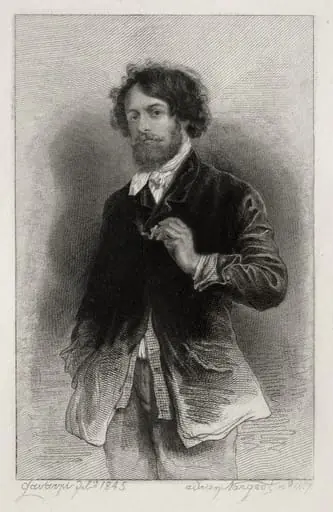
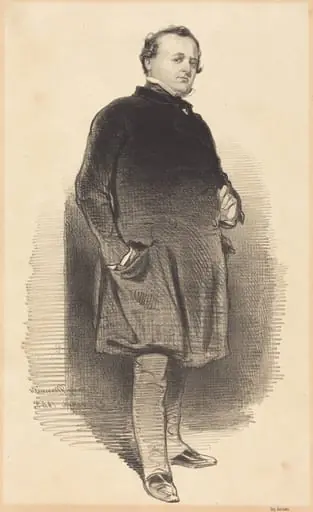
Self-Portrait with a Cigarette is an ink print by the Romanticist artist Paul Gavarni. It dates from 1842 and is held in the collection of the National Gallery of Art.
- Inscription
- Inscribed:lower left backwards in stone: 1842
About this work
Overview
Self-Portrait with a Cigarette is a lithograph created by French illustrator Paul Gavarni (pseudonym of Sulpice Guillaume Chevalier) in 1842. Executed in black ink on chine collé, the print is a self-representation of the artist.
Subject & Meaning
The subject is Gavarni himself, portrayed in a relaxed, everyday moment, characterized by the casual act of holding a cigarette. His attire includes a dark coat and white collar, with curly, disheveled hair and a slightly forward-leaning posture.
Technique & Style
The lithograph features a quick, sketchy style marked by loose lines and expressive shading, prioritizing immediacy over sharp details. This approach was typical of 19th-century lithographic practices, emphasizing spontaneity and creative freedom.
History & Provenance
Created in 1842, the work reflects Gavarni's activity as a prominent illustrator in 19th-century Paris. Specific provenance details are not provided.
Context
Produced during a period when lithography was a popular medium for artistic expression and reproduction, the self-portrait showcases Gavarni's adaptability to this technique, commonly used for both artistic and illustrative works during the 1800s.
Own this work as a print
Artist & collection
Artist
Paul Gavarni was the pen name of Sulpice Guillaume Chevalier, a French illustrator, born in Paris.