Artwork
Sept heures
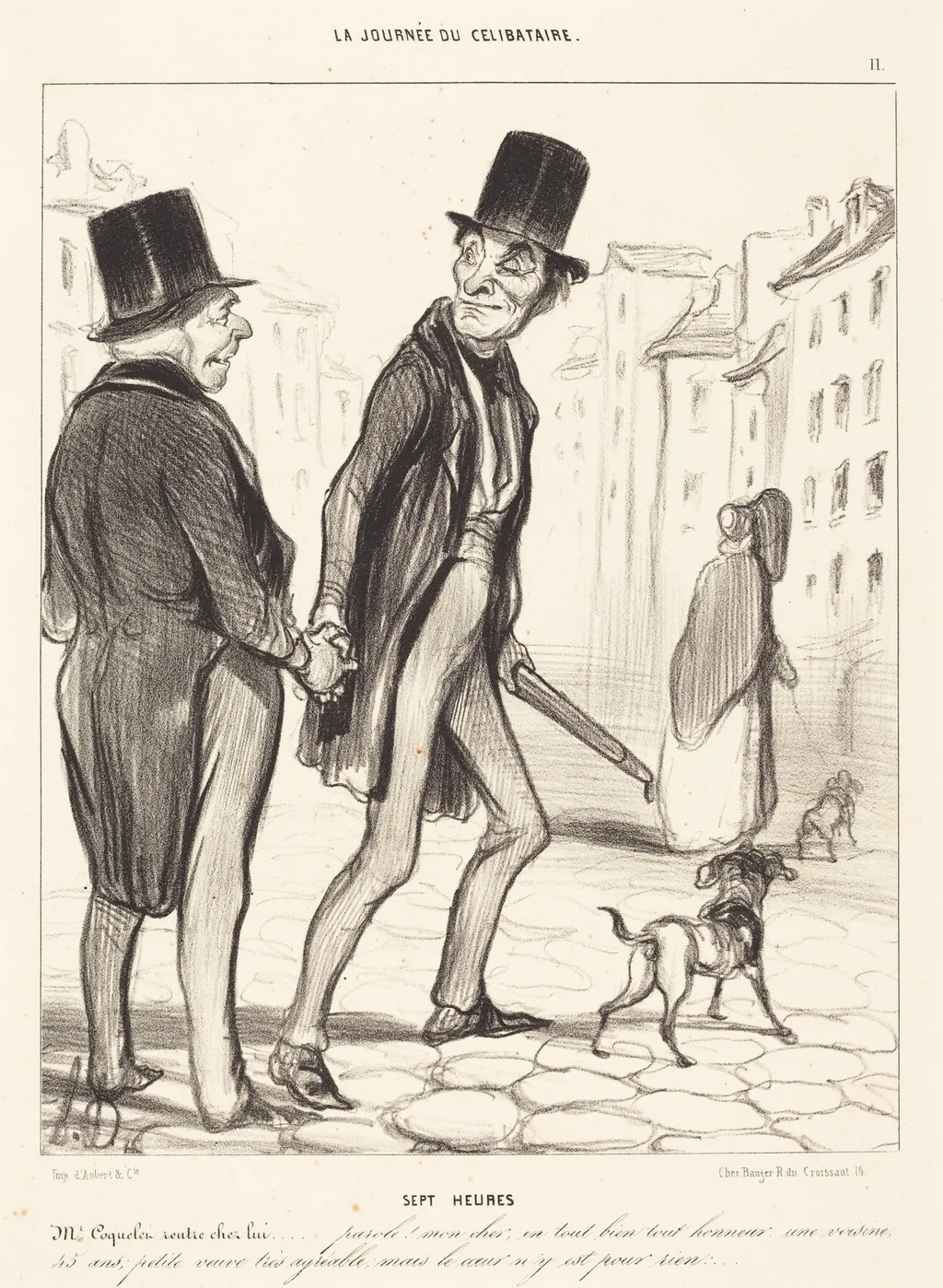
Sept heures is a crayon print by the Romanticist artist Honoré Daumier. It dates from 1839 and is held in the collection of the National Gallery of Art.
- Inscription
- Inscribed:upper center in plate: LA JOURNEE DU CELIBATAIRE.; upper right in plate: 11.; lower left in image in plate: h.D.; lower left below image in plate: Imp. d'Aubert & Cie.; lower right below image in plate: Chez Banger R. du Croissant 16.; across bottom in plate: SEPT HEURES / Mr Coquelet rentre chez lui.... parole! mon cher, en tout bien honneur une voisine, / 45 ans; petite veuve tiès agréable; mais le coeur n'y est pour rien....; by later hand, lower left in graphite: H.D. 2008; by later hand, lower right in graphite: LD. 617
About this work
Overview
Created in 1839, Sept heures is a crayon lithograph by Honoré Daumier, produced during his years as a satirical illustrator for Parisian periodicals.
Created in 1839, Sept heures is a crayon lithograph by Honoré Daumier, produced during his years as a satirical illustrator for Parisian periodicals. The work captures a fleeting urban moment with minimal detail, reflecting Daumier’s commitment to documenting ordinary life through print. Its modest scale and spontaneous line work align with his broader practice of using accessible media to observe social behavior.
Subject & Meaning
The print depicts two men strolling at twilight, one in a top hat with a dog on a leash and a broad smile, the other more reserved, hands clasped. The title, referencing the hour of dusk, suggests the end of the workday and the transition into leisure. Daumier subtly contrasts the confident, perhaps self-satisfied figure with his quieter companion, hinting at class performance and the rituals of bourgeois evening life.
Technique & Style
Daumier employed crayon lithography to achieve a sketch-like immediacy, using fluid, gestural lines to suggest form without detail. The black ink on wove paper allows for tonal variation, with sparse background elements, a lamppost, a hanging coat, adding depth without clutter. The technique mirrors the speed of observation, prioritizing expression over finish, characteristic of his approach to social commentary through print.
History & Provenance
Made during Daumier’s most active period for satirical journals like La Caricature and Le Charivari, Sept heures was likely intended for publication or private circulation among intellectual circles. Though not one of his most widely reproduced images, it survives as part of a larger body of work documenting Parisian life under the July Monarchy, preserved in institutional collections since the late 19th century.
Context
In late 1830s France, political repression followed the July Revolution, yet print media remained a vital outlet for dissent. Daumier’s work navigated censorship by focusing on everyday scenes that implicitly critiqued social hierarchies. Sept heures fits within this strategy: its quiet humor and unassuming subject matter mask a sharp observation of class demeanor in public space.
Legacy
Daumier’s use of lithography to capture transient moments influenced later realist and modernist artists, particularly in their embrace of sketch-like immediacy. Sept heures exemplifies his ability to transform mundane urban encounters into subtle social documents. Though less overtly political than his other works, it endures as a quiet testament to his eye for the rhythms of ordinary life.
Own this work as a print
Artist & collection
Artist
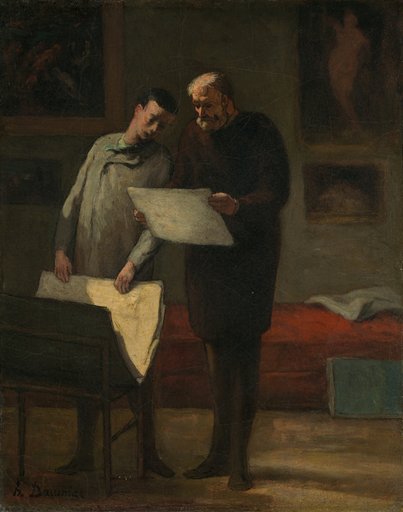
Honoré-Victorin Daumier (French: ; 26 February 1808 – 10 or 11 February 1879) was a French painter, sculptor, and printmaker, whose many works offer commentary on the social and political life in France, from the…









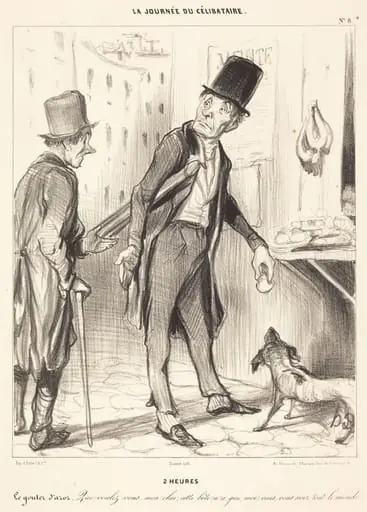
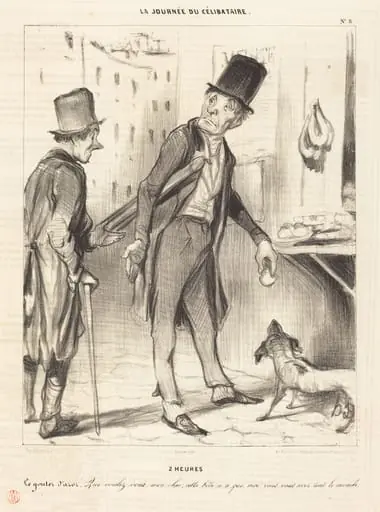 2 heures - Le gouter d'Azor
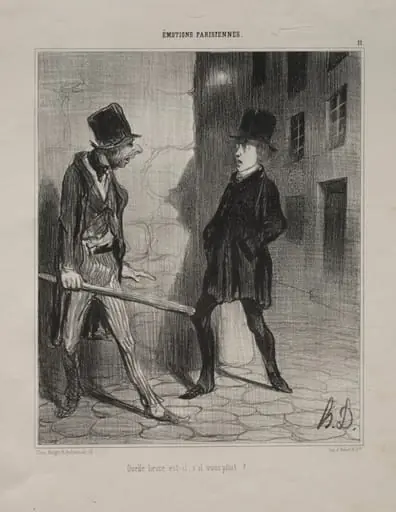 What Time is it, Please?
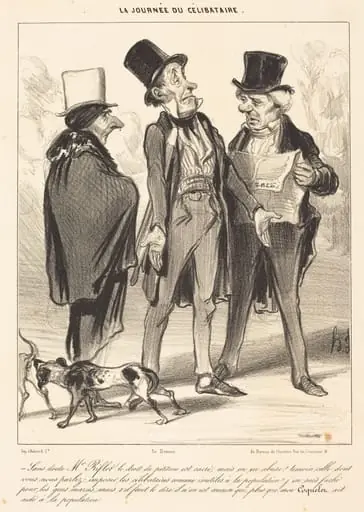 Sans doute M. Riflot le droit...
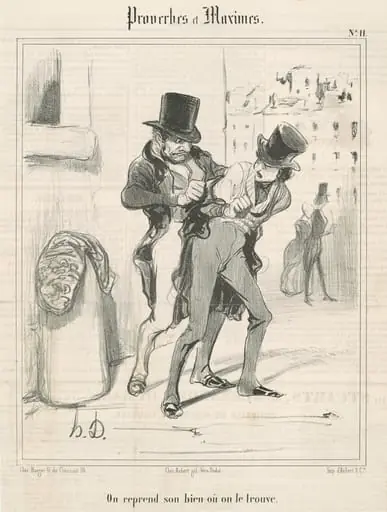 On reprend son bien ou on le trouve
 Quelle heure est'il, s'il vous plait?...
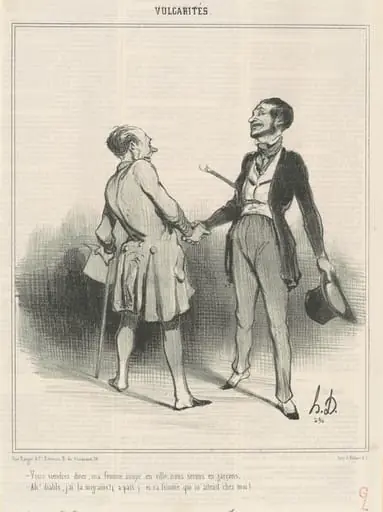 Vous viendrez diner, ma femme soupe en ville ...
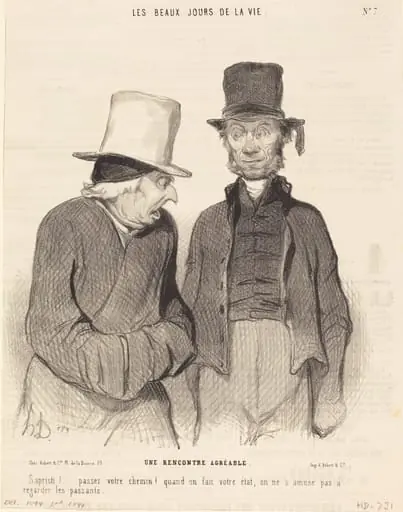 Une Rencontre agréable
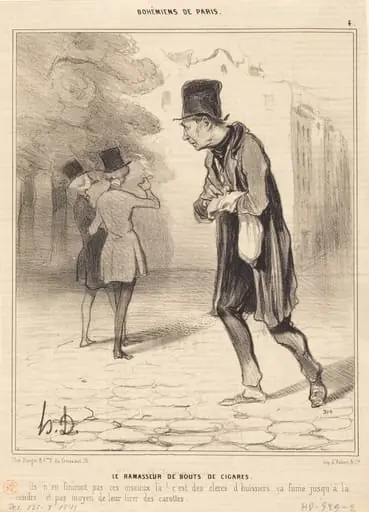 Le Ramasseur de bouts de cigares
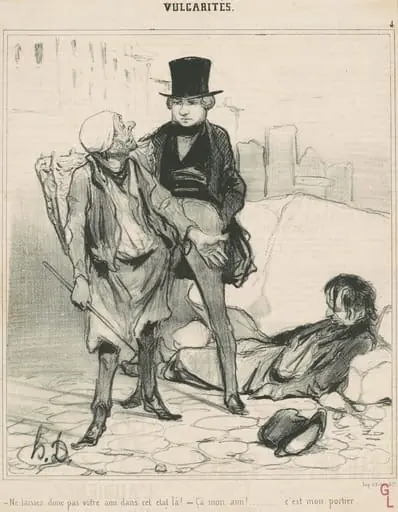 Ne laissez donc pas votre ami dans cet état la!
 Une heure - Promenade au Luxembourg