Artwork
Apple Tree with Red Fruit
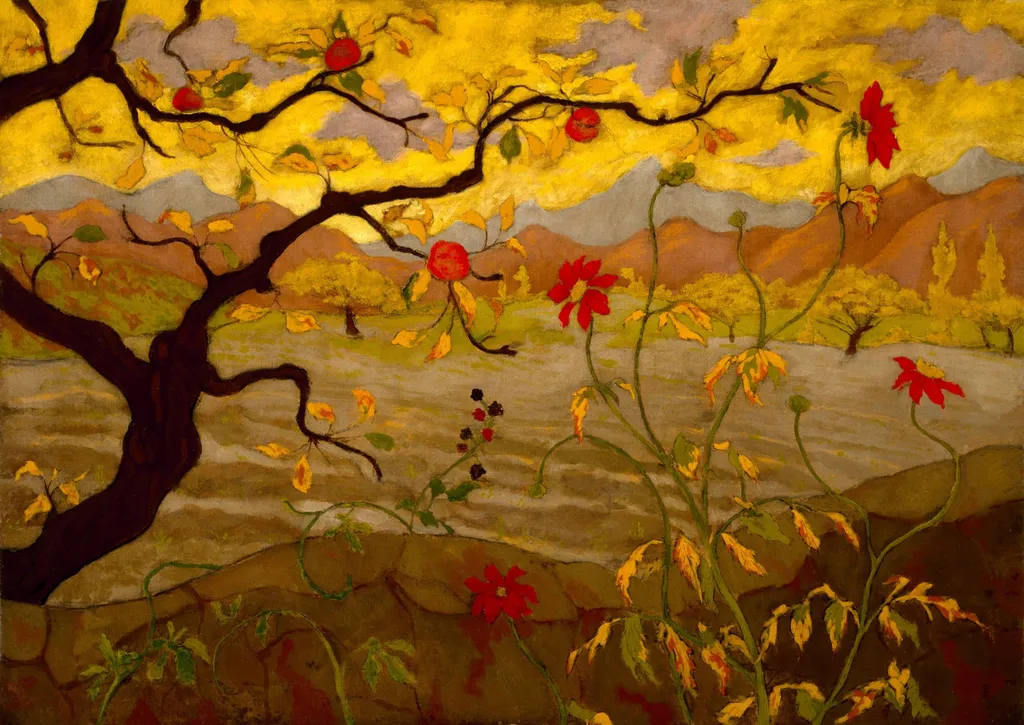
Apple Tree with Red Fruit is an oil painting by the Les Nabis artist Paul Ranson. It dates from 1902 and is held in the collection of the Museum of Fine Arts, Houston.
About this work
Overview
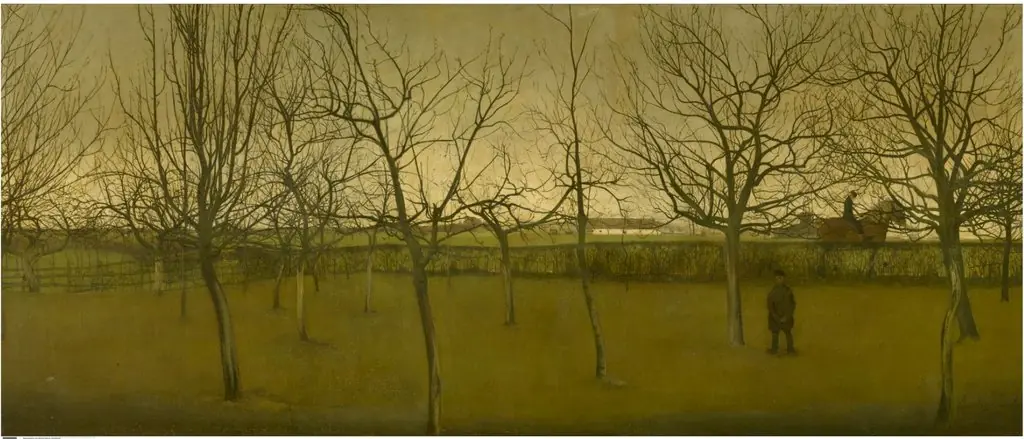
Painted in 1902 by Paul Ranson, Apple Tree with Red Fruit is an oil-on-canvas work that captures a solitary apple tree in full fruit.
Painted in 1902 by Paul Ranson, Apple Tree with Red Fruit is an oil-on-canvas work that captures a solitary apple tree in full fruit. The painting is part of the collection at the Museum of Fine Arts, Houston. Its composition centers on the tree’s sprawling branches, framed by distant mountains and a soft, overcast sky. The scene balances naturalism with stylized form, reflecting Ranson’s engagement with Symbolist and Nabi aesthetics.
Subject & Meaning
The apple tree, laden with red fruit, serves as a quiet emblem of nature’s cycles and abundance. Set against a muted landscape, the tree becomes a focal point of quiet vitality. Ranson avoids overt symbolism, instead inviting contemplation through the interplay of form and color.
The presence of foreground flora suggests an intimate, almost sacred engagement with the natural world, consistent with Symbolist interests in inner experience over literal representation.
Technique & Style
Ranson employs thick, deliberate brushwork to define the tree’s limbs and foliage, creating a tactile surface that emphasizes texture over realism. Colors are heightened but not arbitrary, deep reds, greens, and earth tones are applied with rhythmic intensity. The sky and mountains are rendered in softer washes, contrasting with the tree’s assertive silhouette.
This interplay of bold and subtle marks reflects the Nabi group’s interest in flattened space and expressive color.
History & Provenance
Created in 1902, the painting entered the Museum of Fine Arts, Houston’s collection through documented acquisition, though its earlier ownership history remains unrecorded in public sources. It was produced during Ranson’s mature period, following his association with the Nabis and his shift toward more personal, landscape-centered subjects. The work has been exhibited intermittently since its acquisition, primarily in American collections focused on Post-Impressionist and Symbolist art.
Context
Ranson was a member of the Nabi group, which sought to infuse painting with spiritual and decorative qualities beyond naturalism. While many Nabis focused on interiors or figures, Ranson increasingly turned to nature as a vehicle for emotional resonance. Apple Tree with Red Fruit aligns with his late 19th- and early 20th-century explorations of landscape as a meditative space, influenced by both Japanese prints and the Symbolist revival of poetic imagery in art.
Legacy
Though not widely known outside specialized circles, the painting exemplifies Ranson’s distinctive synthesis of Symbolist mood and Post-Impressionist technique. It contributes to the broader understanding of how French artists beyond the mainstream Impressionists engaged with nature as a site of personal and aesthetic reflection. The work remains a quiet testament to the Nabi legacy in landscape painting, appreciated for its restrained intensity and formal harmony.
Own this work as a print
Artist & collection