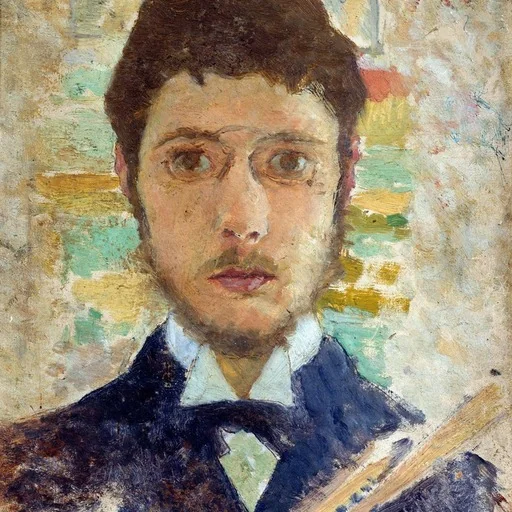
Movement
Les Nabis
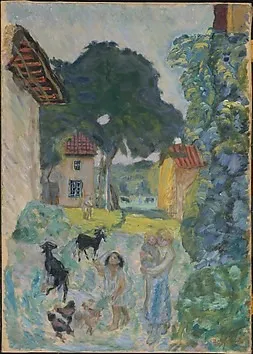
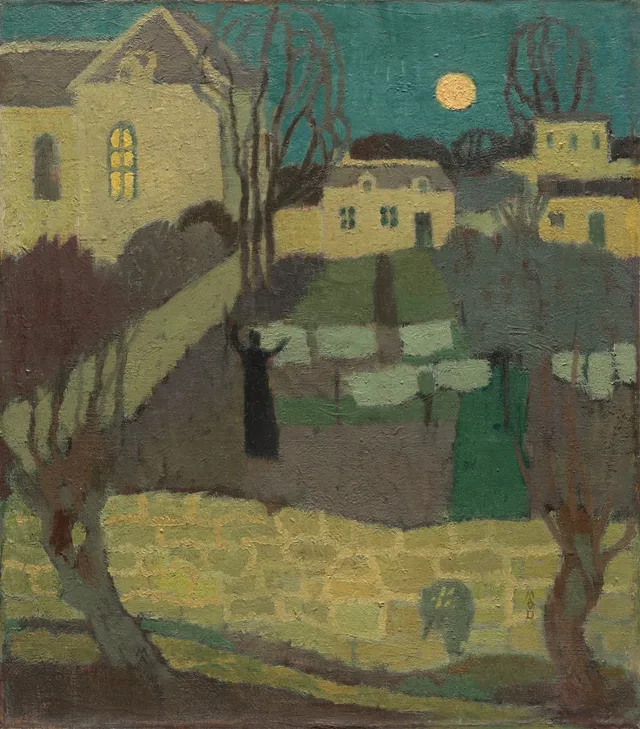
Les Nabis is an art movement dating from 1888. The gallery holds 80 works in this movement, including works by Pierre Bonnard, Maurice Denis and Édouard Vuillard. Browse Les Nabis paintings, portraits, pictures and artworks from the world's public-domain museum collections.
Les Nabis—from the Hebrew word for "prophets"—were a brotherhood of young French painters who coalesced in Paris around 1889 and remained active until roughly 1900. Most met as students at the Académie Julian, but the group's true point of origin lay in Brittany. In the summer of 1888, Paul Sérusier painted a small, near-abstract landscape of the Bois d'Amour at Pont-Aven under the direct guidance of Paul Gauguin, who urged him to render trees not as he saw them but as patches of pure, intensified colour. Brought back to Paris, the panel was revered by his friends as "The Talisman," the magical charm and founding icon of the movement. Through it the Nabis absorbed the lessons of Gauguin's Pont-Aven circle and its Synthetism, alongside Japanese woodcuts, Symbolist literature, and decorative tradition.
The group's guiding theory was supplied by the precocious Maurice Denis, who in August 1890, aged nineteen, published "Définition du néo-traditionnisme" in Art et Critique. Its opening sentence became a watchword of modern art: a picture, "before being a warhorse, a nude, or an anecdote of some sort, is essentially a flat surface covered with colours assembled in a certain order." In practice this meant flattened space, bold and often arbitrary colour, sinuous contour, and an emphasis on the decorative surface over naturalistic illusion.
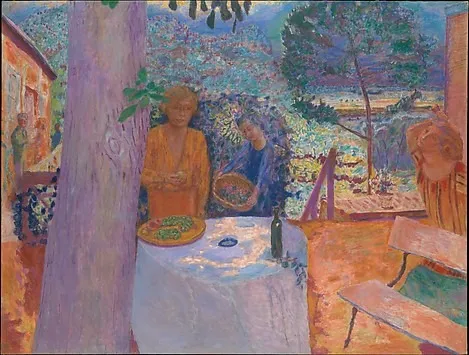
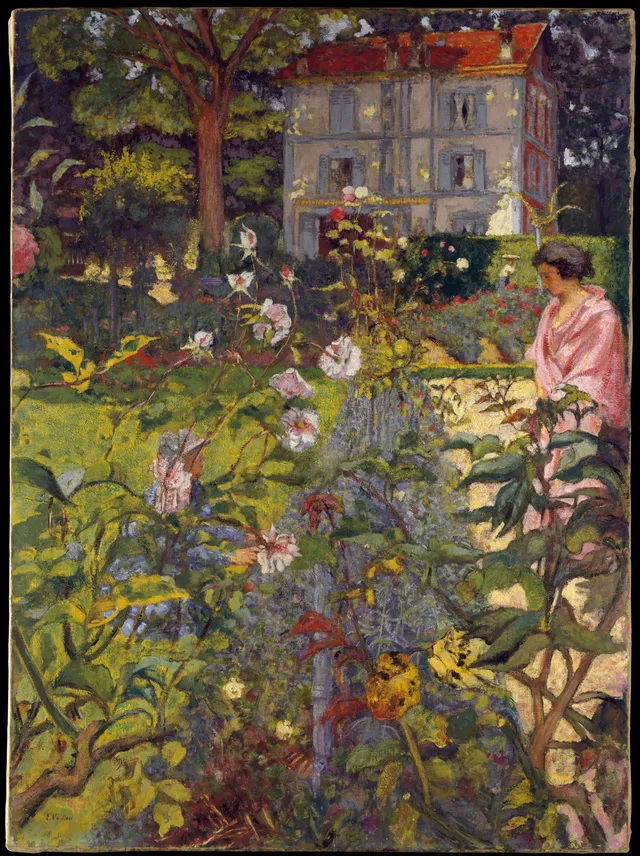
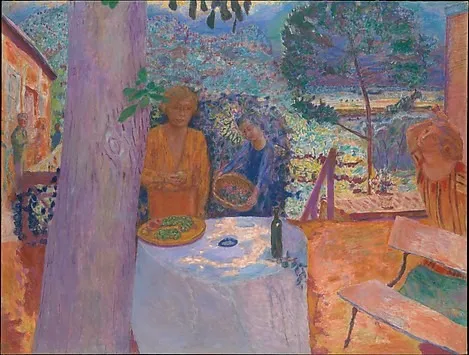
The Nabis pursued divergent paths. Pierre Bonnard and Édouard Vuillard became the great "intimists," painting the muffled poetry of bourgeois interiors and gardens—seen in our holdings in Bonnard's The Terrace at Vernonnet and Village Scene, Grasse, and Vuillard's Garden at Vaucresson. Denis, Sérusier, and Paul Ranson leaned toward the mystical, religious, and theosophical, as in Denis's Bacchus and Ariadne and his luminous Drying the Linen, or Moonrise at the Priory. The Swiss-born Félix Vallotton brought a sharp graphic edge, especially in his woodcuts.
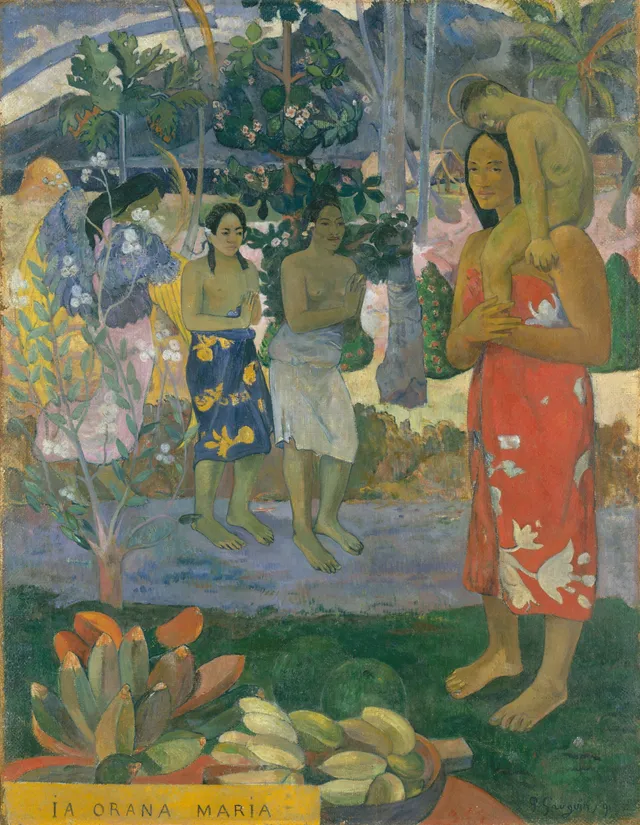
Deliberately erasing the hierarchy between fine and decorative art, the Nabis produced screens, posters, theatre designs, and prints as readily as easel paintings. Their flat, expressive colour fed directly into Fauvism and helped open the way to abstraction, while Gauguin's Ia Orana Maria, also in our collection, marks the Synthetist source from which their revolution sprang.
Key artists
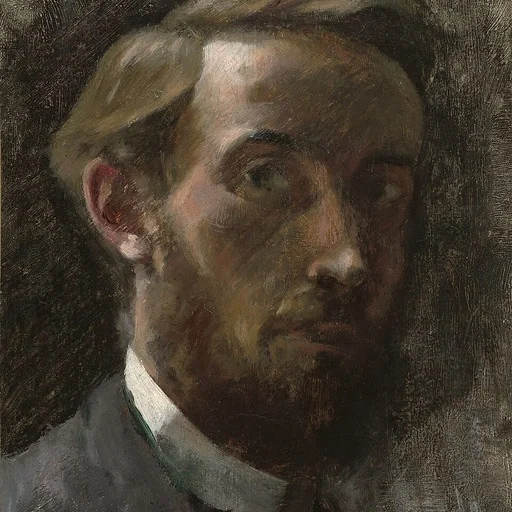

Works
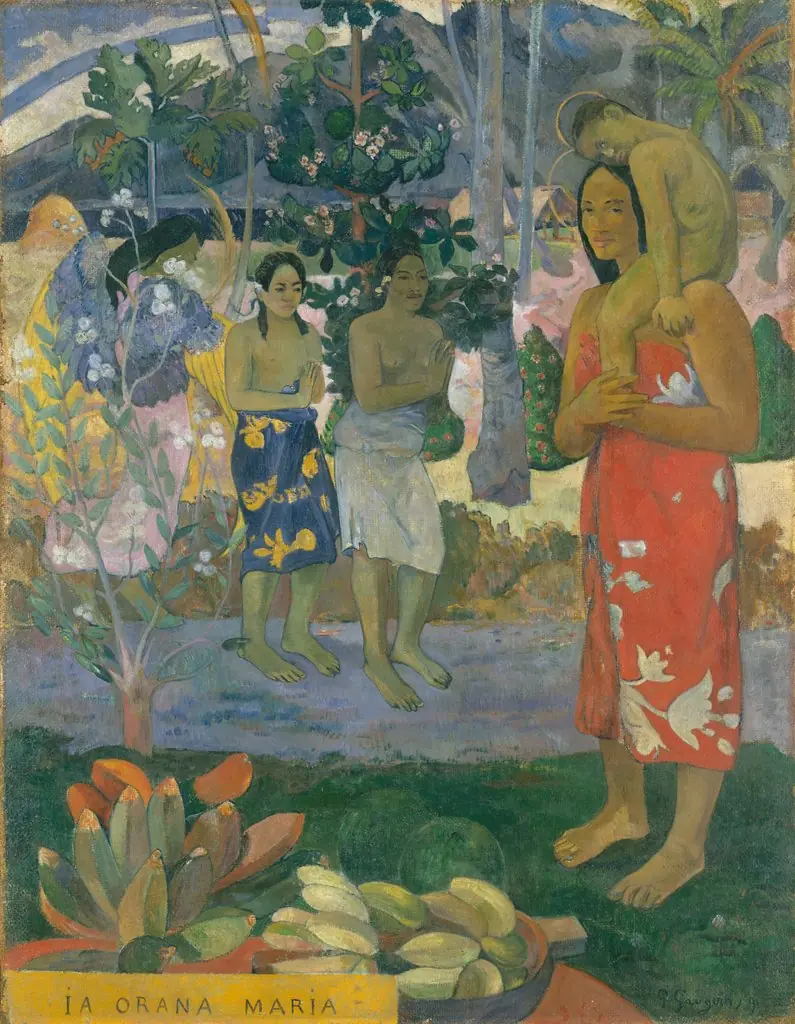 Ia Orana Maria
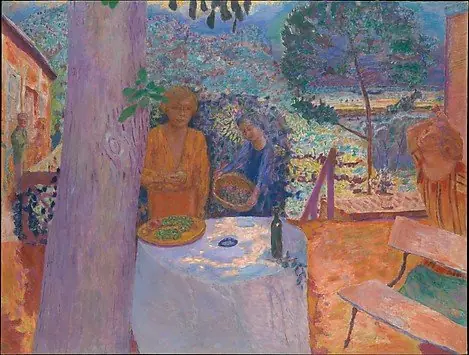 The Terrace at Vernonnet
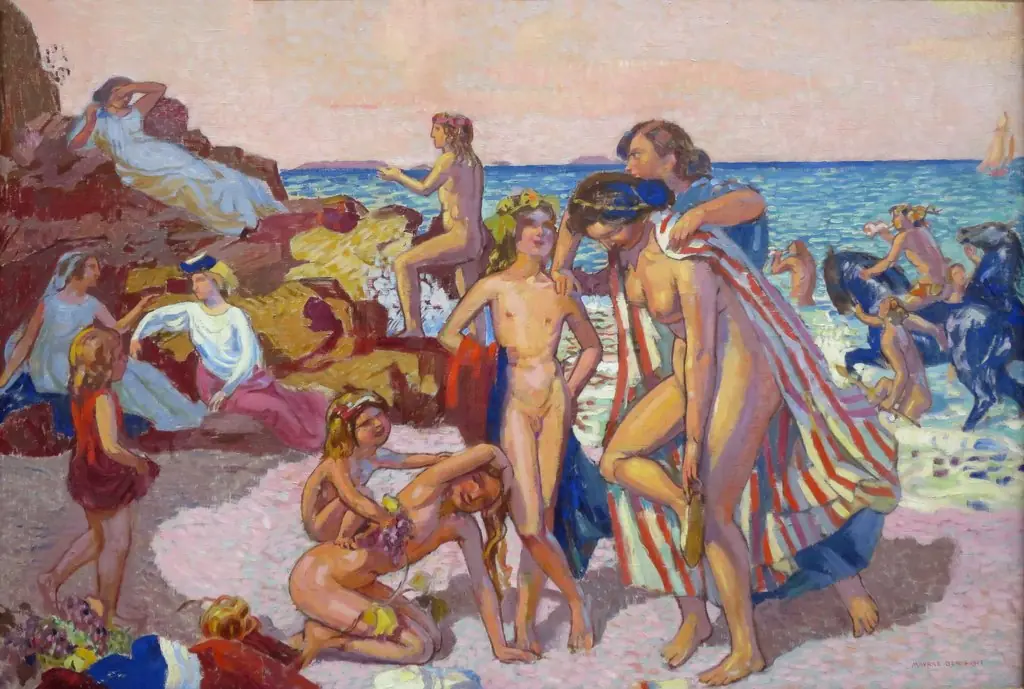 Bacchus and Ariadne
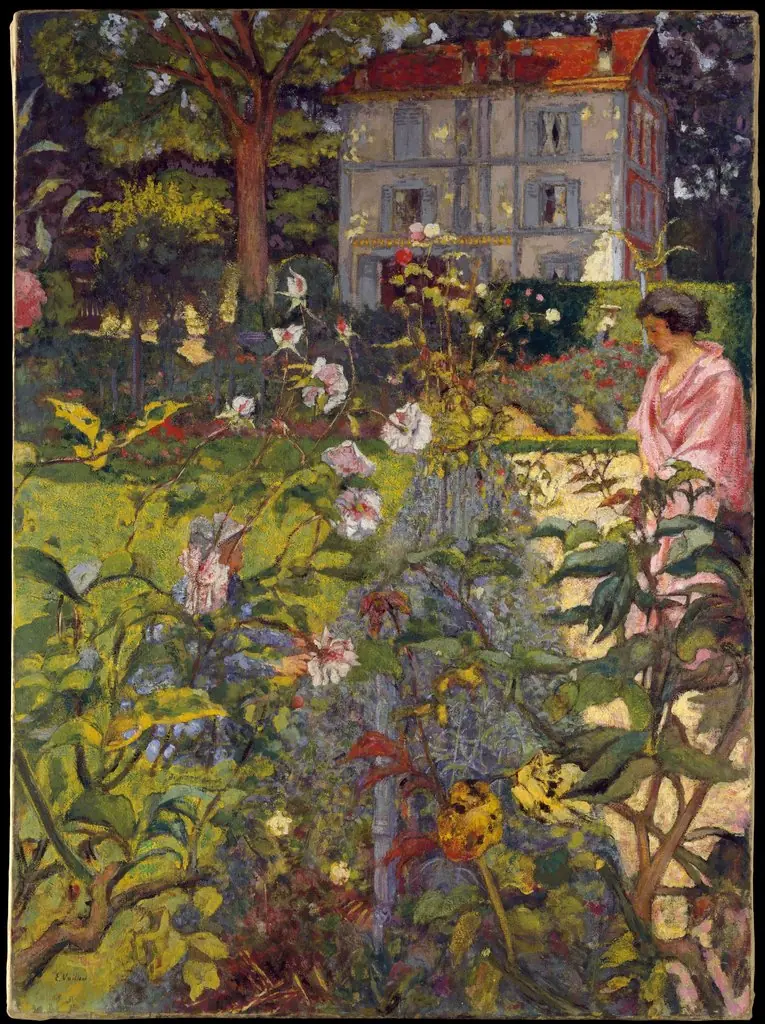 Garden at Vaucresson
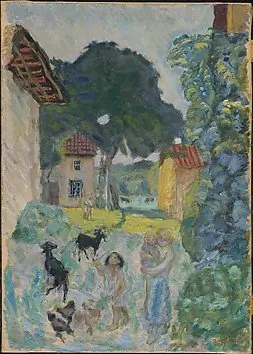 Village Scene, Grasse
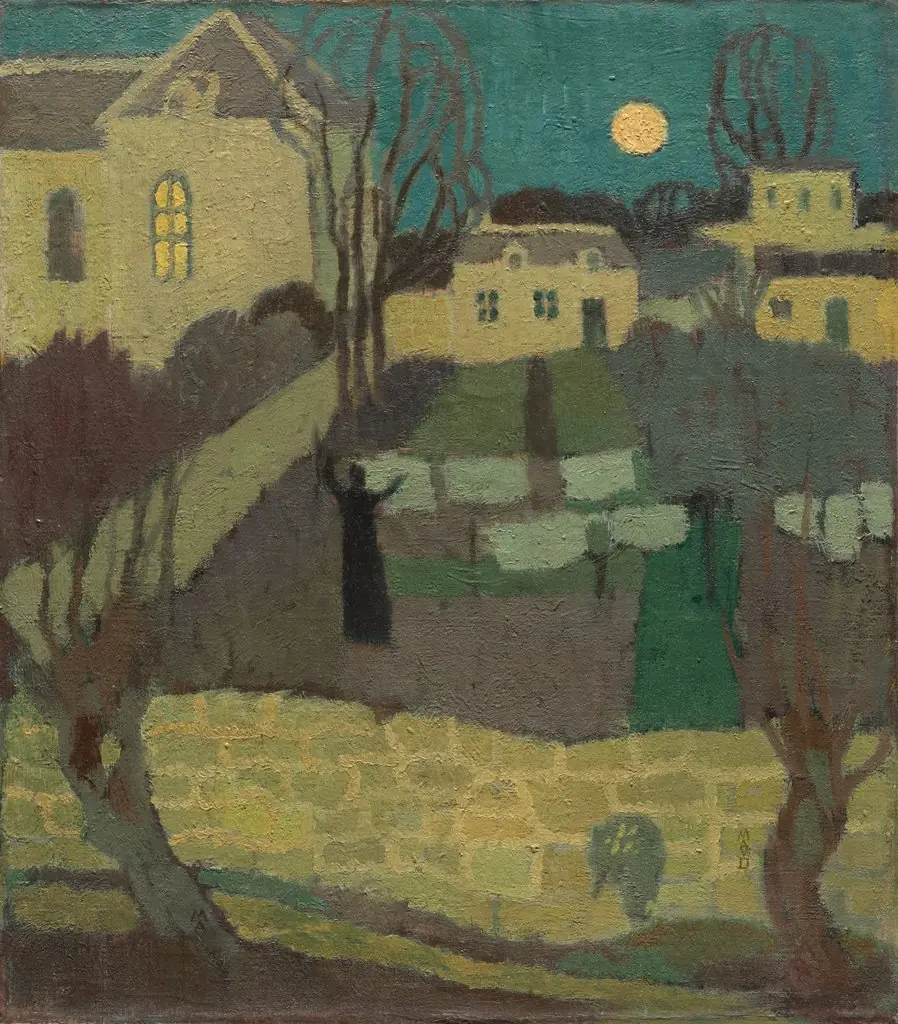 Drying the Linen, or Moonrise at the Priory
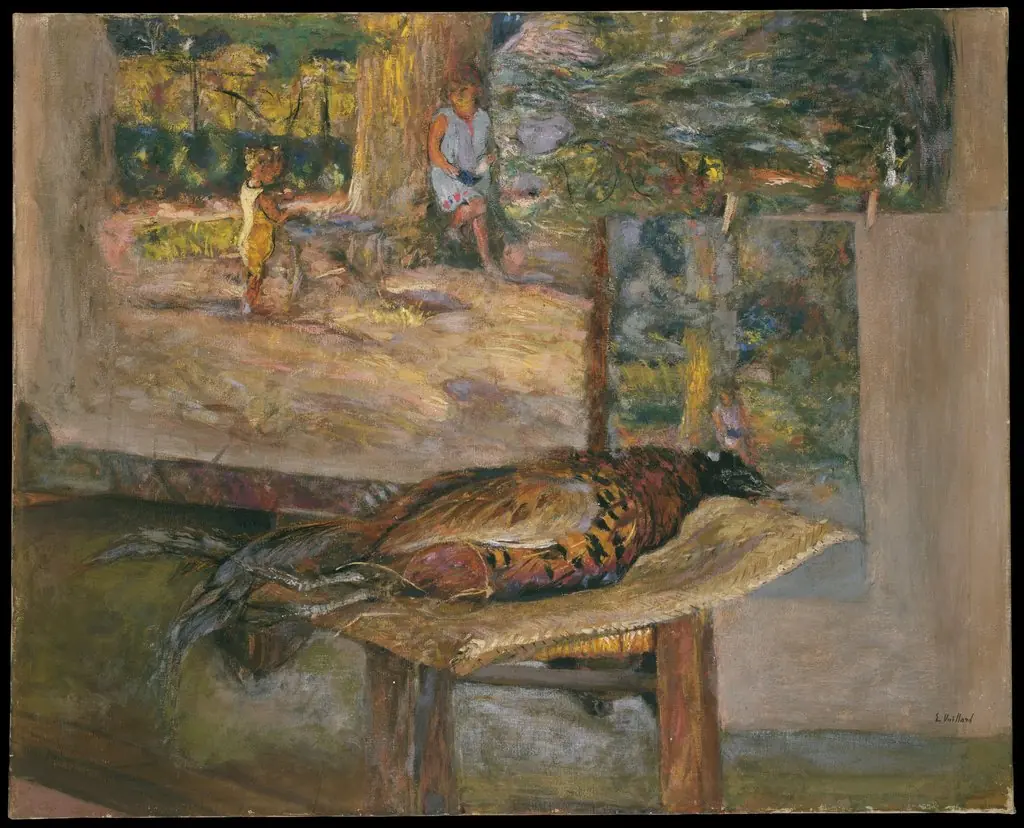 Interior with Paintings and a Pheasant
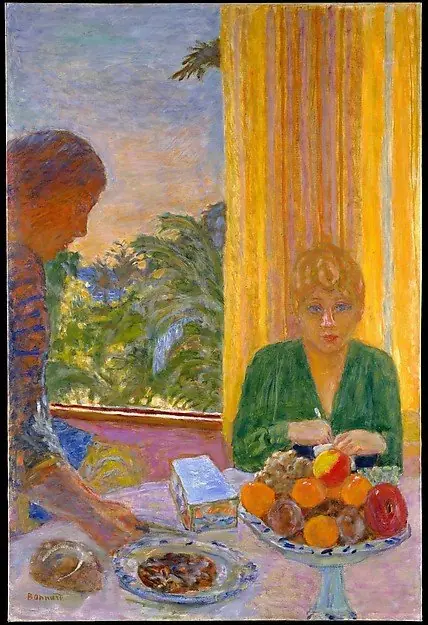 The Green Blouse
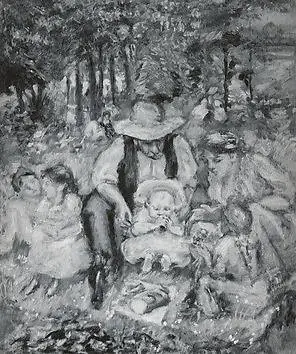 The Family of Claude Terrasse
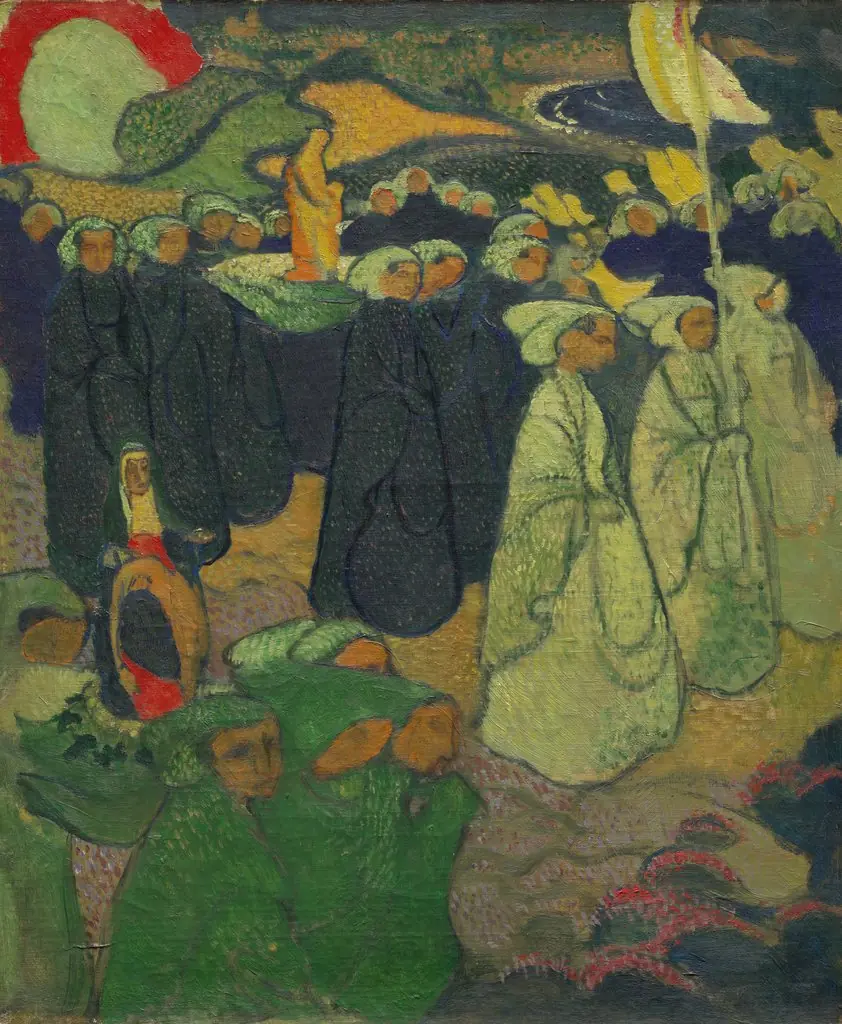 Procession or Pardon at Perros-Guirec
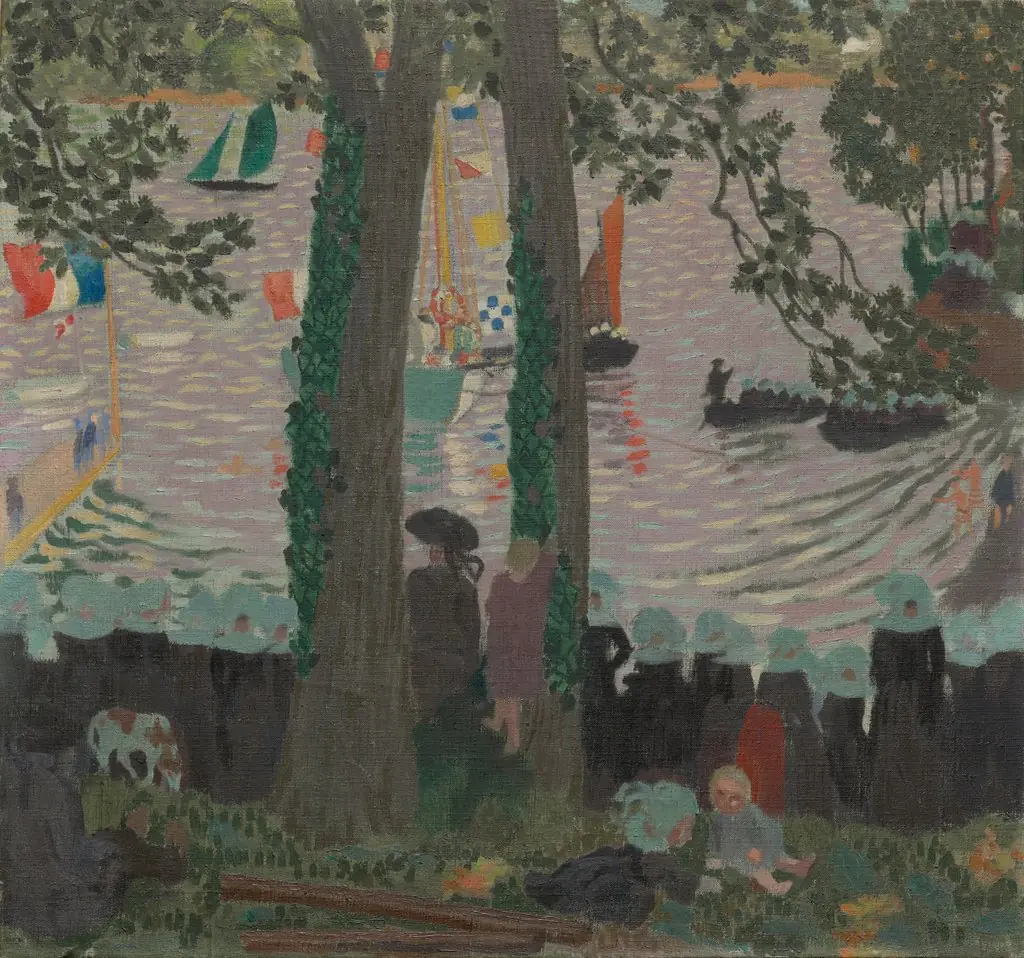 Blessing of a Yacht on the Belon River
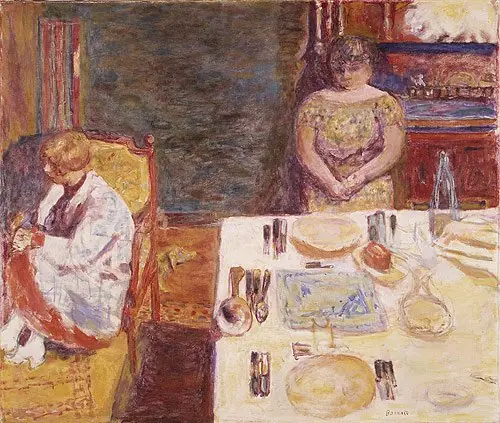 Before Dinner
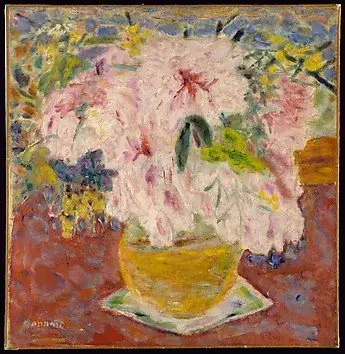 Pink Bouquet
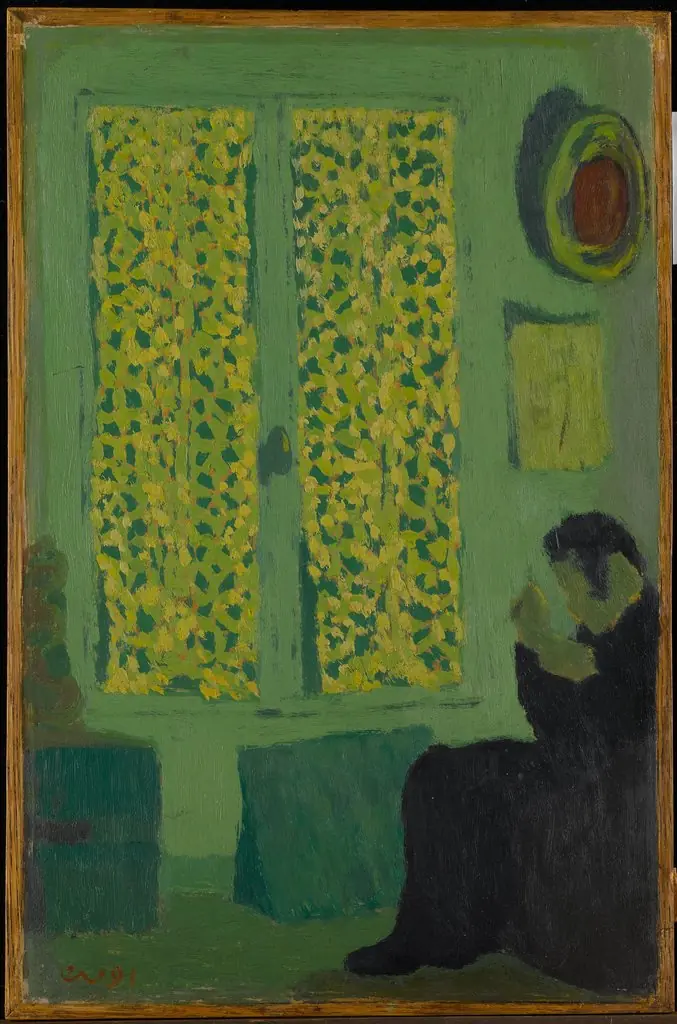 The Green Interior (Figure Seated by a Curtained Window)
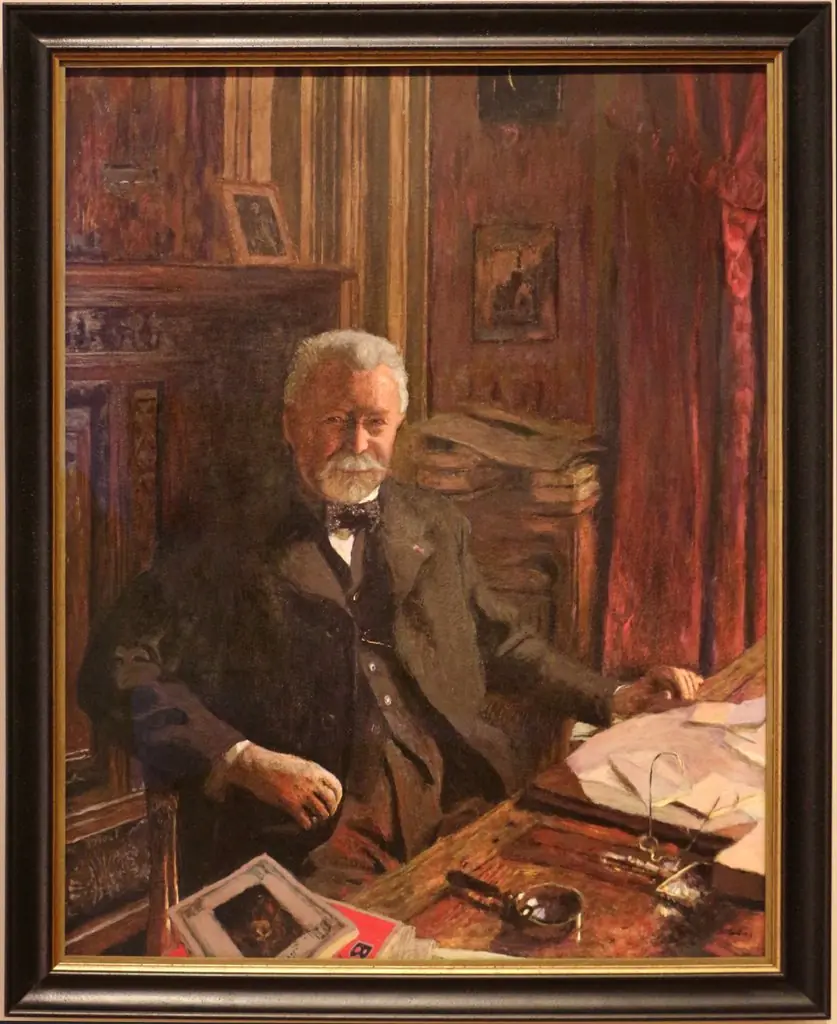 André Bénac
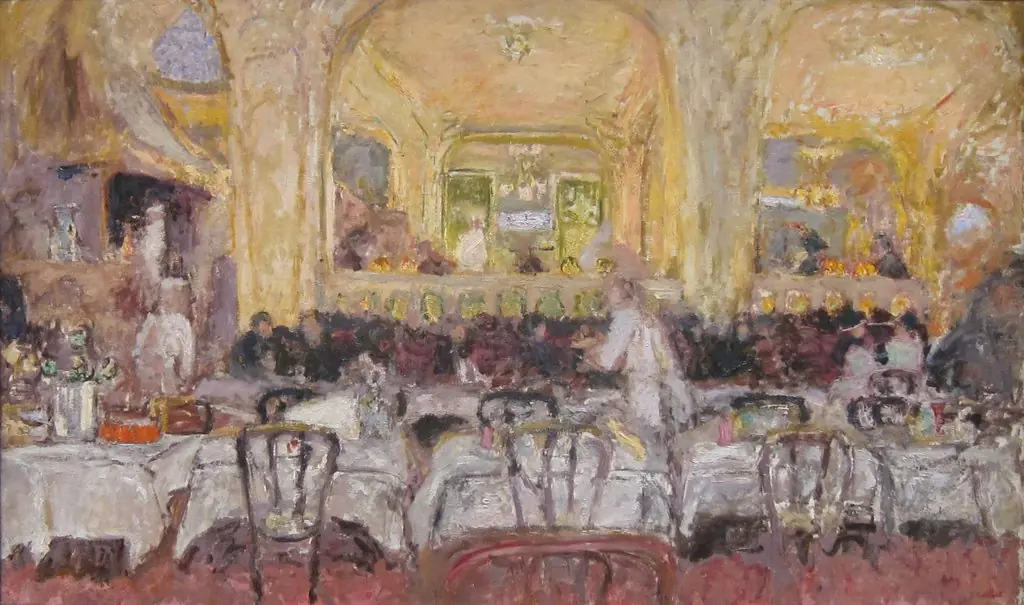 Café Wepler
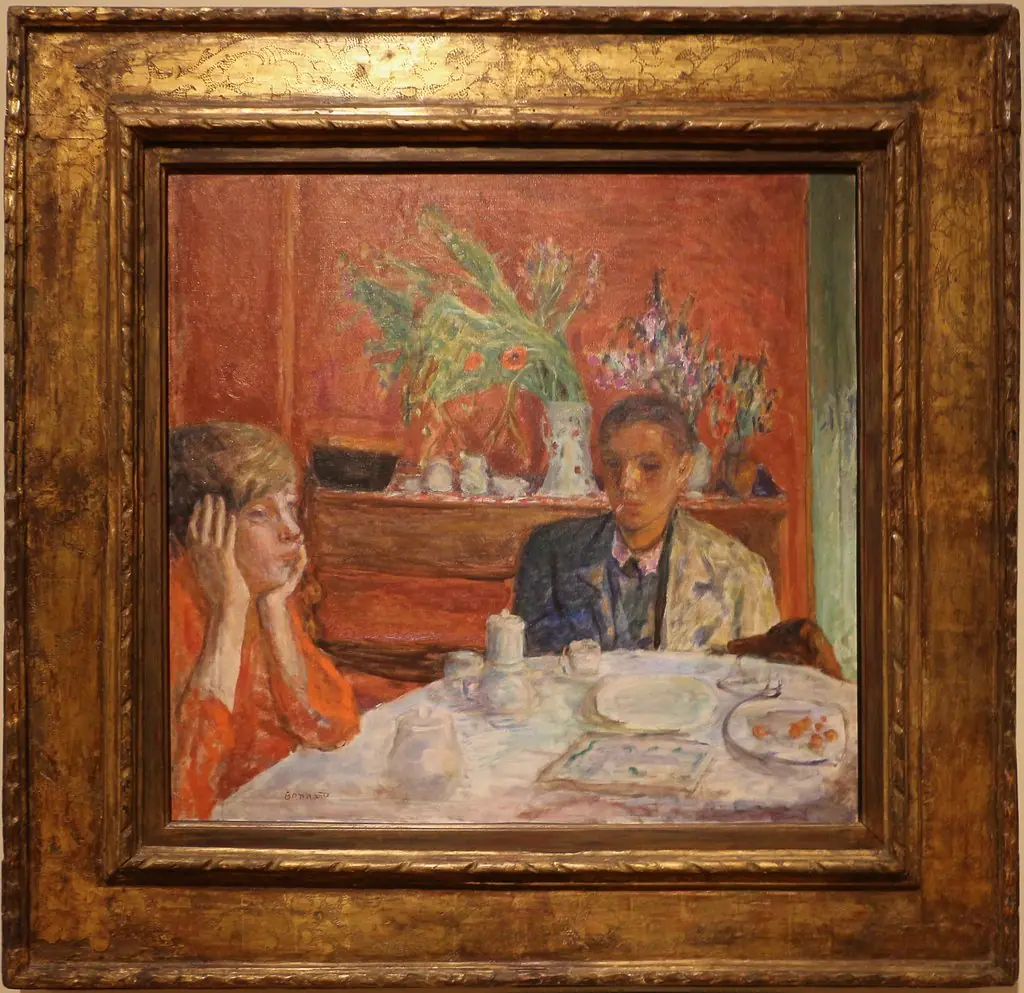 The Dessert
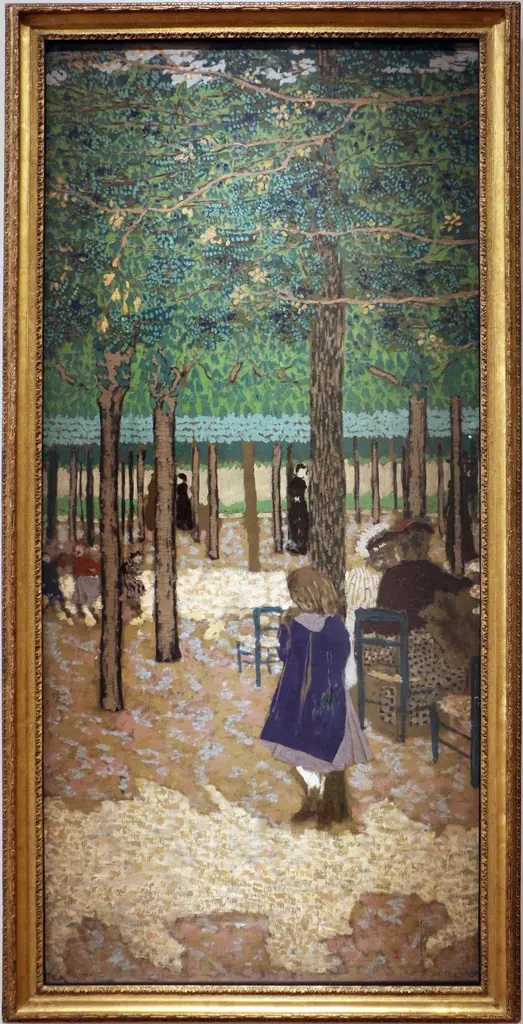 Under the Trees (from "The Public Gardens")
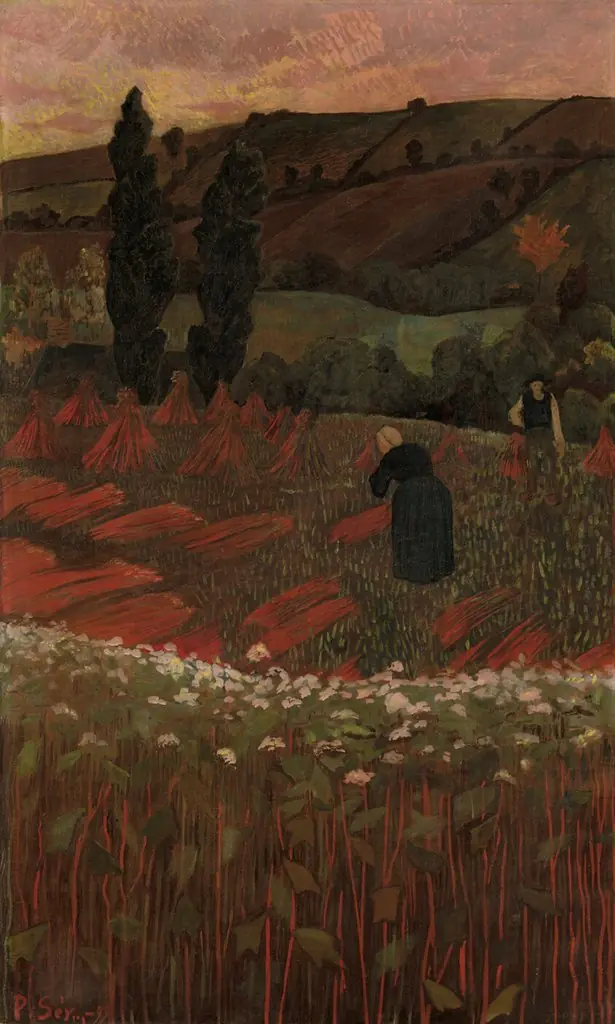 The Harvest of Buckwheat
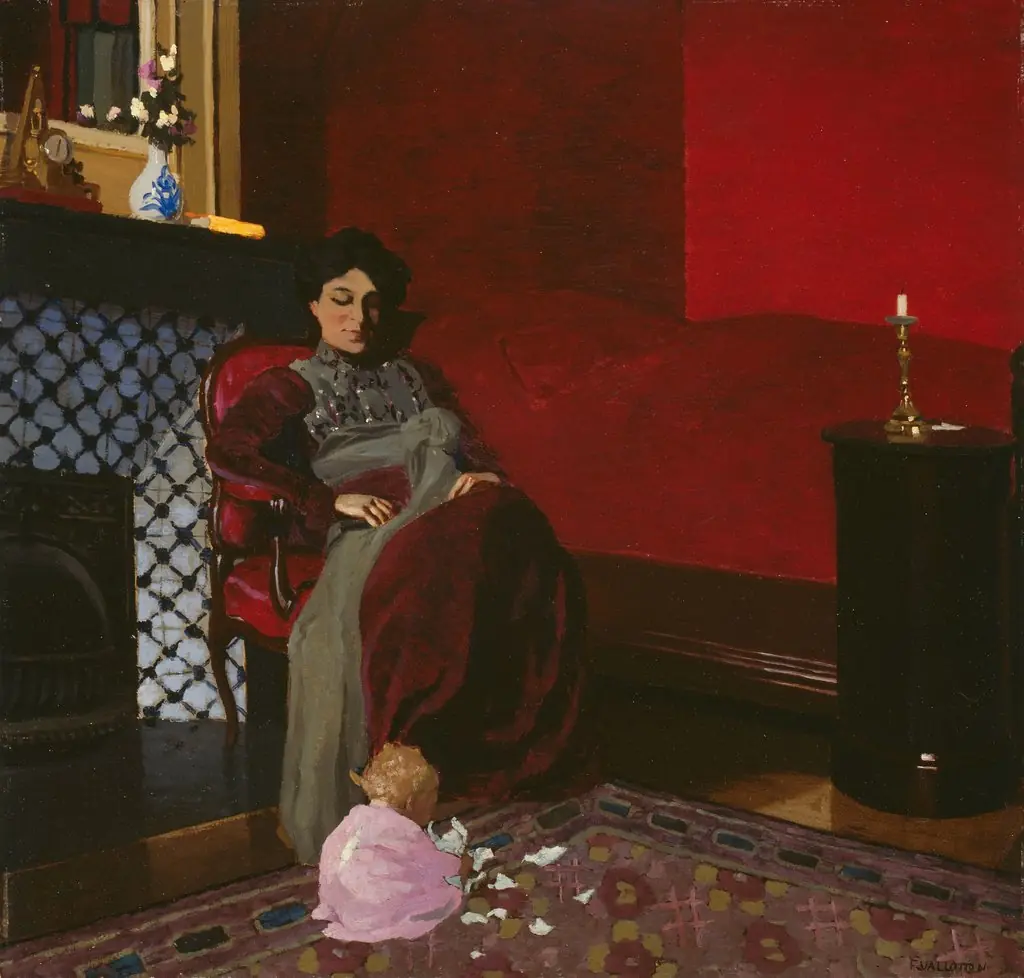 Madame Vallotton and her Niece, Germaine Aghion
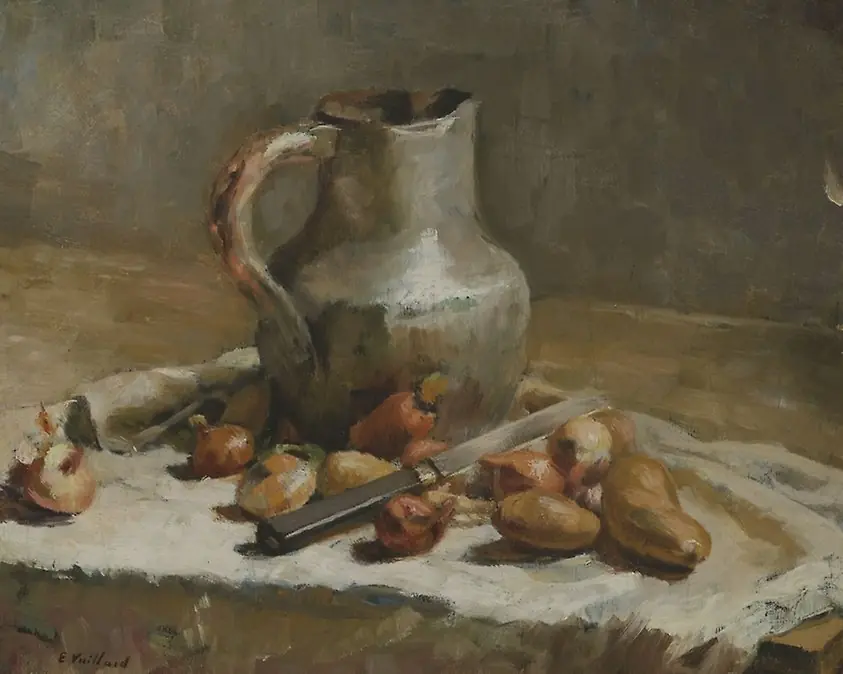 Still Life with Jug and Knife
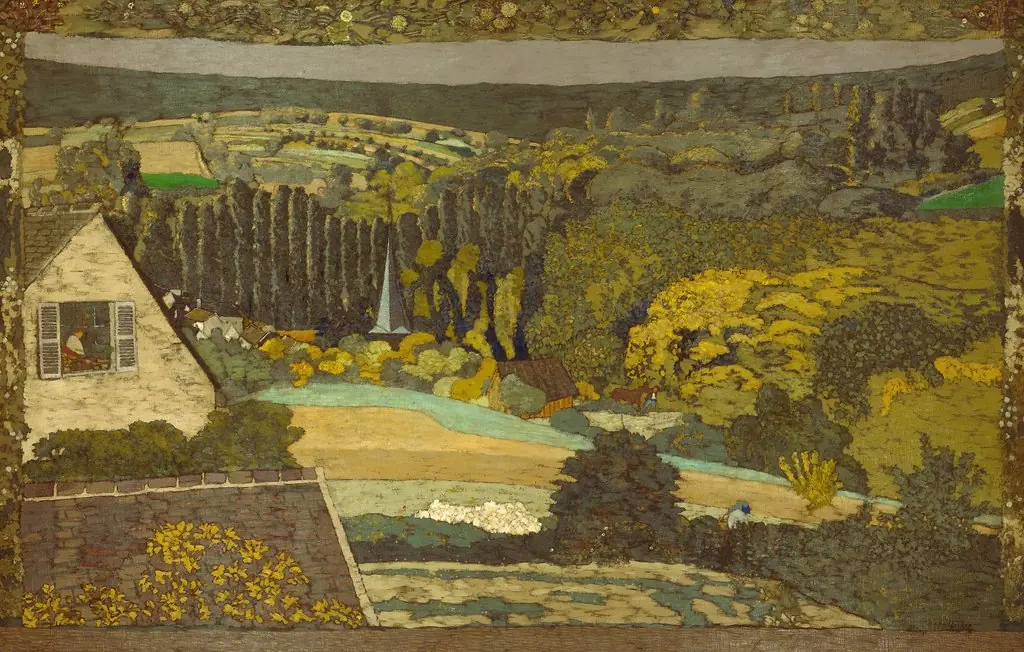 Landscape: Window Overlooking the Woods
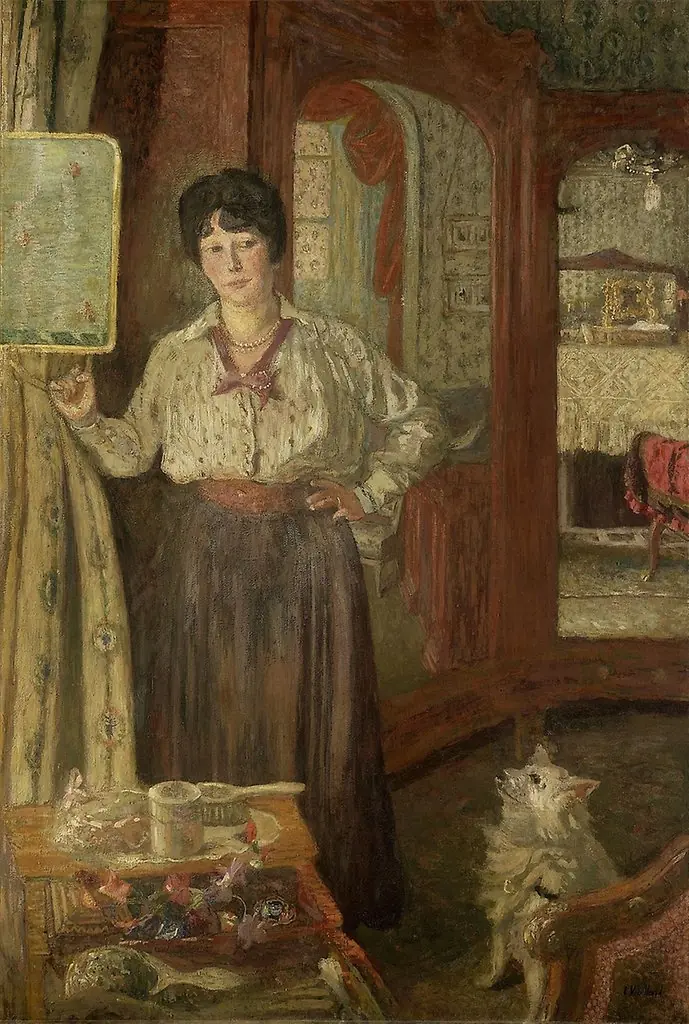 Portrait of Madame Guerin
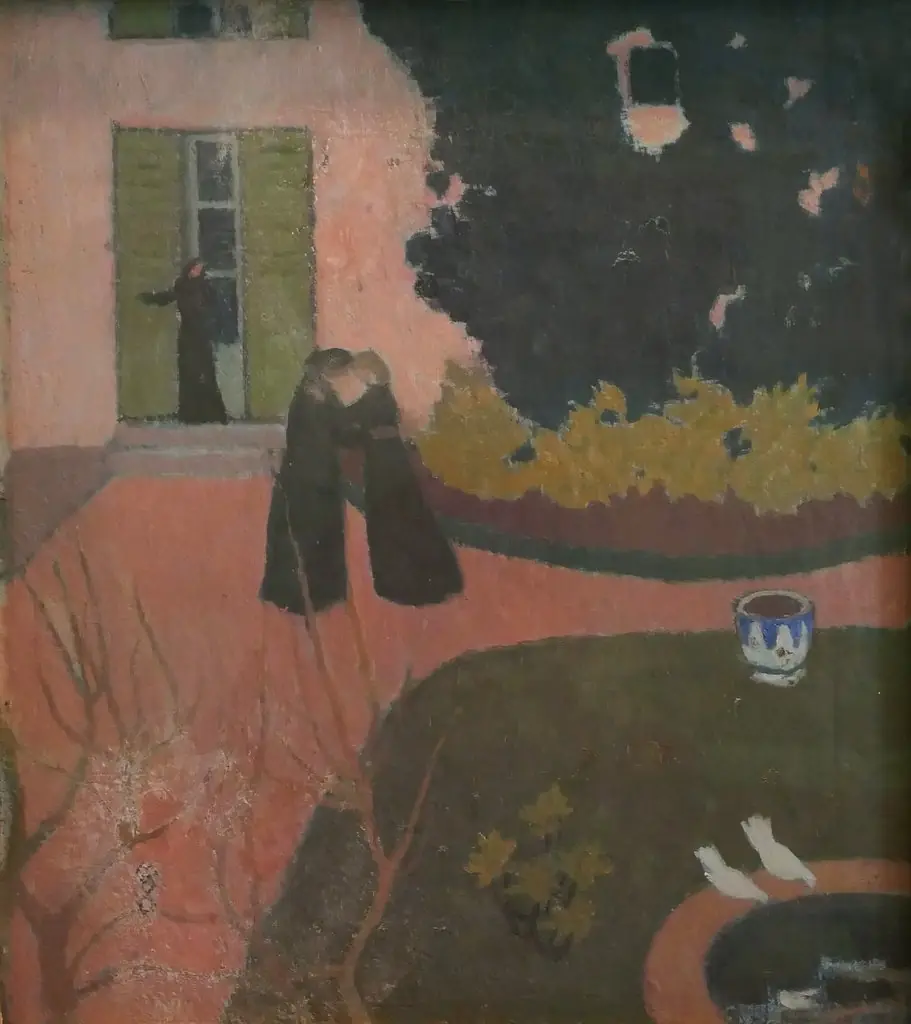 Encounter
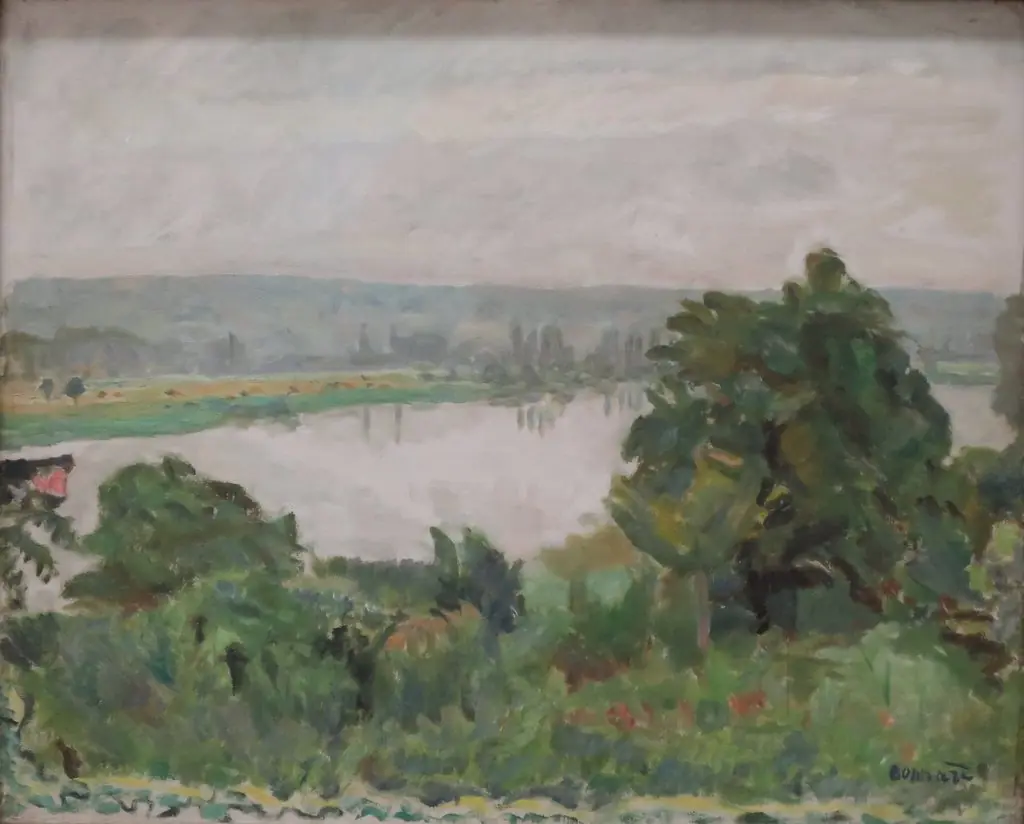 Seine near Vernon
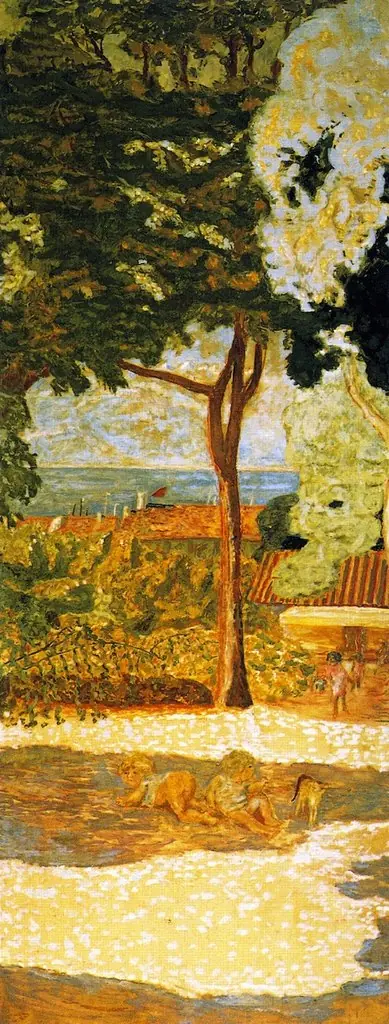 The Mediterranean. Triptych (central panel)
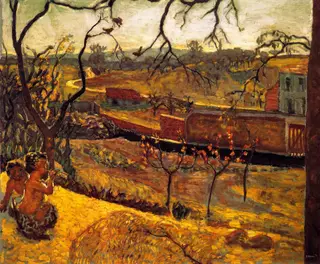 Early Spring. Little Fauns
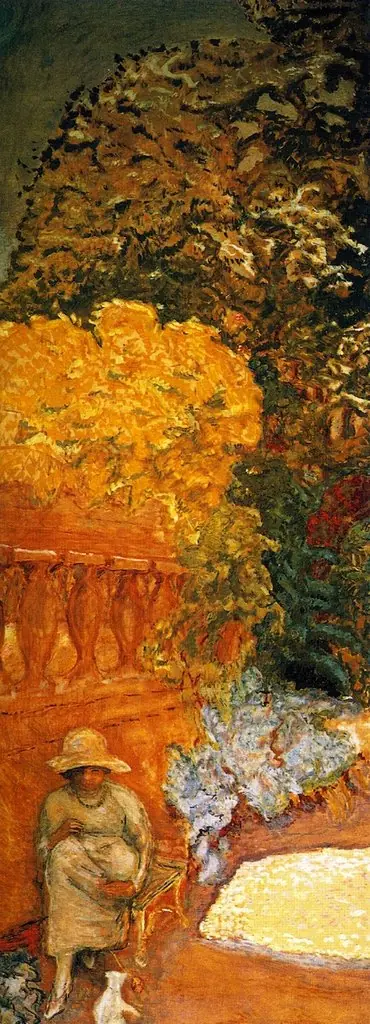 Mediterranean. Triptych (left panel)
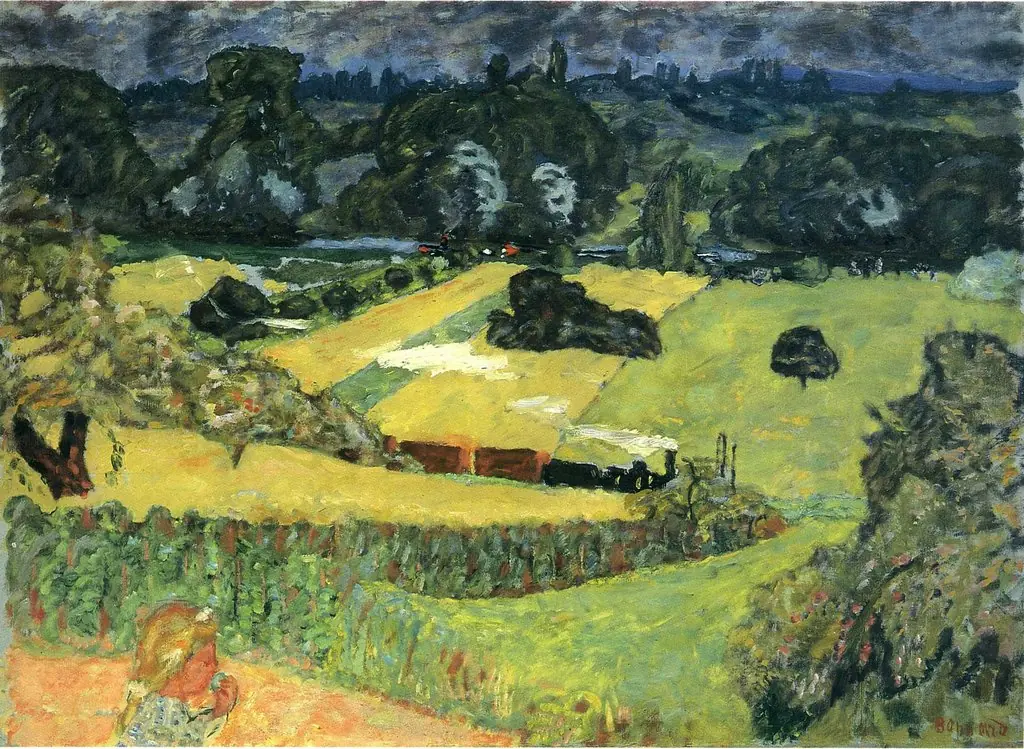 Train and Bardes
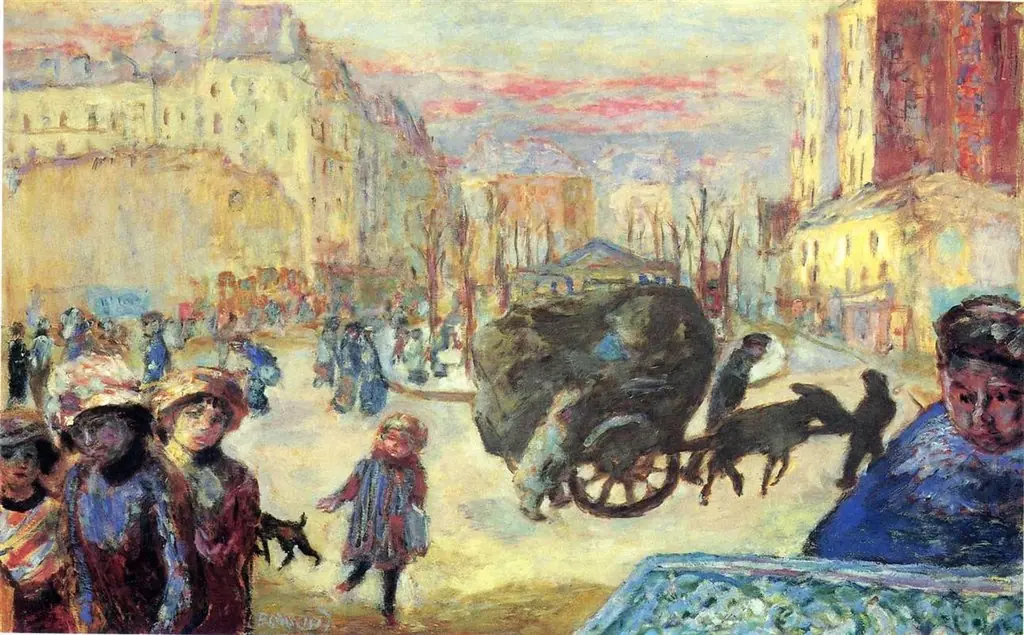 Morning in Paris
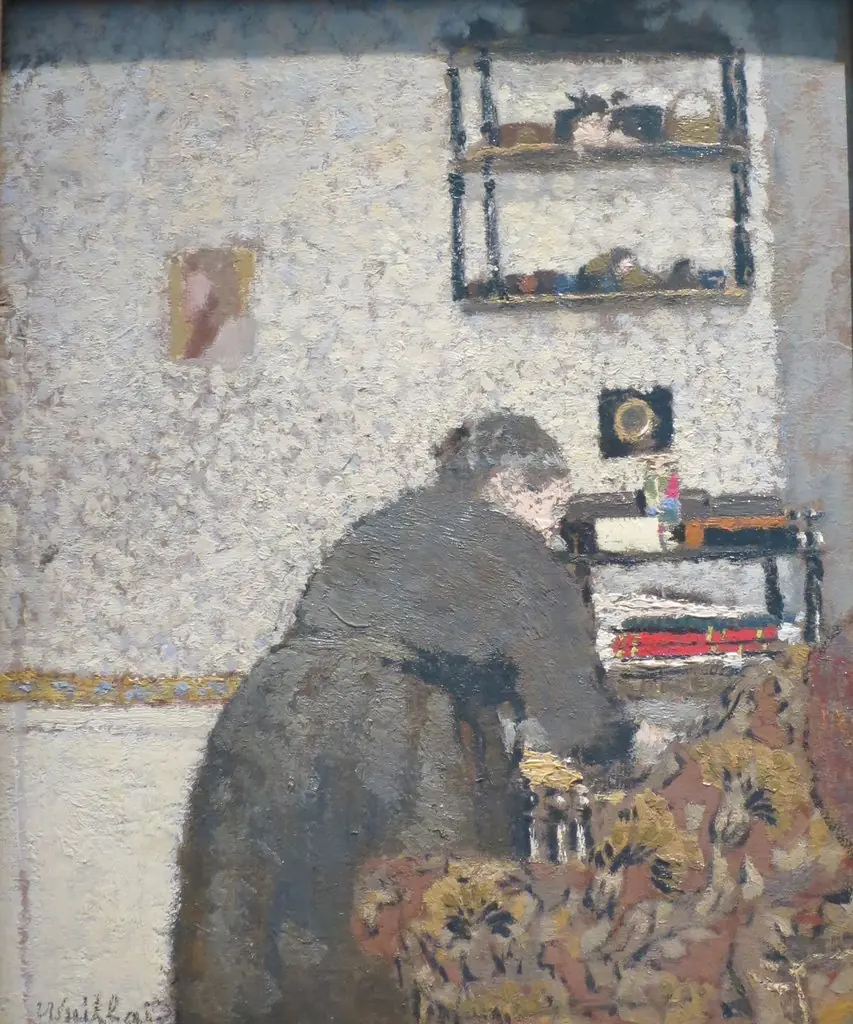 Madame Vuillard in a Drawing Room
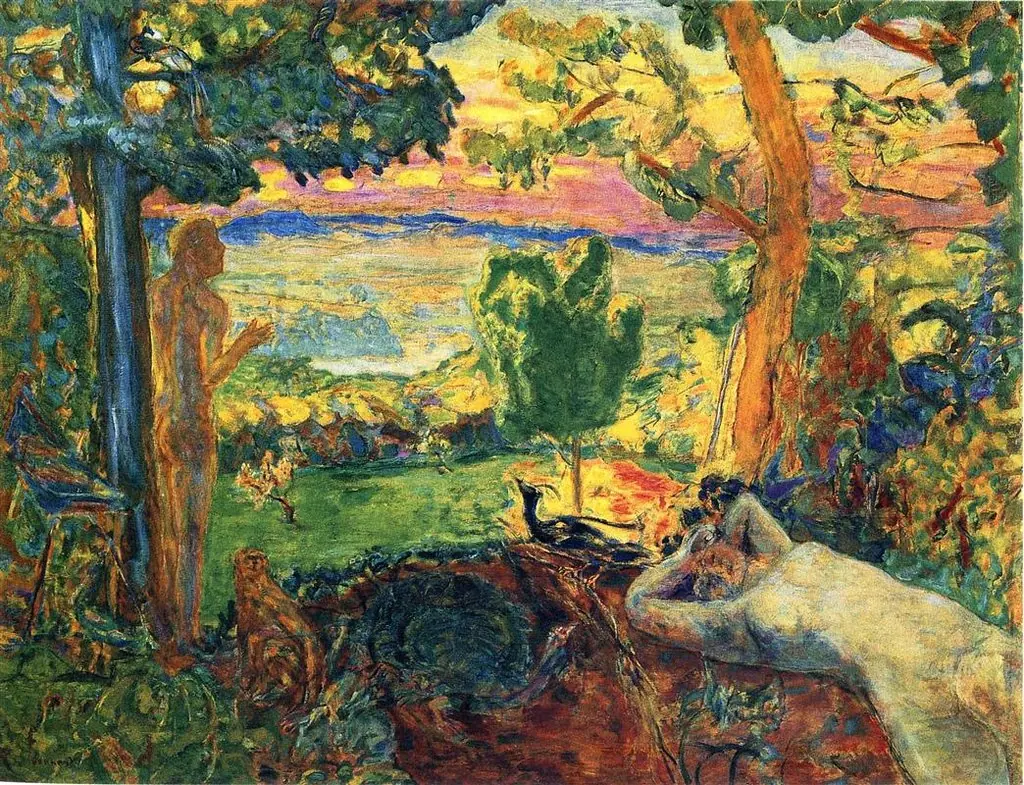 Earthly Paradise
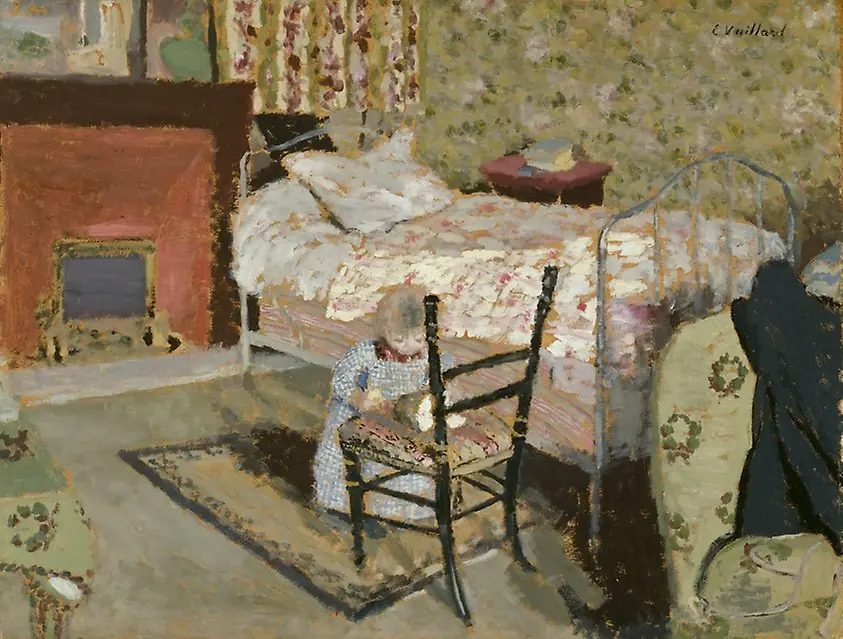 Child Playing: Annette Roussel in a Front of a Wooden Chair
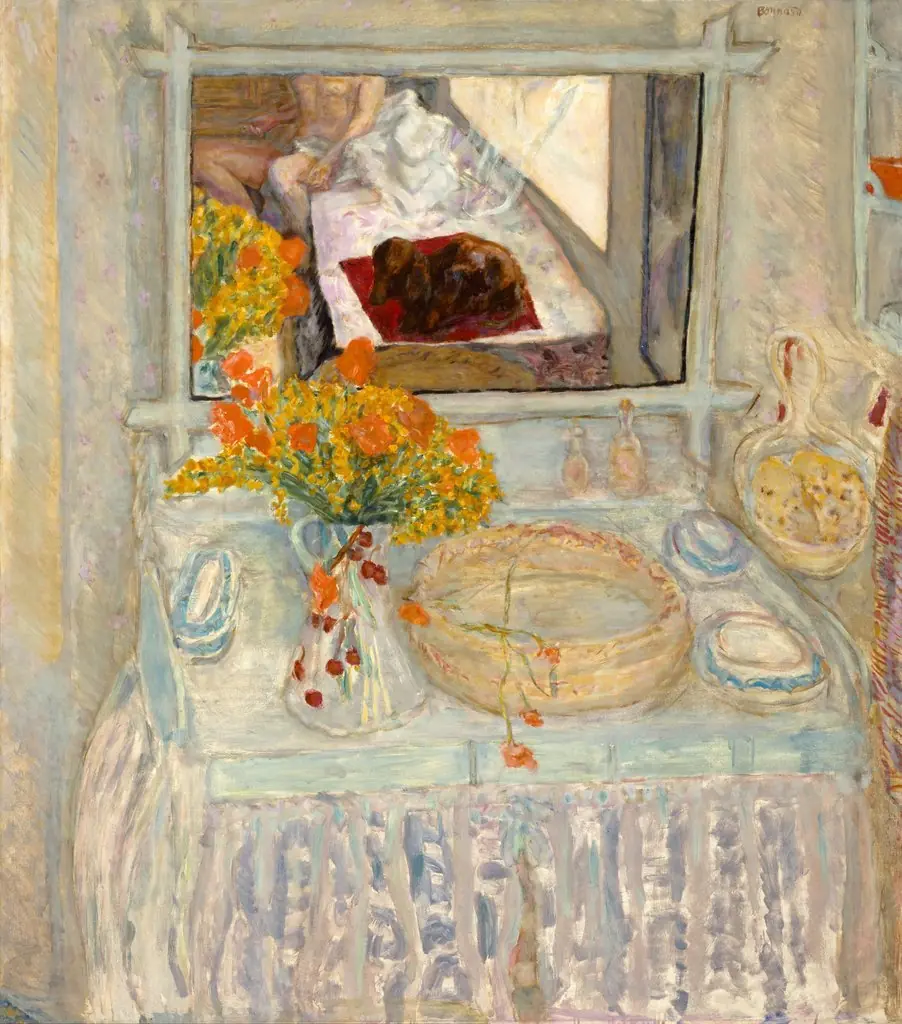 Dressing Table and Mirror
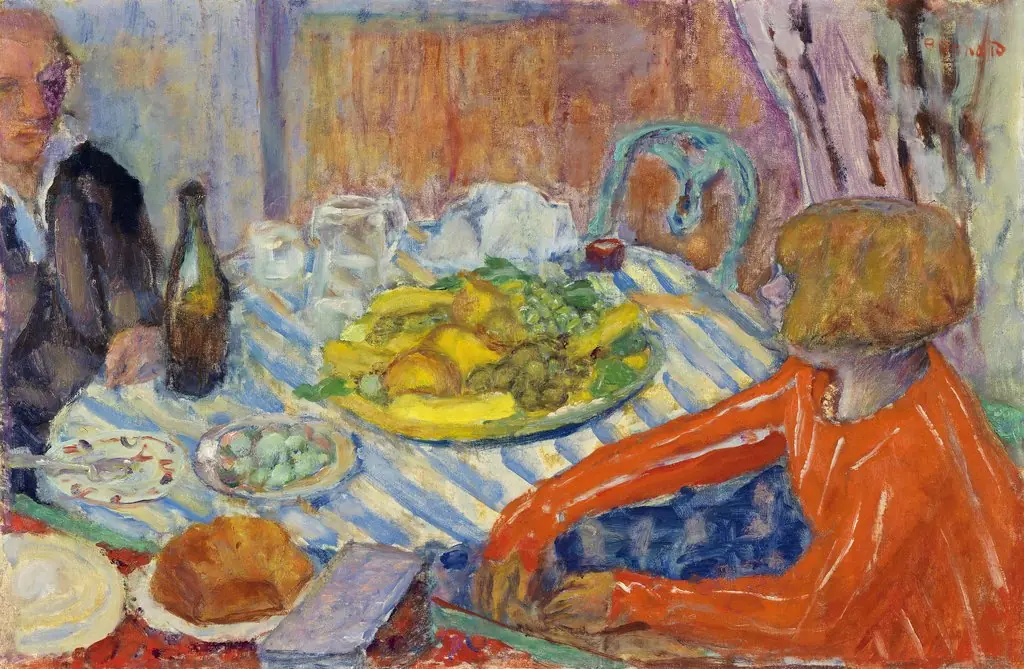 Le Déjeuner
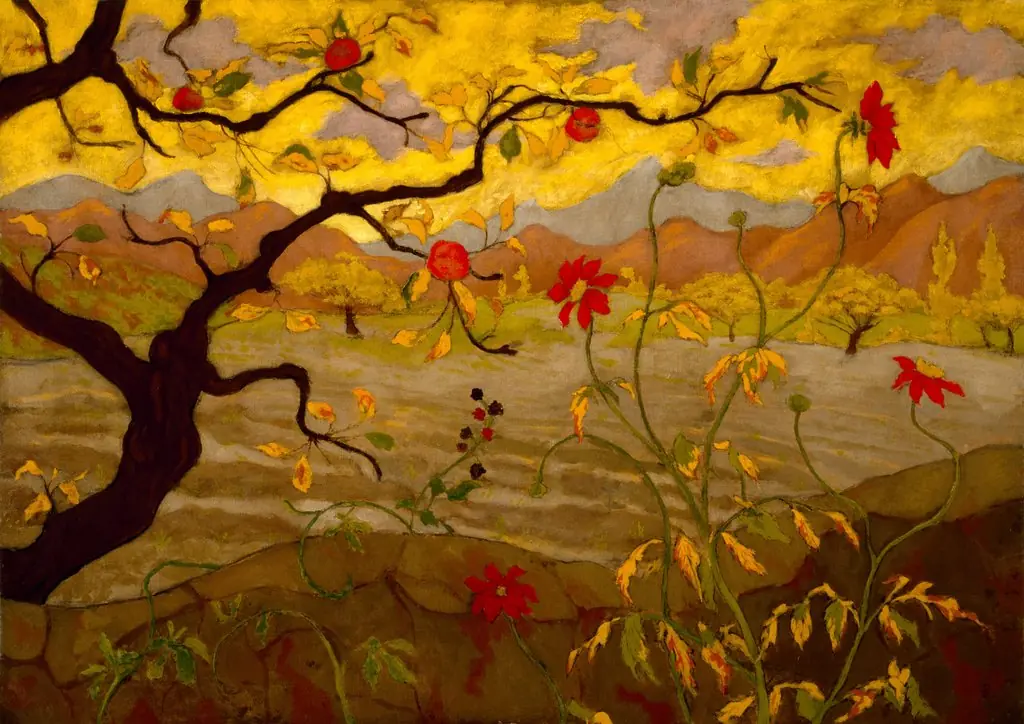 Apple Tree with Red Fruit
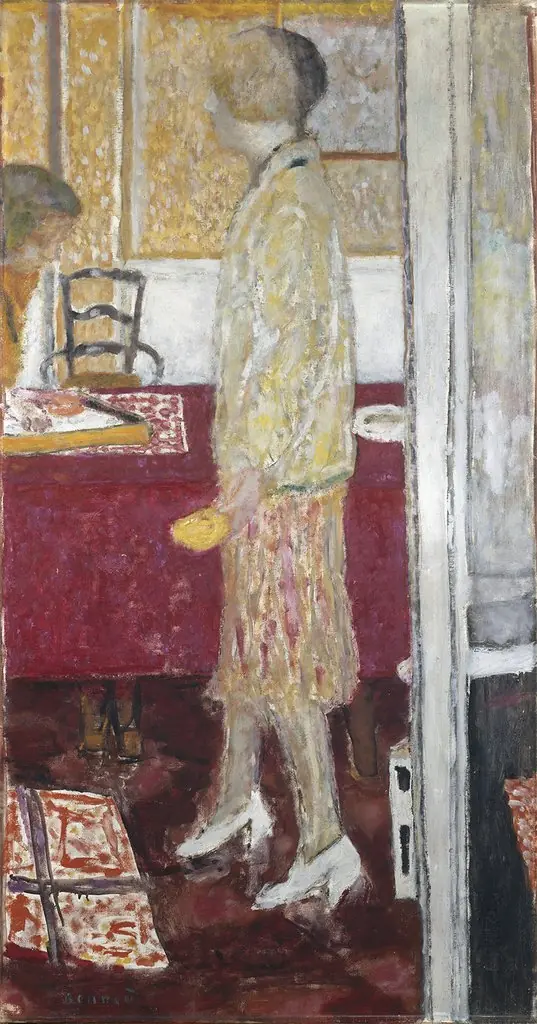 Marthe dans la salle à manger au Cannet
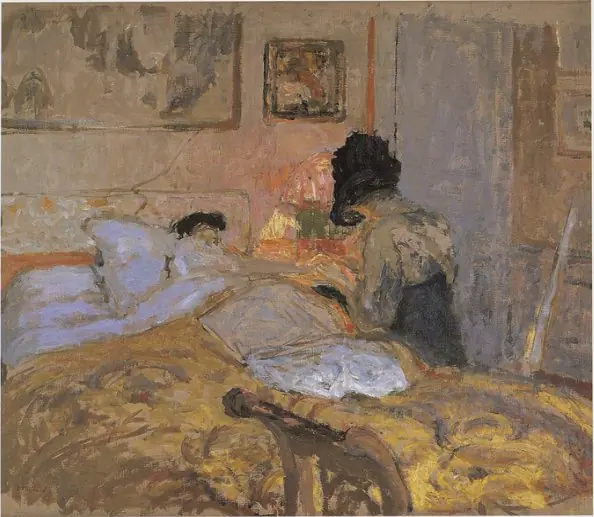 Madame Hessel et la Manucure
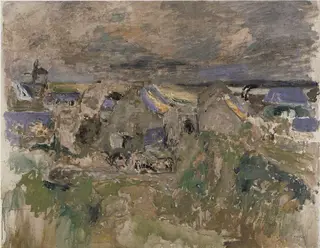 Village au bord de la mer. Saint-Jacut
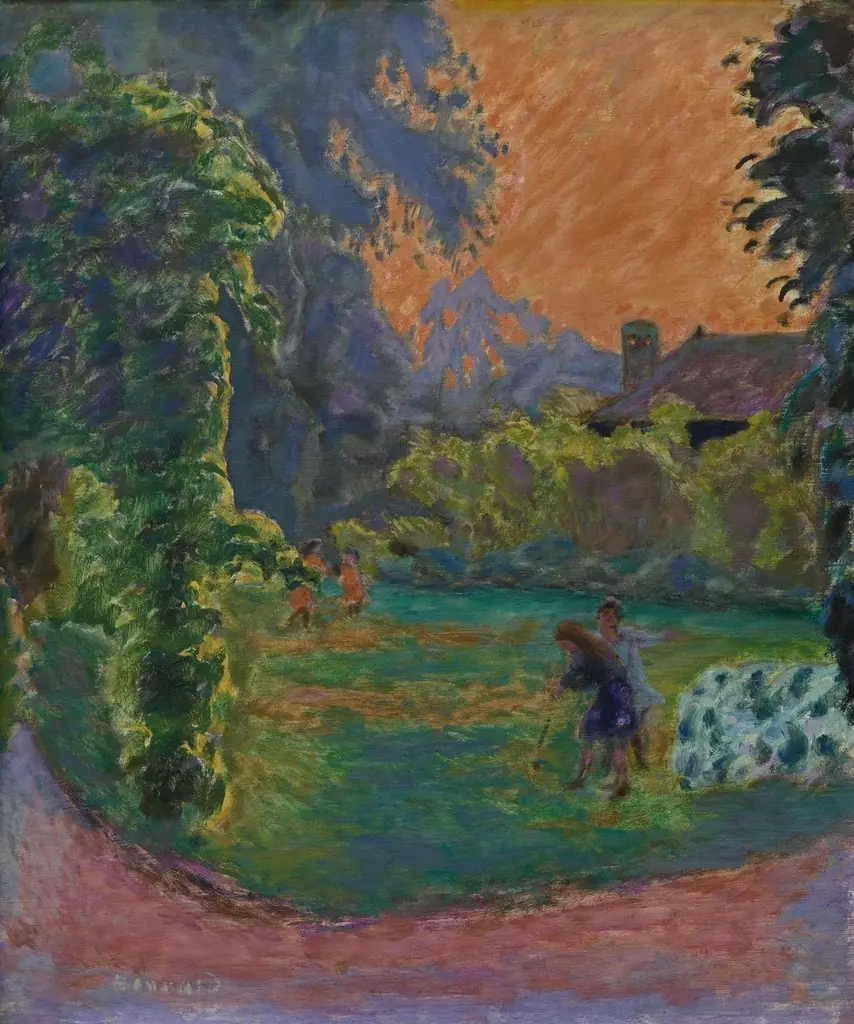 Soleil couchant
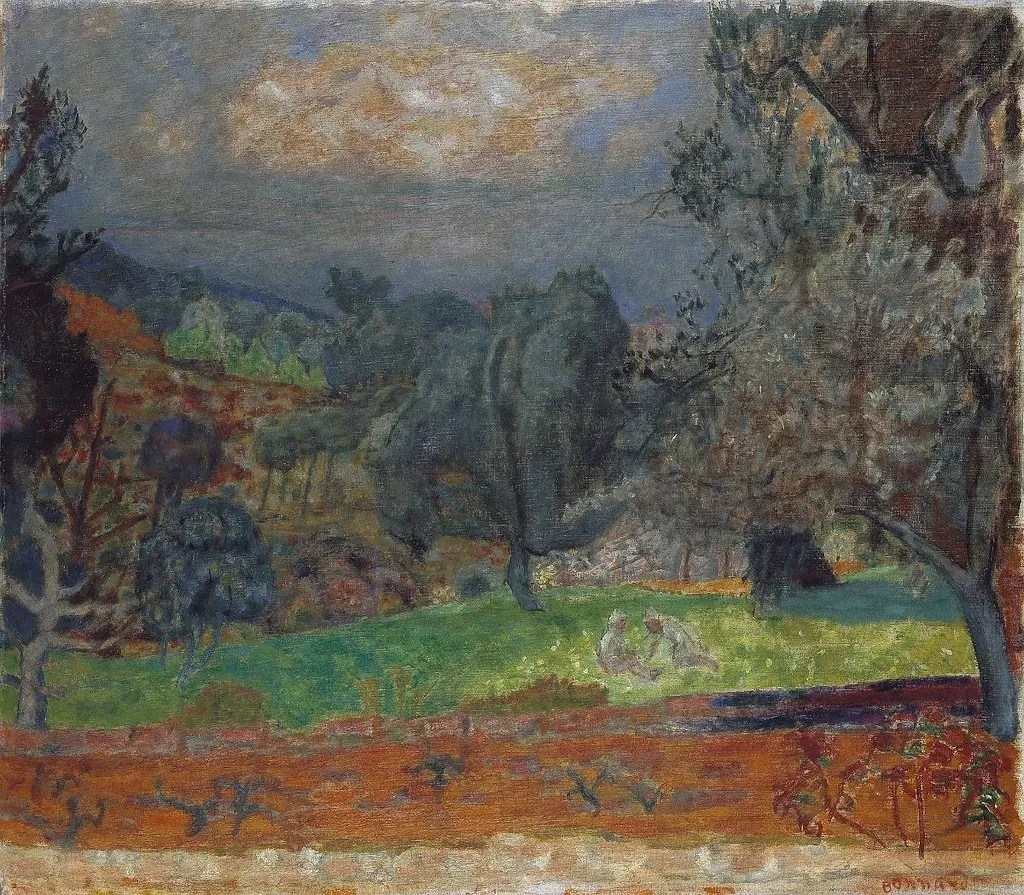 Paysage au soleil couchant. Le Cannet
 L'enfant dans la mare
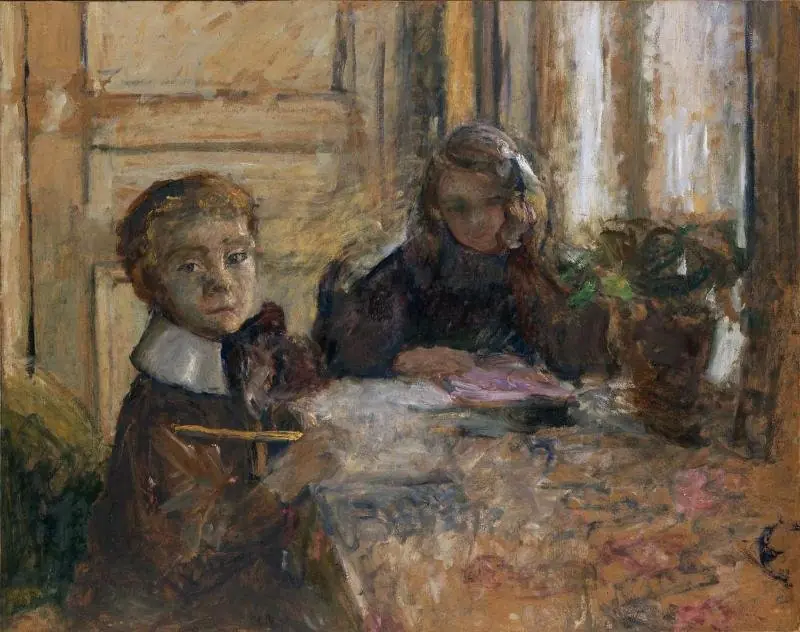 Annette et Jacques Roussel faisant leur devoir
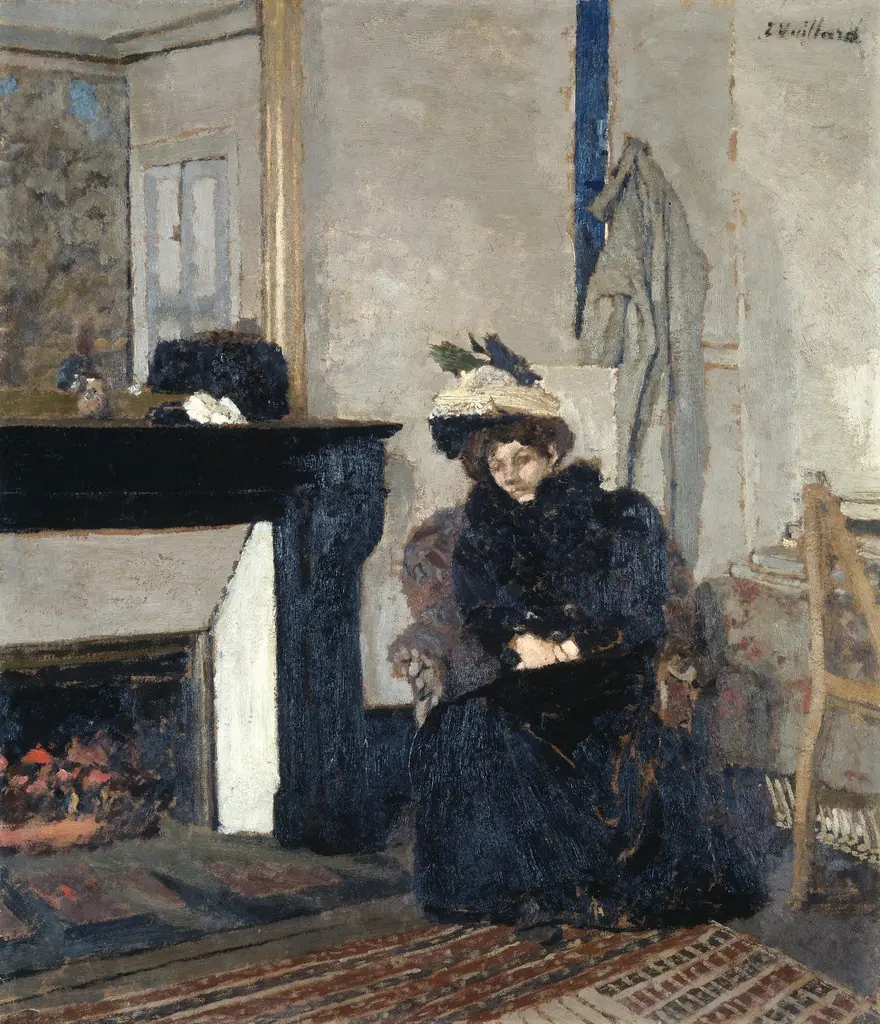 The Visitor
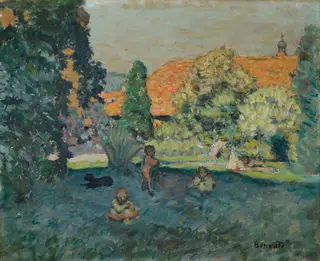 Le Toit rose
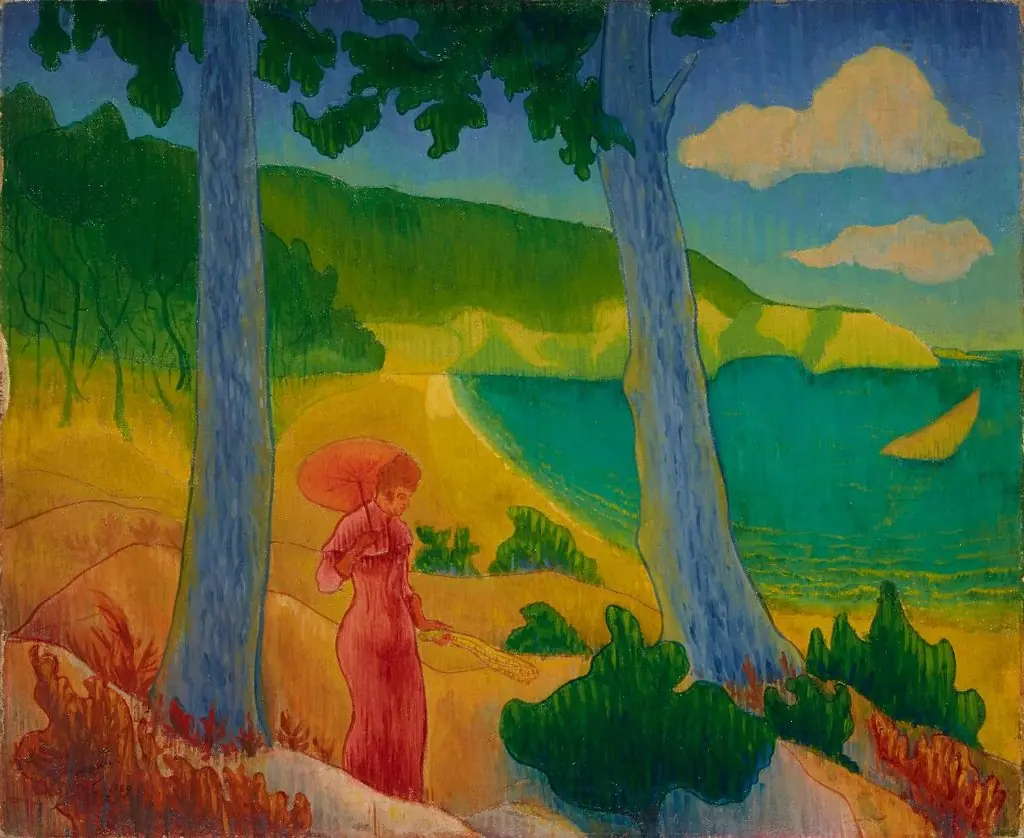 Rivage
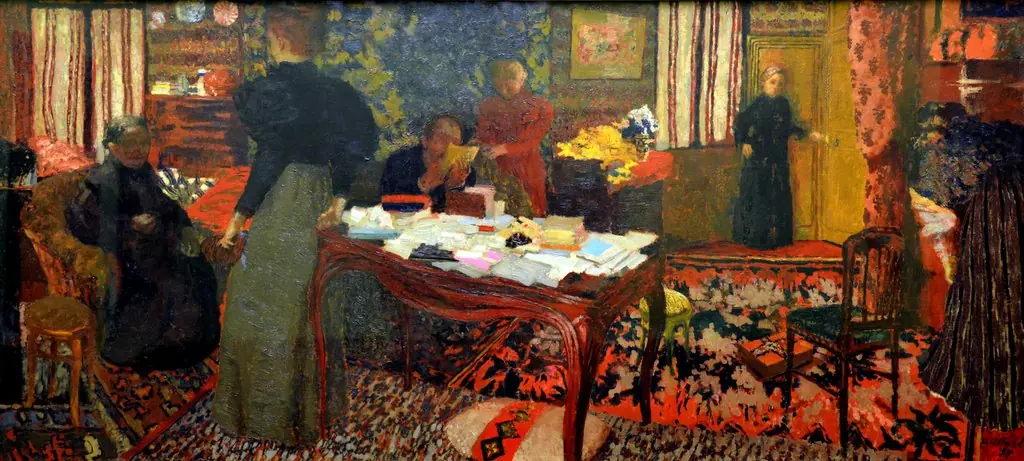 Le Grand Intérieur aux six personnages
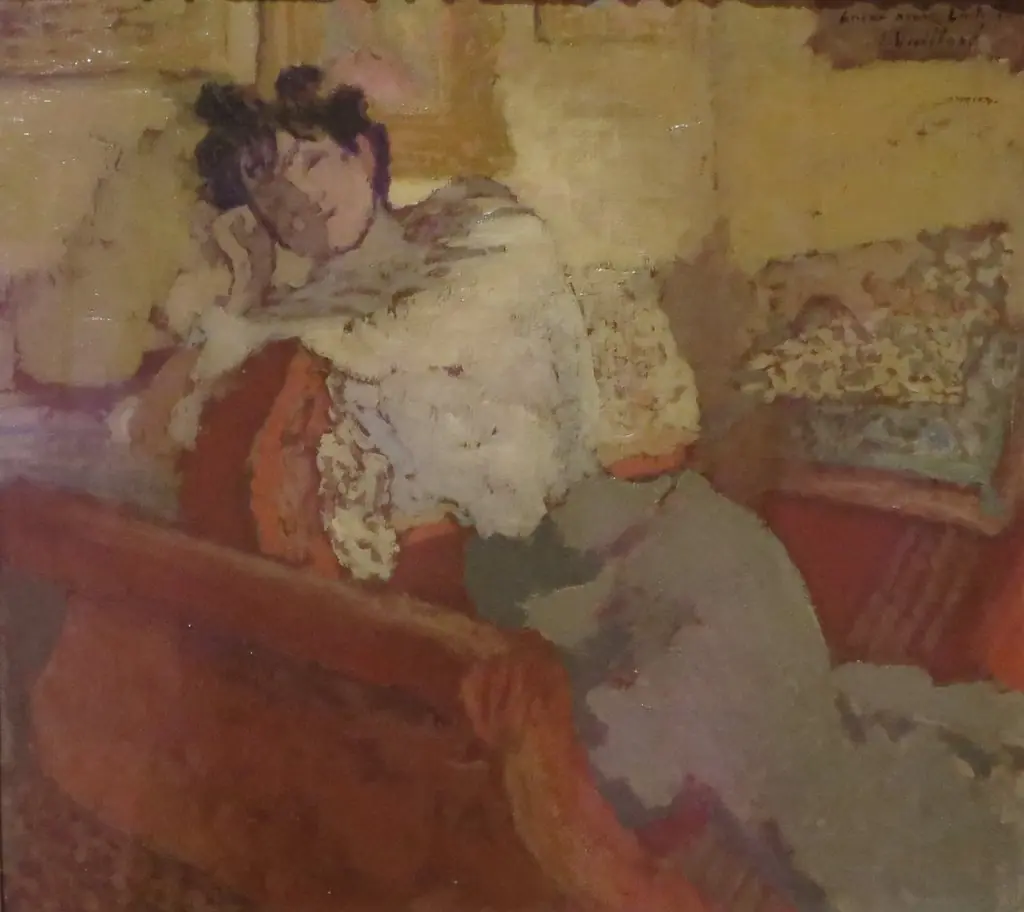 Lucie Hessel
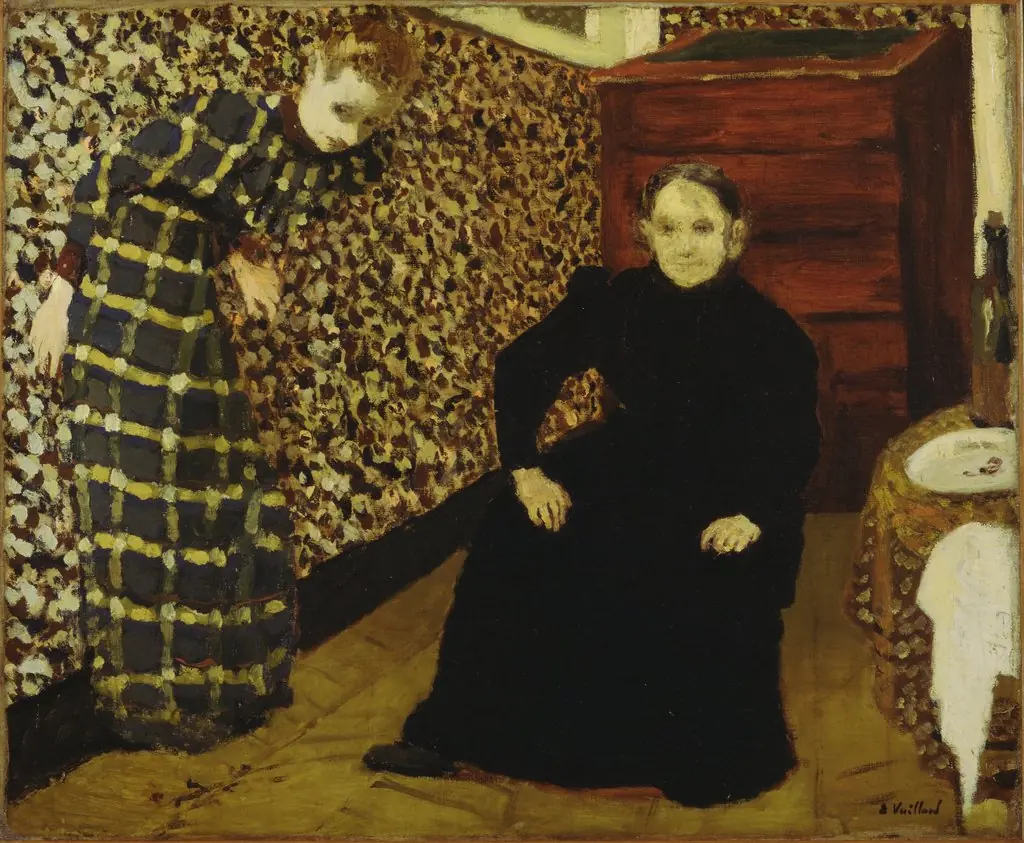 Interior Mother and Sister of the Artist
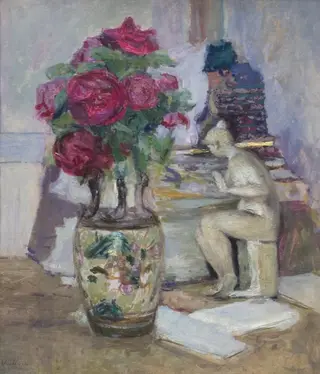 Flowers with Leda
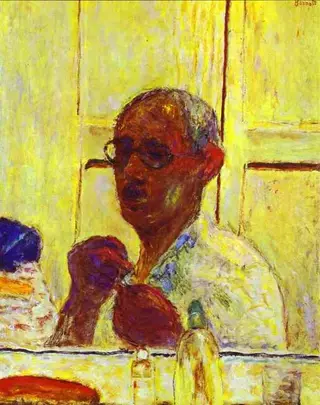 Self portrait
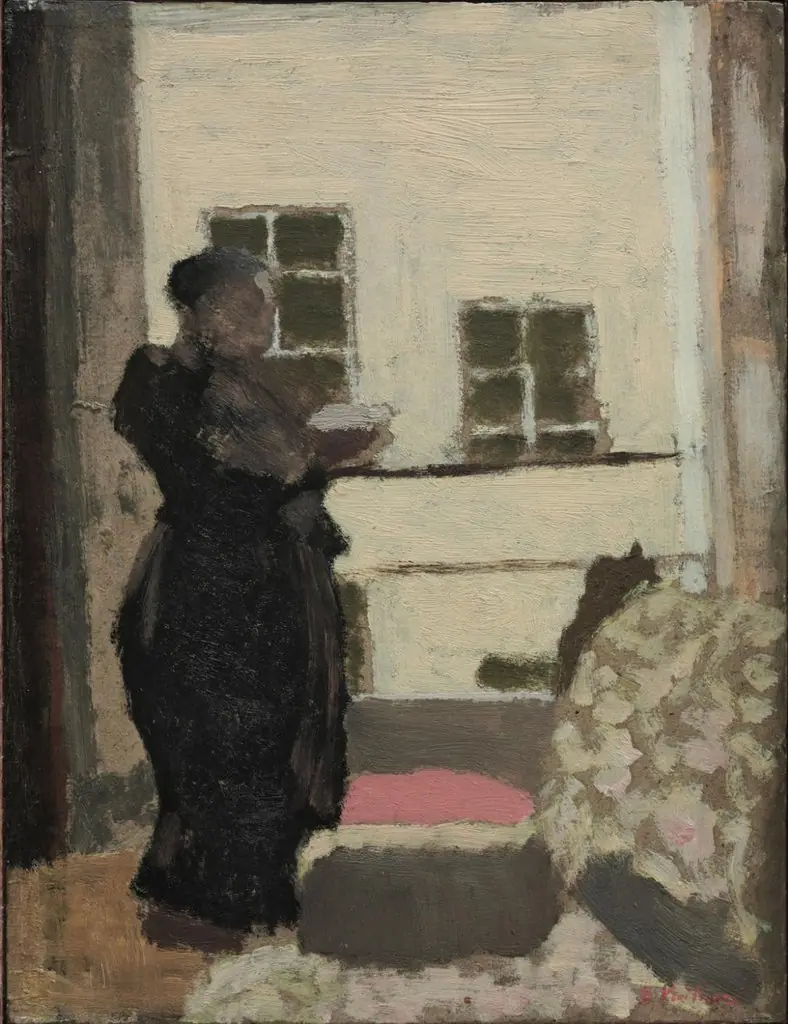 Madame Vuillard Standing, Reading by a Window
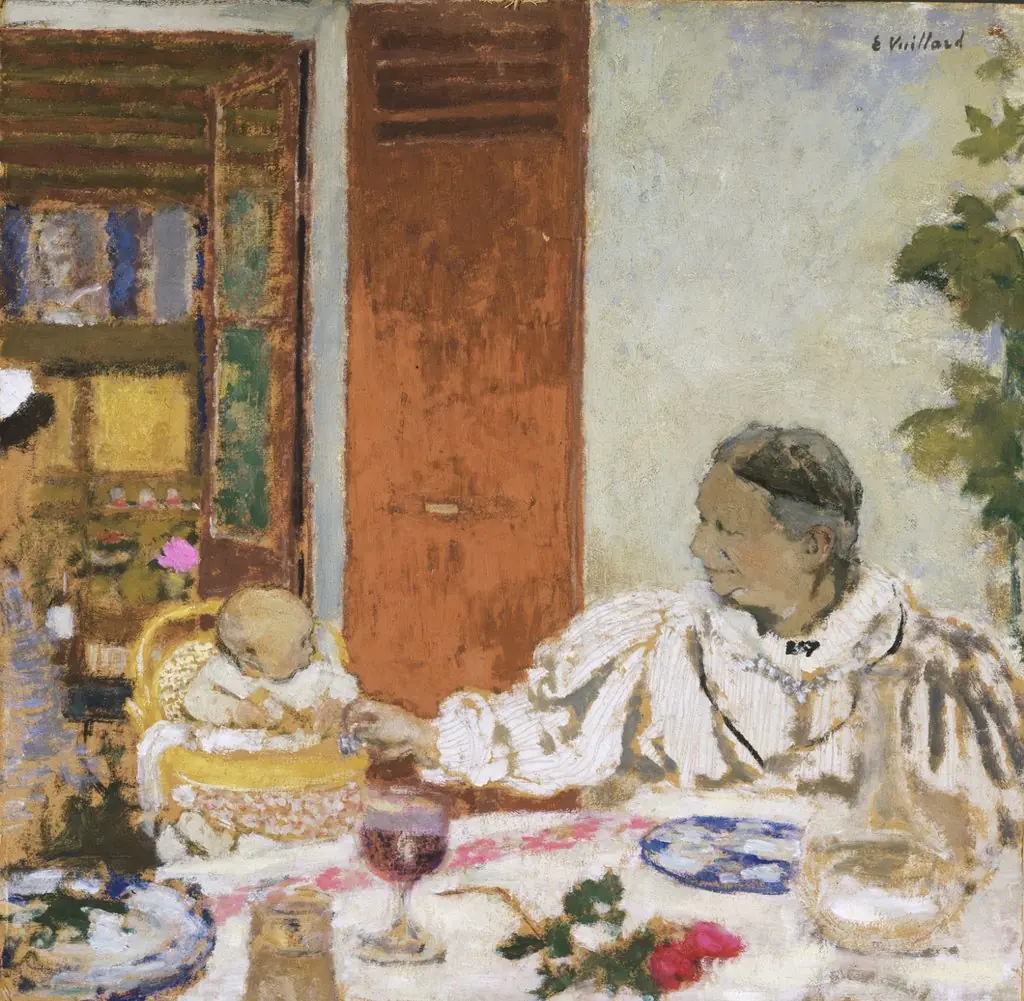 The Meal
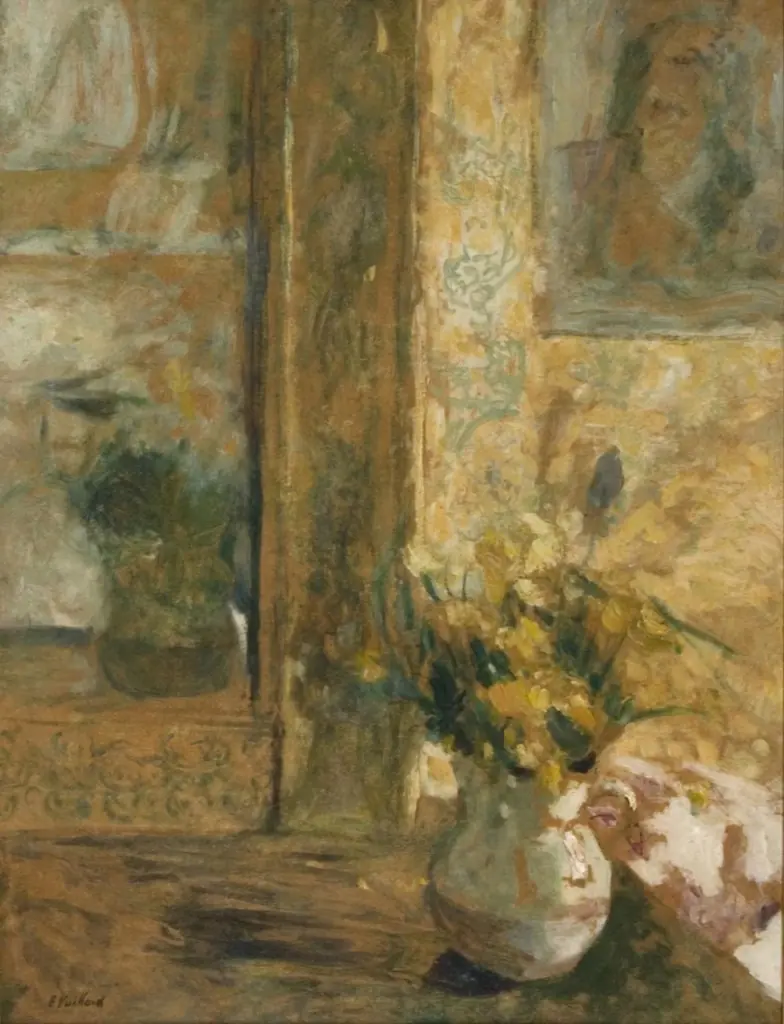 Bouquet and Mirror
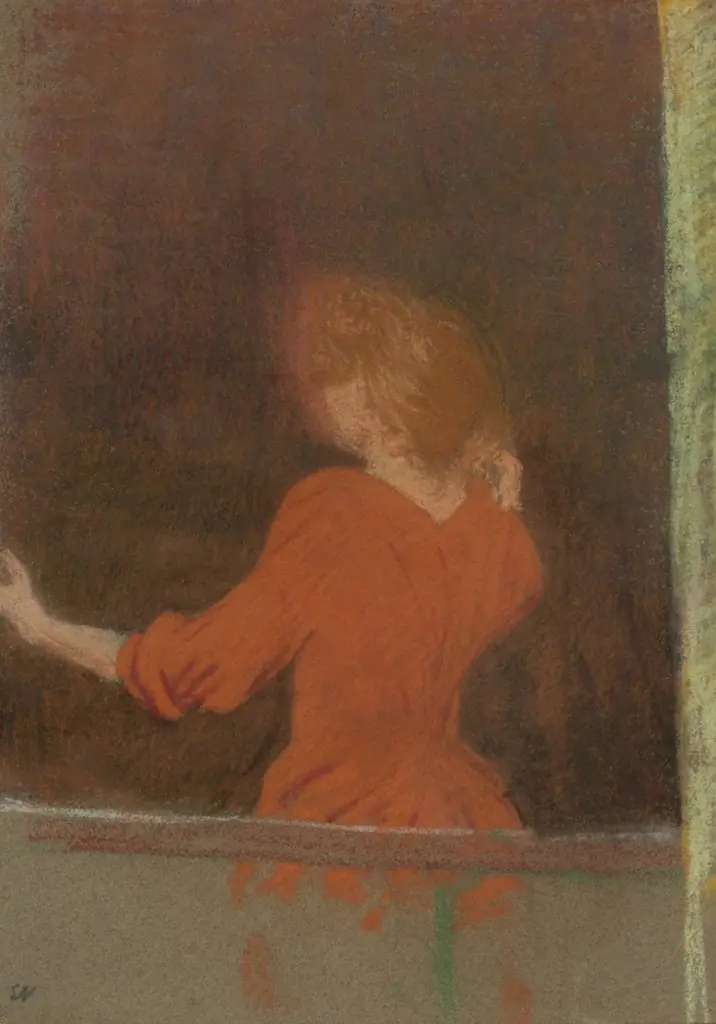 Femme en rouge, dos à la fenêtre (Mujer de rojo, de espaldas a la ventana)
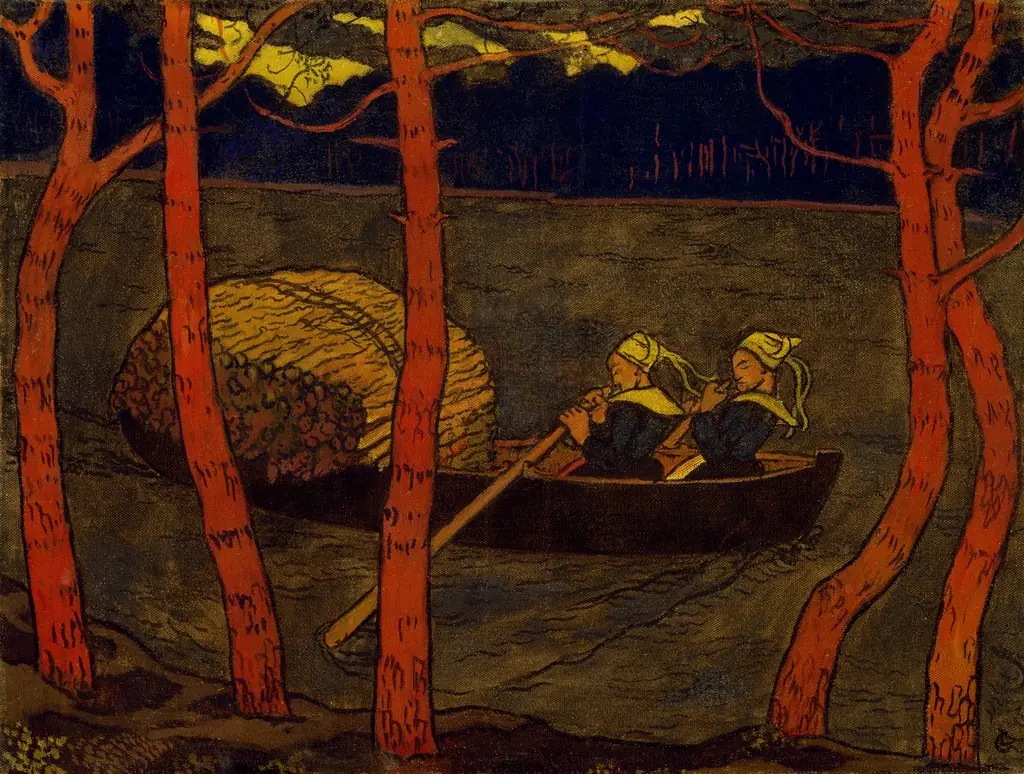 Boatwomen in Brittany
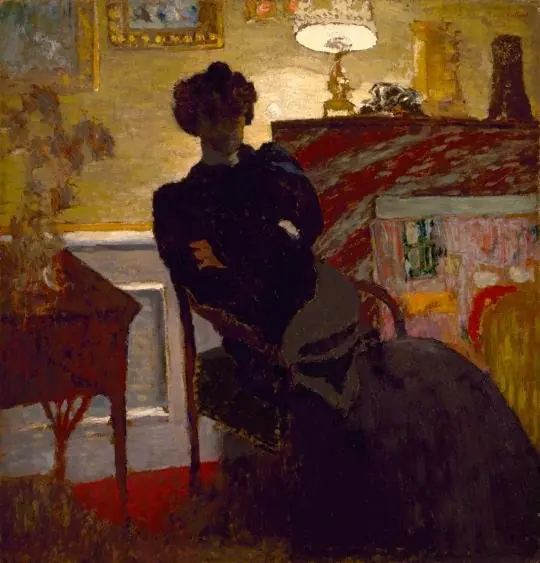 Madame Hessel at Home
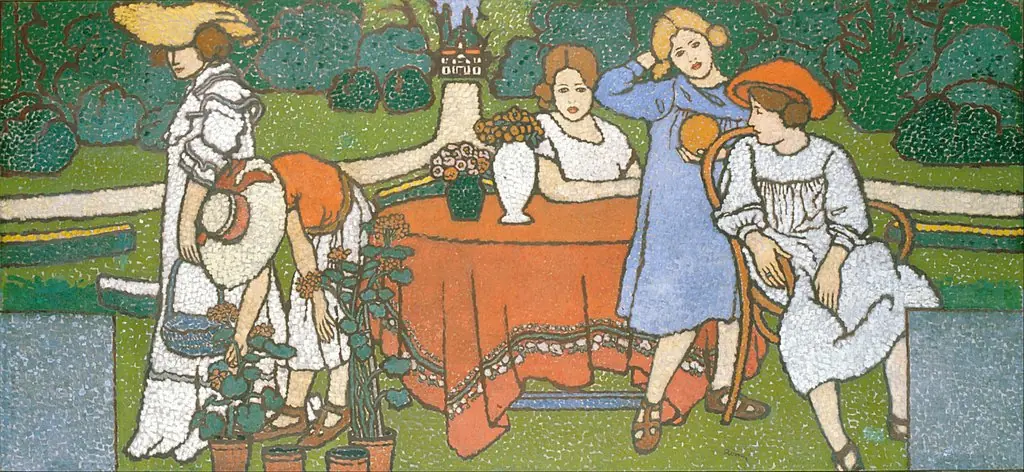 Panel-Picture for the Schiffer Villa
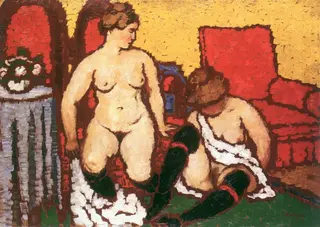 Girls Getting Dressed (Red Furniture and Yellow Wall)
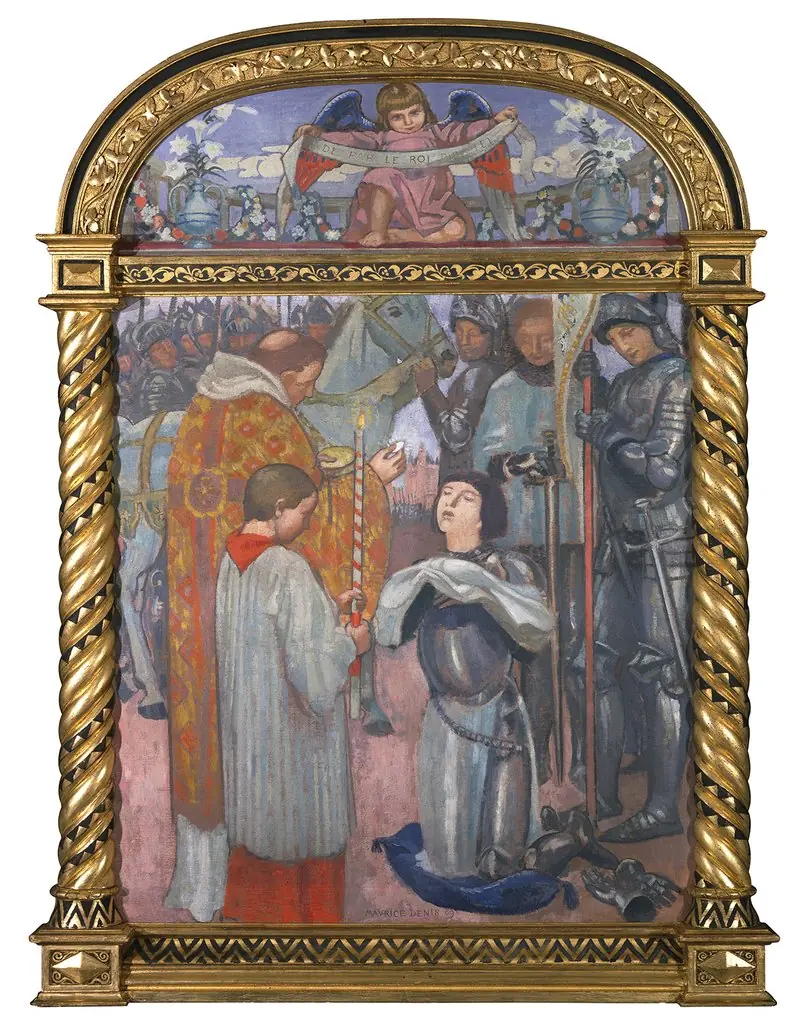 La communion de Jeanne d'Arc
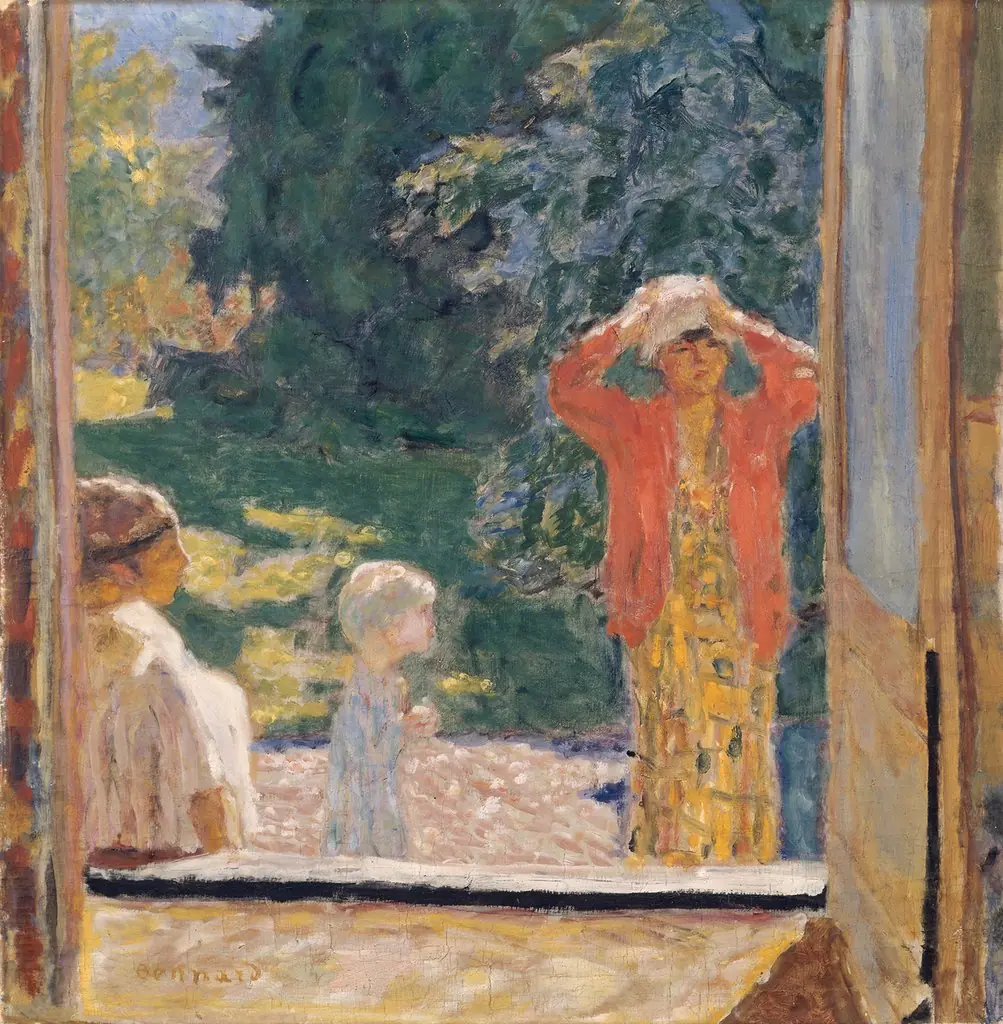 Devant la fenêtre au Grand-Lemps
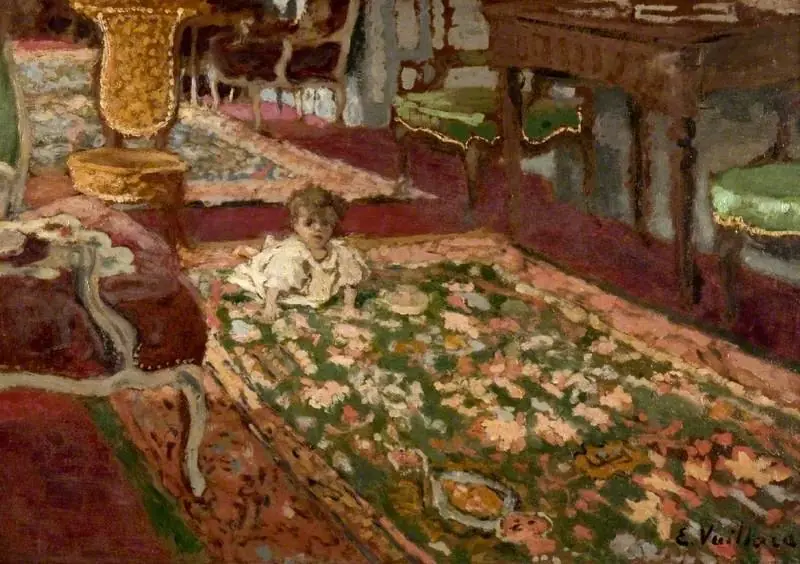 Interior: The Drawing Room
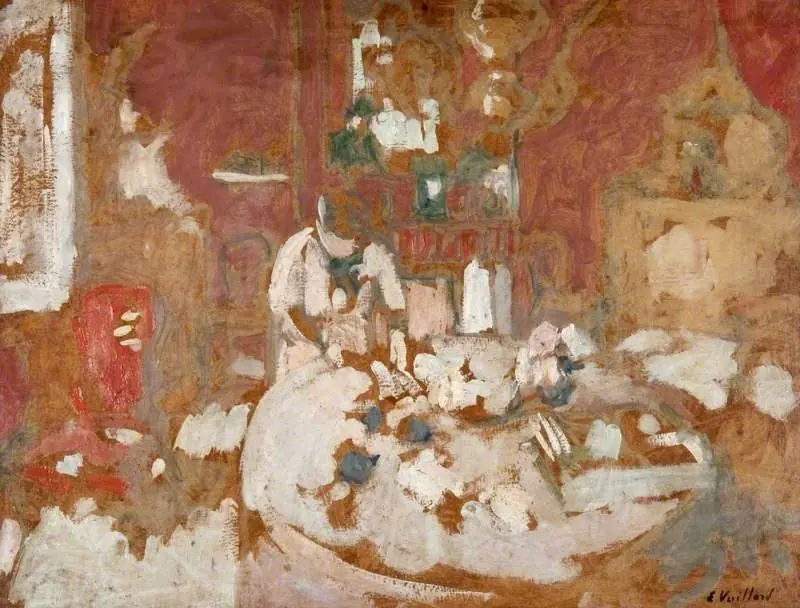 The Table
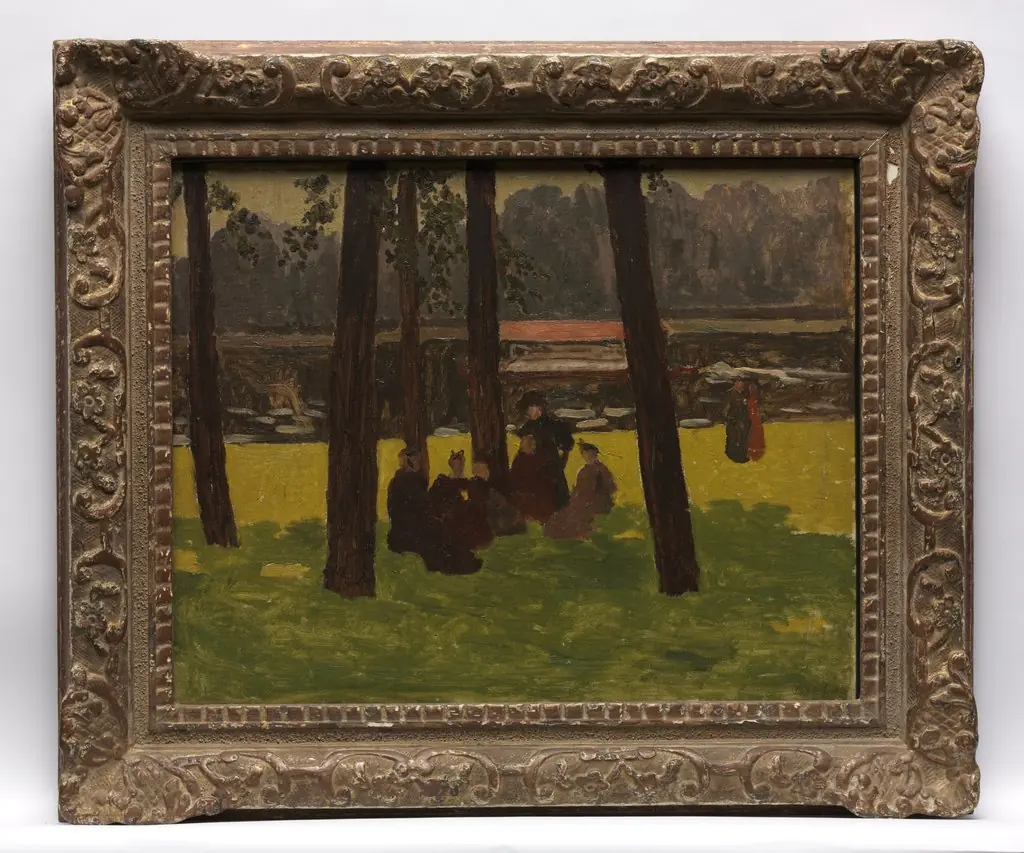 Women Meeting in the Shade
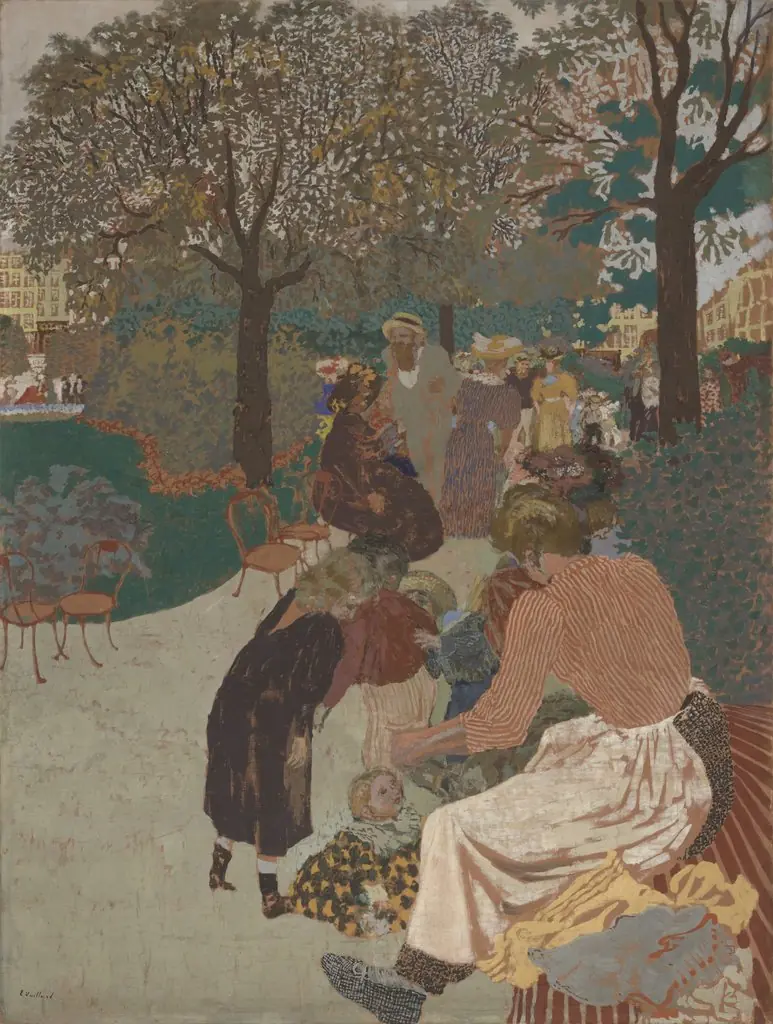 Park
Park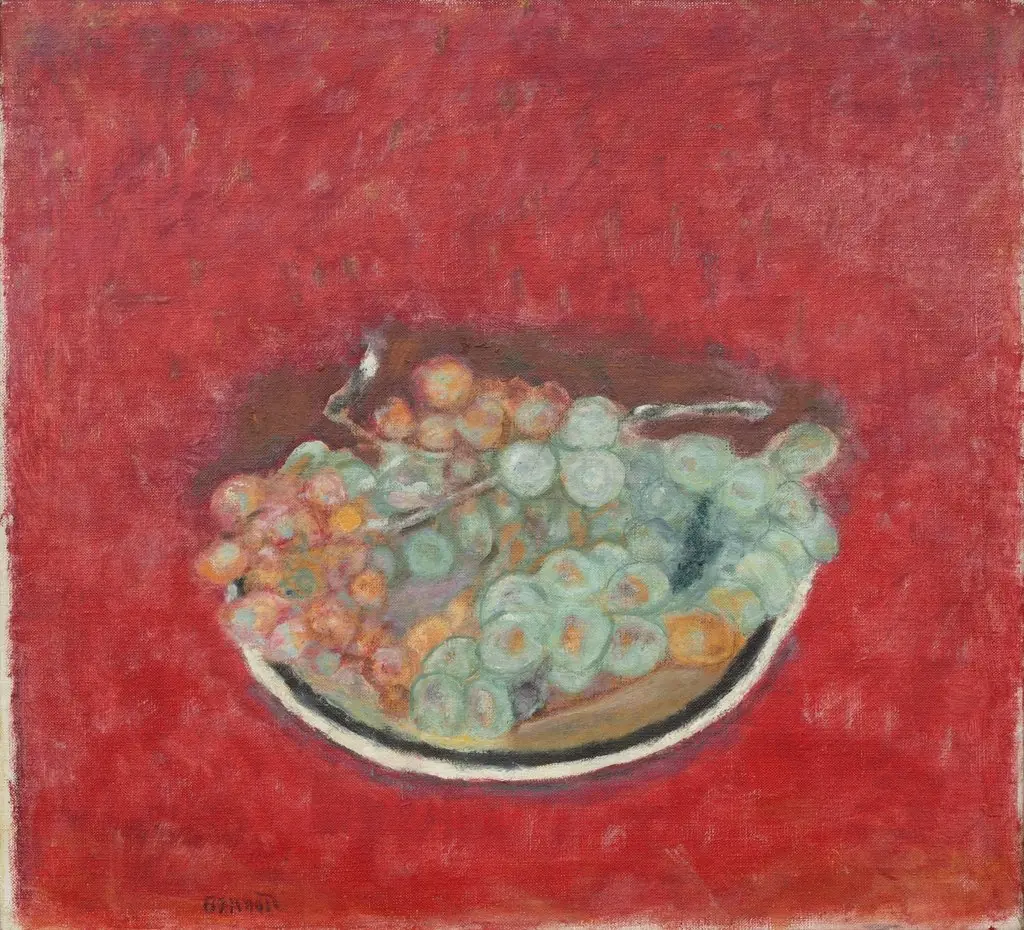 Grapes
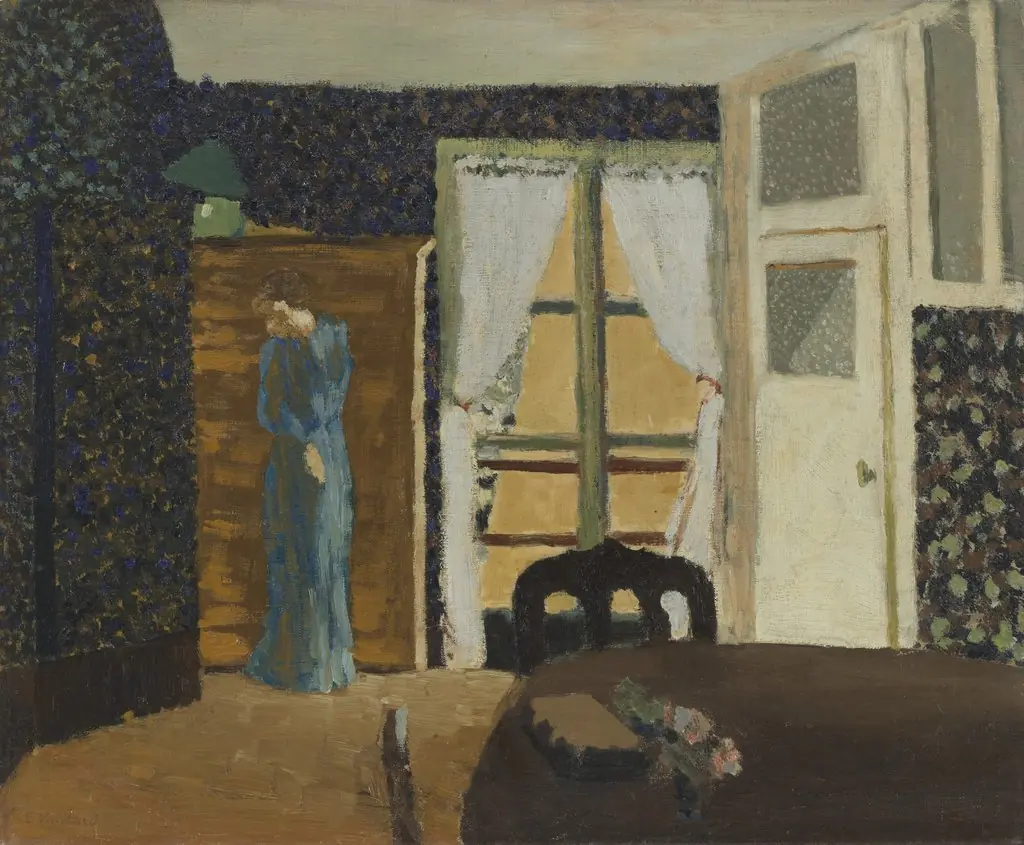 Window
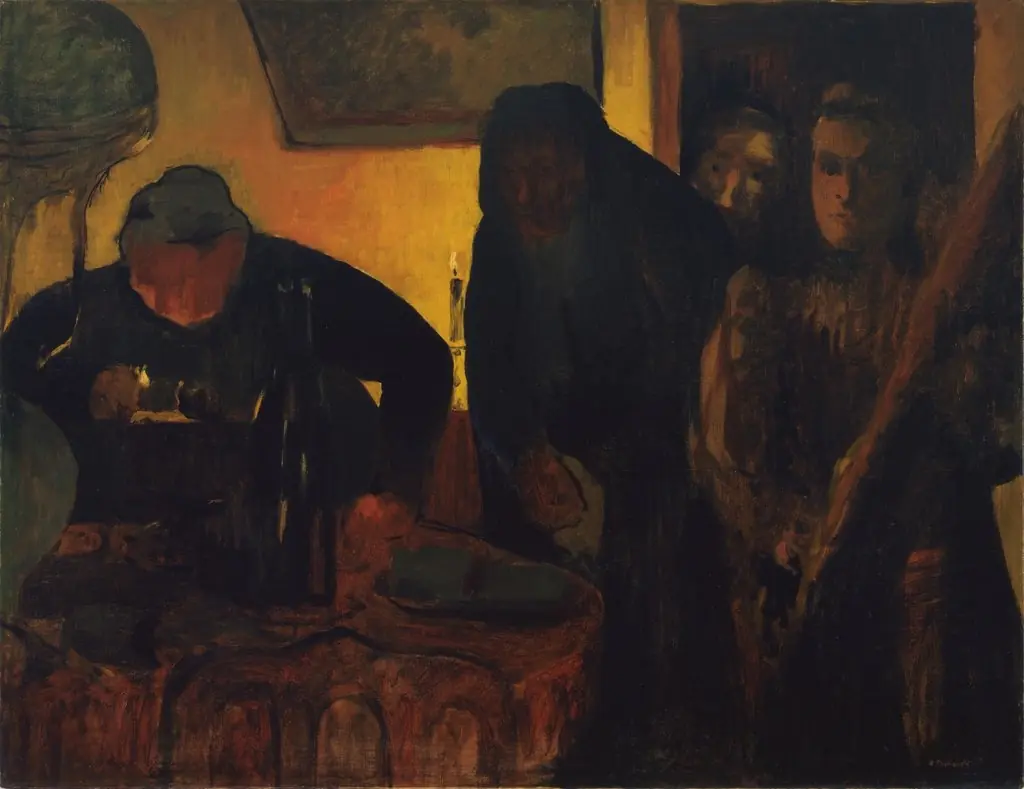 Dinnertime
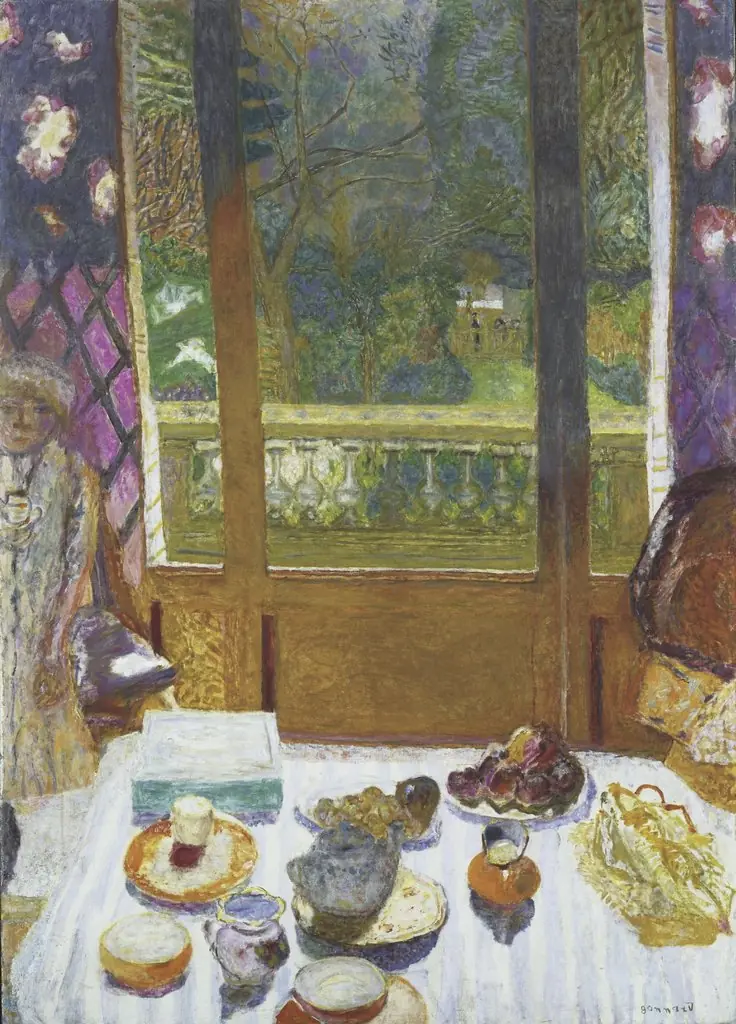 Dining Room Overlooking the Garden (The Breakfast Room)
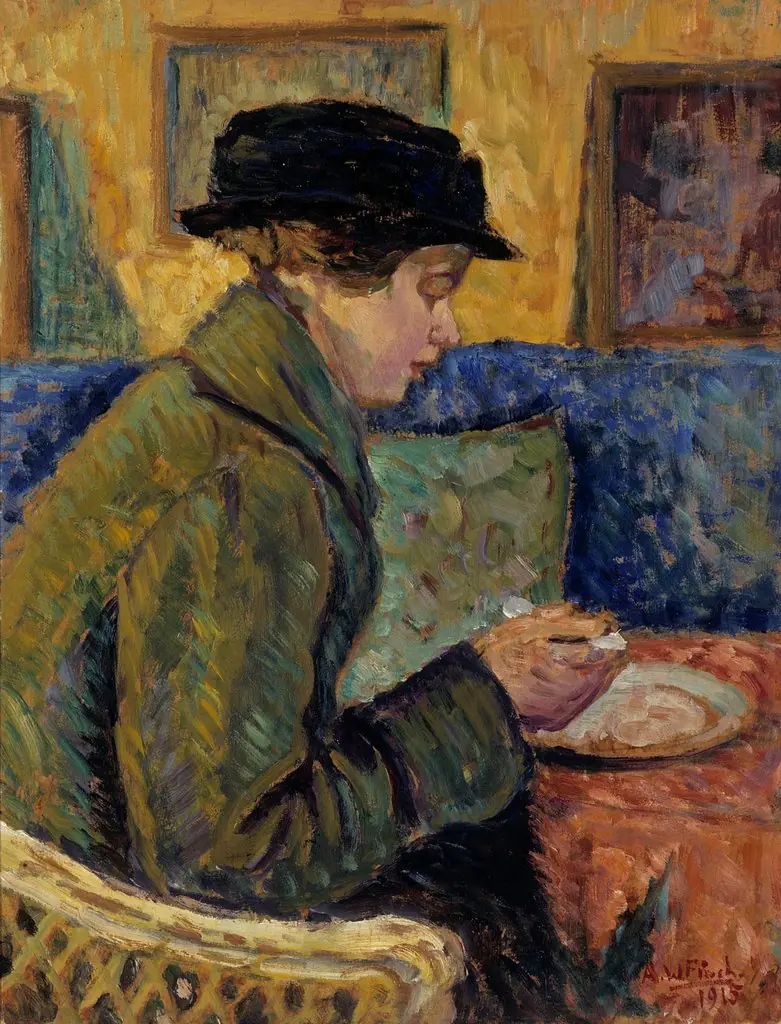 Woman in Profile
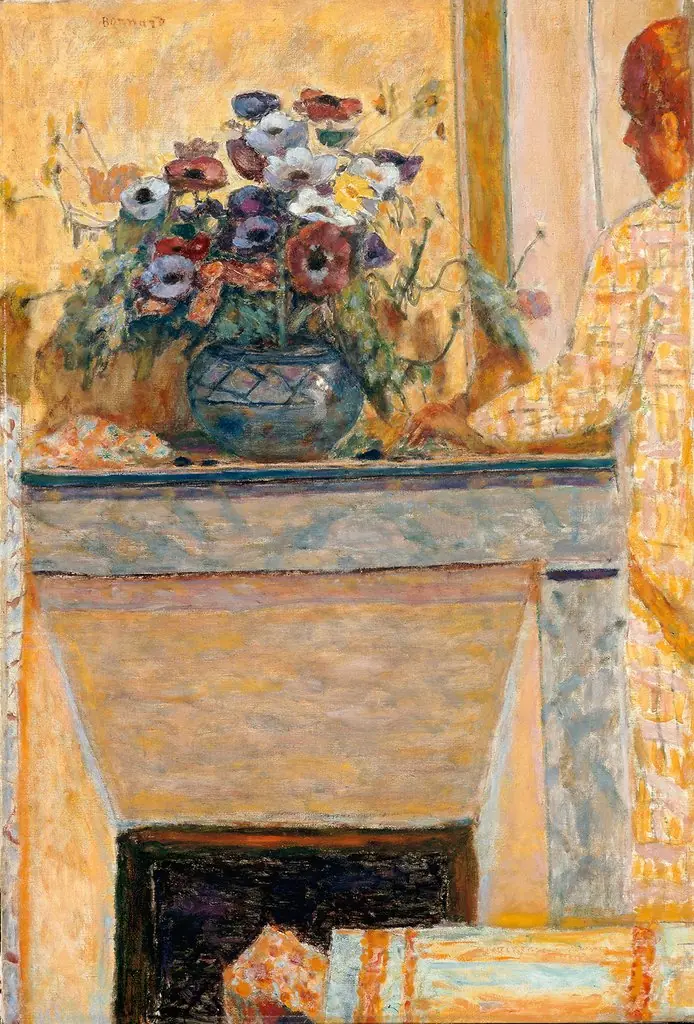 Fleurs sur une cheminée au Cannet
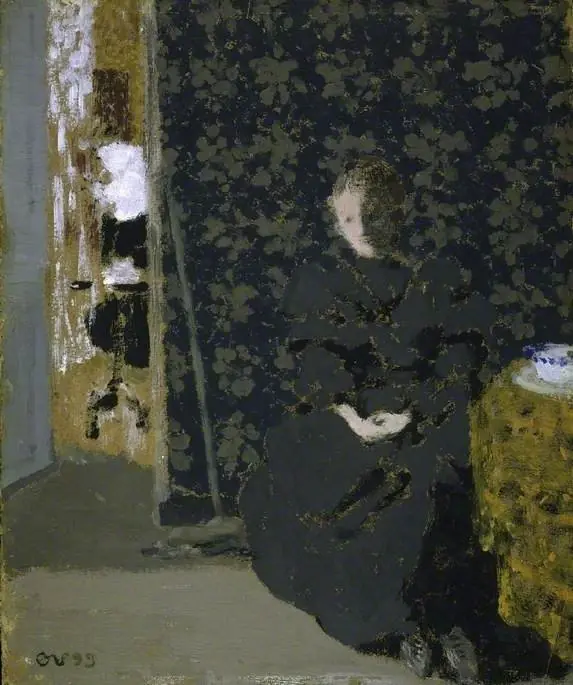 Femme Assise: Tasse de Café
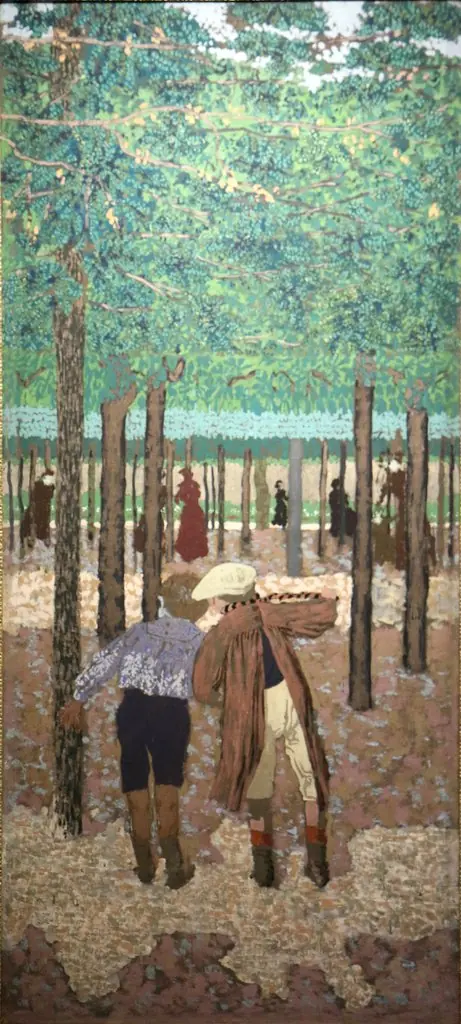 The two schoolboys
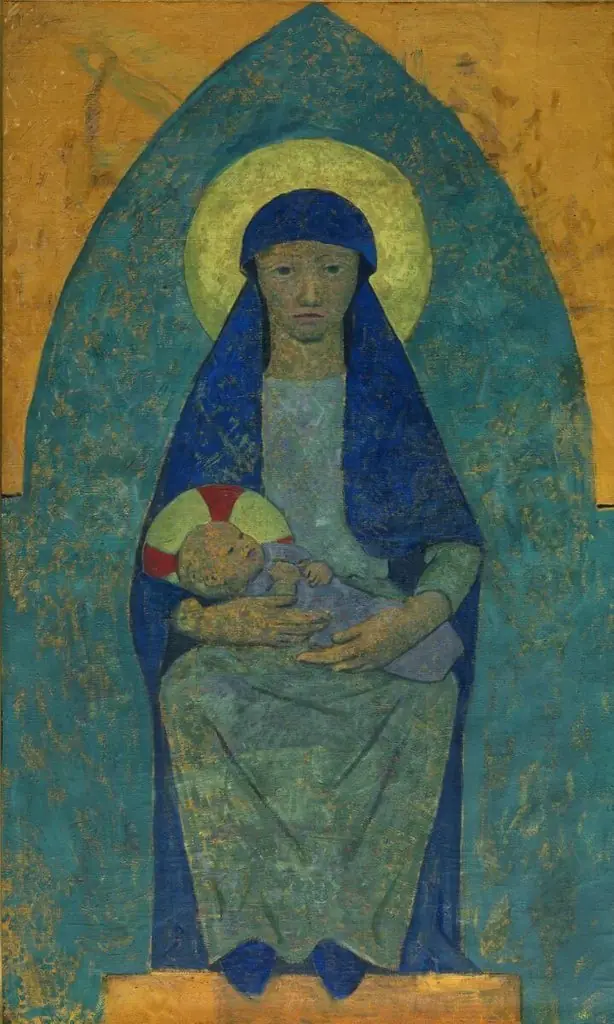 Vierge à l'Enfant
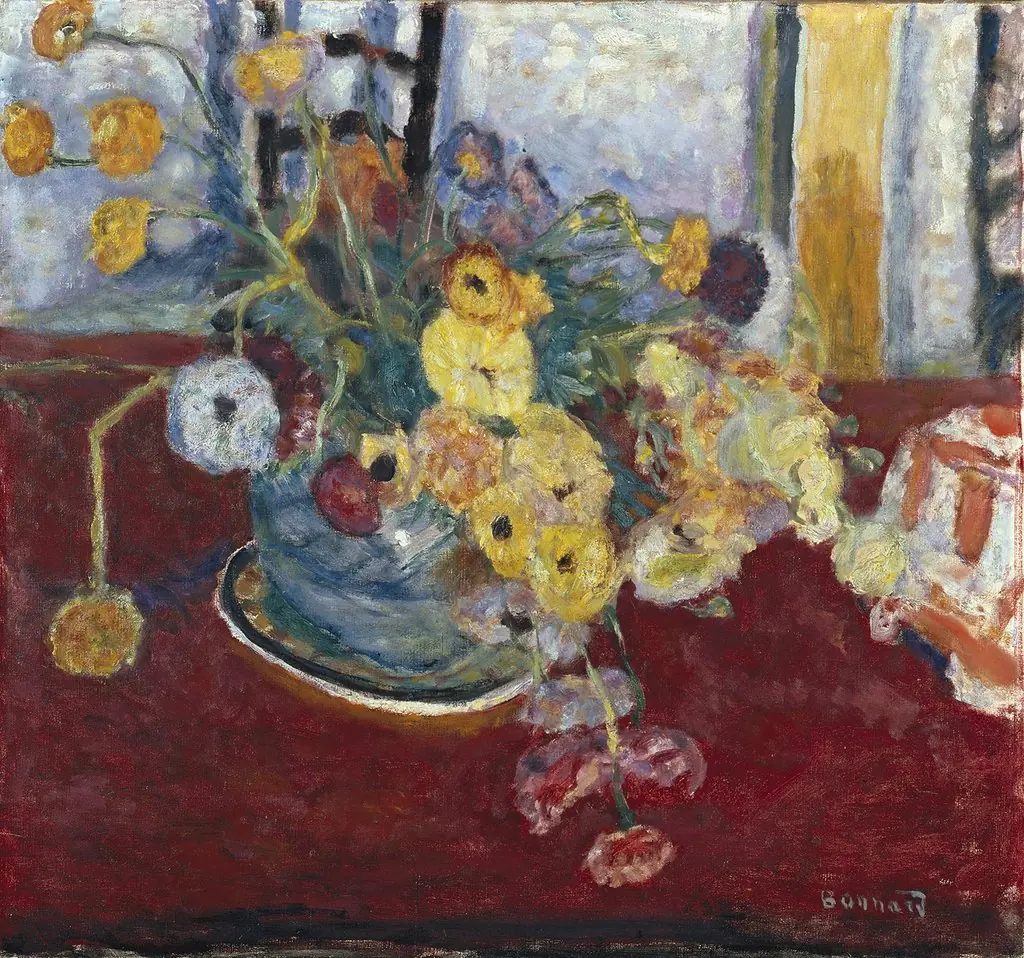 Fleurs sur un tapis rouge
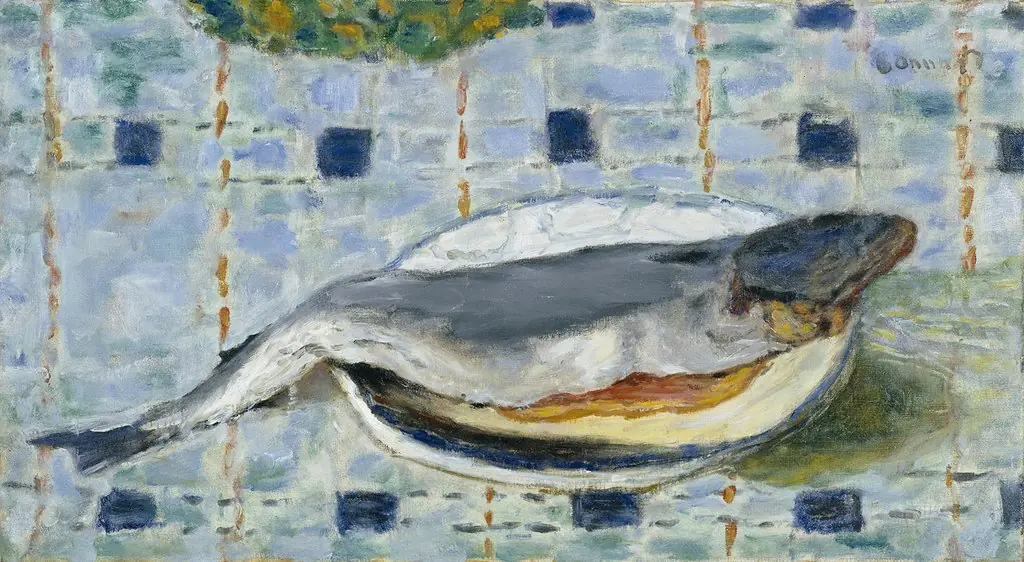 Poisson sur une assiette
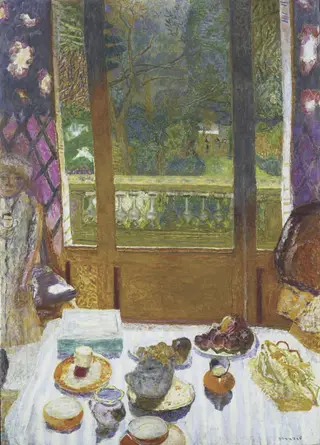 Untitled
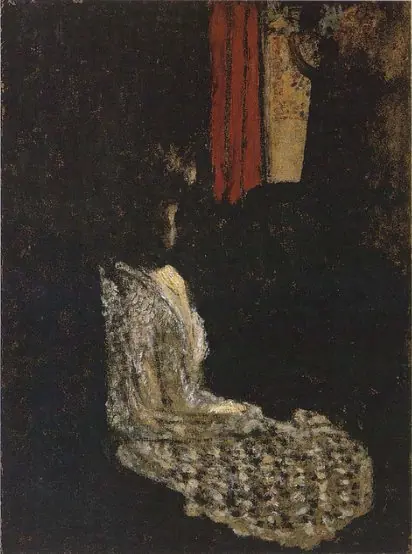 Femme assise dans une pièce sombre
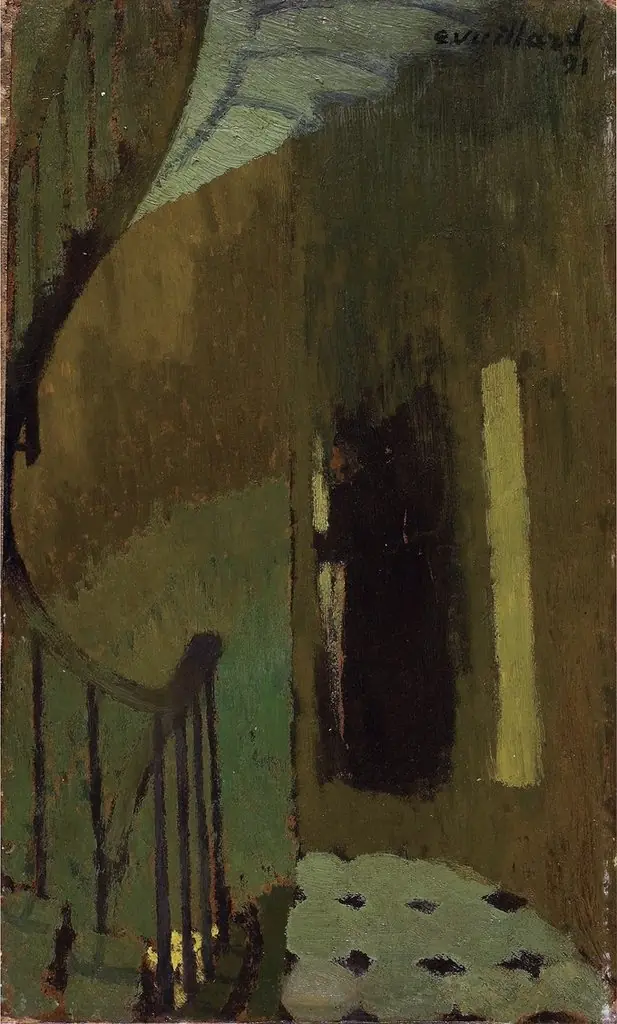 Le palier, rue de Miromesnil
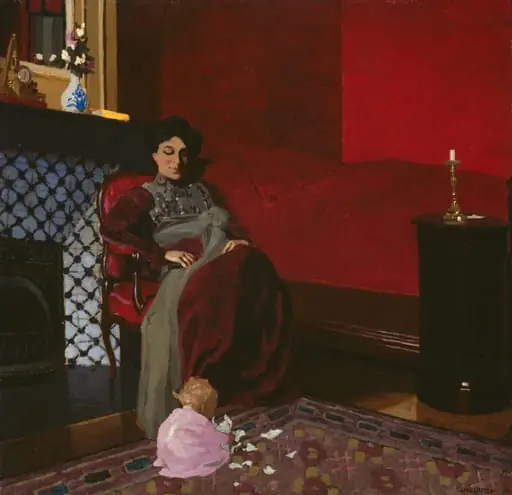 The Red Room, Etretat
Frequently asked questions
What is Les Nabis?
Les Nabis is an art movement. A group of Post-Impressionist painters in Paris in the 1890s — including Pierre Bonnard, Édouard Vuillard, and Maurice Denis — who took Gauguin's ideas about flat color and emotional resonance and applied them to intimate domestic subjects, posters, and theatrical design.
How many Les Nabis works does Artifact World Gallery have?
Artifact World Gallery holds 80 public-domain Les Nabis works, all free to view and download.
Who are the key Les Nabis artists?
Key Les Nabis artists in the collection include Pierre Bonnard, Maurice Denis and Édouard Vuillard.
When did Les Nabis take place?
Les Nabis dates from around 1888.
Where can I see Les Nabis works?
Les Nabis works in the collection are held by Metropolitan Museum of Art, Kunsthaus Zürich and Hermitage Museum.