Artwork
Virgin of the Angels
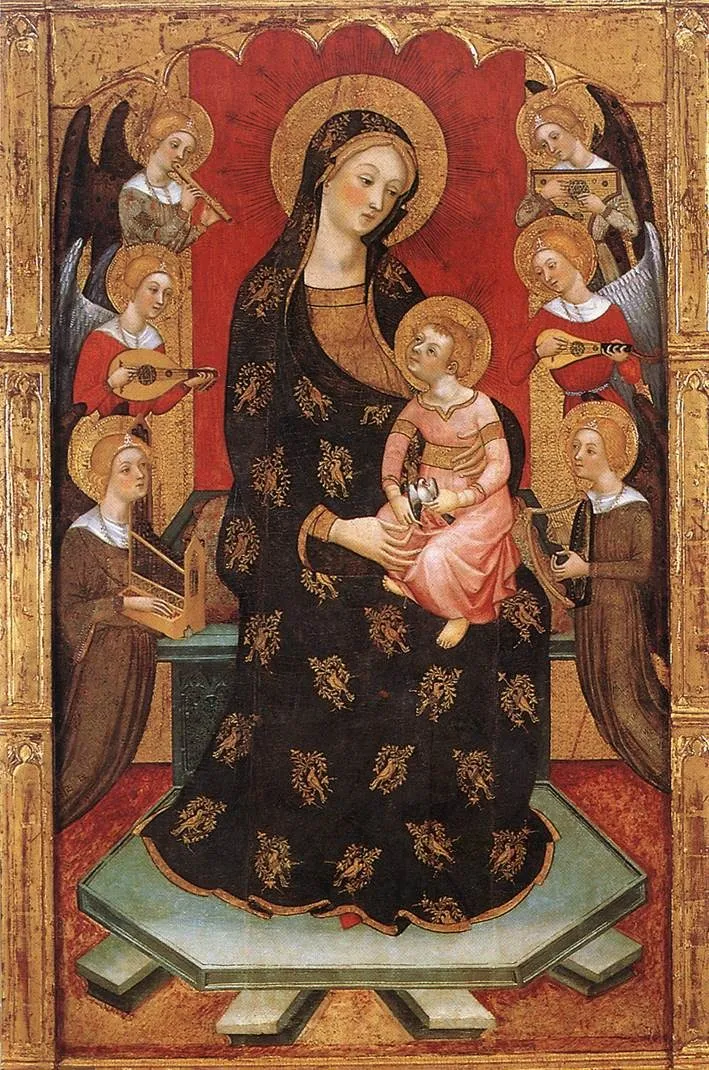
Virgin of the Angels is an unspecified painting by the Byzantine icon painting artist Pere Serra. It dates from 1393 and is held in the collection of the Museu Nacional d'Art de Catalunya.
About this work
Subject & Meaning
The composition shows Mary as a mother figure with the Christ Child, emphasizing divine motherhood and heavenly music within a sacred context.
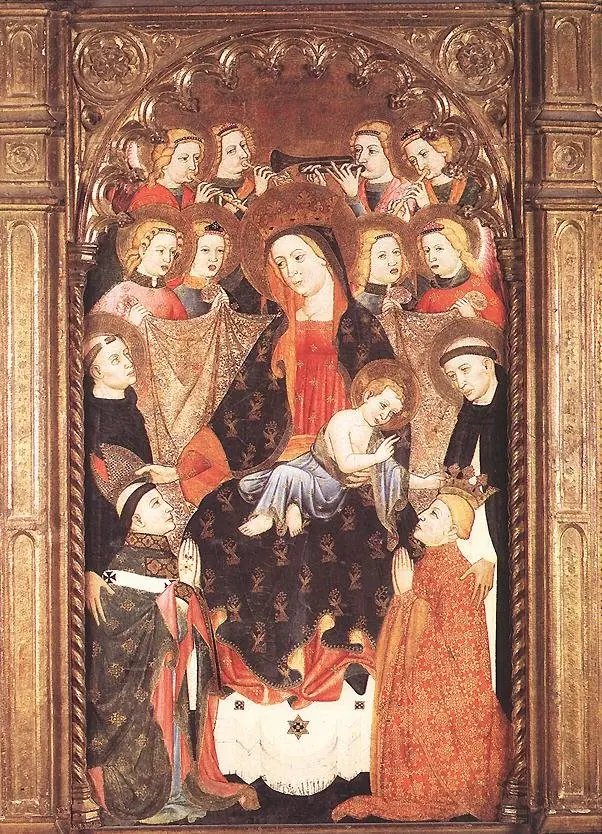
The Virgin of the Angels depicts the Virgin Mary holding the infant Jesus, surrounded by musical angels, representing a popular late medieval devotional image of the Madonna and Child. The composition shows Mary as a mother figure with the Christ Child, emphasizing divine motherhood and heavenly music within a sacred context. This iconography reflects the widespread veneration of Mary in 14th-century Catalan religious practice, where such scenes symbolized both maternal tenderness and heavenly harmony. The work was created for a chapel in Tortosa Cathedral in the 1380s, linking its subject to specific liturgical devotion to the Virgin under the title 'Our Lady of the Angels'.
Technique & Style
The Virgin of the Angels is executed in tempera on a wooden panel support, following the traditional panel-painting practice of late fourteenth-century Catalonia. Pere Serra employed fine, layered brushwork to render the Virgin’s drapery in smooth, luminous folds and to articulate the delicate features of the Christ Child and the surrounding angels. The composition centers on the enthroned Madonna and Child flanked by music-making angels, a refined interpretation of a widely circulating Marian iconography. The panel’s handling emphasizes grace and linearity, with careful attention to the modeling of faces and hands and to the rhythmic arrangement of the angelic figures.
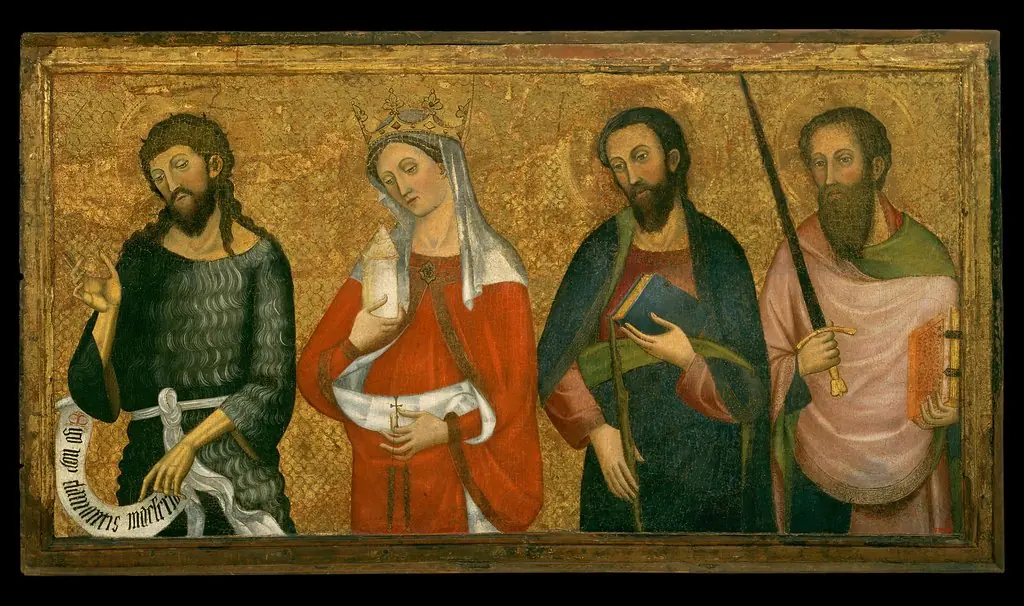
The work survives as the central panel of a dismantled altarpiece, with only the predella saints remaining; no later conservation records are cited in the sources.
History & Provenance
The Virgin of the Angels was painted by Pere Serra around 1385, forming the central panel of an altarpiece dedicated to the Virgin Mary. It was commissioned for one of the chapels in the ambulatory of Tortosa cathedral, probably during the 1380s. The work originally included two predella sections with saints that flanked a tabernacle.
The painting and its two lateral predella panels were acquired by the Museu Nacional d'Art de Catalunya in 1932 from the Plandiura collection. They had previously come from Tortosa cathedral in the Baix Ebre region. The central panel depicts the Virgin and Child surrounded by music-making angels, a highly popular iconographic type of the period. The lateral panels show four saints each: on the left, Saints Peter, Clare of Assisi, James the Greater, and John the Evangelist; on the right, Saints John the Baptist, Mary Magdalene, James the Lesser, and Paul the Apostle.
The painting is held at the Museu Nacional d'Art de Catalunya (MNAC) in Barcelona. The central panel and the two lateral predella sections were acquired by the museum in 1932 from the Plandiura collection. These three panels originated from Tortosa Cathedral (Baix Ebre), where the altarpiece was originally painted for one of the chapels in the ambulatory, probably in the 1380s. No inventory or accession number is provided in the sources. The work is listed on the museum's website.
Context
The Virgin of the Angels represents a refined iteration of an iconographic type featuring the Madonna and Child surrounded by music-playing angels, a motif that achieved immense popularity during the late fourteenth century. Art historical analysis characterizes the work as a graceful and delicate execution of this widespread theme. The painting originally functioned as the central panel of an altarpiece dedicated to the Virgin Mary, likely commissioned for a chapel within the ambulatory of Tortosa Cathedral around the 1380s.
The work situates Pere Serra within a prominent dynasty of painters who came to dominate Catalan art in the latter half of the fourteenth century. Although the complete altarpiece is lost, surviving components, including the central panel and predella sections depicting various saints, were acquired by the Museu Nacional d'Art de Catalunya in 1932 from the Plandiura collection. These remnants provide critical insight into the Gothic artistic production of the region during this period.
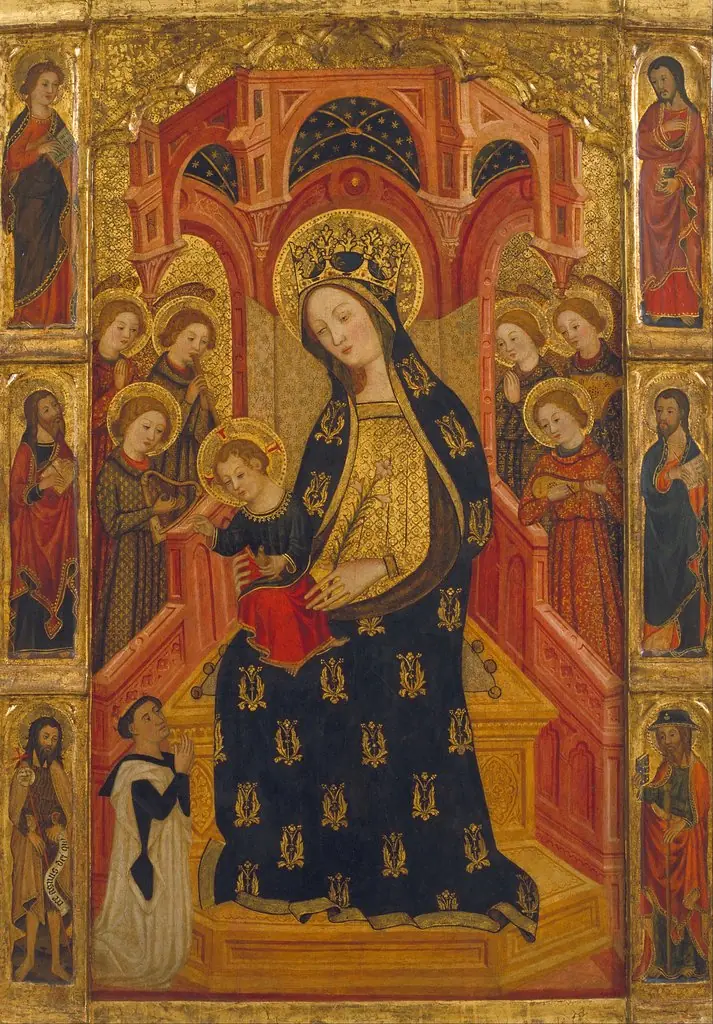
Artist & collection
Artist
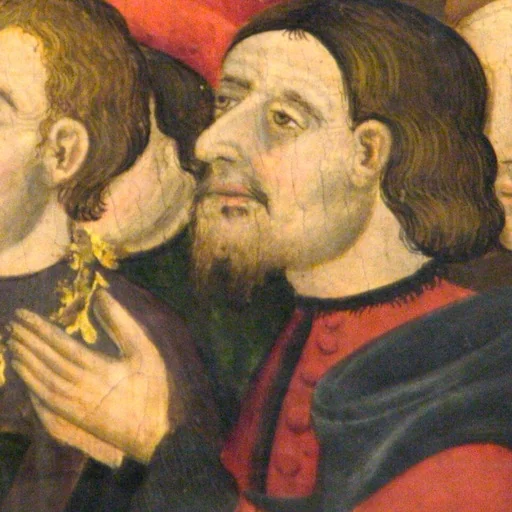
Pere Serra was a painter in Gothic-Italian style, who was active in Catalonia in 1357–1406.

 Virgin and Child with Angels and Saints
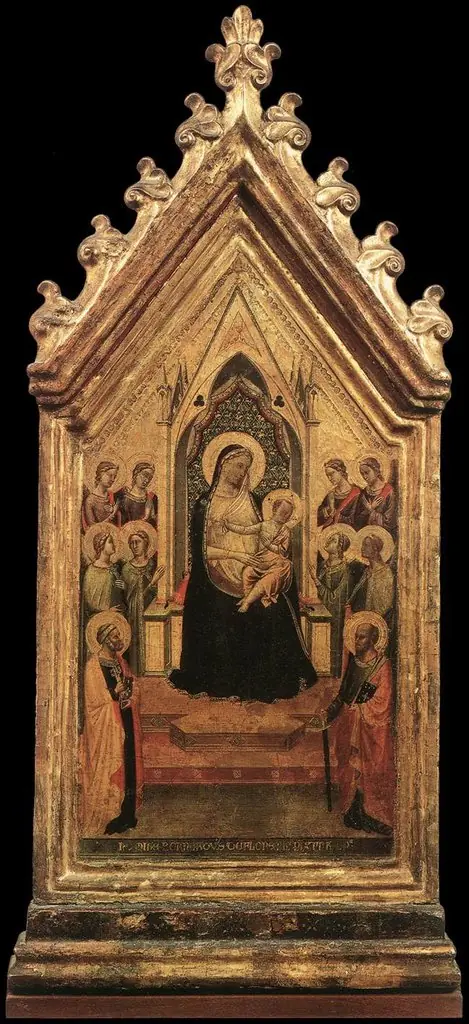 Madonna and Child Enthroned with Angels and Saints
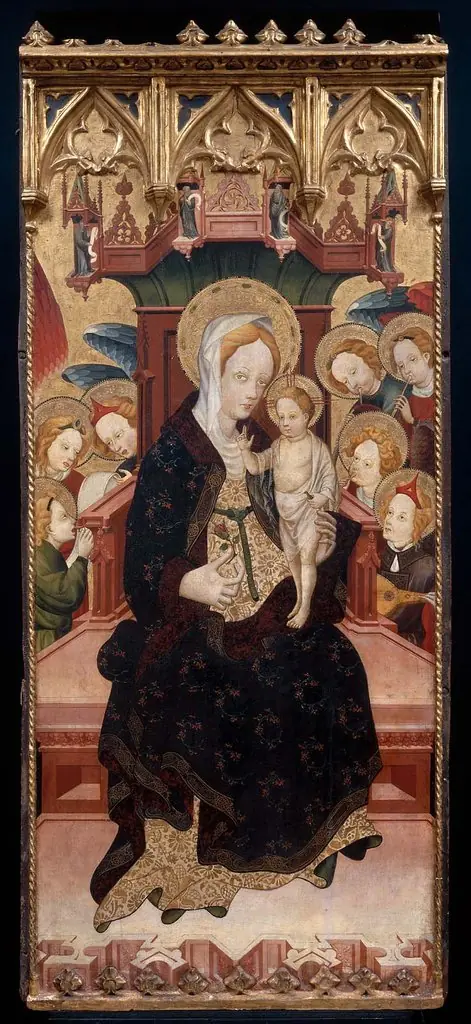 Virgin and Child Enthroned
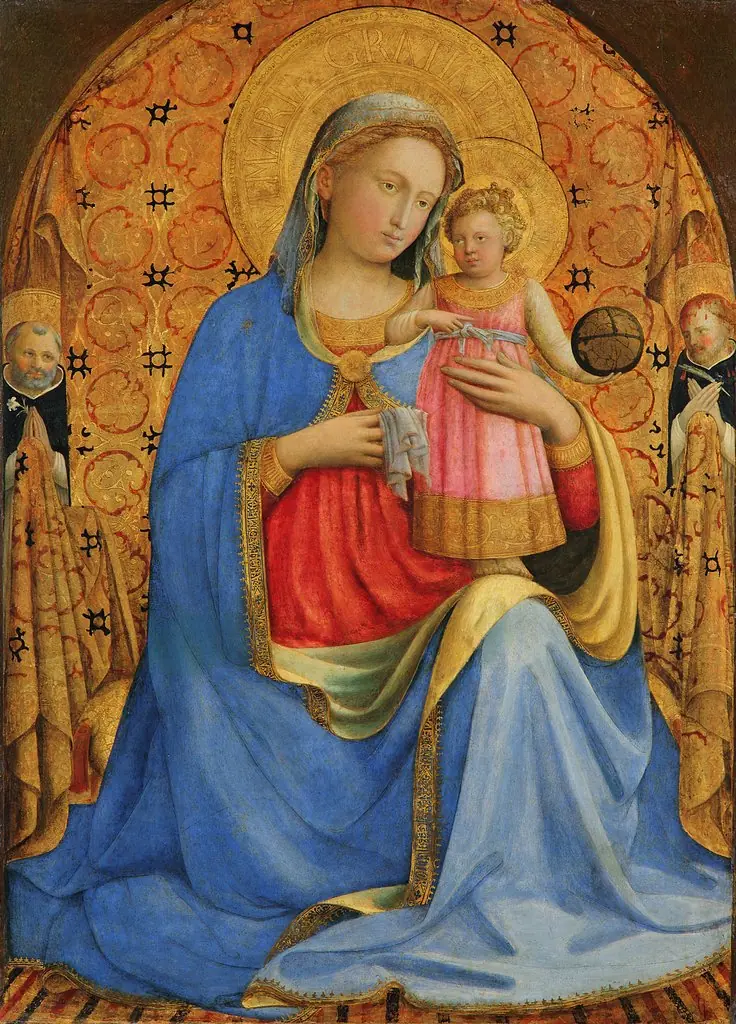 Madonna and Child
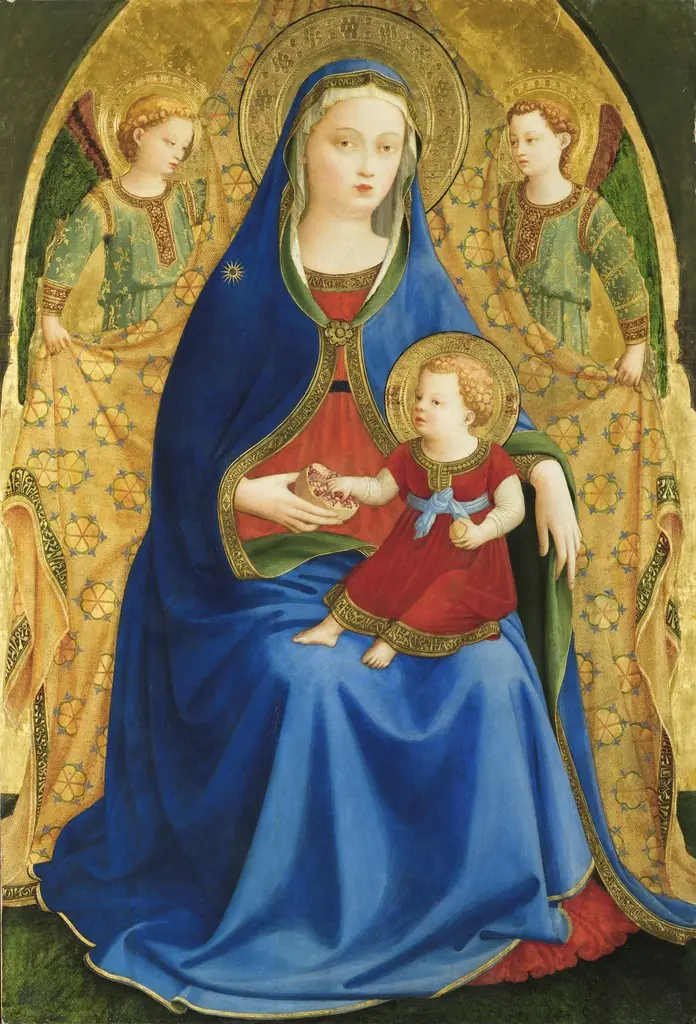 Madonna of the Pomegranate
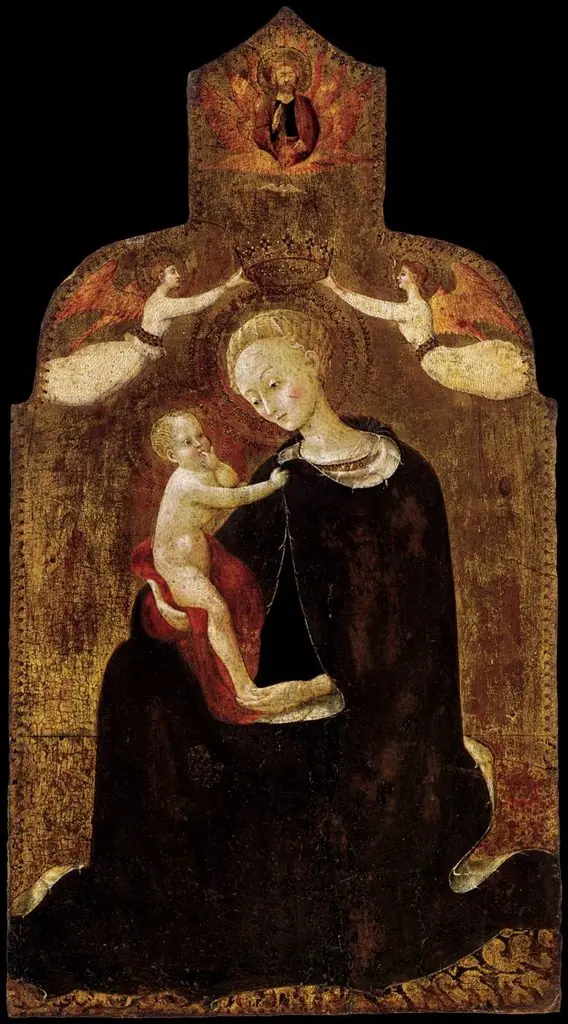 Madonna of Humility
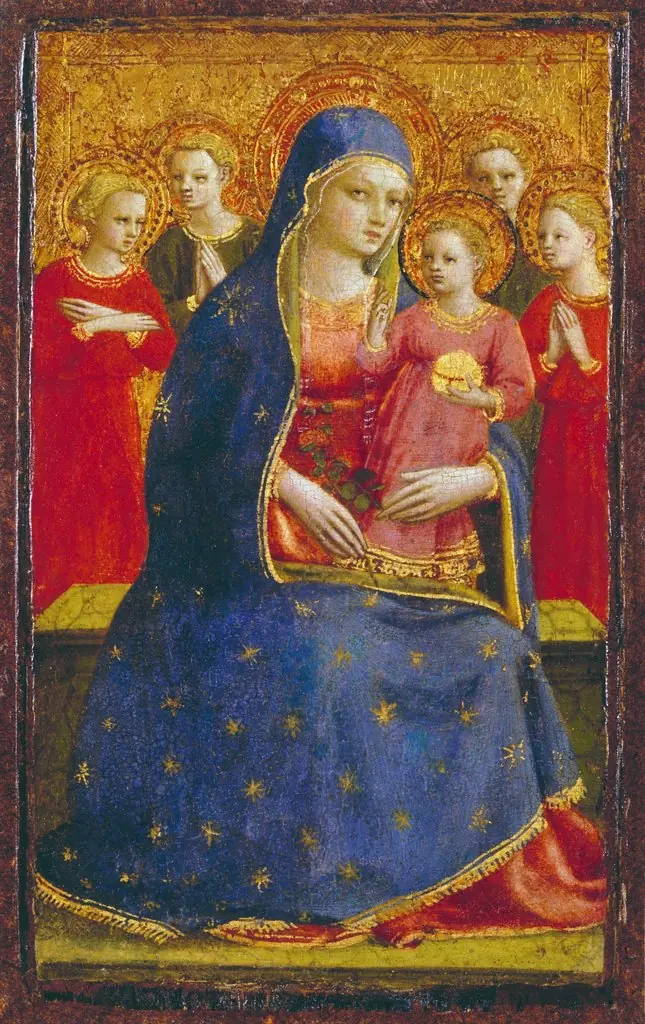 Madonna and Child with Angels
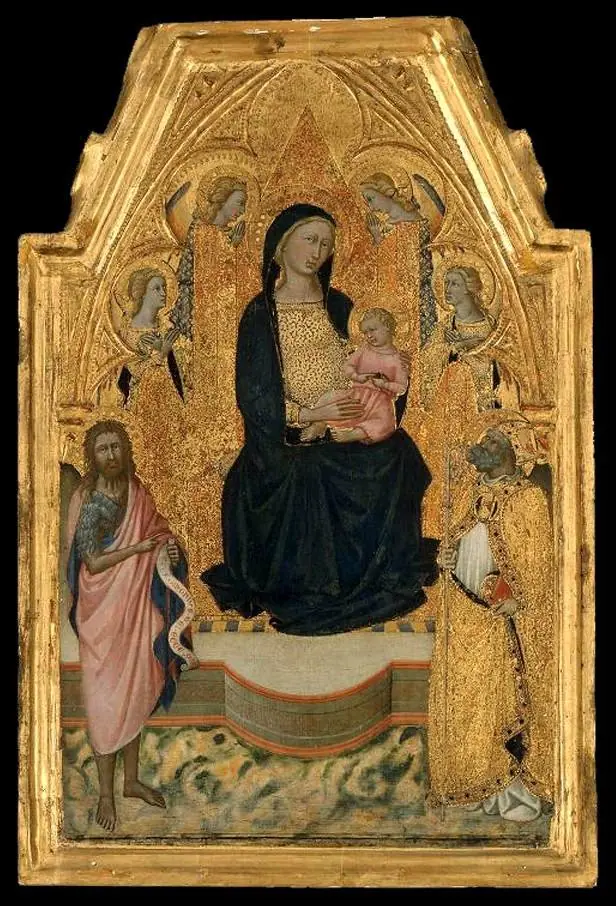 Virgin and Child Enthroned with a Bishop Saint, Saint John the Baptist, and Four Angels
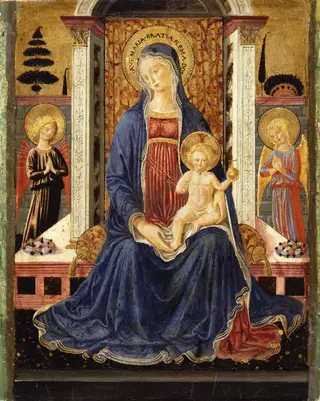 The Virgin and Child enthroned with two angels