Artwork
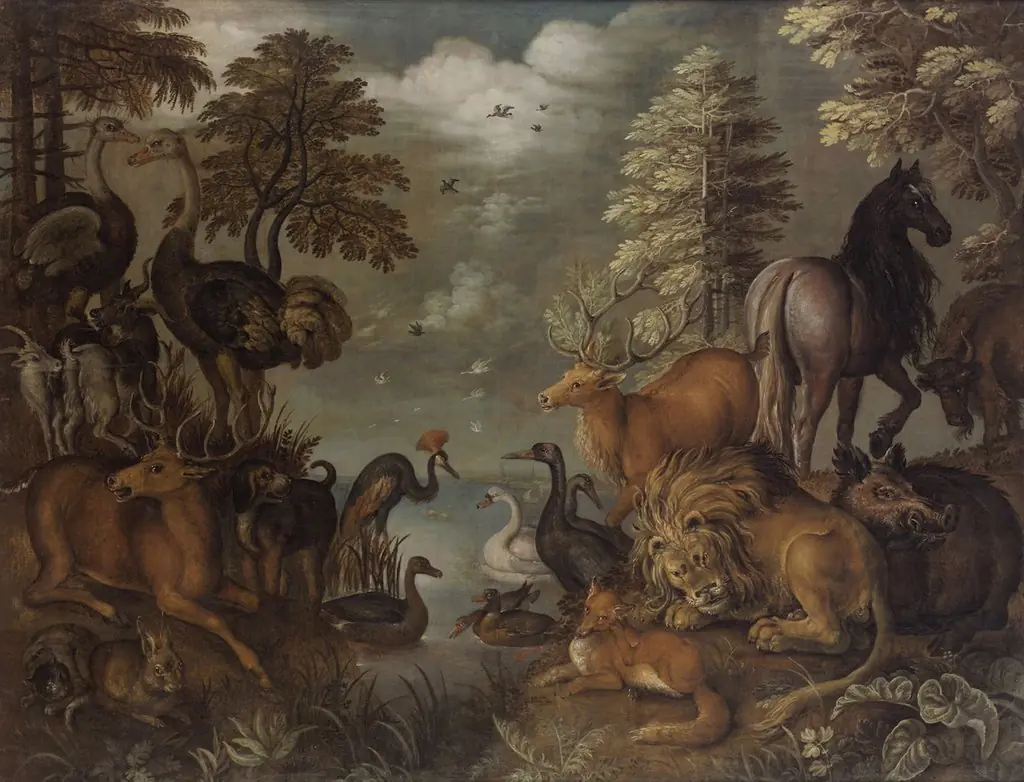
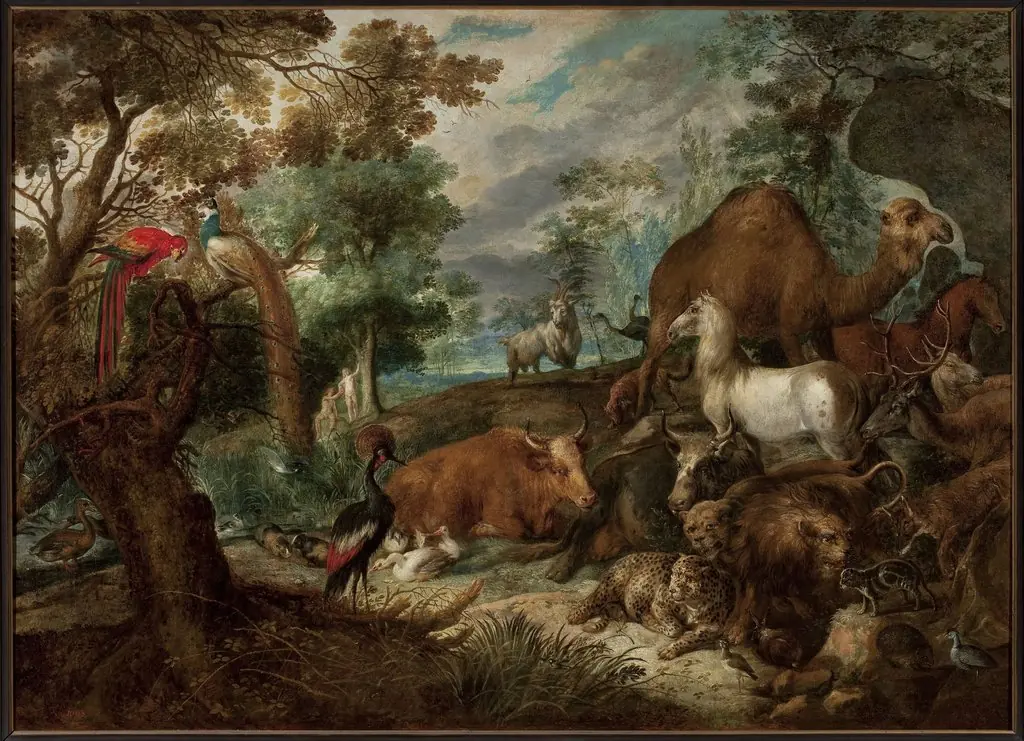
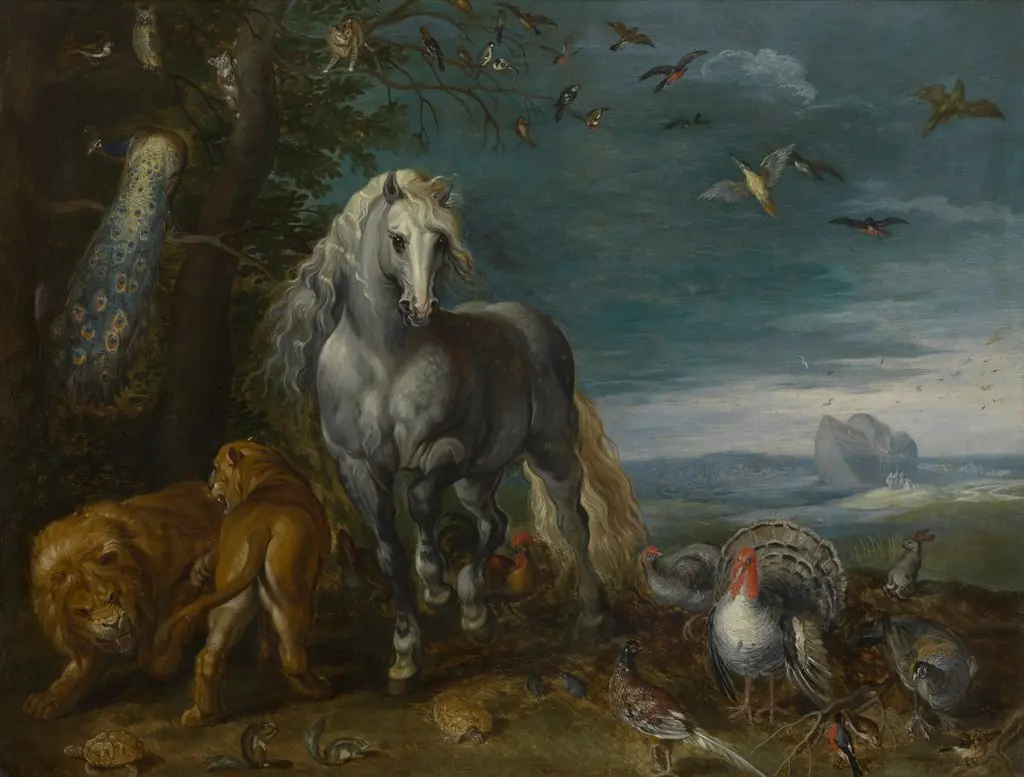
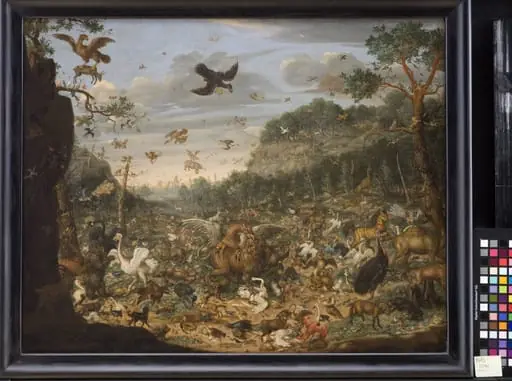
Various animals gathered before Noah's Ark
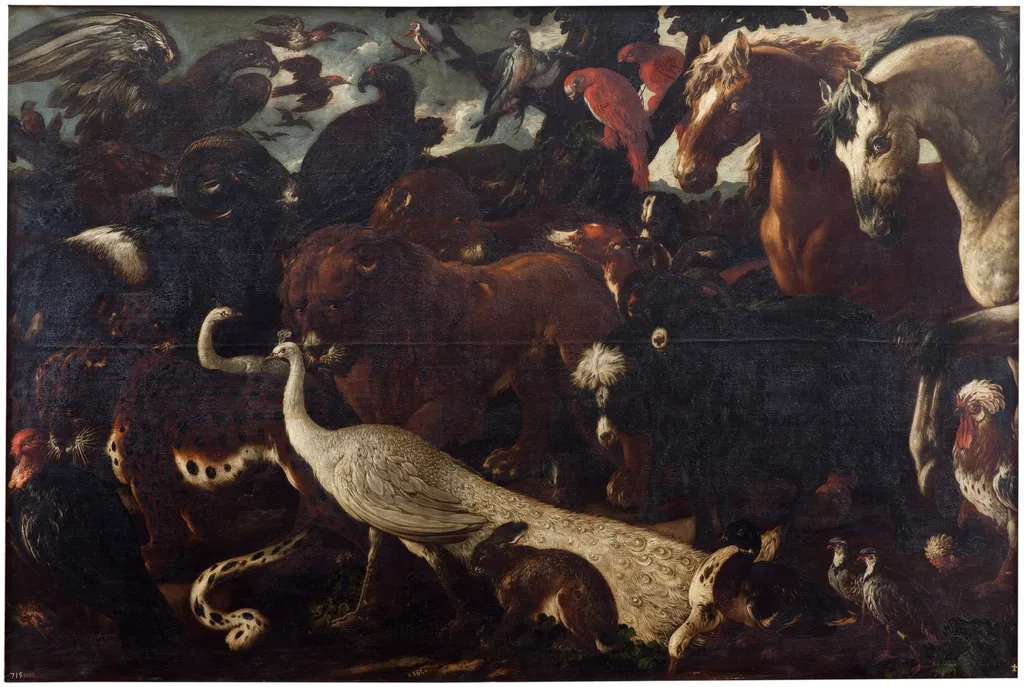
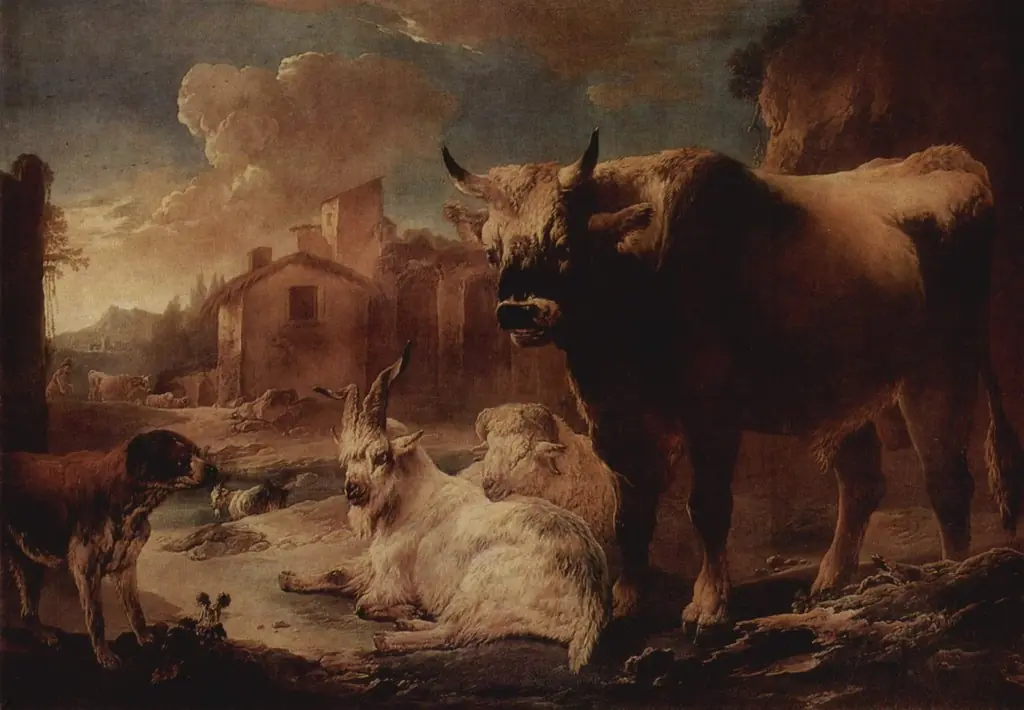
Various animals gathered before Noah's Ark is an oil painting by the Flemish Baroque painting artist Philipp Peter Roos. It dates from 1669 and is held in the collection of the Museo del Prado.
About this work
Technique & Style
These formal choices underscore the painting’s blend of documentary observation and idealized pastoralism.
The work is executed in oil paint on canvas, a standard support for 17th‑century European easel painting. The brushwork combines naturalistic detail in the rendered fauna with a more expressive handling of foliage and sky, typical of the Bamboccianti's small‑scale genre scenes. Compositional balance is achieved through the diagonal thrust of the embarkation motif, while the palette of earth tones and muted greens reinforces the rustic narrative. These formal choices underscore the painting’s blend of documentary observation and idealized pastoralism.
History & Provenance
Philipp Peter Roos painted Various animals gathered before Noah's Ark in 1669 as an oil on canvas work measuring 199 by 295 centimeters. The painting entered the Spanish royal collection through Elisabeth Farnese, later passing to Charles III and Ferdinand VII of Spain. It remains in the Museo del Prado, where it is classified as animal art and depicted as the embarkation of Noah's Ark.
The painting Various animals gathered before Noah's Ark by Philipp Peter Roos is held in the collection of the Museo del Prado in Madrid. The work entered the museum's holdings after passing through the ownership of Elisabeth Farnese, Charles III of Spain, and Ferdinand VII of Spain. Created in 1669, the oil on canvas depicts the embarkation of Noah's Ark and measures 199 cm in height by 295 cm in width.
The sources do not provide specific inventory or accession numbers, nor do they list any exhibition history for the work.
Overview
Philipp Peter Roos’s 1669 oil painting, Various Animals Gathered Before Noah’s Ark, presents a crowded tableau of fauna poised before the legendary vessel. Executed in the Flemish Baroque idiom, the work now resides in the Museo del Prado. The composition clusters a white bird, a cow, horses, a rooster and a peacock in the foreground, while darker tones recede to reveal rabbits, smaller birds and a dog amid a muted backdrop.
Subject & Meaning
The scene interprets the biblical moment when creatures assemble for entry onto Noah’s Ark, a narrative of salvation and renewal. By juxtaposing domesticated and wild species, Roos underscores the universality of the flood story, suggesting a harmonious gathering of all living beings awaiting divine deliverance.
Context
Created during a period when biblical subjects were popular among patrons seeking moral instruction, the work aligns with contemporary trends of animal painting, a genre in which Roos specialized. His focus on lively animal groups parallels the work of his contemporaries in Rome, who often combined narrative content with detailed naturalism.
Own this work as a print
Artist & collection
Artist
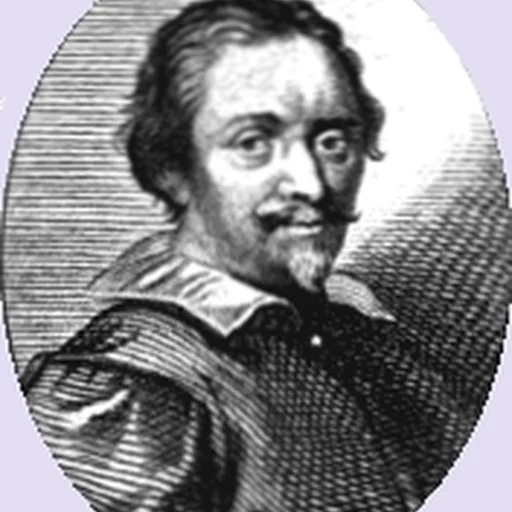
Philipp Peter Roos (later surnamed Rosa di Tivoli; 1655–1706) was a German Baroque painter, active in and near Rome from 1677 onward.