Artwork
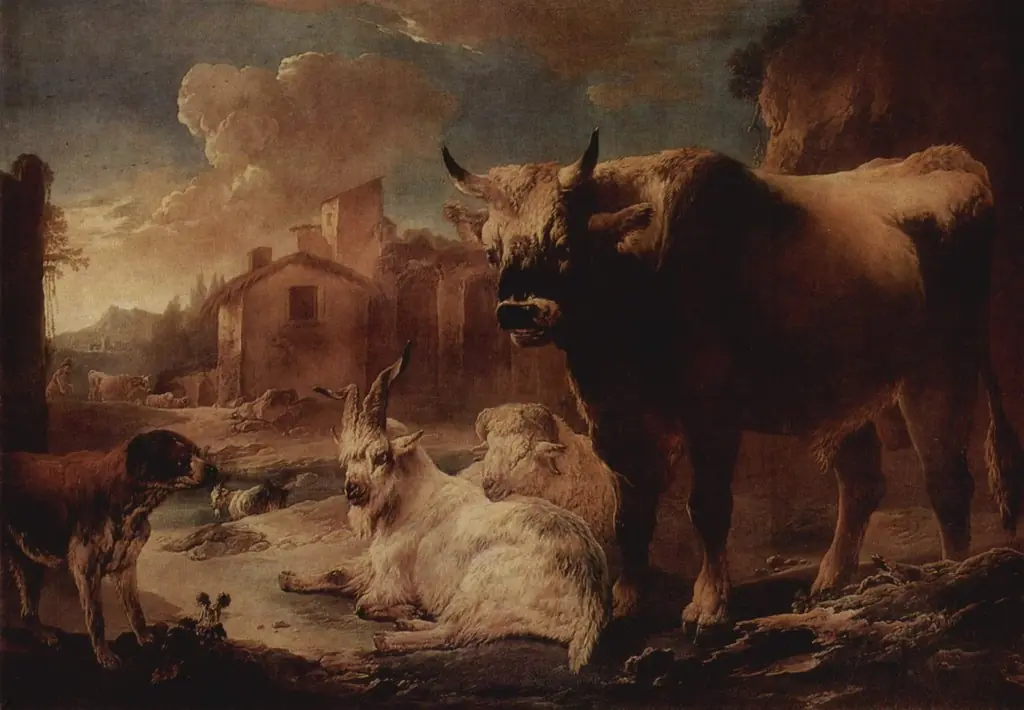
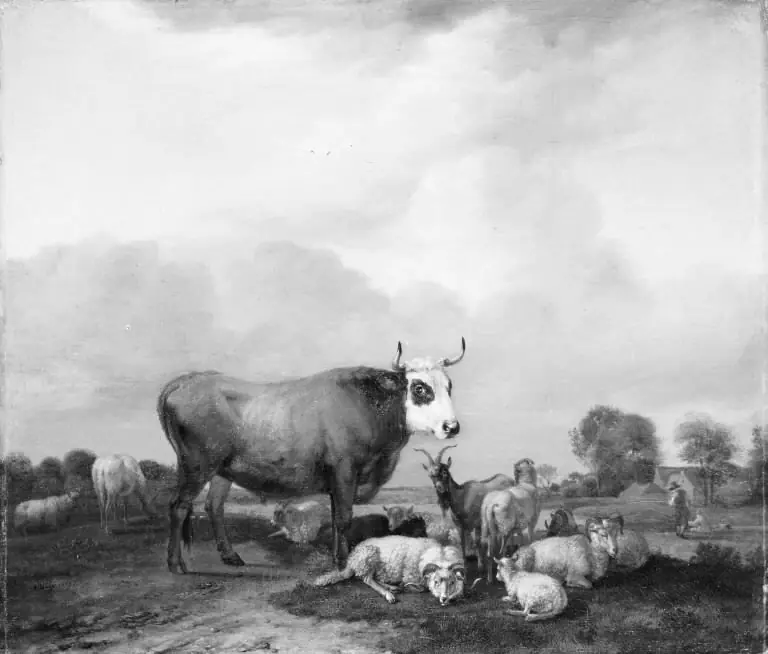
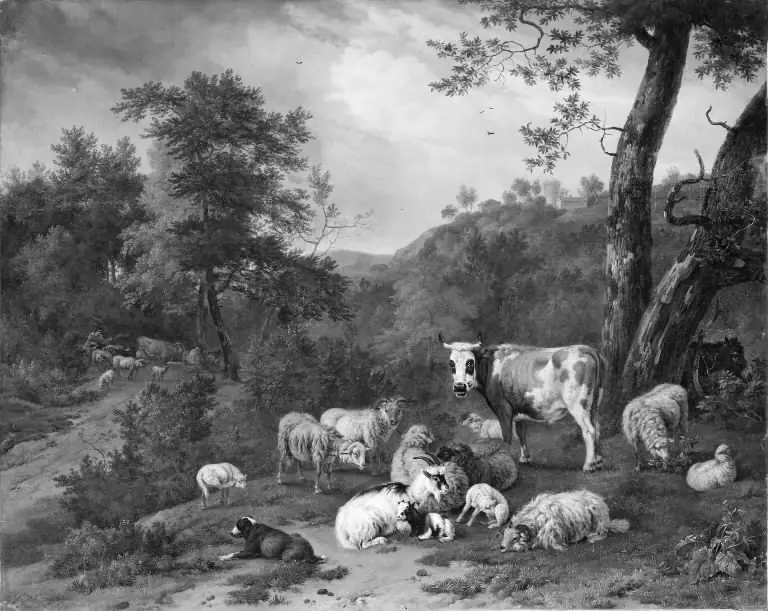
Landscape with a Bull, Sheep and Goats
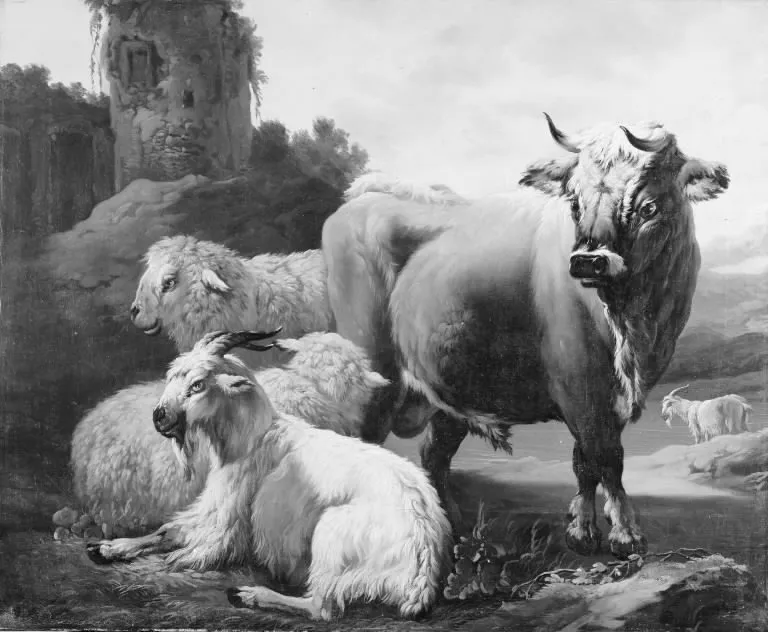
Landscape with a Bull, Sheep and Goats is an oil painting by the Flemish Baroque painting artist Philipp Peter Roos. It dates from 1694 and is held in the collection of the Statens Museum for Kunst.
About this work
Overview
Painted in 1694 by Philipp Peter Roos, this oil on canvas work presents a quiet rural scene in the Italian countryside.
Painted in 1694 by Philipp Peter Roos, this oil on canvas work presents a quiet rural scene in the Italian countryside. Roos, a German artist active near Rome from the late 1670s, focused on animal subjects within natural settings. The painting is part of the Statens Museum for Kunst’s collection and reflects the influence of Flemish Baroque traditions, particularly in its attention to organic forms and atmospheric depth.
Subject & Meaning
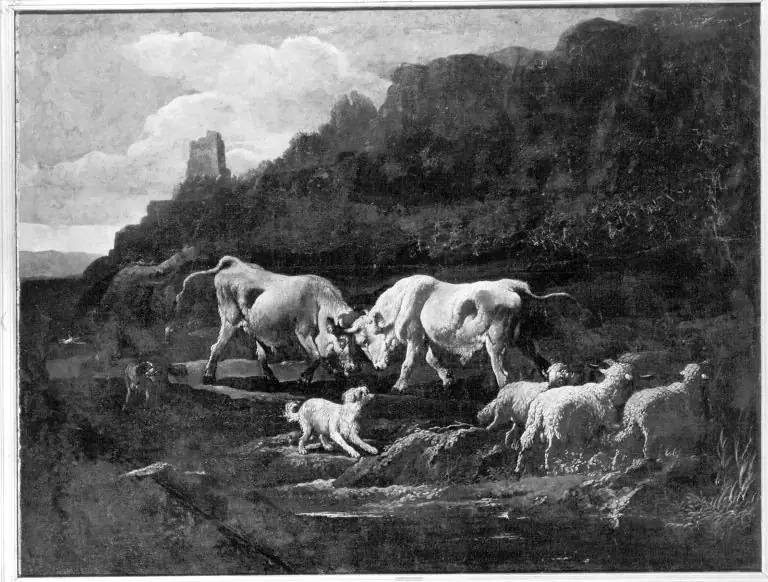
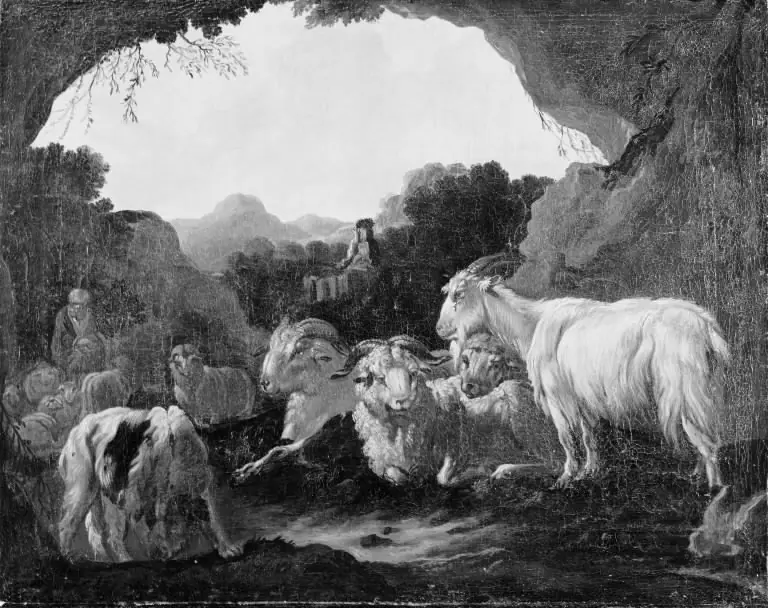
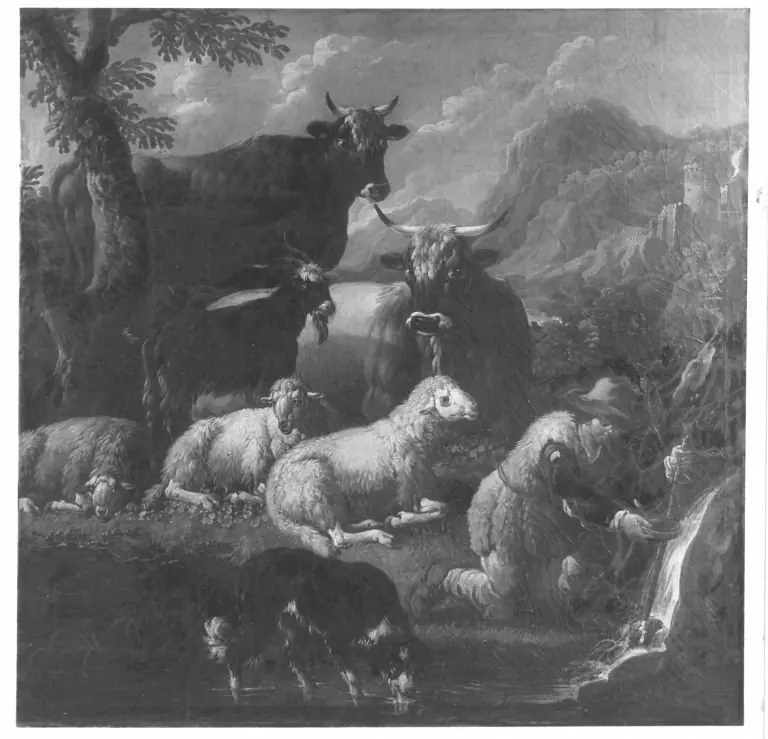
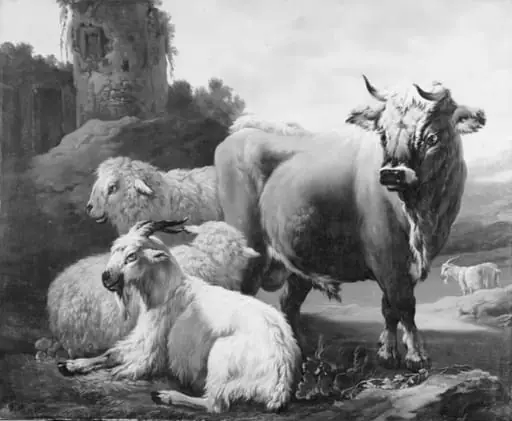
The composition centers on a muscular bull standing atop a gentle slope, while three sheep and a goat rest below, their forms relaxed and integrated into the terrain. The animals are rendered without human presence, emphasizing nature’s quiet rhythms. The ruined tower in the distance suggests the passage of time and the remnants of human habitation, reinforcing a theme of pastoral stillness over architectural permanence.
Technique & Style
Roos employed chiaroscuro to model the animals’ forms, using subtle shifts in light and shadow to define volume and texture. The bull’s dark coat absorbs light, while the wool of the sheep and goat catches it in soft, luminous highlights. Brushwork is precise yet unobtrusive, allowing the naturalism of the scene to dominate. The background fades into a hazy horizon, enhancing depth without distracting from the foreground subjects.
History & Provenance
Created during Roos’s time in Italy, the painting remained within European collections before entering the Statens Museum for Kunst in Denmark. Its documented history is limited, but its stylistic ties to Flemish and Roman pastoral traditions suggest it was likely produced for private patrons interested in idealized rural life. No major alterations or restorations are recorded in public archives.
Context
In late 17th-century Italy, artists often turned to pastoral themes as a counterpoint to religious and mythological subjects. Roos’s focus on livestock aligned with a broader trend among Northern European painters working in Rome, who sought to capture the dignity and naturalism of animals. His work reflects a growing interest in observation over idealization, bridging Flemish detail with Italian landscape sensibilities.
Legacy
Though not widely known today, Roos’s paintings contributed to the development of animal painting as a serious genre in Baroque art. His careful rendering of fur, light, and terrain influenced later artists interested in naturalism. Landscape with a Bull, Sheep and Goats remains a quiet example of how everyday rural life could be rendered with quiet authority, without grand narrative or dramatic intervention.
Artist & collection
Artist
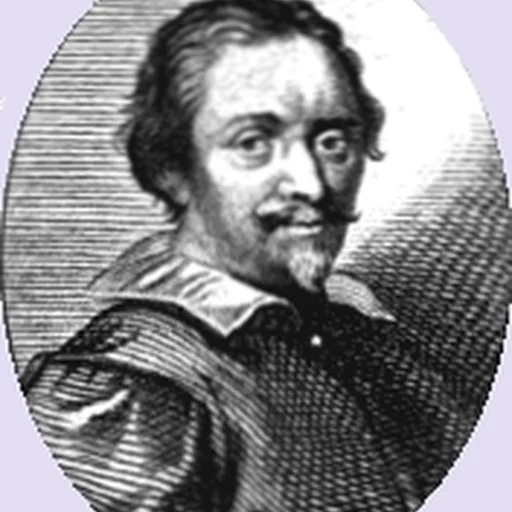
Philipp Peter Roos (later surnamed Rosa di Tivoli; 1655–1706) was a German Baroque painter, active in and near Rome from 1677 onward.