Artwork
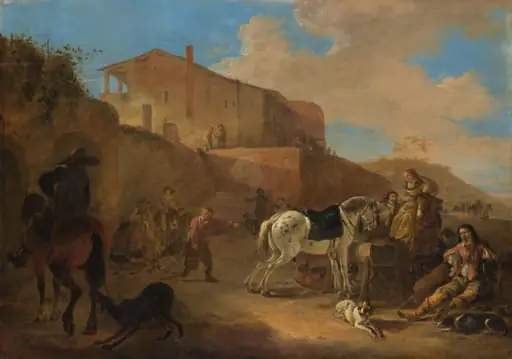
Blacksmith shoeing a horse
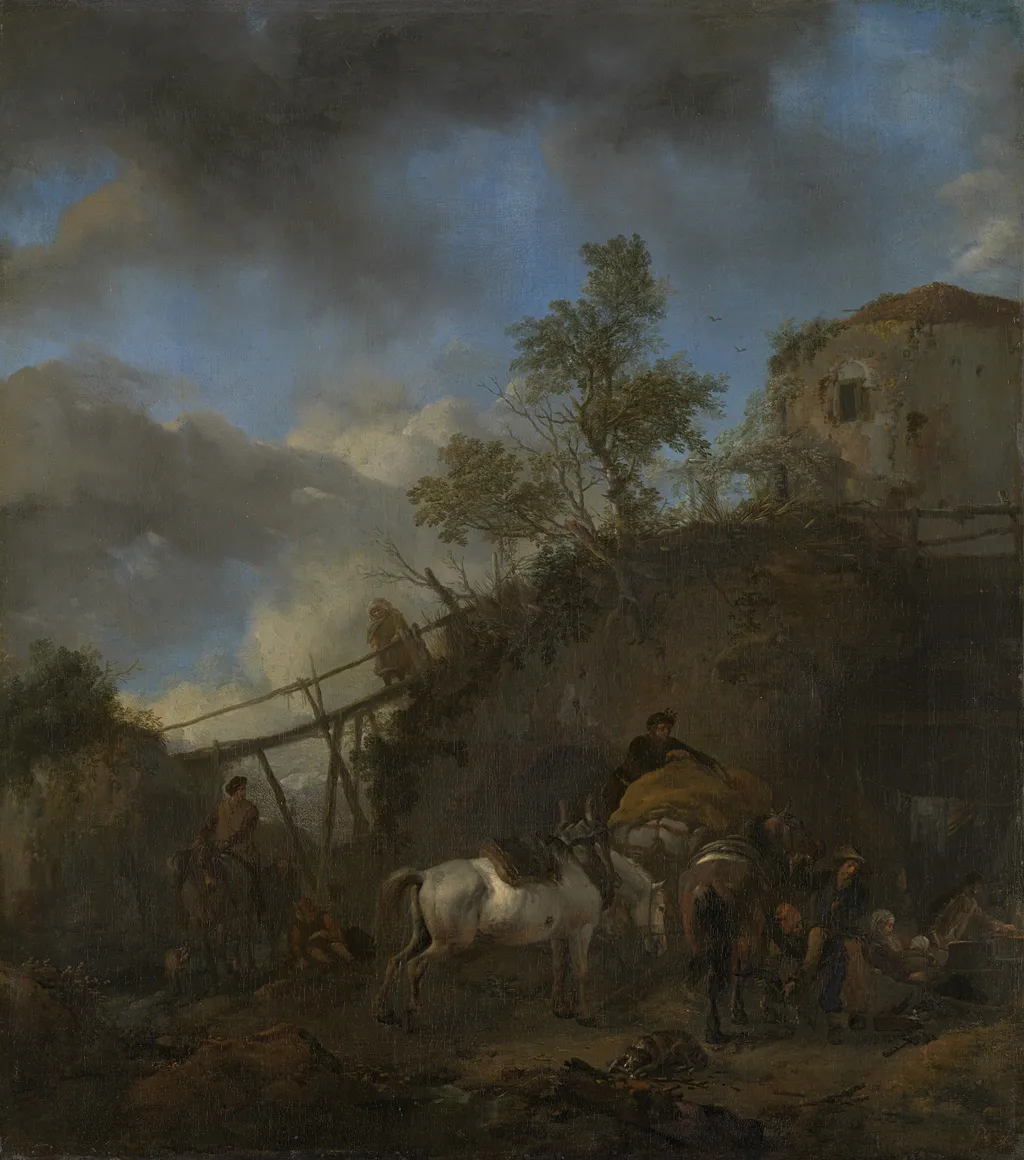
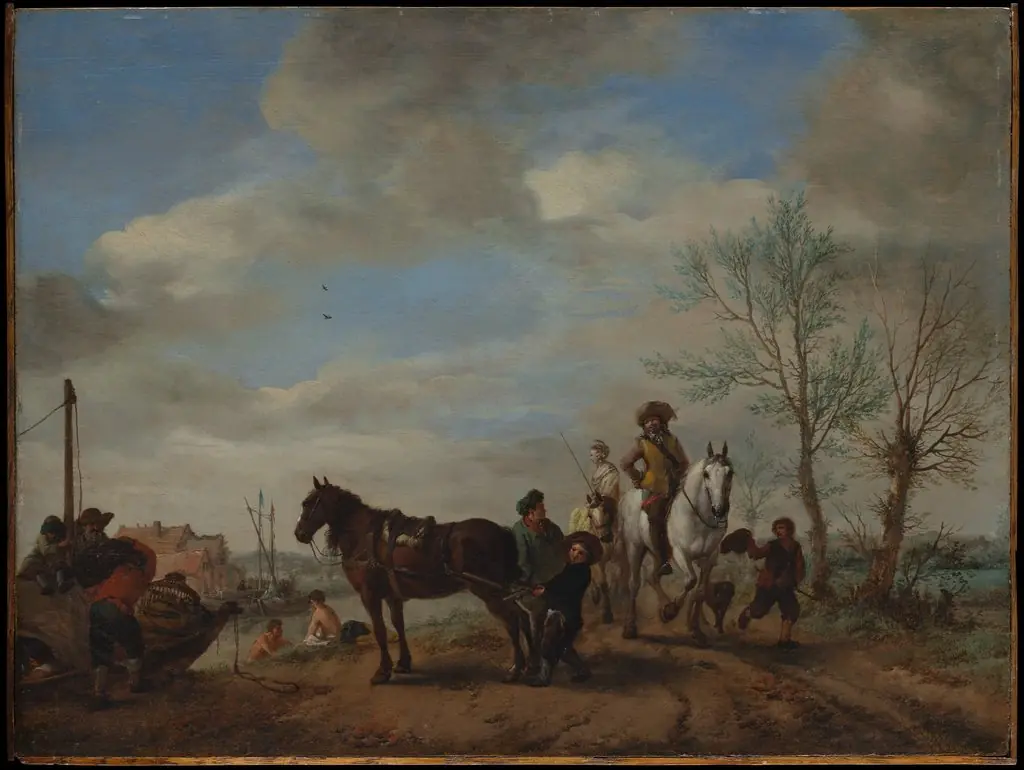
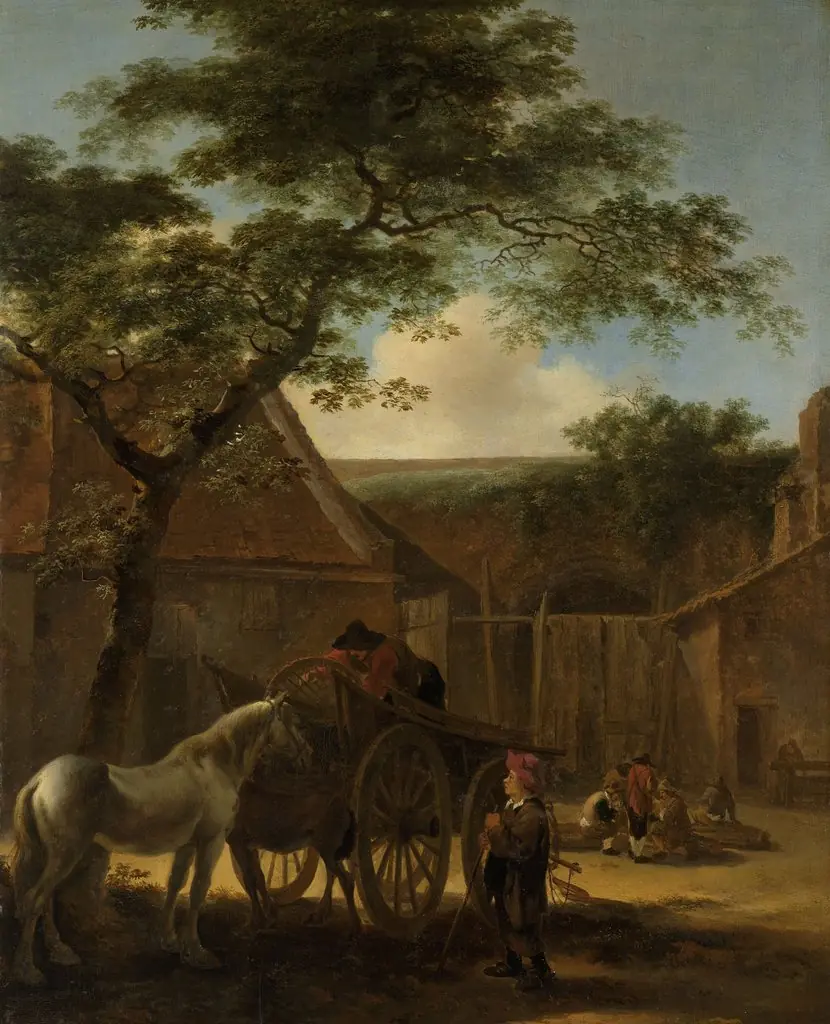
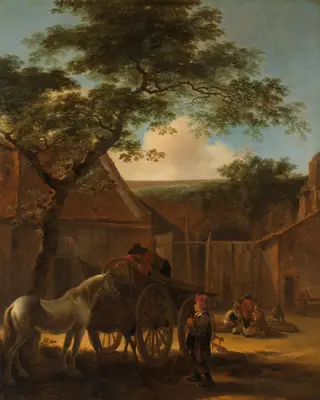
Blacksmith shoeing a horse is an oil painting by the Dutch Golden Age artist Philips Wouwerman. It dates from 1650 and is held in the collection of the Rijksmuseum.
About this work
Subject & Meaning
Through this realistic portrayal, Wouwerman may be highlighting the dignity of manual labor and the interconnectedness of human and animal existence.
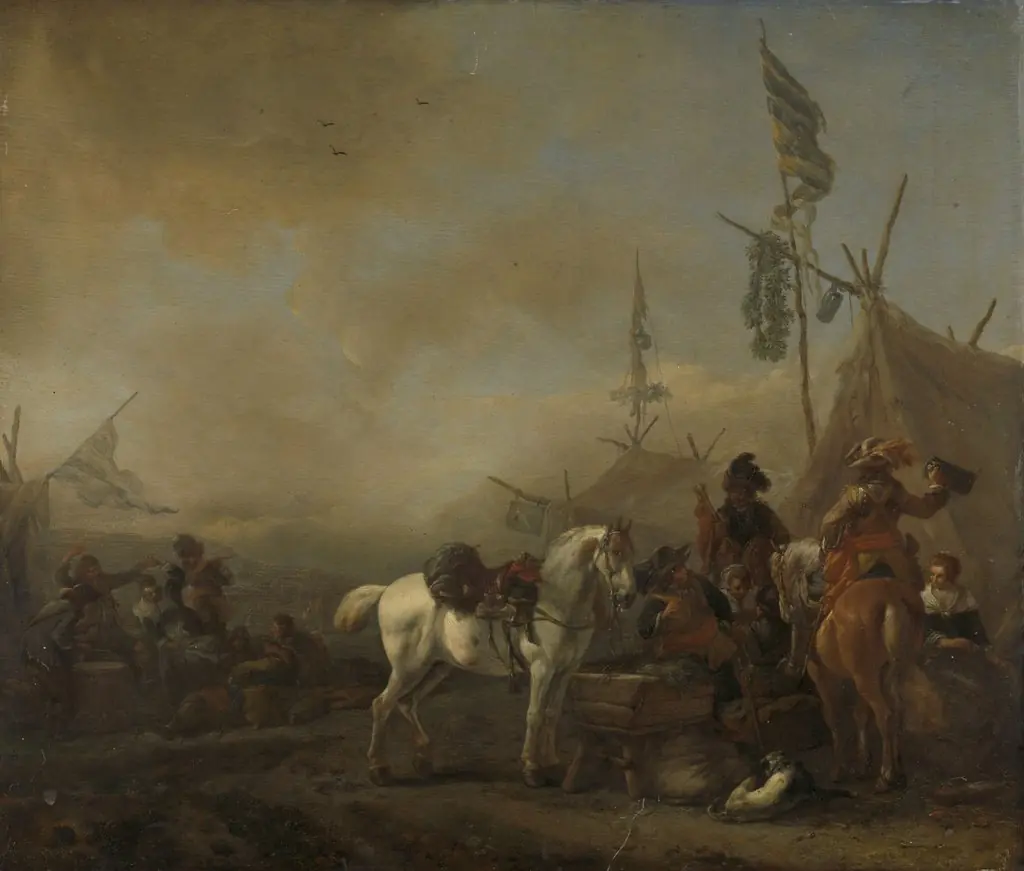
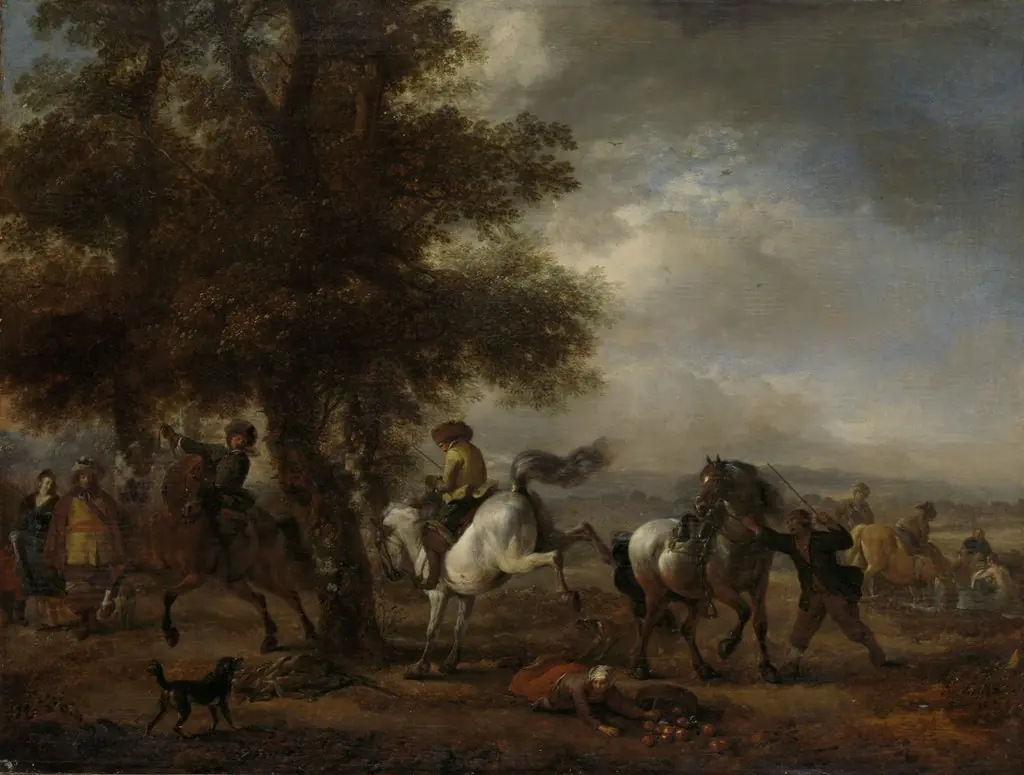
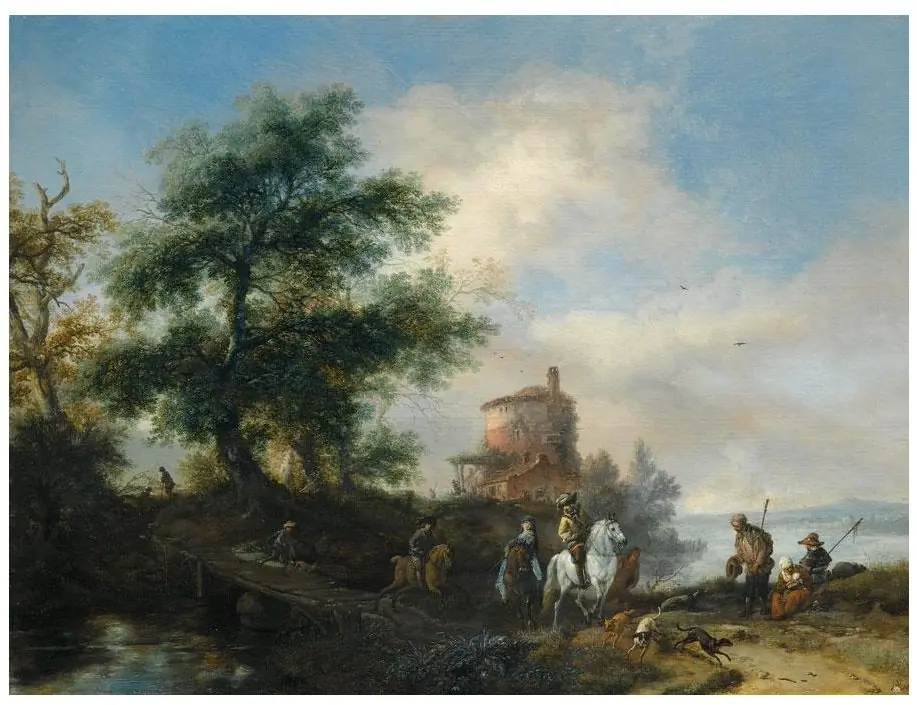
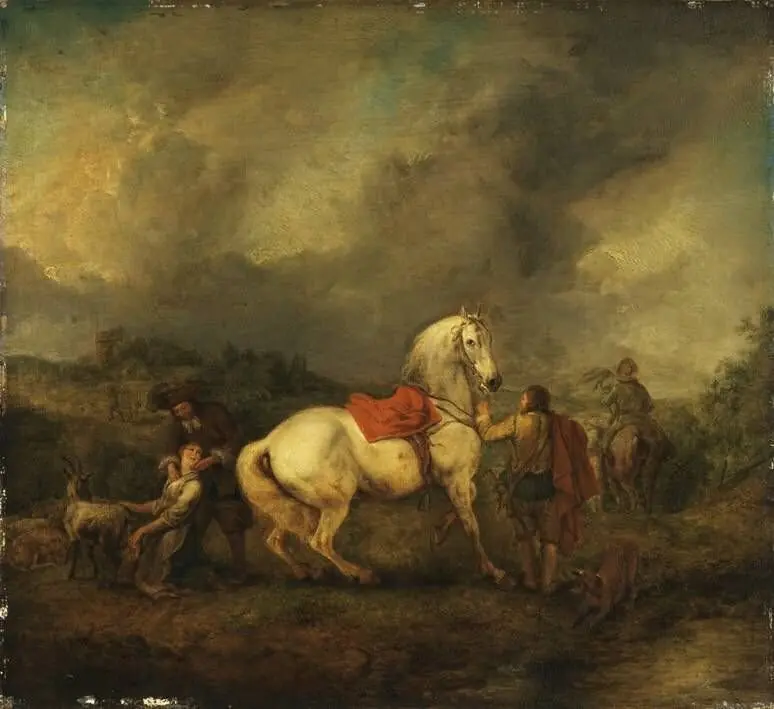
The painting shows a blacksmith engaged in the act of shoeing a horse, a scene that captures the everyday labor of rural life. The depiction of the blacksmith with his tools and the animal emphasizes themes of hard work and the essential role of skilled trades in society. The surrounding landscape and tree provide a natural backdrop that frames the activity, suggesting a harmonious relationship between human effort and the environment.
Through this realistic portrayal, Wouwerman may be highlighting the dignity of manual labor and the interconnectedness of human and animal existence.
Technique & Style
The painting is executed in oil paint on canvas, reflecting 17th-century Dutch techniques. Its dimensions are 62 cm by 55 cm, characteristic of landscape compositions from this period. The work depicts a blacksmith shoeing a horse, a scene rendered with naturalistic detail and careful handling of light and shadow, typical of Philips Wouwerman's style.
The formal qualities include precise brushwork in defining the horse's musculature and the blacksmith's gestures, with a muted tonal palette emphasizing earthy browns and grays. The composition balances dynamic movement with compositional stability, achieved through careful spatial arrangement and atmospheric perspective.
History & Provenance
Philips Wouwerman created the oil painting Blacksmith shoeing a horse in 1650. The work was produced in Haarlem and executed on canvas. Historical records indicate that the piece was once owned by Gerrit van der Pot. Today, the painting is held in the collection of the Rijksmuseum.
The painting Blacksmith shoeing a horse by Philips Wouwerman is held in the collection of the Rijksmuseum in Amsterdam. The work, created around 1650, is executed in oil on canvas and depicts a landscape scene featuring a horse and a tree. Historical records indicate the piece was previously owned by Gerrit van der Pot before entering the museum's holdings. The artwork is cataloged within the Rijksmuseum's inventory, where it remains part of the permanent collection.
Overview
Philips Wouwerman’s oil painting Blacksmith shoeing a horse, executed around 1650, presents a quiet rural scene in which a horse is attended by a blacksmith. The work is part of the Rijksmuseum’s collection and exemplifies the artist’s focus on everyday activities within a natural landscape.
Context
During the Dutch Golden Age, scenes of daily labour were popular subjects, offering moral and economic commentary. Wouwerman, known primarily for equestrian and landscape subjects, often incorporated figures engaged in work, linking the vitality of the countryside with the prosperity of the Dutch Republic. This work aligns with that tradition, illustrating the interdependence of humans and animals in agricultural life.
Own this work as a print
Artist & collection
Artist
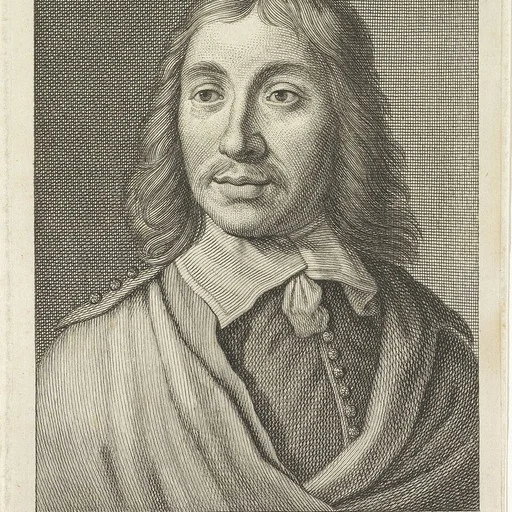
Philips Wouwerman (also Wouwermans) (24 May 1619 (baptized) – 19 May 1668) was a Dutch painter of hunting, landscape and battle scenes. He became prolific during the Dutch Golden Age and joined the Haarlem Guild of St. Luke.