Artwork
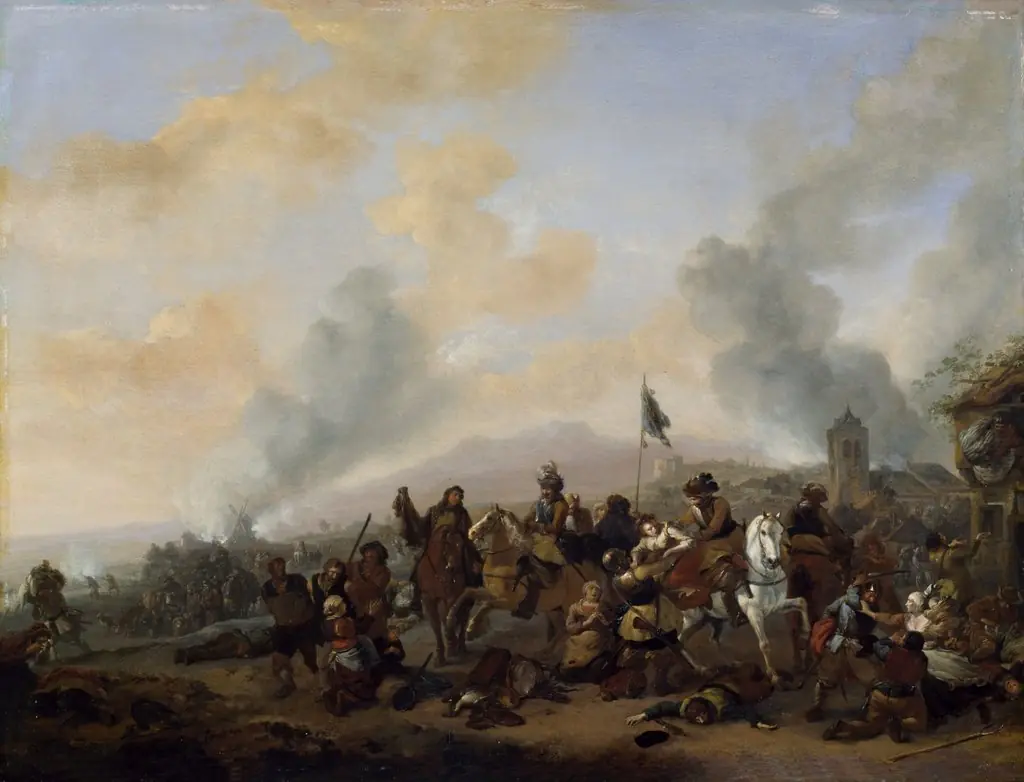
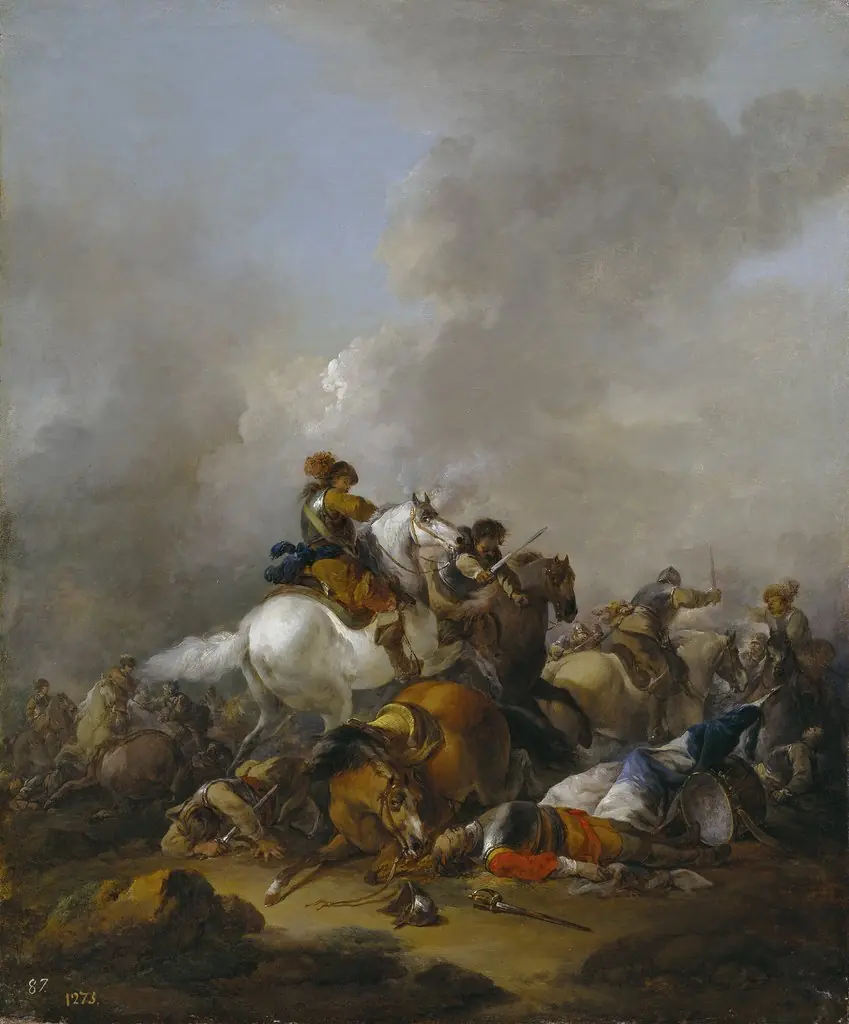
Cavalry in front of a Burning mill
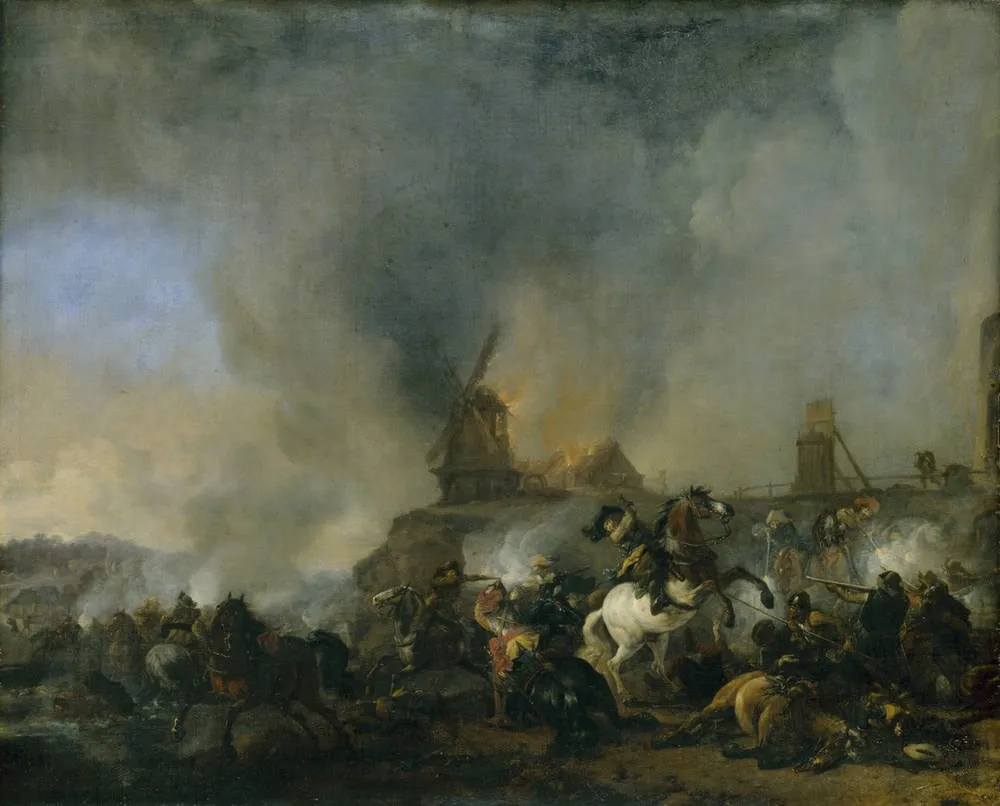
Cavalry in front of a Burning mill is an oil painting by the Dutch Golden Age artist Philips Wouwerman. It dates from 1660 and is held in the collection of the Staatliche Kunstsammlungen Dresden.
About this work
Overview
5 cm in width, the artwork was created in Haarlem and is currently held by the Gemaldegalerie Alte Meister, part of the Staatliche Kunstsammlungen Dresden.
Cavalry in front of a Burning mill is an oil on canvas genre painting by the Dutch artist Philips Wouwerman, dated to 1660. Measuring 54.5 cm in height and 66.5 cm in width, the artwork was created in Haarlem and is currently held by the Gemaldegalerie Alte Meister, part of the Staatliche Kunstsammlungen Dresden. The painting is a dramatic representation of 17th century military conflict, combining genre art with the turmoil of battle, and it stands as a significant example of Wouwerman's exploration of warfare and equestrian subjects.
Subject & Meaning
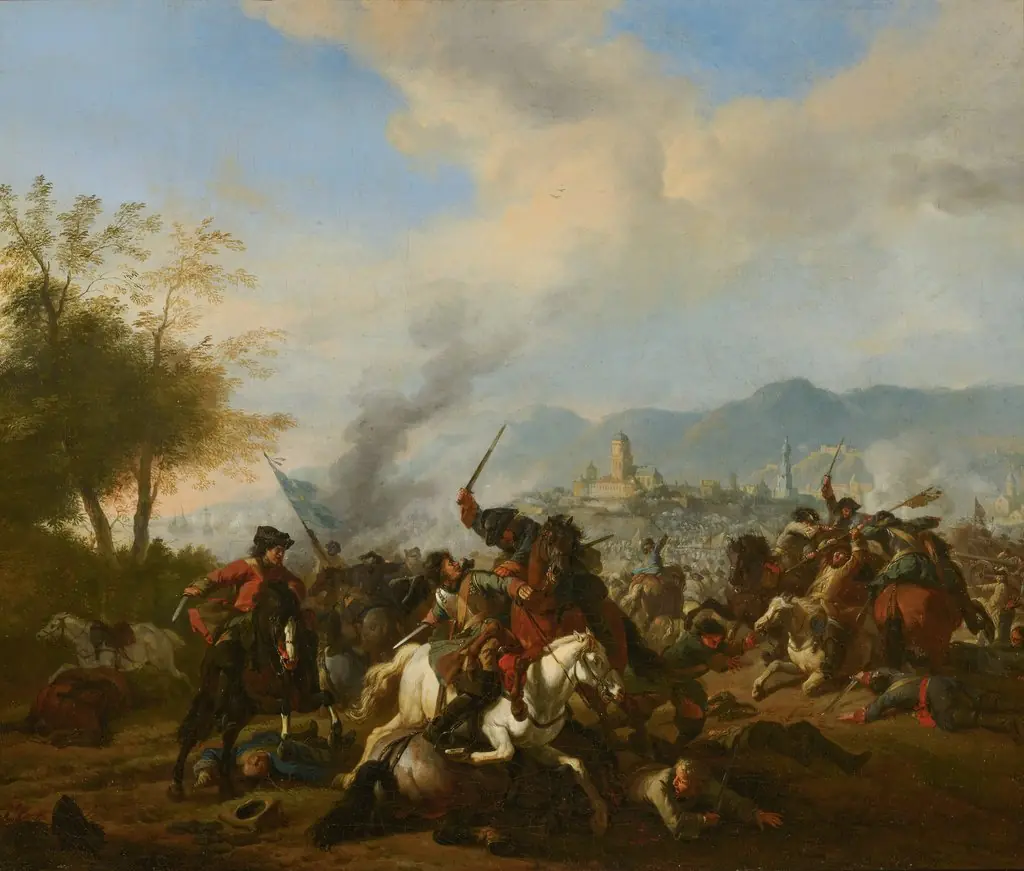
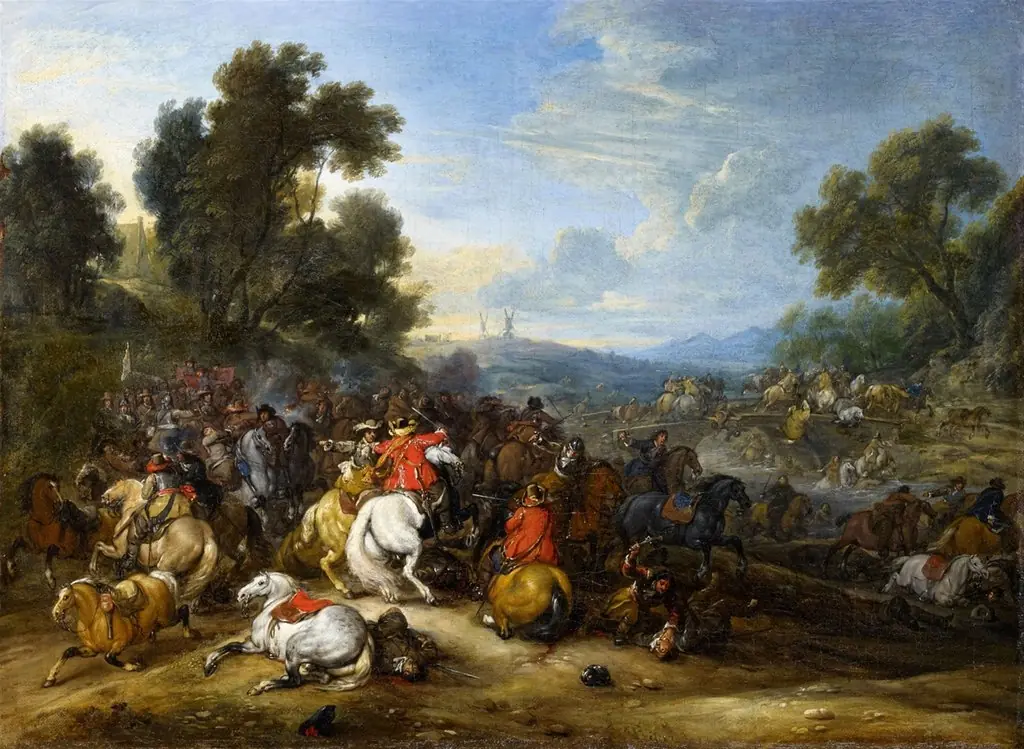
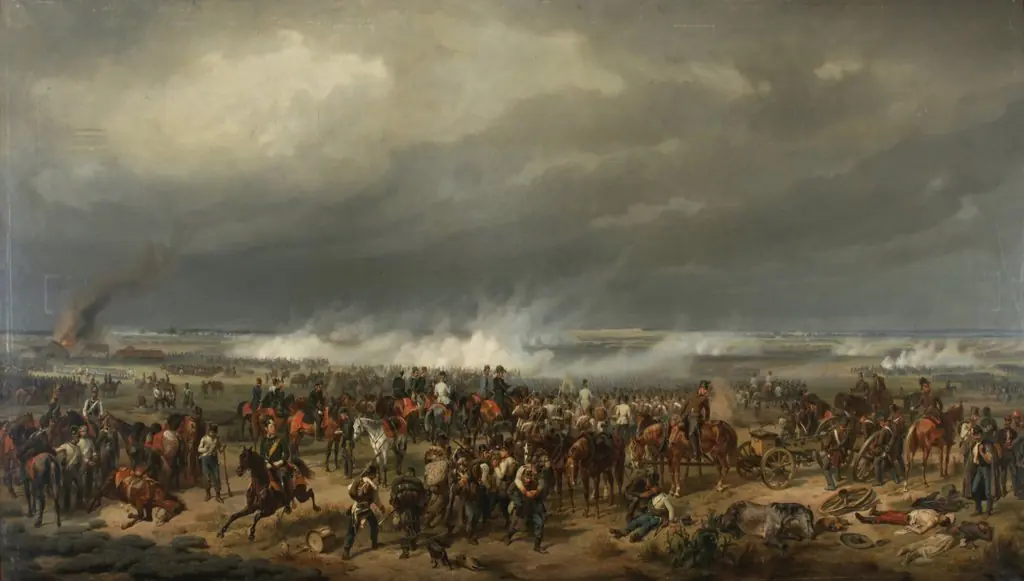
The artwork depicts a chaotic battle scene featuring both mounted cavalry and foot soldiers engaged in combat across uneven terrain. A rearing white horse dominates the center, its rider clad in dark clothing with a raised arm, while fallen horses and bodies litter the ground. In the middle distance, a windmill engulfed in flames sits atop a small rise, emitting thick smoke that merges with heavy storm clouds overhead. This conflagration forms the backdrop to the tumult of war, capturing the violence and disorder of military conflict. The burning mill and the chaotic skirmish illustrate the destructive nature of war, with the heavy smoke obscuring background structures and tiny figures, reinforcing the overwhelming atmosphere of the scene.
Technique & Style
Wouwerman executed the painting in oil on canvas, employing a palette dominated by muted browns, grays, and ochres, punctuated by touches of red and yellow on the soldiers' garments. His brushwork varies across the composition, utilizing smooth applications in the sky and more textured, vigorous strokes for the figures and landscape. This energetic handling suits the turbulent subject matter. Strong contrasts between the dark foreground and luminous, hazy areas in the background create a convincing atmospheric depth. While weapons, hats, and military details are visible, they remain loosely defined rather than sharply rendered, contributing to the overall sense of rapid, violent motion and atmospheric obscurity caused by the smoke of the burning mill.
History & Provenance
Created in 1660 in the city of Haarlem, the painting eventually entered the collection of the Staatliche Kunstsammlungen Dresden, where it remains today as part of the Gemaldegalerie Alte Meister. While the specific commission and early ownership chain are not detailed in the available records, the work has been photographed and reproduced for public domain and educational platforms, with its digital record maintained by the SKD online collection. The painting's presence in Dresden places it within one of the major European Old Master collections, ensuring its continued preservation and study.
Context
Philips Wouwerman lived from 1619 to 1668 and built his reputation largely on paintings of equestrian scenes and military encounters. Working primarily in oil on canvas and panel, he was highly productive in Haarlem. His broader output includes well known works such as The Grey Horse from 1646 and Horsepond on a river from 1650. While the largest concentration of his works today belongs to the Rijksmuseum in Amsterdam, Cavalry in front of a Burning mill represents a mature phase of his career, painted in 1660, well after he had established his characteristic focus on cavalry engagements and atmospheric landscapes.
Artist & collection
Artist
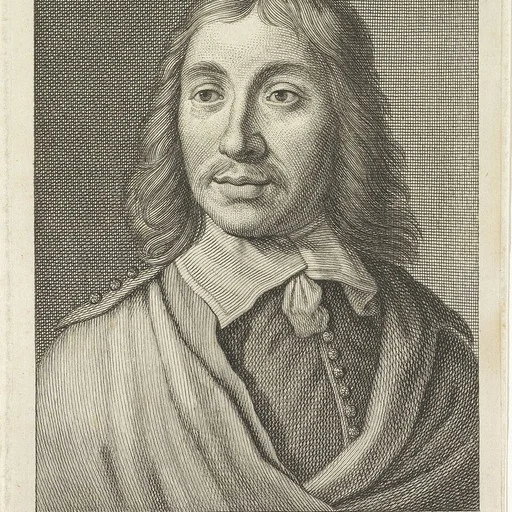
Philips Wouwerman (also Wouwermans) (24 May 1619 (baptized) – 19 May 1668) was a Dutch painter of hunting, landscape and battle scenes. He became prolific during the Dutch Golden Age and joined the Haarlem Guild of St. Luke.